Category Archives: Uncategorized

Collision and Recoil, Part 1

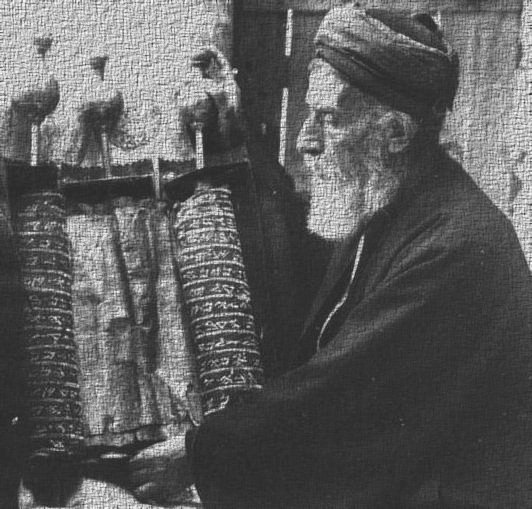
ancient-torahFor some days he was with the disciples at Damascus. And immediately he proclaimed Jesus in the synagogues, saying, “He is the Son of God.” And all who heard him were amazed and said, “Is not this the man who made havoc in Jerusalem of those who called upon this name? And has he not come here for this purpose, to bring them bound before the chief priests?” But Saul increased all the more in strength, and confounded the Jews who lived in Damascus by proving that Jesus was the Christ.

When many days had passed, the Jews plotted to kill him, but their plot became known to Saul. They were watching the gates day and night in order to kill him, but his disciples took him by night and let him down through an opening in the wall, lowering him in a basket.

–Acts 9:19-25 (ESV)

And when the Gentiles heard this, they began rejoicing and glorifying the word of the Lord, and as many as were appointed to eternal life believed. And the word of the Lord was spreading throughout the whole region. But the Jews incited the devout women of high standing and the leading men of the city, stirred up persecution against Paul and Barnabas, and drove them out of their district.

–Acts 13:48-50 (ESV)

This becomes a familiar refrain in Paul’s life. Always someone is condemning him for his message or what it implies in their lives. As you may recall from yesterday’s “morning meditation,” when, in Acts 9:23, it says that “the Jews plotted to kill him,” the word we read in English as “Jews” in Greek is “Ioudaioi,” which specifically refers to the Jewish religious leaders and those who support them, not the Jewish people in general (according to the commentary in my ESV Bible, anyway). We see the same word used in Acts 13:50 when it also says, “But the Jews incited the devout women of high standing and the leading men of the city, stirred up persecution against Paul and Barnabas…”

I’ve been reading D. Thomas Lancaster’s Torah Club 6: Chronicles of the Apostles, specifically his commentary on Acts 13 (pp 379-405) which is intended to be read during the week that Torah Portion Bo (“Come”) is studied. I really wish that all of you reading this blog (and everyone else) could read this particular lesson on chapter 13 of Acts, because it is illuminating in many ways, presenting the message of salvation to Jews, Jewish converts, and everyone else in such a clear manner. Space on this blog prevents me from replicating Lancaster’s arguments in full and besides, if I simply “copied and pasted” the lesson here, I would be depriving you of the pleasure of studying from the Torah Club.

Nevertheless, there is some important territory to cover. For instance, why does Chapter 13 end with the Jewish religious leaders of Antioch (and according to Lancaster,“thanks to the Seleucid dynasty, more than fifteen cities in the Roman world bore the name Antioch”), conspiring with “a few prominent, God-fearing, Gentile women who were friendly with the Jewish community” to drive Paul and Barnabas out of their area? I mean, the whole thing started out so well. After Paul’s brilliant teaching as we read in Acts 13:16-41.

When they went out [from the synagogue] they requested of them to speak these things to them the following Shabbat. When the assembly was dismissed, many individuals from the Yehudim and righteous converts followed Polos and Bar Nabba, who spoke to their heartfelt need and warned them to stand in the kindness of God

–Ma’asei HaShlichim 13:42-43 (As quoted from Torah Club, vol 6, pg 393)

The above version of Acts 13:42-43 is taken from an unpublished translation based upon the work of the nineteenth-century Christian scholar Franz Delitzsch (a translation of the Gospels based on Delitzsch’s work is currently available). Let me present the same verses in a form that might be more familiar to you.

As they went out, the people begged that these things might be told them the next Sabbath. And after the meeting of the synagogue broke up, many Jews and devout converts to Judaism followed Paul and Barnabas, who, as they spoke with them, urged them to continue in the grace of God.

–Acts 13:42-43 (ESV)

Now, according to Lancaster, here’s the Jewish reaction to what Paul had taught the Jews, converts, and Gentile God-fearers about the risen Messiah:

The synagogue of Pisidian Antioch received Paul’s message enthusiastically. The synagogue heads asked Paul and Barnabas to return the following Sabbath and present more teaching about the man from Nazareth, His messianic claims, His resurrection from the dead, and the evidence from the prophets. After the Sabbath services concluded, an excited group of Jewish people (both Jews and proselytes) gathered around Paul and Barnabas. They followed them back to where they were staying and asked for more teaching and stories about the Master. The apostles spent the remainder of the Sabbath instructing them further in the message of the gospel and the teaching of Yeshua. They “were urging them to continue the grace of God.”

-Lancaster, pp 393-4

I’m not sure where Lancaster found that level of detail about what happened between the Jewish and proselytes from the synagogue and Paul for the rest of the Shabbat, but I can see how it could be true. Certainly it is evident that Paul’s message sparked a tremendous amount of excitement from his audience, it was received enthusiastically, and they couldn’t wait to hear more. This hardly seems like the sort of atmosphere that would abruptly turn to the local Jews experiencing “the offense of the cross” as some modern Christians might put it.

What happened?

Well, let’s back up a little bit.

Brothers, sons of the family of Abraham, and those among you who fear God, to us has been sent the message of this salvation.

–Acts 13:26 (ESV)

Before proceeding, let me present the same verse from the Delitzsch translation to give it a more Judaic context:

Men, brothers, sons of Avraham’s family and God-fearers who are among you: to [us] this word of salvation was sent.

–Ma’asei HaShlichim 13:26

synagogueAnd now Lancaster’s explanation:

Paul finished his historical review with the prophecies of John the Immerser. Before going on to present the story of Yeshua, his suffering, and resurrection, he stopped to appeal directly to the people present in the synagogue. He declared, “To us the message of this salvation has been sent.”

Paul’s first person, plural pronoun “us” included all three types of people he addressed that day in the synagogue: “Brethren, sons of Abraham’s family, and those among you who fear God” (Acts 13:26). “Brethren” referred to his fellow Jews. “Sons of Abraham” referred to proselytes. (Proselytes take the patronymic “son of Abraham” at the time of their conversion.) “You who fear God” referred to the God-fearing Gentiles present that day in the synagogue. The God-fearing Gentiles were not accustomed to being acknowledged in such addresses, and they had never been included in the promises of Messianic redemption or covenant privilege.

-Lancaster, pg 390

That’s absolutely true. God-fearers, such as the Roman Centurion Cornelius and his household who we met in Acts 10, acknowledged the sole sovereignty of the God of Israel and denied all other Gods, but they had no covenant status to connect them to God as did the Jews. There was only the covenant God made with Abraham, but it was unrealized as far as the Jews and God-fearers who were listening to Paul knew.

I will bless those who bless you, and him who dishonors you I will curse, and in you all the families of the earth shall be blessed.” So Abram went, as the Lord had told him, and Lot went with him. Abram was seventy-five years old when he departed from Haran. And Abram took Sarai his wife, and Lot his brother’s son, and all their possessions that they had gathered, and the people that they had acquired in Haran, and they set out to go to the land of Canaan. When they came to the land of Canaan, Abram passed through the land to the place at Shechem, to the oak of Moreh. At that time the Canaanites were in the land. Then the Lord appeared to Abram and said, “To your offspring I will give this land.” So he built there an altar to the Lord, who had appeared to him.

–Genesis 12:3-7 (ESV)

Now the promises were made to Abraham and to his offspring. It does not say, “And to offsprings,” referring to many, but referring to one, “And to your offspring,” who is Christ.

–Galatians 3:16 (ESV)

For the first time, as Paul addressed all those present at that synagogue in Antioch, he “hot wired” the connection between the Abrahamic covenant and the Jewish Messiah who he revealed was Yeshua of Nazareth, Son of David, who was born, died, and resurrected, and who carried the promise of salvation to the Jew, the Jewish convert, and yes, even to the Gentiles of the nations who feared God.

We’ve already seen how the Jews and proselytes reacted with great joy, but what was the response of the Gentiles who heard this message?

We’ll pick up with the answer to that question and more in Part 2 presented in tomorrow’s “morning meditation.”

Sunday School Homework: Acts 9:1-31

paul-on-the-road-to-damascusBut Saul, still breathing threats and murder against the disciples of the Lord, went to the high priest and asked him for letters to the synagogues at Damascus, so that if he found any belonging to the Way, men or women, he might bring them bound to Jerusalem. Now as he went on his way, he approached Damascus, and suddenly a light from heaven shone around him. And falling to the ground he heard a voice saying to him, “Saul, Saul, why are you persecuting me?” And he said, “Who are you, Lord?” And he said, “I am Jesus, whom you are persecuting. But rise and enter the city, and you will be told what you are to do.” The men who were traveling with him stood speechless, hearing the voice but seeing no one. Saul rose from the ground, and although his eyes were opened, he saw nothing. So they led him by the hand and brought him into Damascus. And for three days he was without sight, and neither ate nor drank.

–Acts 9:1-9 (ESV)

This is part of the book of Acts generally referred to as “the Conversion of Saul,” and from a traditional Christian point of view, records the event of the Jewish Pharisee Saul, hater of all Christians and followers of Jesus, converting and becoming Paul the Christian, and Apostle to the Gentiles in the diaspora.

If you’ve been reading my blog for very long, you know that I’m not likely to accept the exact understanding most Christians have of this event, but I must say things have been illuminating. A new teacher is taking over the Sunday school class I’m attending and he’s coming in with a different style. It’s not particularly unusual, though. He assigns “homework” for the upcoming Sunday school class, in this case on the aforementioned Acts 9, and presents a series of questions that we students are supposed to research (he provides the relevant scriptures) and answer, and then bring our answers to the next class, which for me, is later today.

I debated within myself (and with God) whether or not I should even write about my Sunday school assignment. After all, my first impression upon receiving my assignment by mail several days ago and taking a look at it, was that it’s rather traditional Christian fare in terms of its content and perspective. I was wondering if there was anything I could learn from it (I know that sounds arrogant on my part, but I’m pretty familiar with how Christian tradition views Saul/Paul). I was also wondering what the rest of the class could learn, since the lesson seems relatively elementary, and I recently discovered that several members of the class are on the church’s board of elders, and thus are likely long-term Christians, well established in their faith and knowledge of the Bible.

I can’t speak for them of course, but I learned a few things.

I tend to think and write thematically, and while I am detail oriented, some of the finer points of scripture escape me at times, or at least don’t make it from short-term to long-term memory. According to Galatians 1:16-19, after Paul’s “conversion,” having his sight restored, and his escape from Damascus (Acts 9:23-25), Paul spent three years in Arabia (presumably it was Arabia) before going to Jerusalem. According to Galatians 1:18-19, once Paul returned from Arabia and journeyed to Jerusalem, he spent fifteen days in the Holy City (Acts 9:26-30) before leaving again (apparently in haste to escape the “Greek-speaking Jews” who were trying to kill him).

paul-damascus-basketI’m not sure those details are important, but they were recorded by Luke and Paul so I suppose I should acknowledge them.

I did find it ironic that Paul most likely discovered that the shoe was on the other foot as he found himself being lowered in a basket, through an opening in the exterior wall of Damascus to escape those trying to kill him.

For some days he was with the disciples at Damascus. And immediately he proclaimed Jesus in the synagogues, saying, “He is the Son of God.” And all who heard him were amazed and said, “Is not this the man who made havoc in Jerusalem of those who called upon this name? And has he not come here for this purpose, to bring them bound before the chief priests?” But Saul increased all the more in strength, and confounded the Jews who lived in Damascus by proving that Jesus was the Christ.

When many days had passed, the Jews plotted to kill him, but their plot became known to Saul. They were watching the gates day and night in order to kill him, but his disciples took him by night and let him down through an opening in the wall, lowering him in a basket.

–Acts 9:19-25 (ESV)

Compare that to what we read here:

But Saul, still breathing threats and murder against the disciples of the Lord, went to the high priest and asked him for letters to the synagogues at Damascus, so that if he found any belonging to the Way, men or women, he might bring them bound to Jerusalem.

–Acts 1:1-2 (ESV)

In Acts 9:23, when it says the Jews plotted to kill him, the word translated into English as “Jews” is the Greek word “Ioudaioi,” which specifically refers to the Jewish religious leaders and their supporters, not all Jewish people in general. Paul was a representative of the Jewish authorities in Jerusalem, and only a short time before, he was the one who was seeking to imprison and kill the Jewish believers belonging to “the Way.” Now, he was in the exact position of those he formerly sought to harm, and his opponents were the ones who only a tiny march of days before, would have been his allies. It must have been like facing a reflection of his former self as he was before encountering the Master on the road to Damascus. His “Damascus experience” had changed and completely reversed itself from what he thought it was to be when he originally left Jerusalem.

Jesus, it seems, is not without a sense of irony.

And when he had come to Jerusalem, he attempted to join the disciples. And they were all afraid of him, for they did not believe that he was a disciple. But Barnabas took him and brought him to the apostles and declared to them how on the road he had seen the Lord, who spoke to him, and how at Damascus he had preached boldly in the name of Jesus. So he went in and out among them at Jerusalem, preaching boldly in the name of the Lord. And he spoke and disputed against the Hellenists. But they were seeking to kill him. And when the brothers learned this, they brought him down to Caesarea and sent him off to Tarsus.

–Acts 9:26-30

OK, let me get this straight. After an absence “off the grid” of three years, Paul returns to Jerusalem and attempts to make contact with the Apostles. They are naturally dubious, since the last time they heard about Paul, he was an enemy of the Way and had made it his “mission” to persecute the movement and eradicate its followers. Now he’s claiming to be one of them, to have had a vision of the Master himself, and that Jesus had given Paul a completely different mission, one of announcing the good news of Messiah to the Gentiles of the nations. It sounds like a bad joke.

PaulFortunately, Barnabas was there to back Paul up and to verify everything Paul was saying. Scripture doesn’t record how the Apostles reacted, but I guess it was favorably enough to allow Paul to go “in and out among them at Jerusalem” and to preach “boldly in the name of the Lord.” However, for whatever reason, Paul found it necessary to speak and dispute against the Hellenists (Greek-speaking Jews) in Jerusalem, which resulted in said-Hellenists wanting to kill him. Again, we don’t have the details, but commentary suggests that these Hellenistic Jews were not believers (as were the “Hellenists” we find in Acts 6:1), however, they may have been some of these guys.

And Stephen, full of grace and power, was doing great wonders and signs among the people. Then some of those who belonged to the synagogue of the Freedmen (as it was called), and of the Cyrenians, and of the Alexandrians, and of those from Cilicia and Asia, rose up and disputed with Stephen. But they could not withstand the wisdom and the Spirit with which he was speaking. Then they secretly instigated men who said, “We have heard him speak blasphemous words against Moses and God.” And they stirred up the people and the elders and the scribes, and they came upon him and seized him and brought him before the council, and they set up false witnesses who said, “This man never ceases to speak words against this holy place and the law, for we have heard him say that this Jesus of Nazareth will destroy this place and will change the customs that Moses delivered to us.”

–Acts 6:8-14 (ESV)

That’s just speculation and the interpretation I found in my ESV Bible, but it’s as good as anything, lacking further information. All this does suggest something though.

The main understanding I’ve gained here is that not all Jews were against Paul, against following Jesus as the Messiah, or against the Way. There were obviously believers in Damascus, and Ananias, who was directed by Jesus to restore Paul’s sight (Acts 9:10-16) is thought by Christian tradition to have been the leader of the Jewish believers in that city. It is in the same city after his sight was restored, that Paul (amazingly, given who he was just a few days before) began to proclaim the Master in the local synagogues (Acts 9:19-22) and he did so for “many days” (v 23), and only when the non-believing Jewish religious leaders (as opposed to the Damascus Jews in general) tried to kill Paul (presumably for reasons similar to why Stephen was stoned in Acts 6), that he had to leave in secret.

Similarly, after his three-year absence, Paul returned to Jerusalem to find Jews who were Apostles and followers of Jesus and Jews who were not. The believing Jewish Apostles cautiously supported him (small wonder, given his former reputation) while other Jews, because he spoke against them (the reasons aren’t clear), opposed him and wanted to kill him (a recurring theme in Paul’s life).

prince-of-peaceThe upshot is that “the Jews” as a people and a nation, did not “reject Jesus.” Opinions between Jewish sects varied widely on theological grounds, but the most likely reason why the “official” (that is, established and supported by Rome) Jewish religious leaders wanted to kill Paul (and other members of the Way) was because they were rocking the political boat and upsetting the status quo of a corrupt and invalid leadership that was firmly in Rome’s back pocket.

Even studying for Sunday school, using a traditional Christian Bible and only consulting accepted Christian commentary, I still find that many, many Jews, including one of the (former) chief opponents of the Way, firmly accepted the Gospel message and were loyal and devoted disciples and Apostles of Jesus Christ of Nazareth. Yes, other Jewish sects had reasons not only to disbelieve Jesus was Messiah but to passionately oppose the Jewish sect of the Way, but they didn’t represent all Jews everywhere. Paul spent “many days” in Damascus preaching the message of Messiah among all of the local synagogues (not just those belonging to Christ’s Jewish followers), so obviously he had a Jewish audience who wanted to repeatedly hear what he had to say (we see this again in the latter part of Acts 13 which I’ll introduce tomorrow).

Paul only spent fifteen days in Jerusalem before some of the Jewish believers heard of the plot to kill Paul and helped him escape (Acts 9:30), but he continued to speak boldly in the Master’s name. And even after leaving Jerusalem, we can see the effect of his subsequent journey.

So the church throughout all Judea and Galilee and Samaria had peace and was being built up. And walking in the fear of the Lord and in the comfort of the Holy Spirit, it multiplied.

–Acts 9:31 (ESV)

While this translation of the Bible speaks of “the church” throughout all Judea and the Galilee and Samaria, who were the believers living in those regions? Jews and Samaritans. Probably lots of Jews and Samaritans. The first Gentile we know who became a disciple of Jesus was Cornelius, and Peter had yet to encounter him (see Acts 10). The Jews and Samaritans were not Christ’s enemies, at least not all of them. Many desired to hear the message of hope and they believed. Luke’s chronicle in the early chapters of Acts records this clearly. Those Christians who doubt this because of our own traditions may want to re-examine the scriptures with open eyes and see what is actually there.

christian-coffee-cultureJesus said, “salvation is from the Jews.” (John 4:22 ESV). Paul said, “first for the Jew, then for the Gentile.” (Romans 1:16, 2:10 ESV). If we in the church ignore or worse, cut off our root, we separate ourselves from the only source of our faith, our hope, and our salvation.

Oh, one more thing.

And falling to the ground he heard a voice saying to him, “Saul, Saul, why are you persecuting me?” And he said, “Who are you, Lord?” And he said, “I am Jesus, whom you are persecuting.

–Acts 9:4-5 (ESV)

I knew of the extremely close association between Jesus and his people Israel and particularly his Jewish disciples, but I didn’t know it was also revealed here. Jesus didn’t ask, “Why are you persecuting my people” or “my disciples” but “Why are you persecuting me.” The better part of a year ago, I painted similar portraits of the Master as the Son of Israel in Minister of Peace and Gift of the Firstborn of Israel. Jesus revealed this part of his nature to Paul as well, and I hadn’t even realized it.

Now I wonder how much of this I should share in Sunday school?

The Rabbi and The Taxi Driver

HumbleThe position which baalei teshuvah [penitents] occupy cannot be occupied even by tzaddikim [completely righteous].

-Berachos 34b

A surgeon once encountered difficult complications during an operation and asked his assistant to see if there was anyone in the surgical suite who could help. The assistant replied that the only one who was there was the chief of the surgical staff. “There is no point in calling him,” the operating surgeon said. “He would not know what to do. He never got himself into a predicament like this.”

As far as people’s own functioning is concerned, it might be better not to have made mistakes. Still, such perfection makes them relatively useless as sources of help to others who have made mistakes, because they have no experience on which to draw to know how to best help them correct their mistakes.

A perfect tzaddik may indeed be most virtuous, but may not be able to identify and empathize with average people who need help in correcting their errors. The “position” to which the Talmud is referring may be the position of a helper, and in this respect the baal teshuvah may indeed be superior to a tzaddik.

Today I shall…

…reflect on how I dealt with the mistakes I have made, and share my experience with others who may benefit from them.

-Rabbi Abraham J. Twerski
“Growing Each Day, Shevat 8”
Aish.com

I love stories. I suppose you know that if you’ve been following these “meditations” for very long. I like the stories the Rabbis tell. Many of them are very inspiring without being particularly schmaltzy.

I like stories that tell a lesson or impart a moral, and one of my favorite movie lines about this comes from an unlikely source:

But there’s a bright side to this, and a moral. I think morals are good for you, I love morals, and the moral of this story is: If you’re walkin’ on eggs, don’t hop.

-Jack Braddock (played by Warren Oates)

I didn’t include that quote randomly. Mr Oates, who sadly passed away in 1982 at the age of 53, often played tough guys and other character roles rather than the “leading man.” In that way, he could be much more relatable to the audience than the handsome and always capable hero-type. The above-quoted line was delivered with his usual Kentucky drawl that, in spite of him playing a rather intimidating character, was like the advice you might get from your father or favorite uncle.

I think that’s what a life of holiness is supposed to be like.

Now I suppose that last statement requires an explanation. After all, how can a tough guy character actor delivering a line in a 1983 action film remind me of a life of holiness?

Time for another story.

I once had this exact conversation with a taxi driver. He was Catholic, and asked me if rabbis marry. I told him that not only are rabbis allowed to marry, they are obligated to marry. “Be fruitful and multiply” is a command to all, regardless of career or position in the community.

The taxi driver shook his head and said, “You Jews have got it good. In my community, when someone is dating and confused, or is going through a rough patch in his marriage, or needs guidance on how to discipline their kids, who should we turn to? Our celibate priest? He wouldn’t have a clue what it means to argue with your wife, he’s never been dumped, and certainly doesn’t have a kid that pokes other kids’ eyes out. If I have a question in theology, or need to know which prayers to say, then sure, I’ll go to him. But real-life issues—he can’t help me!”

This taxi driver’s comments brought home for me an important truth. Judaism does not differentiate between “clergy” and “laymen.” Whether you are a rabbi or a taxi driver, you are expected to live a “normal” life, to be involved with the struggles and pleasures of the mundane world.

But it works the other way as well. Whether you are a taxi driver or a rabbi, you are expected to make your everyday mundane world a home for G‑d. The Torah’s ideal is to create a society of holy people. Sanctity and morality are not the domain of rabbis alone: every individual must live to the same standard, and each one of us can engage in direct dialogue with G‑d and Torah.

The rabbi is there just to help others bridge the needs of the spirit with the realities of life. But he has to do the same in his own life.

Perhaps that cab was a microcosm of an ideal world. What could be more beautiful than a society in which taxi drivers share spiritual wisdom, and rabbis change diapers?

-Rabbi Aron Moss
“Can a Rabbi Get Married?”
Chabad.org

taxiRabbi Twerski and Rabbi Moss are almost telling the same tale. In the first story, we have a picture of two “experts,” two surgeons, one who is “ordinary,” and one who is “chief of the surgical staff.” In this instance, although the first surgeon has encountered a problem and needs help, no one believes the “chief,” or in the case of a moral dilemma, the “perfect tzaddik,” will be much help, because they’ve never encountered the problems of an ordinary person.

Rabbi Moss adapts that to the relationship between a married Catholic who has children and a Priest. How could the celibate Priest possibly understand the problems of a husband and a father, at least by direct experience?

But the Rabbi can. Further, not only can the Rabbi relate because he is not only allowed but commanded to marry and have children, but he is, in many ways, no greater keeper of holiness or wisdom than the taxi driver.

What could be more beautiful than a society in which taxi drivers share spiritual wisdom, and rabbis change diapers?

That’s a life of holiness we can all live and pursue. In some ways, maybe that’s the only way we can understand God and other human beings, by being immersed both in a world of spirituality, and in a world of going to work every day, taking out the garbage, and changing diapers. Life has many troubles, but a journey of faith does not serve God if it is undertaken in some ivory tower or study hall where you never encounter pain, frustration, or tears.

In these days especially, when by G-d’s kindness we stand at the threshold of redemption, we must make every conceivable effort to strengthen every facet of our religion. Mitzvot must be observed b’hidur, with “beauty,” beyond minimal requirements. Customs must be kept scrupulously, nothing compromised. It is a Mitzva and duty of every Rabbi in Israel to inform his congregation that the current tribulations and agonies are the “birth-pangs of Mashiach.” G-d is demanding that we return to Torah and mitzvot, that we not hinder the imminent coming of our righteous Mashiach.

“Today’s Day”
Thursday, Sh’vat 8, 5703
Compiled by the Lubavitcher Rebbe
Translated by Yitschak Meir Kagan
Chabad.org

The baal teshuvah and the tzaddik both live inside of you, and you will see the return of Mashiach, may he come soon and in our day.

Silent Faith at the Sea

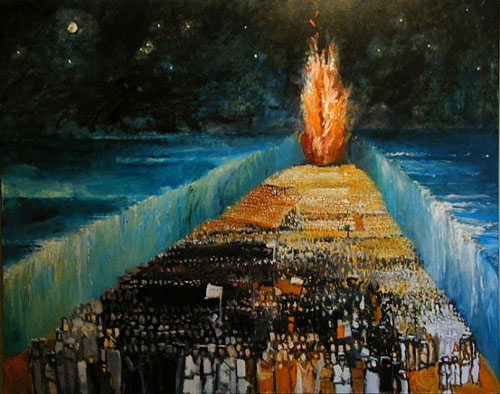
exodus-reed-seaWhen the king of Egypt was told that the people had fled, Pharaoh and his courtiers had a change of heart about the people and said, “What is this we have done, releasing Israel from our service?” He ordered his chariot and took his men with him; he took six hundred of his picked chariots, and the rest of the chariots of Egypt, with officers in all of them. The Lord stiffened the heart of Pharaoh king of Egypt, and he gave chase to the Israelites. As the Israelites were departing defiantly, boldly, the Egyptians gave chase to them, and all the chariot horses of Pharaoh, his horsemen, and his warriors overtook them encamped by the sea, near Pi-hahiroth, before Baal-zephon.

As Pharaoh drew near, the Israelites caught sight of the Egyptians advancing upon them. Greatly frightened, the Israelites cried out to the Lord. And they said to Moses, “Was it for want of graves in Egypt that you brought us to die in the wilderness? What have you done to us, taking us out of Egypt? Is this not the very thing we told you in Egypt, saying, ‘Let us be, and we will serve the Egyptians, for it is better for us to serve the Egyptians than to die in the wilderness’?” But Moses said to the people, “Have no fear! Stand by, and witness the deliverance which the Lord will work for you today; for the Egyptians whom you see today you will never see again. The Lord will battle for you; you hold your peace!”

Then the Lord said to Moses, “Why do you cry out to Me? Tell the Israelites to go forward.

Then Moses caused Israel to set out from the Sea of Reeds. They went on into the wilderness of Shur; they traveled three days in the wilderness and found no water. They came to Marah, but they could not drink the water of Marah because it was bitter; that is why it was named Marah. And the people grumbled against Moses…

–Exodus 14:5-15; 15:22-24 (JPS Tanakh)

The miracle of the splitting of the Red Sea is the culmination of the Exodus. One week after the calamitous plague of the First Born, once again Pharaoh is chasing after the Jews to enslave them. As he advances, the Jews are trapped between the sea and the advancing Egyptian army.

Groups of Jews suggest a variety of responses to the impending disaster. God tells Moses to cease praying and travel toward the sea. In a heroic act of faith, Nachshon, prince of the tribe of Judah, throws himself into the sea, and it splits. (Talmud – Sotah 37a)

-Rabbi Dave Rudman
“Chumash Themes #11: Splitting of the Sea”
Commentary on Torah Portion Beshalach
Aish.com

One of the arguments I sometimes hear (though fortunately, not lately) about how Christians are ultimately superior to the ancient Israelites, has to do with faith. Basically, I’ve heard that Christians have an abundance of faith in God through Jesus Christ and the Israelites had none. The “proof” of the latter has to do with the continual grumbling of the Israelites (as I’ve tried to illustrate above) and how it seems to be a characteristic of them for the next forty years. That first generation out of Egypt never seems to get it right. It appears amazing after all, since they witnessed miracles of God that would stagger the senses. They saw the plagues against Egypt. They saw the parting of the Reed Sea. The entire population of Israel directly encountered God at Sinai and received the Torah “as one man.”

How could they not know that God is was with them?

The response to that question is much bigger than I’m able to answer, particularly in a blogging format, but through metaphor, midrash, and a little Chasidic mysticism, I want to use a tiny bit of the Exodus narrative to tell a story about us…about you and me…about people of faith.

When the Jewish people left Egypt, they were the spiritual equivalent of children. Their active participation in the Ten Plagues and the Exodus was negligible. The plagues were accomplished in a completely miraculous way through the agency of Moses and Aaron. The Exodus itself was predicated on the covenant that God promised Abraham to redeem his descendants from slavery. (Genesis 15:13-14)

Therefore, the Jewish people needed to mature and interact with God on their own.

-Rabbi Rudman

And he said to them, “Do you not understand this parable? How then will you understand all the parables? The sower sows the word. And these are the ones along the path, where the word is sown: when they hear, Satan immediately comes and takes away the word that is sown in them. And these are the ones sown on rocky ground: the ones who, when they hear the word, immediately receive it with joy. And they have no root in themselves, but endure for a while; then, when tribulation or persecution arises on account of the word, immediately they fall away. And others are the ones sown among thorns. They are those who hear the word, but the cares of the world and the deceitfulness of riches and the desires for other things enter in and choke the word, and it proves unfruitful. But those that were sown on the good soil are the ones who hear the word and accept it and bear fruit, thirtyfold and sixtyfold and a hundredfold.”

–Mark 4:13-20 (ESV)

sower-seedThe full “Parable of the Sower” can be found in Mark 4:1-20 and I find it an interesting parallel to what Rabbi Rudman said about the Children of Israel being “spiritual children” at the point when they’re leaving Egypt. They were a people but not yet a nation. Their bodies had been freed from slavery but not their minds and hearts. They moved forward with joy but were terrified at every setback.

Here’s another way of looking at the choices we make as cited in a more “mystic” source:

A king had lost a costly pearl. He sent his three sons to look for it. The first son was of the opinion that his father did not need him anymore, and he did not return to him. The second son did not think about the pearl at all, he only wanted to be back home with his father. The third son understood that he had been sent out for this purpose: to become completely independent. So he searched for the pearl and found it and brought it to his father.

It is very much like that with humanity. One person is deeply involved in this world. For him it would have been better if he had never been born. Another strives his whole life to get back home to his Source, to his Father; but he is thereby thinking only about himself. Still other men seek after and find the precious pearl. They return the holy sparks of God which have been scattered in the world back to their original Source again. Such men are the true redeemers of mankind.

–Paul Philip Levertoff
“Repentance and Redemption”
Religious Ideas of the Chasidim
Chapter 1, Sections 12 and 13
as quoted from Messiah Journal, Issue 112 (Fall 2013/5773), pp 79-80

Now how does all that compare to us?

young-levertoffYou may have been a Christian for so long that you’ve forgotten what it was like to be a brand new believer. You may have initially come to faith as a child within the context of a Christian family, so you may never have encountered God without the support of a church and loved ones, just you and Him alone and unfiltered. Taking the Master’s parable as a model, and given all that I’ve just said, you may have never faced nurturing a new and fragile faith that just about anything could blow away if you let it…like when the Adversary comes to take the word back out of your heart, or when you don’t allow the word to take root, or when you let the problems and worries of the world around you distract you and choke your faith to death. The challenge of letting faith and the word grow in good soil is to protect it long enough to become strong.

I suppose that’s one of the advantages I have in coming to faith later in life, although it comes with many disadvantages as well. Faith is something I’ve had to fight for within myself and it remains a struggle, sometimes between me and God.

Therefore, the Jewish people needed to mature and interact with God on their own. This was the purpose of the second phase of the Exodus, the splitting of the sea. In order to bring the Jews to this degree of independence, God directs them on a specific journey…

-Rabbi Rudman

I frequently refer to a life of faith as a journey taken along a path and I think the metaphor serves quite well. I sometimes feel that the first generation out of Egypt were never meant to enter the Holy Land of Israel, and that the trial of slavery in Egypt was just too much for them to overcome on the journey, even though God was with them.

But what was Egypt to them and why would it have left such an indelible brand on its slaves, at least as certain “mystic” viewpoints in Judaism see it today?

Mitzrayim (Egypt) expresses constriction, limitation. The spiritual Egyptian exile is the animal soul’s restricting and concealing the G-dly soul so severely that the G-dly soul is compressed to the degree that it is diminished and obscured. “Exodus from Egypt” is the removal of the constriction and bounds; i.e. the intellect in the brain illuminates the heart, bringing about fine character traits translated into actual practice.

“Today’s Day”
Sunday, Sh’vat 4, 5703
Compiled by the Lubavitcher Rebbe
Translated by Yitschak Meir Kagan
Chabad.org

They had been slaves all their lives, their parents, their grandparents, and all of their people had been slaves in Egypt for almost as long as their collective memory could recall. I sometimes feel as if they existed to prepare their children to inherit the promises God made to Abraham, Isaac, and Jacob.

But I’ll never know, I suppose. That’s just my imagination. I’ll never know if the journey was for the sake of the children who left Egypt and the children who were the first generation of Israelites born in freedom after several hundred years of enthrallment. The journey had a purpose, but it may not have been the one that we think of when we read of the forty years of wandering.

But what about us? It would be an immense tragedy to try to apply the forty years of wandering and the ultimate death of that first generation as a metaphor of us as individual believers. It would mean that the lives of some Christians who don’t quite make it in their faith are only illustrations for the witnesses to their lives. That sounds unfair to them and maybe I’m being unfair to the first generation to leave Israel as well. I don’t know.

But I do know that the journey has a purpose, even when it doesn’t appear that such a purpose exists. Each miracle, each tragedy, each meal of manna, each harsh encounter with Moab or the Amalakites…all of that shaped and molded the journey and shaped and molded the Israelite faith in the presence and purpose of God who was among them.

It is just the same with our journey as well. In reading and re-reading the Torah cycle each year, we are witnesses to the Israelite journey and as witnesses, we can try to learn the lessons their path is teaching us about our own trip through life. As we see their struggle, it is one of human beings contending with God. Can God save them from the latest calamity or must the Israelites take matters into their own hands and return to Egypt? Can Moses and Aaron be trusted to lead the people, or should Korach and his associates take over?

As far as we’re concerned, when difficulties happen to us, who should we trust and what should we do?

Sometimes you see that things have been taken out of your hands and are following a supernatural order. At this point, just do your best at what you have to do—and stay out of G‑d’s way.

-Rabbi Tzvi Freeman
“Getting Out of the Way”
Based on letters and talks of the Rebbe
Rabbi M. M. Schneerson
Chabad.org

WateringThis doesn’t mean we have no responsibility to act on our own behalf or on the behalf of others as circumstances require, but on the other hand, it doesn’t mean we have license to always drive ourselves into each problem as if God doesn’t exist, either. There is a time to act and a time to let God act and have faith that, even though things seem hard or even impossible, He will prevail.

Moses said to the people, “Do not fear. Stand still, and see the salvation of G-d that He will show you today: for the Egyptians whom you have seen today, you shall never see them again. G-d will fight for you, and you shall be silent.”

–Exodus 14:13-14

Talmud Yerushalmi – Ta’anit 2:5 explains:

  • One group felt they could not win this battle. So rather than be captured alive, they wanted to commit suicide by casting themselves into the sea. To this, the response was “stand still.”
  • Another group of Jews desired to return to Egypt and surrender. To them, the response was, “the Egyptians whom you have seen today, you shall never see them again.”
  • A third group desired to go to battle. But Moses told them, “God will fight for you.”
  • For those who wanted to pray, Moses said, “Be silent.”

I told you midrash would be involved.

Listen to God and do what you are required, as best as you can comprehend, to address your life as it exists each day because it is faith in God that gives us courage to act. This helps us to mature and interact with God on our own. But remember that it is also faith and courage to “stand still” and to “be silent” and let God take care of you as well.

Messiah and the Temple of God

tallit_templeThe re-building will begin when the Messiah comes. This Third Temple will be on the Temple Mount, exactly where it previously stood. In fact, Maimonides writes that one sign that the Messiah is the real Messiah (and not an imposter) will be when he re-builds the Temple on the Temple Mount.

“Rebuilding the Temple”
Commentary on Tisha B’ Av
Aish.com

Belief in the coming of the Messiah has always been a fundamental part of both Judaism and Christianity. The Hebrew word for Messiah, Mashiach or Moshiach, means anointed, as does the Greek word, christos. Thus in Christianity, Christ is just another word for the Messiah. Much has been written about Jesus as the Messiah within the Christian realm, but little information has been publicized to the uninformed Jewish community concerning the coming of a Messiah, whom all we know about is that he will be a direct descendant of king David. Although Jesus has been proposed by Christianity to be such a descendant, Judaism does not accept Christ as their savior or king. Because the Messiah cannot be separated from God’s Third Temple and because God’s Third Temple is destined for all people…

“Coming of the Messiah”
ThirdTempleInfo.org

“For thus says the Lord: David shall never lack a man to sit on the throne of the house of Israel, and the Levitical priests shall never lack a man in my presence to offer burnt offerings, to burn grain offerings, and to make sacrifices forever.”

–Jeremiah 33:17-18 (ESV)

In some parts of religious Judaism, one of the very strongly held beliefs is that when the Messiah comes, he will rebuild the Temple on its original site in Jerusalem. In fact, Jewish “anti-missionaries” use the current lack of the Jerusalem Temple as “proof” that Jesus couldn’t have been the Messiah (since if he was, he would have rebuilt it 2,000 years ago).

More than that, according to the Judaism 101 website, the Messiah will do many important things.

The mashiach will bring about the political and spiritual redemption of the Jewish people by bringing us back to Israel and restoring Jerusalem (Isaiah 11:11-12; Jeremiah 23:8; 30:3; Hosea 3:4-5). He will establish a government in Israel that will be the center of all world government, both for Jews and gentiles (Isaiah 2:2-4; 11:10; 42:1). He will rebuild the Temple and re-establish its worship (Jeremiah 33:18). He will restore the religious court system of Israel and establish Jewish law as the law of the land (Jeremiah 33:15).

Also, according to AskNoah.org, Gentiles will be able to worship in the rebuilt Temple.

Torah Law holds that Gentiles are allowed to bring burnt offerings to G-d in the Temple when it is standing in Jerusalem. There is a specific commandment to let us know that an animal (sheep, goat or bullock) offered in the Temple by a Gentile must be unblemished, to the same degree as the offering of a Jew. (Leviticus 22:25)

The same website citing the prophet Isaiah, declares that in the days of the Third Temple, Gentiles will be able to take on a greater role than in previous eras.

“And it will come to pass at the end of days that the mountain of G-d’s House will be firmly established, even higher than the peaks, and all the peoples will flow toward it as a river. And many nations will go and will cry, ‘Let us go up toward the mountain of G-d’s House, to the House of the L-rd of Jacob, and we will learn from His ways and walk in His paths, for out of Zion goes forth Torah and the word of G-d from Jerusalem.’ ”

–Isaiah 2:2-3

But why am I writing about this?

It’s come up on more than one occasion at the church I attend, that certain things have changed because of Jesus. Since I’m kind of sensitive to the spectre of supersessionism (also called “replacement theology” or “fulfillment theology”), what has and hasn’t changed always gets my attention. Both in the Pastor’s message and in Sunday school, one piece of information I’ve heard is that before Jesus came, worship of God was confined to the Holy Temple in Jerusalem, and after the resurrection and ascension of Jesus, worship of God was no longer confined to a specific, geographic location.

You can see that this might present a problem if you also believed the Messiah was supposed to rebuild the Temple upon his return. Would that mean a step backward? Would our “freedom” to worship anywhere be revoked and Jerusalem once again become the locus for religious control and sacrifice to God?

old-city-jerusalemWell, yes and no. Frankly, it’s not that clear cut. We know that even during the Second Temple era, synagogues and centers for prayer (not always the same things) were available for Jews. After all, Jewish people were scattered not only all over Israel in those days, but across the civilized portions of the Earth. Recall the Ethiopian eunuch (Acts 8:26-40) who likely was a Jew on a pilgrimage to Jerusalem. It would have been difficult for most of world’s Jewish population to travel to the Jerusalem Temple every time they wanted an encounter with God. It was very likely that there was provision for both individual and communal prayer for Jews, so the Temple wasn’t literally the only place of worship.

Of course to obey the mitzvot, Jews were obligated to travel to Jerusalem on certain occasions including the moadim and particularly for Rosh Hashanah and Yom Kippur, but while extremely important, it wouldn’t have been possible for all Jews because it would require leaving home and undertaking lengthy journeys several times a year. While we don’t have much information on him, it’s likely that the Jewish Ethiopian had made only one 1,200 mile long trip between his country to Jerusalem when Philip encountered him. In those days, a trip of such length over land could have taken up to two months, so it wasn’t the “quick dash” it would be by car or plane in our day and age.

Also, looking forward, we have this.

Then everyone who survives of all the nations that have come against Jerusalem shall go up year after year to worship the King, the Lord of hosts, and to keep the Feast of Booths. And if any of the families of the earth do not go up to Jerusalem to worship the King, the Lord of hosts, there will be no rain on them. And if the family of Egypt does not go up and present themselves, then on them there shall be no rain; there shall be the plague with which the Lord afflicts the nations that do not go up to keep the Feast of Booths. This shall be the punishment to Egypt and the punishment to all the nations that do not go up to keep the Feast of Booths.

–Zechariah 14:16-19 (ESV)

It would be very difficult for the representatives of all of the nations of the world to observe Shavuot (Feast of Booths) in Jerusalem if there were no existing Temple.

It is true that John writes in Revelation 21:22 that he saw no Temple in the city, presumably New Jerusalem, but there are vast periods of time being described in his recording of his vision, so we can’t use that one verse as evidence that the Third Temple will never be built by Messiah after his coming (return).

So what’s the big deal?

Only that the birth, life, death, resurrection, and ascension of Jesus the Messiah may not have (permanently) changed as much as we might think it did. The church may ultimately have to integrate a more Jewish perspective of Messiah than we previously have. Yes, many of us think we’ve done a pretty good job at “rediscovering the Jewish Jesus,” but I don’t think the majority of us have truly engaged the reality of what that actually means.

I’m not criticizing Pastor Randy or anyone at the church I attend (and I know Pastor Randy sometimes reads my blog), but I am suggesting that at least in this one area, Christ may not have changed what we think he changed. Unfortunately, many Christians take the idea of what Jesus did to Judaism a little too dogmatically and treat Jews, Judaism, and Jewish Holy sites quite poorly, as this commentary I received on Facebook attests.

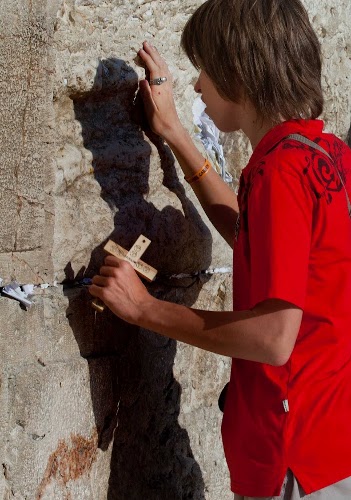
I have been at the Wall, Jews Holiest Place, and seen bus loads of tourist arrive. Even I cringed at the sight of shorts, halter tops, men with out shirts, cameras and water bottles in tow. I have seen the garbage left behind. I have heard the ‘chatter’ at the Face of the Wall and observed the frivolity of trying to place a paper prayer ‘for a friend’ in the highest unreachable crack. (a paradise for rock climbers). I have heard prayers for ‘the Jews to be saved”….I have stood by women ‘claiming the place in the name of Jesus”.

Jerusalem, to include the Wall, is not an International place of holiness. Once the sacredness of the place is removed it becomes one more place to be trashed. The fact that the Reform movement, Women at the Wall and other such groups are irritated that ‘they’ can not make the rules and regulations simply indicates their dislike for the Ultra-Orthodox. One side may be Extreme but the otherside opens the door to Liberal attitudes and the slippery slope to “so what, this is just another wall!”

christian-at-the-kotelThe analysis seems kind of harsh but then again, it’s probably justified given how casually and callously some people treat this Jewish Holy place.

To you and me, the Kotel may not have the same meaning, but for most religious Jews (and Jesus and all his apostles were and are religious Jews), it is all that’s left of where once the Divine Presence of God dwelt among His people Israel. It is also a symbol of hope in the coming of Messiah, the redemption of Israel (which doesn’t mean quite the same thing in Judaism as it does in Christianity), and the return of hope, life, and peace for the Jewish people and in fact, for all the nations of the Earth.

If it also happens to be the site of where the Christ will rebuild the Temple and establish his reign as our King, shouldn’t we at least try to respect it’s holiness? I know that in Christianity, we consider each believer to be a “Temple” containing the Holy Spirit, and we tend to look at ourselves as replacements for the physical Temple, but this “human Temple” imagery doesn’t preclude the future existence of a Third Temple. We tend to think that something is either this or that, left or right, one or the other, as if we are computers communicating in binary language, but since we’re dealing with God here, is it too difficult to believe we can be (metaphorically) a “Temple” and the physical Temple will one day be rebuilt by Messiah? Is it too much to ask for both?

Practicing Messianic What?

studying_tanakh_messiahBy now, most Christians have at least heard of “Messianic Jews,” that is, Jewish believers in Yeshua of Nazareth who have retained their Jewish identity and continue to observe the Torah and practice Judaism in loyalty to Yeshua and their biblical heritage.

Less well known and less understood are what we can call “Messianic Gentiles.” I identify myself as a Messianic Gentile, and I am not alone. There are a lot of us, and our numbers are growing, but what exactly is a Messianic Gentile?

The Messianic Gentile is a Sabbatarian and Torah-keeper practicing Messianic Judaism, not as a wanna-be Jew, but as a Gentile. The holy Torah of Moses has commandments for both Jews and Gentiles. Judaism is a universal religion. It is naturally centered around the Jewish people (and the Jewish Messiah), but its scriptures and practices extend out to all nations, encompassing all of us in the final consummation of the Messianic Era. A Messianic Gentile lives for the Messianic Era, an idea that our Master called “the kingdom of heaven.”

-D Thomas Lancaster
“I’m a Messianic Gentile” (June 26, 2011)
FFOZ Blogs

You probably think I’m crazy even asking if Christians practice any form of Judaism. The vast, vast majority of both Christians and Jews would answer a resounding “no.” Only a tiny population of Jews and non-Jews in what is referred to as the Messianic Jewish and Hebrew Roots movements (they overlap somewhat but are hardly the same thing) even ask such a question. Moreover, only some of the people inside of those movements are considering or confused by the answer.

But why even ask such a ridiculous question? First of all, I recently read such a question as it was floating by in the blogoverse and was intrigued by its audacity. One such church-going (non-Jewish) Christian says he regularly tells other people in his church that he practices “Messianic Judaism”. This is just a hair off from his possibly telling other Christians that he’s a “Messianic Jew”. I don’t want to be unfair or inaccurate, and this person did not refer to himself as a Jew, Messianic or any other kind.

-from my blog post
Do Christians Practice Judaism (October 17, 2012)

Well, color me chagrined. I seem to have run headlong into a contradiction. Boaz Michael, President and Founder of First Fruits of Zion (FFOZ) posted a link to Lancaster’s “Messianic Gentile” blog on Facebook recently (though I can’t seem to find it on Facebook again), and I registered my embarrassment in a comment there as well (this is related to Michael’s recently published book, Tent of David: Healing the Vision of the Messianic Gentile).

But I felt the issue needed more exposure so of course, I’m blogging about it.

I really don’t think that a Christian can practice Judaism as such because it seems to muddy the waters between practicing Judaism and being a Jew. Don’t only Jews practice Judaism? It’s confusing because Judaism is more than just a religious movement (Christianity is a religious movement). It’s a people group, a culture or collection of related cultures, a lifestyle, and when factoring in Israel, it’s not just a piece of geography, but the Jewish people and the Jewish nation as well.

If you’re not Jewish, how do you “practice” all that?

According to Lancaster, a “Messianic Gentile” such as he, practices Messianic Judaism by keeping the Shabbat and keeping Torah, “not as a wanna-be-Jew, but as a Gentile.”

My Jewish wife once called me a “Jewish wannabe” in the heat of a discussion and among many other events, it has “inspired” me to attempt to embrace my identity as a Christian for the sake of clarity and as a sign that I’m “backing away from her turf.” That Lancaster calls Judaism a “universal religion” doesn’t mean (in my opinion, but I don’t have even the beginnings of the educational and experiential background in religious and Bible studies that Lancaster possesses) that it can be universally appropriated and practiced by anyone anywhere.

There’s a fine line to be drawn here. On the one hand, Gentiles dressing frum and wearing payot would be offensive to Jews and even look kind of crazy, but on the other hand, Isaiah did relate the words of God when he said:

“It is too light a thing that you should be my servant to raise up the tribes of Jacob and to bring back the preserved of Israel; I will make you as a light for the nations, that my salvation may reach to the end of the earth.”

–Isaiah 49:6 ESV

Jewish in JerusalemThis goes back to something more basic we find in the Torah:

See, I have taught you statutes and rules, as the Lord my God commanded me, that you should do them in the land that you are entering to take possession of it. Keep them and do them, for that will be your wisdom and your understanding in the sight of the peoples, who, when they hear all these statutes, will say, ‘Surely this great nation is a wise and understanding people.’ For what great nation is there that has a god so near to it as the Lord our God is to us, whenever we call upon him? And what great nation is there, that has statutes and rules so righteous as all this law that I set before you today?

–Deuteronomy 4:5-8 (ESV)

Israel, in a sense, was supposed to be an example to the rest of the world by how it obeyed God and adhered to the standards of the Torah mitzvot. The rest of us were and are supposed to observe, be really impressed, and allow Israel’s idealized example influence our nations to become more just, more compassionate, and for all of us to leave our “idols” behind and embrace ethical monotheism.

Maimonidies (Moshe Ben-Chaim) Laws of Kings, Laws 11:10-12 (Capach Edition): “[10] …Can there be a greater stumbling block than this (Christianity)? That all the prophets spoke that the Messiah will redeem Israel and save them, and gather their dispersed and strengthen their Mitzvot, and this (one, i.e., Jesus) caused the Jews to be destroyed by the sword, and scattered their remnants and humbled them, and exchanged the Torah, and caused the majority of the world to err to serve a god other than the Lord. [11] Nevertheless, the thoughts of the Creator of the world are not within the power of man to reach them, ‘for our ways are not His ways, nor are our thoughts His thoughts.’ And all these matters of Jesus of Nazareth and that of the Ishmaelite who arose after him are only to straighten the way of the king Messiah and to fix the entire world, to serve God as one, as it is stated (Zephaniah 3:9), “For then I will turn to the peoples (into) clear speech, to all call in the name of G-d and serve Him unanimously. [12] How (will this come about)? The entire world has already become filled with the mention of the Messiah, with words of Torah and words of mitzvos and these matters have spread to the furthermost isles, to many nations of uncircumcised hearts, and they discuss these matters and the mitzvot of the Torah. Some say: “These mitzvoth are true, but were already nullified in the present age and are not applicable for all time.” Others say: “Hidden matters are in them (mitzvos) and they are not to be taken literally, and the messiah has already come and revealed their hidden (meanings). And when the true Messiah stands, and he is successful and is raised and exalted, immediately they all will retract and will know that fallacy they inherited from their fathers, and that their prophets and fathers caused them to err.”

-quoted from mesora.org

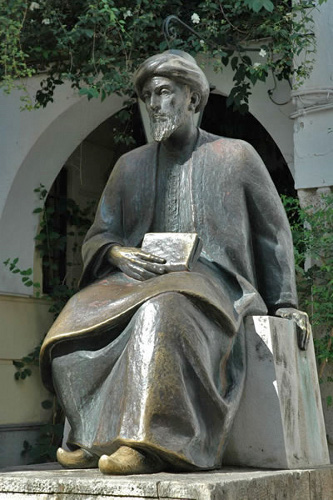
maimoCommentary on this quote found at mesora follows:

With respect, the point is, I think, that although Christianity and Islam are not true, they have played a part in the Divine scheme for the redemption of the whole of humanity by spreading some sort of ethical monotheism involving an albeit incorrect idea of Messiah, Torah and Mitzvot. Although Islam and Christianity are part of the overall process leading to the redemption their imperfect ethical monotheism will be rectified through the adoption of the seven laws.

Naturally, neither Judaism in general nor Maimonides in specific, support Christianity nor the idea that God intended our faith as a mechanism for spreading knowledge of God, and the opinions expressed at the mesora website reflect this. Nevertheless, we can see that Judaism has had a great influence on the world (like it or not) as expressed through Christianity and Islam.

But does “influence” equal “practicing Judaism?” Again, most Christians and certainly most if not all Muslims will strongly deny practicing Judaism in any way or form, but returning to the Messianic Gentile, what about them?

I mainly see “Messianic Gentiles” as having a different perspective than more traditional Christians (which isn’t to say that a self-identified Christian in a church couldn’t have the same point of view). As Lancaster says, they “believe that the Torah is not cancelled, and it contains laws and commandments that apply to both Jews and Gentiles. We keep those laws and commandments as we seek the kingdom.” He further states that:

The idea of practicing Messianic Judaism as a Gentile is not a new thing. Paul’s readers were doing it almost 2000 years ago.

However, in my reading of many of Lancaster’s other works, I don’t believe he is saying that we Christians are all obligated to practice Judaism nor commanded to imitate Jews in every detail in their halalach lifestyle. I don’t think you can find the early Christians who were established by Paul living in such a manner, although I admit that they did live more like the Jews of their day than we Gentile believers do today. I don’t doubt they kept a kind of kosher for table fellowship with Jews, perhaps kept Shabbos as they were able (early Gentile Christianity, unlike Judaism, was not a recognized religion by the Roman empire and Gentiles would not have been absolved from working on Shabbos as the Jews were), davened at the set times of prayer, and even observed some of the festivals (Passover would have been particularly meaningful).

But were even the ancient Christians at the end of the Second Temple era “practicing Judaism?”

A few days ago, I wrote a meditation that outlined the struggles Jewish and Gentile believers had with each other in the days of James, Peter, and Paul due to conflicts in what the Gentiles should and shouldn’t be practicing, and what sort of social bonds (if any) should form between Jewish and non-Jewish disciples of the Master…all based on Lancaster’s commentaries.

I don’t think this is an easy issue to deal with. It wasn’t 2,000 years ago, and it doesn’t seem to be in the present. But if the early Christians in their religious life weren’t “practicing Judaism,” what were they doing? “Christianity” as a discrete entity did not yet exist. Were these Gentiles acting as some sort of “quasi-converts” or “amplified God-fearers?” I think the New Testament was struggling with trying to identify who and what the Gentiles were as they entered into “the Way” and never got around to answering the question.

I’m not sure the question has been answered today, either. Some Hebrew Roots supporters have jumped from A to Z and declared that Messianic Judaism is (supposed to be) all-inclusive and there are no distinctions allowed. Gentiles entering the movement acquire a covenant status that’s not only equal to the Jews in the movement, but identical to them in every conceivable detail. A “Messianic Gentile” is just a “Messianic Jew” without a particular string of DNA and (in the case of males) a circumcision.

I’m not trying to be disagreeable to Lancaster, Boaz, or anyone else, but my opinion is that we use the phrase “Messianic Gentile” as a way to describe a Christian who has a very specific view of Jews, Judaism, the Torah, and God, all relating back to what the movement teaches. But does that mean whatever Messianic Judaism is allows both Jews and Gentiles to practice Judaism as a religious or worship form? If my wife and I go to one of the local synagogues and worship together, am I practicing Judaism?

D.T. LancasterWhile my viewpoints and attitudes probably identify me as a “Messianic Gentile” by Lancaster’s definition, I tend not to use the label for a variety of personal reasons. My wife thinks of me as a Christian and I can only imagine that everyone who sees me at church doesn’t give my being a Christian (as opposed to being a Messianic Gentile) a second thought. Of course, at this stage of my life, I don’t observe anything that even resembles a Shabbat and my level of kashrut is what the Chabad Rabbi in our community would call “kosher style.” If I wanted to truly be “Messianic,” I’d have a long way to go.

I don’t lay tefillin, I don’t pray while wearing a tallit gadol, I only wear a kippah if I’m actually going to shul (since all men are required to, Jewish or not), I pray with a siddur very sparingly, I can’t pray in Hebrew (languages are not one of the things I’m good at), and in many, many other ways, I’m not a “Messianic” anything. I certainly don’t practice Judaism, Messianic or otherwise.

I can’t tell D. Thomas Lancaster or anyone else that they aren’t practicing Messianic Judaism, but on the other hand, in my own life, I can’t see how a Christian like me could ever do such a thing. I suppose this is where opinions differ and possibilities for some of us are yet to be realized. Even if my wife and daughter were to suddenly become shomer shabbos and kasher our kitchen, and I were to daven at the set times of prayer, who would I be and what would I be practicing?

I tend not to think that it’s any form of Judaism, in spite of the obvious similarities, but on the other hand, I don’t really know what to call it. One thing’s for sure, especially with the recent issues involving Gentiles at the Kotel and the lack of respect we’ve been showing at this most Holy site, I feel once again diminished (it’s so sad some Christians can’t treat Jews with respect) and I know for certain that we sure aren’t Jews.