
Category Archives: Uncategorized

Forgive

“If your brother sins against you, go and tell him his fault, between you and him alone. If he listens to you, you have gained your brother. But if he does not listen, take one or two others along with you, that every charge may be established by the evidence of two or three witnesses. If he refuses to listen to them, tell it to the church. And if he refuses to listen even to the church, let him be to you as a Gentile and a tax collector. Truly, I say to you, whatever you bind on earth shall be bound in heaven, and whatever you loose on earth shall be loosed in heaven. Again I say to you, if two of you agree on earth about anything they ask, it will be done for them by my Father in heaven. For where two or three are gathered in my name, there am I among them.”

Then Peter came up and said to him, “Lord, how often will my brother sin against me, and I forgive him? As many as seven times?” Jesus said to him, “I do not say to you seven times, but seventy-seven times.

Matthew 18:15-22 (ESV)

This is a unprecidented third “meditation” in one day, but I saw the accompanying photo on Facebook and it just fit. It’s been a tough week in the Messianic blogosphere and I’ve got the (virtual) bruises to prove it (It’s been a tough week anyway, but that’s beside the point). Most people who give me a hard time for my specific beliefs and their accompanying statements are actually really nice people who love God and want to do good to others. The vast majority of them, I consider my friends and for those who I’ve never met before, I’d love to get together over coffee or a beer and get to know you better. Most of them actually do perform deeds of lovingkindness and have extremely generous hearts.

Just a tiny few however, seem to have a tough time “letting go,” as if what I’m saying is a direct challenge to the doctrine of salvation and the grace of Jesus Christ. I’m not making any such challenge, but for some believers, any suggestion of change or deviation from the norm, particularly in the arena of supersessionism and anti-Jewish rhetoric, is to be feared and even shunned. I admit that there are moments when I want to snap back (more than I already do) but I don’t because I know it wouldn’t be the right thing. How can I exemplify the teachings of my Master if I allow myself to get caught up in the rapid volley, tennis match exchange of angry and upset comments?

Sometimes, along with everyone else, I get caught up in arguing all of the little minutia of religion; all of the arcane details that would make most Rabbis and Pastors go nuts and want to toss in the towel on the human race, but really, God is very simple.

At the end of the day, when you look back at who you are, who you claim to be, what you’ve done with your time, and how you’ve treated other people, you have to say to yourself, “Stop being a jerk and just forgive.” As someone commented on another of my blogs (this isn’t an exact quote), “it’s more important to do right than to be right.”

How can we enter a Shabbat’s rest with anger and frustration tying our hearts and souls into something that looks like a design by M.C. Escher? Let go. Tell the people who you love, “I love you.” Cup a small child’s face in the palm of your hand. Forget all the words and actions that have caused you pain. Remember what’s important.

Forgive.

If you’ve hurt me, I forgive you.

May God go with us all on our journey of faith.

nightsky1

Following the Footsteps of Messiah

It seems like every discussion on every Messianic blog, every “innovative” (I use the term somewhat pejoratively) theology in the Messianic movement, every controversy that I come into contact with currently boils down to the idea of Jewish and Gentile identity.

One Law/Divine Invitation isn’t really about Torah observance. Everyone on both sides of the argument is saying that Torah observance is good and it’s for everyone. People who characterize the argument along the lines of whether or not Gentiles are “supposed to” or “allowed to” observe Torah are completely missing the point (or, in some cases, deliberately and maliciously mischaracterizing the DI position).

Torah observance is not the issue. The only issue is whether or not God has a special covenant relationship with the Jewish people, and whether they continue to have the responsibility to guard that covenant (including the responsibility to admit or refuse proselytes to Judaism).

-Jacob Fronczak
“Getting Past Jewish and Gentile Identity”
Hope Abbey

In my opinion, Jacob’s blog post is spot on. There’s been this ongoing debate on the Messianic blogosphere for years now on the “One Law” topic and I think that Jacob’s correct when he says we’re focused on the totally wrong thing.

I was on the phone yesterday with a guy who lives in Tacoma. Our conversation was all over the map, but we eventually settled on discussing Gentile obligation to the Torah. We were talking about how non-Jewish people who have attached themselves to the Messianic Jewish/Hebrew Roots movement can become incredibly obsessed with “Gentile obligation to the Torah” to the exclusion of virtually all other considerations. What other considerations?

“You have a job. You can provide for your family.”

“You have a lovely wife and a wonderful little boy. Learn to love them and enjoy your time with them.”

“You not only are aware of God but you know Him and you love Him, thanks be to the Messiah whose Good News brought us into such a relationship and sustained us to see this time.”

“You may not know all of the answers to your questions, but you know what’s important. You can spend the rest of your life studying the Bible, but no matter what you end up knowing and not knowing, God is with you all of the time.”

I could go on. Frankly, the Messiah told us what’s important:

And one of the scribes came up and heard them disputing with one another, and seeing that he answered them well, asked him, “Which commandment is the most important of all?” Jesus answered, “The most important is, ‘Hear, O Israel: The Lord our God, the Lord is one. And you shall love the Lord your God with all your heart and with all your soul and with all your mind and with all your strength.’ The second is this: ‘You shall love your neighbor as yourself.’ There is no other commandment greater than these.” And the scribe said to him, “You are right, Teacher. You have truly said that he is one, and there is no other besides him. And to love him with all the heart and with all the understanding and with all the strength, and to love one’s neighbor as oneself, is much more than all whole burnt offerings and sacrifices.” And when Jesus saw that he answered wisely, he said to him, “You are not far from the kingdom of God.” And after that no one dared to ask him any more questions. –Mark 12:28-34 (ESV)

Then the King will say to those on his right, ‘Come, you who are blessed by my Father, inherit the kingdom prepared for you from the foundation of the world. For I was hungry and you gave me food, I was thirsty and you gave me drink, I was a stranger and you welcomed me, I was naked and you clothed me, I was sick and you visited me, I was in prison and you came to me.’ Then the righteous will answer him, saying, ‘Lord, when did we see you hungry and feed you, or thirsty and give you drink? And when did we see you a stranger and welcome you, or naked and clothe you? And when did we see you sick or in prison and visit you?’ And the King will answer them, ‘Truly, I say to you, as you did it to one of the least of these my brothers, you did it to me.’

“Then he will say to those on his left, ‘Depart from me, you cursed, into the eternal fire prepared for the devil and his angels. For I was hungry and you gave me no food, I was thirsty and you gave me no drink, I was a stranger and you did not welcome me, naked and you did not clothe me, sick and in prison and you did not visit me.’ Then they also will answer, saying, ‘Lord, when did we see you hungry or thirsty or a stranger or naked or sick or in prison, and did not minister to you?’ Then he will answer them, saying, ‘Truly, I say to you, as you did not do it to one of the least of these, you did not do it to me.’ And these will go away into eternal punishment, but the righteous into eternal life.” –Matthew 25:34-46 (ESV)

Really. Did anyone get “saved” or “lost” because of Gentile/Jewish identity confusion?

Becoming truly aware of God and His wonders and His graciousness is like entering a world of endless possibilities. You want to sample them all and in fact, you want to just jump into the “ocean” of God and “drown” in Him. However, sooner or later, you realize you still need to breathe and so you come to the surface. That’s the point where you start to ask yourself, “who am I now as a person of God?” Answers vary, but at some point you realize you can’t hog the whole ocean to yourself. Too much of anything can be overwhelming and even harmful:

Doctors tell us that it is better to eat food in small increments more frequently than to eat less frequently, but in larger amounts. It is a delight for those who manage this to find that they can manage on much less food than they had previously assumed that they required. But of course, one difficulty is how to manage with those very tasty foods that seem to compel some of us to eat more and more of them. What is one to do with such foods? One way is to simply abstain from such foods. Others do enjoy them, but still manage to eat a very small amount, “just to taste.”

Mishna Berura Yomi Digest
Stories to Share
“A Question of Moderation”
Siman 168 Seif 9

If I posted the entire missive, it wouldn’t make a lot of sense to most Christians and it certainly would seem irrelevant to a life lived under grace, but there’s an important lesson hidden here. At some point, someone told a lot of non-Jewish people in the Messianic Jewish/Hebrew Roots movement that “One Law fits all.” It’s a compelling thought that we who are Gentile Christians might have access to the wonders of the Torah just by believing so and for many, it’s almost magical the first time you don a tallit and look down at the tzitzit. It’s also kind of intoxicating in a way and many of us (including me at one point) get swept up in the “coolness factor.” In fact, we can be so swept away by the waves of “Jewishness” that we forget all about the “weightier matters of the Torah,” such as those the Master taught in the scriptures I cited above.

The Torah is like a room filled with an infinite selection of delectable morsels and the temptation is to eat them all in unlimited quantities. But has all of the food at the banquet been laid out for us and is eating every bit of everything we see really a good idea?

A wind from the Lord started up, swept quail from the sea and strewed them over the camp, about a day’s journey on this side and about a day’s journey on that side, all around the camp, and some two cubits deep on the ground. The people set to gathering quail all that day and night and all the next day — even he who gathered least had ten homers — and they spread them out all around the camp. The meat was still between their teeth, nor yet chewed, when the anger of the Lord blazed forth against the people and the Lord struck the people with a very severe plague. –Numbers 11:31-33 (JPS Tanakh)

Now he told a parable to those who were invited, when he noticed how they chose the places of honor, saying to them, “When you are invited by someone to a wedding feast, do not sit down in a place of honor, lest someone more distinguished than you be invited by him, and he who invited you both will come and say to you, ‘Give your place to this person,’ and then you will begin with shame to take the lowest place. But when you are invited, go and sit in the lowest place, so that when your host comes he may say to you, ‘Friend, move up higher.’ Then you will be honored in the presence of all who sit at table with you. For everyone who exalts himself will be humbled, and he who humbles himself will be exalted.” –Luke 14:7-11 (ESV)

The two sets of verses I quoted above really do go together. Both have to do with desiring something that is unmerited, unnecessary, and not particularly good for us. They both also have to do with what we want for us, that is, me, me, me. What are my rights? What do I get?

Is that what the Master taught? To put ourselves and our rights and what we want before all other considerations? Sure, you may say, but what about my “obligations?” Fine! What about your obligations to feed the hungry, visit the sick and the prisoner, welcome the stranger? Are you fulfilling those obligations to God? Are you as concerned about helping other people as you are about how your tzitzit are tied?

And what about this as quoted from Fronczak’s blog post?

Messianic Jews can work with Judaism to portray to them a Jesus who is fully Jewish, dealing with theological and cultural objections. This will only happen when Messianic Jews become well versed in their own literary heritage, and when they begin to take halacha seriously, and when someone can walk into a Messianic synagogue and actually reasonably expect a traditional synagogue service.

Messianic Gentiles can work with Christians on the traditional Christian misinterpretations of the Scripture. They can restore the image of Jesus the Jewish Messiah, the importance and centrality of Israel, and the continuing relevance and binding authority of the Torah (not coincidentally, three of First Fruits of Zion’s core values).

That is the big picture; it is what really matters. We need to get on with it so we can make that happen. We need to become who we are, and get on with our mission.

I suppose I’m not really saying anything different from Jacob is and I don’t know if my blog post adds anything to his already excellent statement, but I can’t help but want to support what he’s saying and to emphasize the fact that we do really need to “get on with it.” Continually arguing among ourselves about who is obligated to this and that doesn’t do jack, so to speak.

If you really want to know what your obligations to God are and then perform them, look around you, discover a need someone has, and then fulfill it. If you meet just one person’s need everyday, you will be doing the will of God and walking in the footsteps of the Messiah. Torah will take care of itself.

This is the actual time of the “footsteps of Mashiach.” (the age just before the Messiah comes) It is therefore imperative for every Jew to seek his fellow’s welfare – whether old or young – to inspire the other to teshuva (return), so that he will not fall out – G-d forbid – of the community of Israel who will shortly be privileged, with G-d’s help, to experience complete redemption.

-from “Today’s Day”
Monday, Sivan 18, 5703
Compiled and arranged by the Lubavitcher Rebbe
Rabbi Menachem Mendel Schneerson, of righteous memory, in 5703 (1943)
from the talks and letters of the sixth Chabad Rebbe
Rabbi Yosef Yitzchak Schneersohn, of righteous memory.

Climb!

It is well known that we live in a time when there is terrible hester panim -God’s presence is not easily perceived. The Chofetz Chaim, zt”l, uses this concept to explain why we have so many amenities in our times. “God saw that people were very weak spiritually due to the obscuring of God’s presence and could not survive dealing with the hardships of living without conveniences to make life easier. He afforded access to electricity and all of the appliances that use it, and subsequent generations find such things essential to their survival.”

We sometimes find Talmudic statements that don’t seem to apply today. On today’s daf, for example, we find that if a pregnant woman walks on cut fingernails she will miscarry. Yet this seems a bit farfetched to us here in the twenty-first century. When someone asked the Chazon Ish, zt”l, about whether this principle is still in effect, he replied with characteristic clarity. “In our generation, with such great hester panim, I would not be surprised if a woman who is expecting treads on fingernails and nothing happens to her fetus at all.”

The Shelah HaKadosh, zt”l, gives a similar explanation for why we no longer find that people are struck with tzora’as for sins like leshon hara and the like – although the Gemara explicitly states that certain sins cause the ailment. “The matter of tzora’as is only applicable when we had a Beis HaMikdash and God’s providence was clearly seen. After the destruction of the Beis HaMikdash, God’s providence was hidden. During such hester panim, we are no longer sent tzora’as as a clear message from heaven that one must rectify his sins.”

Daf Yomi Digest
Stories Off the Daf
“The Cloaking of Providence”
Niddah 17

Don’t panic. I have a hard time believing that a pregnant woman would miscarry just because she walked on cut fingernails, too. Nevertheless, this story tells us an important lesson about the nature of the church today.

As you may know if you’ve been reading my “morning meditations” (or any religious blog) lately, there is no more contentious an environment than the religious blogosphere. We may treat each other pretty much politely or with (sometimes feigned) respect when we meet face-to-face in our churches and our synagogues, but once you get us on a web and we have access to a “submit” button on a discussion board or blogger’s comment form, all bets are off. When I wrote Will a Soul Cry Out Against You several days ago (even though I only posted it this morning), I didn’t really have this specific topic in mind. Today, I can’t get the topic out of my head (you’ll see it appear again in tomorrow’s “meditation” on this week’s Torah Portion).

A friend of mine has been communicating something similar recently (no, it’s not the friend some of you may think). The Christian church, our faith and our community, is having “issues”.

Pick up and open any popular book on Christianity and you’ll read about problems. The church has problems. Christianity has problems. We aren’t functioning correctly. In some way, we’re broken; we’re sick. People are leaving churches, youth aren’t keeping their faith into their college years, pastors are suffering from burnout and doors are closing all over the country.

The New Testament church wasn’t this way. It grew exponentially. It rocked its world. It set in motion a movement that now compasses the globe. Why don’t we see that kind of movement in the church down the street?

Why doesn’t our church look like Acts 2, or 1 Corinthians 13, or Philippians 4? Why aren’t converts becoming devoted disciples? Why do people in church seem to complain so much? What’s with the backbiting and shallowness? Where’s the depth? Where’s the passion? Where’s the love?

Good questions. Really good questions. I wish I had the answers but, as you know, questions are my primary message. Sometimes they’re only the breadcrumbs available to guide us along the path.

We in the church are a pretty disappointing lot, but maybe we have an excuse. God doesn’t seem to be very present in the world today. His Face seems to be truly hidden and the Messiah’s light is very much concealed under a bowl. But then again, maybe God’s “absence” is caused by the dismal performance of the church and the members of her body, particularly in the areas of graciousness, respect, and compassion. If God treated us the way we treat each other, the Earth would be a slowly cooling cinder in space, devoid of life and light.

The weight of graceless Christianity (I include myself among the crowd) presses heavily upon my shoulders and like a weak and aged Atlas, I can no longer hold it up. When the Divine Presence filled the Tabernacle in the desert for the first time, Moses wasn’t able to enter the tent of meeting because the glory; the weight of God’s Presence was too heavy (Exodus 40:35). I only wish the weight that keeps me from standing, let alone rising, were from the same Source.

But as much as collective Christianity sometimes makes me want to throw in the towel, there are some out there who are also encouraging. That’s what I need, that’s what we need. We need to be encouraging one another all the time (1 Thessalonians 5:11, Hebrews 3:13) and to love one another (John 13:34-35) so that people will know that our faith is not in vain. We need to do this in a world where we cannot easily see the face or feel the weight of God so that we can be reassured that our faith is not in vain.

At times like these, it’s easy to imagine myself as a spacecraft in a decaying orbit, about to burn up in the atmosphere, or a plane that is spinning out of control into a nose dive toward the unyielding ground beneath me. Small wonder that so many people crash, burn, burnout, and leave the faith. Small wonder that the secular world around us seems to have so many more people in it capable of compassion, kindness, and love.

One of the commentaries on this week’s Torah portion reminds me of a very special quality Moses needed in order to do the job God gave him to do.

One of the greatest attributes possessed by Moshe was his humility, as the Torah attests in the portion Beha’alosecha : “Moshe was extremely humble, more so than any other person on the face of the earth.”

Of all the Jewish people, G-d selected Moshe to lead the Jews out of Egypt. Then G-d chose him, and him alone, to receive the Torah, and learned with him for 40 days and nights.

Moreover, in the portion Beha’alosecha the Torah states that Moshe was able to converse with G-d whenever he wished; that he shared his spirit with the 70 elders and lacked not because of it; and that his relationship with the Jewish people was that of a nurse carrying an infant.

How was it possible for an individual who was so great to be so utterly humble. Was Moshe not aware of his stature? Especially so, since knowing one’s true station is a prerequisite to proper service of G-d. For a person must serve G-d according to his rank, and in order to do so one must be aware of both his virtues and his faults.

The Master taught a lesson that could have come right out of Moshe’s play book.

But Jesus called them to him and said, “You know that the rulers of the Gentiles lord it over them, and their great ones exercise authority over them. It shall not be so among you. But whoever would be great among you must be your servant, and whoever would be first among you must be your slave, even as the Son of Man came not to be served but to serve, and to give his life as a ransom for many.” –Matthew 20:25-28 (ESV)

I’m no Moses and certainly neither are any of the other folks who comment in religious blogs such as mine (though the vast majority of them are very fine and worthy servants of God), but humility in leading can also transfer to humility in speaking and humility in writing. It’s a challenge when you’re “semi-anonymous” on the web and you don’t have to look anyone in the eye. So many people out there feel they have a message to transmit that others need to hear. I guess I’m as guilty of that thought and feeling as anyone. But I implore you (as I implore myself) to consider how much you want or even need a “ministry” that puts you in the public eye, even if it’s only on the Internet. Really wise people avoid the spotlight if they can.

After the passing of Rabbi Shmuel of Lubavitch, the elder chassidim gathered and decided to confer the mantle of leadership on his middle son Rabbi Sholom DovBer. A delegation visited Rabbi Sholom DovBer and requested that he assume his father’s place as Rebbe. Rabbi Sholom DovBer heard them out in silence, playing with the chain of his pocket watch, and did not respond in any way.

Soon after they left, Rabbi Dovid Tzvi Chein, an intimate friend of Rabbi Sholom DovBer, entered the room. As soon as the door closed behind him, the new Rebbe burst into tears. “If you are truly a friend of mine,” he wept, “you would tie a rope around my neck, secure it to a heavy stone, and throw me in the river…”

-Rabbi Yanki Tauber
“The Agony of Leadership”
Based on Numbers 11:28
Chabad.org

Rashi’s commentary on the above referenced verse from Numbers was, “Annihilate them” – Appoint them to a position of leadership, and they will deteriorate of their own accord… These days, all it takes to erode a person once strong in the faith is to “promote” them to “blogger.”

OK, that’s really cynical and my original motivation in writing this “extra meditation” was to try and be encouraging and uplifting, as much for me as for anyone who is reading this.

These days, my son David and I go to the gym together at about five every weekday morning to work out. This morning, I was on one of the aerobic machines. The last five minutes of a workout, I go into a cooldown mode trying to get my heartrate back down to something more or less reasonable. Often, I’ll close my eyes and imagine that I’m running alone on a path that’s climbing to the crest of a hill. It’s dark, but I can see the light of a new sunrise beckoning ahead of me. The light gets brighter as I near the top. It’s almost as if I can see the breath of God intermingling with my own as we approach each other. I jog toward the crest of the hill but never quite reach it before the timer on my machine gets to zero.

But in the last seconds of my fatal descent from the heavens, I manage to pull back up, avoiding a fiery disaster, and with my wings fully extended and my engines roaring with new life, I begin to climb.


Will a Soul Cry Out Against You?

On today’s amud we see that one should have pleasure on Shabbos. A close student once invited Rav Yisrael Salanter, zt”l, join him leil Shabbos.

“I never go to anyone for Shabbos until I find out their custom during the meal I shall be attending,” answered Rav Yisrael Salanter.

This student very proudly recounted that his table was filled with both physical and spiritual oneg shabbos of the very best kind. “We only procure our meats b’tachlis ha’hidur. The cook in our house is a G-dfearing woman, the widow of a renowned talmid chacham. Our table is resplendent with the best foods, yet we are very careful to sing and say an abundance of Torah between each course. We even have a regular seder in Shulchan Aruch. Understandably, our table ends only very late into the night.”

Rav Yisrael accepted his student’s invitation, but with a surprising condition. “I will come, but only if you cut two hours off the meal.”

The student complied with his mentor’s strange request and the meal from start to finish took slightly under an hour. At the very end, right when they were preparing to wash mayim achronim, the student could not contain his curiosity, “Please teach me what is wrong with my regular meal that the Rav would not come until I cut it to such an extent.”

Instead of replying, Rav Yisrael merely asked that the cook be brought the table. When the modest woman arrived, Rav Yisrael apologized to her. “Please forgive me for rushing you this evening since on my account you were forced to serve course after course with no break between them.”

“Hashem should bless the Rav with all the brochos!” replied the gratified widow. “I only wish that he came to us every Friday night. My boss usually has a very lengthy meal, and after a hard day working on my feet in the kitchen, I am so weak that I can hardly stand. But, thanks to the Rav, I can get some much needed rest.”

Rav Yisrael turned his student and said, “In this poor widow’s reply you have an answer to your question. It is true that the way you set up your table is very meritorious…but only if your tzidkus isn’t attained at the expense of another!”

from Mishna Berura Yomi Digest
Stories to Share
“Oneg Shabbos”
Shabbos, June 2, 12 Sivan
Siman 167 Seif 16-20

This lesson needs virtually no commentary and its meaning should be plain, so I have very little to add. In many religious traditions including Christianity and Judaism, there is a tendency to want to impress others with our level of sanctity and holiness. Nevermind that the Bible speaks against such personal arrogance, it is human nature to want to look good in front of others, especially others who hold a higher social rank or who we otherwise feel are our superiors. That’s what we see here in our “story to share.” We also see an example of people who should know better, trying to convince “the masses” of their holiness.

Then Jesus said to the crowds and to his disciples, “The scribes and the Pharisees sit on Moses’ seat, so do and observe whatever they tell you, but not the works they do. For they preach, but do not practice. They tie up heavy burdens, hard to bear, and lay them on people’s shoulders, but they themselves are not willing to move them with their finger. They do all their deeds to be seen by others. For they make their phylacteries broad and their fringes long, and they love the place of honor at feasts and the best seats in the synagogues and greetings in the marketplaces and being called rabbi by others. –Matthew 23:1-7 (ESV)

This verse is usually cited by Christians to pound on Jewish tradition including the modern halachah of Jews wearing tallitot and tefillin, but I don’t believe that was the Master’s intent. He had no problem with that the Pharisses taught (see verse 3 above), only the bad motivations for their behavior. In our story from the beginning of this blog post, the student didn’t necessarily have bad motivations for demonstrating such a high level of observance, but he was careless. He put form before substance. He attained his tzidkus at the expense of another.

Ultimately, everything we do, we do for the sake of Heaven, but as human beings, it is extremely easy to mess up our priorities. This isn’t something you only find in Judaism, it’s also equally likely to happen in Christianity. That’s because I’m describing a trait of the all too frail human heart. On some level, we all desire to do what is right, but our personalities get in the way. It’s even worse when, like the student in our example above, we don’t even realize it. Heaven forbid it should be pointed out to us in such a public way and in front of the person we have been inadvertantly victimizing.

All I’m asking of anyone reading this is that you stop and look in a mirror. Who are you and what are you doing? Could you be serving God better? Could you be serving other people better? Have you, even without realizing it, been exploiting, injuring, or insulting someone else while believing you’re doing good for God? If the answer to any of the last three questions is “yes,” then what do you need to change?

Final question: is it worse to be a hypocrite and know you’re screwing up, or to be clueless about how you’re hurting others?

You shall not mistreat any widow or fatherless child. If you do mistreat them, and they cry out to me, I will surely hear their cry, and my wrath will burn… –Exodus 22:22-24 (ESV)

Asking the Right Questions: A Brief Review of Messiah Journal 110

Gateway to Eden“A river went out from Eden to water the garden.”

There is Eden, and there is the garden.

Eden is a place of delight, far beyond the garden, beyond all created things. Yet its river nurtures all that grows in that garden.

The garden is wisdom, understanding, knowing—where all of creation begins.

Adam is placed in the garden, to work with his mind, and to discover the transcendent Eden flowing within.

The objective of all man’s toil in this world is to work to reach beyond his own mind, higher than mind at all. Not to a place where the mind is ignored, but rather, to its essence, to the inner sense of beauty and wonder that guides it. To Eden.

-Rabbi Tzvi Freeman
“The River from Eden”
Based on letters and talks of the Rebbe
Rabbi M. M. Schneerson
Chabad.org

I get tired.

Yes, I know. We all get tired, but I don’t mean just that. For the past several days, my “meditations” have been anything but peaceful, reflective missives. They’ve been firestorms of controversy which have inspired debates on hotly contested subjects, such as the nature of Christian obligation to Judaism and whether or not the Jews will ever be “saved.”

I’m reminded that at the end of all things, “they shall sit every man under his vine and under his fig tree, and no one shall make them afraid, for the mouth of the Lord of hosts has spoken” (Micah 4:4).

I’m kind of looking forward to that.

I’ve been reading over the latest issue (110) of Messiah Journal (MJ) published by First Fruits of Zion (FFOZ). Normally, I select a few articles from any given issue and review them one at a time. This issue hit me differently.

It’s probably because I was at FFOZ’s recent Shavuot conference which was hosted at Beth Immanuel Sabbath Fellowship in Hudson, Wisconsin. As I was reading a number of the various articles in the magazine, I was reminded of similar content that was presented in different teachings at the conference.

For instance, Aaron Eby’s article “Exile and Redemption in Genesis” seems to be closely related to a number of things I heard Boaz Michael discuss and which I chronicled in Redeeming the Heart of Israel, Part 1 and Part 2. Aaron references the article he wrote for MJ issue 109 called “The Writing on the Wall” in which he discussed the sins that traditional Judaism believes contributed to the destruction of the Second Temple. He alludes to the idea that Christ’s teachings may have specifically been targeting the sins in Israel that resulted in the Temple’s destruction and the exile of the Jewish people, but “Exile and Redemption in Genesis” doesn’t actually go that far. This is obviously a “part 2” of a larger series and I suspect that Aaron will revisit Yeshua’s teachings in the next edition of MJ which will come out in late August or early September. Too bad, because I’d like to see this concept fleshed out a little more right now, particularly with related scriptural verses.

Toby Janicki wrote an article for MJ 110 called Rebbe Nachman on The Suffering Tzaddik.” He tells us that the concept of the death of a tzaddik (righteous one) being able to bring atonement for others, goes back to D. Thomas Lancaster’s article “Suffering Tzaddik” which came out in MJ 107. Toby focuses on the specific experiences and stories related to Rebbe Nachman as they apply to the wider Jewish concept and of course, as they apply to our own great tzaddik, Moshiach Yeshua, and how his death atoned for the sins, not just of his generation, but of all humanity.

(Last September, I wrote my own humble missive on this topic called The Death of the Tzaddik, but my limited research couldn’t possibly be compared to the scholarship of Lancaster or Janicki. Still, you might want to give it a read.)

At the end of reading Toby’s article, I wrote myself a note that said:

Can any of these writings reach Christians who will rely solely on the Bible for evidence?

I was thinking of an email I’d received from a very kind and knowledgable gentleman that morning in response to my “meditation” A Few Thoughts on a General Soul. In part, he wrote:

As you know, the “general soul” business is found in Chassidic thought. It is an extravagant claim and cries out for asmachta (scriptural support). You offer none because, IMHO, there is none to be found.

That certainly strikes home and as fond as I am of the midrashim and Chassidic writings, it is very unlikely that they can be mapped directly back to specific scriptures in the Bible. Near the climax of his article, Toby even says:

So what, if anything, can Rebbe Nachman’s teachings on tikkun and the Master of the Field teach us about the Gospels? It’s important before we answer that question that we realize that the Master and Rebbe Nachman were separated by almost 1,800 years. Much in Judaism changed during those years, and theologies that did not yet exist in the first century had had centuries to develop. Rebbe Nachman based much of his teachings on texts and ideas that were completely foreign to Yeshua.

Don’t get me wrong, I’m completely delighted with this issue of MJ and the scholarly papers presented within, but given recent experiences, I was also reminded of the limitations of said-information, particularly when presented to a crowd of  traditional Christians. It’s like facing an audience of “Joe Fridays” from the old TV show Dragnet (1951-59) with Sgt. Friday interviewing a witness and insisting, “The facts, Ma’am. Just the facts.” In the case of a Christian audience, the phrase might be something like, “The Scriptures, Jim. Just the Scriptures.”

My perspective on my faith allows me to include extra-Biblical sources into my database and I don’t believe you can wholly separate the Judaism of Jesus, Peter, and Paul, from the subsequent Judaisms that have developed across the centuries between the time of Christ and now. That sort of goes along with something else Toby wrote about in his article:

With that said, as my colleague D. Thomas Lancaster likes to point out, “even the work of a Chasidic teacher from a century ago is closer to the world of Yeshua and the disciples than church literature of the second century CE.”

I suppose I’m going to be criticized for including that quote, too.

Russ Resnik in his Messiah Journal article “‘Shema’ Living the Great Commandment: Part 2: ‘Listen’ – The First Imperative” said in part:

Note Yeshua’s emphasis again on hearing, which leads to understanding and bearing fruit. To obey the second line of the Shema and love HaShem wholeheartedly, we must obey the first line and truly “hear.”

The response I wrote in a note to myself says:

And yet, despite the fact that we all want to hear and to obey, what many of us hear seems radically different from all of the others in the body of faith in Messiah, as the comments section of my different blog posts can attest.

Conversations can get very passionate and even unfriendly at times, and yet as we push each other around in the virtual world of the religious blogosphere, we are all striving to achieve essentially the same goal: to uphold and honor God. It’s just that our understanding of what that’s supposed to mean differs greatly from one person to the next and one tradition to the next, and we are all convinced that our tradition is the best and must be defended against all others.

At the Shavuot conference, Boaz mentioned to me that groups often define themselves by their opposition to other groups and that can’t be more clearly illustrated than on the Internet. Even as I’m writing this blog post on Tuesday night, the comments in my blog are continuing to accrue and some part of me isn’t looking forward to reading them. It’s one thing to inspire spirited debate and another thing entirely to be nearly branded “public enemy number one” because I make statements that disagree with someone else’s theology and philosophy.

But in all of these arguments on topics which I really love exploring, I must admit that a number of the points I’ve addressed lately need to be researched much more thoroughly and to be examined through the lens of scripture, before we hitch our wagon to them and start driving them down the road.
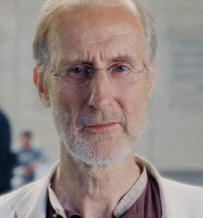
On the other hand, if reading articles written by Russ Resnik, Aaron Eby, and Toby Janicki can inspire this much of a response in me, imagine what they might inspire in you. Faith isn’t just about having the answers, it’s about knowing how to ask the right questions. Joe Friday wanted answers that were facts. Another fictional police officer was rewarded for how he asked questions.

Dr. Alfred Lanning: “Good to see you again, son.”

Detective Del Spooner: “Hello, doctor.”

Dr. Alfred Lanning: “Everything that follows is a result of what you see here.”

Detective Del Spooner: “Is there something you want to tell me?”

Dr. Alfred Lanning: “I’m sorry. My responses are limited. You must ask the right questions.”

Detective Del Spooner: “Why did you call me?”

Dr. Alfred Lanning: “I trust your judgement.”

Detective Del Spooner: “Normally, these circumstances wouldn’t require a homicide detective.”

Dr. Alfred Lanning: “But then our interactions have never been entirely normal. Wouldn’t you agree?”

Detective Del Spooner: “You got that right… Is there something you want to say to me?”

Dr. Alfred Lanning: “I’m sorry. My responses are limited. You must ask the right questions.”

Detective Del Spooner: “Why would you kill yourself?”

Dr. Alfred Lanning: “That, detective, is the right question. Program terminated.”

from I, Robot (2004)

Understanding God and the mystery He’s presented us with in the Bible is not just a matter of having the right answers, but of asking the right questions. These can be questions as startling as, “Why would you kill yourself?” We can’t afraid…I can’t be afraid to raise startling questions or to broach sensitive topics of discussion. As tiring as it can be to continually respond to my critics, I have to keep asking those questions.

The questions are bread crumbs. This is where they’re supposed to lead to someday.

Then the angel showed me the river of the water of life, bright as crystal, flowing from the throne of God and of the Lamb through the middle of the street of the city; also, on either side of the river, the tree of life with its twelve kinds of fruit, yielding its fruit each month. The leaves of the tree were for the healing of the nations. No longer will there be anything accursed, but the throne of God and of the Lamb will be in it, and his servants will worship him. They will see his face, and his name will be on their foreheads. And night will be no more. They will need no light of lamp or sun, for the Lord God will be their light, and they will reign forever and ever. –Revelation 22:1-5 (ESV)

Messiah Journal: Excerpt from “Origins of Supersessionism in the Church, Part 2”

Before I launch into the second part of my series on supersessionism in the church, I want to make a point of saying that I am not hanging the full weight of replacement theology of all Christian churches everywhere. I know, especially from my comments in Part 1, that it appears as if Christianity has much to answer for in its treatment of the Jews across history, but I haven’t forgotten that the church has also done an enormous amount of good in the world as the representatives of the Messiah for nearly 2,000 years. The specific scholars and theologians I’ve selected who represent supersessionism don’t represent all of Christianity. I’m not writing this series to drive a wedge between Christians and Jews (and since I’m a Christian, I have no motivation to do so), but to point out a legacy that we have inherited from our fathers and that we need to search out and continue to correct. To any Christian who feels I have treated them unfairly in my previous article, I apologize. Unfortunately, I have to point out some uncomfortable facts, so that we can recognize them for what they are. Once we’ve done that, we can move forward as disciples of the Master and stand side-by-side with our Jewish brothers in the faith before the throne of God.

-from the introduction to
“Origins of Supersessionism in the Church, Part 2”
by James Pyles
Messiah Journal, issue 110, pg 13

I sometimes “accuse” First Fruits of Zion (FFOZ) of “stealth marketing.” Issue 110 of Messiah Journal (MJ) was on display last week at FFOZ’s product table at the Shavuot conference I attended. Several other attendees told me they had already received the current issue in the mail before the conference. By the time I got home after the conference, my copy had arrived in the mail. But on FFOZ’s most recent issues web page for MJ, Issue 109 is listed as the current issue.

I love the people at FFOZ a lot but…Oy.

As you may recall, Part 1 of my Supersessionism series covered the historical origins of supersessionism from Biblical times to the present or at least the “near-past.” Part 2 covers the theological underpinnings of supersessionism in the church as it applies to three critical areas:

  1. Salvation
  2. Eschatology
  3. Religious Festivals

I know that there’s a lot more I could have written about, but when I was discussing how best to approach this part of the series with Boaz Michael, he suggested that these three areas were the most important. Also, I have a word count limit to observe, so I have to zero in on the most informative areas of each article’s main topic.

Salvation, relative to supersessionism, addresses the mechanism by which Jews must be saved. Christianity not only requires that a Jew come to faith in the Jewish Messiah, but that he or she completely give up any Jewish lifestyle or religious observance as a condition of that salvation.

Eschatology involves what most people think of as “the end times” (cue scary thunder and lightning noises, please). First of all, will Jews even be there and second of all, what will be their role? Who are the “144,000 sealed from every tribe of the sons of Israel?” (Revelation 7:4 ESV). Many Christians aren’t convinced they are literally members of the twelve tribes but some spiritual representation of Israel held by (Gentile) Christians.

Religious Festivals has to do with what Jews celebrate vs. what the church celebrates. Why was Easter created as a Christian observance and were Christians actually barred from any observance of Passover by the early church? Were all Jewish festivals considered invalid for Christians and how does that affect church celebrations today?

How conscious are these ideas in the church today? Do people actually think about the role (or lack thereof) of Jews in their relationship with God and in terms of these three topic areas, or are these wholly assumed and therefore beneath the lived Christian awareness?

To find out the answers to these questions and more, contact First Fruits of Zion and ask to purchase a copy of issue 110 of Messiah Journal.

Oh, and by the by, I’ll be reviewing other selected articles from this same issue, so you’ll get an inside glimpse of what writers such as Russ Resnik, Aaron Eby, and Toby Janicki have to say about a number of interesting and even critical subjects in the realm of Messianic Judaism.

Stay tuned.