Category Archives: Uncategorized

Review of “What About the New Covenant,” Part 4

Session Four: Better Promises

But Jesus has now obtained a more excellent ministry, and to that degree he is the mediator of a better covenant, which has been enacted through better promises.

Hebrews 8:6 (NRSV)

I have a feeling I’m going to encounter this material again when I listen to and review the relevant presentations in D. Thomas Lancaster’s Holy Epistle to the Hebrews sermon series. However, the Hebrews material has been folded into a different context, one contrasting and comparing the Old and New Covenants in First Fruits of Zion’s (FFOZ) latest teaching lectures What’s New About the New Covenant.

On disc four, Lancaster starts with a brief summary of the previous lectures. We learned that Old Covenant doesn’t mean Old Testament, and it doesn’t even mean the Torah. It is an agreement God made with Israel (and only Israel) at Sinai stating that He would be Israel’s God and they would be His people as long as they obeyed His commandments (the conditions recorded in the Torah), and should Israel disobey, God would punish them and exile them (but not forever reject them).

We also learned that the New Covenant doesn’t mean the New Testament and it doesn’t mean the Church. It also doesn’t mean “renewed” Covenant because it indeed is something new. The New Covenant is also an agreement made between God and the Houses of Judah and Israel (and only the Houses of Judah and Israel) and that, according to the writer of the Epistle to the Hebrews, the New Covenant is made of “better promises” and Jesus is the mediator of that New Covenant.

But what are the better promises and how can they be better if between the Old and New Covenants, God does not change even a single condition or requirement for Israel (the Torah mitzvot) but does change the hearts of all Jewish people, making it possible for them to correctly perform all of the mitzvot?

To answer that question, Lancaster takes us through a study of a few of the chapters in the book of Jeremiah. This is why I like reading large portions of the Bible in one setting. I can get the full message of God to Israel in its complete context rather than parsing bits and pieces and verses together artificially to form a picture that might not be correct.

Better Promises in the Messianic Future

The days are surely coming, says the Lord, when I will make a new covenant with the house of Israel and the house of Judah.

Jeremiah 31:31

“The days are surely coming” indicates the end of days, the final redemption, the future Messianic Era. For those Christians who believe that the New Covenant has already replaced the Old Covenant, this statement makes that particular doctrine impossible because the New Covenant hasn’t been enacted or completed yet. The death and resurrection of Jesus only got the ball rolling, so to speak. We’re still in the Old Covenant age. The Torah is still in effect as it always has been since Sinai.

Good News for Israel and Judah
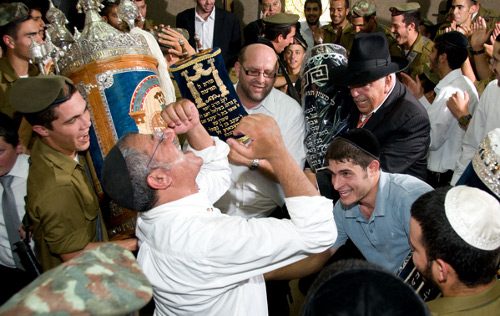
Simchat TorahNotice (and I’ve mentioned this before) that the addressees of the New Covenant are “the house of Israel and the house of Judah.” This is only with the house of Israel and the house of Judah. Period. It’s an exclusive relationship between God and the Jewish people, just as the Old Covenant defined an exclusive relationship between God and the Jewish people. The New Covenant (pay attention please, this is important) has nothing to do with the nations, with Gentiles, or with anything called “Christianity” or “the Church.” The New Covenant does not create a stand-alone covenant relationship between the Church and God. The only covenant that all the people of the earth can claim for their (our) very own is the Noahide Covenant (Genesis 9:1-17).

The Transformation of the Jewish Heart

It will not be like the covenant that I made with their ancestors when I took them by the hand to bring them out of the land of Egypt—a covenant that they broke, though I was their husband, says the Lord. But this is the covenant that I will make with the house of Israel after those days, says the Lord: I will put my law within them, and I will write it on their hearts; and I will be their God, and they shall be my people.

Jeremiah 32-33

The next “better promise” is that God will make it possible for the Jewish people to obey His righteous standards and not sin by writing those standards on the Jewish heart.

Husband and Wife

Lancaster says an oath the groom would recite at the wedding ceremony in the ancient near east was to declare, “I will be your husband and you will be my wife.” God declared “I will be a God to you and you will be a people to me,” but that was contingent upon Israel not disobeying God and worshiping idols. Idol worship was considered as adultery by God, a wife going astray with other lovers (gods). Under the Old Covenant, Israel went astray, but under the better promises of the New Covenant, since the Torah will be written on their hearts and not just on tablets and scrolls, Israel will never again “cheat” on God, so to speak, and will always remain faithful.

Intimate Knowledge of God

No longer shall they teach one another, or say to each other, “Know the Lord,” for they shall all know me, from the least of them to the greatest, says the Lord; for I will forgive their iniquity, and remember their sin no more.

Jeremiah 31:34

Master and disciplesUnder the Old Covenant, many times the people of Israel, including the Priests and Prophets knew about God, but they didn’t know Him in the sense of an intimate knowledge that led to obedience. This is often true of Jews and Christians today. It’s easy to study the Bible and learn about God but not so easy to live a life that is consistently, day-by-day, hour-by-hour pleasing to God. Under the New Covenant, there will be a universal revelation of God to the whole world. It will be natural for everyone to obey God.

I know I said the New Covenant is an agreement just between God and the Jewish people, and I, or rather Lancaster, will get to the issue of Gentiles by the by.

Forgiving All of Israel’s Sins Forever

So that you may not claim to be wiser than you are, brothers and sisters, I want you to understand this mystery: a hardening has come upon part of Israel, until the full number of the Gentiles has come in. And so all Israel will be saved; as it is written,

“Out of Zion will come the Deliverer; he will banish ungodliness from Jacob. And this is my covenant with them, when I take away their sins.”

Romans 11:25-27

Lancaster didn’t cite Paul or Romans 11 but I felt it an appropriate addition. Lately, I’ve been hearing some bad opinions about Paul and his so-called anti-Torah, anti-Judaism, and anti-Jewish people letters, and I thought this would be a good time to clear some of that up, since Paul is preaching to the Romans New Covenant doctrine that is highly favorable to the Jewish people and to Israel.

Jeremiah, according to Lancaster, is saying one of the “better promises” of the New Covenant mediated by Messiah, is that God will forget all of Israel’s sins which is what makes it possible for Paul to literally mean that “all Israel will be saved” rather than some tiny remnant who, according to the Church, must leave Judaism and convert and assimilate into (Gentile) Christianity. God doesn’t change the Torah. The Torah is unchangeable at its core. God does change the Jewish people so that they naturally will be faithful to God and God, for His part, will forgive all of Israel’s sins, from the Golden Calf forward throughout all of history and into the Messianic Age.

That’s very good news, a wonderful gospel for the Jews.

Israel Will Always Be a Nation Before God

Thus says the Lord,
who gives the sun for light by day
and the fixed order of the moon and the stars for light by night,
who stirs up the sea so that its waves roar—
the Lord of hosts is his name:
If this fixed order were ever to cease
from my presence, says the Lord,
then also the offspring of Israel would cease
to be a nation before me forever.
Thus says the Lord:
If the heavens above can be measured,
and the foundations of the earth below can be explored,
then I will reject all the offspring of Israel
because of all they have done,
says the Lord.

Jeremiah 31:35-37

Moon and StarsI suppose this could be two “better promises.” Israel will be a distinct nation and the Jewish people will be a distinct and identifiable people as long as there is a sun, a moon, stars, and a sea, which is to say, as long as the earth, our solar system, and the universe exists. It is also a promise that God will never reject Israel and the Jewish people and they will remain a people and a nation until the heavens can be measured and the foundations of the earth can be explored. These conditions, by the way, are rhetorical language meaning “always.” Israel will always be a nation before God and God will never reject the Jewish people. Ever.

This flies in the face of the various churches who still adhere to some form of Replacement Theology because for them, the New Covenant replaces the Old Covenant, and they interpret that to mean that God rejected Israel permanently because Israel rejected Jesus as Messiah. God then replaced Israel with the (Gentile) Church which accepted Jesus. Now, the only way God will accept a Jew is for the Jew to reject Judaism and convert to (Gentile) Christianity. However, examining the New Covenant language reveals that Replacement Theology is hopelessly unBiblical.

Jerusalem the Eternal City

The days are surely coming, says the Lord, when the city shall be rebuilt for the Lord from the tower of Hananel to the Corner Gate. And the measuring line shall go out farther, straight to the hill Gareb, and shall then turn to Goah. The whole valley of the dead bodies and the ashes, and all the fields as far as the Wadi Kidron, to the corner of the Horse Gate toward the east, shall be sacred to the Lord. It shall never again be uprooted or overthrown.

Jeremiah 31:38-39

Who can count the number of times Jerusalem has been conquered and destroyed? OK, probably someone has, but the point is that historically, whenever Israel sins, the Temple is destroyed and Jerusalem is left in ruins. This “better promise” for the Jewish people states that Jerusalem will be rebuilt and expanded and it will never again be destroyed because the Jewish people will never again sin against God or other people.

Some of the really exciting “better promises.”

Jeremiah 32:1-15 tells of God commanding Jeremiah to buy a field in Judah during Nebuchadrezzar’s siege against Jerusalem, a command Jeremiah couldn’t understand. It would have been crazy to do so, but God had something in mind: more “better promises.”

MessiahI don’t really want to reveal all of the better promises since if I do, you might not be as inclined to listen to the full lecture. In brief, the other promises include the regathering of the Jewish people to their Land, giving the Jewish people all one heart, and one way (in my opinion, “the Way”) so that there will be no division among Jews, that the New Covenant will be everlasting, that God will rejoice over doing good for Israel, that a “righteous branch” meaning the Messiah, will rise from the line of David. In addition to a return of the Davidic dynasty on the throne of Israel, the line of Aaron and the Levitical priests will return, which means there must be a Temple for them to offer sacrifices in.

God even says that He will only break His covenant with David and with Aaron if someone can break God’s covenant with day and night. More rhetorical language meaning “never.”

But there is something more about Lancaster’s sermon I do want to reveal since it contains a dire warning.

Those Who Say God Rejected Israel

The word of the Lord came to Jeremiah: Have you not observed how these people say, “The two families that the Lord chose have been rejected by him,” and how they hold my people in such contempt that they no longer regard them as a nation? Thus says the Lord: Only if I had not established my covenant with day and night and the ordinances of heaven and earth, would I reject the offspring of Jacob and of my servant David and not choose any of his descendants as rulers over the offspring of Abraham, Isaac, and Jacob. For I will restore their fortunes, and will have mercy upon them.

Jeremiah 33:23-26

ChurchHistorically, who has held Israel in contempt and said that God no longer regards the Jewish people as a nation? OK, just about everybody, but that “everybody” includes the Christian church. Even today, many churches continue to adhere to some form of Replacement or Fulfillment Theology, and any Christian who does espouse such a theology is who God, through Jeremiah, said “hold my people in such contempt” (emph. mine). Really, do you want to be on God’s “wrong side” by holding Israel in contempt, or even in the slightest degree, believe that God has rejected Israel and replaced her with the Church?

In addition to their being more “better promises” and “good news” for the Jewish people in these chapters of Jeremiah, Lancaster mentioned that there are still more better promises littered about the various books of the Prophets including Isaiah, Ezekiel, Amos, and Joel. That’s really a lot of better promises and good news for Jewish people.

But What About the Gentiles?

Then certain individuals came down from Judea and were teaching the brothers, “Unless you are circumcised according to the custom of Moses, you cannot be saved.”

But some believers who belonged to the sect of the Pharisees stood up and said, “It is necessary for them to be circumcised and ordered to keep the law of Moses.”

Acts 15:1, 5

Remember what I (citing Lancaster) said above about the New Covenant being made only with the House of Israel and the House of Judah? No mention of Gentiles at all. So do we even figure in? There’s a lot of language in the Apostolic Scriptures that says “yes” but we have to dig for it.

However, from the point of view of the various Jewish sects in the late second temple period, including believing Jews in “the Way,” recalling the New Covenant language, the only way they could see how Gentiles could be included in these “better promises” was to convert to Judaism.

In Acts 15:1-2 and 15:24, Now with what Satanically-inspired and dogmatic false teaching did these “certain men from Judaea” try to infect the church at Antioch, and why according to Galatians 2:4-5? (emph. mine)

That quote is from the study notes for the Sunday school class I attend when they were teaching on Acts 15 last September (here’s the link to the relevant blog post). What they couldn’t see was that the Jewish people asking these questions were not “Satanically-inspired” but rather, asking a legitimate question based on the Jeremiah 31 text.

Paul knew that the Gentiles didn’t have to convert to Judaism in order to be included in better promises (hence his letter to the Galatians), and Peter witnessed this first hand as recorded in Acts 10:44-48, but no formal decision had been rendered by the Council of Apostles and Elders defining Gentile legal identity within the Jewish community. Acts 15:6-29 records a summary of the legal hearing, including the testimony of various witnesses, and the conclusion and ruling of the Council that Gentiles could be granted honorary status within the commonwealth of Israel, grafted into the nation (see Romans 11:11-24), but only because of their association with Israel through faith in King Messiah.
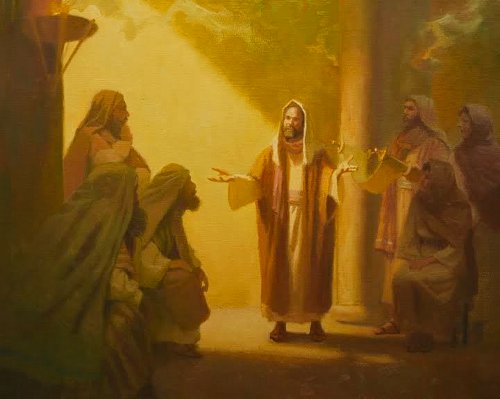
Apostle Paul preachingThat’s an incredibly vital point to get, because without the New Covenant “better promises” being applied exclusively to the House of Israel and the House of Judah, if God really did reject Israel and the Jewish people in perpetuity, then we Gentiles would have absolutely, positively no hope of salvation at all! Israel is central in God’s plan to redeem the people of all the nations of the earth.

When King Messiah returns, he will be King of Israel, King of the Jews, and he will conquer all of the other nations and be their King. He will annex all of the other countries and Israel will be at the head of the nations, and all of the other nations will be vassal servants to Israel. As citizens of these vassal nations, we too will be annexed subjects of Israel and her King. The good news for the Gentiles is if we swear allegiance to King Messiah now, even before his return, we become his subjects and the New Covenant blessings become ours.

No, we don’t become Jews because we are citizens of a nation annexed by Israel and not citizens of Israel itself. We are granted an honorary status in the commonwealth of Israel. We’re grafted in.

As I’ve mentioned about a million times elsewhere, we don’t come under “One Law” in terms of being commanded to wear tzitzit, lay tefillin, and such, but we do become people who are called by His Name, and partisans or freedom fighters, so to speak, who are defending our King and his people until he returns and ascends his throne in Jerusalem, much as Robin Hood and his Merry Men of legend fought against the tyranny of Prince John and protected the innocent until King Richard’s return.

And many peoples will come and say, “Come, let us go up to the mountain of the LORD, To the house of the God of Jacob; That He may teach us concerning His ways And that we may walk in His paths.” For the law will go forth from Zion And the word of the LORD from Jerusalem.

Isaiah 2:3

New CovenantIf you are not a Jew and if you call yourself a Christian or any other name that indicates an allegiance to the King of the Jews, to Jesus Christ, then this is your hope in the New Covenant through national Israel, the Messianic Kingdom, and through the Messianic King. The Master said, Salvation comes from the Jews,” (John 4:22) and according to Lancaster, he was talking about the New Covenant and everything that was presented in this lecture ”Better Promises.”

If you want to be part of those “better promises” then please carefully consider everything you’ve read here today. It really wouldn’t hurt and might do a great deal of good if you got a hold of the five-disc set of What’s New About the New Covenant and listened to all of the content, since it really applies to who we are as Christians and what God expects of us and of how we treat His people Israel. Our salvation comes from Israel and her firstborn son Yeshua of Nazareth, the Messiah, the King…not the other way around.


Sermon Review of the Holy Epistle to the Hebrews: The Book and the Sword

Hebrews 4:11-16 speaks of a fearsome sword that divides soul and spirit, joint and marrow, and reveals the inner intentions of the heart. Discover the edenic background to the double-edged sword of the book of Hebrews and the Way to the tree of life.

-D. Thomas Lancaster
Sermon Twelve: The Book and the Sword
Originally presented on April 6, 2013
from the Holy Epistle to the Hebrews sermon series

Let us therefore make every effort to enter that rest, so that no one may fall through such disobedience as theirs.

Indeed, the word of God is living and active, sharper than any two-edged sword, piercing until it divides soul from spirit, joints from marrow; it is able to judge the thoughts and intentions of the heart. And before him no creature is hidden, but all are naked and laid bare to the eyes of the one to whom we must render an account.

Since, then, we have a great high priest who has passed through the heavens, Jesus, the Son of God, let us hold fast to our confession. For we do not have a high priest who is unable to sympathize with our weaknesses, but we have one who in every respect has been tested as we are, yet without sin. Let us therefore approach the throne of grace with boldness, so that we may receive mercy and find grace to help in time of need.

Hebrews 4:11-16 (NRSV)

D. Thomas Lancaster started this week’s sermon by going over the sense of distance we sometimes (often?) perceive exists between us and God. I’ve experienced that distance more than once. I’ve attributed that distance to my own faults and failures. After all, what else could it be?

Lancaster went through the ancient, traditional approach that people took to “access” God. As I’ve always surmised, why should an infinite, omnipotent, God want or have to listen to one tiny mortal human being? Who do we think we are, anyway that God should be mindful of us?

So usually ancient man had to go to a god’s temple, bring an appropriate sacrifice, and allow the priest of the temple to offer the sacrifice on our behalf. They needed a priest.

I can already see where Lancaster is going and the expected Christian response that, as believers, we are now our own priests (1 Peter 2:5) and don’t need an intercessor. God removed the veil separating man from the most holy place (Matthew 27:51, Mark 15:38).

But let’s wait and see how far and in what direction Lancaster takes this sermon.

Lancaster says the requirement of a priest did not always exist. Adam and Eve walked with God in the garden, in Gan Eden, in paradise and there was nothing between them and Him.

But that didn’t last too long.

Then the Lord God said, “See, the man has become like one of us, knowing good and evil; and now, he might reach out his hand and take also from the tree of life, and eat, and live forever” — therefore the Lord God sent him forth from the garden of Eden, to till the ground from which he was taken. He drove out the man; and at the east of the garden of Eden he placed the cherubim, and a sword flaming and turning to guard the way to the tree of life.

Genesis 3:22-24 (NRSV)

Leaving EdenNo, the cherubim are not cute, little, baby-like angels. The keruvim are big, dangerous, fierce angelic beings with a flaming sword, no less, turning in each direction to bar the way to the tree of life.

And human beings walked out of Eden and have been in exile ever since, trying to find a way back, trying to return to paradise, and even we, who have put our faith and devotion in Messiah, are still separated from God, still in exile, still on the outside looking in, some of us more than others, it seems.

He slaughtered the ox and the ram as a sacrifice of well-being for the people. Aaron’s sons brought him the blood, which he dashed against all sides of the altar, and the fat of the ox and of the ram—the broad tail, the fat that covers the entrails, the two kidneys and the fat on them, and the appendage of the liver. They first laid the fat on the breasts, and the fat was turned into smoke on the altar; and the breasts and the right thigh Aaron raised as an elevation offering before the Lord, as Moses had commanded.

Aaron lifted his hands toward the people and blessed them; and he came down after sacrificing the sin offering, the burnt offering, and the offering of well-being. Moses and Aaron entered the tent of meeting, and then came out and blessed the people; and the glory of the Lord appeared to all the people. Fire came out from the Lord and consumed the burnt offering and the fat on the altar; and when all the people saw it, they shouted and fell on their faces.

Leviticus 9:18-24 (NRSV)

Lancaster showed us in the verses above, the inaugeration of the duty of the Levitical priesthood. So now only priests can enter into the presence of the Lord and only after making extensive preparations on their own behalf as well as on the behalf of those they represent.

Again, I know what you’re thinking, Christians. Hang on. The answer is coming.

burning-bushIs there a way back to Eden, a way back to the level of intimacy that Adam and Eve (or Chava, actually) enjoyed with Hashem? Is there a way past the keruvim and the flaming sword?

Lancaster took a look at the sword through the lens of rabbinic commentary, principally Genesis Rabbah, and came up with different opinions about the sword. Some say it is angels, and others flaming Gehenna. One Rabbi said circumcision. The final opinion is that the sword is Torah, for as it says:

Let the high praises of God be in their throats and two-edged swords in their hands, to execute vengeance on the nations and punishment on the peoples…

Psalm 149:6-7 (NRSV)

Lancaster then took his audience over some previous territory:

For if the message declared through angels was valid, and every transgression or disobedience received a just penalty…

Hebrews 2:2 (NRSV)

The word “message” in Greek is “logos” or “word” and is representative of the Torah, and it contains judgment for disobedience of transgressions, just as the sword was God’s response for disobedience at Eden.

The sword is logos, Torah, God’s standard, God’s instruction. How can we get past God’s judgment, past the sword, is there a way back to Eden?

Jesus said to him, “I am the way, and the truth, and the life. No one comes to the Father except through me.

John 14:6 (NRSV)

It’s no coincidence that the ancient name for the Jewish worship stream devoted to Yeshua (Jesus) was called “the Way.” Genesis 3:24 says the sword guarded the way to the tree of life” (emph. mine). Just like Israel in the days of the Tabernacle, in the days of the Temple, the writer of Hebrews is telling his Jewish readers that they need a priest to help them draw nearer to God, but even though they had priests to intercede and offer sacrifices in Herod’s temple, there was an even greater priest in an even greater, heavenly Temple, and only through him could they, can we approach any level of intimacy with God.

But this is no easy thing. One does not simply declare that they “believe in Jesus” and suddenly it’s alright and everything’s groovy. In Rabbinic interpretation, the Torah was given with a sword so that if Israel obeyed God, the Torah would save them from the sword, and if Israel did not obey God, the sword would mete out judgment, which as we see many times in the record of the Tanakh (Old Testament), that is exactly what happened.

Contemplate three things, and you will not come to the hands of transgression: Know what is above from you: a seeing eye, a listening ear, and all your deeds being inscribed in a book.

-Pirkei Avot 2:1

All of us like sheep have gone astray, Each of us has turned to his own way; But the LORD has caused the iniquity of us all To fall on Him.

Isaiah 53:6 (NASB)

There is none righteous, not even one…

Romans 3:10 (NASB)

lightEven the mere thought of entering into the presence of God should send us into fear and trembling, for who is without sin, and who has not disobeyed the most powerful, almighty, infinite God? It is a terrible thing to fall into the hands of the living God (Hebrews 10:31).

The sword, the Torah, is God’s standard of righteousness and it judges us. In and of ourselves, we cannot pass by the flaming sword and enter into God’s presence in paradise.

But there is some good news:

Since, then, we have a great high priest who has passed through the heavens, Jesus, the Son of God, let us hold fast to our confession. For we do not have a high priest who is unable to sympathize with our weaknesses, but we have one who in every respect has been tested as we are, yet without sin. Let us therefore approach the throne of grace with boldness, so that we may receive mercy and find grace to help in time of need.

Hebrews 4:14-16 (NRSV)

Once a year in the days of the Temple in Jerusalem, the High Priest would go through a special set purification rites and sacrifices for himself simply to prepare to enter into the Holy of Holies on the Day of Atonement, on Yom Kippur, to present the annual offerings to atone for the sins of the nation.

But he had to do this once a year, and he had to offer many sacrifices just to atone for his own sins first, so he could be in such a state of purity in order to be acceptable enough to enter into the Most Holy Place in the earthly Temple.

This was an effective system but it had limits. The writer of the Book of Hebrews says there is one even more righteous than the High Priest of the line of Aaron. This priest is without sin, a tzadik who is completely Holy unto God. It is he who is our hope, not of entering the earthly Temple (as it will one day exist again) to make offerings, but to enter past the keruvim, past the flaming sword, past the desperate hazard of God’s judgment and the threat of burning eternally in Gehinnom, so that we may rest in God’s mercy in paradise.

What Did I Learn?

I particularly appreciated the word play associated with “the way” as illustrated in Genesis 3:24 and John 14:6, and how that “way” allows us to return from the exile humanity experienced as a result of the failure at Eden. It puts me one step closer to understanding why we all need a “Savior,” and why prayer and repentance to Hashem is “not enough,” a question that has plagued me for quite some time.

But it also brings up a question or rather, it reminds me of an unanswered question I typically ignore except at times like these when I can’t avoid it.

For we do not have a high priest who is unable to sympathize with our weaknesses, but we have one who in every respect has been tested as we are, yet without sin.

Hebrews 4:15 (NRSV)

There seems to be a disconnect between this verse and the one that follows, and even between one part of this verse and another.

Yeshua (Jesus) lived a perfectly human and yet a perfectly sinless life for thirty some odd years. I probably can’t avoid an act of disobedience for thirty some odd minutes (or even thirty seconds, sometimes). So Jesus can sympathize with us when we are tempted and tested because he knows the difficulty and suffering of testing as well. Lancaster says it wasn’t just the three trials of the tempter he had to endure (Matthew 4:1-11), but living a human life, he endured human temptations.

So he can sympathize with me when I am tested in the manner of humans, just as he was tested in all human frailty…

…but he did not sin…ever.

unworthySo our high priest can sympathize with our trials, just like the Aaronic High Priests as human beings could sympathize, but an Aaronic High Priest could also sympathize with failure and having sinned because they weren’t perfect…they sinned.

Jesus never sinned, which is what qualifies him to enter into the Heavenly Holy of Holies on our behalf, but how can he possibly sympathize with human failure when he never failed?

Recently, Derek Leman wrote a very good piece on the meaning of grace that transcends the traditional Christian interpretation and adds a great deal of depth to God’s divine kindness and mercy and His undeserved gifts to human beings.

On that level, I can understand why Jesus the High Priest would intercede for us before the Father, and I can imagine that he might feel merciful and even experience pity for we pathetic human beings (I may not be apprehending Derek’s point as much as I need to here), but sympathy or rather empathy because our experience is his experience? I don’t think so. I can’t see how you can understand failure unless you’ve failed. Since Jesus never failed, how can he, or God the Father, the infinite and unknowable Ein Sof, possibly understand us? How can Jesus ever understand me when I fail?

Notes On the Church From an Insomniac

Old English cir(i)ce, cyr(i)ce, related to Dutch kerk and German Kirche, based on medieval Greek kurikon, from Greek kuriakon (dōma ) ‘Lord’s (house),’ from kurios ‘master or lord.’

I’ve always wondered how you get “church” out of “ekklesia” and in a bout of insomnia, I decided to find out. It’s not so much that I want to know about the usage of “church” as a building or even an organization, but as the entity that has, in some circles, replaced Israel as the focus of all His New Covenant prophesies and promises (see my five-part review series on D. Thomas Lancaster’s lectures, What About the New Covenant for more).

The definition above is what I first came up with in a Google search using the search string “origin of the word church”. Here’s more detail:

church (n.) Old English cirice, circe “church, public place of worship; Christians collectively,” from West Germanic *kirika (cognates: Old Saxon kirika, Old Norse kirkja, Old Frisian zerke, Middle Dutch kerke, Dutch kerk, Old High German kirihha, German Kirche), probably [see note in OED] from Greek kyriake (oikia), kyriakon doma “Lord’s (house),” from kyrios “ruler, lord,” from PIE root *keue- “to swell” (“swollen,” hence “strong, powerful”); see cumulus. Phonetic spelling from c.1200, established by 16c. For vowel evolution, see bury. As an adjective from 1570s.

Greek kyriakon (adj.) “of the Lord” was used of houses of Christian worship since c.300, especially in the East, though it was less common in this sense than ekklesia or basilike. An example of the direct Greek-to-Germanic progress of many Christian words, via the Goths; it probably was used by West Germanic people in their pre-Christian period.

Also picked up by Slavic, probably via Germanic (e.g. Old Church Slavonic criky, Russian cerkov). Finnish kirkko, Estonian kirrik are from Scandinavian. Romance and Celtic languages use variants of Latin ecclesia (e.g. French église, 11c.).

-from Online Etymology Dictionary

This resource has links that define the sources used to generate the information above so please click the link for more.

As you can see, it’s not as simple as saying that “church” equals “ekklesia” which is how it seems if you simply read your English-language Bibles.

Now what about “ekklesia” (alt. “ecclesia”)?

noun, plural ec·cle·si·ae [ih-klee-zhee-ee, -zee-ee] Show IPA .

1. an assembly, especially the popular assembly of ancient Athens.

2. a congregation; church.

Origin: 1570–80; < Latin < Greek ekklēsía assembly, equivalent to ékklēt ( os ) summoned ( ek- ec- + klē-, variant of kal-, stem of kaleîn to call, + -tos past participle suffix) + -ia -ia

The same source, dictionary.reference.com also provides the following:

— n , pl -siae
1. (in formal Church usage) a congregation
2. the assembly of citizens of an ancient Greek state

[C16: from Medieval Latin, from Late Greek ekklēsia assembly, from ekklētos called, from ekkalein to call out, from kalein to call]

churchAccording to biblehub.com, the “English word “church” comes from the Greek word kyriakos, “belonging to the Lord” (kyrios).” By comparison, “ekklēsía(from 1537 /ek, “out from and to” and 2564 /kaléō, “to call”) – properly, people called out from the world and to God, the outcome being the Church (the mystical body of Christ) – i.e. the universal (total) body of believers whom God calls out from the world and into His eternal kingdom.”

So as nearly I can figure, not being a linguist or etymologist, we can understand the word “ekklesia” as originally meaning (for the purposes of this brief study) an assembly of Greek citizens or more specifically, a popular assembly in the city of Athens. In its most generic sense, it was probably used to mean any assembly of people for a common purpose.

There’s also a sense, when used to describe an assembly of believers, as it’s used in the New Testament, that said-assembly is a group of people “called out”. This is probably (in the minds of the Jewish writers of the New Testament) related to the Hebrew word Shaliah, meaning “legal emissary” or “agent,” equivalent to the Greek word “apostolos” from which we get the English word “apostle”. It’s reminiscent of the use of the word Shaliach as employed by the Chabad to mean “a member of the Chabad Hasidic movement who is sent out to promulgate Judaism and Hasidism in locations around the world.”

That probably fits since historically and into modern times, one of the primary functions of the Christian Church as an institution is to send out members as missionaries or “sent out ones” to “promulgate Christianity in locations around the world.”

Called out ones, sent out ones. In either case, a population of individuals separated from the larger group for a common purpose. From a Christian standpoint, “the Church” is called out of the generic population of the nations for the purpose of being worshipers of Jesus Christ. An important secondary mission (Matthew 28:19-20) is to spread the gospel message of salvation to the world, creating more called out ones to join “the Church.”

Except, as you may have noticed above, the word “church” is more related to the Greek word “kyriakos,” so I’m not sure it’s reasonable to directly translate “ekklesia” as “church”.

But I haven’t written this in the middle of the night to be that picky. I’m just using it as background.

In studying Lancaster’s What’s New About the New Covenant lecture series, I started wondering, given the centrality of Israel in all the New Covenant language, how “the Church” managed to replace Israel or usurp her position in that Covenant. Actually, I’ve wondered this for a while and it keeps bothering me.

PaulI’ve learned in past conversations with Pastor Randy at the church I attend, that “the Church” was created in Acts 2 at Pentecost, was originally made up of mostly Jewish people, and was centralized around Jerusalem and the Temple. Subsequently, the Church began to spread and its locus of control was shifted to the assembly at Syrian Antioch (see Acts 11 starting at verse 19 and subsequent chapters) as more Gentiles were added. Paul returned to Antioch after his first two “missionary journeys” rather than Jerusalem, to give a report of his activities. He only returned to Jerusalem after his third journey (Acts 21) at the prompting of the Holy Spirit (Acts 20:22-23), not as a missionary going back to his “home church” to make a report, but for a larger and most likely eternal purpose.

From this perspective, as time goes on, starting during the lifetime of Paul, “the Church” becomes less and less Jewish and less and less of a Judaism, and increasingly describes a body of Jewish but mostly Gentile people focused on the worship of Jesus Christ, while divesting themselves of the various practices, perspectives, and even thoughts that previously associated it with a first century stream of Judaism (very similar to the viewpoint of John MacArthur on this topic).

Can you see why this bothers me? I’ve mentioned recently that if God really did reject Israel and replace her with “the Church” in all of the covenant prophesies and promises, then it would be like a man cutting off his own legs and expecting to run a marathon afterward.

It would be impossible.

All of the New Covenant language we see in Jeremiah 31 and Ezekiel 36 is focused on Israel as the object of God’s prophesies and promises, not another entity, and certainly not an entity that isn’t Israel and Judah (which “the Church” isn’t). It’s as if traditional Christian thought on the New Covenant starts in the Gospels and particularly the Epistles, and then works its way backward into the “Old Testament,” proceeding to engage in some significant theological and eisegetical gymnastics to rework the words of the Prophets in order (some how) to make them fit the way institutional Christianity chooses to interpret Paul.

I’ve also mentioned recently how at least some of what Paul wrote is all too easily interpreted as anti-Torah, anti-Judaism, and anti-Jewish people, making Paul a big problem for understanding the New Covenant as it’s described in the Prophets, and giving “the Church” the (apparent) leverage it needs to reinterpret the New Covenant in a Gentile-focused manner that diminishes Israel and the Jewish people in favor of Goyim Christianity. At this point, if the Jews weren’t kicked out of the Church (unless they converted to Christianity and gave up Judaism and being Jewish people), they would have walked out, since the “no Jews allowed” sign had been raised. The Church isn’t a Jewish place, it’s a Gentile place.

“The older I get, the more I realize how different it is to be a Jew in a Jewish place as opposed to a Jew in a non-Jewish place. It’s definitely a different feeling in terms of how freely you can be yourself and celebrate your culture and religion.”

-Natalie Portman

Etymology is defined as “the study of the origin of words and the way in which their meanings have changed throughout history.” As we’ve seen above, the etymology of the word “Church” isn’t as straightforward as the casual users of that word might believe. In fact, “Church” is more related to a completely different Greek word, but most people don’t know that.

JudaismI suggest that the way most Christians understand the word “Church” today isn’t how the original apostles and disciples of the Master understood “ekklesia” or meant for anyone to understand it. The “ekklesia” were the called out body of Messiah, but did not call out Jews from Judaism. If the New Covenant prophesies mean anything at all, then primarily, it was the non-Jewish peoples who were “called out” of paganism in order to be grafted in to the commonwealth of Israel to benefit from the blessings of the New Covenant through their Abrahamic faith in Messiah, Son of David. The Jewish disciples may have been called out of other Jewish streams and into the Judaism of “the Way,” but if they had been called out of Judaism as modern Christians believe, then they (and we) would have exited the New Covenant altogether.

But just as we see how the word or words that eventually became “church” in English went through many changes throughout history, the meaning, purpose, and composition of the body of believers has also “morphed” a great deal over time. I doubt Paul would recognize a modern group of Christians in a Sunday worship service because of the result of nearly two-thousand years of evolutionary changes.

I wish I could do this wee study more justice, but it would take more study and time than I have right now. I fell asleep exhausted several hours ago, woke up way too late (or too early) and now I can’t sleep at all. For some reason, I keep thinking of “the Church” in general and the little local church I attend in specific.

I emailed one of the associate Pastors earlier today in relation to the church’s website, and one of the things he asked in response was, “How are you doing in your walk?”

Given how unusual I am in relation to just about everyone else in church, I didn’t know how to respond. I feel “fine” in my “walk,” but I don’t know if that’s how I’d appear from his point of view.

I suppose I should try to get some more sleep. Morning will come all too soon and I’ll regret it if I go to work with my brain in a fog. Maybe I’ll write a “part two” to this when I get more time and can do more research. I don’t really feel like I’ve said what I wanted to say, except that I wanted to say that what the Church has become today, not as a building or even an institution, but as an entity or even a concept, seems to have changed a great deal from the hopes and dreams of the apostles and from the spirit of what was intended in the New Covenant, a covenant non-Jewish people can only partake of through Israel and her firstborn son, Messiah, Son of David…the person we call Jesus Christ.

Read Part 2: When Is Church Not Church?

Review of “What About the New Covenant,” Part 3

Session Three: The Inner Torah

Lancaster began this lecture by recalling a time when he was teaching a Torah class at a large, Charismatic church. One of his students really loved the class and decided to bring her husband. The husband was less enthusiastic and told Lancaster after the lesson was over, “This sounds like the oldness of the letter, not the newness of the spirit.”

It’s the contrast between these two ideas and the traditional Christian misinterpretation of these concepts, that Lancaster presents through out this forty-three minute sermon.

Lancaster followed up with a fictional story about him running a stop sign while driving and being pulled over by a police officer. In this made up scenario, Lancaster told the officer, I know the letter of the law said “stop” but as long as I didn’t hit anyone or cause an accident, I obeyed the spirit of the law.

In real life, that wouldn’t work out very well.

Let’s take another example from the lecture.

When you build a new house, you shall make a parapet for your roof; otherwise you might have bloodguilt on your house, if anyone should fall from it.

Deuteronomy 22:8 (NRSV)

This is included as one of the 613 mitzvot or commandments in Judaism. The letter of the law is that, assuming you have a flat roof on your house where people can stand, you shall build a barrier around the roof to keep people from falling off. The spirit of the law, that is the intent, and in this case, it’s God’s intent, is that you should locate and remediate any dangerous hazard on your property.

The spirit of the law doesn’t abrogate or somehow cancel the letter, the spirit is simply the intent behind the actual law.

But in Christianity, the letter of the law and the spirit of the law are placed in direct opposition to one another. The letter usually means the Torah or the “Old Covenant” conditions, while the spirit usually means the grace of Christ or the New Covenant. The spirit is an easier law, one people are more capable of obeying than the letter.

However, Christians are somewhat justified in their assumption which they get from Paul:

But now we are discharged from the law, dead to that which held us captive, so that we are slaves not under the old written code but in the new life of the Spirit.

Romans 7:6 (NRSV)

Not that we are competent of ourselves to claim anything as coming from us; our competence is from God, who has made us competent to be ministers of a new covenant, not of letter but of spirit; for the letter kills, but the Spirit gives life.

2 Corinthians 3:5-6 (NRSV)

I can see why some people want to get rid of Paul, especially when many of us are trying to interpret Paul as pro-Torah, not anti-Law.

But what did Paul mean? The peshat or plain meaning of Paul’s words seems to indicate that he is contrasting the law with the spirit, the Torah with Jesus. Is this the way we should read Paul? Is there another “plain” and more accurate way to understand what he’s saying?

That requires a little background, perhaps the very background possessed by his original audience.

According to Jeremiah 31:34, we know the New Covenant language declares that in the future, Messianic Era, there will be a universal revelation of God. Everyone will know God. We will have an apprehension of God that will be greater than that of John the Baptist, all of Israel will be saved, because the Torah will be written on the hearts of Judah and Israel.

Hear, O Israel: The Lord is our God, the Lord alone. You shall love the Lord your God with all your heart, and with all your soul, and with all your might. Keep these words that I am commanding you today in your heart.

Deuteronomy 6:4-6 (emph. mine)

ShemaHey, wait! That’s the Shema. That was given way back in the days of the ancient Israelites. But the Torah of God isn’t written on our hearts yet. What gives?

I’ll get to that.

We know that God will give Israel a new spirit and new heart, and God will put the new spirit into the hearts of the Jewish people (Ezekiel 36:26-27) so it will be possible for people, Israel and the people of the nations who join them through faith in Messiah, to obey God, not just the list of mitzvot, but the intent behind them, not out of fear or obligation, but because we want to and fully understand why we should do good. I know Gentiles are included because God’s Spirit will be poured out on all flesh (Joel 2:28-29) and that our evil natures will be bound and unable to sway us (Revelation 20:1-2).

But we aren’t there yet, are we? That’s what Lancaster said in session two. So what do we have?

Now He who prepared us for this very purpose is God, who gave to us the Spirit as a pledge.

2 Corinthians 5:5 (NRSV)

So God gave believers His Holy Spirit as a pledge or down payment. Against what? According to Lancaster, against the promise of the coming Messianic Age which was inaugurated and started beginning to arrive with the death and resurrection of Jesus, but will not fully arrive until the return of Messiah.

Until then, we know what we want and what we should do (such as stopping at a stop sign) but we don’t always do what we know is right because of our human nature or what is called in Judaism the evil inclination.

For we know that the Law is spiritual, but I am of flesh, sold into bondage to sin. For what I am doing, I do not understand; for I am not practicing what I would like to do, but I am doing the very thing I hate. But if I do the very thing I do not want to do, I agree with the Law, confessing that the Law is good. So now, no longer am I the one doing it, but sin which dwells in me. For I know that nothing good dwells in me, that is, in my flesh; for the willing is present in me, but the doing of the good is not. For the good that I want, I do not do, but I practice the very evil that I do not want. But if I am doing the very thing I do not want, I am no longer the one doing it, but sin which dwells in me.

Romans 7:14-20 (NRSV)

My brilliant light of selfA person who has received the “down payment” of the Spirit knows what is right and what pleases God. God has just started writing the Torah on that person’s heart. But they still possess their will to be disobedient, and so two natures war within the person, and they always will be until the resurrection. We can live in the flesh, that is, in our human nature, but then we don’t even desire to please God. We can live by the letter of the law, attempting to please God, but only with our human strength. Or we can live in the spirit, desiring to please God and relying on the Spirit of God to help us obey him, even though we know we will continually be in a battle with our human nature.

This isn’t a battle between the Torah and grace, but between the Holy Spirit within us and our human nature.

To some degree, this makes it seem as if we’re off the hook, since being evil, even possessing the Spirit, the best we can do is try to do good but continue to sin.

Lancaster says Paul doesn’t make it that easy.

So then, brethren, we are under obligation, not to the flesh, to live according to the flesh — for if you are living according to the flesh, you must die; but if by the Spirit you are putting to death the deeds of the body, you will live.

Romans 8:12-13 (NRSV)

Once we receive the Spirit, God expects us to live as if the Messianic Age has already fully arrived, not to just blow off God’s desires.

What then? Shall we sin because we are not under law but under grace? May it never be!

Romans 6:15 (NRSV)

By the way, that “law” Paul mentions is not the Torah. You’ll have listen to the entire recording of the lecture to get the full argument, but the “law of sin and death” (Romans 8:2) means the wages or consequences of sin is death (Romans 6:23). If we give in to the temptation to sin and don’t even resist the evil inclination within us, then the result is death. We must keep fighting, the old man against the new man, wrestling like Jacob and Esau in their mother’s womb (Hosea 12:3).

I’m reminded of the sermon and subsequent Sunday School lesson I heard last week in church. The message was on the perseverance of Paul in the face of almost certain death.

But I do not consider my life of any account as dear to myself, so that I may finish my course and the ministry which I received from the Lord Jesus, to testify solemnly of the gospel of the grace of God.

Acts 20:24 (NRSV)

PaulWe know, based on what Paul said in Romans, that he continued to struggle with his human nature and disobeyed God, but we also know that he “fought the good fight…finished the race…kept the faith” (2 Timothy 4:7), remaining obedient and faithful to God and his mission to the Gentiles, never teaching against the Torah or against the Jewish people (Acts 28:17-20).

So it’s possible in this life with the current troubles we face (and how many of us have ever had the struggles Paul had to deal with?) to obey God and to commit our lives to our Master, with the old nature and new creation within each of us struggling “like two immortals locked in an epic battle until Judgment Day and trumpets sound” (quoting from this movie) at the return of the King.

I wouldn’t be giving a complete review of “The Inner Torah” unless I talked some about the Rabbinic perspective on the Messiah and the Messianic Age. Lancaster says that according to the Sages (he didn’t provide a specific reference), Messiah will teach the Torah, correcting all of the misinterpretations, and he will even bring a new Torah, the Torah of Messiah. This is somewhat misleading since the Torah of Messiah is the Torah of Moses, but…

…it’s thought that there is a perfect, heavenly Torah, which is God’s wisdom, will, and intent. To make it accessible to people, the Torah was “clothed,” so to speak, so that it could take on physical properties and be given to our world. That is the Torah we have as represented by scrolls in arks in synagogues and by books of the Bible we carry with us. But you can only include so much of Heaven in an object meant to exist on Earth. Messiah will be able to “unlock” the greater mysteries of the Torah, the heavenly essence, so to speak, and teach that Torah. It’s still the same Torah, but it contains so much more than we can currently perceive.

This is the inner Torah, the same Torah that was given at Sinai, but fully “unclothed” and fully written within us, so that we will not only know all good and everything that pleases God, but we will have a total desire to do all that is good and we will understand why each thing God wills is good and perfect, because it will be written within our natures. There will be no more fighting inside of us. The old creation is dead and the new creation lives on victorious (2 Corinthians 5:17).

The messianic age will be characterized by the peaceful co-existence of all people (Isaiah 2,4). Hatred, intolerance, and war will cease to exist. Some authorities suggest that the laws of nature will change, so that predatory beasts will no longer seek prey and agriculture will bring forth supernatural abundance (Isaiah 11,6-9); others like Maimonides, however, say that these statements are merely an allegory for peace and prosperity. What is agreed on by all is a very optimistic picture of what real people can be like in this real world, the like of which has never been seen before.

All of the Jewish people will return from their exile among the nations to their home in Israel (Isaiah 11,11-12; Jeremiah 23,8; 30,3; Hosea 3,4-5), and the law of the Jubilee as well as the rest of the special agricultural laws in the Torah will be reinstated.

In the messianic age, the whole world will recognize YHWH, the LORD God of Israel, as the only true God, and the Torah will be seen as the only true religion (Isaiah 2,3; 11,10; Micah 4,2-3; Zechariah 14,9). There will be no more murder, robbery, competition, or jealousy.

-Mashiach: The Messiah
mechon-mamre.org

heart in the sandNear the end of the lecture, Lancaster briefly mentioned that the Torah written on our hearts doesn’t mean that Gentiles become Jews or that Gentiles and Jews all wear tzitzit, lay tefillin, and wear payot. How the Torah is applied varies between Jews and Gentiles. I want to add that people struggle hard enough with our human natures and our sins. It’s not like wearing a tallit will cancel being stingy, or repeatedly losing our temper, or other sins of which we’re guilty.

As Lancaster interprets Paul and presents in his lecture, we may still struggle between righteousness and sin, but we are also responsible for continuing the fight. Paul kept the faith all his life and he’d have lived a longer life if he wasn’t obedient to God. But the Master taught, “Those who find their life will lose it, and those who lose their life for my sake will find it.” The New Covenant is only beginning. We are still at war within ourselves. But as we battle, the finger of God slowly is writing His Torah on our hearts and the King is coming. We must continue in his will and grace, be obedient, and prove ourselves as worthy servants until his return.

Addendum: I just read a commentary on New Testament scholar Larry Hurtado’s blog on N.T. Wright’s new book (tome) Paul and the Faithfulness of God. This is the last of a series of reviews Hurtado has written, and I found the following quote appropriate to the current discussion:

We do have Wright emphasizing correctly that for Paul God’s eschatological programme had already begun in Jesus, especially in Jesus’ death and resurrection. So, to use terms familiar in the history of NT scholarship, Paul held an “inaugurated eschatology,” the final events already underway, the programme to be consummated at Jesus’ parousia (return). (I still like Oscar Cullmann’s analogy: For Paul, Jesus’ death and resurrection was D-Day, and his parousia V-Day, and Paul thinks he is living in the exciting time between these two events: Christ and Time, pp. 144-74, esp 145. )

Also, Wright links (again correctly) the Spirit with eschatology, and so the presence and experience of the Spirit in early Christian circles was for Paul evidence of the new age underway, the Spirit raising new possibilities, new energies for obedience to God, even among former pagans.

For the full content of Hurtado’s commentary, please read Paul’s Eschatology: Further Comments on Wright’s New Opus.

Mission to the Church

Question:

I read on Aish.com that “Every Jew is equally important to our mission.” Pardon my question, but exactly what is our mission?

The Aish Rabbi Replies:

No need to apologize. The only bad question is one that remains unasked.

Rabbi Noah Weinberg zt”l wrote an article for Israel’s 50th anniversary, which was published in Azure magazine. There he writes:

“Tikkun Olam” is the basis of what drives the Jewish people to greatness. It all started back with Abraham. His business was to go out and teach what it means to be “created in the image of God.” He demonstrated how a human being has to take responsibility for the world. Abraham’s undertaking was the first progressive, liberal movement the world had ever seen. And look how it succeeded!

Tikkun Olam is the Jewish legacy. In looking back at the first 3,000 years of Jewish history, we don’t recall the names of any great entertainers or athletes or corporate executives. We recall the great teachers of the Jewish message: Moses, King David, Maimonides, the Vilna Gaon. That is the essential Jewish legacy. The message was engrained in our souls at Mount Sinai and it is the single defining characteristic of our people.

Torah methodology is universal – for Jews and non-Jews, religious and secular, Israel and the diaspora, left and right. The Torah is alive and relevant for today. And for the Jewish people, the ability to effectively communicate this message is our single most important undertaking.

I hope this helps answer your question. Though this raises a whole new question: What are you going to do about it?!

-from “Jewish Mission”
Aish.com

We don’t often think of Jews as “missionaries.” In fact, except for arguably the Chabad, religious Judaism doesn’t really practice anything we’d call “outreach. And yet we see in the above-quoted text that the Aish Rabbi, referencing Rabbi Noah Weinberg, not only believes that the “Torah methodology is universal – for Jews and non-Jews,” but that the “Torah is alive and relevant for today,” and like Abraham, it should be used to teach everyone that we were all “created in the image of God” as a responsibility the Jewish people have to the entire world.

About a year ago, Rabbi David Rudolph delivered a sermon to his congregation Tikvat Israel called Our Mission in which he outlined the specific mission for his synagogue to reach out to the larger Jewish community in Richmond, Virginia.

Others objected after listening to the recorded sermon, stating that R. Rudolph was being exclusionary and that the mission of any Messianic Jewish group should be equally to Jews and Gentiles. Interestingly enough, I find R. Rudolph’s approach to be quite Pauline in nature (Acts 3:26, 19:8-10, Romans 1:16, 2:9). Rudolph’s complementary sermon is called ”We Need Each Other” (find it by going to Sermons and then scroll down and look under the “Unity” category) illustrating that Jewish and Gentile disciples in Messiah need really do need each other.

I chronicled all of this in two blog posts: Twoness and Oneness: From the Sermons of David Rudolph and Oneness, Twoness, and Three Converts. In a sense, this mirrors the larger normative Judaisms of our day in that the mission of religious Judaism is to bring secular Jews back to the Torah and to reach out to the people of the nations of the world, teaching them (us) the lessons of ethical monotheism and our responsibilities to the world as beings created in God’s image.

new heartI’ve been thinking of my own “mission” (so-called) to the Christian Church to share the “good news” of the Messiah, that all of Israel will be saved (Romans 11:26), that the Gentiles who are called by His Name (Amos 9:11-12) will come alongside Israel to raise the fallen tent of David, that the Temple will be called a house of prayer for all people (Isaiah 56:7), but only if we will take hold of the tzitzit of a Jewish man (Zechariah 8:23) who I believe is a very specific Jewish man, Messiah, Son of David, whom the Church calls Jesus Christ.

It hasn’t gone so well and frankly, I’m concerned that any sort of effectiveness I may have once experienced is rapidly waning. I guess good news for the Jewish people doesn’t sound so good to Christians who are used to sitting in the Catbird seat, so to speak.

I recently read an objection to the Noahide laws that religious Judaism applies to the rest of the world as the minimum standards by which the nations are expected to live. I also recall a story Pastor Randy told me about his time in Israel. He noticed a Jewish man would sit just outside a Christian church or seminary (I can’t remember which one) and after engaging the man in conversation, Pastor realized this man was trying to live out his “mission” to be a light to the nations. I think my friend Gene Shlomovich is trying to do the same thing and for pretty much the same reason. From their point of view, the Noahide laws are incumbent for all of humanity, Jew and Gentile alike. And if we are to take the Aish Rabbi at his word, Torah, in some manner or fashion is also applicable on all of humanity, not just the Jewish people.

But it depends on what you call Torah or instruction, and it depends on how you want to apply the specifics of all those instructions on the Jewish people vs. the rest of the world.

Actually, as far as people go, the Noahide laws aren’t a bad place to start. They are expressed as a list of (mostly) “negative commandments,” that is, a list of “don’t” but could easily be rephrased to be the opposite. Here’s how they’re listed at AskNoah.org:

  1. Do Not Worship a False Deity
  2. Do Not Commit Blasphemy
  3. Do Not Commit Murder or Injury
  4. Do Not Have Forbidden Sexual Relations
  5. Do Not Commit Theft
  6. Do Not Eat Meat Taken from a Live Animal
  7. Establish Laws and Courts of Justice

That actually doesn’t sound bad at all. Click the link I provided just above this list to read all of the explanatory text accompanying those commandments and you’ll see there’s more to them than meets the eye (the origin of the Noahide laws can be found in Genesis 9).

Here’s the list again, reworked to a list of positive commandments:

  1. Worship the One, true God and obey Him only.
  2. Sanctify the Name of God and bless Him.
  3. Preserve and sanctify human life.
  4. Cleave to and honor your spouse, forsaking all others.
  5. Only that which is yours may you use and consume.
  6. Treat the lesser beasts with compassion, committing no cruelty to them.
  7. Establish just laws and courts in judging your fellows because your God is lawful and just in judging mankind.

wrapping paperBefore complaining that you don’t have enough of God’s laws to obey, check and make sure you’re meeting even the minimum standard I’ve just listed here.

If you’ve been paying attention, you should have noticed that each of these laws is quite Biblical and expresses the desires and will of God. They read like a condensation of the laws of the Torah and each of these laws can be unpackaged to produce a lot of detail.

For instance, it would be difficult for a single individual to establish an entire court system for his or her nation, but we can take that commandment to also mean that we should treat other people in a just manner. In fact, part of the prayer Jesus taught his disciples (Matthew 6:9-13, Luke 11:2-4) includes the phrase “forgive us our debts as we also have forgiven our debtors,” implying (or outright saying) that God will forgive our transgressions in the same manner as we forgive those who have sinned against us. It is a terrible thing to fall into the hands of the living God (Hebrews 10:31).

If this is a large part of the mission of the Jewish people to the rest of the world, it’s not so bad at all. In fact, you can see the Noahide laws as the place where Jesus was starting with the non-Jewish people, principally through Paul but ultimately through all of the apostles, and then trying to elevate us, first with the four Acts 15 particulars, and then ultimately in defining how the Torah of Moses is applied to Gentile believers.

God entrusted Noah with a basic set of laws that were to be applied to all humanity. This was in the days before Abraham, and thus mankind knew or should have known what God expected of them…of us. Then, through Abraham, Isaac, and Jacob, and through Jacob’s children, the twelve tribes, the Israelites, the Jewish people, were entrusted to be a light to the nations (Isaiah 49:6).

See, just as the Lord my God has charged me, I now teach you statutes and ordinances for you to observe in the land that you are about to enter and occupy. You must observe them diligently, for this will show your wisdom and discernment to the peoples, who, when they hear all these statutes, will say, “Surely this great nation is a wise and discerning people!” For what other great nation has a god so near to it as the Lord our God is whenever we call to him? And what other great nation has statutes and ordinances as just as this entire law that I am setting before you today?

Deuteronomy 4:7-8 (NRSV)

lightAs you can see, Israel was to be a light to the nations from the very beginning. It is true that Israel has had great difficulty in fulfilling that mission. The Tanakh (Old Testament) is a litany of blessings and curses God has heaped upon Israel for cycle after cycle of obedience and disobedience. And yet as we’ve seen from D. Thomas Lancaster’s New Covenant lecture series, the intent of the New Covenant was not to change the Law and how it was applied, it was and is intended to change people so that we will be able to obey the law God has given us as applied to Jews and to the Gentiles called by His Name.

Jesus was the ultimate example of Israel’s “light to the world”:

Again Jesus spoke to them, saying, “I am the light of the world. Whoever follows me will never walk in darkness but will have the light of life.”

John 8:12 (NRSV)

And he transmitted or rather, reaffirmed Israel’s mission to be a light to the world to his Jewish disciples:

“You are the light of the world. A city built on a hill cannot be hid. No one after lighting a lamp puts it under the bushel basket, but on the lampstand, and it gives light to all in the house. In the same way, let your light shine before others, so that they may see your good works and give glory to your Father in heaven.”

Matthew 5:14-16 (NRSV)

And that light was to be shown to everyone by the Jewish disciples:

And Jesus came and said to them, “All authority in heaven and on earth has been given to me. Go therefore and make disciples of all nations, baptizing them in the name of the Father and of the Son and of the Holy Spirit, and teaching them to obey everything that I have commanded you. And remember, I am with you always, to the end of the age.”

Matthew 28:18-20 (NRSV)

The Master selected Paul as a special emissary to take this “good news” to the Gentiles as well as to Israel:

But the Lord said to him, “Go, for he is an instrument whom I have chosen to bring my name before Gentiles and kings and before the people of Israel…”

Acts 9:15

And it was first revealed to Peter that even the Gentiles could receive the Holy Spirit and be saved:

While Peter was still speaking, the Holy Spirit fell upon all who heard the word. The circumcised believers who had come with Peter were astounded that the gift of the Holy Spirit had been poured out even on the Gentiles, for they heard them speaking in tongues and extolling God. Then Peter said,“Can anyone withhold the water for baptizing these people who have received the Holy Spirit just as we have?” So he ordered them to be baptized in the name of Jesus Christ. Then they invited him to stay for several days.

Acts 10:44-48 (NRSV)

Unfortunately, the actual “good news” of the New Covenant blessings to the Gentiles has become rather warped in its meaning and in many cases, that it is good news to the Jew first has become forgotten, even though it is plain in the Biblical text (Romans 1:16 for example).

Spirit, Torah, and Good NewsThe Jewish mission is to repair the world (Tikkun Olam) by returning the secular Jew to the Torah and to be a light to the nations, informing us of the good news of God. From a Messianic Jewish perspective (a viewpoint I have adopted), the perfect example of the “world repairer” is Messiah Yeshua (Christ Jesus). He assigned his disciples to be a light to the Jewish people and to the nations, and particularly Paul was to both return the Jewish people to a more specific observance of Torah (this was illustrated in articles written by Derek Leman and David Matthews at AncientBible.net) and to illuminate the Gentiles in the diaspora with the light of Messiah.

But while the Christian Church has done much good in the world (and sadly in its history, also great evil), it is currently suffering from mission drift and is in desperate need of what you might call a Messianic Reformation. I think that was Boaz Michael’s intent in writing Tent of David and subsequently traveling back and forth across America giving Tent Builders seminars.

And so it is now up to we Messianic Gentiles inhabiting our churches to carry that light back into the Christian community. But history teaches that we won’t always be successful and that some will reject our offer of good news, substituting what they already believe they have for what Jesus intended apostles like Paul to teach. We know from Paul’s own history that he received “mixed reviews” and that while some eagerly accepted the gospel of Messiah, others vehemently rejected it.

And so it is with us. All we can do…all I can do, is to be a voice in the wilderness, a small ship on a vast and turbulent sea, crying out, raising my sails, hoping someone will have ears to hear and eyes to see, and for those who do, it is wonderful. For those who don’t, may God send another emissary who may gain better “traction,” and if He chooses not to (for did he send someone after Paul to all those who rejected Paul?), then may he forgive me for my failure and may he forgive all of us who do not or have not listened, as the Master taught, “forgive them; for they do not know what they are doing.”

Not all Christians are going to help raise the tent of David. Sometimes, they’ll let it fall.

Addendum: since writing and publishing this blog post, I revisited something I wrote almost a year ago called Conquering Wrong with Right. It was not so much a record of my own dissonance with normative Christianity but the Church as seen through the eyes of a millennial blogger; a young woman who doesn’t want to give up on the Church but who doesn’t see Christians living up to the ideal of Christ. I thought it was a fit addition to the current message.

The Battle Between Easter and Passover

Passover and Easter are fast approaching, and I am still immersed in speaking and traveling in support of my book, Being Both. So I am reposting some essays from the archives. This one dates from the spring of 2010. Enjoy!

-Susan Katz Miller
“Passover: Three Generations of Interfaith Family”
On Being Both

The “collision” of Easter and Passover is hitting me particularly hard this year. Last year I “celebrated” both. I put that word in quotes because I had the traditional Passover seder in my home as I do every year, but for the first time in over a decade, I went to the “Resurrection Sunday” (they don’t call it “Easter”) service at the church I currently attend.

I remember that Sunday morning as I was leaving for services. It was too late to do anything about it and since I’d been going to church for months, I didn’t think my wife would mind. But as I was getting up to leave, the hurt I saw in her eyes was almost tangible. It was too late to stop and as I drove away from our house, I realized that this was probably the worst thing I could have done…attend an Easter service while being married to a Jew.

In the history of the Church how many passion plays were immediately followed by a pogrom?

I remember quite some number of years ago attending Shabbat services at our local Conservative/Reform synagogue. Everyone was talking about the Mel Gibson film The Passion of the Christ (2004) which had just been released. All of the Jewish people in the room were absolutely terrified.

In the history of the Church how many passion plays were immediately followed by a pogrom?

I’ve never seen “Passion” and I never will. I realize Evangelical Christians won’t understand my reasoning, but I know the film would just make me angry and I know bringing the DVD into my home would be insulting to my Jewish family.

Passover this year begins the evening of Monday, April 14th and concludes the evening of Tuesday, April 22nd. Easter Sunday is on April 20th. I’ve never really connected to Palm Sunday or Good Friday, so I’m pretty detached from the whole sequence of Easter related events. And yet, especially this year, Easter and Passover seem heavily intertwined.

This coming Sunday, the church service will be quite different from normal. Not only will Pastor be speaking about Passover, but the entire service will be geared around Pesach. No, I don’t mean they will be conducting a seder, but there will be “Passover related” music such as “My Passover Things,” “The Ballad of the Four Sons,” and “Don’t Sit on the Afikomen.” The program does include a couple of more traditional pieces of music such as “Dayeinu” and Hallel,” but when I first saw this in the church bulletin last week, I wasn’t sure if I wanted to attend or not. Also, and this is the heavy punctuation to the event, they will also be conducting a communion service. I don’t begin to know how to wrap my brain around a matzah-communion wafer mashup.

Normally, communion is only offered in the evening service at this church, perhaps as an inducement to get people to attend both morning and evening services. I haven’t taken an actual communion since first coming to faith as a Christian. I’ve always practiced ”Do this in remembrance of me” (Luke 22:19, 1 Corinthians 11:24) as part of my Passover observance. Communion, to me, seemed at least redundant if not a skewed path away from this additional meaning Messiah attached to the Pesach meal.

The problem of whether or not to attend became moot when I was asked to help a family move to their new home this coming weekend. This is a friend of my wife’s, a Jewish woman, a single mother with three sons, all with some degree of disability. I’ve helped out this family in small ways before and long-planned to be part of the “grunt labor” when it was time for them to move.

PassoverMy wife is slowly winding things up for our Pesach seder this year. She ordered the matzah for the meal from some place in Vermont that processes the matzah from the growing of the wheat through baking, packaging, and shipping the matzah. For the rest of the week of unleavened bread, we’ll be eating more local fare (although we’ve already opened a box and have started munching).

But while people like Susan Katz Miller can celebrate interfaith families and (apparently) not encounter significant dissonance between Christian and Jewish worlds, there are points in my life experience where I can’t avoid them. One point I faced was last year on Easter, uh…excuse me, Resurrection Sunday, as I was about to walk out the door and looked one more time at the expression on my Jewish wife’s face. I don’t think I can take seeing that hurt and feeling that guilt again.

But there’s another less personal but still important reason.

Imagine this alternate prophetic scenario, which I believe accords far better with the Jewish prophets than the New Testament’s version of the future, where the glorious multinational Church and Jesus are reunited. This is not a version of future events where Jews belatedly accept and worship the messiah they “murdered” two thousand years ago, and finally join the Church, feeling very sorry for not recognizing Jesus all along. The unfolding events looks (sic) decidedly different than what the authors of the gospels, Paul and the author of Revelation would have their readers believe. This is my reading of the Jewish prophets. I took some liberties with filling in the blanks.

-Gene Shlomovich
“The future of Israel, Messiah and the World (the Jewish version)”
Daily Minyan

LevitesGene has made it something of a mission to try to educate Christians, including Hebrew Roots Christians and Messianic Gentiles, of the error of our ways, and how the Bible does not really presuppose “the Church” in any form, but still allows the people of the nations to join with Israel in the worship of the God of Israel. But the people of the nations, including (especially) Christians, are much less Israel-friendly in his scenario.

The real Jewish messiah appears on the scene. He’s not Jesus, but a virtuous and devout Jewish man who is able to unite all Jews. While he knows full well the tradition of Davidic lineage of his family, he does not find it significant when it comes to himself, at least not at this time. After all, many Jews today are able to do the same. Coming from a deeply devout family which nevertheless identified with Jews of all walks of life and participated in the national life of Israel, he is both a scholar and experienced military leader. Humble and wise, he is respected by all sections of the Jewish society. He doesn’t call himself a messiah. In fact, just like his ancient predecessor, Moses, he doesn’t even know that he too one day will help lead Israel – only G-d does. Neither has he been anointed – this is still to come. Still, the nations of the world hate and oppose him and work against him, as they’ve done to every Jewish leader in Israel‘s history. Some already derogatorily speak of this Jewish leader as a false messiah, scorning and ridiculing the fact that he’s so respected by the Jewish people while Jesus has been rejected.

Indeed, he’s nothing what they expected to see in a messiah as Christianity long portrayed him – not the glorious all-powerful heavenly god-man coming back for his beloved Church. It does not take long for this leader of the Jewish nation to branded as the “antichrist”. Preachers preach fiery sermons in their churches against him and against the Jews who fell “under his spell just as Jesus, Paul and John predicted”. No Christian may believe in him or support him in any way, or they risk losing their salvation. Christian tourism to Israel dries up as do other forms of Christian support, with many Christians denominations joining the boycott of the Jewish nation. Jews are ridiculed for their “folly” and the New Testament is held up as having already predicted everything the Jews will do. Muslims, who along with Christians likewise believe that Jesus is the Messiah and that no one else fits the bill, also reject the leadership of the real Jewish Messiah and join with the Western world in their opposition to him and the nation of Israel.

This is the more traditional Jewish viewpoint of the Messiah, the last battle, and the ultimate victory of Israel over her enemies. Gene’s last mention of Jesus will seem particularly difficult for most Christians:

The idols of the nations which do not save (including Jesus) are destroyed, are put away for good and are remembered no more. All false prophets and idol worshipers will be ashamed – they will all realize that they inherited nothing but lies from their forefathers.

sunrise-easter-serviceWhile I consider Gene to be my friend, I am more than conscious of the gulf that lies between us, it’s incredible width, it’s gaping depth, because while I believe (unlike most Christians) in the primacy of Israel and that it will not be replaced by “the Church” as God’s central focus of devotion, love, and the receiver of all the covenant promises, our perception of not only the identity of Messiah, but of his very nature, character, role, and mission as Israel’s King are dramatically different and tremendously at odds.

And as Gene knows quite well, having personally experienced persecution as a Jew in his native Russia, after every passion play, there is a pogrom.

We don’t have pogroms as such in America in the 21st century, but the very act of celebrating Easter is bound to send out some sort of spiritual tremor into the atmosphere that is keenly felt by many Jews. Certainly in interfaith families, it is unavoidable. A collision of Easter and Passover.

My own answer this year will be to not attend Easter or Resurrection Day services. I’m not even sure that Jesus intended to add Easter to the calendar of religious moedim and I’m sure he didn’t intend for Easter to actually replace Passover.

Today, churches all over the U.S. pay some sort of attention to Passover. It’s usually the one festival of Judaism Christians know something about, thanks to the “Last Supper” of Jesus. One of the Jewish Christians at the church I attend will be holding a Passover seder and is inviting anyone in the church who wants to attend. Church and the Passover. It almost seems like an oxymoron.

What will Passover be like in the Messianic Age? My guess is that, from Gene’s point of view, “reformed Christians” will not be attending, at least to eat the Pascal meal, since only men who are circumcised may eat of the sacrifice in the Messiah-built temple. From the Church’s point of view, while some Christians believe there will be a third temple, many more believe that since “Christ is our sacrifice,” the actual sacrificial system will not be reinitiated, and therefore, there will be no Passover sacrifice.

If anyone celebrates Passover, it will be as a memorial of Christ’s Last Supper. Probably the expectation is that since Communion seems to have replaced Passover, that will be the more significant event.

Even from my point of view, one that holds the belief in a third temple, in the return of the sacrifices, and the continued commemoration of all of the moadim, including Passover, I can’t see how I, an uncircumcised male, would be able to eat of the Pascal offering with my Jewish family (assuming they made the pilgrimage to Jerusalem for Pesach) or even sit at the same table with them, lest my presence render the offering tamei (unclean).

i_give_upI know Christians and Hebrew Roots Gentiles will say that I’m rebuilding the dividing wall between Gentiles and Jews, but the Bible is the Bible. I can’t simply ignore certain parts of God’s Word because it’s inconvenient to Christian theology. I must not allow myself to stand in the way of God’s special, chosen people, the Jewish people. I believe there are personal sacrifices all believing Gentiles must make for the sake of Israel.

Only God can heal the nations after the terrible wars against Israel that will occur in the future. Only God can heal the rift between believing Gentiles and the Jewish people. For Gene, that healing comes at the price of our faith in Jesus as the Messiah. From my point of view, it comes at the price of Christian arrogant presumption that they (we) are the center of God’s universe and that the Jews either mean nothing at all, or at least have been reduced to “shield carriers” standing silently in the background of our tragic play.

Only God can heal how distant I feel from Him sometimes, and how distant I can feel from Jewish people, even in my own family, because of my faith.

Only God can heal us…