Category Archives: Uncategorized

The Spirit of God and the Jewish People

Lubavitcher Rebbe, Rabbi Menachem Mendel SchneersonMy father wrote that he heard in the name of the Alter Rebbe that all rabbinic authors until and including the Taz and Shach, composed their works with ruach hakodesh, the Divine Spirit. An individual’s ruach hakodesh, as explained by Korban Ha’eida in Tractate Sh’kalim (Talmud Yerushalmi), end of ch. 3, means that the mysteries of Torah are revealed to him. This comes from the aspect of chochma in its pre-revelation state.

-from the talks and letters of the sixth Chabad Rebbe, Rabbi Yosef Yitzchak Schneersohn, of righteous memory.
Compiled by the Lubavitcher Rebbe; Translated by Yitschak Meir Kagan

Moses received the Torah from Sinai and transmitted it to Joshua; Joshua to the elders; the elders to the prophets; and the prophets handed it down to the men of the Great Assembly.

Pirkei Avot 1.1

This isn’t going to resonate well with Christians who believe that God has abandoned the Jewish people. On the other hand, in reading the First Fruits of Zion book Gifts of the Spirit, I came across this:

We confuse ourselves regarding the giving of the Holy Spirit when we assume that, prior to the Shavu’ot even described in Acts 2, Jewish people did not have the Holy Spirit. That assumption also leads us to believe that non-Messianic religious Jews after that could not possibly receive inspiration from the Holy Spirit, act in any capacity of the Holy Spirit, or perform miracles by the Holy Spirit. These assumptions, I believe, are based squarely upon a misunderstanding of John 7:39 where it says, “He said this about the spirit that those who believe in him would receive, because the Holy Spirit was not given before Yeshua was glorified.”

-D. Thomas Lancaster
“Chapter 3: A Pledge of What is to Come,” pg 39
“Gifts of the Spirit”

That quote also won’t sit well with the vast majority of Christians, and I will comment more extensively on this quote and other chapters of the book next week.

But I got to thinking about the relationship between God and the Jewish people, all the Jewish people, not just those who profess a faith in Yeshua (Jesus) as the Messiah and Son of the Most High. Did God cut them off? Are Jews and Judaism “dead” to God and only those Jews who convert to Christianity (or alternately, enter into faith as a Messianic Jew) “alive” to God?

I say then, God has not rejected His people, has He? May it never be! For I too am an Israelite, a descendant of Abraham, of the tribe of Benjamin. God has not rejected His people whom He foreknew. Or do you not know what the Scripture says in the passage about Elijah, how he pleads with God against Israel?

Romans 11:1-2 (NASB)

Paul goes on to speak of a chosen remnant within Israel selected by God’s grace, which certainly makes it seem as if only a few Jewish people will “make it” and the rest are toast.

But there’s more to the story:

But I am speaking to you who are Gentiles. Inasmuch then as I am an apostle of Gentiles, I magnify my ministry, if somehow I might move to jealousy my fellow countrymen and save some of them. For if their rejection is the reconciliation of the world, what will their acceptance be but life from the dead?

Romans 11:13-15 (NASB)

JudaismIt seems the “stumbling” and “partial hardening” (v 25) of the Jewish people is for the benefit of the Gentiles, and this was Paul’s warning to the Gentile believers in Rome, as I discussed in my reviews of the Mark Nanos book The Mystery of Romans, to not create additional “stumbling blocks” between the Jewish people and faith in the Messiah by the arrogance of the Gentiles in the Roman synagogues.

How can we say that God abandoned all or even most of the Jewish people if Paul never did?

I am telling the truth in Christ, I am not lying, my conscience testifies with me in the Holy Spirit, that I have great sorrow and unceasing grief in my heart. For I could wish that I myself were accursed, separated from Christ for the sake of my brethren, my kinsmen according to the flesh, who are Israelites, to whom belongs the adoption as sons, and the glory and the covenants and the giving of the Law and the temple service and the promises, whose are the fathers, and from whom is the Christ according to the flesh, who is over all, God blessed forever. Amen.

Romans 9:1-5 (NASB)

One of the Nanos papers (PDF) discusses a translation of the Greek we read in Romans 11:25 as “partially hardened” and renders it as “callused,” indicating that what separates most Jewish people from the knowledge of Messiah is a temporary condition, one which can be healed so that “all Israel will be saved” (Romans 11:26).

If this is God’s intention for Israel, the Jewish people, the chosen nation of Hashem, then who are we, the non-Jewish disciples of the Jewish Messiah, to stand in the way for the sake of our own “self-superiority,” which is the same condition Paul was chastising the believing Gentile believers in Rome for exhibiting?

And yet, how are we to believe that the Holy Spirit continues to be with the Jewish people, even as they are “temporarily calloused” toward the identity of the Messiah, when in the Church, we believe someone receives the indwelling of the Spirit only when we come to faith in Jesus Christ?

Has the Holy Spirit of God abandoned the Jewish people or does the Spirit guide the “rabbinic authors” in composing their works? It’s difficult to imagine that one unifying Spirit is guiding all the Jewish people when the various sages across history and the different streams of Judaism today all seem to disagree with each other. But then again, examining the different denominations of the Christian Church, we see the same phenomenon: multiple streams of Christianity which are theoretically all guided by the same, unifying Spirit and yet all disagree with each other on a number of important theological and doctrinal details.

But every once in a while in Christianity and Judaism, we see evidence of the presence of the Spirit of God working in interesting and surprising ways:

A few months before he died, one of the nation’s most prominent rabbis, Yitzhak Kaduri, supposedly wrote the name of the Messiah on a small note which he requested would remain sealed until now. When the note was unsealed, it revealed what many have known for centuries: Yehoshua, or Yeshua (Jesus), is the Messiah.

With the biblical name of Jesus, the Rabbi and kabbalist described the Messiah using six words and hinting that the initial letters form the name of the Messiah.

-Aviel Schneider
“The Rabbi, the Note and the Messiah,” May 30, 2013
Reprinted from Israel Today Magazine, April 2007
israeltoday.co.il

You can click the link I provided to read the full article and also, go to YouTube to view a brief (4:48 minutes) video on Rabbi Kaduri’s revelation.

Rabbi Yitzchak KaduriThe yartzeit of Rabbi Yitzchak Kaduri was observed last December 31st (the 29th of Tevet), which is why this information has been recently re-published in magazines and social media.

I’ve been writing a great deal on whether or not the “gifts of the spirit” have ceased or continued past the closure of Christian Biblical canon. To listen to John MacArthur of Strange Fire fame and other “cessationists,” the answer is that no human being has been granted specific gifts of prophesy, speaking in tongues, having visions, or healing in nearly two-thousand years. He and his colleagues have plenty of opposition to this idea.

My reading of the “Gifts of the Spirit” book, named for a conference I attended last May, tells me that the Holy Spirit continues to be active in our world today in very observable ways, but doesn’t really emphasize particular individuals continually exercising specific “gifts” provided by the Spirit of God. After all, we aren’t the apostles, so how can we expect to operate at their level of spirituality and holiness? Maybe there are a few tzaddikim (Christianity would call them “saints”) or exceptionally righteous individuals who can apprehend such gifts, but I’d have to say they’re few and far between in our religious and historical landscape.

I consider it nothing less than miraculous that Rabbi Kaduri could come to such a startling conclusion, which certainly has sent ripples of interest and shock across the body of his disciples and across the span of religious Judaism.

There’s a great deal that I don’t know about the Spirit and how He chooses to move among those who pray to the God of Abraham, which includes Christians, Jews, and Muslims, but I believe God can do exactly as He desires to do without the consent of human beings. I choose to believe Rabbi Kaduri had a vision. I choose to believe God did not abandon the Jewish people or Judaism. There is still wonder, and awe, and amazement, in our world as God is present among His people and speaking to us in many voices. I’m glad Rabbi Kaduri chose to listen and obey. It’s a message of hope for all believers and for all Jewish people that the gospel message of Moshiach is indeed good news for the Jews, and also for the people of the nations who are called by His Name.

Why did I write all this now? I read the quote I put at the top of this blog post today and everything else fell into place.

Gifts of the Spirit in Balance

Carl KinbarMany years ago — it seems as if it was another lifetime — I was a Jewish Christian attending a very large charismatic conference. In the midst of literally thousands of worshiping men and women, I stood that day enraptured with the presence of God. Then, bowed by his majesty, I prostrated myself on the floor as the singing continued. Suddenly, I felt a hand on my shoulder. I did not look up. After a few moments, a man spoke these words to me: “You will feed on the inheritance of your father Jacob.” I waited for more, but that was it. “You will feed on the inheritance of your father Jacob.” When I finally glanced over my shoulder, the man was already walking away.

-Rabbi Carl Kinbar
“For the Common Good,” pg 19
Gifts of the Spirit

I really didn’t want to review this book chapter by chapter, but sometimes I have difficulty distancing myself far enough from a creative work to take it all in. Each chapter, such as this presentation by Rabbi Kinbar, packs in a great deal of information that is hard to ignore or dilute.

I remember Carl saying those words (the quote above) when I attended the First Fruits of Zion (FFOZ) Shavuot Conference “Gifts of the Spirit” last May at Beth Immanuel Sabbath Fellowship in Hudson, Wisconsin. I was taking notes as fast as I could and probably got some things wrong in what he and the other presenters said, which is why I’m grateful for this book.

I’m also grateful for this book because it arrived after my multiple commentaries on Pastor John MacArthur’s own conference addressing “gifts of the spirit,” which he called Strange Fire (thanks to the liveblogging of Pastor Tim Challies I was able to sample each presentation without wading through days of audio recordings).

I’ll try not to review each chapter of the “Gifts” book, especially as it would fly in the face of my previously stated intent to blog less often, but we’ll see what happens.

Going back to the above-quoted comment of Rabbi Kinbar with which he opened his “For the Common Good” presentation, Carl had no idea what had happened after his unusual encounter so many years ago, or what “the inheritance of your father Jacob” meant. Carl supposed the unknown speaker knew he was Jewish and chose the phrase “father Jacob” from that knowledge.

Ultimately, Carl learned that “the inheritance of your father Jacob” references Isaiah 58 and the various fasts. It also has “something to do with the land of Israel, the vision of Jacob’s ladder, and what God had promised to Jacob and his descendants.” (Kinbar, pg 20)

A few sentences later, Carl referred to the words he heard from that mysterious gentleman as a “prophesy.” As it turns out, the usage of that word seems appropriate.

Since I’m filtering “Gifts of the Spirit” through “Strange Fire,” I suppose I should mention that referring to the experience as a “prophesy” would no doubt make the “Strange Fire” folks a little uncomfortable. I didn’t think much of it at the time when I was listening to Carl at the conference, but I too must admit to always being at least a little skeptical about supernatural occurrences intruding on “real life”.

Nevertheless, Carl is one of the most theologically grounded and realistic people I know (and also a kind and gentle person). He’s the one who is likely to email me or comment on my blog when he thinks I’ve gone too far in making a connection between midrash and scripture. He’s never impressed me as someone who leads with his feelings at the expense of his intellect, and I consider him highly intelligent, very well-educated, and certainly well read. Hardly someone who experiences God on a purely visceral level.

I’m reminded of a rather interesting (though minor) experience of my own in church some months ago. I was sitting in Sunday school class waiting for the socializing to die down and the actual teaching to begin. I was feeling gloomy and discouraged. My presence in church wasn’t what I thought it would be and I was pondering how long I would last before someone would suggest I leave for “heretical” beliefs (such as the idea that the Torah mitzvot continues to be in force for all believing and unbelieving Jewish people) or that I’d just stop going.

Then a woman who I had never seen before approached me, smiled, and said “Shalom Aleichem.” I was momentarily startled by this greeting in such a Christian context. I assumed she knew my wife was Jewish and chose her words accordingly. After chatting with her for a few minutes, I asked why she had greeted me that way. As it turns out, she had no idea my wife was Jewish and couldn’t really articulate why she said “Shalom Aleichem.”

I was grateful anyway, and it did brighten my mood. It seems God knows who and what to send into your life at certain necessary points. Not quite what Carl experienced, which ultimately led him into Messianic Jewish studies and practice, but it will do.

In going over this chapter, I was taken with how Carl, who had spent the better part of forty years as a Jewish Christian in a Charismatic church, characterized the experience. He said they emphasized “worship and teaching” and I didn’t get the idea that anyone checked their brains at the door as they entered.

Charismatic prayerCarl said later in his presentation, that he didn’t believe that the gifts of the spirit were the same now as in the days of Paul, due to the change in purpose and context. He even admitted that there were times when he felt that some “spiritual healings” were not really on the up and up. He did also say that he has witnessed at least one authentic spiritual healing. On that occasion, he so inspired by the event that he kept the crutches of the healed woman (as she no longer needed them) in his office.

I got to thinking about one of the criticisms of the Charismatic movement by MacArthur and company was that these “gifts” were not consistent, while in the Bible, they never seemed to fail or to work only intermittently.

Except that’s not quite true:

When they came to the crowd, a man came up to Jesus, falling on his knees before Him and saying, “Lord, have mercy on my son, for he is a lunatic and is very ill; for he often falls into the fire and often into the water. I brought him to Your disciples, and they could not cure him.” And Jesus answered and said, “You unbelieving and perverted generation, how long shall I be with you? How long shall I put up with you? Bring him here to Me.” And Jesus rebuked him, and the demon came out of him, and the boy was cured at once.

Then the disciples came to Jesus privately and said, “Why could we not drive it out?” And He said to them, “Because of the littleness of your faith; for truly I say to you, if you have faith the size of a mustard seed, you will say to this mountain, ‘Move from here to there,’ and it will move; and nothing will be impossible to you.”

Matthew 17:14-20 (NASB)

It seems sufficient faith is required of the one attempting to exercise a spiritual gift and possibly the one who is the recipient. I don’t think such a thing can be reduced to a formula and in any event, the source of such gifts is God and if healing, casting out demons, or whatever, is not in His plan or for His glory, He will not empower the individuals involved with such gifts. I should say that while I can’t discount the existence and workings of the Holy Spirit as He empowers individual human beings on certain occasions, I consider them rare and I believe many of us can go though our entire lives and not demonstrate any such gifts.

For that matter, in the New Testament, and particularly in the Gospels, demon-possessed people seemed to be extremely common, but I can’t say I’ve ever seen one. If demon possession continues to exist in our world, then it must be as rare as dramatic spiritual gifts.

In my previous commentary on the “Gifts of the Spirit” book, I said that Boaz Michael described Torah and the Spirit as completely inseparable. Carl, in his presentation, linked Christ crucified, the Spirit, and the Torah together.

For I determined to know nothing among you except Jesus Christ, and Him crucified.

1 Corinthians 2:2 (NASB)

Paul was a well-educated man in the tradition of the Pharisees, so it’s unlike him to go into a situation armed with only the knowledge of “Jesus Christ, and Him crucified,” yet, according to Carl, this is the crux of the matter for all of us. If we don’t fully apprehend why Jesus had to die as a sinless man, and then be resurrected, giving us all the promise of eternal life, then our faith is in vain (see my review of the FFOZ TV series episode Resurrection for details).

According to Carl, Spiritual gifts, particularly verbal gifts, are to impart wisdom. After all, we cannot understand the Word of God, the Bible, at all apart from the help of the Spirit of God. This was one of the reasons, perhaps one of the most important ones, why Messiah had to depart from us.

“But now I am going to Him who sent Me; and none of you asks Me, ‘Where are You going?’ But because I have said these things to you, sorrow has filled your heart. But I tell you the truth, it is to your advantage that I go away; for if I do not go away, the Helper will not come to you; but if I go, I will send Him to you. And He, when He comes, will convict the world concerning sin and righteousness and judgment; concerning sin, because they do not believe in Me; and concerning righteousness, because I go to the Father and you no longer see Me; and concerning judgment, because the ruler of this world has been judged.

“I have many more things to say to you, but you cannot bear them now. But when He, the Spirit of truth, comes, He will guide you into all the truth; for He will not speak on His own initiative, but whatever He hears, He will speak; and He will disclose to you what is to come. He will glorify Me, for He will take of Mine and will disclose it to you.”

John 16:5-14 (NASB)

We have the Spirit with us as a helper, speaking not on his own behest but only the words from God, and it seems that Messiah’s intent was that the Spirit would continue to help us until his return (or perhaps even beyond that).

MysteryAnd the Spirit is supposed to impart wisdom about the Word for the purpose of drawing us nearer to God, not just as individuals (for Carl’s own experience was personal) but for the common good of the body of Messiah.

That’s why I can’t see the “gifts of the spirit” being authentic if they in any way distract us from God and who He is as well as Messiah, and him crucified. If spiritual gifts lead in a different direction, then they can’t be from the Spirit of God, which may account for some of the abuses attributed to the Charismatic movement.

Carl cited Isaiah 53:4-6 as a strong description of the knowledge of a crucified Messiah, which the Spirit points to, as well as this:

For to us God revealed them through the Spirit; for the Spirit searches all things, even the depths of God. For who among men knows the thoughts of a man except the spirit of the man which is in him? Even so the thoughts of God no one knows except the Spirit of God. Now we have received, not the spirit of the world, but the Spirit who is from God, so that we may know the things freely given to us by God, which things we also speak, not in words taught by human wisdom, but in those taught by the Spirit, combining spiritual thoughts with spiritual words.

1 Corinthians 2:10-13 (NASB)

Let’s look at part of that again:

…for the Spirit searches all things, even the depths of God. For who among men knows the thoughts of a man except the spirit of the man which is in him?

Trying to visualize the Spirit of God searching the depths of God borders on the mystic. What does it mean except that the Spirit of God acts as a portal to all knowledge of God, not that human beings could access even the tiniest fraction of that infinite storehouse. The Spirit of God is the gateway into spiritual thought for people. Without that gateway, we would be locked outside in the secular world, with no way to know God or to even believe He exists.

Paul’s reason for emphasizing the verbal gifts was not that he thought healing and miracles are unimportant…

In 1 Corinthians, chapter 2, “wisdom” words appear nine times and “knowledge” words five times…

-Kinbar, pp 27 and 28

Paul was a scholar and a teacher. For him, spiritual gifts were God’s means to illuminate people with the knowledge of God and the crucified Christ, not to put on some sort of “magic show” or to elevate the possessors of said-gifts to some exalted status. If the manifestation of the Spirit does not reveal God, the Messiah, and the Word of God, then it is not from God, for that is the purpose (in my own opinion) of the Spirit in our world today.

Carl quoted the following to show the connection between Messiah and the Spirit, substituting “HaShem” for “the Lord”:

Then a shoot will spring from the stem of Jesse,
And a branch from his roots will bear fruit.
The Spirit of [HaShem] will rest on Him,
The spirit of wisdom and understanding,
The spirit of counsel and strength,
The spirit of knowledge and the fear of [HaShem].
And He will delight in the fear of the [HaShem].

Isaiah 11:1-3 (NASB)

The connection between the Torah and wisdom can be found in these verses:

See, I have taught you statutes and judgments just as HaShem my God commanded me, so that you should do them in the land which you are entering to possess it. So guard them and do them, for that is your wisdom and your understanding in the sight of the peoples who will hear all these statues and say, “Surely this great nation is a wise and understanding people.”

Deuteronomy 4:5-6 (Kinbar’s translation)

Carl goes on to say that the “relationship between the Spirit of God and the Torah is seen even more vividly in Ezekiel 36, in which God promises to bring back the exiles of Israel to their land:”

For I will take you from the nations, gather you from all the lands and bring you into your own land. Then I will sprinkle clean water on you, and you will be clean; I will cleanse you from all your filthiness and from all your idols. Moreover, I will give you a new heart and put a new spirit within you; and I will remove the heart of stone from your flesh and give you a heart of flesh.

Ezekiel 36:24-26 (NASB)

That one threw me a little, since Ezekiel is describing a situation that has yet to occur, but it does serve to remind us that we cannot bifurcate the Spirit of God from anything else about God, such as Himself, His Word, and the Messiah.

While the Torah, Messiah, and the Spirit can be spoken about separately at times, they cannot be separated in reality. When Paul wrote about the spiritual gifts in 1 Corinthians, he did not mention the Torah because of the specific circumstances in Corinth, but neither did he nor God ever intend for Torah to be left out of the picture permanently.

-Kinbar, pg 36

It’s difficult for me to compress Carl’s points in this blog post and still trace the path of logic adequately so if you think something’s been left out, I encourage you to get a copy of Gifts of the Spirit and read the entire article.

Carl did say one more thing I want to point out.

But the traditional charismatic framework is not adequate for a fully Messianic Jewish expression of the gifts of the Spirit.

-ibid

Carl, and the other presenters at the “Gifts of the Spirit” conference, by necessity, must refactor the charismatic movement and that understanding of the “gifts of the spirit” into a form that is more appropriate for a Jewish and Messianic Jewish context.

A Promise of What is to ComeI’ve mentioned before, citing the FFOZ TV series A Promise of What is to Come, that by viewing scripture including the New Testament writings through a Messianic Jewish lens, we can capture a perspective that has been lost to the Church since the days of the apostles. This includes an understanding of the process of the Holy Spirit, how He worked in the past and how He is working today.

As I’ve already mentioned, I’m something of a skeptic. Except for a few minor, transitory experiences, I can’t say that I’ve witnessed a demonstration of the power of the Holy Spirit, and certainly not “spiritual gifts” in or around my own personal world of faith. Like I said, if they exist, they must be pretty rare or poorly advertised. I also think that enough charlatans have exploited the fertile spiritual soil so as to make the rest of us feel that anyone who claims “miraculous gifts” must be a rip-off artist.

It makes it difficult for me and people like me to listen objectively when someone talks about what they experience as an authentic spiritual occurrence.

Does the Holy Spirit work in our world today? Absolutely, otherwise, no one would come to faith and the Bible would seem like foolishness to all of us. Who was that man who touched Carl Kinbar on the shoulder so many years ago, and spoke of Carl’s feeding “on the inheritance of your father Jacob”? A prophet? An angel? I have no idea.

I do know, and I’ve said this before, that the FFOZ Book “Gifts of the Spirit” offers us an opportunity to read a counterpoint to John MacArthur’s “Strange Fire” conference and to see for ourselves the differing perspectives of dedicated and devout men and women, all of whom, in all their different religious “camps,” are seeking to know God and to balance our understanding of Creator, Spirit, Torah, and Messiah.

Gifts of the Spirit, Torah, and Gospel

Spirit, Torah, and Good NewsThe theme of this year’s conference is “The Gifts of the Spirit.” To be honest, when the First Fruit of Zion staff first suggested this theme, I was not excited about it at all. I’m not what you might call a Pentecostal type of person. Growing up, my Jewish background was secular and non-religious, until my family got involved in a Baptist church, and then eventually Messianic Judaism, but I have never been what you might think of as a holy roller.

So when the staff suggested this theme for the conference, I groaned. I thought, “What in the world would we possibly have to say about gifts of the Holy Spirit?” I pictured us trying to act Pentecostal and Spirit-filled.

-Boaz Michael
“Let’s Get Pentecostal,” pg 5
Gifts of the Spirit

Note: This book is a compilation of the presentations given at the “Gifts of the Spirit” conference, organized by First Fruits of Zion (FFOZ) and held during the festival of Shavuot in May 2013 at Beth Immanuel Sabbath Fellowship in Hudson, Wisconsin.

I was surprised at the conference, and again by reading black text on a white background, that the modern Messianic Jewish movement was highly influenced by the Pentecostal church. Early Messianic services emphasized the Holy Spirit, called Ruach HaChodesh in Hebrew, but said-services were indistinguishable from their Charismatic Christian counterparts. Small wonder Boaz was less than enthusiastic when his staff suggested a “Gifts of the Spirit” theme for last year’s Shavuot conference.

But like so many other beliefs and practices in modern Christianity, the concept of the Holy Spirit was appropriated from ancient Jewish origins. After all, “Pentecostal” refers back, way back to the Acts 2 event which occurred on the Jewish festival of Shavuot, which in the Church is called Pentecost.

When the day of Pentecost had come, they were all together in one place. And suddenly from heaven there came a sound like the rush of a violent wind, and it filled the entire house where they were sitting. Divided tongues, as of fire, appeared among them, and a tongue rested on each of them. All of them were filled with the Holy Spirit and began to speak in other languages, as the Spirit gave them ability.

Acts 2:1-4 (NASB)

While the giving of the Spirit depicted above was a unique experience, Pentecost, or Shavuot, is an annual event, speaking to the Jewish people of the will of God and their response to Him. It is said that God gave Moses and the Children of Israel the Torah on Shavuot, so devout Jews consider it is the anniversary of the giving of the Law to the Israelites. But for Messianic Jews, and not a few Gentiles, it is also the anniversary of another gift, the power of the Holy Spirit, which enabled the apostles to fulfill their mission and their purpose of spreading the good news of the Moshiach to the Jews and Gentiles in Judea, Samaria, and ultimately across the globe.

And so we come to the Holy Spirit and what it means in Messianic Judaism today.

So that’s our objective at this conference. We want to recontextualize the role of the Holy Spirit and the gifts of the Spirit. To accomplish this, we must first understand the Spirit and the gifts from a Jewish perspective. What were the gifts? How did they function among first-century believers? Why? What was their purpose? What role did they play in first-century Messianic Judaism?

-Boaz Michael, pg 7

I quoted above how the Holy Spirit of God filled the apostles on an occasion which my Pastor calls “the birthday of the Church.” And yet, is this a completely New Testament concept?

This is not a New Testament idea. The Torah uses the same terminology to describe the endowment of God’s Spirit on Joshua, Caleb, Bezalel, and Oholiab. In those examples, the Torah compares a person to a vessel. God’s Spirit can fill a human being like water can fill a jar.

-ibid, pg 9

Receiving the SpiritThe Church believes that when a person truly becomes a believer, they are filled with the Holy Spirit, even though in the modern age, there are no visible or auditory cues that speak of the event; no rushing of wind or tongues of fire. Also, in Acts 2, the in-filling of the Spirit was like those more ancient days of which Boaz speaks, when the Spirit didn’t fill everyone, but only certain ones in order to enable those people to accomplish certain tasks, such as the apostles, the witnesses of the resurrected Messiah, to be able to spread the gospel message.

Boaz also writes of many other incidents in the Torah and the Prophets whereby a person or even groups of people received the Spirit.

And if we compare the events in Exodus 20 to the Acts 2 experience of the apostles, there are striking similarities, enough for Boaz to call the Acts 2 event a “second giving of Torah.”

What does it all mean? It means that the disciples of Yeshua experienced the day of Pentecost as a second giving of the Torah. They knew the rabbinic legends about the words of fire dividing into seventy languages as they left the mouth of God (Boaz references Shmot Rabbah 5:9). They knew the story of God’s voice speaking to all mankind in every tongue. Those legends gave significance to the miracles and signs and wonders that they experienced on Shavu’ot, the anniversary of the giving of the Torah.

-ibid, pg 12

I’m reminded of John MacArthur’s Strange Fire conference and subsequent book which I know fails to address the ancient Jewish perspective on the Holy Spirit. But then, MacArthur’s purpose was not to examine the Biblical history or merits of the Holy Spirit, particularly from a Jewish point of view, but to more narrowly focus on the detrimental effect Pentecostals and Charismatics have on the larger body of the Christian Church today. Boaz Michael and the Shavuot conference “Gifts of the Spirit,” held five months prior to the MacArthur conference, took a completely different course. While Michael cites the Jewish perspective as linking Spirit and Torah (Bible), MacArthur declares that Pentecostalism divorces the Word of God from the Spirit of God, inordinately focusing on the later and all but ignoring the former.

But what if they were meant, as Boaz suggests, to go hand in hand? Moreover, what if the giving of the Spirit is the fulfillment of prophesy in a way MacArthur likely missed? Jeremiah 31:33 referring to the New Covenant, states that God will put His Torah within His people and write it on their hearts, while Ezekiel 36:27 says that God will put His Spirit within His people in order to cause them (the Jewish people in this context) to walk in His statues and to obey His rules (Torah).

R.C. SproulOf course, MacArthur and his conference presenters didn’t totally deny any activity of the Holy Spirit in the life of a genuine believer today, just that certain “gifts of the Spirit” were not carried over into the post-canonical world.

I guess I should mention that Strange Fire presenter R.C. Sproul did speak about Pentecost in relation to the Charismatic movement, but his perspective was hardly Jewish and he suggested (and I don’t know if he really meant this…I hope not because of its anti-Jewish/anti-Semitic implications) that only those Israelites (such as the prophets) who received the Holy Spirit were saved, not all Israelites who had faith and genuinely obeyed God.

Strange Fire speaker Tom Pennington did say that the work of the Spirit in today’s Church is not null and void, only that specific gifts have ceased:

The label “Cessationism” is negative, but the real problem is that it has been easily caricatured as believing that the Spirit has ceased his work. But the fact is that we who are cessationists believe the Holy Spirit has continued his work. Nothing eternal happens in a person apart from the Holy Spirit. Temporal things can happen, but nothing eternal. We only believe the Spirit has ceased in one function: the miraculous gifts, such as tongues, prophecy, and healing.

Church doctrine states that in order for believers to rightly interpret the scriptures, they must be helped by the Holy Spirit. It is also believed that the Spirit draws each person to God, indwells within each person as he or she comes to faith, and then enables them (us) to break free of the chains of sin and to live lives pleasing to God. While mainstream Christianity depends on the Holy Spirit to help us understand the words of God, the Jewish perspective, according to Boaz, goes even further:

It means that the work of the Spirit is fundamental to Messianic Judaism. If the Torah is important to Messianic Judaism, so is the Holy Spirit. We should not try to separate the two. They are married together.

-Michael, pg 13

It’s one thing to speak of the activity of the Spirit in the apostolic era and before, and another thing to apply it to the life of a believer in the 21st century. Unless you are deeply involved in the Charismatic movement, your experiences with the Spirit of God may not seem very tangible or even noticeable. We assent to the existence of the Spirit of God and we believe the Spirit is influential in our lives, but only invisibly, intangibly, unperceptively. In other words, when/if the Spirit is at work in our lives, chances are, most of the time, we can’t tell.

As MacArthur’s conference pointed out (at least to me), the different factions of Christianity seem woefully out of balance. The Pentecostals seek the Spirit above all else. Evangelicals/Fundamentalists rely solely on reading/studying the Bible for their understanding of God. Some people primarily pray. Some focus on preaching. Others believe evangelizing on the mission field is the only way to go. Boaz suggests that we need to be sitting on a three-legged stool to avoid falling this way, that way, or the other way. The three legs are:

  • The Spirit of the Lord
  • The Torah of Moses
  • The Gospel of the Messianic Kingdom

Note that each of the three legs must be of equal length, of the same strength, and equally secured to the platform upon which we are seated so we don’t start leaning in a particular direction or have our foundation break down beneath us. Boaz mentioned another “three legs” which we should be pondering.

For now we see in a mirror, dimly, but then we will see face to face. Now I know only in part; then I will know fully, even as I have been fully known. And now faith, hope, and love abide, these three; and the greatest of these is love.

1 Corinthians 13:12-13 (NASB)

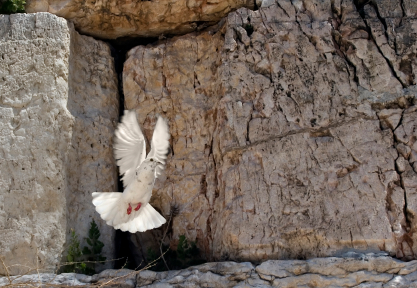
white-pigeon-kotelIn reflecting on the “Gifts of the Spirit” conference, which I attended last May, MacArthur’s “Strange Fire,” and Michael L. Brown’s hastily constructed response to MacArthur called Authentic Fire, I can’t help but think that the FFOZ Gifts of the Spirit book, while not really a “response” to MacArthur, would have been a better way to speak to the Pentecostal community than the “Strange Fire” approach. In fact, as I recall, there were a number of Pentecostals at the Shavuot event, and they were made to feel welcome and participate fully. If FFOZ’s “Gifts of the Spirit” had received the same “press” as “Strange Fire” in the Christian media space, it might have made MacArthur’s efforts superfluous.

Something to consider at any rate.

God Was In Church Today

ChurchI went back to church today after a three-week absence. I’ll admit that I was avoiding Christmas. I’m OK with people in the general public wishing me a “Merry Christmas” but knowing the additional meaning those two words carry in Christianity, I thought it best to keep a low profile. No one mentioned my not being around and they probably just assumed I was spending the holidays out-of-town with relatives.

God reminded me that He is still in church today. No, I didn’t have a vision or hear a loud, booming voice or anything like that. Three things happened.

The first was a missionary to Ireland (I never heard of such a thing before) who was diagnosed with cancer back in August while serving on his mission, was in our church with his wife today (they attended our church until leaving for Ireland on their mission in 2005). He still walks with a limp and a cane, but the tumor was removed from the bone in his leg and the radiation treatments are done, so he’s finally beginning to heal and go into physical therapy.

I was surprised how young Dean (the missionary) was. Not a grey hair in his head. For some reason, I expected him to be older. He also was very gracious about having cancer. He said it opened up opportunities while in Ireland once word got around. People approached him with their own physical or medical difficulties or crises in relation to faith and their spiritual lives. Sure, maybe between him, his wife, and God, Dean had a lot of hurt and angry things to say, but you’d never know it by listening to him in church this Sunday.

The second thing that happened was Pastor Dave leading prayer. No, that’s not unusual of course, but he’s going in for some surgery tomorrow (three people in church are all having surgery on Monday). Dave is also a young guy, in his 40s but he looks younger to me (I guess that doesn’t hurt when you’re the youth Pastor). I didn’t write down the prayer and I don’t remember the words, but the “feeling” of graciousness is what sticks with me. I know that some people in Hebrew Roots and related movements have left “the Church” because of some harm (real or perceived) they endured at the hands of Christians, but even though I don’t always agree with the standard theology and doctrine, I will never criticize the people I worshiped with today for a lack of compassion and love of God and each other.

The third thing that happened was during the music. Pastor Bill (who is an older gentleman) sometimes leads the singing when the usual people who are more “officially” musical are unavailable. There are hymn books, but most people use the projection of the lyrics on the screen at the front of the room. At one point early in the first hymn, Pastor Bill stopped the singing. There was a lyric about surrendering everything to Jesus. He pointed out that it doesn’t mean just “Sundays” or just a few things, but everything. I wonder how many of us really, really have surrendered everything? I know I have a long way to go in working through my imperfections as a human being who purports to be a disciple of Messiah.

God was in church today.

Be the ChurchTrue, I felt a few disturbing tremors in Pastor Randy’s sermon, reminding me that he still reads my blog (though I could be reading too much between the lines of his message) and doesn’t always agree with my opinions, but his grasp of history related to scripture always opens up new worlds in the Bible for me. It’s also true that when I got to the Sunday school class, it was uncharacteristically dark, with no indication that the teacher or anyone else had set the room up for us. Since we have a “guest missionary” with us today, and since plans change at church quickly sometimes, I figured we weren’t having class after all, so I turned around and headed on home. I was disappointed, but things happen.

Pastor Randy’s been out-of-town for a few weeks for a family reunion, and I just found out that he’s going to be gone in relation to his doctorate program for most of January, so I guess our conversations are on an extended hiatus. Another disappointment.

But God was in church today, so that makes up for those few things that didn’t quite work out.

I’ve been struggling with church for a while now and being out for three weeks only made it that much more difficult to go back today. But instead of focusing on the differences I experience between my viewpoint and the “official story” of doctrine and dogma, I need to look at what we all have in common and what I am learning about God, the Bible, and myself.

God was in church today. Maybe He’ll be there next Sunday, too.

The Consequences of Gentile Identity in Messiah

Soon after, Minister Flores made the decision to convert to Judaism. But he struggled to find a way to tell us, as he didn’t want to tear down Christianity without being able to offer us an alternative. So he kept teaching Torah, but in a way that was as subtle as possible. He gradually peeled away the things that were wrong and got us closer to Torah. Our church started replacing Jesus’ name with Jewish, Hebrew names of God, and the songs became Hebrew songs. We began to incorporate real Jewish traditions into our festivals, and we even got a Torah scroll for the church.

At that point we resembled more of a Jews for Jesus group, in the sense that we were Christians with a lot of Jewish traditions. The difference, of course, was that we were moving in the direction toward authentic Judaism, not the other way around.

-Yosef Juarez
“The Torah in Our Church”
Aish.com

Ever since I published Nanos, Paul, and the Consequences of Jewish Identity in Messiah as well as witnessed/participated in the subsequent online discussion, I’ve spent a great deal of time pondering the idea of exactly how the early non-Jewish disciples of the Messiah entered into what was originally a wholly Jewish religious stream. Up to the time of Paul, the only way for a non-Jew to formally enter into any form of religious Judaism was to convert via the proselyte process and become “a Jew by choice,” to use the modern parlance.

In the aforementioned blog post inspired by an article written by New Testament scholar and historian Mark Nanos, one blog commenter asked (tongue-in-cheek):

Then what were gentiles converting to? Christianity?

No, of course not. Christianity, as we understand it today, did not exist when Paul walked the earth. But the Gentiles were not converting to Judaism either…well, not exactly.

Or were they?

No, I’m not suggesting that the early Gentile believers actually converted to Judaism and took on all of the obligations and identity markers of their Jewish mentors, but they did join “the Way” as fully equal co-participants in Yeshua-faith with the Jewish disciples.

But how can you convert to Judaism and not be a Jew?

It gets complicated from here on in, but that’s the mystery we struggle with twenty centuries later as we look through the lens of scripture, history, archeology, and any other tool at our disposal, and try to apprehend not only the intent of Paul and the Council of Apostles in Jerusalem, but of Messiah and God the Father.

That Gentiles were always intended to be reconciled with the Creator and to worship the One God alongside Israel is a foregone conclusion based on many of the Messianic prophesies chronicled in the Tanakh (Old Testament), but exactly how it was to happen is still somewhat hidden in the shadows of time.

Well, maybe.

The only conclusion I can come to with my present understanding of Paul is that he did “convert” non-Jews into a Jewish religious space, not by the proselyte rites, or as “guests” in the manner of the God-fearers, but into a life within Judaism specifically developed for Gentiles in Messiah, and lived out as non-Jewish co-participants, equal in the blessings of reconciliation, justification, and salvation, but not identical to Jewish participants in identity or responsibility.

Not that the Gentiles didn’t have responsibilities. We can start to see the skeleton of their (our) duties in the apostolic decrees (see Acts 15) and fleshed out just a bit more in many of Paul’s letters.

I wrote a number of detailed reviews of the Nanos book The Mystery of Romans including this one that described a sort of mutual dependency Paul characterized between the believing Gentiles and believing and non-believing Jews in Rome.

For the believing Gentiles, their duties to their Jewish hosts did not end at complying with principles designed to avoid offending Jewish sensitivities and facilitating fellowship, but also included provoking jealousy by showing themselves to be the first fruits of the prophecies of the Tanakh that speak of Gentiles “taking hold” of Jews, and going up to the House of the Lord, the House of Prayer, with the devout Jewish people in order to worship the God of Jacob.

That would mean separating from their former lifestyle, from paganism, and in most cases from family, leaving civic cult practice to honor God within the context of a Jewish worship designed for Gentile identity and legal status, but remaining non-Jews in order to clearly show themselves to be the fulfillment of prophesy rather than proselytes or some form of “pseudo-proselytes”.

Mark NanosIn my previous blog post, I characterized Nanos’ opinion on Paul relative to Gentile conversion to Judaism within the framework of “the Way” as being firmly against such a proselyte conversion, but subsequent reading has brought up some questions. It’s very possible Paul was convinced that the Messianic return was only decades away and as such, he felt there just wasn’t time to do anything but spread the gospel message to the rest of the known world as quickly as possible. He may have thought that issues of conversion or even marital status (1 Corinthians 7:8 for example) were of a lesser priority than the imminent return of the Moshiach, so there was no need to develop rulings that would cover the requirements of later generations of Gentile believers.

However, history as shown us that the window for Messiah’s return is a rather lengthy corridor and we still have yet to reach the end. That being said, and keeping a Jewish perspective in mind, since Judaism is adaptive and halachah is continually or at least periodically in a state of development, is the issue of Gentile conversion to Judaism within the modern Messianic Jewish movement something that is, while Paul may not have pre-supposed it, nevertheless completely valid in the present, given the requirements of Jewish and non-Jewish disciples within the context of a Jewish faith in Yeshua the Messiah some two-thousand years down the road?

That question (and it was a long one) might not make sense to Christians who state they observe the “commandments” of the New Testament as a closed canon and an unchangeable decree, but that actually isn’t the case. While Christians sometimes criticize the various modern streams of Judaism for maintaining a quasi-open canon via the Talmudic rulings of the Rabbinic sages, in reality, the Protestant church in all its incarnations, more closely follows a 16th century (and even later) set of interpretations of the New Testament, rather than the original, apostolic understandings and teachings of the people who participated in spreading the good news from Jerusalem to Judea, Samaria, and to the diaspora nations of the first century of the common era.

Both Christianity and Judaism have their own methods of keeping one foot firmly rooted in the Bible and the other one wandering up and down the passageways of time.

This idea of how Paul, James, and the apostles of the council conceptualized the role of Gentiles in their Jewish religious world has profound implications, not only on how we read and understand the New Testament, but how we view the role of the Church today, as well as modern Christian/Jewish relations.

We may have it all wrong when we think of the exact mechanism by which Gentiles entered “the Way,” and that, in a sense, they were not “converted” to Judaism or became citizens of Israel (and thus “Israelites” as opposed to “Jews”), but entered a unique legal status that at once made them equal relative to certain covenantal blessings without being identical, for the sake of fulfilling Messianic promises, to the Jewish people in identity and obligation, but still actually practicing Judaism as a way of life specifically crafted for the Gentiles by legal decree and the will of the Holy Spirit. I’ve heard it said that the short definition of a Jew is one who has rejected idolatry (obviously the long definition contains a lot more details). In that manner, while we can’t count the Gentiles in Messiah as Jews, they (we) are practicing a form of Judaism styled for them (us), at least within the ancient “Way” and in modern Messianic Judaism.

Although Christianity and Judaism (in all their various flavors) have described quite different trajectories across history, it is foolish to imagine that One God and a returning Messiah King will allow such a state to remain as we have constructed it, through it’s within the realm of possibility (considering the beginning verses of Matthew 23), that Messiah may allow a certain amount “halachah” to remain in place based on his giving the apostles the authority to make binding rulings in his name (assuming any of that trickled down to the Christian or Messianic movements of today as we imagine it has in parallel process to the modern, normative Judaisms).

Prophesy states that Messiah will return all of the Jewish exiles to their Land and their place, but it may be that he will also return the Gentile disciples to an understanding of who we are and where our duties lie in relation to the King of Israel, the nation of Israel, and the Jewish people.

I have a lot more reading to do in order to more completely explore this concept, but it’s heading in a direction I’ve been approaching for a while now.

jewish-traditionI think there are a number of Christians and Christian groups who are feeling the pull of prophesy, but in most cases, such as in the above-quoted article written by Yosef Juarez, there’s been a terrible misunderstanding. Messiah never meant for us to believe that we had to choose between him and our devotion to Jewish people and Israel, rather he desires that we arrive at a proper understanding of our role in relation to Israel and her King, where King and Country are not mutually exclusive as most people believe is true of Jesus and Israel.

While we don’t see entire church groups converting to Judaism en masse very often (as Yosef Juarez describes in his article), we do see Gentile Christians entering into Hebrew Roots congregations and attempting to fulfill their roles (mistakenly in my opinion) by apprehending Jewish identity rather than their (our) own, or even more tragically, Gentiles in Hebrew Roots and Messianic Judaism leaving Messiah Yeshua behind and converting to one of the modern Judaisms of our day.

There are few things sadder than seeing a Christian begin to develop a sincere love of Israel and the Jewish people and then to allow misunderstanding and a misguided sense of purpose to cause them to completely overshoot the target, missing the point and mistaking the background for the goal.

“One who romanticizes over Judaism and loses focus of the kingdom of Heaven can be compared to a carpenter who is infatuated with the hammer, rather than the house it was meant to build.”

Troy Mitchell

It may not be entirely inappropriate to consider, under certain specific circumstances, Gentile conversion to Judaism within a Messianic Jewish venue, but again, in my opinion, this should be a rare occasion. Gentiles will never be able to take their (our) place in God’s Kingdom as the crowning jewels of the nations if we convert or quasi-convert to Judaism in significant numbers. To be “crowning jewels” we must remain among “the nations” or fail prophesy, Messiah, and God.

One of These Things is Not Like the Others

One of these things is not like the othersCommunity. It’s that thing, the way of life, that we all want but we’re just not quite sure how to pull it off successfully. It’s that tantalizing concept that promises so much reward, and yet it seems so elusive. Its promise sometimes causes us to cut ties where we are and move somewhere else where we hope to find greener pastures, better friends, and/or become part of a different community. Then when we do get a taste of real community, it’s only a matter of time before our hearts are stunned with hurt or insult. But a lack of community causes us to feel despondent, alone, and often times as if we’re missing out on something significant that was intended for us all along. This community thing can really be disappointing!

-Lisa
“Community Disappointment”
Following the Ancient Paths

I wrote a lengthy response to this blog post, but when I pushed “Post Comment,” I received an error message and my comment was lost forever. It was a rather lengthy comment (go figure) and I suspect the blog application was complaining to me about it. I thought about re-writing the comment but decided to blog instead.

Lisa’s blog post addresses what we should already know. Being part of any group or community is hard work. It’s hard to join, it’s hard to sustain, it’s hard to adapt over time. This includes families, employers, and Lisa’s specific topic, religious organizations.

I can sympathize. A little over a year ago I “went back to church” and in that time have had many interesting, educational, and dismaying “adventures.” But as Lisa’s blog post suggests, this is to be expected. No group that involves multiple human beings is always going to run smoothly.

Over a year apart, I wrote the blog posts Why I Don’t Go to Church and Why I Go to Church, chronicling my internal struggle, the same one Lisa seems to be describing.

We live in a world that seems to praise isolationism, yet we instinctively know that we weren’t created to be loaners (sic). Somehow it’s considered a good thing when we can handle things alone, when we can appear stand tall with a backbreaking burden strapped to our backs, when we live such private lives that nobody knows what is really going on with us. Deep inside we know that it isn’t right to go through life all alone. We wrestle with wanting something yet not wanting the very same thing, pursuing it and rejecting it all at the same time.

-Lisa

As Lisa says, we want to go it alone to avoid all of the messiness of being part of a community, but when alone, we know that being isolated from community isn’t right, either. Sort of a “can’t live with ’em, can’t live without ’em” situation.

The main point of my lost comment was the issue of competing interests. Affiliation with one community may conflict with another affiliation. In my case, I’m a Christian living with Jewish family members while attending a Christian church. How does that work?

Another set of competing interests has to do with entering into and finding a niche within a community. I recently declared that I’m a Christian who studies Messianic Judaism, and yet I attend a very fundamentalist Baptist church in Southwestern Idaho. If you’ve read any of my blog posts about my conversations with my Pastor, you know that although we get along, we disagree on a number of fundamental (no pun intended) elements of what faith in Messiah means, particularly to the Jewish people.

Can a square peg successfully integrate into a church of round holes? Good question.

I recently finished the book Life of Pi by Yann Martel. It tells the story of Pi, born and raised in India, from childhood to adulthood through a series of flashbacks, with the main action taking place aboard a lifeboat shortly after Pi’s family died in a shipwreck in the middle of the Pacific Ocean. Pi is the only human survivor, but finds that he must share the lifeboat with an injured Zebra, an Orangutan, a Hyena, and a 450 pound, male adult Bengal Tiger named Richard Parker (Pi’s father was a zookeeper and they were transporting a number of their animals from India to their new home in Canada).

life_of_pi_by_megatruh-d5noigdThe other interesting thing besides how Pi manages to survive seven months adrift at sea sharing a lifeboat with a Tiger (the other animals didn’t make it), is that as a child, Pi adopted three religious traditions, first Hinduism, then Christianity (Catholicism), and finally Islam. Pi practiced all three religions simultaneously, ignoring the basic tenet of each that these religions are exclusivist. That is, if you belong to one, you cannot also belong to any other religion.

Pi managed to observe each religious tradition in parallel without arousing suspicion for a while, but eventually it caught up with him, and he was finally confronted by all three congregational leaders at the same time in a public place in front of his parents.

When questioned about why he thought he could be a Hindu, a Christian, and a Muslim all at the same time, he responds by saying that he “just wants to love God.” (Martel, pg 69)

The book follows Pi’s life into adulthood and middle age where he is married with two children and a small dog and living in Toronto. He still practices all three religions, with no mention of any conflict in his family or in any of the involved congregations, but “Life of Pi” is a work of fiction and operates often at the level of religious allegory (I still haven’t figured out what the carnivorous island is supposed to mean).

In real life, Pi would never be able to successfully manage practicing all three religions, not only because of the conflicts between those communities, but the likely conflict with his own family, particularly his wife, who almost certainly had formed her religious or irreligious affiliations before she ever met and married Pi.

I have to admit, when I read about the sheer audacity and innocence of Pi’s devotion to three different religious branches, cherishing the best in all three, I felt a moment of admiration and even envy. What would it be like to open your arms wide and to take in and accept humanity’s vast range of traditions in worshiping God just for the sheer love of God?

It isn’t practical, which I suspect is one of the reasons why Martel’s novel is called a fantasy.

But Interfaith communities aren’t unheard of in our world. Author Susan Katz Miller maintains the On Being Both blog which celebrates a variety of interfaith families and communities, but such celebrations aside, one does not easily navigate the stormy seas that occur when theologies, doctrines, and dogmas clash in the narrow straits between one religion and another.

The solution in my own family, as it stands now, is something of a compartmentalization of each religion. In my home, Christianity and Judaism exist in separate silos, rarely communicating across the gap between them for the sake of peace. I do occasionally get emails from my wife containing links to news or information items on Israel or Judaism but I’m very careful not to bring up Christianity.

The ugly times is where our communities can grow stronger, more dedicated to one another, where each member grows in righteousness and in the image of our Master. The challenge is on the table. Are we ready to accept it?

-Lisa

Sesame StreetIt is true that adversity can produce stronger communities, but there’s a line that, if crossed, means that adversity has exceeded manageable limits and is destructive, not constructive. Sort of like lifting weights at a gym to build strength but overtraining resulting in injury, sometimes serious injury.

The television show “Sesame Street” sometimes has a lesson in the form of a song called One of these things is not like the others and I know what that experience is like in spades. There are interfaith communities that (seemingly) successfully co-exist within the same larger group, and there are interfaith families that are created and thrive for decades (such as my own), but that doesn’t mean it’s easy (which is what Lisa’s blog is all about).

But beyond being “not easy,” there are times when “not easy” becomes impossible or at least highly improbable, like a fourteen-year old boy from India who is a practicing Hindu, Christian, and Muslim, or the same boy two years later who manages to survive for seven months in the Pacific Ocean sharing a lifeboat with a large Bengal Tiger. How long can such a relationship between communities last before something gives?