Ki Tisa: The Doors of the Temple

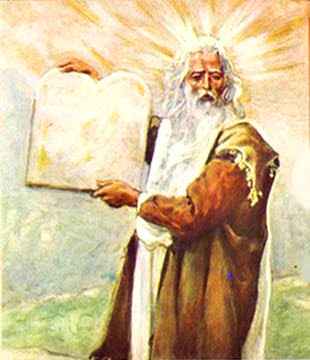
moses-and-the-tabletsFraming the epic events of this week’s sedra are two objects—the two sets of tablets, the first given before, the second after, the sin of the golden calf. Of the first, we read:

The tablets were the work of G‑d; the writing was the writing of G‑d, engraved on the tablets.

These were perhaps the holiest objects in history: from beginning to end, the work of G‑d. Yet within hours they lay shattered, broken by Moses when he saw the calf and the Israelites dancing around it.

The second tablets, brought down by Moses on the tenth of Tishri, were the result of his prolonged plea to G‑d to forgive the people. This is the historic event that lies behind Yom Kippur (the tenth of Tishri), the day marked in perpetuity as a time of favor, forgiveness and reconciliation between G‑d and the Jewish people. The second tablets were different in one respect. They were not wholly the work of G‑d:

Carve out two stone tablets like the first ones, and I will write on them the words that were on the first tablets, which you broke.

Hence the paradox: the first tablets, made by G‑d, did not remain intact. The second tablets, the joint work of G‑d and Moses, did.

-Rabbi Jonathan Sacks
“Two Types of Religious Encounter”
Commentary on Torah Portion Ki Tisa
Chabad.org

I don’t know if this seems so mysterious to me, even if I hadn’t read the rest of Rabbi Sacks’ article. I’ve always imagined that many of the acts of God were really committed through a “partnership” between Him and humanity. Certainly (in my opinion) the Bible is less of a document dictated by God into the ears of its passive writers and more of God stirring the spirit within each of the authors, allowing those people to pour out their witness, their drive, their passion onto the rest of us. God didn’t tell Paul word for word what to put in his letters, nor do I suspect that He personally crafted the Psalms or the Proverbs. Humanity must have a stake in what is holy or we can’t be part of it at all.

Hence Moses and God at Sinai with the tablets.

Hence Liu Zhenying, also known as Brother Yun, in China.

My mother had never learned to read or write, but she became the first preacher in our village. She led a small church in our house. Although my mum couldn’t remember much of God’s Word, she always exhorted us to focus on Jesus. As we cried out to him, Jesus helped us in his great mercy. As I look back on those early days, I’m amazed at how God used my mother despite her illiteracy and ignorance. The direction of her heart was totally surrendered to Jesus. Some of today’s great house church leaders in China first met the Lord through my mother’s ministry.

At first, I didn’t really know who Jesus was, but I’d seen him heal my father and liberate our family. I confidently committed myself to the God who had healed my father and saved us. During that time I frequently asked my mother who Jesus truly was. She told me, “Jesus is the Son of God who died on the cross for us, taking our sins and sicknesses. He recorded all his teachings in the Bible.”

I asked if there were any words of Jesus left that I could read for myself. She replied, “No. All his words are gone. There is nothing left of his teaching.” This was during the Cultural Revolution when Bibles could not be found.

-Brother Yun (with Paul Hattaway)
Chapter 2: A Hunger Fulfilled, pg 26
The Heavenly Man: The Remarkable True Story of Chinese Christian Brother Yun

brother-yunIt seems as if God leaves “gaps” in his plan for humanity that only human beings can fill. There would be no stone tablets without Moses, and there would not have been many of “today’s great house church leaders in China” without Brother Yun’s mother. Brother Yun first came to faith at the age of 16 in 1974. As mentioned above, this was during the Communist “Cultural Revolution” and Christianity was illegal in China. If a person were found to be a Christian and particularly to possess a Bible (they were almost non-existent in China in the 1970s), the Bible would be burned and the person imprisoned and tortured, the Government demanding that the Christian renounce his faith. Often prisoners died under torture or through some other means while in captivity. Nevertheless there were courageous souls in China, including in impoverished Henan Province, who knowing next to nothing of who Jesus is and anything that was written in the Bible, still believed, and prayed, and had faith.

I’ve only just started this book, but as I tore into the opening pages, I couldn’t help but be reminded of the early churches that Paul had started and nurtured. In one sense, having visits from Paul and reading his letters for support, the former pagan believers and God-fearers turned disciples seem much better off than 16-year-old Liu Zhenying and his family. His mother had come to faith as a young woman thanks to Christian missionaries, but this was before the Communists came to power. The Christian missionaries…all Christian missionaries had either been put in prison or forced out of China by 1950, so whatever faith and learning Brother Yun’s mother possessed, atrophied and finally died…or almost.

Still the “early church” in the first century may not have experienced too much more of an advantage than the church in China in the mid-1970s. If there was a Jewish synagogue in the community that welcomed or at least tolerated the Gentile disciples of “the Way,” they could sit and hear the Torah and the Prophets being read and taught, daven the traditional prayers, and share some fellowship with the Jewish community. If not, such as with Lydia and the devout women in Philippi (see Acts 16:11-15), the Gentile believers would have to meet together without such support or encouragement and carry on as best they could. Full knowledge of the scriptures would probably not be available, and worship of God would be a matter of what could be remembered from the synagogue. But worship would be much more about the faith and endurance each of the worshipers could summon by the grace and Spirit of God.

God and man in partnership, meeting somewhere in between life, death, and infinity, bringing the Kingdom of Heaven a little bit closer to earth one day at a time.

The Jewish mystics distinguished between two types of divine-human encounter. They called them it’aruta de-l’eyla and it’aruta de-l’tata, respectively “an awakening from above” and “an awakening from below.” The first is initiated by G‑d, the second by mankind. An “awakening from above” is spectacular, supernatural, an event that bursts through the chains of causality that at other times bind the natural world. An “awakening from below” has no such grandeur. It is a gesture that is human, all too human.

-Rabbi Sacks

On 1 September 1901, a large ship docked in Shanghai Port. A young single lady from Norway walked off the gangplank onto Chinese soil for the first time. Marie Morsen was one of a new wave of missionaries who, inspired by the martyrdoms of the previous year, had dedicated themselves to full-time missionary service in China.

Monsen stayed in China for more than thirty years. For a time she lived in my county, Nanyang, where she encouraged and trained a small group of Chinese believers that had sprung up.

Marie Monsen was different from most other missionaries. She didn’t seem to be too concerned with making a good impression on the Chinese church leaders. She often told them, “You are all hypocrites! You confess Jesus Christ with your lips while your hearts are not fully committed to him! Repent before it is too late to escape God’s judgment!” She brought fire from the altar of God.

-Yun/Hattaway, pg 19

christian-devotionI’ve spent a good deal of time on my blog lately talking about Jewish identity, Torah obligation, healing the rift between the different shredded bits of flesh that, if put back together, would become the body of Christ, but sometimes it’s just good to “get back to basics.” What if you didn’t know what you know? What if you had never even seen the Bible? What if you only knew just little bits and pieces about who Jesus is and what he’s supposed to mean in your life…and yet you still possessed a dynamic, consuming, passionate faith that could lead you anywhere God called you to go?

So far, that’s what I’m finding in Brother Yun’s book. Maybe that’s what was taking place in the lives of many of the former pagan Gentiles who had come to faith but who, unlike the God-fearing Gentiles, had never spent much time in a synagogue, never seen a Torah scroll, and who had only bits and pieces of information about the foreign “Messiah” who died, not just for the Jews, but for the Greeks, the Romans, and everyone else in the world.

Brother Yun’s story also reminded me of another prisoner.

“[A]fter all of these pressures, after all of the nails they have pressed against my hands and feet, they are only waiting for one thing…for me to deny Christ.”

–Pastor Saeed Abedini
from a letter he wrote as a prisoner in Iran

People are put in prison for their faith and we believers on the blogosphere argue about theological minutiae. Men and women are beaten and tortured just because they’re Christians, and you and I complain at each other about whether or not a Gentile Christian should wear a kippah or pray with a siddur. What we consider “problems” and what we “whine” about on our blogs is nothing. There are real men and women of faith out there who know what it is to encounter God who really don’t care if they get a Shabbat rest as long as they are called to serve the Lord.

I’m not saying that many of the topics of our various debates are not worth the zeros and ones they’re printed with on the web, but I am saying that we tend to take those topics (and ourselves) way too seriously. Rabbi Sacks says:

An “awakening from above” may change nature, but it does not in and of itself change human nature. In it, no human effort has been expended. Those to whom it happens are passive. While it lasts, it is overwhelming; but only while it lasts. Thereafter, people revert to what they were. An “awakening from below,” by contrast, leaves a permanent mark.

temple-prayersEven if God chooses to “awaken us from above,” it probably wouldn’t last. I suspect that’s why we don’t see grand and astonishing miracles performed right before our amazed eyes. Miracles wouldn’t matter. In a day or a week, we’d be complaining about the same old stuff again. Only when we are open to being “awakened from below,” when we become willing partners with God, even a God we know almost nothing about, will we see miracles that will make a difference within us and more…miracles that will make a difference in the world. Am I being too dramatic?

About a week and a half ago, a friend of mine gave me Brother Yun’s book as a gift. In the western countries, we tend to take our faith for granted. We don’t have to fight for it. We’re not persecuted. Going to church isn’t a crime punishable by being sentenced to prison. Having a Bible and reading it in public won’t get us dragged off of the streets by the police and tortured in some government office.

God could accomplish everything He wants to do all by Himself. He needs nothing from us. But if He did it that way, we would have no ownership of Him, His plan, and His purpose in our lives. He acts only for our own sake, not for His. But we too must act, for a passive faith in a vain one. It is said that Messiah will build every part of the next Temple in Holy Jerusalem and construct it…all but the doors. It is said that one who puts up the doors of a house, even if he has built no other part of it, becomes owner of the house. We are expected to pull our weight, to take our part, to help repair our broken world. We are also expected to participate and be involved in what God is building, in raising David’s fallen sukkah.

We will put the doors on the Temple, and then it will be a house of prayer for all the peoples. If we didn’t, it would be God’s house, but we would be strangers in it. We are not called to be strangers, but sons and daughters of the Most High.

Everything can be done with joy. Even remorse can be with joy.

-Rabbi Tzvi Freeman
“Everything!”
Based on letters and talks of the Rebbe
Rabbi M. M. Schneerson
Chabad.org

Good Shabbos.

Commentaries and Cautionary Tales

study-in-the-dark‫לא שנא בדרבנן ולא שנא בדאורייתא – קמח‬

Tosafos (earlier 55a) explains that this rule, that under certain circumstances, one should refrain from pointing out a fellow Jews’ transgressions and not to rebuke a sinner, is only applicable where the offender will most certainly not listen to the words of rebuke which are addressed to him. However, if there is any possibility that the person will change his ways, then the observer has the responsibility to instruct him not to sin.

Rema (O.C. 608:2), however, writes that if the nature of the unlawful behavior is in the realm of a halachah which is not explicit in the Torah, then the obligation to intervene depends on whether or not the person will respond or not, as Tosafos says. Although the law is derived from a verse, being that it is not explicitly stated, we only proceed to rebuke the offender if there is a chance he may listen and change his ways. However, if the halachah is one which is explicit in the Torah, then we must rebuke the sinner even if we are certain that he will not listen to our words.

The rationale for the ruling of Rema is found in Rashba (Beitza 30a). He writes that a halachah that is not explicit in the Torah might be looked upon lightly by some people. We should assume that the violator is mistaken is considering this halachah as not important, but the fact is that if we were to correct him, he probably will disregard our rebuke. It is in this situation that we say, “It is better that he not be told, and that his actions remain inadvertent, than for us to make an issue of it and for his continued actions to be a more intentional violation of halachah.” However, if the person is disobeying a halachah which is explicit in the Torah, we cannot assume that his actions are inadvertent at all. We will not make matters worse by exhorting him to desist from his sinful ways, because he is already acting defiantly. We can only hope to improve the situation and to remedy the person’s observance.

Daf Yomi Digest
Distinctive Insight
“Rebuke to the receptive”
Shabbos 148

I had just commented on one of Derek Leman’s blog posts in what promises to be yet another endlessly circular debate on whether or not Paul ever intended for the non-Jewish disciples of Jesus to be obligated to the full weight of the Torah commandments when I read the above-quoted commentary. As you can tell from the wording in my last sentence, I consider most of these conversations to be a futile waste of time, but on the other hand, they are so incredibly compelling (“Someone is wrong on the Internet”) that I still stick my nose in unbidden from time to time (and usually get it chopped off).

Obviously, the Daf commentary on Shabbos 148 is meant to apply within a Jewish halakhic context, but for the purposes of this discussion, I’m artificially applying it to a wider audience and loosening up some of the definitions (“wrong” doesn’t necessarily mean “sin”).

I very recently referred to all people and particularly all people of faith as “poor, blind, naked, stupid human beings who think we’re a whole lot more cool and smart than we really are.” Apparently that message didn’t get out because if it had and if it were taken seriously, then I suppose we might pause in the middle of our “self-important” debates to consider who and what is really important in the grander scheme of things (i.e. the Kingdom of Heaven).

A key element in why it’s easy to lack gratitude is because human nature is to take things for granted when we get used to having them. To master gratitude we need to stop taking things for granted and to increase our thoughts of appreciation.

The Creator keeps bestowing His tremendous kindnesses on us each and every day when we are awake and when we are asleep, whether we are aware of them or not. There are so many things in our lives that we take for granted.

As an exercise, choose a day to not take anything for granted. Look at everything as if it were new. Look at everything as if this were the first time that this positive thing was happening. Look at all that you own as if you just bought or received them today. Look at what you have as if it were invented recently and you are one of the first people on the planet to get it.

Hopefully this exercise will give you the experience of what it’s like to not take things for granted.

-Rabbi Zelig Pliskin
“Daily Lift #744: Don’t Take Things for Granted”
Aish.com

illegal-christianityIt seems that one of the things we’re taking for granted in all of these debates is God. Not that we shouldn’t examine, explore, and discuss our faith and how we understand worship and lifestyle, but I think we’re missing the big, big picture. Recently, I’ve started reading a book called The Heavenly Man: The Remarkable True Story of Chinese Christian Brother Yun written by a Chinese Christian with New Zealand missionary Paul Hattaway. Yun tells his story of coming to faith in Christ at age 16 in a family that was extremely impoverished and in a China where it was illegal to be a Christian.

Yun recounts one of the earliest events when he was captured by law enforcement agents in China for preaching at a gathering of Christians:

I was made to kneel down in the dirt while officers punched me in the chest and face and repeatedly kicked me from behind with their heavy boots. My face was covered with blood. The pain was unbearable and I nearly lost consciousness as I lay on the ground.

They lifted me up and made me stagger down another street. They were determined to make an example of me to as many people as possible.

-Yun/Hattaway, pg 63

I’ll talk more about Brother Yun and the “loss of focus” I believe many of us have been suffering from in tomorrow’s “meditation,” but after reading the Daf commentary and seeing the birth of yet another blogosphere debate this morning, I didn’t want to wait.

In my own little world, I meet with my Pastor every Wednesday night and we discuss many things. We continue our own debate on the function and purpose of “the Law,” both in its original and ancient context and in the world of Judaism today. Pastor Randy lived in Israel for fifteen years, has many Jewish friends, and is deeply devoted to the Jewish people, so it’s not as if he’s a stranger to these topics. And yet we continue to debate how the Torah applies in Judaism and what “Torah” even means.  As people of faith, we all struggle to find our own focus when we read the pages of the Bible, trying to discover the message God has delivered about the past, present, and future.

While our discussions have been very productive thus far, Pastor Randy suggested we turn future meetings toward a specific topic, namely D. Thomas Lancaster’s book The Holy Epistle to the Galatians. I’ve been meaning to re-read it again since I feel I didn’t really “get it” the first time, and Pastor Randy wants to read it but since his reading list is so incredibly vast (he has read up to one hundred books in a single year, so as a reader, I’m definitely an “illiterate” amateur by comparison) that having a “reading partner” will add motivation for him to address Lancaster’s work. I think it’s one way to bring some of the matters we have been talking about into greater clarity.

Maybe it seems like I’m talking out of both sides of my mouth, eschewing Internet debates on controversial Biblical matters but engaging in such conversations in my personal life, but some things seem to be more accessible and “relatable” face-to-face. Also, our conversations don’t involve “the usual suspects” in the blogosphere who always present the same point of view and who always expect everyone else to change their minds except them. That has to include me whenever I participate in these web discussions and that’s why I think those transactions miss the point.

I’ve already experienced some shifting in my viewpoints and more than a little illumination as a result of my Wednesday night talks, and I suspect that my own meager offerings to the conversation may have influenced some of Pastor Randy’s perspectives as well. But that’s what a conversation does…it’s not just a venue for us to teach, it’s an opportunity to learn, to let ourselves be changed, to grow, to be open to encountering God.

It’s also an opportunity to revisit the essentials of faith, which we will definitely not encounter on someone’s web log. God is encountered personally, in actual contact with real human beings, and in the presence of the humility and nakedness of our own spirits.

christianity-is-IllegalIn reading Brother Yun’s book, I’m witnessing the struggle to spread the message of the Gospel in Communist China in the 1970s and early 1980s (which is how far I’ve gotten in my reading so far). Many people coming to faith are illiterate farmers. The vast majority have never even seen the Bible since possession of one would be illegal (although supposedly that has changed in recent years). Most only have a vague idea of who Jesus is except that he’s God’s son who died to take away our sins and illnesses. They meet in secret in small house churches. They baptize in the middle of the night, sometimes in winter, cutting holes in the ice in rivers, trying to avoid the police, arrest, imprisonment, and torture. It will never occur to them that some other Christians in the western nations think that they’re “obligated” to wear tzitzit, keep kosher, and observe the Shabbat. They’re too busy risking their freedom and their lives trying against all odds to worship Jesus Christ, to love one another, and to spread the word of hope to the hopeless.

I’m hardly one to say that I’ve risen above all of the bickering and debating, but I really think we need to stop and put a few things back into perspective. If all the things we argue about aren’t for His Glory; if they aren’t for the sake of Heaven, then they can only be for our own gratification and the desire to be “right.”

Remind them to be submissive to rulers and authorities, to be obedient, to be ready for every good work, to speak evil of no one, to avoid quarreling, to be gentle, and to show perfect courtesy toward all people. For we ourselves were once foolish, disobedient, led astray, slaves to various passions and pleasures, passing our days in malice and envy, hated by others and hating one another. But when the goodness and loving kindness of God our Savior appeared, he saved us, not because of works done by us in righteousness, but according to his own mercy, by the washing of regeneration and renewal of the Holy Spirit, whom he poured out on us richly through Jesus Christ our Savior, so that being justified by his grace we might become heirs according to the hope of eternal life. The saying is trustworthy, and I want you to insist on these things, so that those who have believed in God may be careful to devote themselves to good works. These things are excellent and profitable for people. But avoid foolish controversies, genealogies, dissensions, and quarrels about the law, for they are unprofitable and worthless. As for a person who stirs up division, after warning him once and then twice, have nothing more to do with him, knowing that such a person is warped and sinful; he is self-condemned.

–Titus 3:1-11 (ESV)

Commentary and cautionary tale as found in midrash and in a Pastoral epistle from Paul. Blessings.

God in the Dark Wasteland

desert-at-dusk“If you want to truly understand something, try to change it.”

-Kurt Lewin, German-American psychologist

The Hebrew word “midrash” literally means “research” or “investigation,” but through rabbinic usage the term has come to mean “the investigation of scripture.” A commentary on scripture, a piece of scriptural exegesis, a veiled allusion to a scriptural passage, a retelling of scriptural material – all these are called midrash (in plural, midrashim). The term has become so popular in recent years that in modern parlance it is virtually synonymous with “exegesis,” and any textual interpretation that is not absolutely true to its source is dubbed “midrash.” (And since – according to modern literary critics – no textual interpretation can be absolutely true to its source, all textual interpretation is midrash.)

-Shaye J.D. Cohen
Chapter 6: “Canonization and Its Implication: Scriptural Interpretation”
From the Maccabees to the Mishnah, Second Edition (Kindle Edition)

Midrash is one of those forms of Biblical interpretation where Judaism and Christianity seem to part company. From some extreme perspectives existing outside of Judaism, midrash seems equivalent to “flights of fancy” or even “creative fiction.” On the other hand, according to Cohen, the word “midrash” occurs twice in the Tanakh (Old Testament): “the midrash of Iddo the prophet” in 2 Chron. 13:22 and “the midrash of the book of kings” in 2 Chron. 24:27. Both of these works are lost and Cohen states that these ancient “midrashim” should be considered closer to “stories” or “histories”  rather than the later use of the term as exegesis.

The Greek word “historia” has the same literal meaning as “midrash,” but is more commonly used to describe a “research” or “investigation” into history or the past rather than into scripture.

When used in its verb form “darash,” it refers to people seeking or inquiring of God, but where in Biblical times, the Hebrews sought God directly, once Torah and the Prophets had been canonized in the Second Temple period and into the common era, it meant Jews seeking God through Torah.

Believe it or not, everything I’ve said so far can be applied to Christianity (and not just Catholicism, either) and if you’ll be patient, I’ll explain.

One of the most “objectionable” uses of the midrashic process from the church’s point of view (including the variants that exist under the general category of “Hebrew Roots”) is how the Rabbinic sages seem to shift the meaning and application of the Torah commandments over time.

Perhaps the most radical function of scriptural exegesis was that it allowed Jews to affirm undying loyalty to a text written centuries earlier for a very different society living under very different conditions.

A living culture cannot live in accordance with the dictates of an immovable text. Either a way must be found to introduce flexibility into the text, or the text sooner or later will have to be rejected. In the United States, the interpretations of the Supreme Court allow the government to function in accordance with a document written by a group of eighteenth-century politicians. The Supreme Court interprets the Constitution, but, of course, routinely interprets it in a manner that would have amazed the Founding Fathers. No matter. Historians must try to determine what the Constitution meant in its eighteenth-century context, but the Supreme Court must determine what it means for contemporary society. Rather than write a new constitution every few generations, the United States authorizes the Supreme Court to misinterpret the Constitution for the common good. Similarly, the Jews of antiquity routinely misinterpreted (the usual euphemism is “reinterpreted”) scripture to remove laws and ideas they found objectionable, and to introduce laws and ideas that answered their own needs.

-Cohen, ibid

rabbis-talmud-debateMy, but doesn’t that sound incredibly cynical. But what if it’s true? I know that in many forms of religious Judaism, it is commonly accepted that God gave humanity (specifically through the Rabbis) the ability to interpret Torah for each generation so that the commandments could be applied in a manner that was relevant to the lives of the Jews of that generation. I suppose, depending on your point of view, this process could also justify more than a little “social engineering” within certain sects of Judaism, just as the Supreme Court in the current day seems to be interpreting the Constitution in accordance with the social and political needs of the prevailing “politically correct” perspective (I promise I won’t get “political” except in passing).

As I said before, Christians, especially those who subscribe to a sola scriptura viewpoint on Biblical interpretation, tend to take a dim view of all this “creative exegesis” of the Bible. But on the other hand, it’s not like Christianity has completely clean hands, either.

The identification of biblical laws and heroes with philosophical principles and moral qualities is known as “allegory.” This type of exegesis found a secure home in Christianity, and became one of the favored ways for explaining why Christians do not obey the laws of the Old Testament. Since Christians obey the allegorical meaning of the laws…they need not obey the literal meaning…In fact, some Christian polemicists in the second century argued that the laws were never even intended to be followed literally.

The early Christians believed that the messianic prophecies of Isaiah were “fulfilled” through Jesus, but most other Jews did not agree.

-ibid

In that last statement, Cohen, in referring to “early Christians,” is talking about the Jews in the Messianic sect of Judaism known as “the Way,” and he is applying a fairly traditional interpretation of what the “Jewish Christians” believed based on popular Christian theology (the Law was “nailed to the cross” and so on).

But as far as agreement and disagreement goes, Cohen brings up a good point.

All Jews who affirmed the validity of scripture had to engage in exegesis. They did not always agree – the Sadducees rejected the traditions of the Pharisees – but all were involved in the same activity.

Guess where we are today?

Although allegory isn’t the only wrench in the Christian toolbox anymore, we still employ more than a little “creative interpretation” in our theology/theologies. If we didn’t and if we didn’t have a long, long history of doing so, “Christianity” would probably still look a lot more “first-century Jewish” than it does today (which is to say, it doesn’t look Jewish at all anymore).

new-testament-allegoryOf course, if we remove the “allegory” wrench from the second-century Christian toolbox, does that mean the non-Jewish Christians (Cohen is assuming that all “Christians,” Jewish and otherwise, set the Law aside, but I’ve presented enough evidence on my blog, including comments by New Testament scholar Larry Hurtado, showing that Paul had no problem with Jews in Messiah leading a completely consistent Torah life…he only had a problem with forcing the Gentile disciples to Torah obligation) should be obeying “the Law” today?

For lots and lots of reasons, which I’ve chronicled at length in my Return to Jerusalem series, I don’t believe so. I do believe that the non-Jewish disciples of the mid to late first-century and into the second most likely “kept” a lot more Torah than most Christians believe or could tolerate, but that they weren’t obligated in the same manner as the Jews. Many of them no doubt observed the Shabbat in some manner, kept kosher or at least attempted to, prayed at the set times of prayer, read and studied the Torah and the Prophets, and when they could, read Paul’s letters or if he was present, listened to his spoken paradosis on the teachings of Jesus.

But the schism that began even in the days of Paul, and that widened dramatically in the following several centuries, finally sent Judaism and Christianity off on two separate trajectories across history. Derek Leman believes that “actual communities of Messianic Jews between about 500 and 1735 CE are very rare, approaching negligible,” but I suspect they didn’t exist at all, leaving a multi-century gap in history when no Jewish person kept a faith of any sort in Jesus as the true Messiah King.

Christians see “Rabbinic Jews” as being hip-deep in midrash, commentary, rulings, laws, judgments, and legal minutiae that would “cross a Rabbi’s eyes,” but the church has the same “problem.” We just hide it better. More to the point, we fail to consciously acknowledge that when we interpret the Bible, we are doing it looking through rose-colored glasses or rather “Church-colored glasses.”

I’m not saying this to be mean, but rather to be accurate. Human beings don’t have unfiltered access to the Bible. Most of us don’t read Biblical Hebrew and Greek and even if we did, we don’t have the original, original texts at our disposal. And even if we did, we would still have to work our way through layers and layers of social programming, theological history, and personal bias before we could access not only the text as it is (or was) but the context in which it was written, including the social programming, theological history, and personal bias of the people who wrote the Bible.

Oh yeah, the Holy Spirit. No, I didn’t forget. But my personal theory (here’s my own bias) is that the Spirit just didn’t dictate the Bible into the ears of the Bible writers, but through some fashion, “partnered” with them to create a collaborative effort, which is why we have the different books of the Bible written in different styles, perspectives, genres, and so on.

Thus, I’m disinclined to give the “Rabbinic Jews” and “Jewish midrash” too much of a hard time for manipulating and “misinterpreting” the scriptures so they’ll fit each generation when, as far as I can tell, Christianity…all of Christianity, is guilty of the same thing to one degree or another.

I know there are a few churches out there that make claim to “absolute truth.” I know a few of them believe they exist in a direct, unbroken line from the first apostles until the present day without change, and are the only “true church.” My personal opinion of that perspective is a semi-polite “baloney.” It think each and every one of us and the religious institutions to which we belong are blindly searching for God while locked in a room that is completely blacked out. We’re crawling on our hands and knees trying to feel for the key that will get us out of there, or are running our palms along the walls hoping we’ll stumble across the light switch.

My advice to anyone who believes that Jews are hopelessly mired in midrash or that Christians are trapped in the web of useless allegory is to dial down the claims to absolute truth you’re making and consider your own position. It might be on your hands and knees in a room with no lights.

silhouette-of-woman-in-sunset-partNo, it’s not that hopeless, otherwise I’d never be able to find faith and hope in my own dark room. If we can’t find the illumination we need and frankly should be emitting, I think we can still find a tiny spark or the nearly infinitesimal flicking flame from our last candle. Or is it really the glare from a blinding searchlight and we’re just too blind to see God’s light for what it really is? Maybe that’s what theology, bias, prejudice, and social programming has done to us. Walled us in and shut God out. Or is it the other way around?

It doesn’t matter. Abraham was justified by faith and maybe that’s what we’ve forgotten. Faith works under any circumstance. It works in the darkest night and in the brightest day. It works up high and down deep. It works when we’re experiencing glorious joy and when we’ve sunk into the unending abyss of despair and loneliness. It works when we offend people and when we feel negligible and insignificant.

Someday we’ll know but until then, while we may be doing quite a bit of guessing, we can still cry and bleed and pray to God that He will allow us a brief encounter with Him. We can hope that the encounter will be gentle and not mind-rippingly overwhelming. We can trust that He’ll have pity on us…poor, blind, naked, stupid human beings who think we’re a whole lot more cool and smart than we really are.

Your religion and mine aren’t the point. What we know and whether or not we can “prove” we’re smarter than the other guy and his religion isn’t the point. At the end of the day, we are each of us one person alone, naked, standing in the desert, watching the last glow of the sun rapidly diminish below the sandy, wind-swept horizon. It gets very dark and cold in the desert at night. There are scary things out there. How can we ever hope to survive even for a single hour…unless we expect to encounter God by faith while standing in the dark wasteland of our lives?

Today I shall…

…try to recognize my self-worth, while being aware that my strengths are a Divine gift. I am no better than any of God’s creatures, and I should not allow barriers to develop between myself and them.

–Rabbi Abraham J. Twerski

Sparking Illumination

bright-spark-welderThe Jewish people have no monopoly on G-d and spirituality. In fact, Judaism’s core desire is that the world perceive G-d’s presence in their lives, and grow spiritually. What’s curious then is the wording of what is arguably Judaism’s most famous expression: “Shema Yisrael… Listen Israel, G-d is our Master, G-d is One (Deut 6:4).” If this eternal message relates to all mankind, why is it addressed only to Israel? Would not the One who created and sustains all mankind, by definition, be the Master of all?

Rashi’s classic commentary solves the puzzle: G-d might appear to be the Master of only the Jewish people, those who received and accepted the Torah at Mt. Sinai. The nation of Israel got direct instructions on how to live from the Master Himself — “Israel, G-d is our Master.” However, “G-d is One” — we wish and hope for the day when every soul universally recognizes the Al-mighty’s intimate involvement with all, when the spirituality hidden beneath every surface becomes abundantly clear.

Perhaps this is a perspective that has been overlooked, but it’s crucial that our practice and interaction with people reflect this hope. It increases our concern and our love for others, and helps us appreciate everyone’s efforts to grow and live meaningful lives. Is this not a recipe for unity?

Good Shabbos!
Rabbi Mordechai Dixler
Program Director, Project Genesis – Torah.org

The Rabbi’s message was originally posted on August 12, 2011 but I periodically revisit it because I took the rather bold step of asking Rabbi Dixler a question. I’ve blogged about it before but in re-reading the Rabbi’s blog post and particularly the comments that have accumulated, I decided it was time to write about the message again.

I must say at this point that trying to “retrofit” modern or any post-Biblical Rabbinic commentary and insights into the original Messianic faith of “the Way” and thus into Christianity is a dubious prospect at best (not that I haven’t been guilty of doing so time and again), but it’s a way of creating dialog and raising awareness among the different “fragments” of the people of God about how God really, really is One and that He is the God of all of Creation, not just of one people group or one religious group. No, I’m not saying that the God of the Bible talks through all religions and their stuff such as Taoism, Buddhism, or Hinduism. I’m saying that regardless of the “systems” and “theologies” and “philosophies” that we human beings manufacture in order to organize ourselves and make “us” feel better and superior to “them,” God is God, a complete and objective unity, in spite of what we believe about Him or even if we believe He exists.

But remember I said that I asked Rabbi Dixler a question. Here it is:

Greetings, Rabbi Dixler.

Thank you for your insightful message, but I must admit to not quite seeing how Rashi’s commentary, as presented in your letter, solves the puzzle. G-d did indeed give direct instructions to the nation of Israel on how to live, but I don’t see where the rest of humanity receives the information that G-d is One.

I’m aware of the Noahide Laws as recorded in Genesis 9, but they don’t resonate from Noah to the rest of the nations in the same sense as the unbroken chain of Torah does from Moses and Sinai to the Jews of today. There’s a unified link between G-d, Moses, and the Israelites who stood at Sinai that can be traced from 3500 years in the past all the way to the present-day Jewish people. When you say that “we wish and hope for the day when every soul universally recognizes the Al-mighty’s intimate involvement with all”, how do you believe this will happen? Will we only become aware of the “spirituality hidden beneath every surface” when the Messiah comes?

Forgive me for asking you this question. I’m a Gentile married to a Jewish wife and we frequently have discussions like this. Since you asked for comments, I thought I’d take this opportunity to ask for your viewpoint.

Thanks and Good Shabbos.

And here is the Rabbi’s response:

James, You make a great point. He did give instructions to the rest of the world, but not to the level He gave to the Jewish people. It would seem that the discrepancy would give the appearance of Him acting as Master over the Jews, while exhibiting less mastery over the non-Jews. The point of the message was to say that He has as much a desire to have that relationship with the non-Jews, if they reach the required level of recognition of Him. While Jews may not always act at that level of recognition, they are the descendants of the Patriarchs and Matriarchs which gives them an advantage.

The recognition of the non-Jews has been happening throughout history and it will certainly reach it’s zenith at the time of the Messiah. The spread of the belief in monotheism to most of the civilized world was likely the greatest manifestation of this that we’ve seen so far.

the-shepherdNow remember that I said it wasn’t so good an idea to try to fit what normative modern Judaism says into normative modern Christianity. From my point of view, Rabbi Dixler doesn’t present a full picture because, from his perspective, he can’t present a full picture. He is (understandably) unwilling or unable to recognize that the Messiah has already come and will come again and that, in his first coming, he did something remarkable for all of humanity. He gave us the ability to get a lot closer to God than we ever could previously. He gave the non-Jewish people of our world the ability to connect to God in a way that is much more intimate and fulfilling than Rabbi Dixler has described on his blog.

“For God so loved the world, that he gave his only Son, that whoever believes in him should not perish but have eternal life.

–John 3:16 (ESV)

And Jesus came and said to them, “All authority in heaven and on earth has been given to me. Go therefore and make disciples of all nations, baptizing them in the name of the Father and of the Son and of the Holy Spirit, teaching them to observe all that I have commanded you. And behold, I am with you always, to the end of the age.”

–Matthew 28:18-20 (ESV)

While Peter was still saying these things, the Holy Spirit fell on all who heard the word. And the believers from among the circumcised who had come with Peter were amazed, because the gift of the Holy Spirit was poured out even on the Gentiles. For they were hearing them speaking in tongues and extolling God. Then Peter declared, “Can anyone withhold water for baptizing these people, who have received the Holy Spirit just as we have?” And he commanded them to be baptized in the name of Jesus Christ.

–Acts 10:44-48 (ESV)

Therefore my judgment is that we should not trouble those of the Gentiles who turn to God, but should write to them to abstain from the things polluted by idols, and from sexual immorality, and from what has been strangled, and from blood. For from ancient generations Moses has had in every city those who proclaim him, for he is read every Sabbath in the synagogues.”

So when they were sent off, they went down to Antioch, and having gathered the congregation together, they delivered the letter. And when they had read it, they rejoiced because of its encouragement.

–Acts 15:19-21, 30-31 (ESV)

The beat goes on, but you get the idea.

But while God is God and God is “universal,” human beings are scattered and shattered and fragmented all over the place in terms of who we think we are, who we think God is (if we have a concept of God) and what we think that means about ourselves and everybody else (and I’ve talked about this before). I’m not just talking about Jewish identity vs. Christian identity, but we can’t ignore that aspect of our connection to God either. As I said just yesterday, we need to heal the broken pieces of humanity, not tear ourselves more and more apart.

But as I’ve also said, unity is not the same as uniformity. I’m not talking about coming together in one, anonymous, doughy, blob with no distinctive features or identifying marks. Don’t worry though. As one of the people commenting on Rabbi Dixler’s blog said, we are nowhere near any form of unity:

I’m a Chab Jew and I have experienced the desdain of other Orthodox jews, some Chassidim. If we cannot be one how can we expect to have the goyim in the boat?

Good question.

After quite a number of questions and comments, Rabbi Dixler sent out a general reply:

An issue that has been raised by a few is that this message somehow dilutes the idea of the Chosen Nation and that the commandment to love is only towards others Jews. To be clear, the Jews were chosen by G-d to be the recipients of His Torah since they are the children of the Patriarchs and Matriarchs – those who discovered G-d’s presence for themselves, devoted every ounce of their being to Him, and introduced the pagan world to what it means to have one G-d. At the same time, the mission of Jews that they’ve been chosen for is to spread the knowledge of G-d’s presence to all of humanity, by acting as a light to the nations. Built into this mission is the concern that all of humanity appreciate G-d and the spiritual relationship we have with Him.

The supreme irony is that Israel is a light to the world in a way that much of Judaism must deliberately reject due to the historic nature of the relationship between Christians and Jews.

Again Jesus spoke to them, saying, “I am the light of the world. Whoever follows me will not walk in darkness, but will have the light of life.”

–John 8:12 (ESV)

cloaked-in-light-tallitAs Israel’s first-born son, the Messiah embodied Israel’s mission to be a light to the nations. He was and is the living, breathing expression of God’s intention to live among, not just the Jewish people, but among all people and to bring us all close to Him and close to each other. Rabbi Dixler’s comments come so very close but still miss the target, at least as I see it.

“You are the light of the world. A city set on a hill cannot be hidden. Nor do people light a lamp and put it under a basket, but on a stand, and it gives light to all in the house. In the same way, let your light shine before others, so that they may see your good works and give glory to your Father who is in heaven.

–Matthew 5:14-16 (ESV)

Israel is the light of the world and that light is transmitted in its most perfect form from the body of the first-born son of Israel, the Messiah, Son of David. But as his disciples, we too are called to be a light to the world, to send forth the light that originates from God to a dark and desperate humanity. One of the Jewish commentators I quoted above lamented that if Judaism isn’t united, how can they expect the goyim to get into the boat? If the disciples of Messiah aren’t united in love and purpose, how can we expect to ignite a spark, let alone shine a light that illuminates the power and glory of Christ in a fallen Creation?

After examining my finances, I think I’m one step closer to being able to attend the Shavuot Conference being hosted by First Fruits of Zion (FFOZ) in Wisconsin this May (there are still a few more details to work out). But based on my experience with the conference last year, I realize that “for every ascent, there is a descent,” for every uplifting event of fellowship, there is an inevitable let down when it’s over. That’s why, as much as I’m looking forward to going again this year, it’s not the focus of my faith or my “mission” (if I can be so bold as to say that I even have a “mission”).

The goal, the focus, and purpose of our lives and our very beings is not to count on periodic events of fellowship, sharing, and worship, but to live out each day with purpose, seeking an encounter with God, promoting healing between the damaged and torn parts of Messiah’s body. The Messiah isn’t just the Christ who belongs to the goyim and he’s not just Yeshua who belongs to a tiny population of modern Messianic Jews. Messiah belongs to all Jews everywhere and he belongs to any and all people from among the nations who hear his voice, who are called out, and who recognize the shepherd.

the-last-candleWe don’t all do “light to the world” in the same way, so it appears as if we are working at cross purposes relative to all of the different “Judaisms” and “Christianities” that exist in the world today. But if we believe that God is One and His Name is One, then we must also believe that whatever man has put asunder, God will one day join back together, not as an anonymous, gooey, doughy mass of bland, “wonder bread,” cookie cutter cut up humanity, but as who He made each of us to be and each of our people groups to be; those chosen at Sinai and those who joined him at the cross.

We don’t “get it” now. None of us really “get it” now. But if we keep striving for our encounters with God, if we continue to seek His will, if we keep striking our little stones against our little bits of flint, maybe we’ll one day create a spark, ignite a flame, and then the light to the nations and the light of the nations will illuminate the world.

And we will be illuminated, too. I just hope my tiny candle doesn’t burn out first.

Healing the Enemy

healingIt is not incumbent upon you to complete the work.

–Ethics of the Fathers 2:21

In economics, the bottom line measures success and failure. Someone who goes into a business venture with complete recklessness, yet makes a great deal of money, is considered a successful entrepreneur. Another person who was extremely cautious and applied sound business principles, yet went bankrupt, is considered a failure.

Unfortunately, we tend to apply these values to our personal, non-business lives. If things do not turn out the way we wish, we may think that we have performed badly. This is not true. If parents abuse and neglect their children, yet one child wins the Nobel Prize, or discovers the cure for cancer, they do not suddenly become good parents. On the other hand, if they did their utmost to raise their children well, yet one becomes a criminal, they are not necessarily bad parents.

We must understand that we have no control over outcome. All we can control is process, i.e. what we do. If we act with sincerity and with the best guidance available, then what we are doing is right.

Parents whose children turn out to be anti-social invariably fault themselves and may be consumed by guilt. Their pain is unavoidable, but their guilt is unjustified.

Humans do not have the gift of prophecy, nor do we always have the most accurate knowledge. We should hold ourselves responsible for that which we can control, but we should not hold ourselves responsible for that which is beyond our control.

Today I shall…

…try to realize that I must judge the correctness of my actions by how I arrive at them, and not by what results from them.

-Rabbi Abraham J. Twerski
“Growing Each Day, Adar 16”
Aish.com

There’s a lot going on here including the struggle to define what is good and what is bad, not only in our own actions, but in the actions of others. We all know our own intent when we say or do something, but even when that intent is good, especially on the Internet, our words can be taken in the wrong way and people can respond with offense and even hurt and anger, as if we had gone out of our way to try to injure them. On the web, that’s usually how we define an “enemy.”

“You have heard that it was said, ‘You shall love your neighbor and hate your enemy.’ But I say to you, Love your enemies and pray for those who persecute you, so that you may be sons of your Father who is in heaven. –Matthew 5:43-45 (ESV)

Bless those who persecute you; bless and do not curse them. Rejoice with those who rejoice, weep with those who weep. Live in harmony with one another. Do not be haughty, but associate with the lowly. Never be wise in your own sight. Repay no one evil for evil, but give thought to do what is honorable in the sight of all. If possible, so far as it depends on you, live peaceably with all. Beloved, never avenge yourselves, but leave it to the wrath of God, for it is written, “Vengeance is mine, I will repay, says the Lord.” To the contrary, “if your enemy is hungry, feed him; if he is thirsty, give him something to drink; for by so doing you will heap burning coals on his head.” Do not be overcome by evil, but overcome evil with good. –Romans 12:14-21 (ESV)

None of this is suggesting that Jesus or Paul wanted us to give a kiss on the cheek to someone who’s holding the barrel of a loaded handgun to our head. It’s not as if we are forbidden from defending ourselves in war or must allow ourselves to be beaten during a robbery attempt. We see Christ’s intent in his juxtaposing the words “neighbor” and “enemy.” Someone can be our “enemy” if they are our next door neighbor. Maybe we’re upset with them because they borrowed our favorite power tool six months ago and never gave it back, or they have a dog that barks half the night but refuses to quiet the animal. For whatever reason, our “neighbor” can become our bitter enemy and they can even say bad things about us and malign our character unjustly.

WrongThis happens a lot on the web and often in blogs and blog comments (and I’ve written about this many times before). While I haven’t been “stung” in a little while, in my readings this morning (as I write this), it occurred to me that misunderstanding and misinformation are rampant on the Internet, and disagreements or differences of opinion on a good many things, but particularly in the world of religion, have created many enemies from the body of our neighbors. Against my better judgment, I’m going to refer to a blog post by Judah Himango, his commentary on a sermon delivered at his wife’s church (Judah attends church with his wife on Sunday but considers his Hebrew Roots congregation, which meets on Saturday, to be his primary place of worship) which Judah calls My experience at church today, a friendly criticism of Pastor Troy Dobbs’ sermon on Jesus and the Sabbath.

In reading Judah’s commentary, I must say that I agree with him that the Pastor in question was not accurate, (in my humble opinion) and that his message from the pulpit reflected a very traditional supersessionist stance which we have often observed in the church historically. I have been fortunate to find a church and a Pastor who sees beyond the rhetoric and back into the Scriptures in a way that reflects what I believe to be the true intent of Jesus and the Apostles relative to Jews, Judaism, and the Torah (although we don’t agree on everything), but many other churches still have a long way to go. Does that make the particular Pastor at Judah’s church my “enemy” or any sort of enemy to those of us to disagree that “the Law was nailed to the cross and replaced by grace?”

Absolutely not. In fact, at one point in the comments section, Judah even defends this Pastor by saying, “Pastor Dobbs has much great teaching.” It’s only on certain points that Judah and Pastor Dobbs disagree; it’s not (I hope) a more general drawing of battle lines between Hebrew Roots and Christianity, as if they were mutually exclusive entities (although I’m disappointed to find out that Judah “posted [a] friendly criticism on the Church’s website, underneath their post for this particular sermon, and on the Church’s Facebook page, but they deleted both..”) I think we in the church should be big enough to take a few criticisms rather than assuming what we say will always be taken as “Gospel” by literally everyone hearing the message without question.

I don’t believe it Judah’s intent to say that only his perspective is correct and everything produced by any Christian Pastor is wrong (unfortunately, a number of people have commented on his blog who seem to have a more “adversarial” relationship with Christianity and the church), but it is all too easy for most of us to start making enemies between different factions of Christianity by pointing out where they (we) disagree and ignoring how much alike both sides actually are. It’s inevitable that we are going to disagree, particularly in the religious blogosphere, but then, what are we supposed to do about it? What did Jesus and Paul say to do in their words as I quoted them above? What did Rabbi Twerski say?

Today I shall try to realize that I must judge the correctness of my actions by how I arrive at them, and not by what results from them.

Said another way, perhaps we should try to realize that we must judge the correctness of the actions of others by how they arrive at them, not by what results from them. If we understand that our good intentions can be misunderstood, then we must certainly grant that same “grace” to others. No, it’s not like we have to agree with everything that everyone else says and we can certainly recognize and challenge error, but the fact that we disagree with someone and think they’re wrong about something doesn’t make them bad or evil, nor does it make them our enemy, unless we choose to decide that they are. churches

Pastor Dobbs isn’t Judah’s enemy and frankly, he isn’t mine, either. Extending that out from individuals to systems, it also doesn’t mean that the church is the enemy of Hebrew Roots or even Messianic Judaism (or any Judaism). Yes, there has been great enmity between Christians and Jews historically, and yes, sermons like those delivered by Pastor Dobbs have often been used to maintain the distance and to some degree, the hostility we sometimes experience between Christians and Jews. To deny the validity of Jews and Judaism within the confines of what once was a sect of Judaism is kind of crazy-making, especially if you think the scriptures support such a position.

But the answer to this problem isn’t to make enemies, to revile “the church,” or to believe that some other movement that exists outside of Christianity is the only valid expression of the worship of Messiah. The answer, or at least part of it, is communication, fellowship, and patience. This is why I thought it was rather poor form of whoever manages the church’s website and Facebook page to remove Judah’s commentary (assuming it was worded in a respectful manner). Of course, depending on the church’s policy on public communications, it might be a conversation that would better be conducted (initially) in private, but even that might not have yielded Judah a friendly and receptive audience.

What to do? There’s probably no one right answer for all people and all churches, but I think part of the answer is what Boaz Michael suggests in his book Tent of David. We need to persist in the church. We need to be present in the church. We need to be the change we want to see in the church, not by forcing our thoughts, feelings, and opinions down the church’s collective throat, but by living the sort of life we believe is right in relation to Jews, Judaism, and Israel. But this doesn’t mean we should act like Jews, Judaism, and Israel (and I said just yesterday, that the best way to preserve the safety and continuance of Judaism and the Jewish people is for we Christians to protect Jewish identity, especially from ourselves).

Paul says we must do our best, as far as it depends on our own behavior, to “live peaceably with all,” which includes those with whom we disagree. And when we disagree, our response is not to beat our “enemy” about the head and shoulders with a blunt instrument (such as a handy Torah scroll), but to “heap burning coals” on their heads by offering them acts of kindness, meeting their needs, and providing for their requirements. Part of that, for some of us anyway, is to show up at church every week, to attend Sunday School, to take a weekday evening class offered at church, to smile and be friendly, to make relationships.

No one is going to listen to us, especially in a disagreement, unless we’ve first established a relationship with them and we’ve demonstrated that we are committed to being part of the church community. Even if we go on a more or less regular basis, if we are going as if we’re just guests and not part of the church, who will want to listen to us? Why will anybody care? They don’t think we care, so why should they?

If you want to inspire change, you have to demonstrate love. This isn’t just one group trying to convince another group to change their minds or to acknowledge that our group may have a valid point. The ability to commit and to show love has much wider and deeper implications.

The purpose of every human being is to serve his Creator, and that is a service of great joy: “I, puny mortal and decidedly finite being, serve with my deeds the Infinite Creator of All Worlds! I am bound to the Source of Life from birth, and all the many raging waters of this world cannot tear me away from that bond. Even if I sometimes fail, I may always return and in a single moment reconnect all my soul.”

-Rabbi Tzvi Freeman
“The Infinite Connection”
Based on letters and talks of the Rebbe
Rabbi M. M. Schneerson
Chabad.org

communityI disagree with Judah that it will always be a mistake to ask anyone who supports Jews, Judaism, the Jewishness of Messiah, and the centrality of Israel to become part of a traditional church (though I admit, it isn’t for everybody). After all, Judah and his wife are part of a church and yet that doesn’t seem to have inhibited his ability to express a differing opinion. I’m a part of my church, and the content of my blog posts should provide ample evidence that I haven’t been “brainwashed” or otherwise inhibited from holding and expressing my individual perspectives. Boaz Michael, who wrote Tent of David, and his wife Amber regularly attend a small Baptist church in their community and yet, he is not only able to write such a book, but his Pastor actually wrote the book’s introduction, endorsing Michael’s views.

The church isn’t a building or a denomination or even a theology. The church is people. The church is the body of Messiah, all of us, each and every individual who acknowledges that Jesus Christ is Lord and Yeshua HaMoshiach is ani or ha-olam (light of the world). Yes, the body of the Messiah seems hopelessly shredded, fragmented, scattered, and dismembered, with the bloody parts strewn to the four corners of the globe. But God has promised to gather the Jews who are called by His Name back to Israel (Zechariah 10:6-8, Micah 2:12) and He has also promised to gather the Gentiles from the nations who are also called by His Name (Zechariah 14:16-19, Amos 9:11-12).

One day the body of the Messiah will be One just as God’s Name is One. The body will still have “parts” even as an individual human body has many parts, but all of those parts must work together in harmony if the body is to live and to maintain good health. So to it will be for the body of Messiah. Yet, we in that body will only wither and die if we say that we reject another body part or that our own part is the only thing the body needs. Can a person live without a heart or a liver? Can the lungs say that they are the only body part the person needs and all of the other parts are “wrong?”

Even when Israel has behaved in total disobedience, God called her back to Him like a groom calls his virgin bride. How can we do any less when we perceive disagreement between ourselves and some other part of the church? I know the analogy is far from perfect, but to believe otherwise is to deny that Christ has a body of those who are called by his name or worse, it’s to say that in our own opinion, we have judged only ourselves to be the “true church” and that all congregations who don’t agree with us right down to the finest theological detail, are not part of the larger Messianic community.

Seize the vision of hope, healing, unity, and community. The beginning of restoration of the body of Christ starts with one person reaching out a friendly hand to another, even when they’ve disagreed, and calling him “brother.”

Whitewash

whitewashMordechai said to respond to Esther, “Do not think that you can save yourself [from Haman’s decree of annihilation] because you are in the royal palace.”

–Esther 4:13

Esther, the heroine of the Purim episode, received this sharp rebuke from Mordechai. No Jew should ever assume that anti-Semitism will affect only others but not oneself. No one has immunity. Every Jew must know that he or she is part of a unit, and a threat against any Jew anywhere in the world is a threat to all Jews.

History has unfortunately repeated itself many times. Spanish Jews who held powerful governmental positions were sent into exile along with their brethren. Jewish millionaires and members of European parliaments were cremated in Auschwitz ovens. Throughout the ages, those who had thought to escape anti-Semitic persecution by concealing their Jewish identities sadly learned that this effort was futile.

Esther accepted Mordechai’s reprimand and risked her life to save her people. In fact, the Megillah (Book of Esther) tells us that Esther had not revealed her Jewish identity because Mordechai had instructed her to keep it a secret. She never would have stayed hidden in the palace and watched her people perish. Mordechai spoke his sharp words not to her, but to posterity.

Some people simply refuse to accept history’s painful lessons. In defiance, they continue to say that they will be different. Neither any individual who feels secure for any reason nor any community that lives in what it considers to be a safe environment should have this delusion of immunity.

Mordechai’s message reverberates throughout the centuries: “Do not think that you can save yourself by hiding when other Jews are being persecuted.”

Today I shall…

…be forthcoming and proud of my Jewish identity and at all times retain a firm solidarity with my people.

-Rabbi Abraham J. Twerski
“Growing Each Day, Adar 14”
Aish.com

Purim is typically celebrated as a time of joy, happiness, and even silliness, but there is always an undercurrent of sheer terror and a hint of cringing under the spectre of death. The Jewish people had “dodged the bullet,” so to speak, and it’s not so difficult to understand that when you thought you would certainly die and then are miraculously saved at the last-minute, you’d want to “whoop it up” a little because you’re so relieved. Hence the costumes, wigs, and hamantash.

But let’s get back to that “spectre of death” thing for a minute. The story of Esther is only one story in the long history of persecution and multiple times of “certain death” for the Jews, not just individual Jewish people, but the entire Jewish people. Nevertheless, God in his infinite mercy and love for His Children, though He may rebuke them, even harshly, never allows their light to be completely extinguished from the earth.

Purim teaches us the age-old lesson, which has been verified even most recently, to our sorrow, that no manner of assimilation, not even such which is extended over several generations, provides an escape from the Hamans and Hitlers; nor can any Jew sever his ties with his people by attempting such an escape.

On the contrary: Our salvation and our existence depend precisely upon the fact that “their laws are different from those of any other people.”

Purim reminds us that the strength of our people as a whole, and of each individual Jew and Jewess, lies in a closer adherence to our ancient spiritual heritage, which contains the secret of harmonious life, hence of a healthy and happy life. All other things in our spiritual and temporal life must be free from any contradiction to the basis and essence of our existence, and must be attuned accordingly in order to make for the utmost harmony, and add to our physical and spiritual strength, both of which go hand in hand in Jewish life.

-Rabbi Menachem M. Schneerson of righteous memory
from Personal and Public Correspondence of the Rebbe
7th of Adar, 5713 [February 22, 1953] Brooklyn, N.Y.
Chabad.org

In this letter, written by the Rebbe just over sixty years ago, he tells us of two types of dangers to the Jewish people: “Hamans and Hitlers” and “assimilation.” However of the two, it would seem that assimilation is the greater villain in our “Purim play” for while violence and oppression can be resisted, passivity and apathy is like a cancer in the bones. And yet even as Esther’s supposed “assimilation” did not exempt her from her duty to her people, and even as assimilation did not save the European Jews from the horrors of Hitler’s Holocaust, the Rebbe says that assimilation will not hide the Jewish people forever, even “extended over several generations.”

jewish-assimilationBut what about whitewashing?

In a sense, Jews assimilating into the surrounding culture is a form of whitewashing; a form of disappearing into the background, blending in, disappearing, vanishing completely. But what of the reverse? What if the “background” blends into the Jews?

I suppose one way of doing that would be if the rest of the world converted to Judaism, but that hardly seems likely. In fact, the rest of the world is going to do everything in its power to avoid looking or acting like Jews for fear of being mistaken for them and being swept up in the next persecution, pogrom, or holocaust.

But time and again on blogs like mine, the theme of a kind of “reverse whitewashing” comes up where it is not the Jews who are disappearing into the Christian background, but certain elements of the Christian background are springing up and looking like Jews. But how could this be much of a problem? I mean, after all, history shows us that the Jewish people need all of the allies they can get, even allies in Christianity (which historically has been one of the greatest forces in attempting to exterminate Judaism).

But a Christian cannot convert to Judaism (except arguably Messianic Judaism, but that’s a discussion for another time) without renouncing Christ, and such a thing would be unthinkable (see Matthew 10:33). However, what if you could assume a Jewish “identity” without ever converting to Judaism?

Some say that’s exactly the situation James and the Jerusalem Council set up in Acts 15, but as you may know if you’ve read my Return to Jerusalem series, that is not quite the case. But then again, we know that Paul applied a sort of halachah to the non-Jewish disciples of Jesus, and we also know that even in the absence of Jewish teachers, devout non-Jews worshipped the God of Israel in a manner very similar to the Jews in the days of Paul and Silas.

So where is the dividing line that separates Jewish and Gentile identity in the body of the Jewish Messiah? I think that’s still being worked out. There are some in Messianic Judaism who say that no Christian should ever worship in a body of believing Jews nor perform any mitzvot that even remotely suggests Judaism. There are others however, who say that Lydia and her group of devout women in Philippi (see Acts 16:13-15) should be a sort of model for the rest of us; a template for Gentile Christian congregations to recite the Shema, pray the Shemoneh Esreh, and read from the Torah and the Prophets during Shabbat services.

In less than three months, a group of Jews and Gentiles in Messiah will gather together in Hudson, Wisconsin to celebrate Shavuot and to discuss and share the gifts of the spirit. Last year I attended this conference and was blessed to be part of this unified body of Messiah, which for just a few days, seemed to summon the Messianic future we will all one day enjoy.

Since the gathering included a wide variety of people representing different expressions of faith, philosophy, and theology, there were a few who were still struggling with the “identity issue,” including one Christian gentleman who said he insisted on wearing a kippah and tallit gadol to different churches in his area to act as a “witness” to his faith. This viewpoint was gently challenged by the hosts of the event, but the majority of us seemed to have a clear idea of who we are in Christ and what role God expects of each of the parts of Messiah’s body.

Gentile believers ate kosher alongside Jewish believers. We had every opportunity to pray side by side, share ideas, discuss our devotion to God, hear the Torah being read, and bask in the glow of the light of the world in one house as one family.

And whitewashing our identities to create some sort of illusion of uniformity (which after all, is not the same as unity) was not requested nor required.

Assimilation and its shadowy twin which I’ve been describing are remnants of the past, vestiges of an era when it was thought that Jews and Christians could not co-exist as co-heirs in one body of Jesus.

Small groups of Jewish Christians (more accurately, Christian Jews) persisted through the first five or six centuries CE, but they were regarded as sects by both the Jews and the Christians. As one fourth-century church father remarked, “They are not Jews because they believe in Christ, and they are not Christians because they observe the Jewish laws.”

-Shaye J.D. Cohen
Chapter 5: Sectarian and Normative
From the Maccabees to the Mishnah, 2nd ed (kindle edition)
quoting Jerome, Epistle 112, in A.E.J. Klijn and G.J. Reinink
“Patristic Evidence for Jewish-Christian Sects” (Leiden: E.J. Brill, 1973), 201

diversity-dayenuWhile Cohen may believe (and while Jerome may have believed) that a Jew who is a disciple of Yeshua as the Jewish Messiah and who is still performing the mitzvot is an oxymoron, I do not. I don’t believe those Jews who continued their faith in the Master into the fifth and sixth centuries CE were confused or misguided for their faith or for continuing to observe Torah. I don’t believe that we non-Jewish disciples of our Jewish Messiah King are confused for desiring to recite the Shema or pray the Amidah alongside our believing Jewish brothers and sisters. I just think we need to be exceptionally mindful of the fact that coming alongside Israel does not make us Israel; it makes us the beneficiaries of God’s love and mercy toward humanity through Israel, the light to the nations, and through Messiah, the light to the world.

But if we Christians, especially those of us drawn to the Torah, to the siddur, and to Shabbos, truly honor our Jewish brethen and “love Israel,” then we will do anything to protect them, which means protecting the very identity of the Jewish people and of Judaism, even from ourselves.

Protecting Jewish identity is how Jews and Judaism have always been saved from Hamans, Hitlers, assimilation, and whitewashing.

The Rebbe concluded his letter this way:

With best wishes for a joyous Purim, and may we live to see a world free of Hamans and all types of Amalekites, the enemies of the Jews, of their body, soul and faith.

Put away the paint brush and the bucket of whitewash and enjoy the colors, hues, and shades produced by the differing “organs” within the body of the Christ. Appreciate the “civilized” Jewish branches along with the “wild” Gentile branches, soaking up the same nourishment from the same root, and growing and flourishing together.

"When you awake in the morning, learn something to inspire you and mediate upon it, then plunge forward full of light with which to illuminate the darkness." -Rabbi Tzvi Freeman