Who Are We in Christ?

Being caught up in the fresh wind of God’s activity among the Gentiles, none of the apostles or the other Jewish believers immediately attempted to formulate a theology of Gentile identity. They just rejoiced. As we seek to formulate—or perhaps more accurately, to rediscover—that same theology today, we must remember to keep our priorities straight. We must praise God that his activity is universal and that he gives the same Holy Spirit to all who believe. But our questions still haven’t been answered, and neither had the questions of the believing Jews in Jerusalem. Before too long, two elements emerged. One group, mostly Pharisees who had accepted Christ, did not recognize the eschatological significance of the miraculous conversion of Cornelius. They argued that these Gentile believers must proselytize; they must convert to Judaism. Others, though, dissented. One of them was Sha’ul, also known as Paul, who had just come back from a mission trip to Asia Minor (known today as Turkey). He, like Peter, had witnessed God working in the lives of Gentiles. He reported that many Gentiles had come to faith in Jesus. We know from Paul’s epistles that he immediately forbade these Gentile converts from worshipping idols. They could no longer be identified as pagans. So how were they to be identified?

While the “circumcision faction” —probably a majority— answered this question by requiring conversion to Judaism, Paul refused this answer to the Gentile problem. This conflict was resolved in Acts 15 at what is now called the Jerusalem Council. First, Paul’s opponents made their case. Then Peter got up and told his story. Then Paul and Barnabas told theirs. They didn’t give a theological reason for their position. They just told their stories. For them, that was enough. They had seen firsthand how God had miraculously changed the hearts of the Gentiles who had attached themselves to Jesus. It was clear enough to Peter, Paul, and Barnabas that the Gentiles didn’t need another status change. They had been accepted just as they were.

It was James, Jesus’ brother, who gave a theological voice to the position of Peter and Paul. He quoted Amos 9:11–12: “‘After this I will return and rebuild David’s fallen tent. Its ruins I will rebuild, and I will restore it, that the rest of mankind may seek the Lord, even all the Gentiles who bear my name,’ says the Lord, who does these things, things known from long ago.” James reasoned that the wave of Gentiles who were coming to faith were a fulfillment of biblical prophecy. At this juncture, with James’s ruling, it became halachah — law — within the early church that Gentiles did not have to become Jews. Not only that, but their identity was just as valid and as valuable as that of the Jews. They too had an eschatological significance, they too were a fulfillment of prophecy, and they too were called by God to be part of the body of believers, just as the Jews were.

At the Jerusalem Council, then, one aspect of the identity of the Gentile believers had been confirmed. They weren’t Jews, and since the term “Jew” and “Israelite” had been synonymous since the Captivity, they couldn’t be called “Israelites” either. They were still Gentiles. But in the first century, the terms “Gentile” and “pagan” were synonymous.

Knowing this, many Two-House proponents are offended at being called “Gentiles.” To them, the terms “Gentile” and “pagan” are still synonymous today. They believe that Israel constitutes the only people of God. The negative connotation of the word goy in rabbinic literature only serves to confirm this sentiment. Yet the New Testament is clear that believing Gentiles are still called Gentiles. They remained members of the ethnē, the nations, and the apostles addressed them as such.

Yet non-idol-worshipping Gentiles were virtually unheard of. There was no precedent. New words and concepts had to be created to explain this new phenomenon, or else familiar concepts had to be adapted. The latter route is the one the New Testament authors took in identifying the Gentile converts, their place in God’s plan, and their obligations to God and to the Jewish people.

-From an unpublished book I can’t talk about yet
Receiving the SpiritIn my various roles as an author, editor, and reviewer, I occasionally receive advance copies of books that I really can’t discuss until they are published or near their publication dates. Nevertheless, as I was reading this one, I came across the above quoted section of a particular chapter and was rather taken by the content. The viewpoint of the author (who must remain nameless for now) is very much like mine, and what is written speaks to not only what I understand to be true for me, but also answers a number of my questions about who the Gentile disciples of the Master were in the first century…and maybe who they…who we really are today.

We don’t really think about it much now from a “church” point of view, but just how did the original Jewish Apostles of the Jewish Messiah see the newly-minted Gentile disciples? What sort of plan was there (if any) to integrate them into the larger Jewish faith in the God of Abraham, Isaac, and Jacob? When a first century idol worshiper accepted being a disciple of Jesus of Nazereth, did they stop being a “Gentile” and turn into something else? If so, what did they turn into…a Jew?

Paul says no, otherwise, he wouldn’t have had any objections to Gentiles (males, that is) becoming circumcised (see Galatians 2) and actually converting to Judaism, but if the Gentiles weren’t “spiritual Jews,” what were they? More to the point, who are we now?

(I know you’re thinking “we’re Christians,” but that term didn’t exist back then, at least not as it’s defined today. Who the new, non-Jewish disciples were was a completely unsettled matter in the beginning. So who were they, and who are we?)

That, as they used to say, is the $64,000 question. But why am I even bothering to ask it, especially right now?

Another round of the “One Law” vs. “Bilateral Ecclesiology” debate has reared its ugly head, this time starting in Derek Leman’s blog post We’re Not All the Same and then continuing in Comfort, Agitation, Breakthrough (I say “raised its ugly head” not to disparage Derek’s writing or choice of themes, but just to describe the rather repetitive nature of said-discussions and their lack of concrete resolution). The comments sections of Derek’s blog posts were fresh in my mind as I was reading the text from the above-quoted book and I couldn’t let the matter go, much as I’d like to.

Besides my usual stance that non-Jews claiming obligation to a Jewish lifestyle that (apart from disdaining Mishnah, Gemara, and Talmud) mirrors actual Jewish observance dilutes and threatens to eliminate Jewish distinction from the nations, I realized there was another serious matter going on.

Consider this.

When a Gentile Christian with an attraction to Jewish observance concludes that the same 613 commandments that the Creator gave to the Israelites at Sinai are also assigned to any non-Jew who has accepted discipleship under the Jewish Messiah, then they are saying that every Christian is obligated to a Torah lifestyle. That means, astonishingly enough, that any Christian who does not observe the entire “yoke of Torah” is sinning!

And yet, the vast majority of Christians in the church have absolutely the opposite understanding of their obligations to God.

It’s one thing for a “Messianic Gentile” to say that, as a matter of conscience and personal commitment, they have taken on board behaviors such as refraining from eating Leviticus 11 “treif,” praying with a siddur, and wearing tzitzit, but it’s another thing entirely to say that, according to their own understanding of the Bible, they declare that all believers, Gentile and Jew, must perform the same mitzvot!

That’s rather cheeky.

Particularly when, based on the rather lengthy block of text I quoted at the start of this blog post, the Jewish disciples were still trying to figure out what to do with the Gentile disciples back when all this first got started. Full Torah obligation for all non-Jewish believers certainly wasn’t the obvious conclusion at which the Jewish Apostles arrived. In fact, James said that it seemed not only good to the Council, but to the Holy Spirit as well (Acts 15:28), that the full Torah lifestyle not be dumped upon the Gentiles as a whole. Further, the non-Jewish disciples not only didn’t mind not being obligated to the weight of Torah, they were actually happy about it.

So when they were sent off, they went down to Antioch, and having gathered the congregation together, they delivered the letter. And when they had read it, they rejoiced because of its encouragement. And Judas and Silas, who were themselves prophets, encouraged and strengthened the brothers with many words. –Acts 15:30-32 (ESV)

PaulMaybe the movement to bring the Gentiles into discipleship with the Jewish Messiah never reached a point where matters of identity and practice were resolved before the destruction of the Temple and the final, tragic exile of the majority of Jews from their homeland. Those events paved the way for a “Gentile takeover” of this Messianic Jewish sect (which would eventually evolve into what we call “Christianity” today), such that theology and history would be re-written to remove Judaism and Jews from devotion to Jesus as the Jewish Messiah.

For twenty centuries, the original vision of Paul and Peter was lost or at least significantly distorted, and only in the last few decades has their been a modern attempt at restoration.

But now we have a new problem. Originally, it was up to the Jewish sect administered by James from Jerusalem to apply a set of standards to the non-Jewish disciples, defining identity and limits to their religious practice. Today, the cart has come before the horse, so to speak. The non-Jewish disciples are doing their own defining and identifying, and to that end, summarily ignoring or disagreeing with how Jews define themselves, their participation in the Messiah, and the mechanism for practice of non-Jewish attachment to the God of Israel.

It was Paul who attempted to resolve the “Gentile identity problem” by bringing Abraham into the picture, but that story exceeds the scope of this “extra meditation”. I only want to point out that we haven’t come to the point where we fully understand how a non-Jewish person is supposed to relate to Jewish disciples of the Jewish Messiah, or for that matter, how (or if) our religious practice relates to Judaism. I certainly think that mainstream Christianity has missed a few things along the way, but I think that many non-Jews in the Hebrew Roots movement have “over-corrected” by jumping from a “no-Law” position to a “the Torah is totally mine” stance.

Who are we among the nations who have our identity in Christ? The Bible has a lot to say about the answer, but it doesn’t say everything, at least in a language we can understand. Once the book that has inspired this missive is available to be discussed openly, I hope to write more about this topic.

Until then, let us conclude that each of us is making personal decisions about how we choose to practice our faith relative to how “Jewish” we behave. We just don’t know how or if those decisions mesh with the intentions and desires of God for the people of the nations of the world. We certainly don’t know enough to walk into a church and condemn everyone present for not wearing kippot and tallitot.

I wrote a Part 2 to this article. I hope you’ll read it.

God is in the Simple Places

If we were truly humble, we would not be forever searching higher paths on the mountain tops. We would look in the simple places, in the practical things that need to be done.

True, these are places in a world of falsehood. If the world only had a little more light, none of this would be necessary.

But the soul that knows its place knows that the great and lofty G-d is not found at the summit of mountains, but in the simple act of lending a hand or a comforting word in a world of falsehood and delusions.

-Rabbi Tzvi Freeman
“The Path of the Humble”
Based on letters and talks of the Rebbe
Rabbi M. M. Schneerson
Chabad.org

Do nothing from selfish ambition or conceit, but in humility count others more significant than yourselves. Let each of you look not only to his own interests, but also to the interests of others. Have this mind among yourselves, which is yours in Christ Jesus, who, though he was in the form of God, did not count equality with God a thing to be grasped, but emptied himself, by taking the form of a servant, being born in the likeness of men. And being found in human form, he humbled himself by becoming obedient to the point of death, even death on a cross. Therefore God has highly exalted him and bestowed on him the name that is above every name, so that at the name of Jesus every knee should bow, in heaven and on earth and under the earth, and every tongue confess that Jesus Christ is Lord, to the glory of God the Father.

Philippians 2:3-11 (ESV)

The New Testament is full of lessons on and examples of humility. The idea is that we put God first in our minds and our hearts and our actions, and not seek to exalt ourselves. And yet as we see from the lesson of the Rebbe, even in seeking God on the highest mountain tops and even into the highest Heavens, we are not truly humble.

I suppose there’s a dichotomy involved. We have our feet on earth, yet our eyes gaze upward toward Heaven. The Divine spark within us is trapped in earthly flesh but seeks to return to its fiery Source. How can we really be humble once we realize that we have been made in the Holy image of the Creator of the Universe?

This can be a problem.

The problem is that we have a tendency to elevate ourselves in relation to those around us who do not realize that they too have been created in God’s image. God peppered the Bible with many lessons on remaining humble, and yet we seem to ignore them all.

Now he told a parable to those who were invited, when he noticed how they chose the places of honor, saying to them, “When you are invited by someone to a wedding feast, do not sit down in a place of honor, lest someone more distinguished than you be invited by him, and he who invited you both will come and say to you, ‘Give your place to this person,’ and then you will begin with shame to take the lowest place. But when you are invited, go and sit in the lowest place, so that when your host comes he may say to you, ‘Friend, move up higher.’ Then you will be honored in the presence of all who sit at table with you. For everyone who exalts himself will be humbled, and he who humbles himself will be exalted.” –Luke 14:7-11 (ESV)

Human nature tells us not to pass up an opportunity because it may never come again. If there is an open seat in a place of honor, our impulse is to sit in it. Sure, we know the parable I just quoted above, but this is real life, right? Parables and religious lessons are fine, but how much do they really apply to the day to day world? If we wait for God to raise us up to a place of honor, it may never happen.

And if it doesn’t, so what?

I mean, did God really say that you have to be so important or exalted among your peers?

Let’s change our point of view a bit.

The Alter Rebbe now explains that there are also two general levels in the love of G-d. The higher level is called ahavah rabbah (“great love”). It is a gift from above, granted to an individual after he has attained the level of yirah ila‘ah. This love is so lofty that one cannot hope to achieve it unaided.

The second and lower level of love is attained by contemplating G-d’s greatness. It is called ahavat olam (“eternal love,” and more literally, “love of the world”), because it emanates from one’s comprehension of the world, i.e., from one’s appreciation of the G-dly life-force that animates the world.

Today’s Tanya Lesson (Listen online)
Likutei Amarim, middle of Chapter 43
By Rabbi Schneur Zalman of Liadi (1745-1812)
founder of Chabad Chassidism
Elucidated by Rabbi Yosef Wineberg
Translated from Yiddish by Rabbi Levy Wineberg
and Rabbi Sholom B. Wineberg
Edited by Uri Kaploun

But for most of us, there’s something that has to happen before we can learn to love God in any capacity.

It has previously been noted that the higher level of love can come about only after one’s fear of G-d is total.

Today’s Tanya Lesson (Listen online)
Likutei Amarim, end of Chapter 43

AweFear. In Jewish mysticism, there is a lower level of fear (yirah tata’ah) that we experience when we realize the truly awesome nature of God and understand the terrible consequences we have earned for our sins. It is said that fear comes before wisdom. It is also said that wisdom comes before fear of God, which seems a contradiction, but it’s not. Yirah tata’ah comes before wisdom, but there is a different sort of fear and awe that requires us to already be wise.

The explanation is as follows: The Mishnah refers to the two above-mentioned levels of fear. The first statement — “If there is no fear, there is no wisdom” — refers to the lower level of fear, yirah tata‘ah. Without this level of fear, it is impossible to attain wisdom, i.e., the performance of Torah and mitzvot. (This is deemed wisdom, since the ultimate purpose of wisdom is repentance and good deeds.) The second statement — “If there is no wisdom, there is no fear” — refers to the higher level of fear, yirah ila’ah. This level of fear must be preceded by wisdom, i.e., the performance of Torah and mitzvot. Only thus is one able to attain the higher level of fear.

Today’s Tanya Lesson (Listen online)
Likutei Amarim, beginning of Chapter 43

But what does this have to do with humility and setting aside our natural human inclination to seek honors for ourselves, even as we say we seek to honor God? How can we truly value and even desire humility? There are two ways.

The first is to make ourselves refrain from taking the seat of honor out of fear that, if we are discovered not to belong there, we will be publicly shamed and removed from the banquet. This is sufficient I suppose, but hardly desirable. How can we serve God out of a sort of “peer pressure” to conform, even as everything else we are in our hearts and minds screams the opposite?

The second way is to wisely realize that if we love God, we will obey Him and that His desires are always best for us, regardless of how we may or may not be seen in the eyes of people around us. The seat of humility may not be in the spotlight, but it might be very comfortable and even very instructive.

Ben Zoma says:
Who is wise?
The one who learns from every person…

-from Pirkei Avot 4:1
SimpleToRemember.com

Most secular people avoid a life of holiness, in part, because they fear that their own needs and desires will be completely dismissed, and that they’ll be compelled to live a life of self-denial and frankly, boredom. However I’m sure that you, as a true person of faith, if you took the time to review the events of your life and the gifts of God, would realize that the benefits, even in a temporal sense, far outweigh the sacrifices. You may never become rich or famous or exalted in seats of honor in this life, but if you first learned to fear God and then to love Him, you know that what God has provided has been much more than sufficient.

God is sitting among those who are farthest from the seats of honor and He can be found in the simple places.


Practicing Faith, Part 3

What has to be healed in us is our true nature, made in the likeness of God. What we have to learn is love. The healing and the learning are the same thing, for at the very core of our essence we are constituted in God’s likeness by our freedom, and the exercise of that freedom is nothing else but the exercise of disinterested love – the love of God for His own sake, because He is God.

The beginning of love is truth, and before He will give us His love, God must cleanse our souls of the lies that are in them. And the most effective way of detaching us from ourselves is to make us detest ourselves as we have made ourselves by sin, in order that we may love Him reflected in our souls as He has re-made them by His love.

This is the meaning of the contemplative life, and the sense of all the apparently meaningless little rules and observances and fasts and obediences and penances and humiliations and labors that go to make up the routine of existence in a contemplative monastery: they all serve to remind us of what we are and Who God is – that we may get sick of the sight of ourselves and turn to Him: and in the end, we will find Him in ourselves, in our own purified natures which have become the mirror of His tremendous Goodness and of His endless love…

-Thomas Merton upon entering a Trappist monastery as a novice
Part Three, Chapter Four: “The Sweet Savor of Liberty” (pp 409-10)
The Seven Storey Mountain: An Autobiography of Faith

I hadn’t planned on writing a “part 3” to the part 1 and part 2 of “Practicing Faith,” but this quote form Merton’s book, which I did want to write about, sort of demanded it. I’ve been trying to define what “practicing faith” means which, for me, isn’t always the same as “practicing religion.”

Religion is the mechanism or the interface by which we practice our faith. For Thomas Merton, that interface was the Catholic church and eventually, a Trappist monastery. That’s not exactly my cup of tea and it may not be yours either, but it certainly was his and in the above quote, he has a point to make that I rather like.

But it’s not perfect.

On the one hand, Merton draws a sharp dichotomy between our human self and our selfless love of God. On the other hand, he reunites these two halves when he says our “purified natures which have become the mirror of His tremendous Goodness and of His endless love…” Christianity tends to split the world into the secular and the Divine, devaluing the former and elevating the latter to the highest degree. This explains the rationale for Merton’s joining a “contemplative monastery” in which he could engage in the “little rules and observances and fasts and obediences and penances and humiliations and labors” that comprise monastery life as a life dedicated to our holiness while minimizing our human nature.

Judaism doesn’t support a monastic lifestyle and generally believes that everything we do in the secular has meaning and substance in the Divine realm without really being separated from it. Life is life and faith is faith; a unified whole, much as God is, not divided or relegated into different categories, meanings, or realms. If God created you to be here in the world, then He meant for you to live out your holy life in a concrete universe, not pining away for the ephemeral, spiritual heavens.

When we are confronted to lead a life of faith, we have to ask ourselves (and God) how we’re supposed to do it. For Merton, the answer was to convert to Catholicism and later, to join a Trappist monastery in Kentucky. That isn’t the answer for all of us.

But wait!

If God is One and His Name is One, isn’t there just One religion or One religious sect…one and only one way to worship Him?

You’d think so, which is what allows many people in many different religions to say, “we are the one and you are not.” But I recently compared Thomas Merton and some of the things he teaches to Rabbi M. M. Schneerson and his teachings, and I think we can agree that these two men had radically different ways of practicing faith and certainly of practicing religion.

But the vision or essence behind the mechanics of their practice may have been more closely aligned than we can see on the surface. True, they would have disagreed on a good many things, but they also seemed to see and talk to the same God and I am convinced that God talked to both of them.

I don’t know how they would have tolerated each other if they had actually ever met (both the Rebbe and Merton have since passed away some time ago, so only God knows what a conversation between these two would be like), but in stripping away the “little rules and observances and fasts and obediences” involved in each of their daily lives, maybe we can get a glimpse of the bigger picture.

He has an opinion of how each person should be, how each thing should be done. Those who follow his choreography are his friends, those who dare dance their own dance are his enemies; and few, if any, are left without a label.

In truth, he has neither enemies nor friends. He has only himself, for that is all that exists in his world.

“If you don’t want to be so lonely,” we tell him, “make some room for the rest of us.”

-Rabbi Tzvi Freeman
“The Thick Lagoon of Ego”
Based on letters and talks of the Rebbe
Rabbi M. M. Schneerson
Chabad.org

I suppose I’m coming dangerously close to saying that what religion you practice doesn’t matter and that there are many roads that lead to God. That statement is bound to offend just about everyone, since we are all deeply invested (me too) in our various religions and how our particular religion is a wonderful way (or the wonderful way) to encounter God and find the meaning of our life in Him. In fact, as proof there is one and only one way, Christians will undoubtedly quote:

Jesus said to him, “I am the way, and the truth, and the life. No one comes to the Father except through me. –John 14:6 (ESV)

This, for the Christian, would automatically rule out the Rebbe as having the ability to come to God and for many Protestants, it would rule out Merton’s having a life of holiness as well. And yet, how can we be so sure of just who God accepts and who God rejects, based on their life and how they understand practicing faith?

Human beings can be terribly arrogant and self-absorbed. In order to feel as if we matter to God, we sometimes make the mistake of believing that God cares less for people who are not like us than for people who are like us. For God to love us more, He must love someone else less. We have to be the favorite child to feel secure, so God’s other children can’t also be “favorite.”

Blowing out someone else’s candle doesn’t make yours burn any brighter. -Anonymous

If you want to get better at your faith, by all means, please practice it. But this isn’t a competition. You don’t have to worry that God has only one “gold medal” in the “holiness Olympics.” If we’re competing against anyone, it is ourselves. The only challenge is to be a better person of faith today than we were yesterday. What someone else does or doesn’t do in practicing their faith cannot and does not affect who we are and what we are doing as people who are faithful to God.

We spend all of our lives trying to understand God and understand who we are in Him. That’s a full time job. Do we really need to waste that time worrying about the other person and how he or she chooses to practice faith?

There are no things. There are only words. The Divine Words of Creation.

The words become scattered and we no longer understand their meaning. Only then are they things. Words in exile.

If so, their redemption lies in the story we tell with them. Reorganizing noise into meaning, redefining what is real, and living a life accordingly.

-Tzvi Freeman
“Reinterpretation”
Based on letters and talks of the Rebbe
Rabbi M. M. Schneerson
Chabad.org

We are all journeying on our own path. We are all using our own words to tell our story about God. We each live our life according to that story. The story is our tale about how we practice our faith, and it is always different for each person…but God is the same.

Practicing Faith, Part 2

RebbeSurprisingly, when this question reached Rav Yosef Shalom Eliyashiv, shlit”a, he ruled leniently. “Although the Mishnah Berurah rules that one may not eat food which was in one of the seven liquids without washing, I am lenient in this matter. Although it is certainly a good custom to follow the Magen Avraham in this regard, it is not an obligation. ‬But one who wishes to wash should not interrupt between washing and eating.

Mishna Berura Yomi Digest
Stories to Share
“The Morning Snack”
Shulchan Aruch Siman 158 Seif 4

On today’s amud we find that sometimes being unnecessarily strict
stems from pride.

Rav Meir Chadash brought a story to illustrate how bad middos can cause an otherwise wonderful person to act inappropriately. “A certain woman was very careful to give generously to tzedakah, even going to much trouble so that yeshiva students should eat at her house at no charge. One time a certain student used a bit more water than necessary to wash his hands. The woman began to scream, ‘Kloiznikim! Good-for-nothings! These people are not careful to save water!’

He concluded, “This is a classic case of petty miserliness. The underlying attitude is, ‘If I give, that is fine. But if someone takes even a little without my say-so, I am willing to heap insult and shame on his head!’”

Mishna Berura Yomi Digest
Stories to Share
“The Root of Sin”
Shulchan Aruch Siman 158 Seif 9

But when this question reached Rav Nissim Karelitz, shlit”a, he ruled that no correction was necessary. “Although it is true that some sources hold this chumrah—the Yafe L’Lev is another achron who is stringent—the Chazon Ish clearly disagrees. He writes that one can certainly wait for his hands to dry since the main reasons we must dry our hands before eating is either because of the defiled water which is still on one’s hands or because it is disgusting to eat with wet hands…”

Mishna Berura Yomi Digest
Stories to Share
“A Little Knowledge”
Shulchan Aruch Siman 158 Seif 11

These Rabbinic rulings may seem strange, arcane, and even bizarre to most Christians. We aren’t often taught to be particularly concerned by whether or not we should wash our hands as a condition of dunking a donut in a cup of coffee, if we should use only a certain amount of water in hand washing, and whether to use a towel or forced air to dry our hands after washing as religious obligations, but they can be serious concerns for the observant Jew.

Remember in Part 1 of this “mediation,” I was talking about “practicing faith.” I said that we practice faith by doing and certainly in the examples I’ve just presented, we see Jewish people who are greatly concerned with exactly how they practice, even the smallest details of their faith in daily living.

I’m not suggesting that we Christians go down that particular path. Remember, in Part 1, I quoted from a commentary on the Ethics of Our Fathers that defined a Jew as someone who was more than the sum of his practices and stated that even if a Jew were to completely ignore all of the Torah, they would always be a Jew before man and God.

That doesn’t seem to describe the Christian, since it’s our faith and how we live it out that defines us.

However, I offer these quotes for another reason besides just as examples of “practicing Judaism.” There’s a sort of fallacy in Christian thinking that says Jewish religious practice is inflexible and practically dictatorial. The concept of “being under the Law” is a statement uttered by Christians almost always in a tone of horror. Even those Christians (and some “Jewish Christians”) who say they love Israel and feel called to the Torah, have significant problems with what is referred to as “Rabbinic Judaism.”

And yet we see that there is a great deal of flexibility in how Rabbinic rulings are issued and in how Judaism is practiced. We even see that excessive rigidity is considered sinful rather than pious, and an indication of an individual’s personal pride rather than a sincere desire to serve God.

Ironically, the sort of rigidity and judgmentalism that has been attributeed to Rabbinic Judaism actually describes some non-Jews in certain corners of the Hebrew Roots/Messianic Jewish movement (I use those terms somewhat loosely, since under that umbrella is contained a broad spectrum of beliefs and practices, and not all of them healthy). I’ve personally heard non-Jews in particular areas of this movement (not those with whom I was closely associated) argue almost violently about the proper method of tying tzitzit or what level of kashrut is considered correct. These same folks also dismissed “Rabbinic Judaism” out of hand and proceeded to “possess” the “practice” their own brand of “being Jewish” based on their personal interpretation of scripture or worse, based on some self-declared Gentile “Rabbi’s” revelations from (supposedly) on high.

Practicing righteousness and faith isn’t the same as practicing self-righteousness and faith in a cult leader. It’s also not the same as making concrete judgments on religious and practical behaviors not only for your own group, but for everyone around you and for the world in general.

It also isn’t exercising the supreme irony of Gentiles “practicing Judaism” by removing everything Jewish from the practice except some superficial “Jewish-like” activities. You don’t love Jews by hating Judaism.

Case in point.

Rav Aharon Leib Steinman, shlit”a, once discussed the terrible scourge of sin’as chinam in a moving manner. Speaking in a pained tone of voice, he said, “It is sad that when a Jew wants to expand his apartment, his neighbor—even if the construction doesn’t affect his apartment in the slightest—will often find an ‘underground’ way to stop construction. Such a person often won’t even allow his neighbor to put up a sukkah for seven days a year. But why should he care? In many situations the protestors’ apartment is in the north and the construction is in the south. Although there is no earthly reason why such construction should annoy them, they still protest.

Daf Yomi Digest
Stories Off the Daf
“Human Nature”
Me’ila 4

Here, we see human nature getting in the way of practicing even general human compassion. When a Jew wants to put up a sukkah, for example, in obedience to the commandments, why should his non-Jewish neighbors care? It doesn’t affect them and they aren’t being made to obey the commandment themselves.

The same goes for those non-Jews who are attracted to certain aspects of Judaism but who do not accept the authority of the Rabbis to be able to define what is Jewish religious practice and lifestyle. If there are observant Jews who do choose to keep Glatt Kosher, for example, or who do wash their hands in the morning, or who say the Shema twice daily…even if you disagree with how those Jews practice their faith, why do you, a non-Jew, care enough to say they are wrong and to devalue who they are? What harm does it do to you? Aren’t you free to practice your faith as you see fit?

But this is exactly the point. If you are too rigid in how you judge the religious practice of others or object to what another person does or doesn’t do in the course of their relationship with God, are you practicing faith or practicing being a prideful human being?

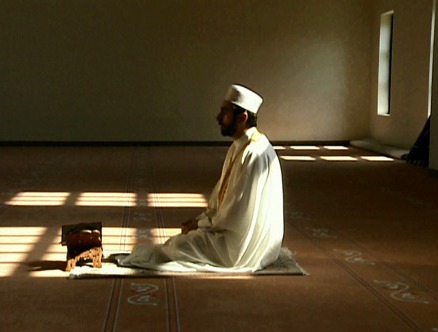
To take it a step further, if a Muslim man kneeling on his prayer rug cries out to God with all his soul for a greater understanding of Allah and the desire to serve and be holy, why do you, even if you have “issues” with Islam, care if or how that Muslim prays? Why do you care if or how a Jew prays? If you have issues with the Christian church and believe bad things about the religion where you were raised, why do you care if or how some Christians pray to God?

If you really want to practice faith and get better at it; if you really want to make a small faith bigger, what must you do?

He has told you, O man, what is good; and what does the LORD require of you but to do justice, and to love kindness, and to walk humbly with your God? –Micah 6:8 (ESV)

God, through the prophet Micah, didn’t say to judge others, force your religious convictions on everyone you disagree with, and demand that you take over another group’s faith practices because you “know better.”

Do justice.

Love kindness.

Walk humbly with your God.

So is this practicing Christianity? It is if you’re a Christian. It’s practicing Judaism if you’re a Jew, and practicing Islam if you’re a Muslim. For all I know, it’s practicing Buddhism is you’re a Buddhist. Most of all though, it’s practicing getting closer to God.

So practice justice, kindness, and humility every day and perhaps then, your small faith will begin to grow.

Why Does God Make Us Laugh?

OK, the better way to ask that question is, “why did God give us the ability to laugh?” I read a Calvin and Hobbes comic strip this morning (see below) and was struck by the absolute profound nature of the transaction between the two main characters. While Calvin remarks that it seems odd evolution should give us the ability to laugh at absurdity, my perspective allows me to attribute our ability to laugh to God.

Returning to Calvin’s’ question, why do we a laugh at the absurd? Why would God make us so that we would have such a strange physiological response to nonsense and further, why do we seem to enjoy it? It’s like watching an old Three Stooges or Laurel and Hardy short comedy film. I still love them, even though in many ways, they are hopelessly archaic…and incredibly silly. They make me laugh.

But while Calvin muses about the survival benefit of laughter in an evolutionary scheme of things, I ask the question of an intelligent and purposeful God. Why do we laugh at the absurdities of life? Directing the question to God makes Hobbes’ answer all the more frightening to me:

I suppose if we couldn’t laugh at things that don’t make sense, we couldn’t react to a lot of life.

That implies a couple of things. That a lot of what happens to us is nonsensical, absurd, or just plain crazy. And that if we couldn’t laugh at the strangeness of life, we wouldn’t have any other way of responding to it.

I’m not saying that life is endlessly funny. In many ways, life is almost endlessly tragic. Just turn on the local TV news or watch CNN for an hour and you’ll see what I mean. But then again, Calvin and Hobbes aren’t talking about humor, they’re talking about the strange, the bizarre, and probably the tragic and the hopeless. Not that we should laugh at the trouble and hardship of others, but often the only thing we can do when the bizarre little twists and turns of laugh overwhelm us and threaten to engulf us is to laugh.

My friend Joe Hendricks is a perfect example of what I mean. As he and his wife Heidi struggle in their continual wrestling match with cancer, the tool they most often use to combat despair and depression is humor. I’m not sure I’d find that many laughs if I were in their shoes (and I’m sure Heidi’s shoes wouldn’t even come close to fitting, anyway), but it works for them. Maybe it works for us to as we watch them…as I watch them, and feel utterly powerless to do anything to help them.

Is that why God gave us the ability to laugh? So we could also endure our own hideous hardships and the heartbreaking experiences of others without completely falling apart?

I’ve heard it said on many occasions that it’s faith that gets us through the tough times but I wonder if it’s really laughter? I wonder, when push comes to shove, if prayer is the most important way we can respond when faced with the horrible and insane events of our world?

How ironic if the sole purpose of having a sense of humor is to keep us from crying all the time when we’re alone and when we’re hurt and when we’re scared.

And when life makes absolutely no sense at all and we feel completely out of control.

Practicing Faith, Part 1

The essential thing, however, is the training to habituate one’s mind and thought continuously, so that it always remain imprinted in his heart and mind, that everything one sees with his eyes — the heavens and earth and all they contain — constitutes the outer garments of the king, the Holy One, blessed be He.

In this way he will constantly remember their inwardness and vitality, which is G-dliness.

This is also implicit in the word emunah (“faith”), which is a term indicating “training” to which a person habituates himself, like a craftsman who trains his hands, and so forth.

Today’s Tanya Lesson (Listen online)
Likutei Amarim, end of Chapter 42
By Rabbi Schneur Zalman of Liadi (1745-1812), founder of Chabad Chassidism
Elucidated by Rabbi Yosef Wineberg
Translated from Yiddish by Rabbi Levy Wineberg and Rabbi Sholom B. Wineberg
Edited by Uri Kaploun.

Now faith is the assurance of things hoped for, the conviction of things not seen. For by it the people of old received their commendation. By faith we understand that the universe was created by the word of God, so that what is seen was not made out of things that are visible.

Hebrews 11:1-3 (ESV)

Um, what is “faith” again?

We tend to think of faith as something we either have or don’t have, kind of like the color of your eyes. You either have brown eyes or not. It’s not something that comes and goes in stages, exactly. You either have faith or you don’t. You either believe in God or you don’t.

But wait a minute. Faith and belief aren’t the same things, are they? The writer of Hebrews seems to say that faith is the mechanism by which we understand that everything was created by the word of God, even though there isn’t any obvious physical evidence to support that this must be so.

But the lesson from the Tanya says that faith (emunah) is something we can be trained in and that we learn to habituate. Faith is learned? You can train in faith?

Kind of an interesting concept, and if you think about it a minute, it makes a lot of sense.

And he said to them, “Why are you afraid, O you of little faith?” –Matthew 8:26 (ESV)

But Jesus, aware of this, said, “O you of little faith, why are you discussing among yourselves the fact that you have no bread?” –Matthew 16:8 (ESV)

Then Jesus said to her, “O woman, your faith is great; it shall be done for you as you wish.” And her daughter was healed at once. –Matthew 15:28 (ESV)

Here, we see that faith can be little or great. Presumably, faith can be anywhere between little and great, too. So there are degrees of faith. But where do these “degrees” come from? Is there anything we can do if we have little faith to make it great or at least bigger than it was before?

Jesus seemed to think so, otherwise he wouldn’t have criticized his disciples for having little faith. But how is this to be done? The commentary in the Tanya Lesson continues:

The Rebbe notes that “who trains his hands” means: “He is cognizant of the craft in his soul; he has a natural talent for it, but needs only to train his hands, so that it will find tangible expression in his actions (be it through art, or fashioning vessels, or the like).”

This is sort of like the old joke about a country fellow who decided to visit New York City. He went on a sightseeing tour of all the famous places in New York such as Times Square, Madison Square Garden, and the Empire State Building. He also bought a ticket to a Broadway play, but as the time of the performance was drawing near, he realized he didn’t know how to find the theatre.

The tourist stopped someone on the street who looked like a local and asked, “How do I get to Broadway?”

The New Yorker brusquely replied, “Practice.”

Can faith be practiced? Can we learn faith the same way we learn a skill, such as painting, molding clay, or replacing a light switch in the hallway of your home?

The Rebbe said something else though. He said that the soul “has a natural talent for it…” (faith) “…but needs only to train his hands, so that it will find tangible expression in his actions.”

So who has a natural talent in faith?

G-d speaks with us at every moment.
His words form the world we see about us.

A prophet is no more than one who catches those words before they congeal into space and time.

-Rabbi Tzvi Freeman
“Prophecy”
Based on letters and talks of the Rebbe
Rabbi M. M. Schneerson
Chabad.org

While the Rabbi is talking about prophecy and not faith, I think we can apply his lesson to our “meditation.” God speaks to everyone, not only by virtue of the universe continuing to exist, but in many other ways. We were all created in His image. We are all His children, whether we even acknowledge Him or not. That means, we all have the ability, if we choose to use it, to connect to Him using faith as our bridge. True, some folks seem to have a greater talent for faith than others, as the Prophets had a greater “talent” for “hearing” God and passing on His Words, but even as we all can “hear” the voice of God, we all have a native talent to respond with faith…and to strengthen that faith by practicing it.

So how to you practice the “skill” of faith?

Part of the answer is in the source of the question. You study. You also pray, meditate, seek reliable teachers, spend time with other people who are also learning faith, and you let your general, day-to-day behaviors reflect your practice. This goes back to things I’ve said before about donating food to the hungry and visiting sick people in the hospital. If you want to be a person of faith, you have to act like a person of faith.

We learn by doing.

But I’ve heard some Gentile Christians say that if we are attracted to “practicing” the Bible and particularly practicing what we consider the Torah, we are really “practicing spiritual Judaism.” But is that true?

Who Is A Jew?

This apparent dichotomy in the nature of relations between Jew and Jew also appears in the words of our sages which describe the very definition of Jewishness and a Jew’s relationship with G-d.

The Talmud states: “A Jew, although he has transgressed, is a Jew.” He may violate, G-d forbid, the entire Torah, yet his intrinsic bond with the Almighty is not affected. In the words of the Midrash, “Torah preceded the creation of the world… but the thought of Israel preceded all in the mind of G-d.”

Commentary on Ethics of Our Fathers, Chapter 1
“Ulterior Motive”
Nissan 28, 5772 * April 20, 2012
Chabad.org

Judaism, at least from the Chabad perspective, considers a Jew to be a Jew, even if he or she doesn’t “practice Judaism” at all. That can’t apply to we non-Jewish Christians if we must practice our faith to be disciples of the Master and are attached to the God of Israel by that practice. So it would seem that “spiritual Judaism” isn’t something that the goyim (non-Jews) can possess, even by diligent practice.

So what are we practicing when we who are not Jewish, practice faith? Christianity?

I’ll save the answer for Part 2.

"When you awake in the morning, learn something to inspire you and mediate upon it, then plunge forward full of light with which to illuminate the darkness." -Rabbi Tzvi Freeman