Tag Archives: book review

Book Review of J.K. McKee’s “One Law for All,” Part 2

Much of this discussion has been focused around passages of the Torah detailing “one law” or “one statue” to be followed by the native Israelite and the sojourner (Exodus 12:48-49; Leviticus 24:22; Numbers 9:14; 15:15-16, 29-30). The majority of these passages actually pertain to specific legislation, where a uniform set of instruction needed to be followed. What these passages establish in a wider, theological and philosophical sense, has caused interpreters to draw a number of conclusions. Traditional Judaism widely interprets the “one law” passages as implying that the ger in Ancient Israel was only anticipated or expected to keep a minimum amount of Torah commandments, and this is followed by many of today’s Messianic Jews. Others in the broader Messianic community have held to the position that while the native Israelite and sojourner are not exactly the same, there are too many areas of equivalence, and that the sojourner was anticipated to keep the considerable bulk of the Torah’s commandments, which for many in ancient times would inevitably lead to circumcision and native status being granted.

-J.K. McKee
“Associated FAQs on the One Law Debate,” p. 130
One Law for All: From the Mosaic Texts to the Work of the Holy Spirit

This is the second part of my two-part review of McKee’s book (I published Part 1 yesterday). As I mentioned, his arguments regarding what he refers to as “Divine Invitation,” “Covenant Obligation,” and “Supernatural Compulsion” regarding how a non-Jewish disciples of the Jewish disciple should respond to the Torah mitzvot (at least within the community context of Messianic Judaism or Hebrew Roots) form the foundation of his book.

McKee advocates for the “Supernatural Compulsion” argument based on the New Covenant language found in Jeremiah 31 but, as I mentioned yesterday, since the Torah isn’t actually written on anyone’s heart yet and won’t be until the second advent, his stated motivation for a Gentile “keeping Torah” does not yet exist.

McKee dedicates about the first third of his book to explaining in great detail the passages in the Torah (listed above) related to “one law” and how the gerim or (Gentile) resident aliens among Israel were to be included and treated identically to the native Israelite in certain matters, usually related to ritual sacrifice. As McKee himself rightly states, all of the “one law” passages are conditional and do not describe a blanket commandment for Gentiles to simply enter ancient Israel and automatically be treated as a native in every single way.

I give “props” to McKee for his obviously detailed research and dedication to the topic of “one law” in ancient Israel but it almost doesn’t matter. Those passages cannot anachronistically be applied either to the Gentiles entering the Jewish worship stream of “the Way” in the first century C.E. or to we Gentile Christians, Messianic Gentiles, or Gentile One Law devotees today.

McKee even gives us the clue as to why:

…that the sojourner was anticipated to keep the considerable bulk of the Torah’s commandments, which for many in ancient times would inevitably lead to circumcision and native status being granted. (emph. mine)

I have long since asked and answered the question Whatever Happened to the Mixed Multitude and McKee has also just answered it. The commandments related to “one law” and the gerim (resident aliens) were originally created to deal with the “mixed multitude” of people (probably fellow slaves of various nationalities) who came with the Israelites out of Egypt. If they didn’t want to return to their own countries and desired to stay with Israel, what was to be done with them?

Eventual assimilation.

“You shall not detest an Edomite, for he is your brother; you shall not detest an Egyptian, because you were an alien in his land. The sons of the third generation who are born to them may enter the assembly of the Lord.”

Deuteronomy 23:7-8 (NASB)

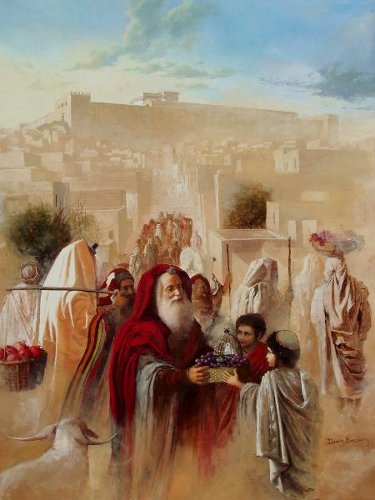
ancient_jerusalemThis is why the “one law” passages in the Torah can never be used to justify Gentile “obligation” to Torah observance in the manner of the Jewish people among Christians in Messianic Judaism or Hebrew Roots today. They do not apply. This method of assimilation was designed to allow the resident alien, who would never be an Israelite, to enter a path so that their grandchildren would be admitted into the Israelite nation as a native. There was never an intention of a sustained multi-generational presence of Gentiles who remained Gentiles and yet were otherwise treated exactly like Israelites including in their observance of all of the mitzvot.

With the passage of time, the gerim were assimilated culturally and religiously. Doeg the Edomite, for instance, was a worshiper of YHWH by the time of Saul (I Sam. 21:8), as was Uriah the Hittite in the reign of David (II Sam. 11:11). Hence, the ger, in contrast to the nokhri, was required in many cases to conform to the ritual practices of the native Israelite. Thus, gerim were subject to laws dealing with ritual purification (Num. 19:2–10), incest (Lev. 18:26) and some of the food taboos (Lev. 17:10–16; but cf. Deut. 14:21). They were expected to observe the Sabbath (Ex. 20:10; Deut. 5:14), participate in the religious festivals (Deut. 16:11, 14), and fast on the Day of Atonement (Lev. 16:29). They were permitted to offer up burnt offerings (Lev. 17:8; 22:18; Num. 15:14ff.) and, if circumcised, even to sacrifice the paschal lamb (Ex. 12:48–49; Num. 9:14). Indeed, they, no less than the Israelites, were expected to be loyal to YHWH (Lev. 20:2; cf. Ezek. 14:5–8).

-from “Strangers and Gentiles”
Jewish Virtual Library

If you click on the link I provided just above, you can read a more detailed treatment of the subject from a Jewish point of view, but as we can see in the above-quoted paragraph, there is a long history of gerim entering Israel as resident aliens and as they married and had children, eventually their descendants were assimilated into Israel and their Gentile past was forgotten.

In order for any “one law” portions of the Torah to apply to Gentiles today relative to their (our) status among Jewish believers and our duty to the Torah mitzvot, there would have had to have been a sustained presence of Gentiles among Israel who continued, generation by generation, to remain Gentiles and yet to observe the commandments in the manner of the Israelites…

…and that population never existed. It’s as if McKee wasted the first third of his book making an argument that in the end doesn’t matter.

The later part of the book has a section called The Torah Will Go Forth from Zion and specifically analyzes the impact of Micah 4:1-3 and Isaiah 2:2-4 on the Messianic and One Law communities today. McKee does well in his description of these nearly identical portions of scripture up to a point. Then he tries to force Ephesians 2:11-12 and 3:6 into the picture.

Let’s have a look. I’ll use the NASB translation:

Therefore remember that formerly you, the Gentiles in the flesh, who are called “Uncircumcision” by the so-called “Circumcision,” which is performed in the flesh by human hands—remember that you were at that time separate from Christ, excluded from the commonwealth of Israel, and strangers to the covenants of promise, having no hope and without God in the world.

…to be specific, that the Gentiles are fellow heirs and fellow members of the body, and fellow partakers of the promise in Christ Jesus through the gospel…

Ephesians 2:11-12, 3:6

Now here’s part of McKee’s commentary (pp. 112-13)

Later questions posed in the Apostolic Scriptures, such as whether or not the nations of the Earth are somehow made a part of Israel’s polity by acknowledging the Messiah…

IsraelThis does and doesn’t seem to say that the rest of the nations of the Earth somehow “become” part of Israel, as if national Israel expands to encompass those nations, eliminating their former identities (America, Canada, Japan, China, and so on) and simply all becoming “planetary Israel” if you will.

McKee spends a great deal of time in this part of his book, which supposedly addresses Micah 4:1-3 and Isaiah 2:2-4, on the effort of including the nations as part of Israel rather than vassal nations serving Israel and her King in the coming Messianic Age, and his most outrageous statement is this:

…but it forms the thrust of what it truly means for born again Believers to truly make up the “one new humanity” (Ephesians 2:15, NRSV/CJB) that the Lord wants to see emerge. Nowhere in the Bible do we ever see the implication that the community of Israel is to remain an exclusively Jewish entity… (emph. mine)

-p. 122

I thought I was done having to tolerate the Christ at the Checkpoint anti-Israel diatribes for this year. This is the worst possible example of anti-Semitic, anti-Jewish Israel in Christian rhetoric. It’s doubtful McKee meant to come off that way. He sometimes tries to bend over backward to establish mutual respect of Christianity and Judaism. But the implications of his statement are both startling and dismaying. It’s like finding the spirit of Haman in the Church. Even the Koran claims that Israel belongs to the Jews.

And just so you don’t think I’m exaggerating, here’s a quote from the Christ at the Checkpoint Conference About Us page:

Any exclusive claim to land of the Bible in the name of God is not in line with the teaching of Scripture.

Do you see the parallels between the two statements?

McKee seems to be invoking the Wesleyan philosophy of “mutual submissiveness” and any theology that makes one party in the Messianic Ekklesia somehow superior to or even different (though equal) from another violates this principle. The idea is that Jews and Gentiles in Messiah are mutually dependent upon each other.

I actually agree with that part of it as far as it goes and as was stated by Rabbi David Rudolph in the first chapter of his (and Joel Willitts’) book Introduction to Messianic Judaism: Its Ecclesial Context and Biblical Foundations, but equality does not mean uniformity. I think McKee is forgetting that Jesus is coming back as a King! As his subjects, we will serve the King of Israel, he won’t be as submissive to us as we are to him. Also remember:

For thus says the LORD, “Sing aloud with gladness for Jacob, And shout among the chief of the nations; Proclaim, give praise and say, ‘O LORD, save Your people, The remnant of Israel.’ (emph. mine)

Jeremiah 31:7 (NASB)

If Israel is the “chief” or the “head of the nations,” that means two things: 1). Israel is the leader of all the nations and the other nations of the Earth are subservient to Israel, and 2). There are other nations besides Israel in the Messianic Kingdom.

politeiaEven a quick reading of Micah 4:1-3 and Isaiah 2:2-4 lets us recognize language such as “the peoples” and “many nations” in contrast to national Israel. If we all become “Israel” and “every knee shall bow” (Romans 14:11; Philippians 2:10), then there can be no other nations, only Israel with a citizenry that is multi-ethnic containing the remnant population of the entire world all as Israelis. Too many Messianic prophesies, including those cited by McKee, specifically mention Israel and the nations.

All this hinges on a single word in ancient Greek: Politeia (πολιτεία). However, I refuse to create an entire theology based on one word that’s used once in only one of Paul’s letters.

McKee’s logic is typical of the one law argument:

  1. Politeia means “citizen”
  2. Gentile believers are citizens of Israel
  3. As citizens of Israel, Gentiles must obey the same national laws as the Jews, that is, the Torah

That’s probably too simple, but you get the idea. Except that the meaning of being separated from citizenship into (or the commonwealth of) Israel is assumed. Verse 13 states, ” But now in Christ Jesus you who formerly were far off have been brought near by the blood of Christ.” At least in English, being “brought near” is not the same as “being made identical to.”

Also, Ephesians 3:6 speaks of Gentiles as “fellow heirs and fellow members of the body,” but “body” is not the same thing as “nation”. What body?

…so we, who are many, are one body in Christ, and individually members one of another.

Romans 12:5 (NASB)

Now you are Christ’s body, and individually members of it.

1 Corinthians 12:27 (NASB)

Put together, what does it all mean? I believe it means we Gentiles, though our faith in Messiah and his atoning sacrifice for humanity on the cross, have been brought into the blessings of the promise of the New Covenant, which includes the forgiveness of sins, reconciliation before God, justification, receiving the Holy Spirit, and heirs of the resurrection and a life in the Messianic Kingdom.

If I have to define my citizenship, I’d have to say that it’s in the promise of what is yet to come in the Kingdom of Messiah, and this Kingdom encompasses the entire planet which will be made up of Israel as the head of all the nations, and then all of the vassal nations that serve Israel and her King.

In that light, I can either choose to let “politeia” be a sticking point or I can factor it in to the larger Biblical panorama and let the overarching plan of God for Israel’s redemption and through her, the redemption of the world tell its own story.

Conclusion

There’s a lot more I could say (I took very detailed notes when reading McKee’s book) but the bottom line is whether or not McKee convincingly made his point that the “one law” passages of the Bible can be applied to modern Christianity as viewed through the New Covenant lens, resulting in a fused or near-fused national identity of Jews and non-Jews as a “Torah-observant Israel”.

As I mentioned, McKee did not convince me that the “one law” passages of the Torah are in any way relevant to modern believers because they were applied in a historical and cultural context that no longer exists. Therefore, “one law” cannot be factored directly into the New Covenant promises and the inclusiveness of the nations in the blessings of those promises.

While I find McKee’s application of “one law” as a “supernatural compulsion” compelling, especially given my own attraction to Jewish studies and practice, I can’t accept that the Messianic Age has already arrived, which is what would have to occur for that “compulsion” to be a result of the “Torah written on the heart.” The best I can give him here is that it is quite possible we will all be living more jewishly in the age to come, but I don’t believe that drive can be seen in the majority of Christians today.

That said, even McKee admits that Christians in the Church today are obedient to eighty or ninety percent of the Torah commandments that can be obeyed today, so perhaps the “compulsion” to obey God’s Torah is more evident than I imagine. Add to that Gentiles like me who seem naturally attracted to Jewish practices and the study of Messianic Judaism as the proper lens for viewing the Bible, and I could even say that a sort of “one law” viewpoint is one way we see evidence of the approach of the Kingdom of Heaven and the Holy Spirit preparing us for the promises of what is yet to come (not, as you can imagine, that I am advocating for “one law” as the best possible application).

And remember, even McKee says he can’t really answer when or how Christians will turn toward the Torah of Moses and the ways of God or even what that will exactly look like.

McKee’s comparison of Micah 4:1-3 and Isaiah 2:2-4 to sections of Ephesians 2 and 3 somehow establishing a worldwide citizenship in national Israel made up of a multi-cultural population just doesn’t play. In order to make it work, his protestations aside, he has to diminish God’s promises to Jews as the exclusive citizenry and possessors of Israel.

J.K. McKee
J.K. McKee
Photo Credit: Congregation Netzar Torah Yeshua

McKee’s book is an interesting but ultimately disjointed “patchwork quilt” of Evangelical and Wesleyan Christianity and Jewish practice that just doesn’t fit together (and that said, I did enjoy reading it). In denigrating certain parties within Messianic Judaism, he also reduces Jewish influence on their own  sovereignty and history, both past and future. The idea that Israel was never meant to be the sole property of the Jewish people in perpetuity completely violates God’s promises to Abraham, Isaac, and Jacob. In imposing “mutual submissiveness” as a cardinal value in Gentile/Jewish Messianic community, he misses that Kings and Kingdoms are not “mutually submissive” but in fact, Kings rule subjects and we are his subjects.

I admire McKee’s apparent effort in his scholarly investigation into the topic and his willingness to challenge the established norms typically associated with One Law practitioners. I also, as I’ve said before, appreciate his high view of the Church and his respect for traditional Christians and the history of the saints, but his even-tempered viewpoint in these areas does not successfully make all the mismatched moving parts in this theory and theology work together.

A final note. Please understand that this doesn’t mean I don’t like McKee (I don’t even know him) or that I am saying Gentiles shouldn’t appreciate or even perform some practices that are typically considered Jewish (observing a form of Sabbath, dietary restrictions, building a sukkah). There are a variety of reasons for doing so (such as being intermarried). I’m just saying, as a reviewer, that I do not believe McKee made a sufficiently convincing case based on his research, interpretation, and presentation. Your mileage may vary.

Addendum: Pete Rambo just published Part 2 of his review of McKee’s book.
Book Review of J.K McKee’s “One Law for All,” Part 1

When I write a book review, I normally start at the beginning of the book and move through to the end. I don’t know why. I guess I’m just kind of linear that way. But J.K. McKee’s book One Law for All: From the Mosaic Texts to the Work of the Holy Spirit was organized in such a way that I decided to start in the middle and work my way out from there.

A little background. McKee in the center of his work, is comparing what has been called “Divine Invitation” (which is an unfortunate label for reasons I’ll address later in this review) with “Covenant Obligation”. These are difficult issues to discuss with a general audience since they require a great deal of specialized knowledge and tend to apply to only very small subgroups within both Christianity and Judaism, specifically movements called Hebrew Roots and Messianic Judaism.

The question, within those particular contexts, is whether non-Jewish believers in Jesus as the Jewish Messiah, are allowed to observe some, most, or even all of the commandments in the Five Books of Moses, also known as the Pentateuch in Christianity and the Torah in Judaism, or if Christians are actually under a covenant obligation to observe all of these commandments exactly or at least more or less like religious Jewish people?

I should say that even addressing what this sort of observance looks like, regardless of it being voluntary or mandatory, is highly variable. How the mitzvot (commandments) are to be observed aren’t always agreed upon even between different branches of Judaism. And particularly in Hebrew Roots, there’s a tendency to believe one can disregard any Jewish authority or opinion regarding how one is to perform a mitzvah and choose your own method based on whatever reason you want as long as you deem it “Biblical.”

In the introduction to the book (p. x), McKee states:

It can be definitely said that a ministry like Outreach Israel and TNN Online adheres to a One Law position, after a fashion.

Here’s where things start to get interesting. Unless otherwise stated, all emphasis in a quote from the “One Law” book belong to McKee.

A question that I have been asked by more than a few people is which option they are to choose: Is the Torah a Divine Invitation to non-Jewish Believers, or is it a Covenant Obligation upon non-Jewish believers? Is the Torah mandatory for Jews to follow, and an option for non-Jews to follow? Or is the Torah something mandatory for all of God’s people to follow?

-McKee, p. 83

First Fruits of Zion (FFOZ) Founder and President Boaz Michael coined the phrase “Divine Invitation” some years ago in explaining how FFOZ had shifted its theological stance from supporting a single standard of observance for both Jewish and Gentile Messianic believers to a viewpoint that advocated Jewish distinctiveness and the understanding that certain of the mitzvot are exclusively reserved for the Jewish people. He never intended it to become a theology all its own but unfortunately, the label stuck. The idea is better expressed as Gentiles in Messiah indeed being obligated, but to a certain subset of the Torah commandments (see Toby Janicki’s article “The Gentile Believer’s Obligation to the Torah of Moses” in the Winter 2012 issue of Messiah Journal for a detailed discussion on this matter) as opposed to a single, uniform application of the mitzvot for all human beings.

McKee’s commentary seems to assume that a Gentile is obligated to exactly zero Torah commandments or all of them, with no variability based on covenant role, identity, nationality, gender, geolocation, and so on.

McKee opposes the position of “divine invitation” which I expected, stating that it is bound to be confusing to non-Jewish Messianics relative to which parts of the invitation to accept, which parts to turn down, and just how one accepts the various invitations (do Gentiles have to perform an accepted mitzvah in exactly the same way as a Jewish person?). At one point in his criticism of this “theology,” he seems to attack Jewish Torah observance as well, replacing it with a more “Christian” concept of “Jewish identity”:

More importantly, though, if there is anything seriously being overlooked about the unique distinctiveness of Jewish people, it is that “salvation is from the Jews” (John 4:22), with Yeshua the Messiah Himself being the quintessential Jew. This is far more significant than Torah-keeping being what apparently makes the Jewish people distinct.

-ibid, p.85

Just a few paragraphs later however, he surprises me by saying something I more or less agree with.

For Messianic Believers today, our family has always emphasized the need to love people into this — rather than issue condemning and mean-spirited words. Much of the “pagan” rhetoric that one sees in fringe parts of the Messianic world has significantly impeded progress for the Kingdom of God, and is a major blight that is not spoken against enough. Yet at the same time, if Divine Invitation presents Shabbat, the appointed times, or kosher eating as entirely optional, what is keeping someone from turning it down?

-p. 86

one law bookThe only parts I didn’t agree with were McKee’s identifying the “pagan rhetoric” against the Christian Church as originating in the “Messianic world”. I organize Messianic Judaism and Hebrew Roots (One Law is a subset group within larger Hebrew Roots) as two separate movements with only a superficial overlap, usually at the level of the non-Jewish believer who is attracted to Judaism to some degree. I don’t typically hear Messianic Jews or Gentiles denigrate Christianity and find the “pagan rhetoric” confined to certain circles within Hebrew Roots (although, to be fair, as McKee said, they are “fringe parts” of the movement or even “fringe individuals”).

The other part I question is if something is considered an option, then there’s nothing preventing a person from saying, “No, I don’t feel led to do that.” That’s what optional means. You don’t have to. McKee’s commentary about Christians and Torah observance becomes confusing and even mysterious just a few pages later.

But before that, in addressing Covenant Obligation, McKee says:

If Believers are “obligated” to “keep Torah,” then this can quite easily lead to a few people thinking that their Torah-keeping will earn them their salvation, and can manifest itself in rather rigid and legalistic assemblies forming.

-ibid

Born again Believers are not required to keep God’s Torah as though it were some kind of debt or obligation (cf. Galatians 5:3); on the contrary, we are told, “Owe nothing to anyone except to love one another; for he who loves his neighbor has fulfilled the law” (Romans 13:8).

-p. 87

On the one hand, I was pleasantly surprised to see a supposed One Law proponent recognize some difficult truths about the movement, but on the other hand, he had to denigrate all Torah observance, even for Jewish believers, by saying loving one’s neighbor fulfills (abrogates, demolishes, deletes) the law. McKee seems to miss the nuances Paul is injecting into Romans 13 and how they connect back to what Jesus calls “the Two Greatest Commandments” (Matt. 22:35-40; Mark 12:28-31; Luke 10:25-28 citing Deut. 6:4-5 and Lev. 19:18).

But that can’t possibly be what McKee’s saying because of the major theme of the book, which is to advocate for Torah observance for Gentiles. I find this author to be a sometimes confusing blend of One Law and Wesleyan perspectives (McKee states that he had a Wesleyan upbringing to which he apparently still adheres) and as I was reading through the rest of this section, I started to think of him as a “One Law Wesleyan.”

McKee continued to defend the Church and to criticize One Law adherents for throwing Christianity under the bus, so to speak:

I have constantly asked various individuals who are “One Law” why they criticize elements of today’s Church who follow well over ninety-percent of the Torah that can be followed today, and why they treat our Christian brothers and sisters as some kind of perpetual “enemy.”

-p. 88

This is one of McKee’s confusing messages. He defends the Church as it is and states they are already observing most of the mitzvot, and yet he is pushing (apparently) for greater “jewishly” Torah observance by (One Law) Christians.

Further…

Our ministry has never advocated that today’s evangelical Christianity is some kind of illegitimate impostor religion, more in touch with accomplishing the objectives of the Adversary than in achieving the mission of God. We have advocated that the Church has flaws to be certain, but that it is the responsibility of Messianic Believers to build on a positive legacy of faithful Christian men and women who have preceded us in the faith…

p. 93

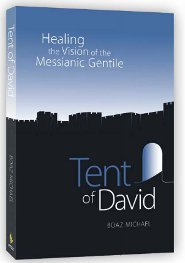
The last paragraph I quoted was startling to me because it reminded me of what Boaz Michael wrote in his book Tent of David: Healing the Vision of the Messianic Gentile:

The church is good but the church needs to change.

Tent of DavidI’ve written a number of different commentaries on his book including this one, and acknowledge that what Boaz produced challenged me personally to set aside my discomfort about going back to church and to “take the plunge,” which was nearly two years ago. Boaz was instrumental in getting me to see what is good in the Church, which is the same message McKee is delivering.

I applaud McKee for maintaining a high view of Christianity and the faithful men and women in the Church, which he acknowledges is practically unknown within One Law communities, but if he does not advocate for One Law anymore than “divine invitation,” and he apparently does not identify with mainstream Christian assembly (although he protects and defends Christians), what else is there that could be considered “One Law”?

As it turns out, McKee’s third viable option is:

Obeying the Lord is neither an optional invitation nor a mandated obligation, it is a supernatural compulsion enacted by the perfecting activity of the Holy Spirit on the human soul.

p.91

I’m disappointed. I expected a much stronger approach to his application of One Law. But this is like just redressing the One Law argument in spiritual rather than covenantal language. The Holy Spirit (supposedly) compels the individual to desire to observe the 613 commandments or something like them, give or take your opinion on the halachah established by the various Rabbinic sages in the numerous streams of Judaism across thousands of years of history.

Actually, I know where he’s getting this:

“Behold, days are coming,” declares the Lord, “when I will make a new covenant with the house of Israel and with the house of Judah, not like the covenant which I made with their fathers in the day I took them by the hand to bring them out of the land of Egypt, My covenant which they broke, although I was a husband to them,” declares the Lord. “But this is the covenant which I will make with the house of Israel after those days,” declares the Lord, “I will put My law within them and on their heart I will write it; and I will be their God, and they shall be My people. They will not teach again, each man his neighbor and each man his brother, saying, ‘Know the Lord,’ for they will all know Me, from the least of them to the greatest of them,” declares the Lord, “for I will forgive their iniquity, and their sin I will remember no more.”

Jeremiah 31:31-34 (NASB)

Unfortunately, McKee has a couple of problems. The first is that the New Covenant was made exclusively with the House of Judah and the House of Israel and does not presuppose any other nations or people groups at all (least of all he and me). Yes, there is a New Covenant application for Gentiles which I summarized here, but up to this point in the book, while McKee mentions various aspects of the New Covenant, he jumps from Jeremiah 31 straight to the Last Supper (Matt. 26:17-30; Mark 14:12-26; Luke 22:7-39; and John 13:1-17:26) without making the connection explicit. I know how it works (and it took me months of study to figure it out) but chances are many of McKee’s readers don’t (or they don’t understand it correctly).

The other major problem is that the New Covenant hasn’t been fully enacted yet. It’s not here. Jesus inaugurated it with his life, death, and resurrection, but until his return, we are only living in what you might consider the leading edge of the Messianic Age. What that means is until the resurrection and until Messiah returns to us here on Earth and ascends the Throne of David in Holy Jerusalem, we are still living in Old (Sinai) Covenant times!

So we don’t have the Torah supernaturally written on our hearts yet and thus, neither Jews and certainly not Gentiles have the Holy Spirit granted ability to naturally obey God and never sin, which is what the New Covenant is all about…the forgiveness of all sins and the ability to never sin again and obey God’s law (as it applies to each individual and each people group).

And yet he says:

A position of Supernatural Compulsion does advocate that a Torah obedient walk of faith is expected of all God’s people but it is to be found as an individual grows in holiness and spiritual maturity…

-McKee, ibid

While “expected” and “obligated” sound really similar to me, I like that, at least, McKee is acknowledging not everyone is going to adopt the various mitzvot at the same rate or to the same degree. It’s a matter of spiritual growth and maturity. Interestingly enough, I’ve heard many stories of secular Jews who became “religious” and this is more or less how they approach the vast body of mitzvot, taking a mitzvah at a time and growing into it.

But for a Christian, there are additional roadblocks, such as a lifetime of being taught that the law is dead.

ChurchMcKee said in his book that he advocates for a gentle, educational approach rather than going into a church and beating Christians over the head with a Torah scroll. In some sense, this is reminiscent of my own Tent of David experience. It’s sort of like evangelizing the church by encouraging them to consider a more Messianic perspective on the Bible, but where I desire to educate about how the New Covenant works and thus alter Christian perceptions on the primacy of national Israel and the Jewish people in the age to come, McKee is hoping to encourage more “Torah observant” behavior in normalized Christianity.

This is still refreshing because a lot of One Law people I’ve encountered in person and online hate the Church, call it “Babylon,” “pagan,” and “apostate,” and encourage Christians to abandon the Church. His attitudes about the Church are very similar to mine.

But here’s one more surprise I didn’t see coming:

Does a ministry like Outreach Israel and TNN Online think the Torah is for everyone? Yes. Does this include things like Shabbat, the appointed times, and kosher? Yes. But such an affirmative also needs to be tempered with another question: Are these aspects of God’s Torah for everyone right now in the 2010s? This is something that only God, in His plans for an individual’s or a family’s life, especially evangelical Christians, knows for sure — and I cannot fully answer.

-p.93

As I am reading McKee, I think he’s saying that believing non-Jews can and should observe the mitzvot in a more or less “Jewish” manner and to the same degree as Jewish believers (and Jewish unbelievers), but that such standards cannot be imposed from the outside by human agency. Even if one worships with other One Law advocates, that community has no right to direct a person or a family to observe this or that mitzvah. Such a directive will only come from the Holy Spirit and only in the way God’s plan is designed for the individual or family and through the process of spiritual growth and maturity.

I’m a little uncomfortable saying that Christians who don’t have a One Law or even a Messianic Gentile perspective are spiritually immature. I happen to know some people at the church I attend who are models of spiritual maturity and who I admire greatly. Just associating with such people is an honor. From a Jewish perspective, they could be referred to as tzaddikim (“righteous ones”). A Christian would say “saints”.

In the first century C.E. before the destruction of the Temple and the exile of the Jewish people from Israel, Paul’s Gentile disciples in Syrian Antioch and the various communities he established in the diaspora probably behaved in a distinctively Jewish manner, much more so than Christians would consider “normal” today, even acknowledging the “Jewish roots of the faith.” In those days there was no such thing as “the Church” or “Christianity,” there was only the Jewish movement of “the Way,” the “Ekklesia of Messiah” which included Jewish and Gentile members.

I suspect that after the resurrection and in the reign of King Messiah, we will have something similar, not a Church and then a Judaism but rather an Ekklesia with two distinct populations: Israel or the Jewish people, and the people of the nations who are called by His Name. This isn’t exactly what McKee is advocating because he believes Jesus-worshiping Jews and Gentiles are all citizens of Israel, but it’s kind of similar.

What McKee may be shooting all around but not quite hitting is the fact that the New Covenant age has yet to arrive (although we’re currently experiencing a foretaste of the promises yet to come) and that the Torah will only be written on our hearts in the future. While some non-Jews will acquire an apprehension of the centrality of the Jewish people in God’s redemptive plan prior to that time, many others, and probably most Christians, won’t.

white-pigeon-kotelI think the reason McKee can’t answer the question about when or how Gentile Christians will be drawn to naturally obey God is because it’s not going to happen until after we are resurrected and perfected in Messiah by the power of the Holy Spirit and in accordance to God’s New Covenant promises.

With the center of McKee’s book laid as a foundation, I’ll use it to build my review of the first and last parts of his text in part 2 of my “meditation” on One Law for All.

Addendum: My partner in this endeavor, Pete Rambo, just published Part 1 of his own review of McKee’s book.

A Book Review By Invitation

My recent post/review of Boaz Michael’s Tent of David has really fostered some good discussion. Probably one of the longest and best discussion thread on any post on this blog. At times it has been spirited, but peace and grace have been the general tenor. Thank you!!

Leaders in the discussion have been bloggers James Pyles of “My Morning Meditations” and Ruth of Sojourning With Jews. Both are friends I have gotten to know over the last year in the blogosphere and though we do not see eye to eye on all things Messianic, we all desire truth and enjoy the pursuit thereof. Each of us has publicly wrestled with thoughts and understandings as we search the Scriptures (though I envy both for being more open with their hearts than I have been…).

-Pete Rambo
“You are invited….”
natsab.com

Hebrew Roots (HR) blogger Pete Rambo has issued a challenge to me (Ruth had to back out) to read one or more leading HR books (since Pete and I have already discussed Boaz’s book Tent of David: Healing the Vision of the Messianic Gentile in the comments section of his review) and to “co-review” the book, he with his perspective on his blog and me on mine.

Pete generously sent me two books to choose from, both written by a gentleman named J.K. McKee who maintains a personal/professional website called TNN Online (Theology News Network Online). McKee’s rather lengthy Statement of Faith is also available on his site, so in addition to his About page, you should be able to find out all you need to know about him.

As far as Pete goes, he describes himself as a “46 [year old] recovering seminary trained pastor.” He also says:

During most of my life I have had a particular interest in eschatology (end times events/prophecy) and in understanding truth. (I used to be a conspiracy theorist… now, I am a conspiracy factualist… ) In my quest, I began to run into pieces of information that challenged my very conservative traditional Christian religious perspectives. Only when I began to pray earnestly for Yahweh to show me TRUTH did He move my focus from geopolitical events and onto a close scrutiny of what I now call ‘Churchianity.’ As I learned how far the Church had moved from the simplicity of the Book of Acts and the clear teaching of the Word, I became convicted of the need for a personal reformation.

Tent of DavidTo “bottom line” it, my understanding (and please correct me if I get this wrong, Pete) is that both Pete and Mr. McKee would fall into the theological/doctrinal category within Hebrew Roots of being One Law (and I’ve linked to a set of definitions created by Rabbi David Rudolph from his website MessianicGentiles.com).

The book Pete and I agreed upon (via email) to review first is McKee’s One Law for All: From the Mosaic Texts to the Work of the Holy Spirit. The book is about two-years old and so far has rather stellar reviews on Amazon with a total of nine reviews as I write this. Either the book is incredibly good, or the deck is stacked, or both.

Let me explain.

Since I’m also published author, though not in the religious or theological space, the publishers I’ve written for typically send me anywhere from five to ten “review copies” of my books once they go to market so I can pass them out to family and friends, asking them to write and publish reviews on Amazon.

This is a traditional marketing technique and the assumption is that the author’s family and friends or perhaps “fans” of his/her work will be more likely to write favorable reviews, elevating the book’s ranking at Amazon. Of course, at least from my experience, every time I’ve sent out review copies of one of my books and asked people I know to review it, it’s always a tad risky, since I want the reviewers to be honest and sincere, and there’s always a chance they’ll take exception to some portion of what I’ve written (if not the whole book). On the other hand, I don’t want anyone to be dishonest in writing their opinion of something I’ve created. If one of my books is to be praised, I want that praise to be authentic.

I say all this with the idea that the individuals who have reviewed McKee’s “One Law” book at Amazon may be those people who are already predisposed to like the content of McKee’s book (and his general theological bent) and thus write positive reviews.

I know one of the reasons I reviewed Matthew Vines’ book God and the Gay Christian: The Biblical Case in Support of Same-Sex Relationships is because I knew it would draw exactly two audiences: those who automatically supported his platform and those who automatically opposed it. I wondered if Mr. Vines would ever get a truly objective review of his work, so I made it my “mission,” so to speak, to do just that, setting aside as much of my own personal bias as was possible.

I intend to do the same thing here with the caveat (please pay attention to this part) that I am theologically and doctrinally opposed to the position that there is One Law, that is, a single and unified application of the Torah mitzvot that applies to all disciples of Jesus Christ (Yeshua HaMoshiach) whether they be Jewish or Gentile (that application would ultimately be applied to all human beings since the Bible refers to how “every knee will bow, see Romans 14:11; Philippians 2:10).

I have a history in “One Law,” and after coming to faith within the context of a Christian church nearly twenty years ago, I swiftly (long story) transitioned into a Hebrew Roots/One Law congregation (which billed itself as “Messianic Judaism”) and learned my basic understanding of the Bible and my faith there.

Without going into a long explanation, after some years, I finally was prompted to question all of the assumptions I naively accepted back in the day and spent nearly a year publicly exploring said-assumptions on my previous blog spot (to which I no longer contribute).

In the spirit of friendship and learning, I have agreed to Pete’s proposal but I could be considered what trial attorneys call a hostile witness in that my attitudes and beliefs regarding “One Law” are not supportive of the theological presuppositions it entails.

one law bookThe goal is as Pete states on his own blog:

In the process of our discussion, I mentioned to James via email that we ought to read and review/discuss a book at the same time…

One point to stress for all of us from the outset: the goal here is to learn and grow. We may be challenged, but we want to plan on good vigorous discussion that at the same time is peaceful and displays the fruit of the Spirit!!

That is, Pete and I will read McKee’s book and each of us will post our impressions/reviews on our respective blogs (and I also intend to post a review on Amazon). We will insert McKee’s book into a crucible and attempt, through our differing viewpoints, to tease out the essence of what’s been written, then present those findings to whoever chooses to read our blogs.

As Pete says, we both want to show that two people can discuss differing theological perspectives in a peaceful and cooperative manner, and avoid those emotional meltdowns that we all frequently have witnessed in the religious blogosphere. We aren’t (necessarily) trying to convince the other to change his mind, but rather are trying to provide clarity of thought and expression of our respective points of view.

I hope you will follow along on our two blogs and feel free to join in (politely and respectfully) on our discussions.

Book Review: Divine Messiah

“We don’t need a Messiah actually,” she argued. I’ve had this conversation a number of times and on this occasion we were relaxing over coffee. “Everything you say Jesus does we say God does. God is our savior and the whole Messiah thing is not what you make it to be. God redeems, heals, raises the dead, is the king, brings the age to come, restores Israel, and gives knowledge in the future time to the Gentiles.”

-Derek Leman
“Chapter One: Seated at the Right Hand,” (loc 23)
Divine Messiah (Kindle Edition)

Note: Lacking page numbers, I’ll use the “location” (loc) notation in Kindle to describe approximately where in the book each quote is to be found. Also, be prepared. This is pretty long.

Most of my regular readers know or at least are aware of Derek Leman, who he is, what he believes, and what he teaches, but for those of you who surfed in to read yet another book review, on his author’s page at Amazon.com Derek says:

I am a rabbi, writer, and speaker focused on the Jewish context of faith in Jesus (Yeshua), on making the Hebrew Bible (Old Testament) simple, and on the intersection of Judaism and Christianity. Linda and I have eight children who fill our lives with fun and friendship. We are a homeschooling family dedicated personally to the value of a faith-filled home. My special interests include the Hebrew Bible, the Gospels, the life and teachings of Yeshua, theology, Second Temple Jewish history, Abraham Joshua Heschel, the early midrashim of the land of Israel, mussar, mysticism, the Hebrew language, Isaiah, the works of J.R.R. Tolkien and C.S. Lewis, science fiction, fantasy, Star Trek, and beer. Not necessarily in that order.

He has been heavily marketing his Divine Messiah eBook on his blog for months, the most recent effort (as I write this) being Preview: Divine Messiah.

In this short book (the print length is only 98 pages, so hardly the length of a chapter or two in most larger texts) which I downloaded onto my Kindle Fire for a nominal cost, Derek proposes to do what I would consider the impossible: to describe, from a Messianic Jewish point of view, the “mechanics” of Yeshua (Jesus) being co-equal to God the Father.

My personal opinion is that the Deity and Divinity of Yeshua remains a profound mystery that defies analysis and that can only be reasonably discussed in the realm of mysticism (I refer the reader to Messianic Luminary Paul Philip Levertoff’s classic Love and the Messianic Age along with its accompanying textual commentary, both published by First Fruits of Zion, for insights into Jewish mysticism within the Messianic perspective).

The purpose of my current review is to determine if Derek reasonably makes his case that Jesus Christ, that is Yeshua HaMashiach, is indeed God as God the Father is God, that he is worthy of worship and devotion as God, and that the early Messianic Jewish and Gentile disciples worshiped Jesus as God beginning in the early to mid-first century CE.

I will mention as a caveat that there is no one “Messianic Jewish perspective” on anything. Derek represents primarily his own point of view although I can only imagine he draws heavily from his affiliation with the scholarly and authoritative body Messianic Jewish Rabbinical Council. He also draws a great deal from the work of Dr. Larry Hurtado, “New Testament scholar, historian of early Christianity and Emeritus Professor of New Testament Language, Literature and Theology at the University of Edinburgh, Scotland.” I should say that I am also a “fan” of Dr. Hurtado’s work and have received a number of personal insights from his recent and classical writings.

Derek wrote his book in six chapters and I’ll structure my review likewise, followed by a conclusions section.

Chapter One: Seated at the Right Hand

Derek starts out with the issue of what Yeshua brings to the table as Divine Messiah. Referencing the dialog I quoted above from his first chapter, traditional Jewish thought has no need for a Messiah who is also God. The God of the Hebrew scriptures is the God of Israel, the God who was, who is, and who forever shall be. Who is this “figure” who supposedly sits at God’s “right hand?”

Derek Leman
Derek Leman

The first chapter lays out all the questions. “Is Yeshua really needed, given that God is already in charge?” How can Messiah, a man, a human being, say that he is God? “Doesn’t God say, ‘I am not a man’?” And if Yeshua isn’t Divine, is “he nothing more than a doorway to the future world we will enjoy?” (a question that I recently explored)

Larry Hurtado, in a recent blog post, brings forth questions about what Jesus did or didn’t believe about himself and how his disciples and apostles perceived him, both before his crucifixion and after his resurrection. Derek seems to understand that Jesus knew exactly who he was and is by quoting the following:

But He kept silent and did not answer. Again the high priest was questioning Him, and saying to Him, “Are You the Christ, the Son of the Blessed One?” And Jesus said, “I am; and you shall see the Son of Man sitting at the right hand of Power, and coming with the clouds of heaven.”

Mark 14:61-62 (NASB)

Derek then proceeds to a number of texts in the Hebrew Bible, principally Daniel 7, also referencing Talmudic scholar Daniel Boyarin’s commentary on the same scripture in his book The Jewish Gospels: The Story of the Jewish Christ, as well as historical notes from other noteworthy Jewish sources such as Rabbi Akiva, Don Issac Abravanel, and of course, the apostle Paul, in order to build a case for how Jewish thought at different points in history, considered God and his “chief agents” as well as how these agents were similar to and different from Yeshua.

Derek’s conclusion here is that no other figure of honor or representing God was treated in the same manner as Jesus:

They saw the Glory of God reflected in the face of Yeshua the Messiah. They saw Yeshua enthroned at God’s right hand and heavenly beings prostrate before both of them. They saw something new, far beyond the other kinds of divine agents in the Hebrew Bible and in Jewish literature of various types.

-Leman, loc 150

While this may seem apparent to most Christians, we don’t often attempt to struggle with comprehending the following:

The belief in Yeshua as Divine Messiah is, in the words of Larry Hurtado “a mutation or variant form of exclusivist monotheism.”

-ibid, loc 161

Chapter Two: God’s Nature in the Hebrew Bible

Having set the stage, Derek next takes a look at the traditional Jewish view of God in the Tanakh (Old Testament), although it should be noted that there is no single, overarching Jewish “opinion” on the nature of God.

The Hebrew Bible is not the record of a God who can be fathomed. His appearance to people is always a surprise. He can appear in ways deceptively small, a bush in the desert. He reveals himself as eternal, with foreknowledge and an unchanging nature, yet acting in human history, regretting things, and at least in appearance moving with events as a participant in them.

-ibid, loc 201

Additionally, and this seems to be the capstone of the chapter:

Monotheism may not be as simple as it seems.

-ibid, loc 210

Standing before GodAs you might expect, the Hebrew Bible declares God a complete and indivisible unity without differentiation. Derek proposes however, based on the Hebrew Scriptures that “God’s nature is differentiated in the Bible (in that) he is at the same time in more than one place and fulfilling multiple roles.” (loc 245)

One vital piece of information Derek confirms is:

The Divine Messiah realization was not disclosed in the Hebrew Bible, but only afterward.

-ibid, loc 257

This may be rather shocking to most Evangelical Christians who cite various proof texts from the Old Testament which they believe establishes Jesus as Messiah as well as Jesus as God. And yet, a careful reading of the Torah, Prophets, and Writings does not lead us to obviously conclude that the Messiah must be God. Apart from the aforementioned Daniel 7, we don’t have any evidence that the Bible presupposed Messiah as God prior to the New Testament.

However, God does appear “differentiated” relative to the various manifestations we see described, such as “Spirit,” “Glory,” and other “forms,” and it’s Derek’s contention that “the Spirit of God” describes something personal about God as opposed to poetic language or even a circumlocution for God’s power such as “the Hand of God.”

God’s Spirit does things requiring active verbs. God’s Spirit was brooding.

-ibid, loc 290

Also…

God does not directly enter the world but sends aspects of his being which are mysteriously undefined.

-ibid, loc 323

Humanity can hardly grasp even imagining the totality of an infinite God. We can’t even grasp the vastness of God’s creation, the universe which is inconceivably large and yet which must be finite. So then, God in all His infinity does not intersect with our universe but rather “aspects” of God that can be witnessed and can interact with our environment and with ourselves. Hence the various “forms” of God we see evidenced in the writings of the Tanakh.

At one point, I believe Derek gets a little premature in saying:

God is not a man, but he is not averse to appearing as one.

-ibid, loc 356

It can be argued that none of the “man-like” supernatural figures appearing in the Tanakh, including Jacob’s “wrestling partner” (Genesis 32:24-32) are not God but angelic representatives or agents, so we may never see God incarnated as a man in the Hebrew texts. Exactly who or what walked with Adam in the Garden (Genesis 3:8), I have no idea, but God did not have to appear human.

Derek does follow-up by stating:

…it should be clear by now that the appearances of God are extraordinarily incomprehensible.

-ibid, loc 411

Throne of GodThe one appearance that is most challenging is the “enigmatic person” who appears with the “Ancient of Days” in Daniel 7 (it always comes back to Daniel 7 it seems) including the mention of a figure “like the son of man” (Daniel 7:13). Derek argues against the modern Jewish interpretation of the “son of man” as national or corporate Israel and gives evidence for a specific individual who is both martyr and ruler, this being “one more example of a seeming paradox.” (in Judaism, paradox and dynamic tension between apparently opposing ideas is sometimes embraced rather than avoided as Christianity does)

Derek even suggests that Trinitarianism (God, Messiah, and Spirit) is supported in the Hebrew Bible, but is far less specific than Christianity’s view of the nature of God.

Chapter Three: Jewish Precursors, Parallels, and Providence

Derek continues to address the nature of God starting out with the two views: God as Force vs. God as Distant. God as Force is seen as the prime actor within our universe but not transcending our universe…personal, active, but wholly embedded in Creation. God as Distant is ultimately transcendent and who set all into motion but then ignores the universe as we might ignore a clock once we set it to the correct time. God is impersonal, the subject of philosophical study, but supremely unapproachable and incomprehensible.

And yet the God of the Bible is both, although His transcendent qualities are obviously more difficult to document. His interaction with our world, as mentioned above, is not through direct contact but accomplished by aspects or agents, and although angelic beings and unique individuals such as Enoch were highly elevated and exalted, “Judaism was not going so far as to say that God became an actual human…” (loc 563)

And again, as mentioned before, Derek tells his audience:

Let me be clear from the beginning (note: though we’re about a third of the way through his book at this point) there was not in normative Judaism the idea exactly like the “binitarian monotheism” of the early Jewish believers.

-ibid, loc 574

Caveat stated, moving forward in history into the time of the New Testament, Derek offers a tour of the “chief agent figures in second temple Judaism.”  He explains how the various streams of normative Judaism of that era were reacting to Gentile influences by creating a number of supernatural “divine agents”. Moving still forward in time, Derek then comments on “Rabbinic thought after the first century.”

Did the rabbis have any comparable inspiration to offer regarding God being present in the world of their time? They certainly did and with great beauty they talked about the Word (Memra, Dibbur, Davar), the Shechinah (Presence), and the Spirit. What they did not do — though some have misinterpreted their words as if the divinity of Yeshua is paralleled in rabbinic sayings about Messiah or the Word — is describe any separate entity equal to God.

-ibid, loc 705

Christianity as well as Messianic Judaism, has been accused repeatedly by more normative branches of modern Judaism as well as “anti-missionary” organizations, of deliberately (or sometimes just naively) misusing rabbinic literature as evidence of “Jewish” support for Yeshua as Messiah as well as a “Divine Messiah”. I appreciate Derek’s integrity here in refuting this practice, and twisting the teachings of the rabbinic sages to say what the authors never intended merely cheapens our efforts to be a witness of Yeshua as Messiah.

That said, I do think it’s true that the later rabbis may have interpreted sections of the Bible to deliberately create distance between Jewish and Christian perspectives.

…that in early rabbinic works references to the Holy Spirit were restrained. The Shechinah was used instead, so as not to seem in agreement with Christians…

-ibid, loc 751

Larry Hurtado
Larry Hurtado

Derek returns to the first century Biblical narrative and particularly to Paul and how his letters seem to manage the “Divine Messiah realization.” Agreeing with Hurtado, Derek proposes an early worship of Messiah as God but does say that such a “realization was thought blasphemy when it first appeared” as implied in the story of Paul.

Again citing Hurtado, Derek states that Paul actually inherited the concept of “Messiah as Divine” from the earlier Judean Yeshua-believers, rather than, as many critics claim, “reinventing” Yeshua the itinerant rabbi from the Galilee as a Deity.

Chapter Four: The Early Believers’ Devotion to the Divine Messiah

In the early half of the first century, it happened so suddenly that there are no records of the way the innovation came about. The early community of Yeshua-followers started believing and practicing something beyond any previous concept.

-ibid, loc 860

Hurtado’s 2005 book How on Earth Did Jesus Become God: Historical Questions about Earliest Devotion to Jesus covers this territory more thoroughly and is the source of much of Derek’s material. Interestingly enough, Derek also leverages Bart Ehrman’s newly published book How Jesus Became God: The Exaltation of a Jewish Preacher from Galilee. I say “interestingly” because Ehrman is both a New Testament scholar and an agnostic, and because Hurtado recently reviewed the same book by Ehrman, providing additional dimension to Derek’s research.

Key support for Derek’s assertion of a Divine Messiah who was worshipped early in the existence of the Yeshua-believing Jewish/Gentile ekklesia is a comparison between Isaiah 45 and the “hymn” of Philippians 2 as well as the “Shema” of 1 Corinthians 8. He also comments on the arguments of Chris Tilling regarding the Corinthian letter and what Tilling calls “relational monotheism.”

In other words, Paul is willing to see Yeshua in the Shema, regards Yeshua as worthy of equal relational faith as God, and sees the one God as the Father and the one Lord as Yeshua.

-ibid, loc 967

I have to admit at this point, it’s difficult for me to sort out how “God is One” and yet to have God the Father and Jesus the Lord so differentiated and yet both being God. I think this is what happens by necessity when anyone actually attempts to analyze or map out the “nuts and bolts” of trinitarian thought.

Derek calls one of the sections of this chapter “Careful but Confusing Language about Yeshua,” which says mouthfuls. Some of the doubt critics of Christianity have regarding the Deity of Jesus is that the Bible never comes out and says “Jesus is God.” It certainly would be helpful for those of us who don’t always want to be reading the Bible as a puzzle or a mystery story to be solved, if the New Testament writers would have been more explicit.

But they said “Yeshua is Lord” not “Yeshua is God,” so we’re left with something to interpret rather than a plain, peshat statement.

Derek again emphasizes that no other Biblical figure save God was accorded such devotion and worship, as evidenced by the early hymns about Jesus, prayer to God “through” Jesus, calling upon the name of Jesus, confessing Jesus, and so on.

They went on stoning Stephen as he called on the Lord and said, “Lord Jesus, receive my spirit!”

Acts 7:59 (NASB)

Even Derek admits that this verse may not be sufficient to support the idea that the early disciples prayed directly to Jesus (bypassing God the Father altogether), but then he goes on to present a larger body of evidence.

D. Thomas Lancaster
D. Thomas Lancaster

In one of my reviews (I don’t recall which one) of D. Thomas Lancaster’s The Holy Epistle to the Hebrews sermon series, I mention that Lancaster says Yeshua’s statement in Mark 14:64 (which I mentioned above) is what got him killed. Derek mentions this again as the foundation of how later opponents to the concept of a Divine Messiah saw the actual worship of Yeshua as Lord (God) as blasphemy, leading to persecution of the Jewish Jesus-believing ekklesia by other branches of first century Judaism.

And yet, referencing Hurtado and Tilling, Derek believes the evidence of Yeshua-worshiping Jewish and Gentile believers is painted all over the New Testament writings.

Some have complained that Hurtado’s evidence that the early believers regarded Yeshua as divine is sparse, based on too few examples and that there is inadequate information about the causes of the new belief. Tilling says language about God-like relational aspects of Messiah with believers nullifies this objection.

-ibid, loc 1185

Further, according to Derek, Paul most often refers to “the Lord” when addressing Yeshua but in referencing God, he uses  “Father” or “Abba,” apprehending both as God but differentiated with different titles.

One traditional criticism, both in ancient and modern times, from normative Judaism is that “Christian devotion to Jesus is idolatry.” If you literally worship a common human being as a “god” then you do have problems, but all of Derek’s narrative has been illustrating that not only is Yeshua unique among humans and agents of God, but that he is specifically and uniquely an object of worship equal to God but not representing a separate “power” from God (no “two powers in Heaven”).

He presents his evidence (though exclusively from the New Testament) that worship of Jesus is directly opposed to worshiping idols or pagan (false) gods, and how worship activities such as “the cup of Yeshua” or “the Lord’s supper” were considered “as being as sacred as the Israelite sacrificial meals.” Of course, from a normative Jewish point of view, if you discount the New Testament as an authoritative source, this doesn’t behave much like evidence.

In the end, Derek’s concluding paragraph to this epic chapter addresses our confusion and our need for faith through the Spirit:

It is by the Spirit that we can say, “Yeshua is Lord.” In other words, there is a mystical communication to the soul which cannot be put into words.

-ibid, loc 1298

Chapter Five: Being Followers of a Divine Messiah

The last two chapters of the book are relatively brief and seem to be Derek’s summing up of what all this is supposed to mean to us today.

Fire on a mountain is one thing. A divine man is quite something else.

-ibid, loc 1336

That’s rather an understatement given the task of communicating a Divine Messiah to a disbelieving world or even those who doubt within the body of faith today, or as Derek also puts it, “Welcome to the mysteries of life and teaching of Yeshua.”

god-is-oneWe can’t just study the Bible and expect to learn and grow. “Knowing is experiential as well as intellectual.” Being a disciple of a living and Divine Master is just as much a matter of doing as thinking or feeling. We “behave” in our lives and toward Jesus as teacher, prophet, master and yes, God as Derek would have us believe and do. And yet he says again, “The nature of Messiah, a mystery we only begin to perceive…” (loc 1356) We learn, we know, we believe, and it is all still a profound mystery, which by its very definition, makes writing a book about said-mystery problematic at best and impossible at worst.

And yet, we have Yeshua himself speaking of returning in power and glory and:

“For whoever is ashamed of Me and My words in this adulterous and sinful generation, the Son of Man will also be ashamed of him when He comes in the glory of His Father with the holy angels.”

Mark 8:38 (NASB)

We have consequences for not having faith in the Divine Messiah when he returns.

Chapter Six: The Case in Short

This is Derek’s final conclusions of his evidentiary arguments for the Divine Messiah, the unsolvable mystery that has many clues. The clues are listed in bullet points within these last few (virtual) pages. His final words are:

The Messianic Jewish belief about God and Messiah is that God has taken an unprecedented new step in lifting up to himself all humanity. This idea is based on a real historical phenomenon that requires some sort of explanation. People could obviously quibble with us about this or that point. But the case has its own internal consistency and a compelling persuasiveness worth considering.

-Leman, loc 1559

Conclusion

Given the open ended nature of Turning Torah how is one to know which meaning is the right one? This is an excellent question, but not a Jewish one. For us there is no one right reading of Torah. There is only the next reading. Of course different Jews will have their preferences, claiming one reading to be superior to others, but this is personal bias rather than a system of right and wrong readings built into the process of Torah Turning.

-Rabbi Rami Shapiro
“Arguing for the Sake of Heaven”
Patheos.com

In reading Rabbi Shapiro’s commentary, I thought of my own Why No One Comes to the Father Except Through the Son. The Torah, and by extension, the entire Bible, from a Jewish perspective, is not a fixed, inflexible, immutable document. According to R. Shapiro, “there is no one right reading of the Torah. There is only the next reading.”

And so it goes with how we read the story of Yeshua in the Gospels and other Apostolic Writings.

Christian literature is replete with apologetics in support of Jesus as Deity, as co-equal with God the Father and God the Spirit. It’s not as if what Derek Leman wrote was the first ever attempt at revealing Lord Jesus to the believing masses.

What was unique, at least relatively so, was making this effort from a Messianic Jewish perspective. I liken it to D. Thomas Lancaster’s presentation of the New Covenant and his interpretation of The Epistle to the Hebrews. This has long since been considered as “Christian” material, completely disconnected from any association with Judaism, reconsidered and reinterpreted from a Messianic Jewish framework.

If you weren’t convinced of a Divine Messiah before this, chances are you won’t be convinced by this book. However, if you are a Jew or Gentile worshiping and studying within a Messianic Jewish context, either individually or in community, I think Derek may have given more than a few of you something new to think about by writing this book.

Remember though that while I (and many others) consider Messianic Judaism to be a Judaism (and not a Christianity as such), it is hardly universally accepted as a Judaism, either by the Church or by the other branches of Judaism as Rabbi Shapiro aptly points out.

There is one limit, however, that is imposed from the outside: arguing for the sake of heaven cannot lead you out of the community. This is a sociological argument imposed by most rabbis. If, for example, a someone turns Torah and finds in God’s use of the plural “us” in “Let us create humanity in our image after our likeness” (Genesis 1:26) proof of the Christian Trinity of Father, Son, and Holy Spirit, almost every rabbi would disavow such a reading. But there is no reason to do so other than the fact that it leads one out of Judaism and into Christianity.

The good Reform Rabbi’s commentary is written to address how Torah can be interpreted and reinterpreted to respond to the needs and even the desires of changing societal imperatives, and can accept many new things that would have been ignored or even shunned by the Rabbis of old, but the hard limit is an interpretation that takes the Jew outside of Jewish community so that even a religious and social liberal opinion as what R. Shapiro seems to represent draws an uncrossable line at a “Divine Messiah.”

praying-at-the-kotelThis is the bitter pill Messianic Judaism swallows in its desire to consider the other Judaisms us, not them. Here is where Derek Leman and the other Jews in Messiah walk a difficult line, embracing a vision of Messiah that has long been associated with Christianity while attempting to refactor it through the lens of Hebrew thinking, scripture, and commentary as wholly Jewish.

Repeatedly, Derek said that the evidence indicates Yeshua-worship in the first century CE was an entirely new and unanticipated concept and activity for any branch of Judaism. The Jewish disciples must have been startled at the sudden inception of a Divine Messiah. They scarcely could have believed in a Messiah that could actually be God. It must have been far easier for the Greeks to adopt this notion, and no wonder so many Jews could not accept it.

Christianity has long assumed that the Jewish “offense of the cross” was Jesus as God, but my studies have often shown me that it was Gentile inclusion in the ekklesia as equal co-participants that was the main reason so many other Jewish sects rejected “the Way.” Could another reason for the early rift between the Jesus-believing Jews and all of their brethren also have been the unprecedented worship of the God-Messiah?

Read Derek’s book and see where his arguments take you.

Book Review: God and the Gay Christian

My core argument is not simply that some Bible passages have been misinterpreted and others have been given undue weight. My larger argument is this: Christians who affirm the full authority of Scripture can also affirm committed, monogamous same-sex relationships. Instead of accepting the divide between moderate and progressive Christians who support marriage equality and conservative Christians who oppose it, this book envisions a future in which all Christians come to embrace and affirm their LGBT brothers and sisters — without undermining their commitment to the authority of the Bible.

-Matthew Vines
“Reclaiming Our Light — An Introduction,” pg 3
God and the Gay Christian

Matthew Vines is an openly gay Christian speaker and LGBT activist, known for the viral video “The Gay Debate: The Bible and Homosexuality” on YouTube. Vines grew up in Wichita, Kansas, having interests in performing arts, speaking and writing.

-from Wikipedia

Note: The featured image at the top of this blog post will make more sense when to get to the end to this article.

Vines is an Evangelical Christian who is seeking to not only establish that the Bible does not actively condemn loving, monogamous, homosexual relationships, but actually supports them, and he’s going to try and do that using a high view of the Bible.

I’ve seen other resources, primarily online, from various progressive churches that are inclusive of the LGBTQ community by taking a low view of the Bible, that is, by not accepting that the Bible is inerrant and ultimately the authoritative Word of God. It’s more of a set of “guidelines” and therefore, the sections of the Bible condemning homosexual behavior are not to be taken literally or, they were social norms that were once valid in ancient societies but have no application in the modern world of faith.

Vines, by contrast, embraces the full authority of the Bible but believes it has been misinterpreted and misapplied, resulting in the Evangelical Church’s long condemnation of homosexual behavior and of gay people, including the gay Christians in their (our) midst.

The approach Vines uses has an unanticipated parallel with what I’ve been trying to do. In my world (if you’ve been reading my blog for very long, you know what my perspectives are), I believe that the Evangelical Church has misinterpreted Scripture and mistakenly concluded that Jesus “nailed the Law to the cross,” rendering it obsolete for both Gentile and Jewish disciples of the Master, replacing Israel with the Church. My purpose has been to attempt to convince Evangelicals of this misinterpretation and to see that both ancient and modern Jesus-believing Jews were and are still in covenant relationship with God through the Sinai covenant as well as the emergent New Covenant (I should note that based on my reading of his book, Vines seems to be a classic supersessionist, but for the purposes of my review, I won’t hold that against him *wink*).

But the parallel in our attempts to convince Evangelicals to reconsider how they view the Bible breaks down almost immediately. I’ll explain why in a minute, but first, let’s take a look at the reasons Vines believes Evangelicals should re-evaluate how they read the Bible relative to LGBT Christians:

  1. First, we saw that a categorical rejection of same-sex relationships has been deeply damaging to gay Christians.
  2. …we saw that the concept of same-sex orientation did not exist in the ancient world. Prior to recent generations, same-sex behavior was widely understood to be the product of sexual excess, not the expression of sexual orientation.
  3. …the church has an established tradition affirming that lifelong celibacy should be voluntarily chosen, not mandated. Maintaining a condemnation of same-sex relationships would require us to revise that teaching.

TorahSince point two is most applicable to an actual examination of Scripture, I want to focus on why Vine believes (and I agree with his perspective here) those portions of the Bible condemning homosexuality do not address sexual orientation as we understand the concept today.

Vine says there are six major Bible verses used by Evangelicals to support the condemnation of Homosexual behavior: Genesis 19:5, Leviticus 18:22, Leviticus 20:13, Romans 1:26-27, 1 Corinthians 6:9, and 1 Timothy 1:10. One by one, Vines addresses each of these points but he might as well have saved himself the trouble because of a few details that make those arguments moot.

As we saw in Chapter 2, same-sex relations in the first century were not thought to be the expression of an exclusive sexual orientation. They were widely understood to be the product of excessive sexual desire in general. This understanding, I want to stress, cannot be reduced to a mere misconception. It was a reflection of widespread cultural practices that differ greatly from modern ones.

-Vines, pg 106

Vines expands on this matter greatly in Chapter 2: “Telescopes, Tradition, and Sexual Orientation.” Dating back to the days of Moses and extending up through the first century CE, the available Biblical and historical information indicates that any same-sex behavior we witness in these records was related to issues of ritual idolatry or status. Homosexual and heterosexual temple prostitutes were part of many pagan rites in the ancient near east and we can certainly see Leviticus 18:22 applied to that context, particularly since many of the prohibitions listed in the Torah have to do with warning the Israelites away from worshiping “foreign gods.”

Homosexual acts as sexual excess and establishing status relate specifically to anal penetration with the individual doing the penetrating having the higher status. Vine establishes, and again, I agree, that in each of these cases, the men and women involved in homosexual acts were also participating in heterosexual acts. This wasn’t a matter of sexual orientation whereby the homosexual person has no choice about being attracted to same-sex people. These were people who indulged in pleasurable sexual (and other) activities for the sake of pleasure and perhaps status (Master vs. slave, Older male vs. younger male), but who had heterosexual relationships/marriages for the purposes of procreation (see Prager’s article Judaism’s Sexual Revolution: Why Judaism (and then Christianity) Rejected Homosexuality).

So how did we get to where we are today? The modern understanding of homosexuality as a sexual orientation began to develop among an elite group of German psychiatrists in the late 19th century. Prior to 1869, the terms “homosexual” and “homosexuality didn’t exist…Even then, while some doctors began to think of same-sex attraction as an exclusive sexual orientation, that understanding didn’t begin to gain wide acceptance until the middle of the 20th century.

-ibid, pg 42

Matthew Vines
Matthew Vines

The heart of Vines’ argument is that none of the Bible passages in question could possibly have to do with sexual orientation or a “loving, committed, monogamous” same-sex relationship because, as such, the concept of sexual orientation didn’t then exist and was not the focus of the Biblical sexual prohibitions.

As far as that goes, Vines makes a good case, but the best he can say is that the Bible is silent on sexual orientation. Of course, we have no idea if human beings experienced homosexuality as an exclusive sexual orientation in ancient times. We only know that such experiences don’t exist in our historical record, nor do they seem to be presupposed by the Bible. Each and every marital relationship described within the context of the covenant people of God was heterosexual, that is, between a man and a woman (or between one man and several woman in the case of men like Abraham, Jacob, and David). There are no normative examples of romantic and marital relationships between two men or two women within the covenant community.

I stress that point because Vines not only wants to discredit the condemnation of homosexuality oriented people based on the Bible, he wants to establish that the Bible can be used to support marriage equality. While he does well in his first argument, he flounders in the second.

Addressing whether or not same-sex couples can become “one flesh,” Vines states:

In Ephesians 5:31-32, the phrase “one flesh” is said to be a mystery that relates to Christ and the church. The relationship between Christ and the church does not involve sexual union or anatomical difference…Not only does Ephesians 5 never mention gender-determined anatomical differences, it focuses instead on the fact that husbands and wives are part of the same body.

So according to Ephesians, gender difference is not necessary to become one flesh in the Bible’s understanding of those words. What is necessary is that two lives are joined as one in the context of a binding covenant.

-ibid, pg 149

In my opinion, Vines is playing fast and loose with his Biblical hermeneutics and sinking into eisegesis, or projecting what he wants to see in the lines between the Bible verses. Stepping back and taking a longer view, as I said above, the Bible never presupposes same-sex couples in a normalized marriage within the covenant community of Judaism or later, the early Christian ekklesia. The overarching template of sanctified marital relationships in the Bible is one man and one woman.

On the one hand, Vines says that the Bible’s prohibitions against homosexuality do not apply to sexual orientation and thus the validity of modern same-sex bonding, but on the other hand, he attempts to force the scriptures to sanction modern same-sex bonding based on how those scriptures define marriage, including Ephesians 5. I don’t think he can have his cake and eat it too.

What about Vines’ other two points?

holding handsIn Chapter 3: “The Gift of Celibacy,” Vines challenges Evangelical Christianity’s “answer” to gays in the Church: life-long celibacy. Vines believes it is cruel to force a gay person who is devoted to Jesus Christ and who loves God to remain sexually unfulfilled for their entire lives, deprived of the same love and companionship that straight couples in the Church enjoy. He says that orientation is not a choice and Vines as well as all other gay people cannot simply change who he is/they are attracted to. Celibacy is unsustainable in a human existence, and Vines provided compassionate stories of gay Christians whose lives were tremendously and negatively impacted by attempting to follow this Church “policy.”

Vines correctly points out, using a number of heartrending examples, how Christian families have been torn apart by a gay child coming out, which has led to gay Christians leaving their churches and their faith, parting from their families, abusing drugs and alcohol, and even committing suicide. All this because the Church demands they either change something about themselves they find impossible to change or to deny that part of themselves by remaining celibate and alone forever.

But I think Vines’ argument comes down to the following:

Instead of asking whether it’s acceptable for the church to deny gay Christians the possibility of sexual fulfillment in marriage, we should ask a different question. Is it acceptable to deny gay Christians the opportunity to sanctify their sexual desires through a God-reflecting covenant?

-ibid, pg 161

Vines began his book by saying he intended to provide evidence to support the supposition that the Bible does not condemn homosexuality as an orientation and does not condemn loving, monogamous same-sex relationships, and I think, based on how we understand the history of homosexuality in the ancient world, he makes a good case. But his evidence for Biblical support of same-sex relationships based on sexual orientation up to and including marriage equality is much weaker and seems to come down to whether or not the Church thinks it’s being fair to gay Christians.

He cannot, in my opinion, make the Bible support same-sex marriages within the Church, but he can make a credible appeal for compassion and even mercy. I don’t deny his love for God, nor can I deny his experience, or the experience of myriads of other gay people who say that they have no choice in the matter, they are attracted sexually and romantically only to members of the same sex. Further, I can be compassionate about the struggles of forced celibacy (the New Testament generally treats celibacy as voluntary and even as a “spiritual gift”).

So, what’s the answer? I don’t have one. Relative to writing a book review, I don’t need to produce one. All I have to do is render an opinion whether or not the author successfully made his case. I must admit, I have been challenged in terms of the Biblical statements regarding homosexual behavior as addressing excesses in indulgence rather than orientation as such, but still see no active Biblical support for acceptance of marriage equality within the Christian Church.

Does that mean I’m being mean or cruel? Vines separates Christians into either those who affirm homosexuality or the non-affirming group. I guess I’m still in the latter category, which is too bad.

BiblicallyI have a confession to make. I was hoping Vines would deliver a devastating argument that I would find impossible to refute Biblically, a real “game-changer” that would permit me in all clear conscience based on sound scriptural exegesis to accept that homosexual orientation and monogamous same-sex bonding was sanctioned or at least permitted by God. It would resolve a great deal of dissonance between my current Biblical perspective and my desire to be compassionate and accepting.

So where does that leave me? Can I accept that a person can be gay and authentically a Christian, in “right relationship” with God through their faith in Jesus Christ? How can I hold a person accountable for something they experience as out of their control, as inseparable from their identity and personality? I don’t know. I don’t know if our understanding of homosexuality as a sexual orientation existed before the late 19th century. There’s no evidence it did, but who writes the history books?

On the other hand, who wrote the Bible? If God intended same-sex couples to be normalized within the covenant community, why isn’t there any indication in the Bible?

As far as my understanding of how Gentiles are included in the New Covenant and the continuance of the Torah mitzvot as an obligation for ancient and modern Jewish Jesus-believers, I find a great deal of Biblical and scholarly evidence as presented by many New Testament theologians. Vines has virtually no Biblical evidence of support for marriage equality, and his only scholarly source, and it’s a good one, is Dr. James Brownson. Dr. Brownson’s son came out as gay at the age of eighteen, resulting in Brownson authoring the book Bible, Gender, Sexuality: Reframing the Church’s Debate on Same-Sex Relationships.

I mentioned before that the best I can say about Vines’ book is that the Bible is silent about how it views same-sex attraction as an orientation, since the concept didn’t exist Biblically and historically. I don’t know what that means for gay Christians, but I think it’s premature to say that it is a “requirement of Christian faithfulness” for believers to “show that supporting LGBT people is not at odds with being a faithful Christian.” (pg 183)

To learn more about Matthew Vines, please go to his website. You should also visit The Reformation Project which…

…exists to train Christians to support and affirm lesbian, gay, bisexual, and transgender (LGBT) people. Through building a deep grassroots movement, we strive to create an environment in which Christian leaders will have the freedom to take the next steps toward affirming and including LGBT people in all aspects of church life.

-from their About page.

One last thing. I purchased this book through AbeBooks.com but the actual seller was Housing Works. According to the bookmark included with my purchase:

Housing Works is a healing community of people living with and affected by HIV/AIDS. Our mission is to end the dual crises of homelessness and AIDS through relentless advocacy, the provision of lifesaving services, and entrepreneurial businesses that sustain our efforts.

AdvocateWhile this doesn’t have a direct relationship with Vines’s book, it does serve as a reminder that there have always been disadvantaged, disenfranchised, and vulnerable populations among us that for one reason or another, we demonize, marginalize, or ignore. The Bible is God’s revelation to human beings in written form, a record of God’s interaction with His greatest creation: people. What it shouldn’t be is a straitjacket that binds us so tightly that we fail to act with compassion, kindness, and mercy. We all are, after all, created in the image of God.

God’s image does not have a sexuality or sexual orientation, but it does provide us with the ability to choose who we are in relationship to God and to each other. We can also choose to behave lovingly and with respect to all others who have the same image, including people who experience grave disadvantage, sometimes just because of how we choose to interpret the Bible.

So far, I know the Bible doesn’t automatically condemn LGBT people. Beyond that, I’m still learning. The one thing I do know though, is that it’s no sin to care about someone, even if they aren’t the same as you. If that’s a mistake, I’ll choose to err on the side of compassion.

Preparing to Review “God and the Gay Christian”

“God and the Gay Christian is a game changer. Winsome, accessible, and carefully researched, every page is brought to life by the author’s clear love for Scripture and deep, persistent faith. With this book, Matthew Vines emerges as one of my generation’s most important Christian leaders, not only on matters of sexuality but also on what it means to follow Jesus with wisdom, humility, and grace. Prepare to be challenged and enlightened, provoked and inspired. Read with an open heart and mind, and you are bound to be changed.”

—Rachel Held Evans, author of “A Year of Biblical Womanhood and Faith Unraveled”
found at Amazon.com

This isn’t the sort of book I’d normally read, and especially the sort of book I’d pay for, but I found a book review on this text, and it’s quite compelling to consider that someone would say there’s supportive data in the Bible for “loving same-sex relationships”. A surface reading of both the Old and New Testaments would seem to suggest otherwise, but the debate continues to rage regarding the accuracy (let alone “truth”) of this matter. One such debate can be found in the comments section of The Christian Post article Evangelicals Review Matthew Vines’ “God and the Gay Christian” Book, while LGBTQNation.com has a very different viewpoint.

Whenever I’m concerned that my conservative religious, social, and political bias is overwhelming my ability to fairly view an issue like this, I check in with my daughter who is supportive of marriage equality and equal rights for the LGBTQ community. Given her perspective, she continues to think that equality in secular society is one thing, but that it’s a step too far to say that the Bible actually supports and endorses homosexual behavior.

That’s been my perspective as well (for a representative but not exhaustive list of my blog posts on this matter, click on this link). I haven’t reviewed a book like Vines’ before, but I have reviewed a series of reviews of a book called Same-Sex Unions in Premodern Europe written by the late John Boswell. My conclusion of the author’s supposition that the Church performed same-sex marriages in antiquity and thus, the modern Church should perform same-sex marriages today, is that it was pretty much wishful thinking on Boswell’s part.

I will agree that the Bible generally does not speak of same-sex relationships in a negative light when they occur outside the community of faith. However, for those who are joined to God in a covenant relationship (i.e. the Jewish people) or those of us (i.e. Gentile Christians) who are grafted in and enjoy certain covenant blessings, the story (in my humble opinion) is different.

But I can’t get ahead of myself and I want to be fair. My concern is that this book will be reviewed almost exclusively along emotional, political, and social lines rather than based on an evaluation of the author’s research in comparison to scripture. That is, if you are a liberal Christian or Jew, you’ll love the book. If you’re a conservative Christian or Jew, you’ll hate it. It’s a knee-jerk response from either side of the aisle. You almost don’t even have to read the book in order to render a strongly held opinion.

I’d like the opportunity to look at Vines’ work while minimizing my “visceral response”. I should say that a lot of how one reviews such a book depends a great deal on the interpretative matrix used to understand the Bible. Evangelical Christians will use proof texts from the Old and New Testaments to speak against homosexuality while simultaneously saying the Old Testament laws (which by definition should include those laws that address homosexuality) are dead (for details about a Jewish viewpoint on homosexuality, read Homosexuality and Halakhah).

Liberal Christians and Jews won’t necessarily speak against the literal words of the Bible, but they will reinterpret them in ways that some of us might consider “creative” in order to say that the plain meaning of the text isn’t the true meaning of the text.

You shall not lie with a male as one lies with a female; it is an abomination.

Leviticus 18:22

If there is a man who lies with a male as those who lie with a woman, both of them have committed a detestable act; they shall surely be put to death. Their bloodguiltiness is upon them.

Leviticus 20:13

Matthew Vines
Matthew Vines

Strictly speaking, the New Testament doesn’t address homosexuality or homosexual behavior. It does address sexual immorality in a number of verses (Matthew 15:19, Romans 13:13, 1 Corinthians 5:11, Revelation 21:8, for example), but it’s a matter of opinion if the intent of the New Testament authors included “homosexuality” as a sexually immoral behavior, although according to this article:

Nearly every major Greek lexicon includes “fornication” as at least an aspect of the meaning of porneia. In addition to premarital sex, this term would also include such things as homosexuality, bestiality, adultery, et al The first definition given above sums it up well as “every kind of extramarital, unlawful, unnatural sexual intercourse.” We would also do well to remember Christ’s words from Matthew 15 which state that it is not only the actual intercourse that is prohibited, but also the sinful affection which lies behind the action (relate to Matthew 5:27-30). (emph. mine)

No doubt, the reviews of Vines’ book, pro and con, are going to be surging forth in the blogosphere, at least in the short run (public opinion is fickle and attention spans are limited), but I feel compelled to add my voice to the din because (hopefully) I can attempt to view what Vines wrote while restricting my reflexive response. If he can make his case based on scripture while avoiding an emphasis on emotional appeal, he should be heard out.

I just ordered the book. It will take some time to get here (five to fourteen business days), but I feel honor-bound to actually read Matthew Vines’ God and the Gay Christian: The Biblical Case in Support of Same-Sex Relationships before reacting to it in any definitive sense.