Tag Archives: Christ

Book Review: Divine Messiah

“We don’t need a Messiah actually,” she argued. I’ve had this conversation a number of times and on this occasion we were relaxing over coffee. “Everything you say Jesus does we say God does. God is our savior and the whole Messiah thing is not what you make it to be. God redeems, heals, raises the dead, is the king, brings the age to come, restores Israel, and gives knowledge in the future time to the Gentiles.”

-Derek Leman
“Chapter One: Seated at the Right Hand,” (loc 23)
Divine Messiah (Kindle Edition)

Note: Lacking page numbers, I’ll use the “location” (loc) notation in Kindle to describe approximately where in the book each quote is to be found. Also, be prepared. This is pretty long.

Most of my regular readers know or at least are aware of Derek Leman, who he is, what he believes, and what he teaches, but for those of you who surfed in to read yet another book review, on his author’s page at Amazon.com Derek says:

I am a rabbi, writer, and speaker focused on the Jewish context of faith in Jesus (Yeshua), on making the Hebrew Bible (Old Testament) simple, and on the intersection of Judaism and Christianity. Linda and I have eight children who fill our lives with fun and friendship. We are a homeschooling family dedicated personally to the value of a faith-filled home. My special interests include the Hebrew Bible, the Gospels, the life and teachings of Yeshua, theology, Second Temple Jewish history, Abraham Joshua Heschel, the early midrashim of the land of Israel, mussar, mysticism, the Hebrew language, Isaiah, the works of J.R.R. Tolkien and C.S. Lewis, science fiction, fantasy, Star Trek, and beer. Not necessarily in that order.

He has been heavily marketing his Divine Messiah eBook on his blog for months, the most recent effort (as I write this) being Preview: Divine Messiah.

In this short book (the print length is only 98 pages, so hardly the length of a chapter or two in most larger texts) which I downloaded onto my Kindle Fire for a nominal cost, Derek proposes to do what I would consider the impossible: to describe, from a Messianic Jewish point of view, the “mechanics” of Yeshua (Jesus) being co-equal to God the Father.

My personal opinion is that the Deity and Divinity of Yeshua remains a profound mystery that defies analysis and that can only be reasonably discussed in the realm of mysticism (I refer the reader to Messianic Luminary Paul Philip Levertoff’s classic Love and the Messianic Age along with its accompanying textual commentary, both published by First Fruits of Zion, for insights into Jewish mysticism within the Messianic perspective).

The purpose of my current review is to determine if Derek reasonably makes his case that Jesus Christ, that is Yeshua HaMashiach, is indeed God as God the Father is God, that he is worthy of worship and devotion as God, and that the early Messianic Jewish and Gentile disciples worshiped Jesus as God beginning in the early to mid-first century CE.

I will mention as a caveat that there is no one “Messianic Jewish perspective” on anything. Derek represents primarily his own point of view although I can only imagine he draws heavily from his affiliation with the scholarly and authoritative body Messianic Jewish Rabbinical Council. He also draws a great deal from the work of Dr. Larry Hurtado, “New Testament scholar, historian of early Christianity and Emeritus Professor of New Testament Language, Literature and Theology at the University of Edinburgh, Scotland.” I should say that I am also a “fan” of Dr. Hurtado’s work and have received a number of personal insights from his recent and classical writings.

Derek wrote his book in six chapters and I’ll structure my review likewise, followed by a conclusions section.

Chapter One: Seated at the Right Hand

Derek starts out with the issue of what Yeshua brings to the table as Divine Messiah. Referencing the dialog I quoted above from his first chapter, traditional Jewish thought has no need for a Messiah who is also God. The God of the Hebrew scriptures is the God of Israel, the God who was, who is, and who forever shall be. Who is this “figure” who supposedly sits at God’s “right hand?”

Derek Leman
Derek Leman

The first chapter lays out all the questions. “Is Yeshua really needed, given that God is already in charge?” How can Messiah, a man, a human being, say that he is God? “Doesn’t God say, ‘I am not a man’?” And if Yeshua isn’t Divine, is “he nothing more than a doorway to the future world we will enjoy?” (a question that I recently explored)

Larry Hurtado, in a recent blog post, brings forth questions about what Jesus did or didn’t believe about himself and how his disciples and apostles perceived him, both before his crucifixion and after his resurrection. Derek seems to understand that Jesus knew exactly who he was and is by quoting the following:

But He kept silent and did not answer. Again the high priest was questioning Him, and saying to Him, “Are You the Christ, the Son of the Blessed One?” And Jesus said, “I am; and you shall see the Son of Man sitting at the right hand of Power, and coming with the clouds of heaven.”

Mark 14:61-62 (NASB)

Derek then proceeds to a number of texts in the Hebrew Bible, principally Daniel 7, also referencing Talmudic scholar Daniel Boyarin’s commentary on the same scripture in his book The Jewish Gospels: The Story of the Jewish Christ, as well as historical notes from other noteworthy Jewish sources such as Rabbi Akiva, Don Issac Abravanel, and of course, the apostle Paul, in order to build a case for how Jewish thought at different points in history, considered God and his “chief agents” as well as how these agents were similar to and different from Yeshua.

Derek’s conclusion here is that no other figure of honor or representing God was treated in the same manner as Jesus:

They saw the Glory of God reflected in the face of Yeshua the Messiah. They saw Yeshua enthroned at God’s right hand and heavenly beings prostrate before both of them. They saw something new, far beyond the other kinds of divine agents in the Hebrew Bible and in Jewish literature of various types.

-Leman, loc 150

While this may seem apparent to most Christians, we don’t often attempt to struggle with comprehending the following:

The belief in Yeshua as Divine Messiah is, in the words of Larry Hurtado “a mutation or variant form of exclusivist monotheism.”

-ibid, loc 161

Chapter Two: God’s Nature in the Hebrew Bible

Having set the stage, Derek next takes a look at the traditional Jewish view of God in the Tanakh (Old Testament), although it should be noted that there is no single, overarching Jewish “opinion” on the nature of God.

The Hebrew Bible is not the record of a God who can be fathomed. His appearance to people is always a surprise. He can appear in ways deceptively small, a bush in the desert. He reveals himself as eternal, with foreknowledge and an unchanging nature, yet acting in human history, regretting things, and at least in appearance moving with events as a participant in them.

-ibid, loc 201

Additionally, and this seems to be the capstone of the chapter:

Monotheism may not be as simple as it seems.

-ibid, loc 210

Standing before GodAs you might expect, the Hebrew Bible declares God a complete and indivisible unity without differentiation. Derek proposes however, based on the Hebrew Scriptures that “God’s nature is differentiated in the Bible (in that) he is at the same time in more than one place and fulfilling multiple roles.” (loc 245)

One vital piece of information Derek confirms is:

The Divine Messiah realization was not disclosed in the Hebrew Bible, but only afterward.

-ibid, loc 257

This may be rather shocking to most Evangelical Christians who cite various proof texts from the Old Testament which they believe establishes Jesus as Messiah as well as Jesus as God. And yet, a careful reading of the Torah, Prophets, and Writings does not lead us to obviously conclude that the Messiah must be God. Apart from the aforementioned Daniel 7, we don’t have any evidence that the Bible presupposed Messiah as God prior to the New Testament.

However, God does appear “differentiated” relative to the various manifestations we see described, such as “Spirit,” “Glory,” and other “forms,” and it’s Derek’s contention that “the Spirit of God” describes something personal about God as opposed to poetic language or even a circumlocution for God’s power such as “the Hand of God.”

God’s Spirit does things requiring active verbs. God’s Spirit was brooding.

-ibid, loc 290

Also…

God does not directly enter the world but sends aspects of his being which are mysteriously undefined.

-ibid, loc 323

Humanity can hardly grasp even imagining the totality of an infinite God. We can’t even grasp the vastness of God’s creation, the universe which is inconceivably large and yet which must be finite. So then, God in all His infinity does not intersect with our universe but rather “aspects” of God that can be witnessed and can interact with our environment and with ourselves. Hence the various “forms” of God we see evidenced in the writings of the Tanakh.

At one point, I believe Derek gets a little premature in saying:

God is not a man, but he is not averse to appearing as one.

-ibid, loc 356

It can be argued that none of the “man-like” supernatural figures appearing in the Tanakh, including Jacob’s “wrestling partner” (Genesis 32:24-32) are not God but angelic representatives or agents, so we may never see God incarnated as a man in the Hebrew texts. Exactly who or what walked with Adam in the Garden (Genesis 3:8), I have no idea, but God did not have to appear human.

Derek does follow-up by stating:

…it should be clear by now that the appearances of God are extraordinarily incomprehensible.

-ibid, loc 411

Throne of GodThe one appearance that is most challenging is the “enigmatic person” who appears with the “Ancient of Days” in Daniel 7 (it always comes back to Daniel 7 it seems) including the mention of a figure “like the son of man” (Daniel 7:13). Derek argues against the modern Jewish interpretation of the “son of man” as national or corporate Israel and gives evidence for a specific individual who is both martyr and ruler, this being “one more example of a seeming paradox.” (in Judaism, paradox and dynamic tension between apparently opposing ideas is sometimes embraced rather than avoided as Christianity does)

Derek even suggests that Trinitarianism (God, Messiah, and Spirit) is supported in the Hebrew Bible, but is far less specific than Christianity’s view of the nature of God.

Chapter Three: Jewish Precursors, Parallels, and Providence

Derek continues to address the nature of God starting out with the two views: God as Force vs. God as Distant. God as Force is seen as the prime actor within our universe but not transcending our universe…personal, active, but wholly embedded in Creation. God as Distant is ultimately transcendent and who set all into motion but then ignores the universe as we might ignore a clock once we set it to the correct time. God is impersonal, the subject of philosophical study, but supremely unapproachable and incomprehensible.

And yet the God of the Bible is both, although His transcendent qualities are obviously more difficult to document. His interaction with our world, as mentioned above, is not through direct contact but accomplished by aspects or agents, and although angelic beings and unique individuals such as Enoch were highly elevated and exalted, “Judaism was not going so far as to say that God became an actual human…” (loc 563)

And again, as mentioned before, Derek tells his audience:

Let me be clear from the beginning (note: though we’re about a third of the way through his book at this point) there was not in normative Judaism the idea exactly like the “binitarian monotheism” of the early Jewish believers.

-ibid, loc 574

Caveat stated, moving forward in history into the time of the New Testament, Derek offers a tour of the “chief agent figures in second temple Judaism.”  He explains how the various streams of normative Judaism of that era were reacting to Gentile influences by creating a number of supernatural “divine agents”. Moving still forward in time, Derek then comments on “Rabbinic thought after the first century.”

Did the rabbis have any comparable inspiration to offer regarding God being present in the world of their time? They certainly did and with great beauty they talked about the Word (Memra, Dibbur, Davar), the Shechinah (Presence), and the Spirit. What they did not do — though some have misinterpreted their words as if the divinity of Yeshua is paralleled in rabbinic sayings about Messiah or the Word — is describe any separate entity equal to God.

-ibid, loc 705

Christianity as well as Messianic Judaism, has been accused repeatedly by more normative branches of modern Judaism as well as “anti-missionary” organizations, of deliberately (or sometimes just naively) misusing rabbinic literature as evidence of “Jewish” support for Yeshua as Messiah as well as a “Divine Messiah”. I appreciate Derek’s integrity here in refuting this practice, and twisting the teachings of the rabbinic sages to say what the authors never intended merely cheapens our efforts to be a witness of Yeshua as Messiah.

That said, I do think it’s true that the later rabbis may have interpreted sections of the Bible to deliberately create distance between Jewish and Christian perspectives.

…that in early rabbinic works references to the Holy Spirit were restrained. The Shechinah was used instead, so as not to seem in agreement with Christians…

-ibid, loc 751

Larry Hurtado
Larry Hurtado

Derek returns to the first century Biblical narrative and particularly to Paul and how his letters seem to manage the “Divine Messiah realization.” Agreeing with Hurtado, Derek proposes an early worship of Messiah as God but does say that such a “realization was thought blasphemy when it first appeared” as implied in the story of Paul.

Again citing Hurtado, Derek states that Paul actually inherited the concept of “Messiah as Divine” from the earlier Judean Yeshua-believers, rather than, as many critics claim, “reinventing” Yeshua the itinerant rabbi from the Galilee as a Deity.

Chapter Four: The Early Believers’ Devotion to the Divine Messiah

In the early half of the first century, it happened so suddenly that there are no records of the way the innovation came about. The early community of Yeshua-followers started believing and practicing something beyond any previous concept.

-ibid, loc 860

Hurtado’s 2005 book How on Earth Did Jesus Become God: Historical Questions about Earliest Devotion to Jesus covers this territory more thoroughly and is the source of much of Derek’s material. Interestingly enough, Derek also leverages Bart Ehrman’s newly published book How Jesus Became God: The Exaltation of a Jewish Preacher from Galilee. I say “interestingly” because Ehrman is both a New Testament scholar and an agnostic, and because Hurtado recently reviewed the same book by Ehrman, providing additional dimension to Derek’s research.

Key support for Derek’s assertion of a Divine Messiah who was worshipped early in the existence of the Yeshua-believing Jewish/Gentile ekklesia is a comparison between Isaiah 45 and the “hymn” of Philippians 2 as well as the “Shema” of 1 Corinthians 8. He also comments on the arguments of Chris Tilling regarding the Corinthian letter and what Tilling calls “relational monotheism.”

In other words, Paul is willing to see Yeshua in the Shema, regards Yeshua as worthy of equal relational faith as God, and sees the one God as the Father and the one Lord as Yeshua.

-ibid, loc 967

I have to admit at this point, it’s difficult for me to sort out how “God is One” and yet to have God the Father and Jesus the Lord so differentiated and yet both being God. I think this is what happens by necessity when anyone actually attempts to analyze or map out the “nuts and bolts” of trinitarian thought.

Derek calls one of the sections of this chapter “Careful but Confusing Language about Yeshua,” which says mouthfuls. Some of the doubt critics of Christianity have regarding the Deity of Jesus is that the Bible never comes out and says “Jesus is God.” It certainly would be helpful for those of us who don’t always want to be reading the Bible as a puzzle or a mystery story to be solved, if the New Testament writers would have been more explicit.

But they said “Yeshua is Lord” not “Yeshua is God,” so we’re left with something to interpret rather than a plain, peshat statement.

Derek again emphasizes that no other Biblical figure save God was accorded such devotion and worship, as evidenced by the early hymns about Jesus, prayer to God “through” Jesus, calling upon the name of Jesus, confessing Jesus, and so on.

They went on stoning Stephen as he called on the Lord and said, “Lord Jesus, receive my spirit!”

Acts 7:59 (NASB)

Even Derek admits that this verse may not be sufficient to support the idea that the early disciples prayed directly to Jesus (bypassing God the Father altogether), but then he goes on to present a larger body of evidence.

D. Thomas Lancaster
D. Thomas Lancaster

In one of my reviews (I don’t recall which one) of D. Thomas Lancaster’s The Holy Epistle to the Hebrews sermon series, I mention that Lancaster says Yeshua’s statement in Mark 14:64 (which I mentioned above) is what got him killed. Derek mentions this again as the foundation of how later opponents to the concept of a Divine Messiah saw the actual worship of Yeshua as Lord (God) as blasphemy, leading to persecution of the Jewish Jesus-believing ekklesia by other branches of first century Judaism.

And yet, referencing Hurtado and Tilling, Derek believes the evidence of Yeshua-worshiping Jewish and Gentile believers is painted all over the New Testament writings.

Some have complained that Hurtado’s evidence that the early believers regarded Yeshua as divine is sparse, based on too few examples and that there is inadequate information about the causes of the new belief. Tilling says language about God-like relational aspects of Messiah with believers nullifies this objection.

-ibid, loc 1185

Further, according to Derek, Paul most often refers to “the Lord” when addressing Yeshua but in referencing God, he uses  “Father” or “Abba,” apprehending both as God but differentiated with different titles.

One traditional criticism, both in ancient and modern times, from normative Judaism is that “Christian devotion to Jesus is idolatry.” If you literally worship a common human being as a “god” then you do have problems, but all of Derek’s narrative has been illustrating that not only is Yeshua unique among humans and agents of God, but that he is specifically and uniquely an object of worship equal to God but not representing a separate “power” from God (no “two powers in Heaven”).

He presents his evidence (though exclusively from the New Testament) that worship of Jesus is directly opposed to worshiping idols or pagan (false) gods, and how worship activities such as “the cup of Yeshua” or “the Lord’s supper” were considered “as being as sacred as the Israelite sacrificial meals.” Of course, from a normative Jewish point of view, if you discount the New Testament as an authoritative source, this doesn’t behave much like evidence.

In the end, Derek’s concluding paragraph to this epic chapter addresses our confusion and our need for faith through the Spirit:

It is by the Spirit that we can say, “Yeshua is Lord.” In other words, there is a mystical communication to the soul which cannot be put into words.

-ibid, loc 1298

Chapter Five: Being Followers of a Divine Messiah

The last two chapters of the book are relatively brief and seem to be Derek’s summing up of what all this is supposed to mean to us today.

Fire on a mountain is one thing. A divine man is quite something else.

-ibid, loc 1336

That’s rather an understatement given the task of communicating a Divine Messiah to a disbelieving world or even those who doubt within the body of faith today, or as Derek also puts it, “Welcome to the mysteries of life and teaching of Yeshua.”

god-is-oneWe can’t just study the Bible and expect to learn and grow. “Knowing is experiential as well as intellectual.” Being a disciple of a living and Divine Master is just as much a matter of doing as thinking or feeling. We “behave” in our lives and toward Jesus as teacher, prophet, master and yes, God as Derek would have us believe and do. And yet he says again, “The nature of Messiah, a mystery we only begin to perceive…” (loc 1356) We learn, we know, we believe, and it is all still a profound mystery, which by its very definition, makes writing a book about said-mystery problematic at best and impossible at worst.

And yet, we have Yeshua himself speaking of returning in power and glory and:

“For whoever is ashamed of Me and My words in this adulterous and sinful generation, the Son of Man will also be ashamed of him when He comes in the glory of His Father with the holy angels.”

Mark 8:38 (NASB)

We have consequences for not having faith in the Divine Messiah when he returns.

Chapter Six: The Case in Short

This is Derek’s final conclusions of his evidentiary arguments for the Divine Messiah, the unsolvable mystery that has many clues. The clues are listed in bullet points within these last few (virtual) pages. His final words are:

The Messianic Jewish belief about God and Messiah is that God has taken an unprecedented new step in lifting up to himself all humanity. This idea is based on a real historical phenomenon that requires some sort of explanation. People could obviously quibble with us about this or that point. But the case has its own internal consistency and a compelling persuasiveness worth considering.

-Leman, loc 1559

Conclusion

Given the open ended nature of Turning Torah how is one to know which meaning is the right one? This is an excellent question, but not a Jewish one. For us there is no one right reading of Torah. There is only the next reading. Of course different Jews will have their preferences, claiming one reading to be superior to others, but this is personal bias rather than a system of right and wrong readings built into the process of Torah Turning.

-Rabbi Rami Shapiro
“Arguing for the Sake of Heaven”
Patheos.com

In reading Rabbi Shapiro’s commentary, I thought of my own Why No One Comes to the Father Except Through the Son. The Torah, and by extension, the entire Bible, from a Jewish perspective, is not a fixed, inflexible, immutable document. According to R. Shapiro, “there is no one right reading of the Torah. There is only the next reading.”

And so it goes with how we read the story of Yeshua in the Gospels and other Apostolic Writings.

Christian literature is replete with apologetics in support of Jesus as Deity, as co-equal with God the Father and God the Spirit. It’s not as if what Derek Leman wrote was the first ever attempt at revealing Lord Jesus to the believing masses.

What was unique, at least relatively so, was making this effort from a Messianic Jewish perspective. I liken it to D. Thomas Lancaster’s presentation of the New Covenant and his interpretation of The Epistle to the Hebrews. This has long since been considered as “Christian” material, completely disconnected from any association with Judaism, reconsidered and reinterpreted from a Messianic Jewish framework.

If you weren’t convinced of a Divine Messiah before this, chances are you won’t be convinced by this book. However, if you are a Jew or Gentile worshiping and studying within a Messianic Jewish context, either individually or in community, I think Derek may have given more than a few of you something new to think about by writing this book.

Remember though that while I (and many others) consider Messianic Judaism to be a Judaism (and not a Christianity as such), it is hardly universally accepted as a Judaism, either by the Church or by the other branches of Judaism as Rabbi Shapiro aptly points out.

There is one limit, however, that is imposed from the outside: arguing for the sake of heaven cannot lead you out of the community. This is a sociological argument imposed by most rabbis. If, for example, a someone turns Torah and finds in God’s use of the plural “us” in “Let us create humanity in our image after our likeness” (Genesis 1:26) proof of the Christian Trinity of Father, Son, and Holy Spirit, almost every rabbi would disavow such a reading. But there is no reason to do so other than the fact that it leads one out of Judaism and into Christianity.

The good Reform Rabbi’s commentary is written to address how Torah can be interpreted and reinterpreted to respond to the needs and even the desires of changing societal imperatives, and can accept many new things that would have been ignored or even shunned by the Rabbis of old, but the hard limit is an interpretation that takes the Jew outside of Jewish community so that even a religious and social liberal opinion as what R. Shapiro seems to represent draws an uncrossable line at a “Divine Messiah.”
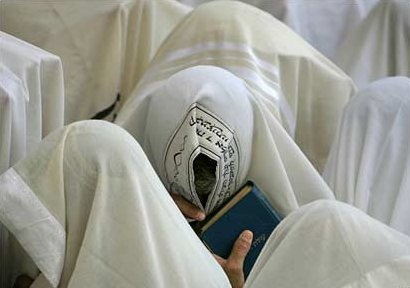
praying-at-the-kotelThis is the bitter pill Messianic Judaism swallows in its desire to consider the other Judaisms us, not them. Here is where Derek Leman and the other Jews in Messiah walk a difficult line, embracing a vision of Messiah that has long been associated with Christianity while attempting to refactor it through the lens of Hebrew thinking, scripture, and commentary as wholly Jewish.

Repeatedly, Derek said that the evidence indicates Yeshua-worship in the first century CE was an entirely new and unanticipated concept and activity for any branch of Judaism. The Jewish disciples must have been startled at the sudden inception of a Divine Messiah. They scarcely could have believed in a Messiah that could actually be God. It must have been far easier for the Greeks to adopt this notion, and no wonder so many Jews could not accept it.

Christianity has long assumed that the Jewish “offense of the cross” was Jesus as God, but my studies have often shown me that it was Gentile inclusion in the ekklesia as equal co-participants that was the main reason so many other Jewish sects rejected “the Way.” Could another reason for the early rift between the Jesus-believing Jews and all of their brethren also have been the unprecedented worship of the God-Messiah?

Read Derek’s book and see where his arguments take you.

Why No One Comes to the Father Except Through the Son

It is true that we do believe the same things about the same God and read the same Scriptures as those Jews who do not believe in Jesus as the Messiah. In Messianic Judaism, we are even part of the same religion. Despite all that common ground, there is one great difference between us. The difference is not in what we believe about God but how we believe about God.

Devout Jewish people who do not believe in Jesus as the Messiah believe the same things about God that we believe, but they do not do so in the light of the revelation, teaching, death, and resurrection of Jesus. They believe outside the light of that transforming, from-faith-for-faith experience that Paul spoke of when he said, “I am not ashamed of the gospel, for it is the power of God for salvation to everyone who believes, to the Jew first and also to the Greek” (Romans 1:16).

-D. Thomas Lancaster
“Chapter 4: Faith Toward God,” pp 55-6
Elementary Principles: Six Foundational Principles of Ancient Jewish Christianity

I read this book not long ago but decided not to review it since it leverages material from Lancaster’s Holy Epistle to the Hebrews sermon series, including portions I haven’t listened to yet. I’ll probably intermix my comments on certain parts of the book in various blog posts as I come across the corresponding material in the audio series.

Except for this part. This part is special because it answers a question that has been bugging me for a long time, a question I haven’t been able to adequately answer until recently. I mentioned this question just the other day.

Prior to the birth, life, death, resurrection, and ascension of Jesus, the Torah laid out exactly what a Jew had to do to worship and relate to God within the context of the Sinai covenant. Yes, there were the sacrifices and the Temple rituals including the moadim (the appointed times or festivals), but Jews also had (and have) a day-by-day relationship and interaction with the God of Israel. Jews pray directly to Hashem. We see this all over the Bible and we see it in the modern lives of observant Jews.

And yet Christianity is telling Jewish people (and everyone else) that you can’t worship God directly anymore. It’s not possible. It’s not effective. You have to worship God by worshiping Jesus.

I am the way and the truth and the life. No one will come to the Father except by me.

John 14:6 (DHE Gospels)

That seems quite plain…and final. I have heard an interpretation that likens Yeshua (Jesus) to a door and once we enter through the doorway, we encounter the reason we entered the ekklesia of the Way, we encounter God the Father, the God of Israel.

But in many churches, this verse is used to make it seem as if Jesus replaced God the Father, as if God the Father retired and is sunning Himself on a beach in Florida while Jesus the Son is running the family business, and in a very different way than “Dad” ever did. But if God is unchanging across time and if Jesus doesn’t do anything except what he sees the Father doing (John 5:19, 30), then how can there be a discontinuity between Son and Father, between Messiah and God?

How can the Son replace the Father as the object of worship for the Covenant community, for Jews who are born into the Covenant and for Gentiles who are grafted in?

What did Jesus change when he inaugurated the New Covenant era at his death and resurrection? What does he bring to the table? How does he fit in to the plan of God as the New Covenant is beginning to unfold?

I know how the Church would answer, but the answer is full of supersessionism and replacement theology. Jesus came to replace the “ceremonial portions” of the Law (Torah). He came to replace behavioral obedience with grace and mercy. He came to release the Jews (and arguably, everyone else) from the Law so they could be free in his grace. For Jews, instead of going to the Judges and the Priests and the Temple and the Torah to get to God, you go through Jesus. He is now the gatekeeper, he holds all the keys, he guards all the doors. The Torah (or major sections of it including just about everything that defines a Jew as a Jew) has gone “bye-bye” and Jesus is large and in charge and is here to stay.

Except that makes absolutely no sense.

two sistersFirst of all, I previously said that there is abundant evidence that in ancient and modern Judaism, living a life of obedience to God’s mitzvot is a joy, not a horrible burden. Further, the Torah is a tree of life for all who cling to her. What could Jesus possibly add to all that to become such a game changer and yet still not violate all of the Torah and the Prophets, including the actual New Covenant language found principally in Jeremiah 31 and Ezekiel 36?

That’s where Lancaster’s commentary I quoted above comes in. In order to explain his point, he tells a parable. I’m going to include it here in its entirety because I think it clears things up a lot.

Remember, this is a parable, a metaphorical story:

Once, a man who had two daughters went off to war. Before he left, he promised to return to them, and he also promised them, “When I return, I will bring you each a fine string of pearls and a summer dress.” No one except the two girls knew about the promise. After many years, the man had not returned, and everyone presumed him dead. His daughters, however, continued to hope, believe, and wait. A decade passed, and they grew to become adult women, but neither of them forgot their father or his promises. Deep in their hearts, they continued to hope and to believe. One day a messenger came seeking the girls. Finding only one daughter, he told her, “I have news of your father. He is returning, and he sends you this gift.” The messenger presented her with a fine string of pearls.

Now both girls still believed in the promise of the father, but one had received a token of the promise, and the other had not. One had faith in the father’s promise on the basis of her hope and confidence in the father’s promise, but the other had faith in the father’s promise on the basis of the good news that she had already received and on the basis of the partial fulfillment of her father’s promise. She already had the pearls. She had no question in her mind that she would soon see her father face to face. Think of that girl’s confidence, certainty, and joy. She no longer had any doubt that her father was coming. She knew that he would bring the summer dress because she had already received the pearls.

-Lancaster, pg 56

The Father made a promise to the nation of Israel and to all Jewish people everywhere that He will return the exiles to their Land, defeat all of Israel’s enemies, and not just restore national Israel’s fortunes but elevate her to the head of all the nations of the Earth. Also is the promise of the resurrection of the dead and eternal life for the covenant people, as well as having the Torah written on human hearts rather than stone or paper so that human beings with the full indwelling of the Spirit will naturally obey all of God’s commandments, the conditions of the Sinai and New Covenants, the Torah. All of Israel’s sins will be forgiven. The world will be made completely peaceful, all people will be safe and secure, and a King from the line of Judah and the house of David will sit on the Throne in Jerusalem forever.

And Jewish people have been waiting ever since but so far, those promises haven’t been fulfilled…any of them…

…or have they?

Talmud Study by LamplightIt should be obvious that the two daughters are two branches of Judaism. The metaphor actually doesn’t work completely because the two daughters must initially be all Jewish people. Then one daughter received the gift sent by her father and believed a messenger. The messenger is Jesus. He is from the Father, from God. He brings a gift, something to confirm that God will fulfill His promises in due time. The messenger does not come to fulfill all the promises but in fulfilling some of them, he brings a guarantee that they will all ultimately come to pass.

But what promises did Jesus fulfill? Did he rebuild the Temple? Did he return all of the Jewish exiles to their land? Did he place Israel as the head of all nations? Is he sitting on the Throne in Jerusalem reigning with justice and peace?

No. He didn’t do any of those things…yet.

How do we know he’ll do any of them at all? Because he brought a gift. Actually, more than one.

He said to her, “Your sins are forgiven you.” Those reclining with him began to say in their hearts, “Who is this who even forgives sins?” He said to the woman, “Your faith has saved you. Go in shalom.”

Luke 7:48-50 (DHE Gospels)

Why do you seek the living one among the dead? He is not here; for he has risen. Remember what he had spoken to you while he was still in the Galil, saying, “For the son of man must be handed over to sinful men and be crucified, but on the third day he will surely rise.”

Luke 24:5-6 (DHE Gospels)

When the day of Pentecost had come, they were all together in one place. And suddenly there came from heaven a noise like a violent rushing wind, and it filled the whole house where they were sitting. And there appeared to them tongues of fire distributing themselves, and they rested on each one of them. And they were all filled with the Holy Spirit and began to speak with other tongues, as the Spirit was giving them utterance.

Acts 2:1-4 (NASB)

While Peter was still speaking these words, the Holy Spirit fell upon all those who were listening to the message. All the circumcised believers who came with Peter were amazed, because the gift of the Holy Spirit had been poured out on the Gentiles also. For they were hearing them speaking with tongues and exalting God. Then Peter answered, “Surely no one can refuse the water for these to be baptized who have received the Holy Spirit just as we did, can he?”

Acts 10:44-47 (NASB)

And that’s not even the entire list. Jesus the messenger from Heaven, brought several “gifts” with him, a sort of down-payment on the promises of God, an illustration and evidence that God will someday do all that He promised. Here’s what Messiah demonstrated:

  • The forgiveness of sins through faith.
  • The resurrection from the dead.
  • The giving of the Holy Spirit.

These weren’t the “full meal deal,” so to speak, but only an appetizer. Jesus forgave the sins of those who had faith as an illustration of how someday all of Israel’s sins will be forgiven. Jesus died and was resurrected as a confirmation that someday there will be a general resurrection of the dead (see Matthew 27:52-53). The Holy Spirit was given first to the Jews who believed, and then later to believing Gentiles also, to show that one day the Spirit will be poured out on all flesh (Joel 2:28).

In Him also we have obtained an inheritance, having been predestined according to His purpose who works all things after the counsel of His will, to the end that we who were the first to hope in Christ would be to the praise of His glory. In Him, you also, after listening to the message of truth, the gospel of your salvation—having also believed, you were sealed in Him with the Holy Spirit of promise, who is given as a pledge of our inheritance, with a view to the redemption of God’s own possession, to the praise of His glory.

Ephesians 1:10-14 (NASB)

Jesus, the messenger, comes as a pledge of our full inheritance as believers, first to the Jew but also to the Gentile, that God will redeem His own and fulfill His Word.

a woman of valorThe metaphor Lancaster used, as I mentioned, doesn’t exactly fit. One daughter has to choose to believe in the messenger, that he really is from their father, and that the gift he brings is genuine and can be accepted by faith as from their father as a promise that he will come and bring his other gift.

One daughter would choose to believe the evidence of the gift and the other wouldn’t. In Lancaster’s parable, this draws a distinction between Jesus-believing Jews and all other Jews, but we can also apply it (since the rest of the world has the potential to be grafted in) to believing and unbelieving Gentiles.

Based on everything I’ve just said, Jesus is now cast in an almost completely different role. Instead of being a replacement for the old, worn out, obsolete Law, he’s the bringer of “better promises” (Hebrews 8:6), not that the previous promises were bad, but as good as things were, God has something even better in mind, something that builds on what happened and what was given before rather than replacing it. It’s as if God is saying, “If you think the Torah is the Tree of Life, you haven’t seen anything yet. Don’t believe me? Here’s a small sample of what is to come.”

Jesus has been called the capstone (Matthew 21:42), the one key object in the structure that completes it and holds it all together. Without that stone, not only would the whole structure remain incomplete, it might actually fall apart.

So, in his first coming as Yeshua ben Yosef, Messiah came as the messenger from Heaven bringing gifts as a guarantee that all God had promised would be fulfilled. And he did this without replacing anything at all. In fact, if he had replaced anything previously promised or established by God, then Jesus would have failed in his mission to bring the Good News to Israel. When properly interpreted and understood, the teachings of Jesus and those of the apostles, including Paul, show us that Jesus brought exceedingly Good News to Israel and also to the Gentiles, that God intends to do great good to Israel and as one of the results of His actions, even the Gentiles will receive blessings.

Unfortunately, when the Gentiles split off from the Jesus-believing Jewish ekklesia to form their (our) own religion called “Christianity,” they “reinterpreted” the ancient Holy Scriptures as well as the teachings of Jesus and the apostles to make it seem as if the Good News was only good for Gentiles. The Christian “good news” was only good for Jews who were willing to give up the original promises of God (and give up being Jewish), for Jesus brought those “new” promises, according to the Christian Church, to replace the old.

That’s when the craziness, the bizarre disconnect occurred between different parts of the inspired, “God-breathed” Word of scripture (2 Timothy 3:16-17). That’s when the two sisters drifted apart, but the hope and the promise is that someday their father will return to reunite them as a family.

Have I proved my case? Will non-believing Jews read this and be convinced?

Probably not.

First of all, my commentary on the role of Jesus and all that he did is hardly comprehensive. A detailed and scholarly analysis would certainly reveal much, much more. No doubt there will be people who will never be convinced and who would even be insulted at my efforts (not that it is my intension to insult anyone).

But I’m trying to show both Jews and Christians that the way they are looking at the Bible and looking at Jesus isn’t really how the Good News was originally presented. The original Jewish Good News didn’t require an evangelical approach that says Jews are “cursed” or that they’re “hypocrites”. Sadly, the Christian Church is its own worst enemy, not even by intent, but by continuing to accept a flawed interpretation of the Gospel that was forged with the early “Church Fathers” and cemented by the men of the Reformation.

The Jewish PaulWithout a strong and sustained effort by mainstream Christianity to set aside their traditions and to look at the Bible, and particularly Jesus and Paul, with fresh eyes that take into account that Israel is the entire focus of God’s Good News and blessings, we Christians will continue to be a curse upon Israel and the Jewish people, and as a result, only a fraction of Gentile believers, a remnant so to speak, will continue to bless Israel, to elevate Israel, and to await the return of the messenger who will be King.

What curses await all those others who perpetually, even without meaning to or desiring to, set aside the centrality of Israel and the place of honor at God’s table for the inheritors of Sinai, the Jews?

Not everyone who says to me, “My master! My master!” will enter the kingdom of Heaven, but rather the one who does the will of my father who is in heaven. It will be on that day many will say to me, “My master, my master, did we not prophesy in your name and in your name drive out demons and in your name do many wonders?” Then I will answer them, saying, “I have never known you. Depart from me, workers of evil.”

Matthew 7:21-23 (DHE Gospels)

I beg those Christians reading this to take my message seriously, because this isn’t just me popping off and being difficult to live with, this is your life and your relationship with God.

A person should always be flexible like a reed, and not rigid like a cedar.

-Taanis 20a

Yesterday was the newest holiday on Israel’s calendar, Jerusalem Day or Yom Yerushalayim. Jerusalem is where the Temple was and will be again. Jerusalem is where he was condemned to die. Jerusalem is where he will one day return as triumphant King and be enthroned in the Kingdom of Heaven.

The ekklesia, the body of his devout ones, who believed the promises, who held tightly to the gifts in faith, who realized that Jesus was and is a vital messenger in the plan of God for Israel and for the nations, will be there celebrating with joy. But part of the foretaste, the sample that Jesus brought is that we can experience a little joy right now.

Many who observe a proper Shabbat have joy in the day of rest as a preview of the future perpetual peace on the Earth. Shavuot is less than a week away and for those who choose to observe the festival in some manner, that too is joy, for we celebrate the giving of the Torah and also of the Spirit. Even now, there are Jews and Gentiles who call themselves Messianic and who share a common vision of who we are and what the future holds.

In the Messianic Kingdom, there will be Israel and the nations, the Jewish people and also the Gentiles who are called by His Name. We will be many peoples but we will have one King and one God. Jesus came first to bring the Good News that God’s promises will be fulfilled and he brought gifts as proof. By faith, we continue to believe in the message and the messenger. By faith, we continue to wait. By faith we experience joy.

Someday all of the promises will be fulfilled and we will have joy in His Presence forever.

“Joy is the simplest form of gratitude.”

-Karl Barth, Swiss theologian

Be grateful. Be joyful. We have received the Good News. The King is coming.

Next week’s review of D. Thomas Lancaster’s Holy Epistle to the Hebrews sermon Faith Toward God will speak more on this topic.

The Unchanging Changing God

Leah and RachelSo Jacob did so and he completed the week for her; and he gave him Rachel his daughter to him as a wife. And Laban gave Rachel his daughter Bilhah his maidservant — to her as a maidservant. He consorted also with Rachel and loved Rachel even more than Leah; and he worked for him another seven years.

Jacob’s anger flared up at Rachel, and he said, “Am I instead of God Who has withheld from you fruit of the womb?” She said, “Here is my maid Bilhah, consort with her, that she may bear upon my knees and I too may be built up through her.”

When Jacob came from the field in the evening, Leah went out to meet him and said, “It is to me that you must come for I have clearly hired you with my son’s dudaim.” So he lay with her that night.

Genesis 29:28-30, 30:2-3, 16 (Stone Edition Chumash)

So Jacob marries two women, and sisters no less, and “consorts,” not only with his two wives, but with both of their maidservants as well. By today’s standards, even in progressive, secular society, this is beyond scandalous. And yet, in the ancient near east, what Jacob was going and how he was building up a family was considered perfectly acceptable.

But we don’t consider that acceptable today, and certainly not in the Christian church. Did Jacob deviate from God’s plan? Did he commit some horrible sin, some dire mistake as did his grandfather Abraham when Abraham “consorted” with Sarah’s slave Hagar (Genesis 16:1-4)? Ishmael went on to father the Arab nations, who have been a thorn in Israel’s side across history and into the present day. Did Jacob’s actions with his wives and concubines represent the same error?

Apparently not, since without the children produced by all four of these women, there would be no twelve tribes of Israel and their descendants, the Jewish people.

But how is this possible? If God is eternal and His morality is eternal and unchanging, then how can the relationship Jacob had with two wives and two concubines be approved of by God and yet be considered morally wrong and sinful today?

He answered them, Have you not read that from the beginning the Maker “created them male and female,” and it says, “Therefore a man shall leave his father and mother and cling to his wife, and the two will become one flesh”? If so, they are not two any longer, but one flesh. Thus, what God has joined, man must not divide.

Matthew 19:4-6 (DHE Gospels)

One FleshJesus quotes from an even older story in the Bible to define what is marriage (and what is divorce) to the questioning Pharisees, but conspicuous in his answer is the absence of Jacob, his two wives, and his two concubines. Certainly, every Jewish person hearing the words of the Master and even Jesus himself, owed their very existence to Jacob and his offspring who he sired with four women, only two of whom he had formally married. But what about “two becoming one flesh?”

And what about this?

And it was when about three months had passed, that Judah was told, “Your daughter-in-law Tamar has committed harlotry, and moreover, she has conceived by harlotry.”

Judah said, “Take her out and let her be burned.”

As she was taken out, she sent word to her father-in-law, saying, “By the man to whom these belong I am with child.” And she said, “Identify, if you please, whose are this signet, this wrap, and this staff.”

Judah recognized; and he said, “She is right; it is from me, inasmuch as I did not give her to Shelah my son,” and he was not intimate with her anymore.

Genesis 38:24-26 (Stone Edition Chumash)

If not for this rather scandalous act on both the part of Tamar and Judah, she would not have given birth to the twins Perez and Zerah, and Perez is an ancestor of the Messiah.

How ironic that the one son of Jacob who found his wife among the Canaanite inhabitants of the land was none other than Judah, whose name would eventually denote the progeny of Jacob that survives. In the phrase “About that time Judah left his brothers,” the verb “left” suggests not only a physical departure, but also a violation of family mores (see Genesis 38:1-2).

-Ismar Schorsch
Commentary on Torah Portion Vayetze
“Setting Aside Our Abhorrence of Canaanites,” pg 105
Canon Without Closure: Torah Commentaries

All of this suggests, even if we agree God’s morality and ethics are eternal and unchanging, that He is willing to “work with” our current traditions and customs as a means of accomplishing His plan. Otherwise, how can we explain such apparently outrageous behavior by some of the greatest men in the Bible?

Later in the same commentary, Schorsch goes on to say:

The language implies an expansion of the notion of excluded nations. It is not ethnicity that defines the seven original settler nations of Israel, but cultural mores.

-ibid, pg 106

abraham1This makes a great deal of sense, especially in the case of Abraham, who was distinguished from even his close relatives in his homeland, not by ethnicity or genetics, but by a moral and ethical code received from God as the result of “faith counted as righteousness” (Genesis 15:6).

As the family of Abraham progressed forward in time, it began to be distinguished and then defined by families, clans, and tribes descended from the twelve sons of Israel. Who Israel was to each other and to God was set against the national backdrop of the people groups surrounding them. But then, time continues to pass and circumstances radically change.

By the time the Pharisees and Rabbis, Ezra’s spiritual heirs, came to power after the destruction of the Second Temple, Judaism had become a missionizing world religion, constituting as much as one-tenth of the population of the Roman Empire. To maintain the deuteronomic legacy, especially in Palestine, would have severely impeded access to Judaism for prospective converts in a world turned cosmopolitan. Who could be sure that an interested gentile was not a descendant of one of the proscribed nations?

-ibid

I know people in the community of Jesus faith who discount the validity of conversion to Judaism because it is not presupposed in the Torah, as if closure of Torah canon constitutes closure of the will of God. My recent commentaries on Pastor John MacArthur’s Strange Fire Conference have shown me (not that I was unsure of MacArthur’s opinions before this) that he closes Biblical canon with a bang at the end of the Book of Revelation and declares that the Holy Spirit isn’t in the business of working miracles or even talking to people anymore.

And yet, even within the Biblical canon, we see time and time again how God, unchanging and eternal God, seems willing to adapt how He interacts with human beings across the varied mosaic of history in order to accomplish His ultimate goal of reconciling man to Himself and ushering in the Messianic age.

I’ve been struggling more than a little with trying to reconcile the Jewish Torah, Prophets, and Writings, which Christians call collectively, the “Old Testament,” with the later Christian scriptures or the “New Testament.” Even though the books of the Tanakh represent a widely diverse set of writing styles and writers, it yet preserves an overall Jewish “flow” of prophesy aimed at the national redemption of Israel, and the restoration of God’s physical rule on Earth and among all the nations. The Christian interpretation of the later writings shifts the focus away from national Israel and the Jewishness of Yeshua faith, and makes it all a story about God’s plan for personal salvation of all people in a single, homogenized group called “the Church.”

But “the Church” is never mentioned in the Tanakh. If the Bible is supposed to be a unified document, Torah, Prophets, Writings, Gospels, Epistles, Apocrypha, then I would expect that overarching Jewish flow of prophesy to be seamless and unbroken across the “Testaments.”

But it isn’t.

DHE Gospel of MarkHowever, is the fault the document we have that we call the Bible, or is it how different groups interpret it? Certainly Christians see the “Old Testament” in a radically different light than Jews see the Tanakh.

Is my search for Biblical reconciliation and the face of the One, Living God across all history doomed to failure? Is there no way to understand an adaptive God and yet find Him eternal and unchanging in all of the pages of the Bible?

Frankly, one of the only places I’ve been gaining traction so far in my quest is by watching and reviewing the different episodes of First Fruits of Zion’s (FFOZ) television series (available for free viewing online) A Promise of What is to Come. That’s because this program is written and formatted to present familiar concepts in Christianity, such as the Gospel Message, the meaning of the title “Messiah,” repentance, and the parables of Jesus, all from an exclusively Jewish perspective.

The key to understanding the Bible, all of it, is to put yourself in the place of the original writers and especially of the original audience. What were the first century Jewish readers of Matthew’s Gospel supposed to take away from his message? What is “the Good News” from an ancient Jewish point of view? Is the Jesus Christ of the Christian Church really the Jewish Messiah, Son of David we see prophesied by Isaiah, Ezekiel, and Zechariah? Is there some way to make sense of how God seems to change His methods and motives based on changes in ancient (and modern?) cultural mores, and still to recognize that He is One God, a single, unified, creative, entity?

In an ultimate sense, the great Ein Sof God of the Universe is entirely unknowable. How can the small and finite know the limitless infinity?

And yet, God gave us a Bible written in human languages by inspired human beings to other human beings in need of inspiration so that we can know Him. God wants us to know Him and to draw close to Him. We read how Abraham drew close to God. We read how the God of his father became the “Dread” of Isaac. We can see how God turned the fugitive son Jacob into Israel, the father of an empire.

And we can read how one, lone, itinerant teacher changed the course of the world through his teachings, his death, his resurrection, and his ascension to the right hand of Glory.

walkingThe search for God is not a search for an ultimate answer that once we possess it, we may rest in our knowledge and sit assured in our complacency. It is a never-ending process, a trail winding through the mountains, a sea without a shore, a lifelong journey of ever greater discoveries and an ever closer walk with our God.

There is an answer, just as there is a final peace, where each man will sit under his vine and under his fig tree, and no one will make him afraid (Micah 4:4). But that time has yet to come. And until he comes again, we remain a traveler without a home, a bird without a nest, eternally walking, eternally in flight, until home comes to us in the Kingdom of God.

May Messiah come soon and in our day.

Was He Born in a Sukkah?

born_in_sukkahWhen was Yeshua born? The Gospel writers either did not know when the event happened or they did not feel the information was important enough to pass along. We can only speculate.

Two centuries after it happened, Clement of Alexandria discussed the dating of the Master’s birth, but he did not mention December 25 or January 6 at all. Instead, Clement reported one tradition corresponding to April 20 on our civil calendar and another tradition corresponding to May 20. By the middle of the fourth century, however, the Roman church had begun to honor December 25 while churches in the East, Asia Minor, and Egypt observed Jesus’ birth on January 6. Both are late developments and unsupported by early tradition or biblical evidence. No trace of a tradition from the early Jewish believers connects the birth of the Messiah with December 25 or January 6.

-D. Thomas Lancaster
“The Birth of Yeshua at Sukkot: Evidence from an Old Source,” pg 21
Messiah Journal, issue 111 (Fall 2012)
Published by First Fruits of Zion (FFOZ)

This is normally the sort of conversation you have in December when the vast majority of the Christian world prepares to celebrate the birth of Christ. One thing we can be certain of is that Jesus was born nowhere near December 25th. But it has been suggested that he might have been born on or near the festival of Sukkot. Could this be true?

I recently had a private request for any information I knew about this possibility. Alas, it’s not something I’ve written on before (although I’ve heard some commentaries on the topic). Fortunately, D. Thomas Lancaster has written on this in the above quoted article in Messiah Journal 111, which was published last year. Does Lancaster conclude that the Master was born during this season and if so, what is his evidence?

Other Sukkot-theory proponents claim, “Yeshua was born in a sukkah because the word ‘stable’ is sukkah in Hebrew.” These arguments are not at all convincing and fall apart under scrutiny. Is there any legitimate evidence of a Sukkot birth, or is the birth of Yeshua at Sukkot just more Hebrew roots movement apocrypha?

-Lancaster, pg 22

That doesn’t sound too encouraging. As much as the symbolism may attract us and fit into the theories and emotional dynamics of certain individuals and groups, is there any real evidence to establish the idea that Jesus was born during Sukkot? What line of reasoning and investigation could we use to support or refute this viewpoint?

Lancaster suggests that we could compare the birth narrative of John the Baptist to that of Jesus. We know, based on Luke 1:26 and 1:36 that the conception of Jesus came about six months after the conception of John, thus we can assume that Jesus was born about six months after John was. If we could determine when John was conceived and/or born, we could reasonably deduce when Jesus was born.

And now you will be silent and not able to speak until the day this happens, because you did not believe my words, which will come true at their appointed time.”

Luke 1:20 (NIV)

And now you will be dumb and unable to speak until the day when this has taken place; because you did not believe my words–words which will be fulfilled at their appointed time.”

Luke 1:20 (Weymouth New Testament)

zechariahThese are the only two translations of the New Testament where it specifically mentions “appointed time,” which is important because of the following:

“Is anything too difficult for the LORD? At the appointed time I will return to you, at this time next year, and Sarah will have a son.”

Genesis 18:14 (NASB)

But what’s “appointed time” got to do with it? Doesn’t it just mean some random date God selected for the birth of John the Baptist and Isaac, the son of Abraham and Sarah?

In the Torah, the biblical festivals are called “appointed times.” According to one Jewish interpretation, “the appointed time” at which Sarah gave birth to Isaac was the first day of Passover:

And how do we know that Isaac was born at Passover? Because it is written, “At the appointed time I will return to you […and Sarah will have a son].” (b.Rosh Hashanah 11a)

In the Gospels, John the Immerser comes in the role and spirit of Elijah. Jewish tradition maintains that Elijah will appear at Passover to announce the coming of Messiah. For that reason, we read Malachi’s prophecy about the coming of the Messiah on the Sabbath before Passover, and Jewish homes set a place at the Passover Seder table for Elijah.

-Lancaster, ibid

Lancaster covers two other traditions. One involving the Biblical record of Joseph and Mary traveling (supposedly) to Jerusalem to attend the festival of Sukkot, and they happened to be near Bethlehem when Mary went into labor. If Bethlehem were on the pilgrim trail to Jerusalem, the multitude of travelers going up to Jerusalem for the festival could account for all the “no vacancy” signs at the inns.

The other tradition has to do with assigning a double meaning to the phrase “the Eighth Day.” Of course, all Jewish boys were to be circumcised on the eighth day after birth, but the last day of Sukkot, which is actually a separate festival, Shemini Atzeret, is also referred to as the “Eighth Day.” This would mean Jesus would have been born on the first day of Sukkot and circumcised on the eighth day of the festival. Pretty neat timing.

Admittedly, this is all speculative. The Gospels do not actually indicate that John was born on the first day of Passover, that Yeshua was born on the first day of Sukkot, or that he was circumcised on the eighth day of Sukkot.

-ibid, pg 23

Lancaster’s article goes on for another page or so where he quotes from a “medieval collection of anti-Christian Jewish folklore titled The story about Shim’on Kefa (Aggadta DeShim’on Kefa),” which may offer certain hints suggesting that the early Jewish believers could have commemorated the Master’s birth at Sukkot, but all in all, support for this perspective is very thin.

Sukkah in the rainI’m not saying it couldn’t work out this way and I suppose it would be very symbolic if it did work out that Jesus was born on Sukkot, but in fact, we just don’t know. Evidence from the Gospels and from various Christian and Jewish sources simply do not provide enough light on this matter to bring it to any sort of resolution. Thus, for Christians and other Gentile believers involved in the Hebrew Roots and Messianic Jewish movements, we must find other reasons to celebrate Sukkot. Don’t worry, we have reasons enough, as one person said on my blog recently.

It is appropriate, not only that you have built the family sukkah, but also that you should participate in its celebration, as an anticipation of the prophetic fulfillment in the Messianic Era when the nations will come up to Jerusalem to celebrate this feast (or suffer drought), as described by Zacharyah. Indeed, Jewish tradition perceives reflections of a sort of Yom Kippur repentance and redemption for the non-Jewish nations in the Sukkot celebration.

As for Messiah, he temporarily lived among people once in the fragile shelter of a human body. Some day, he will return and be with us forever.

I’ve been reviewing some of my past Sukkot related blog posts and thought you’d find these interesting:

Sukkot: Drawing Water from Siloam.

Plain Clothes Sukkah.

May you drink from springs of living water. Chag Sameach Sukkot!

Addendum: This conversation is continued in A Question of the Division of Abijah.

FFOZ TV Review: Call His Name Yeshua

ffoz_tv1Episode 03: It may be shocking to learn, but the fact is that many people were named Jesus in first century Israel. So how is it then that his name is the name above all names? In episode three the name of Jesus is explored in depth in order to gain a better understanding of the significance of not only Christ’s name but his mission. The name Jesus means “salvation” and it was preordained in the prophecies of the Hebrew Scriptures that the messiah would bring salvation not only to Israel but to all mankind.

From the intro to the episode: Call His Name Yeshua
FFOZ TV: The Promise of What is to Come

The Lesson: What does the Name “Jesus” Mean?

I know I’m a little late with this one, two weeks late actually, but my weekend viewing of FFOZ TV has been short circuited by weekend yard projects. I was finally able to carve out some free time to view Episode 3: Call His Name Yeshua.

This episode builds on the basics learned in Episode 1: The Good News and Episode 2: Messiah. Both of those shows focused on presenting a definition of a very basic concept in the Bible, except that in each case, the traditionally Christian audience discovered that the concepts weren’t quite so basic.

Episode 3 focuses on the meaning of the name “Jesus.” I suppose there are Christians in the world who actually believe that “Jesus” was the original name used by the Messiah, that his disciples, his friends, his mother called him “Jesus.” This isn’t possible when we consider that they would all be speaking in Hebrew or Aramaic and in those languages, it’s impossible to make a hard “J” sound.

As always, teacher Toby Janicki offers up the lesson as a mystery that must be solved using three clues. Today’s mystery is “The Mystery of the Name Jesus.” The first verse that leads into the first clue is this one.

But as he considered these things, behold, an angel of the Lord appeared to him in a dream, saying, “Joseph, son of David, do not fear to take Mary as your wife, for that which is conceived in her is from the Holy Spirit. She will bear a son, and you shall call his name Jesus, for he will save his people from their sins.”

Matthew 1:20-21 (ESV)

After using a translation with which most Christians would be familiar, Toby read the same verses again using the Delitzsch Hebrew Gospels:

He was thinking this way, but then an angel of HaShem appeared to him in a dream, saying, “Yosef son of David! Do not be afraid to take Miryam, your wife, for what has been formed within her is from the Holy Spirit. She is giving birth to a son, and you are to name him Yeshua, because he will save his people from their sins.”

As Toby pointed out, many Christians are fond of a hymn called “Jesus, Name Above All Names.” Have they gotten it wrong all these years? Is the true name of Messiah “Yeshua?” Is he offended when we call him “Jesus?” For that matter, how do we know “Yeshua” was/is his original name?

We’ll get to all that in a minute. Toby points to the first clue:

Messiah is named Jesus by direct command of God.

There’s something else. There seems to be a connection between the name Yeshua and what the angel said about him saving his people from their sins.

aaron-ebyThe scene shifts to Aaron Eby in Israel who provides the episode’s language lesson. As it turns out, we get the name “Jesus” from the Latin and Greek translations of the Hebrew word Yeshua. In Latin, his name is translated as “Iesus” and from the Greek, it’s “Ἰησοῦς”. Aaron says that we know Messiah’s name was Yeshua because it was actually a common name for Jewish men at that point in history in Israel. It’s actually a shortened version of Yehoshua which we translate into English as “Joshua.” Yehoshua means “The Lord is Salvation.”

Also, the name Yeshua, when it occurred in the Old Testament, was translated in the Septuagint as we see it also translated in the New Testament, so we can confidently say that Yeshua is the Hebrew name of Jesus.

And from what Aaron presented in his portion of this episode, the definition of the longer version of Yeshua’s name seems to be the connection in the angel’s words to Joseph. Name him “Jesus” (salvation) because he will bring salvation to his people.

Going back to Toby, we hit the second clue:

Jesus means salvation.

Since Jesus was such a common name at the time, it was important to differentiate the Messiah from all of the other Jewish boys and men called Yeshua, so he was referred to as “Yeshua of Nazareth.”

But we need one more clue and it comes from the Old Testament (Tanakh). Actually there are a lot of prophesies in the Old Testament that speak of the Messiah bringing salvation to Israel. Probably one of the oldest is in Genesis 49 when Jacob, before he dies, blesses his sons.

For Your salvation do I long, O Hashem!

Genesis 49:18 (Stone Edition Tanakh)

Toby says that according to the Jewish sages, right before Jacob uttered this exclamation, he had a vision of the end times and was longing for the coming of Messiah and his salvation.

Toby quoted from a number of prophesies, and you can find out what they are by viewing the episode, but he also spent some time using word substitution to illustrate his point: salvation = Yeshua and salvation = Jesus. Here’s a couple of examples. First, the original verse in the NASB translation:

Behold, the Lord has proclaimed to the end of the earth, Say to the daughter of Zion, “Lo, your salvation comes; Behold His reward is with Him, and His recompense before Him.”

Isaiah 62:11

Now with the first word substitution:

Behold, the Lord has proclaimed to the end of the earth, Say to the daughter of Zion, “Lo, your Yeshua comes; Behold His reward is with Him, and His recompense before Him.”

…and then the second:

Behold, the Lord has proclaimed to the end of the earth, Say to the daughter of Zion, “Lo, your Jesus comes; Behold His reward is with Him, and His recompense before Him.”

I know this program is written for a traditional Christian audience, so these verses are designed to make the greatest impact on them, but if there are any traditional (non-Messianic) Jewish viewers, they might have a hard time with the name “Jesus” being directly inserted into the Tanakh as an equivalent term for God’s salvation.

But the prophesies that Toby quotes also lead to the third and final clue:

The Prophets predicted that Messiah would bring salvation.

The lesson in this episode is as simple as that. The name “Jesus” is an English translation of the Greek and Latin translations of Messiah’s name from Hebrew, which is “Yeshua.” Yeshua relates to the Hebrew word for “salvation” and basically means that Messiah brings salvation. This was prophesied many times by many Old Testament prophets, so his name would have meaning to the Jewish people when linked with his Messianic mission.

What Did I Learn?

DaveningI learned that there is a liturgical prayer said by devout Jews three times a day that includes the phrase, …”whose horn will be raised with your salvation.”

Interestingly enough, we find something like it directly referring to Yeshua:

Blessed is HaShem, God of Yisrael, for he has taken note of his people and sent them redemption. He will cause a horn of salvation to sprout for us in the house of David his servant…

Luke 1:68-69 (DHE Gospels)

This is the blessing said over the infant Yeshua by Zecharyah the prophet at the Temple. As Toby points out, this isn’t Zecharyah asking for God to provide salvation for Israel, it’s the prophet thanking Hashem for having sent salvation in the form of the new-born Messiah Yeshua. Messiah and salvation had come.

I hadn’t made the connection between these verses and the daily prayers of Jews all over the world, all of whom are asking for one who has already arrived and who will come again: Yeshua of Nazareth, the Messiah and King of Israel.

I hope to review the next episode very soon.

On Choosing God

TrustNegate your own will in favor of God’s will.

-Ethics of the Fathers 2:4

If I surrender my will and turn my life over completely to the will of God, do I not thereby abrogate my power of free choice?

Certainly not. Take the example of a child who receives money for his birthday. An immature child may run off to the toy store or candy store and spend the money on everything his heart desires. He may indeed have several moments of merriment (although a stomach ache from indulging too heavily in confections is a possibility). Without doubt, however, after a short period of time those moments of enjoyment will be nothing but a memory, with the candy long since consumed and the broken toys lying on the junk heap.

A wiser child would give the money to a parent and ask that it be put into some type of savings account where it can increase in value and be available in the future for things of real importance.

Did the second child abrogate his prerogative of free choice by allowing the parent to decide how to invest the money? Of course not. In fact, this was a choice, and a wise choice as well as a free choice.

We can choose to follow our own whims or we can choose to adopt the will of an omniscient Father. We are wise when we make the second choice.

Today I shall…

…turn my will over to God, and seek to do only that which is His will for me.

-Rabbi Abraham J. Twerski
“Growing Each Day, Nisan 23”
Aish.com

How much is this like the choice Jesus made on that last night?

saying, “Father, if you are willing, remove this cup from me. Nevertheless, not my will, but yours, be done.”

Luke 22:42

Last week, I started talking about free will and Divine Election and how that describes the nature of man and our relationship with God. I still don’t think that we are wind up toy soldiers, pre-programmed by God in all our responses, including the most important response, accepting or rejecting the Almighty.

I don’t think this issue comes up for Jewish people, but then, all Jews are born into a covenant relationship with God just by virtue of being Jewish. Still, the recognition and acceptance of Messiah is a vital task that remains hidden from most Jews, largely due to how Gentile Christianity has “morphed” the Jewish Messiah into a Goyishe King. Still, many Jews see God, not as a harsh overseer with a whip controlling the gates of life and death, but as a teacher, gently but firmly guiding us in the lessons of life as we walk the path with our companion.

That very day two of them were going to a village named Emmaus, about seven miles from Jerusalem, and they were talking with each other about all these things that had happened. While they were talking and discussing together, Jesus himself drew near and went with them. But their eyes were kept from recognizing him. And he said to them, “What is this conversation that you are holding with each other as you walk?” And they stood still, looking sad. Then one of them, named Cleopas, answered him, “Are you the only visitor to Jerusalem who does not know the things that have happened there in these days?” And he said to them, “What things?” And they said to him, “Concerning Jesus of Nazareth, a man who was a prophet mighty in deed and word before God and all the people, and how our chief priests and rulers delivered him up to be condemned to death, and crucified him. But we had hoped that he was the one to redeem Israel. Yes, and besides all this, it is now the third day since these things happened. Moreover, some women of our company amazed us. They were at the tomb early in the morning, and when they did not find his body, they came back saying that they had even seen a vision of angels, who said that he was alive. Some of those who were with us went to the tomb and found it just as the women had said, but him they did not see.” And he said to them, “O foolish ones, and slow of heart to believe all that the prophets have spoken! Was it not necessary that the Christ should suffer these things and enter into his glory?” And beginning with Moses and all the Prophets, he interpreted to them in all the Scriptures the things concerning himself.

Luke 23:13-27

Imagine having this conversation with the Master along the road, but imagine it being a picture of your entire life.

Jewish in JerusalemRabbi Twerski paints for us an image of giving our lives over to God by conscious choice. Even if a Jew is born into covenant, he or she can still completely reject God, and many Jews have done so. The majority of the Jewish population of Israel is secular, so even in the Holy Land, which contains Jerusalem and the Holy Temple Mount, most of the Jewish inhabitants choose not to connect to God.

Both Easter and the Week of Unleavened Bread are now done. Religious Jews continue to Count the Omer, but Christians just “coast” into April and for most of the church, Pentecost (Shavuot) is hardly a little blip on our radar. This is why it is so important for those few of us who are conscious of the season to remind everyone else.

The presence of Mashiach is revealed on Acharon Shel Pesach, and this revelation has relevance to all Israel: Pesach is medaleg, “skipping over” (rather than orderly progress), and leil shimurim, the “protected night.” In general the mood of Pesach is one of liberty. Then Pesach ends, and we find ourselves tumbling headlong into the outside world. This is where Mashiach’s revealed presence comes into play – imbuing us with a powerful resoluteness that enables us to maintain ourselves in the world.

“Today’s Day”
Wednesday, Nissan 23, Issru chag, 8th day of the omer, 5703
Compiled by the Lubavitcher Rebbe
Translated by Yitschak Meir Kagan
Chabad.org

After the week of Matzot, we see that beyond the Omer count, some Chassidic Jews carry forward the revealed presence of the Mashiach into the outside world with them. How much more should we, who know for certain that Messiah is revealed in Jesus Christ, should carry him forward into the world with us?

Any Jew alive on the face of this planet today is a walking miracle. Our mere existence today is wondrous, plucked from the fire at the last moment again and again, with no natural explanation that will suffice.

Each of us alive today is a child of martyrs and miracles.

-Rabbi Tzvi Freeman
“Walking Miracle”
Based on letters and talks of the Rebbe
Rabbi M. M. Schneerson
Chabad.org

I can only imagine that just seeing a Jew walking the streets of the old city in Jerusalem, buying falafel for lunch, davening at the Kotel, must all be miraculous. Who would have thought such a thing possible a scant six decades before? Yes, of course it is a miracle of God that there are any Jewish people left alive today in our world and that they live in a Jewish nation.

But it is also a miracle that there are any Christians, for who of his own free will and in his nature of sin, would choose the Almighty, to come to Him through His Son, unless the Spirit of God were not whispering in our ear, urging us, pleading with us, exploring our heart?

And once Moshiach Rabbeinu has opened our eyes to God, and our minds and hearts to the scriptures, and we choose Him, and we learn of Him and who we are as His sons and servants, what would we not do, from the wisest among us to the most simple, to serve Him who is the author of our story and the lover of our soul?

Choose Love. Choose God. Choose Life.