Tag Archives: Christianity

Yitro: Servants of the Lessons of Peace

And so the explanation of why the Exodus is given as the reason for G-d becoming the G-d of the Jewish people is obvious – G-d’s liberation of the Jews from slavery is what made it possible for Him to give us His Torah and mitzvos on Sinai.

Moreover, the fact that G-d took the Jews out of Egypt in order for them to serve Him was already mentioned several times in the Torah; in none of those places did Rashi find it necessary to explain that this “is sufficient reason for you to be subservient to Me.” What difficulty is there in this particular verse?

The difficulty which Rashi addresses is related to this very issue: Since the Jews were already well aware that the ultimate goal of the Exodus was the receipt of the Torah and submission to G-d, what was the need to mention yet again that G-d’s declaration: “I am G-d your L-rd” is the consequence of His being the One “who brought you out of the land of Egypt”?

Rashi therefore explains that “who brought you out of the land of Egypt” is neither a reason nor an explanation for “I am G-d your L-rd.,” Rather, it is a wholly distinct matter – “Taking you out of Egypt is sufficient reason for you to be subservient to Me.”

“I am G-d your L-rd” implies the acceptance of G-d’s reign. The Jews accepted G-d as their king and ruler, and thereby obligated themselves to obey all His commands. G-d then added an additional matter – merely accepting G-d as king does not suffice; Jews must be wholly subservient to Him.

Accepting a king’s dominion does not preclude the possibility of a private life; it only means doing what the king commands and avoiding those things which the king prohibits. However, being “subservient to Me” means a Jew has no personal freedom; all his actions and possessions are subservient to G-d.

Performing Torah and mitzvos is unlike heeding the commands of a flesh-and-blood king, since it is done in a state of complete subservience. Every moment of a Jew’s life involves some aspect of Torah and mitzvos.

Commentary on Torah Portion Yitro
Based on Likkutei Sichos Vol. XXVI pp. 124-128
and the teachings of the Lubavitcher Rebbe
Rabbi Menachem M. Schneerson
Chabad.org

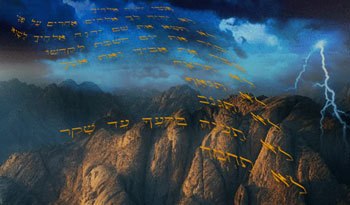
On the third day, as morning dawned, there was thunder, and lightning, and a dense cloud upon the mountain, and a very loud blast of the horn; and all the people who were in the camp trembled. Moses led the people out of the camp toward God, and they took their places at the foot of the mountain.

Now Mount Sinai was all in smoke, for the Lord had come down upon it in fire; the smoke rose like the smoke of a kiln, and the whole mountain trembled violently. The blare of the horn grew louder and louder. As Moses spoke, God answered him in thunder. The Lord came down upon Mount Sinai, on the top of the mountain, and the Lord called Moses to the top of the mountain and Moses went up. The Lord said to Moses, “Go down, warn the people not to break through to the Lord to gaze, lest many of them perish. The priests also, who come near the Lord, must stay pure, lest the Lord break out against them.” But Moses said to the Lord, “The people cannot come up to Mount Sinai, for You warned us saying, ‘Set bounds about the mountain and sanctify it.'” So the Lord said to him, “Go down, and come back together with Aaron; but let not the priests or the people break through to come up to the Lord, lest He break out against them.” And Moses went down to the people and spoke to them.

God spoke all these words, saying…Exodus 19:16-20:1 (JPS Tanakh)

I cannot even imagine what it must have been like to stand at the foot of Mount Sinai and to be a part of this amazing, awesome, terrifying, wonderful experience of standing in the physical presence of the manifestation of God. Just to glimpse it from afar would have been an honor beyond imagination. This was and is truly the pivotal moment in all of Jewish history: the giving of the Torah. Nothing else would so uniquely define the Jews as a people and as the chosen nation of God. No other people have any experience that could compare to this pinnacle moment in the history of Israel. Or do we? I’ll get to that.

In the Chabad commentary I quoted from above, we see that there is an interesting comparison between serving a human King and serving the King of the Universe. As the Rabbis point out, serving an earthly King entails only obeying the specific orders of your monarch. Except for rare individuals, a subject of a King would still have a private life and individual pursuits that were apart from the King’s commands and laws.

This is not so when serving the King of Kings.

The Torah defines every single aspect of a Jew’s life, how he prays, how he works, how he eats, how he is to treat his wife, his neighbors, his animals, everything…every little detail. When the Children of Israel said, “All that the Lord has spoken we will do,” (Exodus 19:8), they were pledging their very lives to God down to the tiniest action and thought. Yes, I know someone out there is going to tell me that according to the record in the Tanakh, the Hebrews were not always very successful in obeying God, but what’s important is the amazing scope of the promise, of the commandments, of having a God who so cared for you and your people that we was involved in every aspect of your existence, not just what you did in synagogue on Shabbat (or church on Sunday). You gave everything you were, are, and ever will be to God.

But when the Pharisees heard that he had silenced the Sadducees, they gathered together. And one of them, a lawyer, asked him a question to test him. “Teacher, which is the great commandment in the Law?” And he said to him, “You shall love the Lord your God with all your heart and with all your soul and with all your mind. This is the great and first commandment. And a second is like it: You shall love your neighbor as yourself. On these two commandments depend all the Law and the Prophets.” –Matthew 22:34-40 (ESV)

We see here that the Son of God, Jesus, the Messiah, God’s Lamb, demanded nothing less of his disciples as well, but that’s to be expected.

But that brings me to an interesting question. Every Jew who has ever lived can point to Sinai and say, “that’s where we began…that’s who we are as a people forever.” In fact, each Jew is to behave not just as an inheritor of the Sinai covenant, but as if he or she had personally stood at the foot of Mount Sinai and accepted the Torah!

Where do we Christians find such a moment in our lives? Do we have a “Sinai?”

When the day of the festival of Shavuot arrived, they were all together in one place. And suddenly there came from heaven a sound like a mighty rushing wind, and it filled the entire house where they were sitting. And divided tongues as of fire appeared to them and rested on each one of them. And they were all filled with the Holy Spirit and began to speak in other tongues as the Spirit gave them utterance. –Acts 2:1-4 (ESV)

Note: I substituted “day of the festival of Shavuot” for the actual text which reads “day of Pentecost” to preserve the perspective of the Jewish Apostles.

Since Pentecost and Shavuot are essentially parallel occurrences, it’s not surprising that the empowering of the Holy Spirit came upon the Jewish Apostles on the same day as the anniversary of the Sinai event.

I have to admit to being somewhat let down. Christians are not encouraged to consider the Pentecost experience as literally their own (I suppose because Christians see salvation as an individual “accomplishment” rather than becoming part of the “body of Christ” and the “commonwealth of Israel”), as if they (we) were “all together in one place” with the Apostles as the “mighty rushing wind…filled the entire house where they were sitting.” We are to consider (sort of) the moment when we accepted Jesus Christ as Lord and Savior of our lives as the moment when we have out Acts 2 experience, although no Christian I have ever met has described that moment in terms of “tongues of fire” appearing from heaven and resting upon them. Some people have described being able to suddenly “speak in tongues”, but I do know a person who, at an altar call at a local church some years ago, was encouraged by the Elder with him to “make something up” if the ability to speak in an “angelic language” didn’t manifest itself in him.

So much for majesty and awe.

For that matter, we don’t really know how Peter could tell that “the Holy Spirit fell on all who heard the word” while he was visiting the Roman God-fearer Cornelius in the Centurion’s home? (Acts 10:44)

However, this is as close to a “Sinai event” as we who are the non-Jewish disciples of the Master can achieve in the modern era. I don’t know what it means or doesn’t mean and maybe I’m reading too much into it, but I don’t think things have been explained to us very well. I don’t think we’ve been told that one of the responsibilities we have in common with our Jewish brothers and sisters is the command to surrender our entire lives, every action, every word, every thought, to God, our King.

It’s not like we should be ignorant of this responsibility, since it’s all over the New Testament.

We destroy arguments and every lofty opinion raised against the knowledge of God, and take every thought captive to obey Christ… –2 Corinthians 10:5 (ESV)

Not many of you should become teachers, my brothers, for you know that we who teach will be judged with greater strictness. For we all stumble in many ways. And if anyone does not stumble in what he says, he is a perfect man, able also to bridle his whole body. If we put bits into the mouths of horses so that they obey us, we guide their whole bodies as well. Look at the ships also: though they are so large and are driven by strong winds, they are guided by a very small rudder wherever the will of the pilot directs. So also the tongue is a small member, yet it boasts of great things. –James 3:1-5 (ESV)

If we look at the words of the Master as recorded by Matthew and add the letters from Paul and James, we see that we too must surrender all that we are to God in everything, including our words and our very thoughts. How like the covenant at Sinai in this one very important dimension in the lives of we Christians.

Christianity prizes Grace over the commandments of the Law, but we tend to miss the fact that we have serious responsibilities and that freedom from sin doesn’t mean we can literally do whatever we want with our lives, pursuing the same matters in practically the same way as the secular people around us. We must be more in our actions, which we aren’t always taught matter as much as faith and having a “warm and fuzzy” feeling inside for Jesus. We are servants. With almost no exceptions, the original Jewish Apostles suffered for a long time and eventually died terrible deaths as the commitment to the Messiah required. This is the lesson they learned, not just as disciples of the Master, but as Jews who, like all of their people, personally stood at the foot of Sinai as the fire and the thunder and the sound of the great shofar sounded, and before their King declared, “All that the Lord has spoken we will do!”

Can there be peace between the people who stood at Sinai and we who inherit the Spirit of Pentecost? We are disciples of the Master, but where is the unity? Where is peace?

Peace refers to harmony between opposites. In an ultimate sense, it refers to a resolution of the dichotomy between the physical and the spiritual, the forward movement enabling a world in which G-d’s presence is not outwardly evident to recognize and be permeated by the truth of His Being.

Moreover, true peace involves more than the mere negation of opposition. The intent is that forces which were previously at odds should recognize a common ground and join together in positive activity. Similarly, the peace which the Torah fosters does not merely involve a revelation of G-dliness so great that the material world is forced to acknowledge it. Instead, the Torah’s intent is to bring about an awareness of G-d within the context of the world itself.

There is G-dliness in every element of existence. At every moment Creation is being renewed; were G-d’s creative energy to be lacking, the world would return to absolute nothingness. The Torah allows us to appreciate this inner G-dliness, and enables us to live in harmony with it.

-Rabbi Eli Touger
In the Garden of the Torah
“Ripples of Inner Movement”
Adapted from
Likkutei Sichos, Vol. XI, p. 74ff; Vol. XV, p. 379ff;
Vol. XVI, p. 198; Sichos Shabbos Pashas Yisro, 5751
Chabad.org

The portion of the Torah event we who are grafted in may take away with us, is that there is a path to peace, not only between Christian and Jew, but for all of mankind. We aren’t there yet. There is not even peace between all Christians or between all Jews. But someday, “they shall sit every man under his vine and under his fig tree, and no one shall make them afraid, for the mouth of the LORD of hosts has spoken.” (Micah 4:4 [ESV]).

Good Shabbos.

The Moshiach and Christianity: My Personal Dilemma

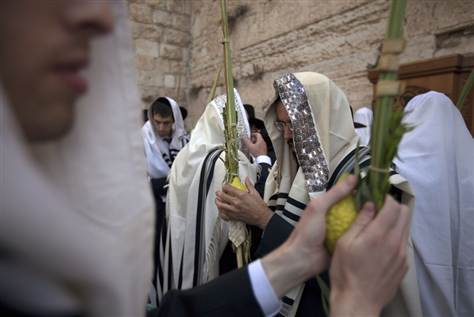
On today’s amud we find the proper seating order in shul.

Rav Raphael of Barshad, zt”l, was a very well known and respected personage, but this did not make him feel any arrogance at all. On the contrary, his every motion was filled with true humility. Every time he would enter a shul or gathering, he would sit in a common seat that was very distant from the coveted eastern wall.

One person felt that this was very strange and decided to ask him what was behind this odd practice. “With all due respect, I cannot fathom what is behind the rebbe’s custom. Either way—if the Rebbe sits in the back because he has true humility, why not sit in the front? Surely, one can retain a feeling of broken-heartedness even while sitting in an honorable seat. And if the rebbe has problems with thoughts of arrogance, chas v’shalom, what does sitting in the back help? Clearly it is possible to be filled with self-inflated feelings while sitting in the back as well as in the front. On the contrary, it is possible to fathom how one would be filled with more thoughts of arrogance because he acts humble…”

Rav Raphael replied, “Listen to me, my brothers. In Kiddushin 59 we find that although action nullifies the intent in one’s thoughts, mere thoughts cannot nullify action. If I, who is unworthy for the honor, were to sit in the mizrach, I would be doing an action of arrogance while trying to overcome this with thoughts of humility. But
we see that this is an exercise in futility. However, sitting in the back is an action of humility which overcomes any thoughts of arrogance. Isn’t it clear that this is the only option that gives me a chance of overcoming thoughts of arrogance?”

Mishna Berura Yomi Digest
Stories to Share
“Action Overrides Thought”
Rema Siman 150 Seif 5

Now he told a parable to those who were invited, when he noticed how they chose the places of honor, saying to them, “When you are invited by someone to a wedding feast, do not sit down in a place of honor, lest someone more distinguished than you be invited by him, and he who invited you both will come and say to you, ‘Give your place to this person,’ and then you will begin with shame to take the lowest place. But when you are invited, go and sit in the lowest place, so that when your host comes he may say to you, ‘Friend, move up higher.’ Then you will be honored in the presence of all who sit at table with you. For everyone who exalts himself will be humbled, and he who humbles himself will be exalted.”Luke 14:7-11 (ESV)

I always worry about “getting into trouble” whenever I post quotes from Talmud and the Gospels in parallel. I realize that the Talmud was written and compiled centuries after the death, resurrection, and ascension of Jesus, so he couldn’t have known about “Rabbinic Judaism” as such, though he probably did know about the teachings of Hillel and Shammai. And yet, again and again, it seems as if much of what the Master taught in some manner or fashion, is carried on in how Jews continued to teach and in how they continue to teach today. I know the connection is tenuous at best, but for some reason, I find it comforting on a purely visceral level.

And yet, someone completely unexpected seems to hold an opinion similar to mine. Frankly, I was more than surprised when I read this.

Not only was Jesus a rabbi, he was a deeply learned, well-versed student of Jewish holy texts. Almost all his teachings derive directly from the Torah. The lessons he articulated line up squarely with Jewish morality and statements of rabbis found in the Talmud. Some of Jesus’ most famous and recognizable teachings are taken directly from earlier Jewish sources.

…Jesus was equally familiar with Talmudic sayings. When Jesus instructs his listeners, “First take the plank out of your own eye, and then you will see clearly to remove the speck from your brother’s eye,” he alludes almost word for word to a Talmudic teaching of Rabbi Tarphon: “If someone urges you to remove the speck from your eye, he must be given the answer, ‘Take the plank out of your own.'”

-Rabbi Shmuley Boteach
Chapter 4: Jesus the Rabbi (pg 24)
Kosher Jesus

Although, as an Orthodox Jew, Rabbi Boteach’s perspective on Jesus is quite a bit different than the one held by Christianity (and when I finish reading his book, I’ll post a complete review), he does recognize that many of the teachings of Christ recorded in the Gospels are indeed teachings that resonate very strongly with what Jews understand from Torah and Talmud (though as I said, the Talmud didn’t exist during the time of the Gospels).

This is how I can draw parallels from the following:

Sadly, there is always a need for charity, especially while we are in exile. The Ohr HaChaim, zt”l, explains that a wealthy man has been entrusted with more money so that he will support the poor and worthy institutions.

Daf Yomi Digest
Stories Off the Daf
“Consecrating One’s Wealth”
Arachin 27

For to everyone who has will more be given, and he will have an abundance. But from the one who has not, even what he has will be taken away. –Matthew 25:29 (ESV)

However, there is a 2,000 year old “disconnect” between the teachings of the Jewish Rabbi from Nazareth and his almost completely non-Jewish followers all over the earth. In one sense, Jesus was remarkably successful in delivering his message, but according to Boteach, it was Paul’s fault that it was totally stripped of its Jewish origins and recreated in the image of the Goyim.

I have to strongly disagree with Rabbi Boteach here, since I don’t believe Paul is the “culprit” but rather, subsequent non-Jewish church leaders who, when they saw that Judaism was universally reviled in the Roman empire after the fall of Jerusalem and the exile of the Jews from Israel, decided to change horses in mid-stream (and this part, Boteach does agree with), creating a faith that would eventually become the state religion of the Roman empire.

I know. I’m probably being unfair and the history of the early church is a lot more complicated than that, but how many Jews have suffered and died because the non-Jewish disciples of Christ forgot that he was also Jewish? However, I must say here that many good non-Jewish disciples loved God and did their best to live out the true principles taught by the Master, so the core of what it is to be Christian has endured, at least as a remnant. But here we are, 2,000 years later, still trying to pick up the pieces of shattered human lives and relationships like tiny bits and shards of Herod’s Temple after the Romans got through with it.

I admit to being discouraged lately. Ironically, it’s mostly to do with Christianity. As much as I’d like to think that the church is getting past its attitude of blaming the Jews for not converting to Christianity, something or someone comes along and shows me that I’m wrong. Then there are some folks who are more or less associated with the Messianic or Hebrew Roots movement who, in their own way, are trying to do the same thing: minimize the Jews in their own faith, not by replacing Jews with Gentiles the way some churches have attempted, but by saying there is absolutely no difference between Gentiles and Jews, as if God “unchose” the Jewish people and then reapplied the same “Sinai choseness” upon all of believing humanity.

Yeah, I’m discouraged. It’s why I wrote my lament on the value and validity of church community and why I know more than ever that it would be completely intimidating for me to go to a church. If someone said to my face the things they feel free to say to me on the Internet, I would have to walk away and regain my composure before deciding if I should respond or not. That’s easy on the web, but harder to do in an in-person encounter, especially when you’re supposed to be “safe” within the encouraging arms of the “body of Christ.”

There are other, even more personal reasons why life as a Christian is becoming depressing and although I am mostly transparent here, this part I’ll reserve to myself. No, I’m not talking about a lack of faith in God or any sort of desire to abandon my discipleship under the Master. However, my faith in some of the people of the church is sorely being tested.

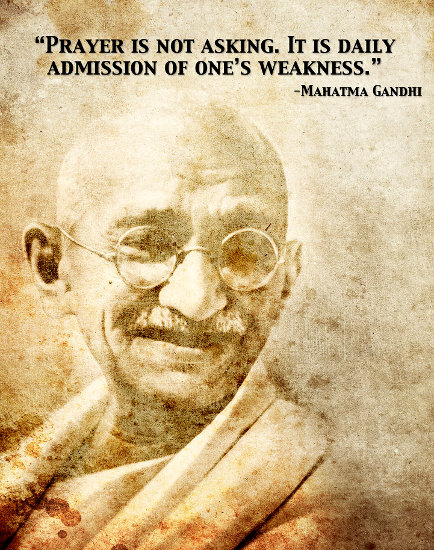
Frankly, I don’t know how God manages to put up with some of his followers, sometimes especially me. No wonder Gandhi said, “I like your Christ, I do not like your Christians. Your Christians are so unlike your Christ.”

Counting Down

Torah at SinaiOn the sixth day of the third month (Sivan), seven weeks after the Exodus, the entire nation of Israel assembles at the foot of Mount Sinai. G-d descends on the mountain amidst thunder, lightning, billows of smoke and the blast of the shofar, and summons Moses to ascend.

G-d proclaims the Ten Commandments, commanding the people of Israel to believe in G-d, not to worship idols or take G-d’s name in vain, to keep the Shabbat, honor their parents, not to murder, not to commit adultery, not to steal, and not to bear false witness or covet another’s property. The people cry out to Moses that the revelation is too intense for them to bear, begging him to receive the Torah from G-d and convey it to them.

The Parashah in a Nutshell
Yitro in Nutshell
Exodus 18:1–20:23
Chabad.org

Starting the second night of Pesach, we begin counting seven weeks, 49 days, until the holiday of Shavuos. This counting is called Sefiras Ha’Omer, The Counting of the Omer. (For more information on Sefiras Ha’Omer, see I:16, I:18)

-Rabbi Yehudah Prero
“The Counting of the Omer – A Count of Anticipation”
YomTov, Vol. IV, # 7
Torah.org

We see the events of the Torah reflected in current Jewish practice. According to the commandments (Ex. 12:16, Ex. 23:14, Lev. 23:7) the Jewish people commemorate the Passover every year in order to remember the Passover in Egypt and the great exodus of the Israelites from slavery to freedom. Then comes the Omer count, whereby Jews are commanded to count the Omer for 49 days in anticipation of the festival of Shavuot, which commemorates the giving of the Torah at Sinai. The events we see displayed with such grandeur and majesty before us when we read the Torah portions that relate these times, are part of the lived experience of every religious Jew and any Gentile who is attached to the Jewish community for various reasons.

But there’s one other event that we Christians must consider.

And when evening had come, since it was the day of Preparation, that is, the day before the Sabbath, Joseph of Arimathea, a respected member of the council, who was also himself looking for the kingdom of God, took courage and went to Pilate and asked for the body of Jesus. Pilate was surprised to hear that he should have already died. And summoning the centurion, he asked him whether he was already dead. And when he learned from the centurion that he was dead, he granted the corpse to Joseph. And Joseph bought a linen shroud, and taking him down, wrapped him in the linen shroud and laid him in a tomb that had been cut out of the rock. And he rolled a stone against the entrance of the tomb. Mary Magdalene and Mary the mother of Joses saw where he was laid. –Mark 15:42-47 (ESV)

According to the Gospel of Mark, Jesus was crucified on the same day as all of the representatives of the Jewish families in Israel were presenting their Passover lambs for sacrifice at the Temple in Jerusalem, in obedience to the commandment. He should have died right before sunset; right before the eating of the Passover lamb by each Jewish family, again, in obedience to the commandment.

But not all of the Gospel versions of the death of Jesus line up chronologically and we cannot be sure of the exact date. Was the “Last Supper” a true Passover seder or some other meal that occurred the evening before? We don’t know. We do know that Jesus died at about the time of the Passover, and we are fond of referring to Jesus as our “Passover lamb”. And three days later, Jesus rose from the tomb and he was with his people again for forty days. And then he ascended.

In the first book, O Theophilus, I have dealt with all that Jesus began to do and teach, until the day when he was taken up, after he had given commands through the Holy Spirit to the apostles whom he had chosen. He presented himself alive to them after his suffering by many proofs, appearing to them during forty days and speaking about the kingdom of God…And when he had said these things, as they were looking on, he was lifted up, and a cloud took him out of their sight. –Acts 1:1-3, 9 (ESV)

It would be nice if things lined up neatly but forty days does not equal the forty-nine day count of the Omer. Maybe this is one of the reasons why Christians don’t also “count the Omer” from the day of the crucifixion, which the church calls “Good Friday” to the day of the giving of the Holy Spirit, which Christians call “Pentecost”, but which also was the day of the festival of Shavuot commemorating the Sinai event.

So the Bible and our celebrations don’t line up into nice, neat, perfectly ordered events and holidays. I also understand that, during the schism between Gentile Christianity and Jewish Messianism, most or all of the Jewish connections to the Christian faith were summarily erased, along with the Jewishness of Jesus. Christians were not taught to count the Omer and in fact, were likely forbidden to perform any celebration of their faith that even vaguely resembled the worship of the Jews.

But wouldn’t it be great if, after the return of the Messiah, the Jews and the Gentiles counted the Omer together, in commemoration of the Passover and the gift of the Messiah to humanity? For just as death passed over the obedient Israelites in Egypt, so has eternal death passed over all who are faithful and obedient to Jesus, the lamb of God, who gave his life for the sake of the world and yet lives. And the giving of the Torah and the giving of the Holy Spirit nourishes all of the Master’s disciples, in accordance to our covenant relationship with God.

But for this tearing down of the wall of enmity to happen, we Christians must not be careless or dismissive of the things that God has created for the Jews and for the good of everyone.

As a young boy, Rabbi Yosef Yitzchak (the sixth Lubavitcher Rebbe) would go with his father on walks through the woods. One time, as they talked, the boy absent-mindedly plucked a leaf off a tree and began to shred it between his fingers. His father saw what his son was doing, but he went on talking. He spoke about the Baal Shem Tov, who taught how every leaf that blows in the wind—moving to the right and then to the left, how and when it falls and where it falls to—every motion for the duration of its existence is under the detailed supervision of the Almighty.

That concern the Creator has for each thing, his father explained, is the divine spark that sustains its existence. Everything is with Divine purpose, everything is of concern to the ultimate goal of the entire cosmos.

”Now,” the father gently chided, “look how you mistreated so absent-mindedly the Almighty’s creation.”

”He formed it with purpose and gave it a Divine spark! It has its own self and its own life! Now tell me, how is the ‘I am’ of the leaf any less than your own ‘I am’?”

-Rabbi Tzvi Freeman
“Purpose of a Leaf”
Based on letters and talks of the Rebbe
Rabbi M. M. Schneerson
Chabad.org

Do not shred a “leaf” too quickly, for you may not correctly understand why God created and sustained it. So it is with the Jewish people. So it is with counting the Omer. So it will be one day when a few, and then many, and then all of Israel sees the Divine spark, the “I am” in the Messiah; in Jesus of Nazareth.

Why Don’t the Jews Convert to Christianity?

In my neighborhood, we did not even mention his name. We said “Yoshke,” a Hebrew play on his name, or some children learned to say “cheese and crust” in place of “Jesus Christ.” In a synagogue sermon, rabbis might refer to Jesus – exceedingly rarely – by saying “the founder of Christianity.”

Fundamentally, we understood Jesus as a foreign deity, a man worshiped by people. The Torah instructs us never to mention the names of other gods, as no other god exists except God. We also understood Jesus to be as anti-Jewish as his followers. Was he not the Jew who had rebelled against his people? Was he not the one who instructed his followers to hate the Jews as he did, instigating countless cruelties against those with whom God had established an everlasting covenant? Was he not also the man who had abrogated the Law and said that the Torah was now mostly abolished?

-Rabbi Shmuley Boteach
from the Preface (pg ix) of his new book
Kosher Jesus

I’m just beginning Rabbi Boteach’s latest and most controversial book and will write a full review when I’m finished. However, in reading the Preface and Introduction sections of the book, I find myself thinking that much of what I’ve consumed so far would be good material for every Christian to read and absorb. Look at what Rabbi Boteach is saying about how he understanding Jesus when Boteach was a young Jewish boy growing up in an Orthodox Jewish neighborhood. A Jew’s understanding of Jesus from earliest childhood is as a person who hated his own Jewish people, who taught his Jewish (and later, Gentile) followers to also hate Jews, and who founded a religion based on the idea that Jews must be eradicated.

And Christians wonder why Jews aren’t standing in line waiting to convert to that form of Christianity. Gee whiz!

But there’s more:

Until the deeply anti-Semitic Augustine of Hippo (354-430 CE) directly addressed the subject centuries later, early Church leaders held that Judaism would never survive. Even the powerful Roman Empire couldn’t resist the Christian juggernaut – eventually capitulating and adopting Christianity as state religion. It wasn’t a stretch for Christians to surmise that all remaining Jews would eventually convert, wiping out the ancient religion. But against all odds, Judaism survived and flourished.

-Boteach
Introduction, pp xiii-xiv

That last sentence reminds me so much of this:

Then Joseph died, and all his brothers and all that generation. But the people of Israel were fruitful and increased greatly; they multiplied and grew exceedingly strong, so that the land was filled with them. –Exodus 1:6-7 (ESV)

Even as Pharaoh, King of Egypt enslaved the Israelites and the Egyptians treated the Hebrews with terrible cruelty, under the harshest conditions, the Children of Jacob survived, multiplied, and flourished. Of course, Pharaoh had no intention of exterminating his population of slaves. They were much too valuable to him alive, so their continued survival was no mystery to him. However, for the early church, according to Boteach, the continuation of Jews and Judaism was inexplicable.

This makes me ask a few questions.

I wonder if the continuation of the Jews and Judaism today is what frustrates some Christians? It would explain something my brother-in-law said to me many years ago. He’s my wife’s younger brother and a born-again Christian. He denies that his mother was Jewish (even though we have ample evidence that she, her siblings, and cousins, and parents, and grandparents are all buried in Jewish cemeteries). I can’t remember how we got on the topic, but at one point, in a fit of emotion, he exclaimed, “Why can’t the Jews just accept Jesus?”

Maybe I should send him a copy of Rabbi Boteach’s book.

I think that the survival and flourishing of Judaism in the modern age is frustrating to some Christians. Rabbi Boteach goes on in the Introduction of his book, to illustrate how there has been much restoration of the relationship between Judaism and both Catholicism and Evangelical Christianity, so I can’t paint a terribly grim portrait of the Jewish/Christian interaction today. But there are still plenty of Gentile believers who seem to wish that Judaism would just plain “go away” and who are at a total loss as to why God would allow the Jewish people to continue as a distinct group on the face of the Earth.

My other question has to do with “Rabbinic” or “Talmudic” Judaism. In any real sense, this is the only valid form of Judaism in the post-Second Temple world (and I’m including significant portions of Messianic Judaism in this group), since without a Temple, functioning priesthood, and functioning Sanhedrin, much of the Judaism of the Torah cannot be observed, even in Israel. I’ve said before in a few blog posts that the Talmud and the traditions of the Sages are a major reason why Judaism survived in a hostile post-Temple world and across the long centuries after 70 CE and after the majority (but not all) of the Jews were exiled from Israel by the Roman conquerors.

Throughout the history that followed the last Jewish exile, on many occasions, Christian religious authorities tried to destroy the Jews by burning their synagogues, their Torah scrolls, their siddurim (prayer books), and their Talmud. Sadly, Martin Luther, near the end of his life, reversed any good he did to bring Christ closer to the Christians by advocating the destruction of the Jews:

…set fire to their synagogues or schools and to bury and cover with dirt whatever will not burn, so that no man will ever again see a stone or cinder of them. This is to be done in honor of our Lord and of Christendom, so that God might see that we are Christians, and do not condone or knowingly tolerate such public lying, cursing, and blaspheming of his Son and of his Christians. For whatever we tolerated in the past unknowingly ­ and I myself was unaware of it ­ will be pardoned by God. But if we, now that we are informed, were to protect and shield such a house for the Jews, existing right before our very nose, in which they lie about, blaspheme, curse, vilify, and defame Christ and us (as was heard above), it would be the same as if we were doing all this and even worse ourselves, as we very well know.

…I advise that all their prayer books and Talmudic writings, in which such idolatry, lies, cursing and blasphemy are taught, be taken from them….

From “Martin Luther: The Jews and Their Lies” (1543)
as quoted by Jewish Virtual Library

If some Christians, both historically and currently, experience frustration at the continued existence of Judaism, they might also experience frustration at and hostility toward the mechanisms by which the Jews have survived: Jewish prayer, synagogue worship, Torah readings, and particularly Talmudic study. If you destroy a people’s lifestyle and culture, you destroy the people, perhaps not in body, but in spirit and identity. As an example, allow me to present the Native American peoples who were all but wiped out by European expansion across this continent over the past several centuries. There are tribes who no longer know their own written and spoken languages, who have lost many of their traditional ceremonies and history, and who are hanging on to any remaining shred of their identity as a people by their fingernails.

This is what could have happened to the Jewish people and to Judaism if the Talmud had successfully been destroyed. But is this why some Christian and Hebrew Roots groups oppose the study and authority of Talmud among Jews today? Does it somehow diminish those who say they follow the cause of Christ if the Jews continue to adhere to that which has allowed them to survive and to flourish as Jews?

I suppose you could say I’m being a little hard on Christianity and some parts of Hebrew Roots for their opposition to the Talmud of Judaism, but frankly, even if their intentions are “benign” from their own point of view, if they had gotten their way, there would be no Jews walking around today or at best, the “Jews” we’d recognize would be a shell rather than a thriving Jewish culture. Their identity would be shattered, and all that would be left of the people established by God Himself at Sinai through the Torah, would be the tiny sparks and shattered fragments that somehow survived in the whitewashed and “Gentilized” teachings of the modern, refactored “Jesus Christ,” who started out well as Jewish Rabbi and Messiah, but who was turned into a non-Jewish icon symbolizing the extinction of his own people.

Having read my wee missive now, if you’re a Christian, if you’re a Pastor, if you’re a Bible teacher, if you’re a Church Choir Leader, if you’re involved in the church in any capacity whatsoever, take a moment and look at yourself in the mirror. Now ask yourself, why don’t the Jews convert to Christianity. You may not understand it yet, but I think you have the answer.

Grounded Prayers

The Chozeh of Lublin, zt”l, writes that prayer—even when it is thoughtless or lackluster—always has value. “In Arachin 23 we find that according to Beis Shammai— which is the way that things will be in the ultimate future—if something is declared hekdesh mistakenly, it is nevertheless consecrated. This alludes to the person who prays without any kavanah, whose mouth intones certain words but whose thoughts have boarded a very different train of thought. While prayer is compared to a sacrifice, this can be considered like sanctifying a sacrifice accidentally. In the future world, hekdesh declared erroneously is still holy. Despite its lack of perfection, it will still be precious when it is finally elevated on high.”

Nevertheless, prayers that are intoned without proper focus can sometimes take a very long time to ascend. The Baal Shem Tov, zt”l, once entered a shul with his disciples and immediately left. When asked why he refused to pray there, he gave a very strange explanation. “That shul is full of prayers.”

When he noticed that those with him were very confused by this reply he explained. “A shul should not be filled with Torah and tefilah, since these should ascend on high. It is only if the prayers were said in a very inferior manner that they remain below waiting for someone to elevate them.

On another occasion the Baal Shem Tov said, “Today I elevated prayers that have waited below for eighty years!”

The Tiferes Shlomo, zt”l, uses this story to explain another statement on today’s daf. “This is the deeper meaning of the statement of our sages that one who elevates his property is allowed to keep his tefillin. The word for tefillin…can also refer to prayers. The tefillos of one who sanctifies his property— meaning, one who nullifies himself and stops thinking about business during prayer—are elevated. This person who works to nullify himself as well as he can will be elevated.”

Daf Yomi Digest
Stories Off the Daf
“Accidental Hekdesh”
Arachin 23

I’ve talked about kavanah before. I’ve talked about what we bring to prayer and our struggles in prayer before. Yet this is something that I think is a common problem for many Christians and Jews. It’s difficult to disengage from our daily lives and to focus on being alone with God. Often, during prayer, I find that my thoughts have wandered and I am not so much praying to God as conducting an inventory the recent events in my life. I wonder if this is why the Master instructed his disciples to pray such a short prayer (Matthew 6:5-15). I can’t imagine there’d be much time in “the Lord’s prayer” to lose oneself in thought. But that’s just my opinion, of course.

However, we see from the Daf of Arachin 23 that perhaps even those prayers that are rooted in the mundane still have value and worth to God. I know this probably won’t make much sense to the Christians reading this “morning meditation” since Christianity doesn’t have such an elaborate set of thoughts and ideas woven around the concept of praying to God. For most people in the church, you pray in the name of Jesus, your prayer is heard by God, and that is that. In Judaism, the individual has a much more active and responsible role in prayer as part of the intricate and sometimes delicate relationship between a Jew and his Creator. I think that’s what attracts me to Jewish worship and study; the requirement that a person must be fully engaged and that what you do in worship and even in prayer matters. You’re not allowed to go on “automatic pilot” and expect that it doesn’t make a difference.

Are prayers grounded on earth when the proper kavanah is not attached and did men such as the Baal Shem Tov have the ability to release those prayers to Heaven after their lengthy “waiting period” in our realm? My tendency is to say “no”, but since the experience is subjective and completely mystical, there’s no way for me to know for sure. And yet, I find I don’t have to take a Hasidic Tale at face value and consider it a literal event in order to find value in its telling. Perhaps this story of the Baal Shem Tov and of synagogues already filled with “unascended” prayers can tell us something about our own prayers.

PleadI believe that God is aware of us in a very detailed and exquisite manner. I believe He is with us all of the time, not just with the human race as a whole and not even just with Christians or Jews as people groups and religious congregations as a whole, but with each and every one of us as individuals. How that works, I cannot say, but I believe it is true. God attended individually to such people as Noah, Abraham, Moses, and Peter (and of course to Jesus, but that goes without saying). Why can’t He attend to you and me? That’s why we pray, isn’t it…so that God will hear us…you and me…as individuals?

We see in the Daf that while any prayer has value, the prayer that is directed with kavanah has greater value and it ascends to God. What this tale teaches me is that prayer is not only a mitzvah but a discipline. It isn’t just sitting around with a cup of coffee at the kitchen table “talking” to God, although that has value too, but it is a personal struggle with God as (and I’ve said this before) Jacob struggled with the angel (Genesis 32:22-32). If you enter a wrestling match or any “martial” encounter with another person and you are not completely focused on the “fight”, you will end up with your opponent handing your head to you. You will be battered and knocked to the mat with nothing but your bruises to show for the effort. While it is true that Jacob also came away from such an encounter with an injury, he also received a blessing. But he had to be fulling involved with the angel as we must be fully involved with God in prayer.

Prayer is a comfort and a mitzvah but it is also a discipline. Prayer can come in many forms including liturgical, spontaneous, and even hitbodeut. Prayer can even be a violent encounter with God but that encounter can show us so much, and in our encounter, our prayers can soar to the heights of Heaven. Or, if we let it, prayer can be passive and rote and leave a puddle of thoughts and feelings on the ground like the remains of yesterday’s rain. If we want our “rain” to ascend, we must provide the kavanah and give our prayer wings.

At the Table of Abraham, Isaac, and Jacob

On today’s amud we find that seeming to prefer one sefer Torah over the other is like besmirching the other sefer Torah.

Honoring the sefer Torah is a great mitzvah. Some people even purchase a special silver crown for the Torah to show honor and respect for it. In one shul they had several sifrei Torah but only one crown. Usually this was sufficient, since on most weekdays and Shabbosim only one sefer is removed from the aron hakodesh. But on days when more than one sefer was removed, they would put the crown on only one of the seforim—what choice did they have?

One talmid chacham pointed out that this may be a lack of honor to the second sefer. “The Chazon Ish told Rav Simchah Kaplan, the rav of Tzfas, that he should not allow them to make a special monument in the cemetery there for a certain tzaddik since this besmirches the many other great tzaddikim interred there. Presumably the same is true in our situation and we must either purchase another crown or refrain from putting the crown on either sefer?”

They agreed to ask Rav Chaim Kanievsky, shlit”a, and he ruled in his usual brief and to-the-point manner: “They can put the crown on whichever Torah they want.”

When this question and answer reached the author of Doleh Umashkeh, shlit”a, he explained why there is no proof from the Chazon Ish’s ruling regarding a memorial in the cemetery in Tzfas. “A special monument is a permanent way of distinguishing one tzaddik over the others, while a crown on a Torah is only worn for a short time.”

Mishna Berura Yomi Digest
Stories to Share
“The Torah’s Honor”
Siman 144, Seif 4

You may be wondering what this has to do with anything, but when I read this commentary, I couldn’t help but think of the conversation that’s been going on in another one of my “meditations” for the past week about debating fulfillment theology. Let me explain.

One of the issues regarding how we consider the “specialness” of the Jewish disciples of Jesus (or Jews in general) relative to the Gentile disciples is the concern that Gentiles will become “second-class citizens” of the Kingdom if Jews are viewed as having a different covenant relationship with God. My proposition has been that the Messianic or Davidic covenant which was initiated by the birth, death, resurrection, and ascension of Jesus Christ, did not overwrite or eliminate either the Abrahamic or Mosaic covenants that came before it, but rather, the Messianic covenant ratified the previous two covenants even as the Mosaic ratified but did not eliminate the Abrahamic covenant.

The first two covenants apply only to the Children of Israel but the third applies to Israel and to the nations. I know this is pretty confusing, and it’s probably easier for most Christians to do away with the complex nature of treaty and covenant relationships as they were understood in the ancient near east, by simply doing away with all but the most recent covenant, but that wouldn’t be accurate, fair, or Biblically honest. Yet, like the crown we see that can only be applied to a single Torah scroll, it seems as if only one scroll receives the highest honors with the other scrolls being subordinate. Just as with the concerns expressed in the commentary above, the Gentile disciples of Jesus (i.e. Christians) do not think it’s fair for the Jews to be crowned with a higher honor than the Gentiles and thus, one of the motivations for supersessionism is born. Instead of the Jews being ascendant over the Christians, the Christians become ascendant over the Jews. Using another Daf commentary, he’s a metaphor of how Christians see the Jews and the Torah.

Shulchan Aruch rules that a rented property that is used for a Beis HaKnesses does not have the sanctity of a Beis HaKnesses. The reason, explains Levush, is that although for the duration of the lease the property will be used for a Beis HaKnesses it is still considered only temporary since today or tomorrow the owner will take back the property. Only when a building was constructed in the first place to be a Beis HaKnesses or if it was purchased to be used as a Beis HaKnesses does it attain the sanctity of a Beis HaKnesses. Teshuvas Ravaz suggests that Shulchan Aruch is basing his ruling on our Gemara which states that a tenant cannot sanctify the rented property since it is not his. The rationale, suggests Teshuvas Ravaz, is that we do not find precedent that property could become sanctified for a limited period of time and then have the sanctity dissipate into nothing upon the end of the lease. As such one could assert that just as a tenant cannot sanctify the property that he is renting to the Beis HaMikdash, so too, he cannot sanctify rental property as a Beis HaKnesses for a limited period of time and then have that sanctity dissipate upon the end of the lease.

Beiur Halacha cites earlier authorities who maintain that Shulchan Aruch’s ruling is limited to the circumstances of Mahari ben Chaviv whose words are the source for Shulchan Aruch’s ruling. In the time of Mahari ben Chaviv the government did not allow property to be rented out to serve as a Beis HaKnesses. For that reason the rental of a property for a Beis HaKnesses was by nature very temporary since at any time the owner could contact the renters and inform them that they had to leave the premises. As such a property rented to be a Beis HaKnesses did not attain the sanctity of a Beis HaKnesses. In our times when it is acceptable for property to be used as a Beis HaKnesses and the owner cannot terminate the lease early a Beis HaKnesses that rents space does attain the sanctity of a Beis HaKnesses with all the halachos that go together with that.

Daf Yomi Digest
Halacha Highlight
“The sanctity of a Beis HaKnesess on leased property”
Arachin 21

The Mosaic covenant, the Torah which details its conditions, and the people who have been subject to that covenant, are all considered temporary or “placeholders” until the arrival of the Messiah. According to supersessionist thought, the Jewish people have no intrinsic value in and of themselves, to God or to the world. The Jews, the Torah, and the Mosaic covenant only existed to point to the Messiah and perhaps just to “fill up space” until Jesus was born.

Once the Messiah arrived and “completed” the work of the Law, the temporary covenant expired, according to supersessionism, and the Messianic covenant permanently replaced the Mosaic covenant, the conditions of the Torah for the Children of Israel, and the descendents of Israel, the Jewish people, forever. Any “sanctity” that the Jews possessed, like a Beis HaKnesses that is rented property, is considered temporary and perishable. In contrast, the Messianic covenant and the Gentile Christians (and any Jews who might choose to surrender their Jewish identity and succumb to becoming a Gentile by converting) rise to become the permanent inheritors of all the covenant promises God made and that were contained in the Abrahamic covenant, with the conditions of the Mosaic covenant (with minor exceptions) being swept away as inferior and even repulsive (which is probably where many Christians over the past 2,000 years got the idea that the Jews themselves were inferior and repulsive).

But is this really so? The two commentaries above do not have direct applications to the answer and I’m using them only as imperfect metaphors, but I think they’re very good imperfect metaphors. Let’s consider the “temporary” nature of Jesus Christ.

And the Word became flesh and dwelt among us… –John 1:14 (ESV)

And the Word became flesh, and did tabernacle among us… –John 1:14 (Young’s Literal Translation)

Most common English translations of John 1:14 say that the Word “dwelt among us” or “made his dwelling among us” or “lived among us”. Young’s translation implies that the “living among us” was temporary, because a tabernacle or a “tent” is not considered a permanent home (although it can be used over an extended period of time, even decades, as we see in the example of the wanderings of the Children of Israel in the wilderness). The Weymouth New Testament translates the same words as “and lived for a time in our midst”, which also emphasizes that Jesus was among us only temporarily.

Jesus, the Word, lived among human beings but only temporarily. Did that make him any less sanctified before God? Perhaps we shouldn’t be so quick to discard things we consider temporary. They could have a much longer “shelf life” than we might imagine.

“I will make with them a covenant of peace and banish wild beasts from the land, so that they may dwell securely in the wilderness and sleep in the woods. And I will make them and the places all around my hill a blessing, and I will send down the showers in their season; they shall be showers of blessing. And the trees of the field shall yield their fruit, and the earth shall yield its increase, and they shall be secure in their land. And they shall know that I am the LORD, when I break the bars of their yoke, and deliver them from the hand of those who enslaved them. They shall no more be a prey to the nations, nor shall the beasts of the land devour them. They shall dwell securely, and none shall make them afraid. And I will provide for them renowned plantations so that they shall no more be consumed with hunger in the land, and no longer suffer the reproach of the nations. And they shall know that I am the LORD their God with them, and that they, the house of Israel, are my people, declares the Lord GOD. And you are my sheep, human sheep of my pasture, and I am your God, declares the Lord GOD.” –Ezekiel 34:25-31 (ESV)

“For behold, in those days and at that time, when I restore the fortunes of Judah and Jerusalem, I will gather all the nations and bring them down to the Valley of Jehoshaphat. And I will enter into judgment with them there, on behalf of my people and my heritage Israel, because they have scattered them among the nations and have divided up my land, and have cast lots for my people, and have traded a boy for a prostitute, and have sold a girl for wine and have drunk it. –Joel 3:1-3 (ESV)

Lest you be wise in your own sight, I do not want you to be unaware of this mystery, brothers: a partial hardening has come upon Israel, until the fullness of the Gentiles has come in. And in this way all Israel will be saved, as it is written,

“The Deliverer will come from Zion,
he will banish ungodliness from Jacob”;
“and this will be my covenant with them
when I take away their sins.” –Romans 11:25-27 (ESV)

Unless God was leaving out some important details, He never seemed to indicate that the Children of Israel would be a people before Him only up to a certain time, and then He’d toss them aside like a bowl of hummus that had been left out in the sun too long. In fact, it seems as if He plans to judge all of the nations that have treated His people Israel poorly, so perhaps the rest of us should be a little cautious when we casually claim that we have replaced “the apple of His eye.” For those Christians who are reading this who are still convinced that Jews and Judaism are “dead” in the eyes of God and as seen through the lens of the Davidic covenant, remember that God can resurrect human beings and even a nation of “dry bones” (Ezekiel 37:1-14). Israel is not “cut off.” Israel has hope. God will place flesh upon all of Israel and Israel will be restored. In fact, God is restoring Israel right now, before our very eyes.

We have a picture, based on John 1 of the Messiah temporarily dwelling among his people Israel and then leaving again. We have a picture of the Jewish people, based on Romans 11 temporarily being “hardened” against the Messiah. We also have this.

And I heard the number of the sealed, 144,000, sealed from every tribe of the sons of Israel… After this I looked, and behold, a great multitude that no one could number, from every nation, from all tribes and peoples and languages, standing before the throne and before the Lamb, clothed in white robes, with palm branches in their hands, and crying out with a loud voice, “Salvation belongs to our God who sits on the throne, and to the Lamb!” –Revelation 7:4,9-10 (ESV)

Then the angel showed me the river of the water of life, bright as crystal, flowing from the throne of God and of the Lamb through the middle of the street of the city; also, on either side of the river, the tree of life with its twelve kinds of fruit, yielding its fruit each month. The leaves of the tree were for the healing of the nations. No longer will there be anything accursed, but the throne of God and of the Lamb will be in it, and his servants will worship him. They will see his face, and his name will be on their foreheads. And night will be no more. They will need no light of lamp or sun, for the Lord God will be their light, and they will reign forever and ever. –Revelation 22:1-5 (ESV)

Here we see that the “temporary” Lamb is now permanent and the “temporary” tribes of Israel are now permanent, and we also see that “a great multitude…from every nation, from all tribes and peoples and languages” will be “standing before the throne and before the Lamb.” Jesus is permanent though he was once temporarily on the Earth. The tribes of Israel are permanent though they temporarily were hardened to the Messiah for the sake of the Gentiles. The Gentiles are there with the tribes of Israel and with the Lamb, not as second-class citizens, but co-citizens with Israel in the Kingdom, and the Lamb is the Lamb for us all.

One God, One Lamb, One throne, One Kingdom. One shepherd over two folds in one pen.

I am the good shepherd. I know my own and my own know me, just as the Father knows me and I know the Father; and I lay down my life for the sheep. And I have other sheep that are not of this fold. I must bring them also, and they will listen to my voice. So there will be one flock, one shepherd. –John 10:14-16

I don’t know how it all works or how it will all work out, but I trust that it will all work out between God and His people Israel, and we Gentile Christians, His people who were placed in His hand by Jesus. And in the end, we will all be seated together at the feast of Abraham, Isaac, and Jacob (Matthew 8:11) and we will all be at peace and none will make us afraid (Micah 4:4) “for the mouth of the LORD of hosts has spoken.”