Tag Archives: D Thomas Lancaster

A Question of the Division of Abijah

levites-aaronic-blessingIn the days of Herod, king of Judea, there was a priest named Zacharias, of the division of Abijah; and he had a wife from the daughters of Aaron, and her name was Elizabeth.

Luke 1:5 (NASB)

I very recently wrote a blog post called Was He Born in a Sukkah and, based on a teaching by First Fruits of Zion (FFOZ) theologian and teacher D. Thomas Lancaster, I suggested that Jesus was not born either on Christmas or on Sukkot. I received some pushback as a result and some readers provided further evidence on how the Master was very probably born on Sukkot.

My original source was an article in Messiah Journal 111 (Fall 2012 issue) called “The Birth of Yeshua at Sukkot: Evidence from an Old Source” but I later listened to an audio CD of Lancaster teaching the same material. The audio contained more information that expanded upon Lancaster’s reasons as to why we can’t really know if Jesus was or wasn’t born on Sukkot.

I just found Lancaster’s sermon online at the Beth Immanuel Sabbath Fellowship website. If you click that link, you’ll be taken to the Audio page specific to the material. To listen to the relevant recording, scroll down until you locate “Birth of Yeshua at Sukkot.” At about 8:29 on the audio, Lancaster introduces the information about Zacharias (father of John the Baptist) that I’m also going to summarize here.

The strongest evidence anyone has presented me about Yeshua (Jesus) being born on Sukkot has to do with the timing of Zacharias’ service in the Temple. But let’s take a step backward:

Now in the sixth month the angel Gabriel was sent from God to a city in Galilee called Nazareth, to a virgin engaged to a man whose name was Joseph, of the descendants of David; and the virgin’s name was Mary. And coming in, he said to her, “Greetings, favored one! The Lord is with you.” But she was very perplexed at this statement, and kept pondering what kind of salutation this was. The angel said to her, “Do not be afraid, Mary; for you have found favor with God. And behold, you will conceive in your womb and bear a son, and you shall name Him Jesus. He will be great and will be called the Son of the Most High; and the Lord God will give Him the throne of His father David; and He will reign over the house of Jacob forever, and His kingdom will have no end.” Mary said to the angel, “How can this be, since I am a virgin?” The angel answered and said to her, “The Holy Spirit will come upon you, and the power of the Most High will overshadow you; and for that reason the holy Child shall be called the Son of God. And behold, even your relative Elizabeth has also conceived a son in her old age; and she who was called barren is now in her sixth month.

Luke 1:26-36 (NASB)

Here we see the angel Gabriel announcing to Miriam (Mary) that she has been chosen to be the mother of Jesus, and popular opinion states that at this time Mary was already pregnant or would become pregnant very soon afterward. We also see that her cousin Elizabeth was six-months pregnant with her child, John the Baptist. The Priest Zacharias is John’s father.

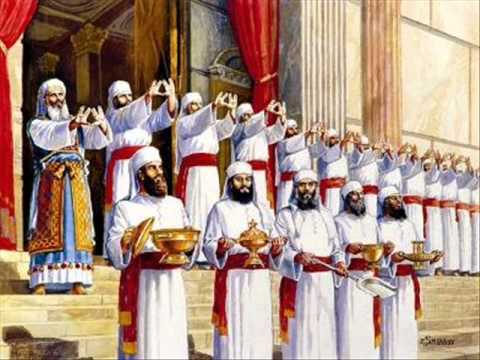
Remember, Zacharias is a Priest in the division of Abijah and we know, based on 1 Chronicles 24, the order of the service of the Priestly divisions. We know that the division of Abijah, like the other divisions, served twice a year for a full week each time. If we could figure out when the course of Abijah was, we could figure out when Elizabeth became pregnant (since she became pregnant immediately after the end of Zacharias’ service in the Temple), count ahead six months and then nine months, and then figure out the birthdate of Jesus.

But Lancaster says it’s not that easy.

First of all, there were 24 courses which meant that each division cycled through the year twice making 48 week-long courses in a year. But in the solar calendar, there are 52 weeks in a year, so unless there was some way to compensate, each course would drift across the calendar making it very difficult to determine when a particular division was serving at any given year.

D.T. LancasterThe assumption though is that the Abijah division was serving in the spring or the fall. But Luke doesn’t tell us what season it was when describing Zacharias’ service, so we have no way of knowing if it was during springtime or autumn.

On top of that, one out of every three years in the Jewish religious calendar contains 13 months. Rabbinic sources don’t tell us how or if the priesthood compensated for an extra four weeks in their calendar every three years. We assume that they must have, but without knowing the exact method they used, we’re stuck as far as calculating the timing of the service of divisions.

And after all that, the entire priesthood was called to serve during each of the three pilgrim festivals: Pesach, Shavuot, and Sukkot, and Lancaster says we can’t rule out that it was during one of the festivals that Zacharias was serving.

The icing on the cake, so to speak, is that experts don’t agree on whether the priestly rotation began on Nisan 1 or Tishrei 1.

Add all this up, and it becomes impossible to calculate when Zacharias served in the Temple in the Luke 1 text, and thus the entire basis for calculating the birth of Messiah disintegrates like wet tissue paper.

Since this is just a summary, I encourage you to click on the link I provided above and listen to the entire recording for yourself. I can’t speak for Lancaster, but unless some additional data comes to light that modifies everything I just said, the information about Zacharias and the Abijah division of priests is a dead-end in terms of discovering the birthdate of the Master.

Was He Born in a Sukkah?

born_in_sukkahWhen was Yeshua born? The Gospel writers either did not know when the event happened or they did not feel the information was important enough to pass along. We can only speculate.

Two centuries after it happened, Clement of Alexandria discussed the dating of the Master’s birth, but he did not mention December 25 or January 6 at all. Instead, Clement reported one tradition corresponding to April 20 on our civil calendar and another tradition corresponding to May 20. By the middle of the fourth century, however, the Roman church had begun to honor December 25 while churches in the East, Asia Minor, and Egypt observed Jesus’ birth on January 6. Both are late developments and unsupported by early tradition or biblical evidence. No trace of a tradition from the early Jewish believers connects the birth of the Messiah with December 25 or January 6.

-D. Thomas Lancaster
“The Birth of Yeshua at Sukkot: Evidence from an Old Source,” pg 21
Messiah Journal, issue 111 (Fall 2012)
Published by First Fruits of Zion (FFOZ)

This is normally the sort of conversation you have in December when the vast majority of the Christian world prepares to celebrate the birth of Christ. One thing we can be certain of is that Jesus was born nowhere near December 25th. But it has been suggested that he might have been born on or near the festival of Sukkot. Could this be true?

I recently had a private request for any information I knew about this possibility. Alas, it’s not something I’ve written on before (although I’ve heard some commentaries on the topic). Fortunately, D. Thomas Lancaster has written on this in the above quoted article in Messiah Journal 111, which was published last year. Does Lancaster conclude that the Master was born during this season and if so, what is his evidence?

Other Sukkot-theory proponents claim, “Yeshua was born in a sukkah because the word ‘stable’ is sukkah in Hebrew.” These arguments are not at all convincing and fall apart under scrutiny. Is there any legitimate evidence of a Sukkot birth, or is the birth of Yeshua at Sukkot just more Hebrew roots movement apocrypha?

-Lancaster, pg 22

That doesn’t sound too encouraging. As much as the symbolism may attract us and fit into the theories and emotional dynamics of certain individuals and groups, is there any real evidence to establish the idea that Jesus was born during Sukkot? What line of reasoning and investigation could we use to support or refute this viewpoint?

Lancaster suggests that we could compare the birth narrative of John the Baptist to that of Jesus. We know, based on Luke 1:26 and 1:36 that the conception of Jesus came about six months after the conception of John, thus we can assume that Jesus was born about six months after John was. If we could determine when John was conceived and/or born, we could reasonably deduce when Jesus was born.

And now you will be silent and not able to speak until the day this happens, because you did not believe my words, which will come true at their appointed time.”

Luke 1:20 (NIV)

And now you will be dumb and unable to speak until the day when this has taken place; because you did not believe my words–words which will be fulfilled at their appointed time.”

Luke 1:20 (Weymouth New Testament)

zechariahThese are the only two translations of the New Testament where it specifically mentions “appointed time,” which is important because of the following:

“Is anything too difficult for the LORD? At the appointed time I will return to you, at this time next year, and Sarah will have a son.”

Genesis 18:14 (NASB)

But what’s “appointed time” got to do with it? Doesn’t it just mean some random date God selected for the birth of John the Baptist and Isaac, the son of Abraham and Sarah?

In the Torah, the biblical festivals are called “appointed times.” According to one Jewish interpretation, “the appointed time” at which Sarah gave birth to Isaac was the first day of Passover:

And how do we know that Isaac was born at Passover? Because it is written, “At the appointed time I will return to you […and Sarah will have a son].” (b.Rosh Hashanah 11a)

In the Gospels, John the Immerser comes in the role and spirit of Elijah. Jewish tradition maintains that Elijah will appear at Passover to announce the coming of Messiah. For that reason, we read Malachi’s prophecy about the coming of the Messiah on the Sabbath before Passover, and Jewish homes set a place at the Passover Seder table for Elijah.

-Lancaster, ibid

Lancaster covers two other traditions. One involving the Biblical record of Joseph and Mary traveling (supposedly) to Jerusalem to attend the festival of Sukkot, and they happened to be near Bethlehem when Mary went into labor. If Bethlehem were on the pilgrim trail to Jerusalem, the multitude of travelers going up to Jerusalem for the festival could account for all the “no vacancy” signs at the inns.

The other tradition has to do with assigning a double meaning to the phrase “the Eighth Day.” Of course, all Jewish boys were to be circumcised on the eighth day after birth, but the last day of Sukkot, which is actually a separate festival, Shemini Atzeret, is also referred to as the “Eighth Day.” This would mean Jesus would have been born on the first day of Sukkot and circumcised on the eighth day of the festival. Pretty neat timing.

Admittedly, this is all speculative. The Gospels do not actually indicate that John was born on the first day of Passover, that Yeshua was born on the first day of Sukkot, or that he was circumcised on the eighth day of Sukkot.

-ibid, pg 23

Lancaster’s article goes on for another page or so where he quotes from a “medieval collection of anti-Christian Jewish folklore titled The story about Shim’on Kefa (Aggadta DeShim’on Kefa),” which may offer certain hints suggesting that the early Jewish believers could have commemorated the Master’s birth at Sukkot, but all in all, support for this perspective is very thin.

Sukkah in the rainI’m not saying it couldn’t work out this way and I suppose it would be very symbolic if it did work out that Jesus was born on Sukkot, but in fact, we just don’t know. Evidence from the Gospels and from various Christian and Jewish sources simply do not provide enough light on this matter to bring it to any sort of resolution. Thus, for Christians and other Gentile believers involved in the Hebrew Roots and Messianic Jewish movements, we must find other reasons to celebrate Sukkot. Don’t worry, we have reasons enough, as one person said on my blog recently.

It is appropriate, not only that you have built the family sukkah, but also that you should participate in its celebration, as an anticipation of the prophetic fulfillment in the Messianic Era when the nations will come up to Jerusalem to celebrate this feast (or suffer drought), as described by Zacharyah. Indeed, Jewish tradition perceives reflections of a sort of Yom Kippur repentance and redemption for the non-Jewish nations in the Sukkot celebration.

As for Messiah, he temporarily lived among people once in the fragile shelter of a human body. Some day, he will return and be with us forever.

I’ve been reviewing some of my past Sukkot related blog posts and thought you’d find these interesting:

Sukkot: Drawing Water from Siloam.

Plain Clothes Sukkah.

May you drink from springs of living water. Chag Sameach Sukkot!

Addendum: This conversation is continued in A Question of the Division of Abijah.

Abraham, Paul, Circumcision, and Galatians

Apostle-Paul-PreachesIt was for freedom that Christ set us free; therefore keep standing firm and do not be subject again to a yoke of slavery. Behold I, Paul, say to you that if you receive circumcision, Christ will be of no benefit to you. And I testify again to every man who receives circumcision, that he is under obligation to keep the whole Law. You have been severed from Christ, you who are seeking to be justified by law; you have fallen from grace. For we through the Spirit, by faith, are waiting for the hope of righteousness. For in Christ Jesus neither circumcision nor uncircumcision means anything, but faith working through love.

Galatians 5:1-6 (NASB)

On the surface, it seems as if Paul is speaking against circumcision, which is commanded by God to the Jewish people, that all their males will be circumcised on the eighth day of life. Did Paul just cancel God’s commandment to the Jews?

God said further to Abraham, “Now as for you, you shall keep My covenant, you and your descendants after you throughout their generations. This is My covenant, which you shall keep, between Me and you and your descendants after you: every male among you shall be circumcised. And you shall be circumcised in the flesh of your foreskin, and it shall be the sign of the covenant between Me and you. And every male among you who is eight days old shall be circumcised throughout your generations, a servant who is born in the house or who is bought with money from any foreigner, who is not of your descendants. A servant who is born in your house or who is bought with your money shall surely be circumcised; thus shall My covenant be in your flesh for an everlasting covenant. But an uncircumcised male who is not circumcised in the flesh of his foreskin, that person shall be cut off from his people; he has broken My covenant.”

Genesis 17:9-14 (NASB)

On the eighth day the flesh of his foreskin shall be circumcised.

Leviticus 12:3 (NASB)

I don’t see how Paul could be addressing Jewish people in the above-quoted scripture from Galatians and telling them not to circumcise. To do so would be in direct contradiction to God, and I don’t see Paul doing that. Neither does Ariel Berkowitz as he states in his article A Torah-Positive Summary of Sha’ul’s Letter to the Galatians:

We come now to another commonly misinterpreted passage in Galatians. This is the section about circumcision. Any reader of this letter written by Sha’ul who does not pick up the context of the Letter to the Galatians by now has one final opportunity to observe the context.

In verses 2 and 3, it appears at first sight that Sha’ul is teaching against circumcision. In turn, by doing so, he would appear to be teaching against following the teachings of Moses. On the one hand, Sha’ul is teaching against circumcision – and against Moses – if people follow those practices in order to earn, merit, or keep their salvation. Sha’ul, the staunch defender of justification by faith, seems almost at a loss for words in his determination to convince his students to abandon any effort to use God’s Torah, or any teaching, in order to achieve their justification by doing the works of that teaching.

The context for understanding why Sha’ul is against circumcision (and the Torah) for legalistic purposes is found in Galatians 5:4, which states, “You who are trying to be justified by Torah have been alienated from Messiah; you have fallen away from grace.” Here, the writer clearly states the problem he was having with their practicing circumcision: They were “trying to be justified by Torah.” This is in perfect keeping with the theme of the letter, which we saw in chapter two.

On the other hand, Sha’ul had absolutely no problem with circumcision (or living the Torah) — as long as it is done with the proper motives and for the right reasons. There are two reasons why we say this. First, we have already seen that his was a life of consistent Torah observance. Second, he had Timothy circumcised (Acts 16:1–3). One may debate about the reasons why Timothy was circumcised, but one cannot deny the fact that it was done and that Sha’ul was behind it. For these two reasons alone, we can see clearly that Sha’ul was not against circumcision per se, and consequently, not against proper Torah practice. But he was very much against it all if someone attempted to earn, merit, or keep his/her justification by performing it.

Galatians by D.T. LancasterThis explanation is in keeping with other portions of Berkowitz’s commentary, but here, he seems to indicate that both Jewish and Gentile believers should be circumcised in accordance to the commandments. That’s sort of understandable if we rely just on Genesis 17, but once we also involve Leviticus 12:3, we see circumcision as specifically a sign God gave for the Jewish males, not all males, such as Gentiles who are grafted in by faith in Messiah.

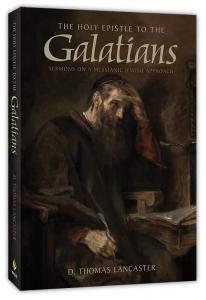
According to D. Thomas Lancaster in his book The Holy Epistle to the Galatians, in “Sermon Twenty-Three: Circumcision and Uncircumcision” (pg 231):

Paul warns Gentiles about relying on Jewish status for salvation and declares circumcision irrelevant with regard to salvation.

Berkowitz and Lancaster have similar perspectives regarding Paul’s intent, but Lancaster states that in this section of his letter, Paul is specifically addressing Gentiles. Based on the above quoted passages from Genesis 17 and Leviticus 12, it was an enduring commandment for the Jews to circumcise their males eight days after birth. Of course, Paul also said (1 Corinthians 7:19), “Circumcision is nothing, and uncircumcision is nothing, but what matters is the keeping of the commandments of God.”

That’s even more confusing because then we have to decide if Paul meant keeping all the commandments of God except the commandment to circumcise. However, in a larger context, Paul tells us:

Only, as the Lord has assigned to each one, as God has called each, in this manner let him walk. And so I direct in all the churches. Was any man called when he was already circumcised? He is not to become uncircumcised. Has anyone been called in uncircumcision? He is not to be circumcised. Circumcision is nothing, and uncircumcision is nothing, but what matters is the keeping of the commandments of God. Each man must remain in that condition in which he was called.

Were you called while a slave? Do not worry about it; but if you are able also to become free, rather do that. For he who was called in the Lord while a slave, is the Lord’s freedman; likewise he who was called while free, is Christ’s slave. You were bought with a price; do not become slaves of men. Brethren, each one is to remain with God in that condition in which he was called.

1 Corinthians 7:17-24 (NASB)

That’s rather similar to the following:

For all of you who were baptized into Christ have clothed yourselves with Christ. There is neither Jew nor Greek, there is neither slave nor free man, there is neither male nor female; for you are all one in Christ Jesus. And if you belong to Christ, then you are Abraham’s descendants, heirs according to promise.

Galatians 3:27-29 (NASB)

communityPut together, we seem to read that neither circumcision nor uncircumcision matters, just as there is neither Jew nor Greek. It appears as if we are all “one new man” (Ephesians 2:15) in Christ with no distinctions whatsoever. This argument has been used to justify both the complete rejection of observing the Torah mitzvot for any believing Jew or Gentile, and the complete acceptance of observing all the Torah mitzvot for every believing Jew or Gentile. It gets confusing.

Of course, when Paul says “neither male nor female,” he wasn’t obliterating physical distinctions between men and women. Another way to interpret Paul on this matter is to say that neither circumcision nor uncircumcision or being Jewish or Gentile matters as far as access to salvation and justification by faith in God through Messiah.

This preserves the commandment of circumcision for the Jews and still allows Paul’s statements to be consistent with God’s commandments.

I know there are some folks out there who will say that Abraham had faith and it was his seed (singular), the Messiah, that allows Gentiles to enter into a covenant relationship with God. And Abraham was commanded to be circumcised and to circumcise his male children and all the males in his household. Doesn’t that mean we Gentile believers need to be circumcised too?

Not so fast!

Then he believed in the LORD; and He reckoned it to him as righteousness.

Genesis 15:6 (NASB)

This is the establishment of faith as the primary linkage for anyone to enter into a covenant relationship with God. But the linkage for the blessings to the nations through Messiah comes earlier:

And I will bless those who bless you, and the one who curses you I will curse. And in you all the families of the earth will be blessed.

Genesis 12:3 (NASB)

Between the two above verses, we have the complete set of requirements that allows Gentiles to enter into covenant relationship with God through faith in Messiah (you can find a more complete description in my blog post The Jesus Covenant Part 8: Abraham, Jews, and Christians).

However, much later on, when Abraham was ninety-nine years old, something new happened. God made a covenant with Abraham that included a physical offspring, the Land of Israel, and circumcision. These, in my opinion, were conditions of God’s relationship with Abraham that took a different trajectory. Certainly the requirement of faith was carried down from the previous encounters with God, but God identified a specific population that were to be included relative to the Genesis 17 promises: Abraham’s physical descendents and members of his household were included in the circumcision requirement.

Does that mean Isaac, Ishmael, Eliezer, and all other males in Abraham’s household at this moment became Hebrews? No, because there’s more. Circumcision certainly created a linkage to Abraham but not all circumcised people become Hebrews, Israelites, or Jews.

Now Abraham took another wife, whose name was Keturah. She bore to him Zimran and Jokshan and Medan and Midian and Ishbak and Shuah. Jokshan became the father of Sheba and Dedan. And the sons of Dedan were Asshurim and Letushim and Leummim. The sons of Midian were Ephah and Epher and Hanoch and Abida and Eldaah. All these were the sons of Keturah. Now Abraham gave all that he had to Isaac; but to the sons of his concubines, Abraham gave gifts while he was still living, and sent them away from his son Isaac eastward, to the land of the east.

Genesis 25:1-6 (NASB)

abrahams-servantAfter Sarah died, Abraham married other wives and had other children. But before Abraham died, he sent away all of his other offspring, giving them gifts, and then singled out Isaac, the Child promised to him by God to fulfill the Genesis 17 covenant involving Abraham’s offspring, circumcision, and the Land of Israel. Of course, Abraham had circumcised Ishmael and all of his other sons as well as Isaac, but Isaac was the only beneficiary of the covenant relationship involving what would eventually become the Jewish people. Even his other sons, let alone the other non-relative males (servants, slaves, herdsmen) in his household who had been circumcised, were not inheritors of the covenant that led to possession of the Land of Israel and the conditions specified for the descendents of Isaac and Jacob, the Children of Israel, the Jewish people…the Torah of Moses.

If, as a Christian male, you believe you have an obligation to be circumcised and to circumcise your sons, no one is going to stop you, but being circumcised, even with the belief that it is required of the spiritual offspring of Abraham, does not create any sort of linkage between you and Abraham’s physical descendants. It doesn’t give you the Land of Israel, and it doesn’t obligate you to observing the Torah mitzvot in the manner of the Jews.

By Paul’s day, circumcision of males became a sort of shorthand way of saying “conversion to Judaism.” Paul was right in saying that circumcision (converting to Judaism) does not justify anyone before God, just as performing all of the mitzvot (for Jew or Gentile) does not justify.

Hopefully, at some point, I’ll be able to write on why Abraham was commanded to circumcise physical offspring who would not inherit Israel or non-relative males who also would not inherit, but for now, I will say that Paul did not believe that circumcision was a guarantee of salvation for Jew or Gentile, however I understand that he believed circumcision was still a requirement for the Jews, as were the other mitzvot of Torah. If he was teaching Jews not to circumcise their sons, then he was lying here:

After Paul arrived, the Jews who had come down from Jerusalem stood around him, bringing many and serious charges against him which they could not prove, while Paul said in his own defense, “I have committed no offense either against the Law of the Jews or against the temple or against Caesar.”

Acts 25:7-8 (NASB)

PaulActs 21:20-26 contains more complete text testifying to the fact that Paul never taught the diaspora Jews to fail to circumcise their sons. If he was lying here, then we can have no confidence in anything Paul wrote which would leave the majority of the New Testament in a shambles, along with our Christian faith.

If you, a Christian, feel you must be circumcised and you must circumcise your sons, remember that it does not justify you before God, it does not put you in the line of succession of Abraham, and Isaac, and Jacob, and Jacob’s twelve sons, and of the twelve tribes, and the Torah of Moses, and give you possession of the Land of Israel. At best, you may be aligned with the non-physical relative members of Abraham’s household, but then, we are still searching for what they and their circumcision mean.

Yes, Timothy was circumcised by Paul, but Titus the Gentile believer specifically was not. Neither was Cornelius the Roman and his entire household. Neither do we have a record of any other Gentile believers who were required to be circumcised as a condition of faith in Messiah. Think of this as you will.

For more on this topic, please read If Paul Had Circumcised Gentiles.

Paul’s Hagar and Sarah Midrash

hagar_and_sarahTell me, you who want to be under law, do you not listen to the law? For it is written that Abraham had two sons, one by the bondwoman and one by the free woman. But the son by the bondwoman was born according to the flesh, and the son by the free woman through the promise. This is allegorically speaking, for these women are two covenants: one proceeding from Mount Sinai bearing children who are to be slaves; she is Hagar. Now this Hagar is Mount Sinai in Arabia and corresponds to the present Jerusalem, for she is in slavery with her children. But the Jerusalem above is free; she is our mother. For it is written,

“Rejoice, barren woman who does not bear;
Break forth and shout, you who are not in labor;
For more numerous are the children of the desolate
Than of the one who has a husband.”

And you brethren, like Isaac, are children of promise. But as at that time he who was born according to the flesh persecuted him who was born according to the Spirit, so it is now also. But what does the Scripture say?

“Cast out the bondwoman and her son,
For the son of the bondwoman shall not be an heir with the son of the free woman.”

So then, brethren, we are not children of a bondwoman, but of the free woman.

Galatians 4:21-31 (NASB)

This set of verses from Paul’s letter to the Galatian churches has been one of the most devastating commentaries used against the Torah of Moses and the Jewish people over the last two-thousand years. Torah and Judaism are slavery. Christ and his grace are freedom. The message to any Jewish person who struggles to come to faith in Jesus as Messiah is that they must give up being Jewish, Judaism, and any connection to the Torah because it is all slavery, and pursue the Christian Jesus because only the Goyim have freedom…

…or be cast out as the bondwoman and her son…her Jewish son.

But given the larger dynamics of Paul’s life, it seems extraordinarily unlikely that he would have meant to say that in this message.

And when they heard it they began glorifying God; and they said to him, “You see, brother, how many thousands there are among the Jews of those who have believed, and they are all zealous for the Law; and they have been told about you, that you are teaching all the Jews who are among the Gentiles to forsake Moses, telling them not to circumcise their children nor to walk according to the customs. What, then, is to be done? They will certainly hear that you have come. Therefore do this that we tell you. We have four men who are under a vow; take them and purify yourself along with them, and pay their expenses so that they may shave their heads; and all will know that there is nothing to the things which they have been told about you, but that you yourself also walk orderly, keeping the Law. But concerning the Gentiles who have believed, we wrote, having decided that they should abstain from meat sacrificed to idols and from blood and from what is strangled and from fornication.” Then Paul took the men, and the next day, purifying himself along with them, went into the temple giving notice of the completion of the days of purification, until the sacrifice was offered for each one of them.

Acts 21:20-26 (NASB)

After Paul arrived, the Jews who had come down from Jerusalem stood around him, bringing many and serious charges against him which they could not prove, while Paul said in his own defense, “I have committed no offense either against the Law of the Jews or against the temple or against Caesar.”

Acts 25:7-8 (NASB)

Throughout Paul’s entire ordeal, in trial after trial, before one judge to the next, Paul continually denied that he had committed any crime against the Jewish people. He denied that he told Jewish believers not to circumcise their sons. He denied that he told Jewish believers not to walk in the customs of their fathers. He denied that he took a Gentile into the Temple or committed any crime against such a Holy place. He denied that he told the Jewish believers to forsake Moses.

Apostle-PaulSo how can we interpret the statements Paul made in Galatians 4:21-31 to mean that Paul did tell the Jewish believers to forsake the Torah and that faith in Messiah was totally inconsistent with Jewish people living as Jews?

In his article A Torah-Positive Summary of Sha’ul’s Letter to the Galatians, Ariel Berkowitz defends Paul’s statement from a Jewish perspective, something most Christian Bible readers lack (please forgive the length of the following quote):

In chapter four, Sha’ul, having been thoroughly trained in the best rabbinic methods of Bible interpretation of his day, makes a midrash. A midrash is the Jewish way of saying that an allegorical or sermonic interpretation of the Scripture is about to take place.

This midrash is in 4:21–31. It is difficult to understand, as all midrashim (plural of midrash) are. Its difficulty has thrown many an earnest Bible interpreter aside. We will not analyze all of the midrash. We will only summarize the main point, because that is the point that is most pertinent to our present study of Galatians.

Sha’ul uses this midrash to illustrate the point he made in chapter three with his comparison of the two important covenants, the Abrahamic and Mosaic. Just as Abraham was putting Hagar before Sarah in order to fulfill God’s promises of descendants, so are those who are attempting a works justification putting Sinai before Abraham. Let us explain.

God called Abraham to a life of faith. God promised Abraham that He would give him children in his old age. God meant that the children would come through Sarah. Time went by and no children came.

Apparently, Abraham thought he would attempt to secure God’s promises by his own effort instead of relying on God to perform it. Thus, he had a child through Hagar. Although this was perfectly in keeping with the established customs of his day, it was not perfectly in keeping with trusting God! Abraham should have trusted God and waited for Sarah to have a child. Ishmael, therefore, was a child of works, but Isaac was the child of faith.

Sha’ul says that anyone who tries to secure God’s gracious promises of salvation and justification by obeying the Torah (going to Sinai) is like Abraham trying to secure God’s gracious promises through his own effort with Hagar. In the Galatian congregation, they were putting “Sinai” before “Abraham,” when they should have put “Abraham” before “Sinai.”

If you read my commentary on last week’s Torah portion, you’ll recognize a familiar theme from the Berkowitz article, that of justification coming through faith, not the mechanics of performing the mitzvot. Berkowitz’s interpretation of Paul’s midrash is no different.

Just as Abraham thought he could fulfill God’s promise of a son through his own efforts with Hagar, so too did some of the Jewish people (or Gentiles who thought they must convert to Judaism) believe they could secure justification before God by perfectly observing the Torah mitzvot. However, those Jewish and Gentile believers who understood that justification comes through faith and not the observance of Torah, are like Abraham when he trusted God’s promise of a son through Sarah, though it seemed completely impossible, because Sarah was so old.

abraham1This is not nullifying the Jewish responsibility of observing the Torah but rather putting faith and obedience in perspective. Obedience must follow faith, otherwise it is not in response to faith. Obedience, that is, following “the rules” for their own sake, does not provide justification before God. This is to be compared to Hagar and her son in Paul’s midrash. Only by faith in God does justification before God become achieved, not through our own performance of the mitzvot, then and only then, does Jewish obedience to the Torah of God have full meaning. This is to be compared to Sarah and her son in Paul’s midrash.

Lest I depend too much on Berkowitz for my defense of Paul, the Torah, and the Jewish people, I want to examine another, related source:

Paul develops a parable (midrash) based upon the story of Hagar and Sarah, Ishmael and Isaac, to point out the difference between God-Fearers and proselytes.

-D Thomas Lancaster
“Sermon Twenty-Two: Sarah, Hagar, Isaac, and Ishmael” pg 219
The Holy Epistle to the Galatians

That’s Lancaster’s brief summary as he’s introducing this chapter and the topic of Galatians 4:21-31. He seems to be taking a somewhat different approach to Paul’s midrash, making a comparison, not between “legalistic” Torah observance for justification vs. justification by faith, but between Gentile God-fearers and those who desired to convert to Judaism for the purpose of justification.

Lancaster takes his cue from Galatians 4:22, “For it is written that Abraham had two sons.”

In the synagogue world, a “ben Avraham” is a convert. Paul used the story of Isaac and Ishmael to illustrate two different types “benei Avraham,” in other words, two different types of Gentile proselytes. He was not contrasting Jews against Christians, nor was he contracting Jews against Gentiles. He was not talking about Jews at all. Instead, he used the Isaac and Ishmael analogy to contrast two different types of Gentiles: “For it is written that Abraham had two sons, one by the slave woman and one by a free woman” (Galatians 4:22).

-Lancaster, pg 221

Lancaster says that Paul makes a big deal out of “flesh versus the promise” as in:

Now the promises were spoken to Abraham and to his seed. He does not say, “And to seeds,” as referring to many, but rather to one, “And to your seed,” that is, Christ.

Galatians 3:16 (NASB)

Lancaster makes specific in his chapter that “All nations will be blessed in Abraham’s seed, the Messiah.” Abraham and Sarah conceived their son Isaac according to the promise, Abraham believed and it was reckoned to him as righteousness (Genesis 15:6). Isaac was born by faith but Ishmael was born by Abraham taking matters into his own hands, so to speak, and attempting to fulfill the promise of God, the promise that leads to Messiah, by his own efforts and not faith.

Lancaster points out something Berkowitz missed. Most Christians interpret the two covenants as Old Testament vs New Testament, which is totally untrue given the context. As should be obvious, the contrast is between the Abrahamic and Sinai covenants, which both Lancaster and Berkowitz point out, and does not allow for a replacement of one over the other.

What I am saying is this: the Law, which came four hundred and thirty years later, does not invalidate a covenant previously ratified by God, so as to nullify the promise. For if the inheritance is based on law, it is no longer based on a promise; but God has granted it to Abraham by means of a promise.

Galatians 3:17-18 (NASB)

Torah at SinaiIt seems rather apparent that the latter law, Sinai, does not nullify the earlier law and the promise made to Abraham by God. As Lancaster says, Hagar cannot replace Sarah. From Lancaster’s perspective, the “children of Hagar” aren’t born Jewish people but rather, Gentiles who have undergone the formal process of converting to Judaism. The “children of Sarah” are the Gentile God-fearers who have come into relationship with God through faith in the Messiah. The converts are compared to Ishmael, who was conceived and born through completely human means, while the Gentiles who have come to faith in Messiah without converting to Judaism are compared to Isaac who was conceived and given life though supernatural means.

I can see where Lancaster is going with this, but I don’t think I can agree. In this case, I think Berkowitz makes the more convincing case. Lancaster rightly is addressing the Gentiles and saying that Paul is communicating that they do not need to convert to Judaism in order to inherit the promise, but he’s leaving the Jewish believers in the Galatian churches out of the equation. There are portions of the letter that could be interpreted as being directed at both Jewish and Gentile believers.

When Paul is addressing his audience in Galatians 1:2, depending on the translation you use, he is saying “brothers and sisters,” or “brothers,” or “brethren.” There’s no indication that he was singling out a specific population, either Jewish or Gentile. If Paul meant to address only the Gentiles in order to convince them not to convert to Judaism in order to be justified before God, I would expect him to have pointed more directly at his desired audience. He seems to be talking to both Jews and Gentiles explaining a unified message: “Obedience to the Law does not justify anyone (Jew or Gentile) before God. Only faith in God, faith such as Abraham had, faith in the promise of Abraham’s seed, faith in Messiah, justifies.”

I know people will say that if Paul was addressing both Jews and Gentiles, then he was telling them both that the Torah has been invalidated by the grace of Jesus Christ, however I can’t agree with that. Based on what I wrote previously and my current analysis of Paul’s Hagar and Sarah midrash, he is saying that yes, obedience does not justify a person before God, only faith. However, that does not nullify what comes next for a Jewish person, anymore than the covenant with Abraham nullified the covenant at Sinai. Jewish believers have a continuing obligation to God to obey the Torah mitzvot because of the specific promises made to Abraham, and to Isaac, and to Jacob.

BerkowitzBerkowitz’s interpretation of Paul’s midrash seems the better one to illustrate this point, but it should be emphasized that it does not justify being interpreted as any obligation for the Gentile believers to obey the mitzvot in the manner of the Jews. I’ve already pointed out that the Acts 15 decision offers us a different or overlapping set of responsibilities.

Paul’s Galatians 4 midrash has been terribly misused by the church over the centuries, and we’ve forgotten what Peter has said to us about Paul:

…and regard the patience of our Lord as salvation; just as also our beloved brother Paul, according to the wisdom given him, wrote to you, as also in all his letters, speaking in them of these things, in which are some things hard to understand…

2 Peter 3:15-16 (NASB)

If Peter, a contemporary of Paul and a fellow Jewish believer, could say such a thing back then, how much more can Paul be misunderstood in the present age by non-Jewish believers laboring under nearly twenty centuries of anti-Judaic doctrine about Paul?

One of the gifts of the Messianic Jewish movement is to help return the Gospels and Epistles to their original Jewish context so that we in the church can see the actual meaning of the good news of Moshiach and the role and purpose of faith, grace, and Torah for the Jewish believers as well as the Gentiles.

Nitzvaim-Vayelech: The Torah of Paul

Moses at NeboSurely, this Instruction which I enjoin upon you this day is not too baffling for you, nor is it beyond reach. It is not in the heavens, that you should say, “Who among us can go up to the heavens and get it for us and impart it to us, that we may observe it?” Neither is it beyond the sea, that you should say, “Who among us can cross to the other side of the sea and get it for us and impart it to us, that we may observe it?” No, the thing is very close to you, in your mouth and in your heart, to observe it.

Deuteronomy 30:11-14 (JPS Tanakh)

On the day of Moshe’s death he assembles the whole Jewish people and creates a Covenant confirming the Jewish people as the Almighty’s Chosen People (chosen for responsibility to be a light to the nations) for all future generations. Moshe makes clear the consequences of rejecting God and His Torah as well as the possibility of repentance. He reiterates that Torah is readily available to everyone.

-Rabbi Kalman Packouz
“Shabbat Shalom Weekly”
Commentary on Torah Portion NitzavimVayelech
Aish.com

Certainly, this is difficult for most Christians to understand. After all, how can Moses say that the Law (Torah) is not too baffling, that it is not beyond reach, and that He expects the Children of Israel to obey it fully, when traditional Christian doctrine teaches that the Law (Torah) only existed to bring wrath (Romans 4:15), death (Romans 7:10), was only a guardian until Christ came (Galatians 3:24), and that if you break even one small mitzvah, you’ve broken the entire Law (James 2:10)?

That’s a tough one. It certainly seems as if the Tanakh (Old Testament) and the Apostolic Scriptures (New Testament) are not in agreement, even a little.

But Paul also wrote that the Law (Torah) “is holy, and the commandment is holy and righteous and good,” (Romans 7:12). He additionally wrote:

Therefore did that which is good become a cause of death for me? May it never be! Rather it was sin, in order that it might be shown to be sin by effecting my death through that which is good, so that through the commandment sin would become utterly sinful.

Romans 7:13 (NASB)

How can Paul say that the Law brings death and then say, virtually in the same breath, that the Law, which is good, doesn’t bring death?

I recently came across a short article written by Ariel Berkowitz called “A Torah-Positive Summary of Sha’ul’s Letter to the Galatians” at MessianicPublications.com. The fine folks at this website and I don’t always see eye to eye, but in this case, the view Berkowitz presents in his missive come very close to my own.

One of the issues that stands between my Pastor and me is the purpose of Torah for the Jewish believers, both in New Testament times and beyond, to our present age. Although we had previously agreed that the Torah has multiple purposes depending on the context, it still is a sticking point in our conversations on Galatians and D. Thomas Lancaster’s book The Holy Epistle to the Galatians.

Referring to Berkowitz, let’s see what he says the Torah isn’t according to Galatians 2:15-16:

In what way specifically was the gospel being perverted? We read in 2:15–16 that some people in that congregation were turning away from the principle that justification is by grace through faith in Yeshua alone. Sha’ul writes, “We…know that a man is not justified by observing the Torah, but by faith in Yeshua the Messiah. So we, too, have put our faith in Messiah Yeshua that we may be justified by faith in Messiah and not by observing the Torah, because by observing the Torah no one will be justified.”

This should be a no-brainer for just about everyone. The mechanical observance of the Torah mitzvot, in and of itself, does not justify anyone to God. Only faith in Messiah justifies.

No one is arguing against that. If a Christian uses that argument as an evidence that the Law (Torah) is no longer a valid means for a Jewish believer to obey God, it’s a straw man argument (although, to be fair, it’s been an argument against Torah in the church for so long, that I sincerely believe those using it are unaware of its “straw man” nature). It’s an easy argument to “win” but it means nothing. Let me repeat, obedience of the Torah mitzvot in and of itself does not justify anyone before God.

Berkowitz continues:

Some people in the congregation were teaching a gospel of works, that one might be justified by what he does. If this was not bad enough, they were using God’s Torah and making a law out of it. They were trying to use God’s revelation to His people through Moshe as a means of works salvation, hoping to gain their justification by doing the Torah.

paul-editedSome people, scholars have differing opinions on who they were, tried to convince the Galatian churches that only obedience to Torah would justify one before God. This completely removes the requirement of faith. The message to the the Jewish church members was that faith in Yeshua (Jesus) was insufficient for justification. Their performance of Torah as Jews would be the primary (only) means of salvation. The message to the Gentile church members was that only by converting to Judaism (being circumcised) and full Torah observance would they be justified. Faith in Jesus wasn’t going to be enough.

I think we all know that Paul vehemently disagreed with this position, but does that mean Paul vehemently disagreed with anyone observing the mitzvot for any reason whatsoever?

We can see from the beginning, therefore, that in truth, Sha’ul had nothing against the Torah. Nor did he have anything against the Torah as a lifestyle for believers, as is evident from his own life. However, he was against anyone misusing the Torah. God never gave the Torah so that people could attempt to earn their salvation / justification from God by performing it. That philosophy is called “legalism.” Legalism is fatal! The Torah was never given by God to be a legalistic document. Some of the Galatians were attempting to do just that!

Here, Berkowitz and I come to a bit of a disagreement. He seems to suggest (though I may be wrong) that there is a rationale for all believers, Jewish and Gentile, to observe “Torah as a lifestyle.” This implies that both Jewish and Gentile believers would/should observe the mitzvot identically and that this was appropriate and expected as long as their obedience wasn’t for the purposes of justification/salvation. My opinion is that the specifics of obedience to God differed or overlapped, depending on whether the believer was Jewish or Gentile, based on the halakhic ruling of James and the Council of Apostles recorded by Luke in Acts 15 and affirmed in Acts 21.

Be that as it may, Berkowitz and I agree that the Torah does not justify people before God.

He did say that we have to examine the life of Paul, as depicted in the Book of Acts, to really understand the Galatians missive and his other epistles. I agree. You can’t take Galatians out of the context of the larger body of Pauline letters and certainly, you can’t dismiss Acts as the overarching narrative of the life of Paul. If elements of those different scriptures disagree and if some of those elements disagree with the Torah, the Prophets, and the Gospels, then either something is wrong with the Bible or something is wrong with our interpretation.

But Berkowitz tells us something important about the misuse of Torah. If we depend on only Torah observance to justify us before God, then the Torah really does bring death (Romans 7:10). This also seems to confirm James 2:10, since if a person depends on only Torah observance for justification, then they must observe all of the Law in order for that to work. Breaking even the least of the mitzvot would break the entire Torah and thus, the person would stand condemned before God.

But all of those negative statements against Torah observance depend on a person using Torah obedience as their sole method of justification, and we know that, based on Abraham we are only justified by faith (Genesis 15:6, Romans 4:22). However, if one depends on faith for justification before God, and in the case of the Jewish person, observance of Torah was (and is) in response to the commandments for obedience once one is justified, then what is the argument against a Jew living a lifestyle in accordance with the Law of Moses?

Applying Berkowitz’s opinion to the Jewish believers, we find:

Where does the Covenant of Torah fit in? Sha’ul says that it is an entirely different kind of covenant. While the Covenant of Abraham is, on the one hand, a covenant of promise and faith in those promises, the Covenant of Torah, on the other hand, is a covenant of obedience. In the Covenant of Torah, the ones who received God’s promises by faith would enjoy and bear fruit in those promises by their obedience. Accordingly, Sha’ul writes in Galatians 3:12, “The Torah is not based on faith…” This is Sha’ul’s way of stating what we have declared above, that the purpose of Torah was not for salvation. If the Covenant of Abraham pictures salvation, then the Covenant of Torah would picture life as a redeemed person in Yeshua.

Sha’ul says that anyone who relies on observing the Torah for his/her justification is under a curse, for it is written: “Cursed is everyone who does not continue to do everything written in the Book of the Torah” (Galatians 3:10–12). The key word here is not “observing,” but “relies on.” The one who is relying on doing the Torah to earn, merit, or keep their justification/salvation is not saved or justified. Justification is only by grace through faith.
ancient-torahThat seems rather straightforward to me as a description of Jewish believers redeemed by God through faith. Trusting in what you do, that is, performance of the mitzvot, to save you is a dead-end street. It only works if you’re perfect at it, and no one is. In that case, the Torah is a curse and it does bring death, but that’s because you’re too blockheaded to see that it’s faith that justifies. However, Paul, who did live by faith, also observed the mitzvot as a Jewish man obeying God and as such, the Torah was a blessing.

I mentioned before that I thought the Torah has multiple purposes depending on history, location, persons involved, and other contextual factors. Let’s take a look at one of those purposes which is particularly used to denigrate Jewish observance of the Law.

Christ redeemed us from the curse of the Law, having become a curse for us — for it is written, “Cursed is everyone who hangs on a tree” — in order that in Christ Jesus the blessing of Abraham might come to the Gentiles, so that we would receive the promise of the Spirit through faith.

But before faith came, we were kept in custody under the law, being shut up to the faith which was later to be revealed. Therefore the Law has become our tutor to lead us to Christ, so that we may be justified by faith. But now that faith has come, we are no longer under a tutor. For you are all sons of God through faith in Christ Jesus. For all of you who were baptized into Christ have clothed yourselves with Christ. There is neither Jew nor Greek, there is neither slave nor free man, there is neither male nor female; for you are all one in Christ Jesus. And if you belong to Christ, then you are Abraham’s descendants, heirs according to promise.

Galatians 3:13-14, 23-29 (NASB)

A plain reading of the text, and especially as filtered through traditional Christian doctrine, seems to indicate that the Law’s only purpose was to act like a tutor or a “child-conductor” to guide people to Christ and, once that was done, so was the Torah. Christ then frees the person under the Law from the curse of the Law and they walk away from Torah and are free in Christ.

Except we’ve already seen that the “works of the Law” weren’t obeying the Law in and of itself, but it was obeying the Law specifically for the purposes of justification; obeying the Law in the absence of faith. The curse was the consequence of faithless performance of Torah in order to achieve justification.

If anything, the coming of Christ freed the Gentile of the obligation of converting to Judaism as the only means of entering into a covenant relationship with God. They did not have to convert and thus observe the mitzvot but rather, thanks to the promises made to Abraham and realized in the Messiah, the non-Jewish believers could come to God by faith and be justified before him. The Jewish believer could also access God by faith and not the false belief (which may have been a popular opinion among some Jewish groups in the late Second Temple period) that only through observing the mitzvot (before faith came) could a Jew (or anyone else) be saved. After all, God can make Sons of Abraham from stones (Matthew 3:9) so being Jewish does not automatically make one justified.

Berkowitz emphasizes this point thus:

To help make his point, Sha’ul draws upon a well-known Roman and Greek custom in his day. Well-to-do people often sent their children to a hired teacher for their education. To guide them along the way and to make sure that they arrive to their instructor, they of ten employed a protector. The Greek text refers to this “protector” as a paidagogos, (π αιδαγωγός). The paidagogos was not the teacher, but he was merely the protector and the one who guided the student to the teacher. For those who are not yet justified by God’s grace, the Torah can function in the same way. Sha’ul states in Galatians 3:24–25, “So the Torah was put in charge to lead us to Messiah, that we might be justified by faith.”

In other words, if you are laboring under the false assumption that only observance of the mitzvot can save you, one of the functions of the Law is to guide you to the one who can truly save you by faith: Messiah.

Jesus also believed that Torah functioned to point to him:

Do not think that I will accuse you before the Father; the one who accuses you is Moses, in whom you have set your hope. For if you believed Moses, you would believe Me, for he wrote about Me. But if you do not believe his writings, how will you believe My words?”

John 5:45-47 (NASB)

Was it not necessary for the Christ to suffer these things and to enter into His glory?” Then beginning with Moses and with all the prophets, He explained to them the things concerning Himself in all the Scriptures.

Luke 24:26-27 (NASB)

messiah-prayerYes, the Torah pointed and still points to Jesus for the Jewish people and frankly, for any Gentile who believes that converting to Judaism or having to obey all of the Torah mitzvot in a manner identical to observant Jews, is the only way to be reconciled with the Father. In terms of justification, faith in Christ is better than observing the Law if your goal is to be saved. However, realizing that faith in Messiah is the means of justification does not invalidate in the slightest, a Jewish believer’s duty to obey God subsequent to salvation by observing the mitzvot. Thankfully, that observance doesn’t have to be perfect, it just has to rest on the firm foundation of faith, otherwise, justification by the Law only is like trying to live in a paper house in the middle of a forest fire. Gentile Christians don’t obey God perfectly either (Christians, please remember that when you see a religious Jewish person being less than “Torah-perfect”), and fortunately our salvation isn’t endangered by that fact.

There’s more I could say on the Torah and Galatians based on the Berkowitz paper, but I think I’ll save that for another time. I believe we can see from the Torah as well as the Gospels and Epistles, that Jewish observance of Torah was not finished at the cross. I believe we can read Galatians, not as Paul’s “anti-law” letter, but as Paul’s correct interpretation of the relationship between Jewish Torah observance and justification. He was trying to tell his Gentile audience that they didn’t have to convert to Judaism and start keeping Torah in the Jewish manner in order to be saved. He was telling his Jewish audience that they had no reason to boast of being Jewish or Torah observance, because it was faith like Abraham’s that provided justification. Their observance of Torah was a valid consequence of being Jewish and being obedient, but their faith is the “sacrifice” of a “broken and a contrite heart,” (Psalm 51:17) that God truly desires.

But as David so eloquently wrote:

For You do not delight in sacrifice, otherwise I would give it; you are not pleased with burnt offering. The sacrifices of God are a broken spirit; a broken and a contrite heart, O God, You will not despise.

By Your favor do good to Zion; build the walls of Jerusalem. Then You will delight in righteous sacrifices, in burnt offering and whole burnt offering; then young bulls will be offered on Your altar.

Psalm 51:16-19 (NASB)

Faith and then obedience.

Good Shabbos.

26 days.

Re’eh: Seeing to Learn

gerizim_ebalSee, this day I set before you blessing and curse: blessing, if you obey the commandments of the Lord your God that I enjoin upon you this day; and curse, if you do not obey the commandments of the Lord your God, but turn away from the path that I enjoin upon you this day and follow other gods, whom you have not experienced. When the Lord your God brings you into the land that you are about to enter and possess, you shall pronounce the blessing at Mount Gerizim and the curse at Mount Ebal.

Deuteronomy 11:26-29 (JPS Tanakh)

These words are spoken to the entire Nation of Israel, at the very end of a forty-year term in the desert. Two distinct mountains were on open display. Mount Grizim is plush, rich, and flowering with the promise of life. Mount Eivil in stark contrast is conspicuously barren and empty. This visual aid is employed to etch into the psyche of the assembled the lesson of remaining loyal to the task and mission of Torah and Mitzvos. In the recording of the event Moshe refers to that day as- “today”. What’s so special about that day? Every day he spoke was also a “today”. Why was that day worthy of a title for all time “today”?

The Ohr HaChaim answers that that day they were capable of understanding his lesson based on the statement of the sages, “A person does not stand on (truly grasp) the knowledge- opinion of his teacher until after forty years” (Avodah Zara 5B).

That means that now after forty years they can begin to truly comprehend what Moshe had told them back then. Why does it take forty years? Were these not brilliant people?

-Rabbi Label Lam
“See What Can Be Seen”
Commentary on Torah Portion Re’eh
Torah.org

Nearly a year and a half ago, I reviewed Toby Janicki’s article “The Gentile Believer’s Obligation to the Torah of Moses,” published in Messiah Journal #109/Winter 2012. I remember at the time being a little surprised at even the title, since my understanding back then was Messianic Judaism was striving for pretty much total isolation between Messianic Jewish and Christian/Messianic Gentile religious practice, at least publicly.

I happened to recall my review the other day when I noticed in the analytics for this blog that someone had viewed it.

I went through the original review and realized that my perspectives have changed in the last eighteen months or so. My fuzzy understanding of the Torah of Moses and its connection to the Gentile believers in Messiah is a little bit clearer. This isn’t to say I have everything “dialed,” so to speak, about the Bible and how it works, but I think it’s fair to say that I’m capable of learning and growing intellectually and spiritually.

While the quote from the Ohr HaChaim speaks to the necessity of the passage of time for learning, I’m not going to take it too literally (in forty years, I’ll either be nearly 100 years old or dead). But I am inspired to re-read Toby’s article and to re-review it as processed through the brain I have now vs. the one I had at the beginning of 2012 (I can only imagine that Toby will chuckle because I continue to wrestle with something he understands so clearly).

There has been a tremendous struggle between Messianic Judaism and Hebrew Roots relative to who “owns” the Torah. That’s an overly simplistic statement, of course, but the surface perception is that the Jews in Messiah get to keep the Torah for themselves while the Hebrew Roots people want them to share. On top of that, traditional Christianity says that we don’t need the Torah at all, just the grace of Jesus Christ.

Like I said, I’m being overly simplistic, so don’t take what I’ve just said too literally.

simhat-torahThe truth of the matter is that we all need the Torah. Even before the Christian Era, I believe that the Jewish people saw themselves as a “light to the nations” (Isaiah 49:6) and that we would all learn from the Torah as “the Law went forth from Zion.” (Isaiah 2:3). How does one learn the ethical, moral, and holiness standards of God apart from the Torah, the teachings of God? We don’t.

However, that concept has been misunderstood to mean (at least in certain circles), that we Christians must learn and observe every single mitzvot in the Torah (or at least the ones that can be observed without the existence of the Temple, the Priesthood, and the Sanhedrin) in exactly the same way as the Jewish people.

Acts 15 shoots that concept down in flames (I know this is debatable but then again, everything is) as I painstakingly chronicled in my review of D. Thomas Lancaster’s commentary on the matter, but Toby Janicki picks out of the ashes, the “phoenix” of Torah that applies to the non-Jewish believers.

And it’s a lot.

I don’t think we ever got a chance to really see the results of the Jerusalem Letter in action. We don’t see a detailed report in the New Testament of how those declarations were understood and practiced in early Christian congregations, the ones that would have existed during Paul’s lifetime and soon after. More’s the pity, because a document providing such details would answer a lot of questions and solve a lot of problems.

Once you rocket through history much past Paul’s death, the wedge between believing Jews and Gentiles was already being pounded into place, and by the time we get to the third and fourth centuries CE, we’ve been split apart and any recognizable form of “Torah practice” among non-Jewish believers had gone the way of the Dodo bird (I’m not quite sure how much help the Didache would be since it’s dated to the late first or early second centuries, but I guess I could buy a copy and find out).

What all this means is that you can expect my review of Toby’s 2012 article sometime next week. If anyone can suggest which copy of the Didache I should purchase from the list presented at the above-link, that would help, too.

In a way, I don’t really blame Hebrew Roots folks for finding the Torah beautiful, praiseworthy, and desirable in study and practice. I’m attracted to it as well. I really don’t understand Christian aversion to “the Law” as something horrible, and awful, and too terrible to even consider but then again, that’s what most churches teach. It isn’t that I think Christians should don tallitot and lay tefillin and try to look like Jews, far from it. But we should admit that we need the Torah for two basic reasons: The first is that it defines our relationship with Jesus and with God the Father through the Abrahamic covenant. The second is that every ethical, moral, and spiritual principle that we live by as Christians is found in the Torah. The Torah was taught by Jesus. Without an understanding of the Torah and the Prophets (and this should be huge in Christianity), we have no hope of understanding anything Jesus ever taught!

torah-what-isThat’s actually true of Paul and any of the other Apostles, so in my opinion, the first class that any newbie Christian should ever attend is Torah 101. Starting new Christians in the Gospels and the Epistles sounds nice but it’s almost next to useless. It’s like trying to teach a four-year old Calculus before they’ve even learned how to count to ten. It’s why I think First Fruits of Zion’s (FFOZ) Torah Club volumes are tremendously important. Not only do they teach Torah, but in a way that is very “Christian friendly.”

From all those who have taught me I have gained wisdom.

Psalms 119:99

The Psalmist is telling us that he learned from everyone, that everyone was his teacher. From some, he learned what to do; from others, what not to do.

If we learn from others’ mistakes, we need not make our own.

Just as we can learn from every person, we can learn from every event. Positive experiences are obvious sources of learning, because each positive act we do adds to our character and prepares us to better face the next challenge in life. Negative experiences can be valuable, too, but only if we are sufficiently alert to learn from them.

The list of lessons that we have learned the hard way may be long, but each one has taught us what not to do and thereby it becomes a positive experience. Indeed, the Talmud states that when people sincerely regret their mistakes and change themselves for the better, the wrongs that they did become actual merits (Yoma 86b). Only when we fail to learn from our mistakes and, rationalizing and justifying, obstinately insist that we were right, do our misdeeds remain deficits.

We have the capacity to make life itself a tremendous learning and growth experience.

Today I shall…

…try to look for lessons from everyone and everything, whether my teacher is positive or negative.

-Rabbi Abraham J. Twerski
“Growing Each Day, Kislev 17”
Aish.com

I don’t think the problem is dealing with positive vs. negative teachers but just with “unanticipated” teachers. For traditional Christians, I think Jewish teachers or teachers very familiar with the Jewish (especially Messianic) perspective on Torah and Messiah are important. Jewish teachers aren’t necessarily a problem for Hebrew Roots people, but often, Christian teachers are. Many people in Hebrew Roots no longer see themselves as affiliated with anything called “Christianity” and sometimes they even define themselves by a completely new religious identity in order to separate themselves from the “crimes of the church,” real and imagined. “The church” is something they’ve “come out of,” like a Jew might have escaped the Soviet Union in the 1960s or one “comes out of pagan Babylon,” a den of iniquity and sin.

Oy.

I’m hardly what you would call a traditional Christian, but I must say that I’ve learned a tremendous amount in my conversations with my Pastor. For Hebrew Roots folks, at least some of you, it might not hurt to find a Christian to connect to and even “embrace” on some level if, for no other reason, than to overcome what for davening_morningsome people I’ve personally met, is a phobic response to Christians and Christianity. Really, we’re not all that bad and in my time in church (in spite of my meditation of yesterday morning), I’ve met a few very kind, gentile, and Holy people.

Remember what Rabbi Twerski said about everyone being a teacher? That means Everyone, not just the people you are attracted to as teachers.

Whether you call yourself a Christian, a Hebrew Roots person, or something else, you…we all have a blessing and a curse set before us as well. We can accept the blessing and choose to learn the Torah as it was intended for us and to take upon ourselves teachers we never thought we’d share a classroom or corner of the blogosphere with, or we can choose to isolate ourselves in our own comfortable little silos, and learn only what we want to learn, which means in that case, very little and nothing new and illuminating.

It may take some time before it all begins to sink in. Like me, you might have to wait awhile and then rediscover something that didn’t quite make sense before but comes into crystal clarity now. That’s OK, too. Just as long as you’re willing to open your eyes and see what God has set before you this day.

Good Shabbos.

54 days.