Tag Archives: God

Tazria-Metzora: Suffering at the Touch of God

Our Sages ask: “What is Mashiach’s name?” and reply “The leper of the House of Rebbi.” This is very difficult to understand. Mashiach will initiate the Redemption, and is associated with the pinnacle of life and vitality. How can his name be linked with leprosy (tzaraas), which is identified with death and exile?

This difficulty can be resolved based on the statements of Likkutei Torah, which explain that a person affected by tzaraas will be:

A man of great stature, of consummate perfection…. Although such a person’s conduct is desirable, and he has corrected everything,… it is still possible that on the flesh of his skin there will be lower levels on which evil has not been refined. This will result in physical signs on his flesh, in a way which transcends the natural order….

Since the filth on the periphery of his garments has not been refined, therefore [blemishes] appear on his skin…. Moreover, these blemishes reflect very high levels, as indicated by the fact that they are not considered impure until they have been designated as such by a priest.

The passage implies that there are sublime spiritual influences which, because of the lack of appropriate vessels (as evidenced by the “filth on the periphery”), can produce negative effects. For when powerful energy is released without being harnessed, it can cause injury. This is the reason for the tzaraas with which Mashiach is afflicted.

-Rabbi Eli Touger
“Mashiach’s Name”
Commentary on Torah Portion Metzora
Adapted from
Likkutei Sichos, Vol. VII, p. 100ff;
Vol. XXII, p. 77ff; Parshas Tazria, 5751;
Sefer HaSichos 5751, p. 491ff
Chabad.org

In Hebrew, leprosy is given the unlikely name nega – literally “a touch” – which means a leper is someone touched by God.

In light of this, when the names of Messiah are discussed in the tractate Sanhedrin of the Talmud, each school names Messiah after its own Rabbi. So for example, to the students of Yanai, Messiah will be called Yinnon (Psalm 72:17; the English says “shall continue”) and to the students of Shila, Messiah’s name is Shiloh (Genesis 49:10). In the same way, Messiah is called Leper after Rabbi Yehudah Hanasi, who either suffered greatly or was in fact a leper. To support their claim that the Messiah is called Chivra, the students of Rabbi Yehudah say, “His name is Chivera after the house of Rabbi, since it says, ‘We esteemed Him stricken, smitten by God, and afflicted'” (b.Sanhedrin 98b).

-Tsvi Sadan
from the chapter “Leper,” pp86-87
The Concealed Light

You find the Messiah in some pretty odd places and doing some pretty unusual things…such as suffering and even dying. But who is suffering and dying? Rabbi Touger’s commentary continues:

The Jewish people as a whole are compared to a human body. This applies within every generation, and also to the entire nation throughout history. All Jews those of the past, present, and future are part of a single organic whole.

This is to be compared to something I just read:

Jews have never found it easy to accept each other. Whether Ashkenaz or Sephard, religious or secular, liberal or conservative, Jews of all stripes have had a difficult time tolerating those with whom they differ. Of course, this isn’t unique to Jews. Human nature compels members of any group to focus on all the differences that exist between one another. Nevertheless, a Jew is a Jew – regardless of the additional descriptive words. Although it sounds oxymoronic, the Jewish people are not a monolithic group and yet we are one. Go figure.

-Asher
“We Are One”
Lev Echad

My friend Yahnatan on his blog Gathering Sparks pointed me (well, anyone who has read his blog post, actually) to a review of Daniel Boyarin’s book The Jewish Gospels written by New Testament scholar Joel Willitts. It says in part:

Now Boyarin’s chapter is quite dense, although accessible. His position is based on a view that Daniel 7 is “a house divided against itself” because it leaves a reader with contrary information: the Son of Man is both a second divine figure and a collective earthly figure, the faithful of Israel.

Setting aside any interpretation of the Deity of the Messiah in the Willitts blog post, we see that in this interpretation and in traditional Judaism, the Messiah and Israel are virtually interchangeable or perhaps inexorably intertwined. Messiah is Israel.

And Israel is touched by God and Israel suffers.

No, I’m not necessarily talking about the modern, geographical and national entity called the nation of Israel (though I suppose I could say a few words on that subject) but rather the historical, spiritual, mystical, people/group/nation of Israel who were forged at the foot of that fiery anvil we call Sinai, and who throughout the panorama of time, have continued to burn at the touch of God while awaiting the comfort and rescue of the Messiah (not unlike Shadrach, Meshach, and Abednego…see Daniel 3), may he come soon and in our day.

But what does that have to do with Christians?

Seen from the perspective of everything I’ve said so far, that’s a hard question to answer and one that is very uncomfortable for the church. I can see why supersessionism exists in the church and, within the Hebrew Roots movement, I can see why the non-Jews are desperate to lay claim to Torah “obligation” and “spiritual Judaism,” if only to be able to have a share in the Jewish King; the Son of Man, who is also Chivra; “touched by God.”

We want to be “touched by God” too, which is strange, since it means that we among the nations, the Gentile disciples of Jesus, must also suffer.

…and if children, then heirs – heirs of God and fellow heirs with Christ, provided we suffer with him in order that we may also be glorified with him. For I consider that the sufferings of this present time are not worth comparing with the glory that is to be revealed to us. –Romans 8:17-18 (ESV)

We Christians say we want to “be like Jesus” but do we really know what that means? In Hebrew Roots, the Gentiles say they want to be “one with Israel” and to share the obligations of Torah and God, but do we really know what that means?

We see from the tale in Matthew 20 that the mother of the sons of Zebedee asked that her two sons sit on the left hand and on the right of Jesus in his kingdom, but this was not an easy request to grant:

Then the mother of the sons of Zebedee came up to him with her sons, and kneeling before him she asked him for something. And he said to her, “What do you want?” She said to him, “Say that these two sons of mine are to sit, one at your right hand and one at your left, in your kingdom.” Jesus answered, “You do not know what you are asking. Are you able to drink the cup that I am to drink?” They said to him, “We are able.” He said to them, “You will drink my cup, but to sit at my right hand and at my left is not mine to grant, but it is for those for whom it has been prepared by my Father.” And when the ten heard it, they were indignant at the two brothers. But Jesus called them to him and said, “You know that the rulers of the Gentiles lord it over them, and their great ones exercise authority over them. It shall not be so among you. But whoever would be great among you must be your servant, and whoever would be first among you must be your slave, even as the Son of Man came not to be served but to serve, and to give his life as a ransom for many.” –Matthew 20:20-28 (ESV)

If you say you are ready to share in the Messiah, are you ready to share his burden, his suffering, his slavery? Are you ready to be “touched by God” as the leper?

As the old saying goes, “be careful what you ask for…you just may get it.”

Tsvi Sadan’s description of the Messiah as a leper in his book (pg 87) tells us what to expect when we, his disciples, share the cup of the Messiah:

“Leper Messiah” is found in Jewish legends such as the one in the above Talmudic passage. This legend describes an encounter of Rabbi Joshua ben Levi, a student of Shimon bar Yochai, with Messiah. On a quest to find out when Messiah would come, Rabbi Joshua ends up in Rome, where he sees one leper amongst the poor and the sick who is tying and untying his bandages (b.Sanhedrin 98a). Rabbi Joshua identifies this leper as Messiah and asks him when he will come. Messiah answers him with a single word “Today!” Waiting in vain till the day was over, Rabbi Joshua complains to his teacher that Messiah lied to him. Rabbi Shimon replies to his disappointed student: “[He will only come] today, if you will hear His voice” (Psalm 95:7).

In some sense, because he is Israel, the Messiah suffers because his people suffer. If we among the nations choose to be grafted in, while it doesn’t make us inheritors of Sinai, we must agree to drink from the cup of the Messiah and to suffer with him and to bear the burden of Israel’s suffering as well. This is why part of our duty as disciples is to support and uplift the Jewish people and to affirm the Jewish right to their national and Biblical homeland: Israel.

I find it ironic and all too human that when some among the Gentiles demand the “right” to be “obligated” to the Torah and to share in a Jewish lifestyle (but without making the actual commitment to be a Jew), they focus on the honor and glory and joy of Judaism; the lighting of candles on Shabbos, an aliyah to the bimah to read Torah, the wearing of tzitzit, and so forth. The stark reality is that anyone who chooses to be called by the name of Christ, whether you call yourself “Christian” or “Hebraic” or “Messianic,” is called to be a leper, to live among lepers, to tie and untie the bandages of the sick and dying…and to be sick and dying. The world didn’t esteem our Master, nor if we are really his disciples, will it esteem us.

Are you sure you are ready to drink from that cup?
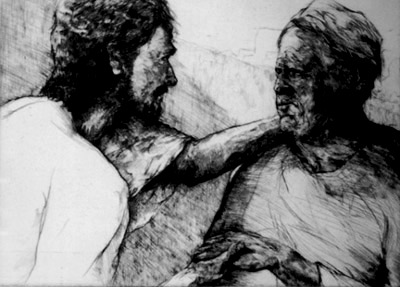
Rabbi Shimon interprets the words of the Messiah to mean that he will come today only if the Jewish people are worthy and will “hear His voice.” In my arrogance, I’m going to suggest an alternate explanation (this is only my opinion so if you disagree, I’m the responsible party to complain to). I think the Messiah didn’t lie to Rabbi Joshua. I think the Messiah did come “today.” I think the Messiah has come yesterday and he will come today again and, God be willing, he will also come tomorrow. I think the Messiah comes every day that someone who is suffering and dying ties and unties the bandages of someone else who is suffering and dying.

Whenever we suffer for His sake and yet in our suffering, live among others who are hurt and sick and dying, and we minister to them, not thinking of ourselves, but serve them for their sake and God’s, then the Messiah has come, and he is coming right now, and he will come tomorrow…because he lives in us.

Yes, someday he will come with the clouds of heaven, in might and power, as one like the Son of Man (Daniel 7:13) and he will heal a broken world and his suffering people, but if we are who we say we are, we will not idly wait for him. We will drink his cup, take up our cross (Luke 9:23), and follow him. We will allow God to touch us and we will be like lepers. If we aren’t willing to suffer with him and with Israel, as Paul said in his letter to the Romans, then we also will not be glorified with him, and all of our words are in vain.

Good Shabbos.

Who Are We in Christ, Part 2

The task for defining the identity of Gentile converts was largely left to the Apostle Paul, the self-described “apostle to the Gentiles.” Modern social-scientific studies on the Bible have called Paul an “entrepreneur of identity” or a “social entrepreneur” who was engaged in forming the identity of his Gentile converts, creating for them a definition of who they were and mapping their relationships with other social groups. To do this, Paul used some metaphors that were drawn from the Old Testament and others that were drawn from Roman society. Taken together, they help give substance and definition to the identity of Gentile believers in Jesus. We will find that even though they do not become Jewish, neither do they remain an undifferentiated part of their pagan society. Paul “invents” a new identity for them and uses variegated imagery to describe that identity. Romans 4:16–17 and Galatians 3:7–9 contain one of Paul’s most powerful metaphors for describing Gentile identity. Paul claims that believing Gentiles are children of the forefather of the Jewish people, Abraham himself! His argument is that since Abraham believed when he was uncircumcised, he is not only the father of the Jews, his biological descendants, but also of all those throughout history who have had “the faith of Abraham.”

It is worthwhile to note that Paul leaves out the other two forefathers of the Jewish people, Isaac and Jacob. By limiting Gentile identity to children of Abraham, he makes it clear that these Gentiles are not part of “Israel” – a name reserved for Jacob’s descendants. However, God promised that Abraham would become the father of many nations, as recorded in Genesis 17:4. Paul sees the believing Gentiles as a fulfillment of that promise. They are still members of the “nations” (Gr. ethnē, Heb. goyim) but their new identity allows them to be simultaneously children of Abraham (and therefore heirs to the promise of Abraham) and members of the nations.

Paul takes great pains to emphasize that the covenant of promise which helps define Gentile identity in Christ is the Abrahamic covenant and not the Sinai covenant. His repeated contrast of these two covenants, especially in Galatians, is meant to drive home the point that though the Gentile converts are children of Abraham, they are not children of Israel, nor did they stand at the foot of Mount Sinai and receive the Torah.

Despite their shared ancestry in Abraham and their shared inheritance in the promise to Abraham, believing Gentiles and Jews have differing obligations to God. Paul also includes his Gentile converts as citizens of a kingdom. Variously described as the “kingdom of God” (1 Corinthians 6:9–10; Galatians 5:19–21), the “kingdom of light” (Colossians 1:12), and the “kingdom of the Son” (Colossians 1:13), Paul uses “kingdom” to indicate the Gentile believer’s eschatological political situation. In other words, who is the Gentile believer’s ultimate authority? Is he still nothing more than a subject of the Roman emperor, while the Jewish people have an eschatological King to look forward to? Paul’s answer is that Gentile believers, like their Jewish brethren, are included in the reign of Jesus Christ. He is their King, and they are his citizens. They have transferred their allegiance from the reign of Caesar to the reign of Christ, a reign that will come into its fullness at his return. This metaphor may underlie the language of citizenship in a commonwealth in Ephesians 2, discussed below. Paul used the imagery of slavery and freedom as well. He regarded Gentile idolaters as “slaves to sin” (Romans 6:20–21) and to “the weak and worthless elementary principles of the world” (Galatians 4:9). Typical of Jewish attitudes toward idolatry, Paul associated it with all kinds of immoral behavior—behavior that led naturally from idolatry, and that was in some way an involuntary consequence of idolatry, dictated by God (Romans 1:18–32). This status of slavery has been removed through obedience to Christ (Romans 6:17–18). The Gentile believers are now free from sin and slaves to obedience (v. 16), to righteousness (v. 19), and to God (v. 22). Paul describes this process as redemption (apolytrosis), a word normally used to describe the ransom, or buying back, of prisoners of war or captive slaves. Paul envisions his Gentile converts as more than just freed slaves; they are adopted children, brought into God’s family (Galatians 4:5).

Another metaphor Paul uses is the term “in Christ” (Romans 8:1; 1 Corinthians 1:30; 2 Corinthians 5:17). In contrast to those who are “in Adam” (1 Corinthians 15:22), those who are in Christ “belong to the new aeon with its freedom and life.” Gentile believers are no longer identified with the old way of life that characterizes sinful humanity; “in Christ” they participate in the eschatological community that Christ inaugurated, the community that foreshadows the ultimate redemptive era, the World to Come.

“Salvation” or the idea of being “saved” is very common in the Pauline corpus and is probably the most popular term used today to describe the action that brings someone into the community of faith—and rightly so. Believers are saved, or rescued, from this world, just as the Jewish people were saved from slavery in Egypt or the captivity in Babylon.

-Also from the book I’m reading that I can’t talk about yet

Updated! See the end of this blog post for details.

I couldn’t resist a “part 2” since these concepts and this discussion won’t leave me alone right now. I suppose it’s an issue that is really at the core of most of Christianity. Who are we in Christ? What does a Christian identity mean to me? What does it mean for a non-Jewish person to accept discipleship under the Jewish Messiah and King?

More plainly put, just who in the heck do we think we are?

Actually, that last question is really part of the problem. There’s (in all likelihood) a difference (probably a whopping big one) between who God thinks we are in Christ and who we think we are in Christ/Messiah (depending on our particular denominational orientation). It’s kind of interesting to think that Paul was the one to actually figure out (or make up) an answer to “the Gentile question.” I mentioned this in yesterday’s part 1 of Who Are We in Christ and decided I should allow the “other shoe to drop,” so to speak.

For the sake of some folks in the Hebrew Roots movement, I thought I should include what should be (but isn’t) obvious, in that if we claim a connection to Israel through Abraham, as our mysterious author tells us, “Paul leaves out the other two forefathers of the Jewish people, Isaac and Jacob.” Interesting, eh? If Abraham is “the father of many nations,” then he is father to more than just Israel. Islam also claims him, and because of Paul, so does Christianity. I seriously doubt most Christians (or any Hebrew Roots folks) would seriously consider Islam to be part of Israel through Abraham, so how can we justify Christianity being synonymous with Israel?

Or can we?

The Christian church hasn’t had to struggle with its identity for a long time. For many centuries, it (we) have been secure in the knowledge that we were the spiritual inheritors of all of the covenant promises because the Law (and the Jewish people along with it) was nailed to the cross of Christ and we were adopted by God’s grace to supplant the descendents of Sinai.

Except that isn’t so clear anymore.

Periodically, I become aware of articles that describe a general exodus from the church, especially by young singles and families who feel their needs are not being met. Some of those needs are spiritual, and the church in the early 21st century, appears to be leaning toward a kind of “entertainment” model to bring in and keep parishioners. Except that may not be what they really want or rather, what they (we) really need.

Some of those disaffected Christians make their way into the Hebrew Roots movement, hoping to find a deeper understanding of their faith and a richer and more robust God than the one they left behind in the Christian Bible class. We all have a tremendous need to feel close to God and sometimes we do that by asking questions and posing puzzles the church (or most of it) doesn’t want to deal with. Hebrew Roots, on the surface, seems to offer those kinds of answers, but it’s sort of an illusion. For a lot of people, “different” means “better” and it takes them a long time to realize that such may not be the case. Also the “stuff” that goes along with Judaism (Messianic and otherwise) is very compelling.

Wearing fringes makes you closer to God. Avoiding ham sandwiches makes you closer to God. Wearing a “beanie” makes you closer to God. It’s really cool stuff. But is it your stuff, or are the Gentiles entering Hebrew Roots merely attracted to playing with someone else’s toys because the toys look brand new, are from different toy stores, and are really cool?

I suppose that’s kind of a mean statement, but I think that fits some Hebrew Roots Gentiles.

For the rest, I think you’re like me. You really do feel there’s a larger reality to who you are and who God is than you’ve been presented with so far. However, I exited traditional Christianity, entered, and then (eventually) existed One Law because it didn’t satisfy what I was looking for either. Ultimately, I had to conclude that “doing Jewish” wasn’t who I really am and that whoever the first century Gentile disciples were, their identity wasn’t “doing Jewish” either.

There’s a mystery that needs to be solved and I think there’s an answer available. Maybe it’s not the final answer, but it beats settling for someone else’s identity because it’s not easy to find your (our) own. If the identity of the Gentile disciple of the Jewish Messiah isn’t in your local Baptist, Lutheran, or non-denominational church, and it’s not in assuming a Jewish identity with all the “bells and whistles” (minus Talmud which tends to put most Hebrew Roots people off), then we may need to start digging a little deeper.

I think enlisting the aid of some reliable Hebrew Roots and Messianic Jewish teachers is a good way to start. If folks, such as my (presently) anonymous author, are taking the time to tell us who Gentiles aren’t in the world of the Jewish King, I think they’ll be more than happy to help us discover who we really are in Christ.

Stay tuned. My commentary on this week’s Torah portion speaks more to this issue and greatly expands upon it. Please give it a read and let me know what you think.

My Beloved Profound Mystery

And that is what the Zohar says on the verse: “My soul, I desire You at night.” “One should love G-d with a love of the soul and the spirit, as they are attached to the body and the body loves them….” This is the interpretation of the verse: “My soul, I desire You,” which means, “Since you, G-d, are my true soul and life, therefore do I desire You.” That is to say, “I long and yearn for You like a man who craves the life of his soul, and when he is weak and exhausted he longs and yearns for his soul to revive in him (lit., ‘to return to him’).

“Likewise when he goes to sleep, he longs and yearns for his soul to be restored to him when he awakens from his sleep. So do I long and yearn to draw within me the infinite light of the blessed Ein Sof, the Life of true life, through engaging in the [study of the] Torah when I awaken during the night from my sleep”; for the Torah and the Holy One, blessed be He, are one and the same.

Today’s Tanya Lesson (Listen online)
Likutei Amarim, beginning of Chapter 44
By Rabbi Schneur Zalman of Liadi (1745-1812)
founder of Chabad Chassidism
Elucidated by Rabbi Yosef Wineberg
Translated from Yiddish by Rabbi Levy Wineberg and Rabbi Sholom B. Wineberg
Edited by Uri Kaploun

Beloved of the soul, source of compassion,
Shape your servant to your will.
Then your servant will run like a deer to bow before you.
Your love will be sweeter than the honeycomb.
Majestic, beautiful, light of the universe,
My soul is lovesick for you;
I implore you, God, heal her
Be revealing to her your pleasant radiance;
Then she will be strengthened and healed
And will have eternal joy.
Timeless One, be compassionate
And have mercy on the one you love,
For this is my deepest desire:
To see your magnificent splendor.
This is what my heart longs for;
Have mercy and do not conceal yourself.
Reveal yourself, my Beloved,
And spread the shelter of your peace over me;
Light up the world with your glory;
We will celebrate you in joy.
Hurry, Beloved, the time has come,
And grant us grace, as in days of old.

“Yedid Nefesh”
-by Eleazer Ben Moses Azikri
A sixteenth-century Kabbalist
Quoted from easwaran.org

I think it’s safe to say that God loves you more than you love God. I don’t say that to be mean or to minimize your capacity to love God, only that God is infinite and His love is infinite. We are finite and mortal and frail. And yet in reading the excerpt I quoted from the Zohar and the beautiful and classic words of Yedid Nefesh, I can see that at our best, when we are able to touch the hem of the garment of God, our ability to love exceeds mere flesh and bone and blood and the soul of God becomes one with the soul of man.

I wonder if Paul’s commentary in his letter to the church at Ephesius is a “midrash” of such a love between humanity and the Divine?

Husbands, love your wives, as Christ loved the church and gave himself up for her, that he might sanctify her, having cleansed her by the washing of water with the word, so that he might present the church to himself in splendor, without spot or wrinkle or any such thing, that she might be holy and without blemish. In the same way husbands should love their wives as their own bodies. He who loves his wife loves himself. For no one ever hated his own flesh, but nourishes and cherishes it, just as Christ does the church, because we are members of his body. “Therefore a man shall leave his father and mother and hold fast to his wife, and the two shall become one flesh.” This mystery is profound, and I am saying that it refers to Christ and the church. –Ephesians 5:25-32 (ESV)

It is a profound mystery indeed.

You are altogether beautiful, my love;
there is no flaw in you. –Song of Solomon 4:7 (ESV)

Is this the soul of God speaking to man or the soul of man speaking to God?

Or both, intertwined in a graceful yet ephemeral dance?

God is in the Simple Places

If we were truly humble, we would not be forever searching higher paths on the mountain tops. We would look in the simple places, in the practical things that need to be done.

True, these are places in a world of falsehood. If the world only had a little more light, none of this would be necessary.

But the soul that knows its place knows that the great and lofty G-d is not found at the summit of mountains, but in the simple act of lending a hand or a comforting word in a world of falsehood and delusions.

-Rabbi Tzvi Freeman
“The Path of the Humble”
Based on letters and talks of the Rebbe
Rabbi M. M. Schneerson
Chabad.org

Do nothing from selfish ambition or conceit, but in humility count others more significant than yourselves. Let each of you look not only to his own interests, but also to the interests of others. Have this mind among yourselves, which is yours in Christ Jesus, who, though he was in the form of God, did not count equality with God a thing to be grasped, but emptied himself, by taking the form of a servant, being born in the likeness of men. And being found in human form, he humbled himself by becoming obedient to the point of death, even death on a cross. Therefore God has highly exalted him and bestowed on him the name that is above every name, so that at the name of Jesus every knee should bow, in heaven and on earth and under the earth, and every tongue confess that Jesus Christ is Lord, to the glory of God the Father.

Philippians 2:3-11 (ESV)

The New Testament is full of lessons on and examples of humility. The idea is that we put God first in our minds and our hearts and our actions, and not seek to exalt ourselves. And yet as we see from the lesson of the Rebbe, even in seeking God on the highest mountain tops and even into the highest Heavens, we are not truly humble.

I suppose there’s a dichotomy involved. We have our feet on earth, yet our eyes gaze upward toward Heaven. The Divine spark within us is trapped in earthly flesh but seeks to return to its fiery Source. How can we really be humble once we realize that we have been made in the Holy image of the Creator of the Universe?

This can be a problem.

The problem is that we have a tendency to elevate ourselves in relation to those around us who do not realize that they too have been created in God’s image. God peppered the Bible with many lessons on remaining humble, and yet we seem to ignore them all.

Now he told a parable to those who were invited, when he noticed how they chose the places of honor, saying to them, “When you are invited by someone to a wedding feast, do not sit down in a place of honor, lest someone more distinguished than you be invited by him, and he who invited you both will come and say to you, ‘Give your place to this person,’ and then you will begin with shame to take the lowest place. But when you are invited, go and sit in the lowest place, so that when your host comes he may say to you, ‘Friend, move up higher.’ Then you will be honored in the presence of all who sit at table with you. For everyone who exalts himself will be humbled, and he who humbles himself will be exalted.” –Luke 14:7-11 (ESV)

Human nature tells us not to pass up an opportunity because it may never come again. If there is an open seat in a place of honor, our impulse is to sit in it. Sure, we know the parable I just quoted above, but this is real life, right? Parables and religious lessons are fine, but how much do they really apply to the day to day world? If we wait for God to raise us up to a place of honor, it may never happen.

And if it doesn’t, so what?

I mean, did God really say that you have to be so important or exalted among your peers?

Let’s change our point of view a bit.

The Alter Rebbe now explains that there are also two general levels in the love of G-d. The higher level is called ahavah rabbah (“great love”). It is a gift from above, granted to an individual after he has attained the level of yirah ila‘ah. This love is so lofty that one cannot hope to achieve it unaided.

The second and lower level of love is attained by contemplating G-d’s greatness. It is called ahavat olam (“eternal love,” and more literally, “love of the world”), because it emanates from one’s comprehension of the world, i.e., from one’s appreciation of the G-dly life-force that animates the world.

Today’s Tanya Lesson (Listen online)
Likutei Amarim, middle of Chapter 43
By Rabbi Schneur Zalman of Liadi (1745-1812)
founder of Chabad Chassidism
Elucidated by Rabbi Yosef Wineberg
Translated from Yiddish by Rabbi Levy Wineberg
and Rabbi Sholom B. Wineberg
Edited by Uri Kaploun

But for most of us, there’s something that has to happen before we can learn to love God in any capacity.

It has previously been noted that the higher level of love can come about only after one’s fear of G-d is total.

Today’s Tanya Lesson (Listen online)
Likutei Amarim, end of Chapter 43

AweFear. In Jewish mysticism, there is a lower level of fear (yirah tata’ah) that we experience when we realize the truly awesome nature of God and understand the terrible consequences we have earned for our sins. It is said that fear comes before wisdom. It is also said that wisdom comes before fear of God, which seems a contradiction, but it’s not. Yirah tata’ah comes before wisdom, but there is a different sort of fear and awe that requires us to already be wise.

The explanation is as follows: The Mishnah refers to the two above-mentioned levels of fear. The first statement — “If there is no fear, there is no wisdom” — refers to the lower level of fear, yirah tata‘ah. Without this level of fear, it is impossible to attain wisdom, i.e., the performance of Torah and mitzvot. (This is deemed wisdom, since the ultimate purpose of wisdom is repentance and good deeds.) The second statement — “If there is no wisdom, there is no fear” — refers to the higher level of fear, yirah ila’ah. This level of fear must be preceded by wisdom, i.e., the performance of Torah and mitzvot. Only thus is one able to attain the higher level of fear.

Today’s Tanya Lesson (Listen online)
Likutei Amarim, beginning of Chapter 43

But what does this have to do with humility and setting aside our natural human inclination to seek honors for ourselves, even as we say we seek to honor God? How can we truly value and even desire humility? There are two ways.

The first is to make ourselves refrain from taking the seat of honor out of fear that, if we are discovered not to belong there, we will be publicly shamed and removed from the banquet. This is sufficient I suppose, but hardly desirable. How can we serve God out of a sort of “peer pressure” to conform, even as everything else we are in our hearts and minds screams the opposite?

The second way is to wisely realize that if we love God, we will obey Him and that His desires are always best for us, regardless of how we may or may not be seen in the eyes of people around us. The seat of humility may not be in the spotlight, but it might be very comfortable and even very instructive.

Ben Zoma says:
Who is wise?
The one who learns from every person…

-from Pirkei Avot 4:1
SimpleToRemember.com

Most secular people avoid a life of holiness, in part, because they fear that their own needs and desires will be completely dismissed, and that they’ll be compelled to live a life of self-denial and frankly, boredom. However I’m sure that you, as a true person of faith, if you took the time to review the events of your life and the gifts of God, would realize that the benefits, even in a temporal sense, far outweigh the sacrifices. You may never become rich or famous or exalted in seats of honor in this life, but if you first learned to fear God and then to love Him, you know that what God has provided has been much more than sufficient.

God is sitting among those who are farthest from the seats of honor and He can be found in the simple places.


Practicing Faith, Part 3

What has to be healed in us is our true nature, made in the likeness of God. What we have to learn is love. The healing and the learning are the same thing, for at the very core of our essence we are constituted in God’s likeness by our freedom, and the exercise of that freedom is nothing else but the exercise of disinterested love – the love of God for His own sake, because He is God.

The beginning of love is truth, and before He will give us His love, God must cleanse our souls of the lies that are in them. And the most effective way of detaching us from ourselves is to make us detest ourselves as we have made ourselves by sin, in order that we may love Him reflected in our souls as He has re-made them by His love.

This is the meaning of the contemplative life, and the sense of all the apparently meaningless little rules and observances and fasts and obediences and penances and humiliations and labors that go to make up the routine of existence in a contemplative monastery: they all serve to remind us of what we are and Who God is – that we may get sick of the sight of ourselves and turn to Him: and in the end, we will find Him in ourselves, in our own purified natures which have become the mirror of His tremendous Goodness and of His endless love…

-Thomas Merton upon entering a Trappist monastery as a novice
Part Three, Chapter Four: “The Sweet Savor of Liberty” (pp 409-10)
The Seven Storey Mountain: An Autobiography of Faith

I hadn’t planned on writing a “part 3” to the part 1 and part 2 of “Practicing Faith,” but this quote form Merton’s book, which I did want to write about, sort of demanded it. I’ve been trying to define what “practicing faith” means which, for me, isn’t always the same as “practicing religion.”

Religion is the mechanism or the interface by which we practice our faith. For Thomas Merton, that interface was the Catholic church and eventually, a Trappist monastery. That’s not exactly my cup of tea and it may not be yours either, but it certainly was his and in the above quote, he has a point to make that I rather like.

But it’s not perfect.

On the one hand, Merton draws a sharp dichotomy between our human self and our selfless love of God. On the other hand, he reunites these two halves when he says our “purified natures which have become the mirror of His tremendous Goodness and of His endless love…” Christianity tends to split the world into the secular and the Divine, devaluing the former and elevating the latter to the highest degree. This explains the rationale for Merton’s joining a “contemplative monastery” in which he could engage in the “little rules and observances and fasts and obediences and penances and humiliations and labors” that comprise monastery life as a life dedicated to our holiness while minimizing our human nature.

Judaism doesn’t support a monastic lifestyle and generally believes that everything we do in the secular has meaning and substance in the Divine realm without really being separated from it. Life is life and faith is faith; a unified whole, much as God is, not divided or relegated into different categories, meanings, or realms. If God created you to be here in the world, then He meant for you to live out your holy life in a concrete universe, not pining away for the ephemeral, spiritual heavens.

When we are confronted to lead a life of faith, we have to ask ourselves (and God) how we’re supposed to do it. For Merton, the answer was to convert to Catholicism and later, to join a Trappist monastery in Kentucky. That isn’t the answer for all of us.

But wait!

If God is One and His Name is One, isn’t there just One religion or One religious sect…one and only one way to worship Him?

You’d think so, which is what allows many people in many different religions to say, “we are the one and you are not.” But I recently compared Thomas Merton and some of the things he teaches to Rabbi M. M. Schneerson and his teachings, and I think we can agree that these two men had radically different ways of practicing faith and certainly of practicing religion.

But the vision or essence behind the mechanics of their practice may have been more closely aligned than we can see on the surface. True, they would have disagreed on a good many things, but they also seemed to see and talk to the same God and I am convinced that God talked to both of them.

I don’t know how they would have tolerated each other if they had actually ever met (both the Rebbe and Merton have since passed away some time ago, so only God knows what a conversation between these two would be like), but in stripping away the “little rules and observances and fasts and obediences” involved in each of their daily lives, maybe we can get a glimpse of the bigger picture.

He has an opinion of how each person should be, how each thing should be done. Those who follow his choreography are his friends, those who dare dance their own dance are his enemies; and few, if any, are left without a label.

In truth, he has neither enemies nor friends. He has only himself, for that is all that exists in his world.

“If you don’t want to be so lonely,” we tell him, “make some room for the rest of us.”

-Rabbi Tzvi Freeman
“The Thick Lagoon of Ego”
Based on letters and talks of the Rebbe
Rabbi M. M. Schneerson
Chabad.org

I suppose I’m coming dangerously close to saying that what religion you practice doesn’t matter and that there are many roads that lead to God. That statement is bound to offend just about everyone, since we are all deeply invested (me too) in our various religions and how our particular religion is a wonderful way (or the wonderful way) to encounter God and find the meaning of our life in Him. In fact, as proof there is one and only one way, Christians will undoubtedly quote:

Jesus said to him, “I am the way, and the truth, and the life. No one comes to the Father except through me. –John 14:6 (ESV)

This, for the Christian, would automatically rule out the Rebbe as having the ability to come to God and for many Protestants, it would rule out Merton’s having a life of holiness as well. And yet, how can we be so sure of just who God accepts and who God rejects, based on their life and how they understand practicing faith?

Human beings can be terribly arrogant and self-absorbed. In order to feel as if we matter to God, we sometimes make the mistake of believing that God cares less for people who are not like us than for people who are like us. For God to love us more, He must love someone else less. We have to be the favorite child to feel secure, so God’s other children can’t also be “favorite.”

Blowing out someone else’s candle doesn’t make yours burn any brighter. -Anonymous

If you want to get better at your faith, by all means, please practice it. But this isn’t a competition. You don’t have to worry that God has only one “gold medal” in the “holiness Olympics.” If we’re competing against anyone, it is ourselves. The only challenge is to be a better person of faith today than we were yesterday. What someone else does or doesn’t do in practicing their faith cannot and does not affect who we are and what we are doing as people who are faithful to God.

We spend all of our lives trying to understand God and understand who we are in Him. That’s a full time job. Do we really need to waste that time worrying about the other person and how he or she chooses to practice faith?

There are no things. There are only words. The Divine Words of Creation.

The words become scattered and we no longer understand their meaning. Only then are they things. Words in exile.

If so, their redemption lies in the story we tell with them. Reorganizing noise into meaning, redefining what is real, and living a life accordingly.

-Tzvi Freeman
“Reinterpretation”
Based on letters and talks of the Rebbe
Rabbi M. M. Schneerson
Chabad.org

We are all journeying on our own path. We are all using our own words to tell our story about God. We each live our life according to that story. The story is our tale about how we practice our faith, and it is always different for each person…but God is the same.

Practicing Faith, Part 2

RebbeSurprisingly, when this question reached Rav Yosef Shalom Eliyashiv, shlit”a, he ruled leniently. “Although the Mishnah Berurah rules that one may not eat food which was in one of the seven liquids without washing, I am lenient in this matter. Although it is certainly a good custom to follow the Magen Avraham in this regard, it is not an obligation. ‬But one who wishes to wash should not interrupt between washing and eating.

Mishna Berura Yomi Digest
Stories to Share
“The Morning Snack”
Shulchan Aruch Siman 158 Seif 4

On today’s amud we find that sometimes being unnecessarily strict
stems from pride.

Rav Meir Chadash brought a story to illustrate how bad middos can cause an otherwise wonderful person to act inappropriately. “A certain woman was very careful to give generously to tzedakah, even going to much trouble so that yeshiva students should eat at her house at no charge. One time a certain student used a bit more water than necessary to wash his hands. The woman began to scream, ‘Kloiznikim! Good-for-nothings! These people are not careful to save water!’

He concluded, “This is a classic case of petty miserliness. The underlying attitude is, ‘If I give, that is fine. But if someone takes even a little without my say-so, I am willing to heap insult and shame on his head!’”

Mishna Berura Yomi Digest
Stories to Share
“The Root of Sin”
Shulchan Aruch Siman 158 Seif 9

But when this question reached Rav Nissim Karelitz, shlit”a, he ruled that no correction was necessary. “Although it is true that some sources hold this chumrah—the Yafe L’Lev is another achron who is stringent—the Chazon Ish clearly disagrees. He writes that one can certainly wait for his hands to dry since the main reasons we must dry our hands before eating is either because of the defiled water which is still on one’s hands or because it is disgusting to eat with wet hands…”

Mishna Berura Yomi Digest
Stories to Share
“A Little Knowledge”
Shulchan Aruch Siman 158 Seif 11

These Rabbinic rulings may seem strange, arcane, and even bizarre to most Christians. We aren’t often taught to be particularly concerned by whether or not we should wash our hands as a condition of dunking a donut in a cup of coffee, if we should use only a certain amount of water in hand washing, and whether to use a towel or forced air to dry our hands after washing as religious obligations, but they can be serious concerns for the observant Jew.

Remember in Part 1 of this “mediation,” I was talking about “practicing faith.” I said that we practice faith by doing and certainly in the examples I’ve just presented, we see Jewish people who are greatly concerned with exactly how they practice, even the smallest details of their faith in daily living.

I’m not suggesting that we Christians go down that particular path. Remember, in Part 1, I quoted from a commentary on the Ethics of Our Fathers that defined a Jew as someone who was more than the sum of his practices and stated that even if a Jew were to completely ignore all of the Torah, they would always be a Jew before man and God.

That doesn’t seem to describe the Christian, since it’s our faith and how we live it out that defines us.

However, I offer these quotes for another reason besides just as examples of “practicing Judaism.” There’s a sort of fallacy in Christian thinking that says Jewish religious practice is inflexible and practically dictatorial. The concept of “being under the Law” is a statement uttered by Christians almost always in a tone of horror. Even those Christians (and some “Jewish Christians”) who say they love Israel and feel called to the Torah, have significant problems with what is referred to as “Rabbinic Judaism.”

And yet we see that there is a great deal of flexibility in how Rabbinic rulings are issued and in how Judaism is practiced. We even see that excessive rigidity is considered sinful rather than pious, and an indication of an individual’s personal pride rather than a sincere desire to serve God.

Ironically, the sort of rigidity and judgmentalism that has been attributeed to Rabbinic Judaism actually describes some non-Jews in certain corners of the Hebrew Roots/Messianic Jewish movement (I use those terms somewhat loosely, since under that umbrella is contained a broad spectrum of beliefs and practices, and not all of them healthy). I’ve personally heard non-Jews in particular areas of this movement (not those with whom I was closely associated) argue almost violently about the proper method of tying tzitzit or what level of kashrut is considered correct. These same folks also dismissed “Rabbinic Judaism” out of hand and proceeded to “possess” the “practice” their own brand of “being Jewish” based on their personal interpretation of scripture or worse, based on some self-declared Gentile “Rabbi’s” revelations from (supposedly) on high.

Practicing righteousness and faith isn’t the same as practicing self-righteousness and faith in a cult leader. It’s also not the same as making concrete judgments on religious and practical behaviors not only for your own group, but for everyone around you and for the world in general.

It also isn’t exercising the supreme irony of Gentiles “practicing Judaism” by removing everything Jewish from the practice except some superficial “Jewish-like” activities. You don’t love Jews by hating Judaism.

Case in point.

Rav Aharon Leib Steinman, shlit”a, once discussed the terrible scourge of sin’as chinam in a moving manner. Speaking in a pained tone of voice, he said, “It is sad that when a Jew wants to expand his apartment, his neighbor—even if the construction doesn’t affect his apartment in the slightest—will often find an ‘underground’ way to stop construction. Such a person often won’t even allow his neighbor to put up a sukkah for seven days a year. But why should he care? In many situations the protestors’ apartment is in the north and the construction is in the south. Although there is no earthly reason why such construction should annoy them, they still protest.

Daf Yomi Digest
Stories Off the Daf
“Human Nature”
Me’ila 4

Here, we see human nature getting in the way of practicing even general human compassion. When a Jew wants to put up a sukkah, for example, in obedience to the commandments, why should his non-Jewish neighbors care? It doesn’t affect them and they aren’t being made to obey the commandment themselves.

The same goes for those non-Jews who are attracted to certain aspects of Judaism but who do not accept the authority of the Rabbis to be able to define what is Jewish religious practice and lifestyle. If there are observant Jews who do choose to keep Glatt Kosher, for example, or who do wash their hands in the morning, or who say the Shema twice daily…even if you disagree with how those Jews practice their faith, why do you, a non-Jew, care enough to say they are wrong and to devalue who they are? What harm does it do to you? Aren’t you free to practice your faith as you see fit?

But this is exactly the point. If you are too rigid in how you judge the religious practice of others or object to what another person does or doesn’t do in the course of their relationship with God, are you practicing faith or practicing being a prideful human being?

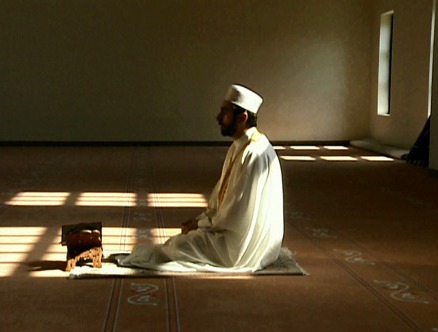
To take it a step further, if a Muslim man kneeling on his prayer rug cries out to God with all his soul for a greater understanding of Allah and the desire to serve and be holy, why do you, even if you have “issues” with Islam, care if or how that Muslim prays? Why do you care if or how a Jew prays? If you have issues with the Christian church and believe bad things about the religion where you were raised, why do you care if or how some Christians pray to God?

If you really want to practice faith and get better at it; if you really want to make a small faith bigger, what must you do?

He has told you, O man, what is good; and what does the LORD require of you but to do justice, and to love kindness, and to walk humbly with your God? –Micah 6:8 (ESV)

God, through the prophet Micah, didn’t say to judge others, force your religious convictions on everyone you disagree with, and demand that you take over another group’s faith practices because you “know better.”

Do justice.

Love kindness.

Walk humbly with your God.

So is this practicing Christianity? It is if you’re a Christian. It’s practicing Judaism if you’re a Jew, and practicing Islam if you’re a Muslim. For all I know, it’s practicing Buddhism is you’re a Buddhist. Most of all though, it’s practicing getting closer to God.

So practice justice, kindness, and humility every day and perhaps then, your small faith will begin to grow.