Tag Archives: messianic judaism

The Convert and the Disciple: A Shavuot Lesson

Question:

I attended synagogue services on the holiday of Shavuot morning, and we spent a half-hour reading the Book of Ruth. Is there any special connection between Ruth and Shavuot?

The Aish Rabbi Replies:

The Torah and prophetic reading on Yom Tov always relate to a deeper theme of the day.

In this case, Ruth is the ancestor of King David, who was born on Shavuot, and died on Shavuot.

Another reason is because Ruth is the quintessential Jewish convert, and on the very first Shavuot – when the Torah was given at Mount Sinai – each Israelite essentially became a “Jew by Choice.” That’s why the Talmud and Code of Jewish Law use the Sinai experience as a basis for determining the requirements of all future converts:

1) Mikveh – All converts must immerse in a Mikveh (ritual bath), as the Israelites did at Mount Sinai (Exodus 19:14, 24:8).

2) Milah – Male converts must undergo circumcision, as the Israelites did before leaving Egypt (Exodus 12:48 and Joshua 5:5).

3) Mitzvot – All converts must accept to observe all 613 mitzvot of the Torah, as the Israelites did at Mount Sinai (Exodus 24:3).

Interestingly, the Torah intimates that the souls of eventual converts were also present at Sinai, as the verse says: “I am making [the covenant] both with those here today before the Lord our God, and also with those not here today.” (Deut. 29:13)

From “Ruth and Shavuot”
the Aish Ask the Rabbi column
Aish.com

In my recent review of the Mark Nanos essay “The Question of Conceptualization: Qualifying Paul’s Position on Circumcision in Dialogue with Josephus’s Advisors to King Izates” as found in the book Paul within Judaism: Restoring the First-Century Context to the Apostle (Kindle Edition), citing Nanos, I commented that the Apostle Paul was very much against the non-Jewish disciples of Yeshua (Jesus) converting to Judaism, frankly, because it was unnecessary. In Messiah, Gentiles have an equal communal status with the Jewish disciples, the same indwelling of the Holy Spirit, and the same promise of the resurrection.

mikvahThe other major reason that Paul discouraged Gentiles from converting is that it would undermine God’s promise to Abraham that he would be the father to many nations. If we all converted to Judaism as a means of accessing a covenant relationship with God, then God’s promise that not just the Jewish people but all peoples would bow to Him, would be null and void. And as I hope you realize, it’s impossible to thwart the plans and promises of Hashem, God of Israel.

So is there any good reason for a Gentile in Messiah to convert to Judaism? There must be, because some few such converts exist (I have no statistics as to exactly how many there are or where they can be found and only personally know of one such person).

I also know that some critics of Messianic Judaism in the Hebrew Roots space believe that the practice of conversion is not presupposed in the Torah and thus is unbiblical, not to be recognized by those Gentiles who believe the Torah applies equally to all, Jew and Gentile alike.

However, as we see above, the Jewish people certainly do believe there is a precedent in the Torah that allows for ritual conversion of Gentiles, bringing them into Israel as (Jewish) children of Abraham.

Neither Christianity nor any branch of Judaism believes that Gentiles must convert to Judaism and indeed, Christianity sees converting non-believers to themselves is the desirable outcome, not becoming a member of the tribes, so to speak.

I also mentioned before that both in the late Second Temple period and today, those of us, that is, non-Jews who have some sort of connection with Judaism in general and Messianic Judaism in particular, often suffer from an identity crisis. More than once, the dissonance of who I’m supposed to be and what I’m supposed to do given my rather unique outlook on the Bible, has stirred a great desire in me to “throw in the towel” and stop associating with religious people altogether, both face-to-face and over the web.

It’s not an easy life.
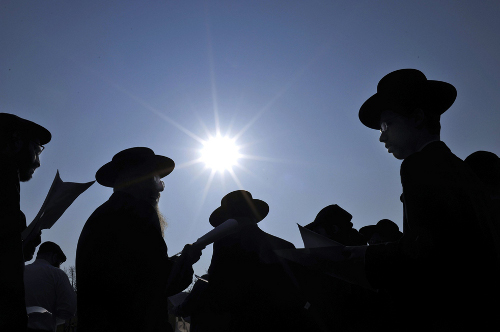
Orthodox JewsSome non-Jews entering Messianic community have shot out the other end, so to speak, and converted to (usually Orthodox) Judaism as a way to end that dissonance and secure a religiously and socially acceptable identity within Judaism. To do so however, they had to surrender all fealty to Yeshua as Messiah and King, thus, from Christianity’s point of view, becoming apostates.

I believe, both in ancient and modern times, that God gave the Jewish people the ability to be “gatekeepers” into their realm. Nanos spoke of a “chronometrical gospel”, that is, a time-related good news event or set of events, a good news that entered our world heralding the advent of the New Covenant promises with the birth, life, death, resurrection, and ascension of the Master, the Messiah.

Prior to Yeshua, there was a mechanism in place whereby Gentiles who were drawn to the God of Israel could undergo a ritual allowing them to join Israel and thereafter be considered indistinguishable from the born Israelite. It was the only real option for such Gentiles, apart from the status of God-Fearers who had no covenant status relative to God (unless you count the Noahide covenant).

The process of conversion seemed to morph over time and was likely different in some manner to the process we see Ruth undergoing to convert to Judaism and become the eventual ancestor to King David and ultimately, Yeshua.

No one should question the authenticity of David’s let alone Yeshua’s Judaism because a convert was their ancestor.

But as I said before, if converting to Judaism were the only way for Gentiles to apprehend the blessings of the New Covenant (let alone Sinai), then as I said above, God’s promise to Abraham would fail.

two pathsSo through Messiah, another avenue was created, one that does not require we convert and become Israel. We are permitted now to come alongside Israel, not being them but being at the same table with them, partaking in the same blessings without being responsible for the same obligations. This makes it possible for the whole world to come to God, to be blessed by God, to attain the companionship of the Holy Spirit of God, and to receive the promise of a life in the world to come, all without conversion and all while remaining fully Gentile citizens of the nations.

In another Aish Ask the Rabbi column, the Rabbi states in part:

Being culturally Jewish, without belief in God, is compared to a cut flower. While it still retains much of its vitality, the flower has been cut off from its source of nutrition, and within a short time will wither and die. The ideals which have kept the Jewish people alive and thriving over the millennia – despite all odds – can only be transmitted with the framework that the Torah provides.

I’ve mentioned in this blog post and several others including this one, that we “Messianic Gentiles” actually have a very specific duty, that of encouraging and supporting Jews in Messiah (any Jew we may encounter, actually) to return to Torah and to more fully observe the mitzvot.

Without Jewish devotion to Torah, as the Aish Rabbi states, what God has preserved in the Jewish people will eventually fade…and without Israel, we Gentiles have no hope, because 100% of the promised blessings we receive God made with Israel, not us!

That’s why Yeshua is the King to the Jews first and only after, the King of the nations of the world. Whether the realization is comfortable or not, Israel is the gatekeeper, it guards all the doors, it holds all the keys, all through God’s covenants with Israel, and all through the person of Israel’s King, King Messiah, Son of David.

There may well be some valid reasons for Gentiles converting to Judaism, but they are all minimized within the Messianic Jewish realm simply because, as Paul pointed out repeatedly, it’s not necessary in order for a Gentile to have an authentic relationship with God. Particularly for the Gentile but also for the Jewish people, the cornerstone, the lynchpin to that relationship is Messiah. He opened the door that let the Gentiles into a full relationship with God, and he brought the very beginnings of what will someday be the completion of God’s New Covenant promises to Israel, and only through Israel, to the world.

aloneWe non-Jews should not dismiss or denigrate converts to Judaism, regardless of which branch they convert into, but we should rest assured that it is not a requirement either. This may be confusing relative to Gentile identity in Messianic community (which is why I suspect such Gentiles either covert to Judaism, return to the Gentile Church, or just give up on religion completely), but what Jews and Gentiles don’t yet understand about the non-Jew’s role and function among Israel, is well understood by God.

If I, as a non-Jew who studies within a Messianic Jewish framework, am never accepted as who I am, either by Gentiles or Jews, I can take comfort that in the privacy of my prayers and studies, I am still accepted by God. I can be a disciple and a Goy. I can be who I am. I don’t have to become someone else or pretend to possess another’s responsibilities to stand in the presence of the Almighty.

Chag Shavuot Sameach!

Book Review of Paul within Judaism, “The Question of Conceptualization: Qualifying Paul’s Position on Circumcision in Dialogue with Josephus’s Advisors to King Izates”

Jews practicing Judaism in the first century observed the rite of circumcision, so it may seem natural enough to conclude that Paul’s arguments depreciating, when not opposing, circumcision undermine the very idea that Paul should be interpreted as a representative of Judaism. But Paul’s position is much more nuanced than the readings on which the interpretive tradition’s conclusions depend; so too is the practice of the right within Judaism.

-Mark D. Nanos
from the beginning of his essay:
“The Question of Conceptualization: Qualifying Paul’s Position on Circumcision in Dialogue with Josephus’s Advisors to King Izates”
Paul within Judaism: Restoring the First-Century Context to the Apostle (Kindle Edition)

So begins this rather lengthy article of Dr. Nanos’ on why, contrary to what is typically believed within Christianity today, Paul actually was a very good representative of the Judaism of his day, and why, again contrary to Christian tradition, Paul did support ritual circumcision of Jewish boys on the eighth day of life, though this was not required of non-Jewish boys, even among those families who were devoted disciples of Yeshua (Jesus).

Even if I were just to quote those passages in Nanos’ paper I highlighted as significant, this blog post might become almost as long as the original article. I will try to be brief and also to capture the essential points being made in this fourth submission to the “Paul Within Judaism” book (and yes, I realize it’s been quite some time since I’ve offered a review of this material).

Paul within JudaismIn real estate, the predominant credo is “location, location, location.” In Biblical exegesis, it’s “context, context, context”. Our traditional view of Paul relative to Judaism and circumcision (and most other things) tends to disregard that context, that is, the first century Jewish context in which the Apostle wrote, taught, and lived.

According to Nanos, viewed and read within that context, alongside “similarly qualified statements made by other Jews,” Paul always remained properly observant to the Torah of Moses and upheld circumcision of Jewish males as a continued sign of the Abrahamic covenant between the Jewish people and God.

If Paul opposed circumcision, it was specifically regarding the proselyte ritual to convert a non-Jew to Judaism, as was the tradition of his day (and ours).

I should make clear that, as Nanos writes, Paul did not object to non-Jewish practicing Judaism alongside ethnic Jews and converts, or at least he didn’t object to them behaving “Jewishly” within a Jewish social and community context. This did not require these Gentile disciples to become obligated to the Torah mitzvot in the manner of the Jewish people. Rather, for the sake of social discourse with their Jewish mentors as well as elevating the non-Jews’ spirituality and moral/ethical behavior to the level Hashem expects of those who were created in His Image, they behaved, as I have just said, “Jewishly,” or in a way that an outside observer might believe is “Jewish”.

Nanos slowly builds his arguments (which are too long to cite in detail here) regarding how we can read Paul and how the Apostle uses the term “circumcision,” “circumcised” (for a Jew), and “foreskinned” (for Gentiles including Gentile Yeshua disciples) to show that Paul supported (male) Jewish disciples being circumcised but not so the Gentile believers. Paul only was against circumcising Gentile Yeshua-disciples and fully supported the circumcision only of Jewish Yeshua disciples along with all other Jewish males.

The gospel’s chronometrical claim creates the basis for Paul’s resistance to circumcision of Christ-following non-Jews. He believes that now they must represent those from the other nations turning to the One God of Israel, and thus, that they must not become Israelites…

Nanos turns to a story related by Josephus, the narrative about the circumcision of the non-Jew Izates, King of Adiabene. Rather than attempt to familiarize you with that story from Nanos’s full rendition, you can find a summary of the life and significant experiences of Izates, specifically his familiarity with and eventual conversion to Judaism, at Wikipedia (not the best of sources, but it will get you started…feel free to Google Izates for more).

In short, Izates, who was a contemporary of Paul, encountered a Jewish advisor named Ananias, who familiarized the young King with Judaism, so much so, that even without converting, Izates took on a number of “Jewish” behaviors and, to a casual observer, could have been mistaken for acting “Jewishly” if not being “Jewish”.

Ancient Rabbi teachingAnother advisor, Eleazar, told Izates that it was improper for him to study Torah without converting. Izates greatly desired to convert, but Ananias believed the King’s subjects would not accept the rule of a Jewish King (how ironic, since one day, the whole world will be ruled by a Jewish King, King Messiah).

Even uncircumcised, that is, as a Gentile, Izates (as well as his mother) were practicing a form of Judaism without being Jewish. And while the advice of Eleazar won out and the King did indeed convert, Nanos makes the point that both Paul and Ananias held quite similar points of view, that it was unnecessary for a non-Jew to convert in order to worship “[sebein; literally , ‘honor,’ ‘respect,’ or ‘fear’] God without circumcision…”

Here’s an important point Nanos made:

…Izates had not yet given up his desire to become circumcised: thus Eleazar “urged him [Izates] to accomplish ‘the work’ [or ‘the rite,’ ton ergon].” Eleazar is a Jew from the Galilee, and likely a Pharisee…

Terms such as “the act,” “deed,” or “work” as we find in Paul’s writings on “the works of the law” (see Galatians 3:2 for example) specifically refer to the Apostle’s disapproval of Gentiles undergoing ritual circumcision for the purpose of conversion in order to be justified before God. Again, Paul’s “works of the law” had nothing to do with forbidding Jewish Yeshua-disciples from being circumcised nor was Paul preaching against Torah observance for the Jewish followers of Messiah.

Nanos quotes Josephus (quoting Eleazar) as outright stating that one must be a Jew in order to be obligated to the commandments of the Torah of Moses. In Eleazar’s case, the only way to resolve the conflict of a non-Jew even voluntarily observing some of the mitzvot was for him to “complete the act,” “rite,” “work” of conversion through circumcision.

Ananias, on the other hand, like Paul, saw devotion to God and observing a life of moral and ethical excellence as a Gentile was Izates’ proper response “apart from becoming a Jew, and thus, apart from becoming under Torah on the same terms as a Jew (a distinction that people of his [Itazes] kingdom are represented as grasping…).”

Nanos dovetails off of Josephus to re-engage Paul, stating:

Moreover, this raises interesting comparisons with Paul’s insistence that faith(fullness) for Christ-following non-Jews requires abstaining from becoming Jews through circumcision, while at the same time insisting that they turn away from cults associated with familial and civic gods, which would be expected to apply to themselves in most Jewish groups…

synagogueSo Paul expected that Gentiles as Gentiles behave “Jewishly” but not become Jewish. However behaving “Jewishly” does not mean they became Jews without a bris and were in any manner obligated to the 613 commandments as were/are the Jewish people, either born or converted.

Further:

Such unorthodox behavior creates for them [Yeshua-believing Gentiles] an anomalous identity leading to sociopolitical marginalization, both from Jews, who do not share their chronometrical gospel claim to be neither guests nor proselytes but full members alongside of Jews, and, for different reasons, from their non-Jewish families and neighbors. If even those who become proselytes may be regarded with suspicion as atheists and traitors, then likely all the more threatening would be those who remained non-Jews if they simultaneously claimed the right to abstain from honoring their fellow non-Jewish people’s gods and lords.

I suppose a brief explanation of the term “chronometrical gospel” is in order. As I understand it, the term refers to a time-based event in the overarching salvational plan of God for Israel and the nations, whereby with the first advent of Messiah ben Joseph, Gentiles were granted, for the first time in human history, the opportunity to be equal partakers in the blessings of the New Covenant (Jer. 31, Ezek. 36) without becoming Gerim as was required in the time of Moses, and having the third generation of their offspring being accepted as an Israelites (thus partaking in the Sinai covenant), or in first century (and later) times by undergoing the rite of the proselyte and converting to Judaism.

From the life, death, resurrection, and ascension onward, non-Jews were provided a new and better path by which we can swear fealty to God through the faithfulness of the Jewish Messiah King.

We also see from the above-quoted passage, that Yeshua-believing Gentiles were accepted as social equals and sharers of the New Covenant blessings of the Holy Spirit and the promise of the resurrection, not only without being required to first convert, but without the identical obligation to perform the Torah mitzvot, an obligation that remains exclusive to born-Jews and proselytes.

Nanos brings up something especially relevant to the role of the “Messianic Gentile” today, the matter of identity ambiguity. Just like our first century counterparts, we modern Gentiles in Messiah, when within (Messianic) Jewish communal space, are not Jews but are also not allied with our former identities as non-believers. We are expected to take the moral high road, so to speak, and particularly in Jewish space, we say Jewish prayers (although our prayers are sometimes adapted due to us not being Israel), attend prayer services with Jews, attend the Torah service with Jews, eat kosher food when we dine with Jews, cover our heads when davening with Jews, and committing many other acts that look pretty “Jewish,” even though we are not Jews.

identityIn many ways, we are neither fish nor fowl, and the question of just what Messianic Gentile behavior actually is supposed to look like is often a matter of spirited debate.

Changing the discourse about Paul by adding a contextual tag to virtually every statement made about his standing on Jewish matters, such as the circumcision of non-Jews, is a good place to begin for those who are attempting to conceptualize Paul within Judaism…

It would be nice if our Bibles contained such “tags” to make Paul appear more within his own context to those of us reading him thousands of years later in a religious, cultural, and conceptual environment definitely outside of his original context.

Sadly, no such Bible exists (to the best of my knowledge), but Nanos does attempt to give us examples:

In the shortest sense, this could consist of no more than adding the phrase “…for Christ-following non-Jews” to statements made about them in order to avoid universalizing the matter under discussion.

And…

…such as, “for non-Christ-following Jews”

And again…

…by adding “for Christ-following non-Jews who are participating in Jewish communal life”

Or even…

“…who practice Judaism according to the teachings of Paul”

Or even better…

policy changes toward these non-Jews, hence… “for Christ-following non-Jews who practice Judaism according to the chronometrical claim of the gospel proclaimed by Paul and the other apostolic leaders of this Judaism.”

messianic judaism for the nationsYou get the idea. What would have been understood as a matter of course by the original readers of Paul’s epistles almost completely eludes lay-person, clergy, and Christian scholar (or most of them) twenty centuries later in our American churches, seminaries, and universities.

Getting back to the role of the ancient Messianic Gentile who was not expected to observe many/most of the mitzvot in the manner of the Jews, what God did (and does) expect of them (us)…?

…and Paul regarding what signifies faith(fulness) alone for non-Jews is striking…

Or in more detail:

This reasoning parallels Paul’s argument about Abraham’s becoming circumcised as a “sign” of his faithfulness (based upon Gen. 17:11); yet Abraham for Paul illustrates why faith(fulness) for Christ-following non-Jews is shown [specifically] by their [our] not becoming circumcised (Rom. 3:27-4:25; Gal. 3:1-4:7; passim). Paul insists that these non-Jews represent the children promised to Abraham from the other nations before he was circumcised…

…they [we] must remain non-Jews, that is, must not become members of Israel.

That, in a nutshell, so to speak, is the particular path of the ancient and modern Messianic Gentile. The evidence of our faith is to deliberately not become circumcised, that is, to avoid converting to Judaism, within the Messianic community or otherwise, and to fulfill our destiny as the children from the nations called by His Name, thus fulfilling the promise God made to Abraham about his gaining (faithful) children from the nations…that is, us.

By either converting, or unjustly claiming full obligation to the Torah as if we were converts without a bris, we are making a mockery of God’s promise to Abraham, and denying our own role as non-Jews in Messiah, further throwing God’s prophetic word back in His Face (as it were).

In contrast, Paul argues for faith(fulness) alone exclusive of circumcision as the decisive action for the Christ-following non-Jews he addressed, even though it came at the price of marginalization.

In other words, if you’re a Messianic Gentile and you at least sometimes feel marginalized, both in the Messianic Jewish world and in the Church among more traditional Christians (and I know what that feels like), that’s normal.

The Jewish PaulBut Nanos believes Paul was not seeking to bifurcate faith for the Gentile vs. actions/deeds for the Jews. Both Jews and Gentiles are saved by faith(fulness), but what is required by the faithfulness of the Gentiles does not include an identity transformation by becoming Jews and/or Israel. That identity is reserved and the faithful Jews are assigned obligations and duties not incumbent upon the Gentiles in Messiah.

Or as Nanos puts it…

Paul appeals to principle, not expedience. He defines the principle as faith(fulness) according to what is appropriate for them as non-Jews, which can be different in specific ways from that faith(fulness) might consist of for those who are Jews.

Bingo.

Hopefully, I’ve captured the essence of Nanos’ arguments. He tends to approach his core points from numerous different directions, and adding a great deal of detail that sometimes defies my ability to succinctly review him. Nevertheless, there are two major takeaways from this essay as I see it:

  1. Any statements made by Paul that appear to devalue or require the elimination of Torah observance and circumcision by all Yeshua-believers, when read within Paul’s original first century Jewish context, only apply to his non-Jewish audience, the Yeshua-believing non-Jews in the Messianic ekkelsia.
  2. Any statements made by Paul that appear to require full observance of the Torah commandments and circumcision by all Yeshua-believers, when read within Paul’s original first century Jewish context, only apply to his Jewish audience, the Yeshua believing Jews in the Messianic ekkelsia (although they would also apply to Jews who were not Yeshua-believers since all Jews have Jewish identity, being Israel, and obligation to the Torah of Moses at the core of their being Jews).

I’ll continue with my reviews as time allows.

Note: Edited at Portland International Airport using PDX’s free wifi and free electrical power in their business courtesy room.

How Can Any Gentile Survive Without the Sabbath?

Speak to the Children of Israel and say to them: The appointed times of Hashem, that you are to designate as holy convocations; these are My appointed times.

Vayikra (Leviticus) 23:2

The Sabbath is a special, Divine gift, given to us so we elevate ourselves above the physicality of the days of the workweek. Indeed, the fact that it comes every week is part of its special nature: Who among us has not wondered how the non-Jews can survive without the Sabbath! We must strive to treat the Sabbath with the same delight and anticipation that we do any of the festivals. (emph. mine)

-from “A Mussar Thought for the Day,” p.140
Tuesday’s commentary for Parashas Emor
A Daily Dose of Torah

That is the $64,000 question, isn’t it. There certainly isn’t one, straightforward reply. The author of the above quoted mussar proposes the question but not the answer. Apparently, there is no Rabbinic response to God’s provision for the Goyim (or lack thereof) relative to Shabbat or any sort of occasion whereby a non-Jew can elevate him or herself and draw nearer to God. Perhaps it’s one of the many reasons why the ancient Gentile disciples of Messiah divorced themselves from the Jewish communities originally created by Paul and founded their (our) own Gentile-based religion called “Christianity”.

Actually, the “Mussar Thought for the Day” does have a response to Gentiles and the Sabbath:

A non-Jew is forbidden to observe the Sabbath; the Torah describes the Sabbath as: “…between Me and the Children of Israel it is a sign forever (Shemos 31:17).”

-ibid, p.141

The Church solved this problem by creating their own weekly Holy Day on Sunday, and until relatively recently in history, treated Sunday in a manner similar to how Jews observe a Saturday Sabbath.

However, the past 50 years or so has seen, particularly in the Western nations, a diluting of Sunday “Sabbath” observance whereby Christians go to church Sunday morning and then go out to lunch just prior to playing a few rounds of golf. The day is only special for the few hours they are in church, and even then, social encounters and conversations can largely be made up of secular material.

I’m not saying there aren’t a lot of Jewish people who only marginally observe a Shabbat or observe it not at all. My daughter goes to work on Saturday and my wife, while she does attend shul in the mornings and into the early afternoon, will resume her regular weekday behaviors upon returning home.

I’m not speaking ill of my spouse, of any other Jew, or for that matter, any Christian. It’s just that how we see the Sabbath and our relation to this day as well as to God is highly variable.

Derek Leman
Derek Leman

Is the answer to how a Gentile should, at least in an ideal sense, respond to the Jewish Shabbat to be found in Messianic Judaism? What makes you think that among the various “Messianic Judaisms” currently in existence, there is a unified response?

In his blog post Reading the Bible Realistically, or rather, in the blog post’s comments section, Derek made a few relevant statements when responding to one of his readers:

Your view that God is supremely upset about which day people choose to worship on is very un-Jewish. Shabbat is about rest and is not a prescribed day of worship. This is an error lying at the root of your entire theory. It is also an erroneous view of God, as if one of the great sins has to do with which day of the week people hold worship services on. I strongly encourage you to reexamine your views which come up short in terms of biblical interpretation and which sound a lot more like they are influenced by Ellen G. White than Torah and Gospel.

-from 05/05/2015 at 9:26 am

And…

non-Jews were never commanded to observe Shabbat (Exod 31:13, it is between Israel and God and Romans 10 agrees). And the majority of Christians keep no Sabbath (Sunday is not a Sabbath for most).

-from 05/05/2015 at 9:57 am

As well as…

I do not think any of the Ten Commandments were addressed to non-Jews.

05/05/2015 at 2:56 pm

So although Derek is the Rabbi of a Messianic Jewish congregation which presumably has a significant number of non-Jewish attendees, and also that he has spoken at many Christian churches and similar non-Jewish venues on topics related to Messianic Judaism and its relationship to believing Gentiles, he also seems to hold a point of view quite similar to the Orthodox Jewish authorities. He doesn’t say that Gentiles are forbidden to observe Shabbat, just that, as a Torah commandment, it doesn’t apply to us in the slightest.

Now let’s contrast that with the following:

It is not uncommon to hear people refer to the appointed times as the Jewish festivals. This is true in that God gave His appointed times to the people of Israel. He told the Israelites, “The LORD’s appointed times which you shall proclaim as holy convocations—My appointed times are these” (Leviticus 23:2). The Jewish people are the wardens of God’s calendar.

However, God does not refer to them as Jewish festivals. He refers to them as “my appointed times.” They are God’s holy days. Paul asks, “Is God the God of Jews only? Is He not the God of Gentiles also? Yes, of Gentiles also” (Romans 3:29). The Bible never offered Gentile Christians any alternative festival days. To say that Gentile believers are not expected to keep God’s appointed times is the same thing as saying that Gentile believers are not supposed to have any holy days or days of worship. Neither the Gospels nor the Epistles grant the Gentile believers their own special festivals.

In the days of the Apostles, both Jewish and Gentile believers observed God’s appointed times together. They met in the synagogues and in the Temple on the Sabbath and festival days to celebrate and observe God’s holy days. When Gentile Christianity left the cradle of Judaism, the Gentile Christians began to neglect the appointed times. The Sabbath day was replaced with Sunday observance. The timing of Passover was changed. The other festivals fell into disuse. Is this what God intended for believers?

-from “The LORD’s Appointed Times”
Commentary on Torah Portion Emor
First Fruits of Zion (FFOZ)

D. Thomas Lancaster
D. Thomas Lancaster

Since this is taken from the Torah Club subdomain of FFOZ, I have to assume it was written (though I could be wrong) by D. Thomas Lancaster, the spiritual leader at Beth Immanuel Sabbath Fellowship which touts itself as “Messianic Judaism for the Nations.” Mr. Lancaster is also the primary contributor to FFOZ’s Torah Club content.

I’ve written a fair amount on Gentiles (and particularly me) and their (our/my) relationship with Shabbat, such as in The Shabbat Project for the Gentiles, Messianic Jewish Shabbat Observance and the Gentile, My Shabbat that Wasn’t, and The Shabbat that Was.

The last three blog posts were not only part of my review of Aaron Eby’s book/siddur First Steps in Messianic Jewish Prayer (also an FFOZ publication) which was written by Eby specifically for a non-Jewish Messianic and Christian audience, but my chronicle outlining my own efforts to truly (or as truly as is possible for me) observe Shabbos using Eby’s book as a guide.

I can’t say I did a very good job of it, but part of that has to do with a lack of practice. One properly observes Shabbat by having many months or years (or a lifetime) of practice observing Shabbat, ideally in the company of people who know what they’re doing.

So we have the Orthodox Jewish perspective that Gentiles are actually forbidden from observing the Shabbat accompanied by astonishment in how we Gentiles manage to survive without it.

Then we have Rabbi Leman’s viewpoint that the Shabbat simply isn’t relevant to non-Jews, even those within the Messianic community, and further, that “Shabbat is about rest and is not a prescribed day of worship.”

We also have FFOZ’s opinion that God is not just a God of the Jews but of the nations as well, and that at least Gentiles are allowed to observe the Moadim, presumably including the Shabbat.

The previously quoted FFOZ blog post ends with:

It is true that the Apostles never commanded the Gentile believers to keep the appointed times, but neither did they tell them not to. They were silent on the matter. In those days, the idea of not keeping the appointed times simply had not occurred to anyone.

pathsPerhaps if there had been no schism between the Jews and Gentiles nearly twenty centuries ago, the issue would be moot. Halachah would have been developed regarding “Messianic Gentile” observance of Shabbat, the Appointed Festivals, and a great many other things we call “Jewish,” and then the halachah would have been refined over the centuries so that today’s expressions of Messianic Judaism would each have their own traditions and practices defined for Gentile members.

But such is not the case.

However, maybe the issue isn’t all that important, at least on a global scale. The churches have their answer to “The Lord’s Day,” and each Messianic community that includes Gentile members or attendees has their official policies regarding non-Jews and Sabbath.

Ultimately, lacking a clear Biblical directive, each of us has to negotiate his or her relationship with God, and each non-Jew has to decide how he or she (or if he or she) should address the puzzling issue of a Shabbat for the Nations.

I wrote quite recently that if it came down to a choice, it’s more important for Jews to observe Shabbos than for Gentiles. In the microcosm of my family, that’s how it works today (however imperfectly).

Of course there are those who want to have their cake and eat it too, but I’m not convinced you can solve knotty problems such as these by saying “the (Torah) rules are all the same for everyone, end of story,” and this narrative can appear a little unusual from time to time (I like comic books too, but this comparison caught me by surprise).

Even setting aside larger, normative Christianity’s opinion on the matter, authorities within Messianic Judaism let alone the wider realm of Jewish thought differ in how or if Shabbat applies to the Gentile, whether a disciple of the Master or not.

I decided to write this “meditation,” even though it may seem that I’m beating a well and truly dead horse, because of the simple statement I quoted at the top of this blog post:

Who among us has not wondered how the non-Jews can survive without the Sabbath!

So, given all of the benefits of Shabbat observance for the Jewish people, how do the rest of us survive?

Each Sabbath refreshes anew the special bond that Hashem has with His people, and affords every Jew the chance to turn away from the weekday world and bask in the radiance of the Shechinah. Thus, every Sabbath is a festival; but rather than commemorating a single event, it serves to strengthen and nurture the connection between the Jews and their Father in Heaven.

-from “A Mussar Thought for the Day,” p.141

Oh, as far as the Shabbat being primarily about rest rather than worship:

It is all too easy to fall into the trap of regarding the Sabbath simply as a day of rest, and to use it only as a chance to catch one’s breath before heading back into the grind of the following week. The folly of this approach, too, is highlighted by the location of the Sabbath among the festivals. Nobody makes the mistake of looking at Pesach or Succos as times of rest! These festivals are clearly identified as times to celebrate the closeness and special care that Hashem has demonstrated toward His people.

-ibid

shabbaton
Aaron Eby

So if we accept Derek’s assertion that Shabbat is not specifically a day of worship, we can also say that, at least in Orthodox Judaism, it’s not primarily just a rest day either. Like the Appointed Festivals, it’s a time of celebration, a day to rejoice in drawing nearer to God, at least for the Jewish people.

But among the varying and madding opinions of the relevant pundits, how do we non-Jews survive without a Sabbath or, like our First Century counterparts, the Gentile disciples Paul made in the diaspora, can we too somehow join Jewish community and simply enjoy the blessings of their Shabbat observance even if, as a matter of covenant, it is not also ours?

I know someone is going to bring up Isaiah 56 as “proof” that everyone everywhere is commanded to keep the Shabbat in the current age, but are we to behave like partisans, freedom fighters representing a (sort of) “King in Exile,” obeying the laws he will establish once he returns as if they are already in effect? Remember, in Messianic Days, King Messiah will not only rule over Israel, but the Gentile countries as well, as we will be vassal nations under the authority and protection of Israel’s Monarch. In those days, the will of the Master will be unequivocal.

Today however, Biblical hermeneutics being what it is, there is room for doubt and multiple conflicting learned opinions, and as I said above, that leaves it up to each of us, our conscience, and our relationship with God, to decide how to navigate the rather murky waters of Gentiles and Shabbat. How can we presume to observe it? How can we survive without it?

The Torah for the Nations of the World

Question:

Why is Judaism so intolerant of idolatry? I don’t mean massive temples with human sacrifices. What about a civilized idolater, in the privacy of his own home. With a job, a family, a mortgage, donates to the World Hunger Fund and Greenpeace — and instead of one G-d, he just happens to have two or three or even several dozen, all lined up on the dashboard of his car. Why does Judaism make a cardinal sin of it, demanding total eradication of idolatry in every corner the world? As long as it doesn’t hurt anyone else, what’s so terrible?

Answer:

There are many ways to answer this, but let’s take a historical perspective. Historians agree that our current standard of ethics stems from the Jewish ethic. Yes, the Greeks gave us the natural sciences, philosophy and art; the Romans gave us governmental structure and engineering; from the Persians we have poetry and astronomy; from the Chinese, paper, printing, gunpowder, acupuncture and more philosophy, and so on. But the historical fact is that all those cultures (and all the other unmentioned cultures) sustained and even glorified attitudes and behaviors that today we universally find abhorrent. Today, if you dispose of your unwanted infants, practice pederasty, set humans to kill each other for sport, ignore the rights of those lower than you on the social ladder and refuse to acknowledge any social responsibility to the poor and the unhealthy, and can’t wait to run to war against the nation next door, you are a barbarian. You may have made a wonderful citizen of Athens or Rome, but today, no club will take you.

Where did those values come from? There’s only one source historians can point to: Torah.

-Rabbi Tzvi Freeman
“What’s So Terrible About Idolatry?”
Commentary on Parshah Acharei-Kedoshim.
Chabad.org

Sorry to be such a “Chatty Cathy” and post two missives in one day, but when I read the paragraphs above, they seemed to spell out something a lot of non-Jewish believers operating in the Messianic Jewish and Hebrew Roots spaces have been puzzling over if not actively struggling with. Is there some sort of “universalism” to the Torah? That is, does the Torah apply to everyone and not just to the Jewish people?

The answer to that question is enormously complex, even though some people seem to believe the answer is an incredibly simple “yes.”

Toby Janicki
Toby Janicki

I’ve written on this topic at length including in my original review of Toby Janicki’s article The Gentile Believer’s Obligation to the Torah of Moses as well as my revisiting that material sometime later. I’ve also written of the Torah and Gentiles in my “in a nutshell” explanation of Torah and Christians and in Torah and the Gentile Believer. Hopefully, I’ve rendered a consistent message across those different blog posts that studying the Torah is appropriate for a non-Jewish believer for a wide variety of reasons, but stating that we share an identical obligation to observe the mitzvot with the Jewish people in a manner identical to theirs, and claiming that the Torah and being “grafted in” also makes Gentiles “Israel” is way over the top.

That’s not to say that we “Messianic Gentiles,” and arguably the mainstream Christian Church don’t have special obligations and duties. It’s just that the duty of Messianic Gentiles and Christians isn’t to observe the mitzvot but to encourage and support Jews to observe the mitzvot.

That said, I do think there is a universal aspect to the Torah, one that applies to every man, woman, and child who has lived throughout history and one that applies to all of us across the world today.

It’s spelled out in Rabbi Freeman’s answer to the question about idolatry.

We tend to think of application of Torah as an either/or sort of thing. Either it applies in exactly the same way to everyone, or it applies to no one at all. There’s no such thing in the minds of certain people as differentiation of application, or the idea that Torah is received by the Jews in one way and by the Gentiles in a different manner.

How the Torah applies to the world, even the world of people belonging to different religions or no religion at all, is in how it has shaped our world ethically and morally. American criminal and civil law, as well as many of our social mores, is based on the Torah.

This isn’t a religious application. Heck, you don’t even have to believe in God. You can be an atheist and still live in a world where the basic moral and ethical structure is based on the “blueprint” of the Torah.

Torah at SinaiRabbi Freeman in his somewhat lengthy answer says that while many peoples, nations, and civilizations have come and gone across the vast corridor of time, only the Jewish people have remained.

Why is that? For one thing, for the entire existence of the people of Israel, since Hashem gave the Torah at Sinai, the Jewish people have kept and preserved the Torah. If Israel had been wiped out by some ancient enemy and the Torah lost forever, upon what would the world have built its ethics and morals? As Freeman states, in ancient times (and maybe in modern ones), if you didn’t like the ethics of a particular “god,” you simply worshiped another one. After all, without the knowledge of a single, all-powerful, all-encompassing, creative God, morals and ethics are relative and impermanent.

The single greatest gift the Jewish people have given the world is the Torah. No, not the obligation to obey Torah on the level of the individual commandments in a way identical to the Jews, but as the broader basis of civilization. According to Freeman, what we think of as civilization wouldn’t exist without the Torah.

Today, we are witnessing the most dramatic results of Abraham’s strategy in action: Our progress in the last 500 years, to the point of the current empowerment of the consumer with technology and information, only became possible through the rise of this ethic. In a polytheistic world, this could never have occurred. It was only once the people of Europe began actually reading the Bible and discussing what it had to say to them, that the concepts of human rights, social responsibility, the value of life, and eventually the ideal of world peace took a front seat in civilization’s progress. And it is only such a world that could have developed public education and health care, old age pension, telephones, fax machines, personal computers, the Internet, environmental design and nuclear disarmament.

I’ve read other articles from Jewish sources stating that the Torah has applications for the whole world, but I never quite grasped what they meant. I guess it was because of the continuing debates we have on the web between Messianic Judaism(s) and various aspects of the Hebrew Roots movement regarding the question of how much of the mitzvot a Gentile should take upon himself or herself that blinded me to a wider perspective.

It’s about the people of the nations creating and then living in “a world that values life, world peace, individual rights, freedom of expression, literacy, knowledge and compassion for those who have less…” That’s the universal quality of the Torah. That’s the Torah for the nations.

The moral and ethical principles are identical for the Jews as they are for the rest of us. The only difference is that there are many additional instructions that only have to do with the Jewish people.

the crowdYou and I as non-Jews participate and “observe” the Torah every day, at least if we’re reasonably ethical, moral, and are law-abiding citizens. For those of us who are believers, this evidence of Torah in our lives becomes all the more apparent, but the larger reality is that untold millions of people everyday also live out the Torah just by committing acts of compassion, by sending their children to school, by obeying the highway speed laws, by upholding the rights of the disadvantaged, and in a thousand other ways.

The answer of how the Torah can be universal seems so elusive until you look at it from the perspective Rabbi Freeman brings in his online article. Once seen from that viewpoint however, everything becomes clear.

After the Meal of the Messiah has Ended

Now I rejoice in my sufferings for your sake, and in my flesh I do my share on behalf of His body, which is the ekklesia, in filling up what is lacking in Messiah’s afflictions. Of this ekklesia I was made a minister according to the stewardship from God bestowed on me for your benefit, so that I might fully carry out the preaching of the word of God, that is, the mystery which has been hidden from the past ages and generations, but has now been manifested to His saints, to whom God willed to make known what is the riches of the glory of this mystery among the Gentiles, which is Messiah in you, the hope of glory. We proclaim Him, admonishing every man and teaching every man with all wisdom, so that we may present every man complete in Messiah. For this purpose also I labor, striving according to His power, which mightily works within me.

For I want you to know how great a struggle I have on your behalf and for those who are at Laodicea, and for all those who have not personally seen my face, that their hearts may be encouraged, having been knit together in love, and attaining to all the wealth that comes from the full assurance of understanding, resulting in a true knowledge of God’s mystery, that is, Messiah Himself, in whom are hidden all the treasures of wisdom and knowledge. I say this so that no one will delude you with persuasive argument. For even though I am absent in body, nevertheless I am with you in spirit, rejoicing to see your good discipline and the stability of your faith in Messiah.

Therefore as you have received Messiah Yeshua the Lord, so walk in Him, having been firmly rooted and now being built up in Him and established in your faith, just as you were instructed, and overflowing with gratitude.

Colossians 1:24-2:7 (NASB – adj)

I’m temporarily interrupting my reviews of the Nanos and Zetterholm volume Paul within Judaism: Restoring the First-Century Context to the Apostle in order to address a conversation I had with my friend over coffee last Sunday. Yes, this is the same friend who previously issued the pesky challenge (I say that tongue-in-cheek) of considering a return to church or some such congregation for the sake of fellowship.

Last Sunday, the challenge was to consider all that Messiah has done for me.

No, it’s not like I don’t have a sense of gratitude, but the way he put it, it’s like I am to consider only two beings in existence: Messiah and me.

The Death of the MasterSo often in the Church, over and over again, I’d hear “It’s just me and Jesus” like the rest of the human population of this planet didn’t matter. It also sounds like God’s overarching redemptive plan for Israel, and through Israel, the world, wasn’t important. All that’s important is the individual Christian and Jesus.

I look at Messiah through the lens of the entire Biblical narrative and what his death and resurrection means in terms of that narrative. I think of Messiah less as dying for me the individual, and more as dying and being resurrected as a definitive confirmation of God’s New Covenant promise to Israel; His promise of Israel’s personal and national resurrection and the life in the world to come. Messiah’s resurrection is definite proof of the resurrection for the rest of us. It certainly was to the direct witnesses of “the risen Christ,” and by their testimony, was accepted as evidence by many other Jews and Gentiles who through faith, became disciples of the Master.

I have a problem pulling Messiah out of that context, isolating his death and resurrection from God’s global redemptive plan, and making it all about “saving” me. When Paul wrote about “salvation,” he was talking about reconciling humanity with the God of Israel, not saving my one little soul so I could go to Heaven and live with Jesus when I die. Paul was “preaching” the New Covenant promises and their blessings to the Gentiles, who needed to do considerable catch-up work not having the benefit of even a basic Jewish education.

I think that’s what he’s saying in the above-quoted block of scripture. He’s writing to Gentiles. They/we who were once far off (Ephesians 2:13) and who had/have been brought near to the promises of God through the faithfulness of Messiah.

There’s no denying that without Messiah, the Gentiles are totally cut off from the God of Israel. The Jews were already near based on being born into the Sinai covenant. Yes, even they could be cut off (Romans 11:20) due to unbelief, but since they are natural branches, think of how much more easily can they be reattached to the root.

My friend said that those who deny Messiah, Jew and Gentile alike, are cut off from God. This at least suggests if not outright demands that God’s presence be manifest only with those Jews and Gentiles who have become disciples of Yeshua and He is apart from everyone else.

working handsI don’t believe that. For the Jews, I believe there’s close and closer. No, it’s not like there is no benefit for Jewish faith in Messiah. I outlined how unbelieving Jews can still be close to God and how believing Jews have a great benefit in being disciples of the Master in my review of D. Thomas Lancaster’s sermon The Holy Epistle to the Hebrews: Faith Toward God. Mark D. Nanos characterizes the text of Romans 11:25 as unbelieving Jews being temporarily “callused” against Messiah. But the text continues:

For I do not want you, brethren, to be uninformed of this mystery—so that you will not be wise in your own estimation—that a partial hardening has happened to Israel until the fullness of the Gentiles has come in; and so all Israel will be saved; just as it is written,

“The Deliverer will come from Zion,
He will remove ungodliness from Jacob.”
“This is My covenant with them,
When I take away their sins.”

From the standpoint of the gospel they are enemies for your sake, but from the standpoint of God’s choice they are beloved for the sake of the fathers; for the gifts and the calling of God are irrevocable.

Romans 11:25-29

Paul, in part, is referring to this irrevocable promise of God to Israel:

They will not teach again, each man his neighbor and each man his brother, saying, ‘Know the Lord,’ for they will all know Me, from the least of them to the greatest of them,” declares the Lord, “for I will forgive their iniquity, and their sin I will remember no more.”

Jeremiah 31:34

So how do I understand my friend’s statement that all people, Jews and Gentiles, are alienated from God if they do not have faith in Messiah? Am I to believe that God abandoned the Jewish people at the cross?

I can’t do that.

I can believe, based on God’s faithful promises to His people Israel, that although many Jews temporarily do not see Yeshua for who he truly is as Messiah, one day everything will be revealed, and then they will all receive the promise of forgiveness of sins and thus “all of Israel will be saved.”

I have no problem believing that all means ALL! In fact, I’m counting on it.

However, God made no such promise to the Gentile nations of the world. We don’t directly benefit from those promises, though as Paul tells us, we do benefit from their blessings through faithfulness. In His mercy, God allows not just Israel, but also the Gentiles to receive the blessings of the resurrection, the indwelling of the Spirit of God, and the promise of life in the Messianic Age and beyond as members of the Master’s ekklesia and vassal subjects of the King.

But in my struggle to reframe the traditional Christian narrative into one that takes into greater account the first century Jewish context of Paul’s letters as they relate back to the promises God, I’ve gotten “stuck” with my panoramic view of the Messiah’s role in Biblical and human history.

Restoration
Photo: First Fruits of Zion

My fight has always been to communicate this Judaic view of ALL scripture, including the Apostolic Writings, as Jewish and centered on national redemption of Israel, and then through Israel, the nations.

Admittedly, I’m having a tough time changing my focus and allowing myself the “conceit” of realizing that there is (or could be) a personal relationship between me and the Master. Frankly, I don’t see why that shouldn’t intimidate the living daylights out of anyone, especially me. How can the King of the future Messianic Era also be, as many Christians might say, my “best friend?”

The presence of Mashiach is revealed on Acharon Shel Pesach, and this revelation has relevance to all Israel: Pesach is medaleg,1 “skipping over” (rather than orderly progress), and leil shimurim,2 the “protected night.” In general the mood of Pesach is one of liberty. Then Pesach ends, and we find ourselves tumbling headlong into the outside world. This is where Mashiach’s revealed presence comes into play – imbuing us with a powerful resoluteness that enables us to maintain ourselves in the world.

-Compiled by the Lubavitcher Rebbe; Translated by Yitschak Meir Kagan
Chabad.org

I too find myself “tumbling headlong” into unprotected territory. It’s become very easy for me to relate to Yeshua as a lowly subject relates to a King. But how can (or should) this “Messianic Gentile” gain an apprehension of a one-on-one relationship with my Master Yeshua?


1. Shir HaShirim 2:8. Midrash Raba on that verse describes the Exodus as medaleg, “skipping over” calculations and rationales for redemption, bringing Israel out of exile regardless of their merit, regardless of the length of the exile. Later in that section the Midrash applies the verse to Mashiach.

2. Sh’mot 12:42, as Rashi notes, the night destined for redemption.

Book Review of “Paul within Judaism,” The Introduction

A new perspective in Pauline scholarship is represented in this volume. This perspective is readily distinguishable from other interpretations of the apostle, including the collection of views now formally recognized as “the (!) New Perspective on Paul” and, all the more, the views mounted in opposition to it because of the New Perspective’s challenge to major tenets of traditional Christian interpretation.

Mark D. Nanos
from the Introduction to
Paul within Judaism: Restoring the First-Century Context to the Apostle
Edited by Mark D. Nanos and Magnus Zetterholm

I’d known for sometime that Nanos and Zetterholm were collaborating on a new book about Paul, but it wasn’t until I read Toby Janicki’s brief review of the book in the current issue of Messiah Journal that I discovered it had already been published (back in January, actually). Throwing caution and my credit card to the winds, I quickly purchased it at Amazon and downloaded it to my Kindle Fire.

There are nine individual contributors to this volume, including Nanos and Zetterholm, and while they all operate within what has been termed the New Perspective on Paul (more on that in a minute), they aren’t in total agreement with each other. So much the better. Generally within any discipline there is not unanimous agreement on all points, which invites discussion to hone what we can learn in said-discipline. I’m optimistic that because of this “honing,” “Paul within Judaism” will bring into sharper focus who Paul was within his first century Jewish framework as the emissary to the Gentiles.

Since I’m facing nine separate essays inspired by “a session entitled ‘Paul and Judaism’ at the Society of Biblical Literature in 2010” plus an Introduction, I intend to review each essay as a stand-alone presentation. That means yet another multi-part review for me to write and offer to anyone who wishes to read them.

I mentioned above something about “The New Perspective on Paul,” but considering the diverse group of scholars whose work we will be evaluating, Nanos states:

The diverse expressions of their research have been variously described in recent years collectively as the “Radical New Perspective,” “Beyond the New Perspective,” and “Post-New Perspective.” Yet these monikers do not fully communicate the major emphases of this research paradigm, since it is not primarily a new development within the New Perspective…

See what I mean?

This volume marshalls the talents of “an international group of scholars” in challenging “major tenets of traditional Christian interpretation” of Paul, using an “alternative approach, for which the phrase the ‘Paul within Judaism’ perspective seems most appropriate.”

Nanos argues that the current prevailing understanding of Paul anachronistically places him within Christianity rather than Judaism, and what keeps Paul within a Christian context is the Church’s long history of tradition regarding the Apostle. The result is:

…profound discontinuities arise between the Paul constructed in this new paradigm and the theological traditions constructed around Paul in the past.

Paul within JudaismI should say these past-constructed traditions about Paul are equally applied by Christianity and normative Judaism, the former to justify reinventing an ancient branch of Judaism as Gentile Christianity, and the latter to condemn that invention and Paul along with it.

However, a Christianity and Judaism that clings to such erroneous and yet enduring traditions on the Apostle results in their failure to see Paul as perhaps he truly was: a Jew operating within a Judaism that was devoted to the revealed Messiah and that had a remarkably liberal view of Gentile admission into their community.

Speaking of the contributors to the New Perspective, Nanos writes:

It also draws deeply from the scholars responsible for the so-called “Sonderweg” trajectory, which detects in Paul’s letters the belief in a “special way” for non-Jews to be included in salvation through Christ alongside the historical Sinai covenant with Israel. (emph. mine)

I bolded “alongside” above to notify anyone who may be concerned that this perspective on Paul defines Jewish and Gentile roles and responsibilities within the ancient (and modern) Ekklesia of Messiah differently. How differently, we will discover as we proceed through the various reviews including this one.

I mentioned above about Christianity’s and Judaism’s anachronistic view of Paul as a “Christian.” To clarify that point of view, the Introduction says in part:

He (Paul) is often enough described simply as a “Christian,” as are his “churches”; he is a “missionary.”

…because it is built on the conviction that there is something fundamentally, essentially “wrong” with, and within Judaism. Further, what is wrong with Judaism is generally analogized with what Paul is understood to have found wrong with “paganism”…

In other words, Nanos shows us that the traditional interpretation of Paul is that he found both Judaism and paganism to contain the same sorts of “wrongs,” necessitating that he create a separate religious stream called “Christianity” that departs from both, taking both Jewish and non-Jewish adherents with him. Paul then ceased the practice of Judaism and identifying himself as a Jew through his “conversion” to “Christianity.”

In this light, it’s small wonder that most non-Jewish (and Jewish) Christians in the Church revere Paul while most Jews consider him a traitor and revile him.

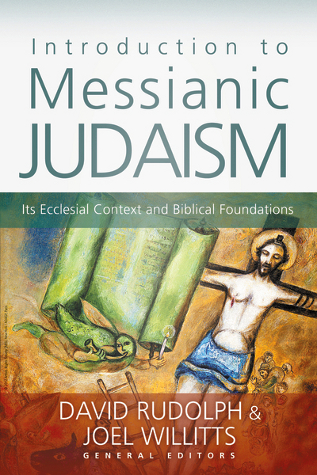
introduction to messianic judaismI’d love to send a copy of this book to every Christian Pastor, Preacher, Minister, and Priest in America but I suppose it would do no good. As the old saying goes, “you can lead a horse to water…” I tried that on a much smaller scale some time ago by purchasing a copy of Rudolph’s and Willitts’ volume Introduction to Messianic Judaism: Its Ecclesial Context and Biblical Foundations and giving it to the Head Pastor of the church I used to attend, in the (vain) hope that such an august collection of scholars writing on the merits of a Messianic Jewish perspective would at least get him to consider changing some of his views.

It didn’t work. He clung too tightly and too dearly to his Fundamentalist Christian “hashkafah,” as Boaz Michael puts it, and was unable to travel the distance necessary to view God, Messiah, and the Bible from a distinctly different, and in my opinion, a more Biblically sustainable, vantage point.

Nanos speaks to this:

If one might say that the latter oppose the New Perspective for being too new for their traditional theological positions to embrace, the contributors to this volume oppose it for being not new enough.

And…

…and the consistency of their answers with the fundamental views attributed to Paul in various traditional Christian theologies, not least the way that Jewish identity and Judaism are portrayed.

…some oppose the New Perspective because it undermines the traditional view that what Paul found wrong with Judaism was its works-righteousness and legalism.

This view of how Christianity sees Paul in relation to the “wrong” in Judaism is contrasted with:

Judaism was characterized by “covenantal nomism,” which recognizes the initial role of divine grace and of faith to initiate the relationship, but also perceives the consequent responsibility to behave according to the terms of the agreement into which participants have entered.

More simply put, the Jewish people entered into a relationship with God by grace and faith and from that, agreed to a set of covenant conditions requiring a specific set of responses, that is, observance and performance of the Torah mitzvot.

Unfortunately, “the ineluctable sin of arrogance at least since Augustine” has resulted in a radical distortion and refactoring of Paul, wholly removing him from his original context, and placing him in one that would have been completely foreign to a first century Jew, that is, Christianity.

And yet, the Church continues to insist that those of us who view Paul as a Jew within Judaism are guilty of:

…the supposed sin of ethnic particularism, variously described and named. On the premises of the New Perspective, this “wrong” is assumed to be the necessary sin involved in celebrating and guarding the boundaries of Jewish identity and behavior, as if claiming to be set apart for God was inherently arrogant, mistaken , and evidence of bigotry.

Not only does larger Christianity hold this viewpoint against those various streams of modern Messianic Judaism, but so does much of the Gentile Hebrew Roots movement. In Part 1 of a recent blog post, I quoted Carl Kinbar as stating he has hesitated to express such views of Jewish particularism for fear of inadvertently offending non-Jews in Messianic Judaism and the wider body of faith in Yeshua (Jesus).

Speaking to the presence of Jews and non-Jews in the ancient Ekklesia, Nanos writes:

This also means that the “assemblies” that he (Paul) founded, and to which he wrote the letters that still provide the major basis for this research…were also developing their (sub)culture based upon their convictions about the meaning of Jesus for non-Jews as well as for Jews within Judaism.

Magnus Zetterholm
Magnus Zetterholm

Of course, it needs to be understood that non-Jews finding the meaning of Messiah within a Judaism does not mean they become Jews nor does it mean, even remaining Gentiles, that they (or we) inherit the obligation of the Sinai covenant to observe the mitzvot.

…even though many if not most of those who were joining these subgroups were and remained non-Jews.

Nanos spent the remainder of the Introduction briefly describing each contributor to the volume and summarizing each of their articles. I won’t go into this portion of the Introduction except to draw something from what Nanos says of the first essay, written by Magnus Zetterholm, the co-editor of this work:

Moreover, if one postulates that Paul still observed Torah, as do Zetterholm and several contributors, then the idea that Paul dismissed it as obsolete or antithetical to the goals of Christ-following Jews is illogical. Zetterholm explains that Paul was not against Torah observance for Jews, including himself; rather, he was adamantly against the observance of Torah by non-Jews who became followers of Christ.

We’ll have to wait until I read and review Zetterholm’s essay to get the full details of his perspective, but this statement does address what I mentioned above about a central view in much of Messianic Judaism, that there remains a distinctiveness between Jew and non-Jew in the Ekklesia of Yeshua relative to the Torah mitzvot and our specific responsibilities to each other and to God.

This next part also needs to be expressed:

However, since this Jewish “faction” drew in many non-Jews, who would naturally be thereafter practicing the Jewish norms of communal life, even if not under Torah technically as non-Jews, this led to various conflicting views about the standing and behavior to be expected of these non-Jews from within the movement and from those outside of it, to which Paul’s letters attest.

And this is exactly what we find happening in Messianic Jewish communities today, particularly those containing a non-Jewish majority membership (which is the vast majority of Messianic Jewish synagogues in the United States today). This is another excellent reason to radically revise how we read Paul. If he knew the answer to the problems vexing non-Jewish participation in modern Messianic Judaism, we need to find out what they are.

Next time, I’ll begin my review of the first essay out of nine, written by Magnus Zetterholm called “Paul within Judaism: The State of the Questions.”