Tag Archives: Tent of David

Tent of David: Returning to Faith

TeshuvahFirst, the Christian church has forgotten that Jesus was and is a practicing Jew. Second, Christians have forgotten the centrality of Israel in God’s plan to redeem the world and her continued covenant status as God’s chosen people. Third, Christianity has an extremely low view of the Torah itself and the commandments God gave to the Jewish people. Fourth, the Christian gospel message, having replaced the broad and majestic vision of the kingdom of heaven with a knowledge-based individualistic salvation, has been emptied of its power.

-Boaz Michael
Chapter 2: The Church Needs to Change (pg 61)
Tent of David: Healing the Vision of the Messianic Gentile

If anything in the above-quoted paragraph shocked you as a Christian, then you probably need to get a copy of Boaz’s book and read it all the way through. However, I’m not writing this “meditation” today to shock you, but to remind you of something.

One of the objections I hear about “going to church” from believers who are not church-goers is that the church gives a whitewashed, “feel good” message, that doesn’t communicate the reality of the Bible, sin, and salvation. That may be true in other churches but it wasn’t in the one I attended last Sunday. It was anything but “whitewashed, feel-good.” The quote I opened this “meditation” with is part of that message. The message is that just because you believe, you may not have a terrifically realistic grip on the consequences of your belief. If you call yourself a Christian or a believer, but still can violate the Word of God with no feelings of guilt, anguish, or remorse, what you have may not even be what is called “faith.” Believing isn’t enough.

-from Day Zero

I mentioned in my last “church report” blog that Pastor Randy delivered anything but a “feel good” sermon about Christians and salvation. In fact, he was very pointed that “just believing” was not enough. We have to remember who Christ is and who we are in him and above all, why he had to die.

Interestingly enough, Boaz’s point about the Christian gospel message being emptied of its power seems to connect quite well to the Pastor’s sermon. Boaz continues.

Yeshua (Jesus) surely preached the gospel; his message – “Repent, for the kingdom of heaven is at hand” – is just as much “the gospel” today as it was two thousand years ago. When Peter adjured the crowds after the coming of the Spirit on Shavuoat in Acts 2:38-39, his message was not “believe in Jesus; go to heaven.” It was “Repent and be baptized every one of you in the name of Jesus Christ for the forgiveness of your sins, and you will receive the gift of the Holy Spirit. For the promise is for you and for your children and for all who are far off, everyone whom the Lord our God calls to himself.

-Michael, pg 87

Admittedly, Peter was delivering this message, the message of salvation, to a totally Jewish audience, and so there is no misunderstanding, let me verify that this message is for the “rest of us” who once were far off.

Therefore remember that at one time you Gentiles in the flesh, called “the uncircumcision” by what is called the circumcision, which is made in the flesh by hands—remember that you were at that time separated from Christ, alienated from the commonwealth of Israel and strangers to the covenants of promise, having no hope and without God in the world. But now in Christ Jesus you who once were far off have been brought near by the blood of Christ.

Ephesians 2:11-13 (ESV)

We non-Jews were also once “far off,” as Peter said, but now we too have been brought near thanks to the Messiah, the Christ.

But if Peter says “Repent, for the kingdom of heaven is at hand,” what does that mean? Does it mean what you think it means?

That is the gospel message. Repent – change the way you live and your life and begin to obey the commandments of God. For the kingdom of heaven is at hand – you can, in some way, bring God’s rule down to earth through your actions; it is possible to “live now for the realization of this Messianic Age” (quoting Levertoff, “Love and the Messianic Age” (Marshfield, Mo: Vine of David, 2009), 32).

-Michael, pg 89

That’s probably not quite what Pastor Randy was getting at in his sermon last Sunday. Pastor was talking about people who have made an intellectual assertion that Jesus is Lord without ever incorporating that knowledge into an actual, lived faith…without any realization that Jesus died for my sins and that I have a personal responsibility to repent and beg for forgiveness.

awareness-of-godThat’s not the wrong thing to do of course, but looking at what Boaz is writing, salvation means more than just the saving of individual upon individual by giving out “go to heaven free” cards. The kingdom of heaven isn’t heaven, according to Boaz, and it has little to do with personal salvation as such, at least not as much as most of us were led to believe. Making a commitment of faith to God through Christ is an entire change of lifestyle in the here and now that has the power to change everything in the here and now. Salvation isn’t just the promise that we’ll go to heaven, it’s the promise that we’ll receive the power to, in some sense, bring heaven to earth.

As Boaz says, Yeshua didn’t simply teach “believe in me and go to heaven when you die.” If you read the Gospels carefully, you’ll see that he doesn’t really mention anything about what happens to you when you die. He mentions what happens to you when you live, if you repent and come to a true and saving faith.

The church needs to change, but not because the church is bad or that Christians are bad. The church needs to change because much of Christianity has taken the message of the Gospel and reduced it down to a simple “get saved” footnote and missed the larger point of what happens while we’re alive. No, it’s not a “works-based” salvation, but one of Pastor Randy’s scripture examples in last Sunday’s sermon was from James.

What good is it, my brothers, if someone says he has faith but does not have works? Can that faith save him? If a brother or sister is poorly clothed and lacking in daily food, and one of you says to them, “Go in peace, be warmed and filled,” without giving them the things needed for the body, what good is that? So also faith by itself, if it does not have works, is dead.

But someone will say, “You have faith and I have works.” Show me your faith apart from your works, and I will show you my faith by my works. You believe that God is one; you do well. Even the demons believe—and shudder! Do you want to be shown, you foolish person, that faith apart from works is useless? Was not Abraham our father justified by works when he offered up his son Isaac on the altar? You see that faith was active along with his works, and faith was completed by his works; and the Scripture was fulfilled that says, “Abraham believed God, and it was counted to him as righteousness”—and he was called a friend of God. You see that a person is justified by works and not by faith alone. And in the same way was not also Rahab the prostitute justified by works when she received the messengers and sent them out by another way? For as the body apart from the spirit is dead, so also faith apart from works is dead.

James 2:14-26 (ESV)

You cannot have a true and saving faith unless it has changed your life. If your every action does not conform to the message of James and you are not behaving in a manner that reflects faith, then you probably should ask yourself if you ever repented at all when you “confessed Christ.” And beyond the “generic” helping to repair the world, as I learned recently (and this is also echoed in Boaz’s book), when we are adjured to help the needy, we in the church have a special duty to assist the poor, the sick, and the needy of Israel as it is said:

Then the King will say to those on his right, ‘Come, you who are blessed by my Father, inherit the kingdom prepared for you from the foundation of the world. For I was hungry and you gave me food, I was thirsty and you gave me drink, I was a stranger and you welcomed me, I was naked and you clothed me, I was sick and you visited me, I was in prison and you came to me.’ Then the righteous will answer him, saying, ‘Lord, when did we see you hungry and feed you, or thirsty and give you drink? And when did we see you a stranger and welcome you, or naked and clothe you? And when did we see you sick or in prison and visit you?’ And the King will answer them, ‘Truly, I say to you, as you did it to one of the least of these my brothers, you did it to me.’

“Then he will say to those on his left, ‘Depart from me, you cursed, into the eternal fire prepared for the devil and his angels. For I was hungry and you gave me no food, I was thirsty and you gave me no drink, I was a stranger and you did not welcome me, naked and you did not clothe me, sick and in prison and you did not visit me.’ Then they also will answer, saying, ‘Lord, when did we see you hungry or thirsty or a stranger or naked or sick or in prison, and did not minister to you?’ Then he will answer them, saying, ‘Truly, I say to you, as you did not do it to one of the least of these, you did not do it to me.’ And these will go away into eternal punishment, but the righteous into eternal life.”

Matthew 25:34-46 (ESV)

sukkoth-feastI know I’ve said a lot of this before, but I want to illustrate that Boaz Michael’s book has a much broader scope than you may have gathered from my previous review. It’s not just directed at those non-Jewish “Messianic” believers who are in the church or who are contemplating returning to church…it’s a message for all believers everywhere who may not have a complete understanding of what the Gospel is trying to tell us.

This is a message about who we are, who we are in Christ, and most importantly, what to do with the rest of our lives. It’s not a message about packing our bags and getting ready for the trip to heaven, it’s about what we do as disciples of the Master and sons and daughters of the living God. Where do we find God? Why are we needed by other people? How do we inspire hope in the world around us and be a light in the darkness?

This is the kingdom of heaven being drawn near to us and to the people around us…by who we are in our faith.

Tent of David: Return of the Christian

restoring-davids-fallen-tentYet even before delving into an appraisal of the institutional church, it is important to recognize the common ground on which we stand. By any biblical definition, all believers in Yeshua the Messiah (Jesus Christ) are part of one body, the ecclesia of God. All who have made Yeshua their master are subjects of one kingdom, the kingdom of heaven.

I believe the term “Messianic” is an easy-to-understand descriptor that helps Christians who understand their Jewish roots to find a concrete identity and definition. Yet to be a “Messianic Gentile” does not make one something other than “Christian.”

-Boaz Michael
“Chapter One: The Church is Good,” pg 36
Tent of David: Healing the Vision of the Messianic Gentile

I started my somewhat unique review of Boaz’s book in yesterday’s extra meditation so you may want to go back and read it before continuing here. I’m only “sort of” reviewing the book, as I’m not presenting my assessment in a single chunk, nor am I trying to look at it with an objective eye. The book is primarily intended to impact the Christian already in the church who has become somewhat “Judaically-aware.” That doesn’t describe me, since I left the church for many years and have only recently returned, and I am writing my response to Tent of David from the viewpoint of my personal experience as a church “returnee.”

Boaz continues to talk about the definition of a Christian in relation to being a “Messianic Gentile,” which he began in the Introduction of his book. I think identity is very important because so many people have left behind the church and the identity of “Christian” out of a sense of disillusionment, seeking something more authentic in other realms, particularly that venue we tend to call Messianic Judaism.

I’ve received quite a bit of encouragement to return to the church recently, both from a friend and from my Mom (hi, Mom). I’ve concluded that God must want me in the church, regardless how I may feel about it and that there is some intended good in my returning there, and perhaps even in the particular church I currently attend. Of course it’s important, as Boaz points out in the first chapter of his book, to remember that there is much good in the Christian church, even if you’ve been told otherwise.

The first good mentioned is community, but the nature and scope of that community may not be what you expect. In the quote above, Boaz mentioned that everyone who is a believer in Jesus Christ is a member of the ecclesia of God. But just who is that exactly?

As a Messianic Jew, I am a Jewish follower of the Jewish Messiah; Gentile believers have also attached themselves to the same Messiah. So we are all Christians according to the word’s original, lexical meaning – Christ-followers. God forbid, that the term “Messianic” should foster an “us vs. them” mentality toward Christians who do not accept the Messianic viewpoint; this attitude is counterproductive, unbiblical, and unnecessary.

-Michael, pg 37

Boaz means to communicate that those Christians who consider themselves (ourselves) “Messianic” should not allow their (our) identity to separate them (us) from Christians who do not necessarily see themselves in the same light, relative to the Torah, the mitzvot, and Jewish practice. However he uses himself as a Messianic Jew in the example and that might not fit the metaphor, at least not according to Rabbi Dr. Michael Schiffman in his blog post Messianic Judaism and Christianity: Two Religions With The Same Messiah.

Messianic Judaism affirms that the Jewish people, believing in Yeshua or not, have been, are, and will always be the chosen people of God. The only nation God ever linked His name to in Scripture is Israel, calling Himself, the God of Israel. Scripture tells us His promises to Israel are eternal, and extend to the sons of Jacob, the House of Israel, known today as the Jewish People. Those leaders of the church did not affirm this. To them, 2000 years of post-Yeshua Jewish history, a history of spirituality and suffering for being Jewish, was worthless. In their view, 2000 years of Jewish unbelief in Yeshua means Twenty centuries of Jews went to hell. I have to confess that the concept doesn’t sit well with me. For Yeshua to be the Messiah of Israel, he would have to be good for the Jews. If his coming resulted in twenty centuries of Jewish people going to hell, the bottom line is, he wasn’t very good for the Jews. Either he wasn’t the Messiah, or the doctrinal understanding is wrong. I believe the latter. Yeshua brings salvation, but is that the only reason to believe in Him; for something we get? I think we should believe in Him because he is the Messiah, and being in relationship to Him brings us closer to God, and increases our kavvanah, or spiritual connection with God.

What they don’t grasp, is the idea put forth by R. Kendall Soulen in his book, The God Of Israel In Christian Theology, that after the first century, the Jewish Yeshua was virtually unrecognizable as a Jew, and therefore, as the Messiah. Jewish rejection of Yeshua was not an act of infidelity towards Yeshua, as much as it was an act of fidelity towards His Father.

infinite_pathsWhile Rabbi Dr. Schiffman has assured me that his writings were not intended to be anti-Gentile, they do draw a sharp distinction between what Jews do and who Jews are within a Messianic Jewish context, and what Gentile Christians do and who we are (Messianic Gentiles or otherwise) within a church or other primarily Gentile believing context. One God, One Messiah, two religions.

If I were to return to Boaz’s definition, then I’d have to believe that at some “meta-religious” level, both the Jewish and Gentile believers of the Jewish Messiah King must belong to the “Kingdom of God,” however you want to define it (In a recent conversation with Boaz, he talked about devoting a great deal of First Fruits of Zion’s (FFOZ’s) resources to address the nature of the Kingdom of God in the coming year. You can get a preview of what he’s talking about at tv.ffoz.org).

But now in Christ Jesus you who once were far off have been brought near by the blood of Christ. For he himself is our peace, who has made us both one and has broken down in his flesh the dividing wall of hostility by abolishing the law of commandments expressed in ordinances, that he might create in himself one new man in place of the two, so making peace, and might reconcile us both to God in one body through the cross, thereby killing the hostility. And he came and preached peace to you who were far off and peace to those who were near. For through him we both have access in one Spirit to the Father. So then you are no longer strangers and aliens, but you are fellow citizens with the saints and members of the household of God, built on the foundation of the apostles and prophets, Christ Jesus himself being the cornerstone, in whom the whole structure, being joined together, grows into a holy temple in the Lord. In him you also are being built together into a dwelling place for God by the Spirit.

Ephesians 2:13-22 (ESV)

Is this where Paul tries to describe that “meta-level” where both the Jewish and Gentile disciples of the Master exist in some sort of common framework? If so, then I have to conclude, going back to Rabbi Dr. Schiffman, that said-framework is virtual, spiritual, supernatural, or even mystical, since a united platform of Jews and Gentiles as believers cannot exist and yet maintain two separate and distinct religious identities.

In any event, that meta-level can’t really help me right now if I must adopt a specific Christian persona within a traditional church context. And yet the concept of identity gets complicated even if we just stick to Christians.

It is not anyone’s place to pass judgment on those who are infants in their faith, who have not taken on this or that mitzvah. James wrote in his epistle (4:11-12), “Do not speak evil against one another, brothers. The one who speaks against a brother or judges his brother, speaks evil against the law and judges the law. But if you judge the law, you are not a doer of the law but a judge. There is only one lawgiver and judge, he who is able to save and to destroy. But who are you to judge your neighbor?”

In essence, this passage communicates to us that the pace of someone else’s spiritual development is God’s concern alone…God has not appointed us to judge someone else based on his or her level of observance; to do so is tantamount to judging the law itself. James even goes so far as to say that one who judges another’s level of observance has ceased to observe the Torah himself.

-Michael, pg 38

I know Boaz intended to address the “Messianic Gentile” in the church or returning to the church, but that person isn’t me. In the past several weeks, Christians have shown me where I am immature in my faith. I have no judgment to offer anyone in the church, who have been performing the “weightier matters of the law” for much longer than I’ve even been considering them. Heck, on Christmas, I found out that one of the local Boise restaurants volunteered free meals to the hundreds and even thousands of homeless. My wife told me someone she works with volunteers for this project every year. Imagine that. I didn’t even know about it. Organizations such as the Boise Rescue Mission, Lighthouse Rescue Mission, City Light Home for Women and Children and Interfaith Sanctuary Housing Service, the CraftWorks Foundation, and others in the local Boise community regularly perform these “mitzvot,” so I along with many others, should be careful who we judge. I certainly have no room to say that who I am and what I do is better than any of these people and agencies.

That’s a rather humbling realization (I’ve been having a lot of them lately) when facing the daunting task of returning to God’s ecclesia and trying to find a place among them.

divergence0-3-negative_pointsBut “levels of spiritual development” aren’t always a simple set of stairs. For me, the different spiritual paths of the people around me and my own path look like a set of divergent vectors, different not only in level, but in character, trajectory, and “texture.”

In his book, Boaz says that some people who become “Judaically-aware” modify their trajectory to adapt their new experiences within the church context, but others allow it to drive their entire course, altering it so drastically, that it carries them completely out of the church and out of Christian fellowship. Of the former group, Boaz has this to say.

I know a number of Christian pastors who have seen the merit in Messianic theology and practice, and have embraced the feasts and even the dietary law on some level, but have no desire to leave their denominations, or their particular theological and cultural distinctiveness, behind. One, an Independent Fundamental Baptist, restricts himself to clean meat and attends Erev Shabbat dinners, yet still puts on his suit and tie for church every Sunday morning and evening, and goes door-to-door every Saturday. Another, a Methodist, erected a sukkah in his backyard last year, yet proudly supports his denomination at the state and national level.

-Michael pp 46-7

These people are the opposite of me. Instead of being in the church as my “home” and extending myself outward toward some modest Judaic awareness, I’m trying to reinsert my Judaically-aware self back into the church and discovering, much to my shock, that I’ve been terribly wrong about a good many things. It isn’t the church that has been resisting me, but rather me resisting the church, and from what I’ve been able to tell so far, they know a great deal more about the “weightier matters of Torah” than I do.

The Christians who, throughout the ages, have propagated this message and tried to soothe the hurting, feed the hungry, and speak to social injustice have been keeping the weightier matters of the Torah. Both Yeshua (Mark 12:31) and the Sages (Rabbi Hillel in b.Shabbat 31a and Rabbi Akiva in Sifra, Kedoshim 4:12) taught that love of neighbor is the essence of Torah. These are non-trivial accomplishments which speak to the robust, biblical ethical system which many devout Christians have embraced.

-Michael, pg 49

The one thing Boaz doesn’t do, and this is where I will have to watch my balance, is he doesn’t “chase the Gentiles back into church” with no inherit connection to the origins of our faith as it was born in ancient Judaism.

One thing Messianic Gentiles must learn is that they do not have a direct, unmediated relationship with God. Jews have many covenants with God by virtue of their very existence as descendants of the Patriarchs. In contrast, Ephesians 2:12-13 describes the state of Gentiles as “separated from Christ, alienated from the commonwealth of Israel and strangers to the covenants of promise, having no hope with out God in the world. But now in Christ Jesus you who once were far off have been brough near by the blood of Christ.”

-Michael, pg 50

I know I quoted from Ephesians 2 earlier but Boaz uses it in a different manner. He’s talking about what links the Gentile to Messiah and God and that link only exists through the covenants God established with Israel and the Jewish people. Without them, we Gentiles would have no connection to Jesus and to God. I’ve tried to explore this in my own covenants series, but it’s a very complex and elusive topic of investigation. Even trying to isolate and examine Ephesians 2 led to a divisive “discussion.”

Nevertheless, Boaz tells us that going back to the basis of our faith, the Jewish Messiah King, and his Jewish apostles, we see that we owe a debt of gratitude to them and their inheritors.

Pirkei Avot 6:3 contains a profound teaching that is particularly relevant here:

One who learns from his fellow a single chapter, or a single law, or a single verse, or a single word, or even a single letter, he must treat him with respect. For so we find with David, king of Israel, who did not learn anything from Achitofel except for two things alone, yet he called him his “master,” his “guide” and his “intimate,” as is stated, “And you are a man of my worth, my guide and intimate friend.” [Psalm 55:13] Surely we can infer a fortiori: if David, king of Israel, who learned nothing from Achitofel except for two things alone, nevertheless referred to him as his master, guide and intimate, it certainly goes without saying that one who learns from his fellow a single chapter, a law, a verse, a saying, or even a single letter, is obligated to revere him. And there is no reverence but Torah, as is stated “The sages shall inherit honor” [Proverbs 3:35] “and the integral shall inherit good” [Proverbs 28:10]; and there is no good but Torah, as is stated, “I have given you a good purchase; My Torah, do not forsake it.” [Proverbs 4:2]

Messianic Gentiles would do well to heed the teaching of this mishnah. Showing reverence towards one’s teacher, even if what they learned was small – a single letter or verse – is showing reverence toward God and the Torah. Conversely, dishonoring one’s teacher is in fact dishonoring God’s work in one’s life.

Michael, pp 51-2

Out of the darknessFor me, the door swings both ways. Not only must I maintain a sense of honoring my ancient and modern Jewish teachers (since I often quote from modern Jewish teachers and scholars), but I must also sustain my respect and honor for the Pastors and Bible teachers at the church I’m attending. That can extend to Christian friends with whom I meet and from whom I learn a great deal.

I suppose in addition to this being a commentary on one of the chapters in the Tent of David book, it could also be part of my “Days” series (though I haven’t titled it as such), but it’s pretty much a foregone conclusion at this point that I’ll be going back to church next Sunday and continuing to go in coming year. But while Tent of David may be a guide for Pastors who build a sukkah or who have decided to eat kosher meat, I don’t know if is particularly aimed at me. Boaz told me that between the preliminary drafts, which I previously reviewed, and the current, final publication, the intended audience shifted from people like me who left and are now returning (or considering returning) to church, to those Christians who are currently in the church and part of its culture, and who have also recently become aware of the Jewish origins of Christianity and the significance of Torah as the foundation of Christian faith.

It’s not like I’m without a guide and in fact, I may even have found a mentor of sorts, but I am unlikely to be able to use Boaz’s book as a direct mapping to my own, personal experience. As I continue to read what he’s written, attend services at church, and record my experiences a chapter at a time, I will share that with you and we will see together how accurate my prediction is…and where I go from here.

12 Days: Staring at the Clouds

staring-at-the-clouds“On the twelfth day of Christmas, my true love gave to me…”

OK, stop right there. It’s twelve days until the end of the year and less than a week until Christmas. There are only twelve days left in my arbitrary “countdown to oblivion” (yeah, I think it’s overly dramatic, too) or at least my countdown to “church or not church.”

I still haven’t made up my mind.

I didn’t go to church last Sunday. I suppose I could have gone, but every Sunday morning, I have to get up at around 4 a.m. so I can drive my daughter to work (she has to be there by 5 a.m.). Afterwards, I get to go back to sleep and last Sunday, sleep I did. I very deliberately didn’t set my alarm so I could get up in time to make it to church. I did periodically wake up, peek at the clock, briefly have an internal dialogue about whether to get up or not, and then I went back to sleep.

And I kept doing that until I determined that it was too late to make it to church on time.

Oh sure, I could have gotten there late. It’s not like anything depends on me being at church on time. But I decided that once it was too late to make it to church before services began, it was just plain too late.

And sleeping in was glorious. I enjoyed it tremendously.

My wife didn’t realize that I wasn’t going to church at first. At about 10 a.m. she mentioned it and I said I decided not to go that morning. That was the end of the conversation.

But I’ve been feeling guilty. I’m not exactly sure why, since my connection to anyone and anything at church is so tenuous. Of course, I already found out that if I miss a Sunday at church people notice. On the other hand, I also discovered that my primary (current) motivation for going to church is a sense of obligation. It’s sort of like the obligation I feel to go to the dentist for regular teeth cleaning. In fact, I’d prefer to go to the dentist to have my teeth cleaned than go to church because I only have to go to the dentist every so many months, and I at least have a long-standing relationship with my dentist and his staff, so we are very familiar with each other.

It’s only a community if you belong and as I also said recently, I don’t have that sense of belonging at church. If predictions are correct, any sense of belonging at all will take about a year.

365 days and counting?

Twelve days left. That’s two more Sundays, one right before Christmas and one right afterward.

I know I should go, I know I should go, I know I should go.

But I don’t want to.

There’s just nothing for me to do there. There’s no one to talk to, at least beyond a friendly, casual, and superficial conversation. The one sort of transaction that would engage me is exactly what I must avoid if I am to have any hope of establishing relationships at all.

More’s the pity, because without the ability to converse and interact, going to church is a really boring way to kill three hours or so.

I’m sure there are Christians out there who are shocked and appalled to read those words.

I started this series at 78 days, made the final determination to return to church at 62 days, and had a private meeting with Pastor Randy at the church I now attend at 57 days (you can see what a cautious fellow I am, slowly sneaking up on an objective).

And it was at 57 days that I went back to church…45 days ago.

Now I only have twelve days left, unless I choose to reset the clock once I reach zero days. I was hoping that I could have a chance to review Boaz Michael’s book Tent of David within the context of a church experience, but I don’t know now. Maybe this effort represents a failure on my part or maybe getting “cold feet” is part of the developmental process of returning to church.

I don’t know.

As I see it, I have two basic choices. One: I can let the twelve days elapse, with or without returning to church for one or both of the Sundays left. Then that is that. Church is no longer an option for fellowship and community. Endgame. Two: I can let the twelve days elapse, with or without returning to church for one or both of the Sundays left, then reset the clock to 365 days. That would mean letting 2013 be “the year of church.” I’d give myself a full calendar year to explore “the church experience.”

Option one seems like a relief and option two seems like a long haul to face, particularly alone. But if I haven’t been giving church a fair chance, then option two is the only one that lets me be fair.

When I look back boy I must have been green
Bopping in the country, fishing in a stream
Looking for an answer trying to find a sign
Until I saw your city lights honey I was blind

You better get back honky cat
Living in the city ain’t where it’s at
It’s like trying to find gold in a silver mine
It’s like trying to drink whisky from a bottle of wine

from “Honky Cat” (1972)
music by Elton John
lyrics by Bernie Taupin

I’ve got a scant twelve days to make up my mind. Until then, I’m staring up at the clouds looking for an answer.

Returning the Torah

“I didn’t know what to say, but I certainly appreciated his incredible gift. I realized that this was a Torah that had been basically homeless for the past 50 years. There was no one to read it, hold it or keep it properly, and now God gave the Torah a home, and would hopefully bring this lonely Jew back in the near future as well.

“Now, what about an ark? That’s a story of its own. I found an online ad for an old Jewish artifact, a Jewish chest. The sellers weren’t Jewish, but they had bought it from a priest who told them it was of Jewish origin.

“When I opened the online pictures of the chest, I saw before me what seemed to be a beautifully crafted ark. It was small, so it wouldn’t be able to hold a regular sized Torah, but would be perfect for the Torah we had. But when I viewed a picture of the top of the ark, I almost fainted. There was a large cross attached to it. All of a sudden, I was not at all sure that this was an item of Jewish origin.

Suddenly I noticed a small plaque at the bottom of it. I asked the sellers to send me a photo of the plaque which appeared to have Hebrew writing on it. They sent me a picture where there was a clear inscription in Hebrew that said “Behold, the guardian of Israel neither sleeps nor slumbers Psalms 121), which proved that the item must be Jewish.

-Rabbi Binyomin Pruzansky
“The Lost Torah Scroll”
Commentary on Shmini Atzeret and Simchat Torah
Aish.com

Rabbi Pruzansky tells a story about regularly hosting 30 or 40 young Jews in his home for Shabbos meals. These are young people who are Jewish but who have never experienced a Shabbat in their own homes. They would be uncomfortable in a traditional synagogue setting, but feel comfortable as guests of Rabbi Pruzansky. So he set out on a quest to acquire a Torah scroll and ark for his home to give these young Jews an opportunity to make aliyah in a Jewish environment where they could feel more at ease.

While the scroll he eventually acquired was purchased from a Jew, although one who had fallen away from practicing Judaism for many years, the ark was another story.

The cross upon closer examination, they said, was a separate piece that had been attached. I realized that the priest who bought this ark must have made that addition. I was deeply moved, and was certain that the hand of God was clearly guiding me.

“I bought the ark and had it delivered to my home. The cross was removed and I marveled at the verse that was inscribed. I have never seen this particular verse inscribed on an ark before. And I realized that there was a message here. It was as if God were saying that although this ark was lost for many years, He would never forget about it. He didn’t rest until it finally was brought home to Jewish hands.

“My dear friends, look at what we have here. A Torah that was neglected for so many years was finally given a home in an ark that had been used by a priest. Yet the message was clear that God would never give up on them. He had not forgotten about this lost ark and Torah scroll, and finally the two of them were brought together and can now be used to bring young men and woman back to their Father in Heaven as well.

In reading Rabbi Pruznasky’s “adventure,” I couldn’t help but be reminded of another tale of the struggle to return Torah scrolls to Jewish hands:

Another thing happened as a result of Saddam’s demise. Iraqi mobs looted his crown jewel of culture, the national museum. The majestic Iraq Museum is still on Nasir Street but it’s under new management – the elected Iraqi government. A museum director, Dr. Donny George, was appointed to restore the museum in 2005.

Soon after, Canon White was invited for a private tour.

Dr. George and Canon White strolled through the grand halls. Eventually the priest was led down to the basement level. Dr. George opened the heavy doors of a vault.

Canon White couldn’t believe what he was looking it – rows and rows of Torah scrolls.

“There are 365 of them,” declared Dr. George.

Canon White’s surprise turned into horror. “The Torah scrolls were all at risk. Rats were eating some of the parchment. They were not properly preserved or displayed, just stacked up on the dirty floors,” he says.

Canon White wanted to rescue them, but he decided to try to obtain just one. He had a destination in mind.

-by Ari Werth
“Struggle for the Scrolls”
Aish.com

As I wrote in my blog post Hope and Love, “Andrew White is an Anglican priest risking his life helping Christians in Iraq. Even more dangerous, however, is what he volunteers to do – protecting the last few Iraqi Jews.”

He is also a Christian who is dedicated not just to protecting the Jews and Christians in Iraq, but to returning to the Jews that which rightfully belongs to them: the Torah scrolls held in Iraqi possession.

But there’s another way of looking at this. Although supersessionism is slowly declining in the Christian world, there is a very small subset of Christianity where a rather odd form of replacement theology is apparently on the rise. A group of non-Jewish believers holds to the theory that all of the contents and conditions of all of the covenants God made with the Children of Israel also belong to them. That means, except for a small strand of Jewish DNA, these Christians believe they are just as “Jewish” as Jewish people.

That’s an oversimplification of their beliefs, generally referred to as “One Law,” but I’m rather struck by the odd parallel (or “anti-parallel”) between their stance and the stories of Rabbi Pruzansky and Canon White. Both of these men, within their differing contexts, have worked very hard to return to the Jews something of the Torah, whether it’s hundreds of scrolls in danger of being destroyed in a sub-basement of a museum in Baghdad, or a Torah ark that had once belonged to a priest.

Traditional Christian supersessionism effectively recast the Jewish Torah into a dying or dead Law that had been replaced with Christ’s grace and “nailed to the cross”. Subsequent generations of Christians have been guilty of incinerating Torah scrolls, siddurim (Jewish prayer books), volumes of Talmud, and actual synagogue buildings.

While thankfully, the church has abandoned such heinous acts against God’s covenant people, a very tiny group of them (us) have taken on a different tactic. The tactic is subtle and for the vast majority of “One Law believers,” it is completely unconscious and innocent, as their leaders insist to them that God wants and even requires that they possess the full yoke of the Torah mitzvot as their very own. It’s not a matter of stealing it from the Jews and saying that the Torah is now “Christian.” Rather, it’s a matter of saying (in effect) that Judaism and everything that is distinctly Jewish is completely irrelevant, because Jesus made us all exactly the same. It’s the ultimate expression of equality and political correctness as applied to this minority Christian viewpoint.

(At this point, I want to say that for many years, I was a One Law believer and in my heart of hearts, I honestly believed I was doing God’s will by (poorly, in my case) imitating Jewish religious and identity practices. I still have many “One Law” friends, both locally and on the web, and they are doing what they believe they must in obedience to God. I pray that God will show them one day that while their desire to obey God is very sincere, a course correction is required. For some One Law Christians though, in spite of being presented with evidence and arguments to the contrary, they insist, as a matter of pride, that the Torah belongs to them. More’s the pity.)

In my blog posts Redeeming the Heart of Israel, Part 1 and Part 2, I tried to describe that a large part of our duty as Christians to the Jewish people is to help them return to the Torah. To bend that last sentence to fit the theme of this “meditation,” we Christians should be returning the Torah to the Jews, not claiming it for our own.

If Jesus had intended to include the rest of the world in covenant relationship with God using all of the conditions of all of the covenants God had made with Israel, in Matthew 28:18-20, he would have just commanded his Jewish disciples to make converts of the nations, not disciples. While one possible interpretation of this command would be for the non-Jewish disciples to directly imitate their Jewish mentors in all of their behaviors, including those that uniquely identify Jewish people as Jews, we don’t actually ever see that happening.

We do see, as in the example of Cornelius in Acts 10, how we non-Jews receive the Spirit the same as the Jews, and we’re baptized in water, the same as the Jews, but while many of the “God-fearers” of Peter’s and Paul’s day did pray three times daily, keep some or all of the dietary laws, and perhaps even keep a weekly Shabbos, they likely did not see becoming carbon copies of their Jewish teachers or (at that point in history) view becoming greater than the Jewish inheritors of Sinai as the desired result of their reconciliation to God.

Jesus and his Jewish Apostles lead and the Gentile disciples followed.

Now, we have a greater purpose. Rabbi Pruzansky’s story is just one small example of how modernity, moral relativism, intermarriage (and I say that as an intermarried Christian husband), and assimilation have grievously depleted the ranks of Jews who are culturally and religiously Jewish. There are so many people (my wife was once one of them), who are halachically Jewish but estranged from the synagogue, the siddur, and the Torah. We Christians who find ourselves drawn, often inexplicably, to Judaism have a great opportunity to, after our own fashion, do what Rabbi Pruzansky and Canon White are doing. We can return the Torah to the Jews or more accurately, we can encourage Jews to return to the Torah.

There is an idea in some corners of Judaism that says the Messiah will only come (or from a Christian point of view, “return”) when all Jews everywhere observe a single Shabbat. I don’t know if that’s true or not, but I believe that God will find favor in His Jewish people, as increasing numbers of them return to Him in obedience to the mitzvot. For a Jew, this means returning to the Torah. For a Jew, it means the Torah is returned to him. It does not mean, “the Torah is now for we Christians but we’re willing to share it with the Jew.” It does not mean, “the Torah is now for everyone and, strictly speaking, it isn’t Jewish anymore.”

Speaking to my Christian brothers and sisters who are not Jewish, whether you or I observe the Torah commandments that specifically identify Jewish people as Jews won’t make much of a difference to God, in my opinion. After all, the vast majority of the Torah speaks of those things that we Christians already do, such as feeding the hungry, visiting the sick, and comforting the grieving. We already do everything that our Master and Savior Jesus commanded his disciples to do.

But in a world that has always been opposed to the Jewish people, we can do something for them and for God. We can give them back what we have taken from them. We can allow them, without resisting any further, to be Jewish and to do Jewish. At Sinai, God created a unique and treasured nation that was never intended to be “xeroxed,” diluted, or deleted.  But through repeated acts of disobedience by the Israelites, God (temporarily) dispersed that nation to the four corners of the earth.

Rolling the Torah ScrollNow He is bringing them back to their peoplehood, to their Land, and God is bringing the Jewish people back to Himself. The mission of the Christian church is to serve God and to obey our Lord, and part of that service is to return the Torah to the Jews and to recognize that Israel will one day (I pray soon) be restored as the head of all nations.

Boaz Michael, the President and Founder of the educational ministry First Fruits of Zion (FFOZ) has written a soon-to-be published book called Tent of David (available January 2013) which outlines this mission for us from a Messianic Jewish perspective. These are exciting times for the church and we all have vital roles to play in the plan of God.

We just need to remember our roles. We just need to remember that our job is not to take, but to restore.

May the Messiah come soon and in our day.

Amen.

God is in Jerusalem

It shall be on that day that God comes against the soil of Israel – the word of the Lord Hashem/Elohim – My raging anger will flare up; for in My vengefulness, in the fire of My fury, I have spoken: [I swear] that on that day a great earthquake will take place upon the soil of Israel. They will quake before Me – the fish of the sea, the bird of the heavens, the beast of the field, every creeping thing that creeps on the ground and every human being that is on the face of the earth; the mountains will be broken apart and the cliffs will topple, and every wall will topple to the ground. I will summon the sword against him to all My mountains – the Word of Lord Hashem/Elohim – each man’s sword will be against his brother. I will punish him with pestilence and with blood; torrential rain and hailstones, fire and sulfur will I rain down upon him and upon his cohorts and upon the many peoples who are with him. I will be exalted and I will be sanctified, and I will make Myself known before the eyes of many nations; then they will know that I am Hashem.

I will make My holy Name known among My people Israel, and I will not desecrate My holy Name any longer; then the nations will know that I am Hashem, the Holy One in Israel.

Ezekiel 38:18-23, 39:7 (The Kestenbaun Edition Tikkun)

This is part of the Haftarah reading for Sukkot Shabbat Chol Hamoed which was read yesterday in synagogues all over the world. Although I attend no synagogue or other congregation where the Torah is read on Shabbat, I privately read and study each week’s Torah portion, including the Prophets, Psalms, and if applicable, the writings of the Apostles.

Although I rarely (if ever) write or teach from the Haftarah portion, I was rather struck by the words of the prophet Ezekiel and by the choice of this passage for the Shabbat that occurs during Sukkot. The words of the prophet seem rather harsh for this season of joy, relating the events of the war of Gog and Magog at the end of time, according to the commentary I found in the Tikkun. And yet there is an important reminder to attend to in this lesson.

God speaks of making His holy Name known, both among the nations and in Israel, and that His holy Name will not be desecrated any longer. In fact, He says, through the prophet, two rather interesting things:

I will not desecrate My holy Name any longer.

Then the nations will know that I am Hashem, the Holy One in Israel.

I quoted from the passage above generally to illustrate that both in most of modern Israel and in most of the rest of the world, the holy Name of God is not recognized, acknowledged, esteemed, or given any honor at all. Most of humanity does not know that “God is Hashem” (Heb. literally, “the Name”). I even mentioned recently that among many religious people, the Name of God is desecrated and not sanctified due to their (our) rude and hostile attitudes when we’re communicating with each other online. Relative to the population of our planet, only a tiny fraction of humanity currently cares about God and His Name at all.

But what peculiar things did God say in the passage from Ezekiel? He said that He will no longer desecrate His own Name. Really? I thought that we human beings were doing the desecrating, not God. The commentary for Ezekiel 39:7 in the Stone Edition Tanakh says that God will no longer desecrate His own Name by “allowing” His “people to be subjugated and humiliated.” That is very interesting because it points to the thought that by subjugating and humiliating the Jewish people (and within the context of this verse, there can be no other people group being addressed), we among the nations (including Christians) are desecrating the holy Name of God.

That’s a rather interesting thought. It goes along with this:

I will bless those who bless you, and him who curses you I will curse; and all the families of the earth shall bless themselves by you.

Genesis 12:3 (Stone Edition Chumash)

To bless Israel is to be blessed and to curse Israel is to be cursed. Furthermore, all of the families, the nations of the earth will bless themselves by you, by Israel.

This tells us something I’ve said on numerous occasions in other blog posts, that we Christians are only connected to God and we only receive the blessings of God through Israel, and specifically through Israel’s “firstborn son,” the Messiah, the King, Jesus Christ.

Every time we throw a Jew under a bus, so to speak, or insult, denigrate, or attack Israel in any way, we are causing God to curse us and canceling our ability to bless ourselves by Israel.

How could we be so blind?

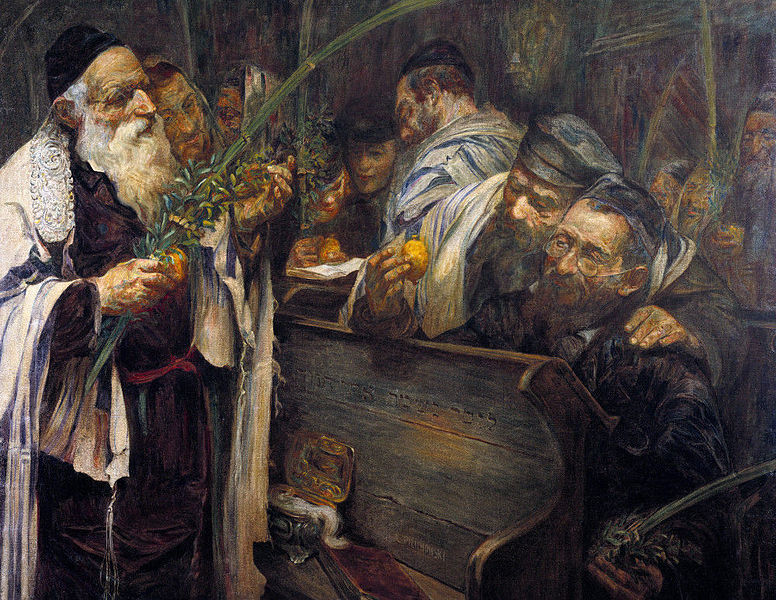
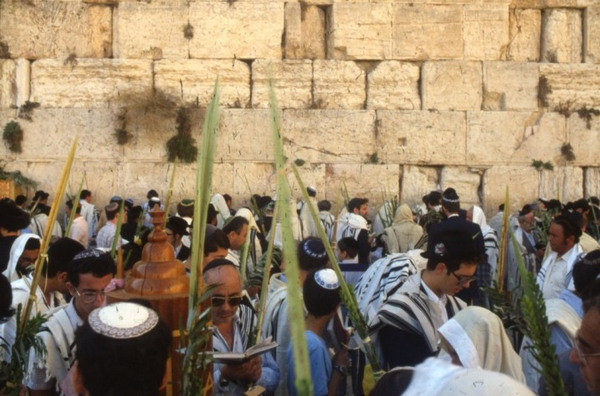
It has been said that during the festival of Sukkot, during the days of the Holy Temple in Jerusalem, that the priests would sacrifice seventy bulls, representing the nations of the earth, in order to atone for our sins. It is also said that if the Romans, representing the nations of the earth, had realized the importance of the Temple in atoning for them, for us, they (we) would never have leveled the Temple (which to this day, has not been rebuilt) and sent the vast majority of the Jews out from their land for nearly 2,000 years.

That leads us to the second rather compelling thing God said through Ezekiel: “Then the nations will know that I am Hashem, the Holy One in Israel.”

Read that last part again. “…the Holy One in Israel,” not the Holy One of Israel. This paints a picture not of possession but of belonging and of unity. God is not just the God of the Jewish people, but He resides in Israel. He has belonging in Israel. He is united with Israel.

Particularly during this time of year, the statement of God in Israel is punctuated by the following:

It shall be that all who are left over from all the nations who had invaded Jerusalem will come up every year to worship the King Hashem, Master of Legions, and to celebrate the festival of Succos. And it shall be that whichever of the families of the land does not go up to Jerusalem to bow down before the King, Hashem, Master of Legions, there will be no rain upon them. But if it is the family of Egypt that does not go up and does not come [to Jerusalem], there will be no [water] for them; the same plague will come to pass with which Hashem will strike the nations that do not go up to celebrate the festival of Succos. This will be the punishment of the Egyptians and the punishment of all the nations that will not go up to celebrate the festival of Succos.

Zechariah 14:16-19 (Stone Edition Tanakh)

In other words, after the end of all things, when God once more establishes His rule over all the world from Israel and in Holy Jerusalem, if the rest of us, all of us, want to go and properly worship the God of Israel, we will need to go and worship our God in Israel.

Really everyone, I’m not making this stuff up. It’s not some arcane and esoteric commentary from the medieval Jewish sages. It’s right there in your Bibles. Look it up if you don’t believe me. As Christians, we may not be commanded to celebrate Sukkot or any of the other festivals, either in our own lands or in Jerusalem, but the day is coming when we will be compelled to send representatives from every nation, people, and tongue, to go up to Jerusalem and pay homage to the King, and to celebrate the festival of booths with our brothers and our mentors, the Jewish people.

But after all, that’s rather appropriate I think, given what was said by James, the brother of the Master:

After they finished speaking, James replied, “Brothers, listen to me. Simeon has related how God first visited the Gentiles, to take from them a people for his name. And with this the words of the prophets agree, just as it is written,

“‘After this I will return,
and I will rebuild the tent of David that has fallen;
I will rebuild its ruins,
and I will restore it,
that the remnant of mankind may seek the Lord,
and all the Gentiles who are called by my name,
says the Lord, who makes these things known from of old.’”

Acts 15:13-18 (ESV)

James is quoting the prophet Amos (Amos 9:11-12) in regards to “David’s fallen booth,” which we might render as “sukkah,” when describing how the Gentiles will also come to worship the God of Israel. Boaz Michael, President and Founder of the educational ministry First Fruits of Zion (FFOZ) referred specifically to this teaching in the Introduction of an early manuscript of his forthcoming book (of which I’ve read an advanced copy), Tent of David: Healing the Vision of the Messianic Gentile:

The Tent of David is a reference to the Davidic kingdom, which Amos envisions will encompass even the Gentiles, non-Jews who attach themselves to Israel and to Israel’s Messiah. James reckoned that the believing Gentiles of his day were the first fruits of the fulfillment of Amos’ prophecy.

The concept of the Tent of David, central as it is to the identity of the church and the Messianic Gentile, is seriously underappreciated. The prophets envisioned a kingdom that brought myriads of Gentiles to the knowledge of the Messiah and submission to his rule. Isaiah (2:2) prophesied that people from all nations—Gentiles—would flow to Jerusalem and worship there. Later in Isaiah (11:10–12), Messiah is said to inspire Gentiles to come to him as well as regather the scattered Jewish people. Isaiah 49:6; Micah 4:2; and Zechariah 8:22–23 contain similar prophecies.

The Lord’s brother saw the potential and the prophetic necessity for Yeshua-believing Gentiles and Jews to partner in making the prophets’ vision a reality. The Messiah had come and Gentiles were coming to him in droves. Paul’s ministry was devoted to making the “obedience of faith” a reality in the Gentile community, connecting his Gentile believers to Israel and teaching them how to properly submit to the rule of King Messiah. (Mark Nanos, The Mystery of Romans (Minneapolis: Fortress, 1996), 166–238.)

Not only must we cease to desecrate God’s holy Name by desecrating His holy people, the Jewish people, we must bless them in order to receive the blessings that God has reserved for us. Part of those blessings is a commandment to worship God in Jerusalem once the Messianic reign of Jesus is fully established. Part of our role as recipients of those blessings is to support Israel so that David’s “fallen booth” can once more be built up. Boaz Michael says it this way:

Gentile believers had a unique and vital role, using their numbers and resources to empower and bless the Jewish community and spread the message of the kingdom in their own culture.

I believe that remains our role in the world and in relation to the Jewish community. We must bless them and build them up, support them in returning to Torah and in re-claiming the Messiah as their own. This is what it is to rebuild the fallen sukkah of David, so that one day, Jews, Christians, and all of the world will gather together in Jerusalem and worship under the shelter of God.