All posts by James Pyles

James Pyles is a published Science Fiction, Fantasy, and Horror author as well as the Technical Writer for a large, diversified business in the Northwest. He currently has over 30 short stories published in various anthologies and periodicals and has just sold his first novella. He won the 2021 Helicon Short Story Award for his science fiction tale "The Three Billion Year Love" which appears in the Tuscany Bay Press Planetary Anthology "Mars."

The Consequences of Gentile Identity in Messiah

Soon after, Minister Flores made the decision to convert to Judaism. But he struggled to find a way to tell us, as he didn’t want to tear down Christianity without being able to offer us an alternative. So he kept teaching Torah, but in a way that was as subtle as possible. He gradually peeled away the things that were wrong and got us closer to Torah. Our church started replacing Jesus’ name with Jewish, Hebrew names of God, and the songs became Hebrew songs. We began to incorporate real Jewish traditions into our festivals, and we even got a Torah scroll for the church.

At that point we resembled more of a Jews for Jesus group, in the sense that we were Christians with a lot of Jewish traditions. The difference, of course, was that we were moving in the direction toward authentic Judaism, not the other way around.

-Yosef Juarez
“The Torah in Our Church”
Aish.com

Ever since I published Nanos, Paul, and the Consequences of Jewish Identity in Messiah as well as witnessed/participated in the subsequent online discussion, I’ve spent a great deal of time pondering the idea of exactly how the early non-Jewish disciples of the Messiah entered into what was originally a wholly Jewish religious stream. Up to the time of Paul, the only way for a non-Jew to formally enter into any form of religious Judaism was to convert via the proselyte process and become “a Jew by choice,” to use the modern parlance.

In the aforementioned blog post inspired by an article written by New Testament scholar and historian Mark Nanos, one blog commenter asked (tongue-in-cheek):

Then what were gentiles converting to? Christianity?

No, of course not. Christianity, as we understand it today, did not exist when Paul walked the earth. But the Gentiles were not converting to Judaism either…well, not exactly.

Or were they?

No, I’m not suggesting that the early Gentile believers actually converted to Judaism and took on all of the obligations and identity markers of their Jewish mentors, but they did join “the Way” as fully equal co-participants in Yeshua-faith with the Jewish disciples.

But how can you convert to Judaism and not be a Jew?

It gets complicated from here on in, but that’s the mystery we struggle with twenty centuries later as we look through the lens of scripture, history, archeology, and any other tool at our disposal, and try to apprehend not only the intent of Paul and the Council of Apostles in Jerusalem, but of Messiah and God the Father.

That Gentiles were always intended to be reconciled with the Creator and to worship the One God alongside Israel is a foregone conclusion based on many of the Messianic prophesies chronicled in the Tanakh (Old Testament), but exactly how it was to happen is still somewhat hidden in the shadows of time.

Well, maybe.

The only conclusion I can come to with my present understanding of Paul is that he did “convert” non-Jews into a Jewish religious space, not by the proselyte rites, or as “guests” in the manner of the God-fearers, but into a life within Judaism specifically developed for Gentiles in Messiah, and lived out as non-Jewish co-participants, equal in the blessings of reconciliation, justification, and salvation, but not identical to Jewish participants in identity or responsibility.

Not that the Gentiles didn’t have responsibilities. We can start to see the skeleton of their (our) duties in the apostolic decrees (see Acts 15) and fleshed out just a bit more in many of Paul’s letters.

I wrote a number of detailed reviews of the Nanos book The Mystery of Romans including this one that described a sort of mutual dependency Paul characterized between the believing Gentiles and believing and non-believing Jews in Rome.

For the believing Gentiles, their duties to their Jewish hosts did not end at complying with principles designed to avoid offending Jewish sensitivities and facilitating fellowship, but also included provoking jealousy by showing themselves to be the first fruits of the prophecies of the Tanakh that speak of Gentiles “taking hold” of Jews, and going up to the House of the Lord, the House of Prayer, with the devout Jewish people in order to worship the God of Jacob.

That would mean separating from their former lifestyle, from paganism, and in most cases from family, leaving civic cult practice to honor God within the context of a Jewish worship designed for Gentile identity and legal status, but remaining non-Jews in order to clearly show themselves to be the fulfillment of prophesy rather than proselytes or some form of “pseudo-proselytes”.

Mark NanosIn my previous blog post, I characterized Nanos’ opinion on Paul relative to Gentile conversion to Judaism within the framework of “the Way” as being firmly against such a proselyte conversion, but subsequent reading has brought up some questions. It’s very possible Paul was convinced that the Messianic return was only decades away and as such, he felt there just wasn’t time to do anything but spread the gospel message to the rest of the known world as quickly as possible. He may have thought that issues of conversion or even marital status (1 Corinthians 7:8 for example) were of a lesser priority than the imminent return of the Moshiach, so there was no need to develop rulings that would cover the requirements of later generations of Gentile believers.

However, history as shown us that the window for Messiah’s return is a rather lengthy corridor and we still have yet to reach the end. That being said, and keeping a Jewish perspective in mind, since Judaism is adaptive and halachah is continually or at least periodically in a state of development, is the issue of Gentile conversion to Judaism within the modern Messianic Jewish movement something that is, while Paul may not have pre-supposed it, nevertheless completely valid in the present, given the requirements of Jewish and non-Jewish disciples within the context of a Jewish faith in Yeshua the Messiah some two-thousand years down the road?

That question (and it was a long one) might not make sense to Christians who state they observe the “commandments” of the New Testament as a closed canon and an unchangeable decree, but that actually isn’t the case. While Christians sometimes criticize the various modern streams of Judaism for maintaining a quasi-open canon via the Talmudic rulings of the Rabbinic sages, in reality, the Protestant church in all its incarnations, more closely follows a 16th century (and even later) set of interpretations of the New Testament, rather than the original, apostolic understandings and teachings of the people who participated in spreading the good news from Jerusalem to Judea, Samaria, and to the diaspora nations of the first century of the common era.

Both Christianity and Judaism have their own methods of keeping one foot firmly rooted in the Bible and the other one wandering up and down the passageways of time.

This idea of how Paul, James, and the apostles of the council conceptualized the role of Gentiles in their Jewish religious world has profound implications, not only on how we read and understand the New Testament, but how we view the role of the Church today, as well as modern Christian/Jewish relations.

We may have it all wrong when we think of the exact mechanism by which Gentiles entered “the Way,” and that, in a sense, they were not “converted” to Judaism or became citizens of Israel (and thus “Israelites” as opposed to “Jews”), but entered a unique legal status that at once made them equal relative to certain covenantal blessings without being identical, for the sake of fulfilling Messianic promises, to the Jewish people in identity and obligation, but still actually practicing Judaism as a way of life specifically crafted for the Gentiles by legal decree and the will of the Holy Spirit. I’ve heard it said that the short definition of a Jew is one who has rejected idolatry (obviously the long definition contains a lot more details). In that manner, while we can’t count the Gentiles in Messiah as Jews, they (we) are practicing a form of Judaism styled for them (us), at least within the ancient “Way” and in modern Messianic Judaism.

Although Christianity and Judaism (in all their various flavors) have described quite different trajectories across history, it is foolish to imagine that One God and a returning Messiah King will allow such a state to remain as we have constructed it, through it’s within the realm of possibility (considering the beginning verses of Matthew 23), that Messiah may allow a certain amount “halachah” to remain in place based on his giving the apostles the authority to make binding rulings in his name (assuming any of that trickled down to the Christian or Messianic movements of today as we imagine it has in parallel process to the modern, normative Judaisms).

Prophesy states that Messiah will return all of the Jewish exiles to their Land and their place, but it may be that he will also return the Gentile disciples to an understanding of who we are and where our duties lie in relation to the King of Israel, the nation of Israel, and the Jewish people.

I have a lot more reading to do in order to more completely explore this concept, but it’s heading in a direction I’ve been approaching for a while now.
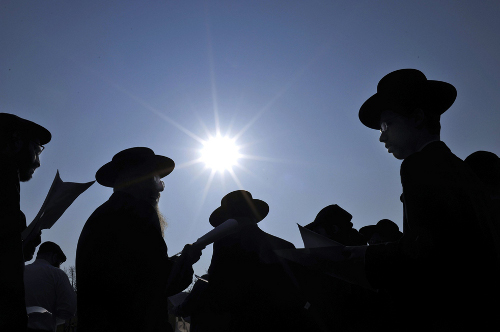
jewish-traditionI think there are a number of Christians and Christian groups who are feeling the pull of prophesy, but in most cases, such as in the above-quoted article written by Yosef Juarez, there’s been a terrible misunderstanding. Messiah never meant for us to believe that we had to choose between him and our devotion to Jewish people and Israel, rather he desires that we arrive at a proper understanding of our role in relation to Israel and her King, where King and Country are not mutually exclusive as most people believe is true of Jesus and Israel.

While we don’t see entire church groups converting to Judaism en masse very often (as Yosef Juarez describes in his article), we do see Gentile Christians entering into Hebrew Roots congregations and attempting to fulfill their roles (mistakenly in my opinion) by apprehending Jewish identity rather than their (our) own, or even more tragically, Gentiles in Hebrew Roots and Messianic Judaism leaving Messiah Yeshua behind and converting to one of the modern Judaisms of our day.

There are few things sadder than seeing a Christian begin to develop a sincere love of Israel and the Jewish people and then to allow misunderstanding and a misguided sense of purpose to cause them to completely overshoot the target, missing the point and mistaking the background for the goal.

“One who romanticizes over Judaism and loses focus of the kingdom of Heaven can be compared to a carpenter who is infatuated with the hammer, rather than the house it was meant to build.”

Troy Mitchell

It may not be entirely inappropriate to consider, under certain specific circumstances, Gentile conversion to Judaism within a Messianic Jewish venue, but again, in my opinion, this should be a rare occasion. Gentiles will never be able to take their (our) place in God’s Kingdom as the crowning jewels of the nations if we convert or quasi-convert to Judaism in significant numbers. To be “crowning jewels” we must remain among “the nations” or fail prophesy, Messiah, and God.
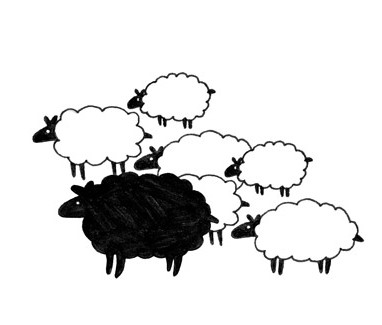
One of These Things is Not Like the Others

One of these things is not like the othersCommunity. It’s that thing, the way of life, that we all want but we’re just not quite sure how to pull it off successfully. It’s that tantalizing concept that promises so much reward, and yet it seems so elusive. Its promise sometimes causes us to cut ties where we are and move somewhere else where we hope to find greener pastures, better friends, and/or become part of a different community. Then when we do get a taste of real community, it’s only a matter of time before our hearts are stunned with hurt or insult. But a lack of community causes us to feel despondent, alone, and often times as if we’re missing out on something significant that was intended for us all along. This community thing can really be disappointing!

-Lisa
“Community Disappointment”
Following the Ancient Paths

I wrote a lengthy response to this blog post, but when I pushed “Post Comment,” I received an error message and my comment was lost forever. It was a rather lengthy comment (go figure) and I suspect the blog application was complaining to me about it. I thought about re-writing the comment but decided to blog instead.

Lisa’s blog post addresses what we should already know. Being part of any group or community is hard work. It’s hard to join, it’s hard to sustain, it’s hard to adapt over time. This includes families, employers, and Lisa’s specific topic, religious organizations.

I can sympathize. A little over a year ago I “went back to church” and in that time have had many interesting, educational, and dismaying “adventures.” But as Lisa’s blog post suggests, this is to be expected. No group that involves multiple human beings is always going to run smoothly.

Over a year apart, I wrote the blog posts Why I Don’t Go to Church and Why I Go to Church, chronicling my internal struggle, the same one Lisa seems to be describing.

We live in a world that seems to praise isolationism, yet we instinctively know that we weren’t created to be loaners (sic). Somehow it’s considered a good thing when we can handle things alone, when we can appear stand tall with a backbreaking burden strapped to our backs, when we live such private lives that nobody knows what is really going on with us. Deep inside we know that it isn’t right to go through life all alone. We wrestle with wanting something yet not wanting the very same thing, pursuing it and rejecting it all at the same time.

-Lisa

As Lisa says, we want to go it alone to avoid all of the messiness of being part of a community, but when alone, we know that being isolated from community isn’t right, either. Sort of a “can’t live with ’em, can’t live without ’em” situation.

The main point of my lost comment was the issue of competing interests. Affiliation with one community may conflict with another affiliation. In my case, I’m a Christian living with Jewish family members while attending a Christian church. How does that work?

Another set of competing interests has to do with entering into and finding a niche within a community. I recently declared that I’m a Christian who studies Messianic Judaism, and yet I attend a very fundamentalist Baptist church in Southwestern Idaho. If you’ve read any of my blog posts about my conversations with my Pastor, you know that although we get along, we disagree on a number of fundamental (no pun intended) elements of what faith in Messiah means, particularly to the Jewish people.

Can a square peg successfully integrate into a church of round holes? Good question.

I recently finished the book Life of Pi by Yann Martel. It tells the story of Pi, born and raised in India, from childhood to adulthood through a series of flashbacks, with the main action taking place aboard a lifeboat shortly after Pi’s family died in a shipwreck in the middle of the Pacific Ocean. Pi is the only human survivor, but finds that he must share the lifeboat with an injured Zebra, an Orangutan, a Hyena, and a 450 pound, male adult Bengal Tiger named Richard Parker (Pi’s father was a zookeeper and they were transporting a number of their animals from India to their new home in Canada).

life_of_pi_by_megatruh-d5noigdThe other interesting thing besides how Pi manages to survive seven months adrift at sea sharing a lifeboat with a Tiger (the other animals didn’t make it), is that as a child, Pi adopted three religious traditions, first Hinduism, then Christianity (Catholicism), and finally Islam. Pi practiced all three religions simultaneously, ignoring the basic tenet of each that these religions are exclusivist. That is, if you belong to one, you cannot also belong to any other religion.

Pi managed to observe each religious tradition in parallel without arousing suspicion for a while, but eventually it caught up with him, and he was finally confronted by all three congregational leaders at the same time in a public place in front of his parents.

When questioned about why he thought he could be a Hindu, a Christian, and a Muslim all at the same time, he responds by saying that he “just wants to love God.” (Martel, pg 69)

The book follows Pi’s life into adulthood and middle age where he is married with two children and a small dog and living in Toronto. He still practices all three religions, with no mention of any conflict in his family or in any of the involved congregations, but “Life of Pi” is a work of fiction and operates often at the level of religious allegory (I still haven’t figured out what the carnivorous island is supposed to mean).

In real life, Pi would never be able to successfully manage practicing all three religions, not only because of the conflicts between those communities, but the likely conflict with his own family, particularly his wife, who almost certainly had formed her religious or irreligious affiliations before she ever met and married Pi.

I have to admit, when I read about the sheer audacity and innocence of Pi’s devotion to three different religious branches, cherishing the best in all three, I felt a moment of admiration and even envy. What would it be like to open your arms wide and to take in and accept humanity’s vast range of traditions in worshiping God just for the sheer love of God?

It isn’t practical, which I suspect is one of the reasons why Martel’s novel is called a fantasy.

But Interfaith communities aren’t unheard of in our world. Author Susan Katz Miller maintains the On Being Both blog which celebrates a variety of interfaith families and communities, but such celebrations aside, one does not easily navigate the stormy seas that occur when theologies, doctrines, and dogmas clash in the narrow straits between one religion and another.

The solution in my own family, as it stands now, is something of a compartmentalization of each religion. In my home, Christianity and Judaism exist in separate silos, rarely communicating across the gap between them for the sake of peace. I do occasionally get emails from my wife containing links to news or information items on Israel or Judaism but I’m very careful not to bring up Christianity.

The ugly times is where our communities can grow stronger, more dedicated to one another, where each member grows in righteousness and in the image of our Master. The challenge is on the table. Are we ready to accept it?

-Lisa

Sesame StreetIt is true that adversity can produce stronger communities, but there’s a line that, if crossed, means that adversity has exceeded manageable limits and is destructive, not constructive. Sort of like lifting weights at a gym to build strength but overtraining resulting in injury, sometimes serious injury.

The television show “Sesame Street” sometimes has a lesson in the form of a song called One of these things is not like the others and I know what that experience is like in spades. There are interfaith communities that (seemingly) successfully co-exist within the same larger group, and there are interfaith families that are created and thrive for decades (such as my own), but that doesn’t mean it’s easy (which is what Lisa’s blog is all about).

But beyond being “not easy,” there are times when “not easy” becomes impossible or at least highly improbable, like a fourteen-year old boy from India who is a practicing Hindu, Christian, and Muslim, or the same boy two years later who manages to survive for seven months in the Pacific Ocean sharing a lifeboat with a large Bengal Tiger. How long can such a relationship between communities last before something gives?

FFOZ TV Review: The Restoring the Kingdom

A promise of what is to comeEpisode 26: The disciples ask Jesus “Are you at this time going to restore the kingdom to Israel?” They were looking for a physical kingdom. Was the kingdom only spiritual, or were the disciples right to expect a physical, future kingdom? Episode Twenty-six will show the viewers that the kingdom of Messiah is not just spiritual. There is a literal, coming, restoration of the kingdom of Israel. Although we believers have laid hold of the kingdom and enjoy a foretaste of it, we have not entered the kingdom yet. It’s still ahead.

-from the Introduction to FFOZ TV: The Promise of What is to Come
Episode 26: Restoring the Kingdom (click this link to watch video, not the image above)

The Lesson: The Mystery of Restoring the Kingdom

In this final episode of the first season of A Promise of What is to Come, First Fruits of Zion (FFOZ) teachers Toby Janicki and Aaron Eby address the question of exactly what is the restoration of the Kingdom of God. From traditional Christianity’s point of view, the Kingdom has often been described as being Heaven, or being the Church, or being an invisible, spiritual Kingdom, the spirit that is in our hearts.

But this show uses a specifically Jewish perspective to read the Bible and understand how to interpret ancient prophesies. We can’t go only by what the words say themselves. We need to know how the original speakers and audiences in the Bible would have comprehended what was said. What did the disciples mean when they asked the following question to Jesus?

So when they had come together, they were asking Him, saying, “Lord, is it at this time You are restoring the kingdom to Israel?”

Acts 1:6 (NASB)

It was at this point that Jesus was about to ascend into Heaven to take his place at the right hand of the Father. He was leaving his disciples on Earth. They must have been puzzled that Jesus was leaving without finishing his work. Where was the Kingdom? Why hadn’t he established it? How could he depart when there was so much left for him to do?

Christian Pastors often criticize the ancient Jewish disciples for misunderstanding what Jesus taught. In the eyes of many modern believers, the Kingdom is a spiritual Kingdom, not a physical reality. But even today, devout Jews believe that one of Messiah’s major tasks is to restore the nation of Israel as a physical Kingdom on Earth, return all of the exiled Jews to their Land, and elevate Israel as the head of all the nations.

This is one of the reasons why most Jewish people don’t believe Jesus could have been the Messiah. They don’t believe he was resurrected and that he died without restoring and redeeming physical Israel. Even from a believing Jew’s point of view, Jesus as Messiah left before completing his work. That means he must come back at some point to finish the job. Otherwise, he can’t be Messiah.

Toby suggested at this point in the program, that it would be a good time to review some of the information about the Kingdom presented in previous episodes of the series. To this end, he quoted:

After Yochanan was arrested, Yeshua came to the Galil and proclaimed the good news of the kingdom of God. He said, “The time is fulfilled, and the kingdom of God has drawn near. Repent and believe the good news.”

Mark 1:14-15 (DHE Gospels)

As you may recall, the Kingdom being “drawn near” or “at hand” meant that it was something that had arrived and could be appropriated at any time. It’s like standing at a doorway of a house. All you have to do is open the door and walk inside. In this case, the message was to repent, which was what Jesus was telling national Israel to do, in order to enter the Kingdom, the restoration of Israel to be accomplished by the Messiah.

Toby JanickiThe Torah, many of the Prophets, and even the Psalms, all speak of these Messianic promises, of a nation restored, a Holy people redeemed, a Land flourishing, the world at peace, all under the rule of King Messiah, Son of David. Here Toby paints a portrait of the prophesies that are continually additive, one linking to another, and to another, and to another, through the Tanakh (Jewish Bible) and across the so-called barrier between the Old and New Testaments, describing in a single, unbroken thread in the tapestry of God’s restorative and salvational plan.

It was this Jewish and Biblical understanding that told the disciples of the Master what to expect and led to the question we read in Acts 1:6. The Church says the ancient and modern Jews are all wrong and that no physical Kingdom was ever planned by God, in spite of the overwhelming evidence otherwise stated in prophesy. But what did Jesus say?

He said to them, “It is not for you to know times or epochs which the Father has fixed by His own authority…”

Acts 1:7 (NASB)

Here, Jesus isn’t saying that they’ve misunderstood him, or that there would never be a physical restoration, or that his Kingdom is purely spiritual. He’s saying that he wasn’t going to tell them when the Kingdom would be restored, only that it would be restored at a time fixed by God’s own authority.

In other words, Jesus didn’t contradict the expectations of his disciples, he only said he wasn’t going to restore the Kingdom of Israel at that very moment and that they had to wait. He also said this:

“…but you will receive power when the Holy Spirit has come upon you; and you shall be My witnesses both in Jerusalem, and in all Judea and Samaria, and even to the remotest part of the earth.”

Acts 1:8 (NASB)

The Kingdom of Israel would be restored, but before that was going to happen, Jesus said they would receive power when the Holy Spirit came upon them, and with that power, they were to be Messiah’s witnesses in Jerusalem, Judea, Samaria, and to the four corners of all the Earth.

It’s not that Messiah won’t restore physical, literal Israel as a Kingdom; the Kingdom above all nations, it’s only a matter of when.

Clue 1: Jesus taught that the Kingdom has not yet happened.

If you were to ask a room full of Christians if Jesus had finished his work in the first coming, most of them would say “yes” based on this:

Therefore when Jesus had received the sour wine, He said, “It is finished!” And He bowed His head and gave up His spirit.

John 19:30 (NASB)

But Toby says Jesus was most likely speaking of his suffering and the atonement of sins, not his entire mission as a Messiah. I agree. If Messiah’s work was finished, then where is the world at total peace? Why don’t we all act as we should? Why is there still sin? And why is there a predicted second coming of Jesus?

Aaron EbyBoth Jews and Gentiles say today “Maranatha,” which means “O’ Lord, come.” Why do we say this if he has already finished everything he was supposed to do?

The scene shifts to Israel and FFOZ teacher and translator Aaron Eby for a brief word study of “Maranatha.” As it turns out, in the Church, we get this word from two words in Aramaic Paul inserted at the end of 1 Corinthians. Aaron said, and I learned recently, that there were no spaces between words in the Bible. For instance, if we were to translate a portion of Romans 1:32 into English but not insert spaces between the words, it would look something like:

thoughtheyknowgodsrighteousdecreethatthosewhopracticesuchthingsdeservetodie

What a mess. No wonder Biblical translation is so challenging. No wonder there is such a great difficulty in organizing the context of the Bible and how creating chapters and verses can lead to misunderstanding of the original message.

But Aaron says that even though we don’t know how the Aramaic word “Maranatha” is separated, it still means the same thing: “O’ Lord, come.” Aaron believes that Paul not only acknowledged and preached about the great accomplishments of Messiah during the first advent, but longed for the Messiah’s return and all that he would do at that future time.

Hear the word of the Lord, O nations,
And declare in the coastlands afar off,
And say, “He who scattered Israel will gather him
And keep him as a shepherd keeps his flock.”
For the Lord has ransomed Jacob.

Jeremiah 31:10-11 (NASB)

This is a key Messianic prophesy describing what Messiah will do for the Jewish people and for Israel, and describes the responsiblity of the nations to listen (and obey) the words of Israel’s King.

Aaron pointed to the miracle of modern Israel’s very existence and the restoration of the Hebrew language, which had vanished for many centuries. He used Zephaniah 3:9 as a prophesy of the restoration of Hebrew, and expressed what a miracle it is for even an Israeli child to be able to read from an ancient Torah scroll and grasp its meaning.

But as exciting as this all is, Israel is still in exile as long as even a single Jew does not live within her borders, and as long as it is still threatened by its enemies, and as long as it is still largely secular, and as long as there are still two foreign Mosques on the Temple Mount in Jerusalem, the most Holy place on Earth.

Believing and non-believing Jews all still cling to the twelfth of the Rambam’s thirteen principles of faith:

I believe with a perfect faith in the coming of the Messiah, and even though he may delay, still everyday I pray that he will come.

The modern state of Israel is a good start, but it is hardly finished. There is so much more left to do.

Back in the studio, Toby gives us the second clue:

Clue 2: Jesus had not yet fulfilled all of the Messianic prophecies.

RestorationWe may not know when the Messianic Kingdom will come, but we know what it will be like. Toby links a number of passages in scripture together including Matthew 16:27, Isaiah 40:10, and Revelation 22:12. And Jesus himself said he had much work left to do. We read in Matthew’s gospel how he described his own return:

Then the son of man will appear in heaven, and all the families of the earth will mourn, as they will see the son of man coming with the clouds of heaven in power and great glory. He will send forth his angels with the sound of the great shofar; they will gather his chosen ones from the four winds, and from one end of heaven to the other.

Matthew 24:30-31 (DHE Gospels)

Jesus was referring to this prophesy:

It shall be on that day that a great shofar will be blown, and those who are lost in the land of Assyria and those cast away in the land of Egypt will come [together], and they will prostrate themselves to Hashem on the holy mountain in Jerusalem.

Isaiah 27:13 (Stone Edition Tanakh)

Jesus was speaking of what he had yet to do beyond his first coming, and that renders the third and final clue:

Clue 3: Jesus did not think his work was finished.

Unless you think the world is as it should be and that we have peace among the nations and kindness between human beings, then you must believe his work isn’t finished either.

What Did I Learn?

In this final episode of the first season of The Promise of What is to Come series, I learned pretty much what I already knew. It seems silly to imagine that Jesus had fulfilled all that he was supposed to do in his first coming. The world is still a mess and still needs a lot of fixing. Unless you are prepared to throw out large portions of the Tanakh (Old Testament) and replace the content with how the Church understands the apostolic scriptures, you must believe that the life, death, resurrection, and ascension of Jesus does not fulfill all of the Messianic promises we see in the Bible.

This is also where I believe embracing a Jewish understanding of those scriptures is handy. It does not require that we refactor what Jews believe as a physical Kingdom of God in Israel into some sort of spiritual environment we enter when we die. Jewish and Gentile disciples of Jesus the Messiah can all believe that what God said through Isaiah and Jeremiah and how it was understood was still true in the world of Jesus, Peter, and Paul and still is true in our world of the 21st Century of the Common Era.

As I’ve said before, many of the beliefs in the modern Christian Church have their origins in the earliest expressions of anti-Semitism and supersessionism created by our so-called “Church Fathers,” and preserved by the men of the Reformation many centuries later. What was once invention and tradition created to separate a nascent Gentile Christianity from normative Judaism (that is, how the Church sees the Jewish people, modern Israel, and the ancient Messianic prophesies), is now believed to be rock solid fact. It doesn’t occur to many Christians to question any of these assumptions.

The FFOZ TV show is dedicated to thoughtfully suggesting to its Christian audience that its assumptions be questioned in the light of a Jewish interpretation of Biblical truth. The numerous other resources offered at First Fruits of Zion and her sister organization Vine of David are designed to provide that perspective and expand upon it for both traditional Christians and the Jewish people who have yet to recognize the face of the Messiah as the Jewish face of Rabbi Yeshua in the Gospels.

Modern IsraelBut even learning this does not summon the Promise of the Messiah to our world. In order to finish our own work so that he may come, we must live out those truths that have been revealed to us. Visit the sick, give charity to the poor, donate food to the hungry, act only with kindness to any person that you encounter, speak of the good news of the Messiah to a damaged and dying humanity.

Only then will we be pursuing the path of our Master by participating in tikkun olam, repairing our desperately broken world.

It is said that the Messiah will return only when all of Israel, all the Jewish people, keep the Shabbat as one. It is also said that the Messiah will return only when all of Israel and the world has reached a level of deepest depravity.

I don’t know what to think. I only know that we introduce a tiny bit of the Messianic Kingdom into our world every time we extend a helping hand to another person. If we all committed one unasked act of kindness each day, then how Messiah-like would the world begin to appear? We wait for Messiah to return to finish what he started, but in the mean time, we can all do what we can, as we have faith in the promise.

Hiatus or Something Like It

Walking outRabbi Meir Hagar of Viznitz related that one of the great chassidic rabbis was once praying with much enthusiasm. His evil inclination came to him at a moment he was praying with the height of fervor, and whispered in his ear, “How can you be so insolent as to pray in such a manner? Yesterday you did improper things. You are unworthy of such prayers.”

The righteous man was not thrown by the evil inclination and mentally replied, “It might be true that yesterday I have erred. Moreover, it is possible that tomorrow once again I might err. But right now I am in the middle of praying, so get away from me!”

-Rabbi Zelig Pliskin
“Make the Highs Even Higher”
Aish.com

It is said that for every descent spiritually, there is an ascent. This blog and a good many other things are going into hiatus, or at least a significant slow down, for an indeterminate period of time which may be a few days to a few weeks, or even longer. Frankly, I’ve recently been reminded of my humanity and my fallibility (I came to this conclusion before my recent Nanos blog post, but the mess I caused didn’t help). I’ve always been concerned about putting my thoughts, feelings, and opinions about God, the Bible and everything out on the Internet, since I am only human, when the rest of the religious people in my space (and in all other religious spaces) in the blogosphere seem to be so “perfect” (not that anyone is perfect, of course).

I’m far from perfect. Very far.

I’ll miss the daily writing. I really enjoy it. But discussing theological issues should be less about personal enjoyment and more about enlightenment and truth. I told a friend over coffee last Sunday that I was stuck on the level of content as far as my faith goes. I like reading and writing about “stuff,” about opinions, and doctrine, and information.

But that’s not all that a life of faith is made of. A life of faith must be lived faithfully.

For however long I’m away, or however infrequently I visit, I bequeath the religious blogosphere to those of you who want it or need it. I’m going to see what life is like without living it on a daily basis. At one point, I thought blogging was a way to get closer to God, but now I see that it has become a barrier between me and Hashem, like many other things I have in my life.

Oh, just in case the “apostasy police” or anyone else is “concerned” by what my decision means, no, I haven’t lost faith or walked away from Jesus. I’m walking away from a public online discussion of my faith right now, thank you very much.

When will I be back? I don’t know exactly. I still have one more episode of First Fruits of Zion’s television program A Promise of What is to Come to review, and I know I’m going to watch it, but when will I write the review and post it for all to read? Soon I hope.

Even if I return to this blog in a few days or a few weeks, it’s pretty unlikely that I’ll return to daily blogging.  It’s more likely, though nothing is decided yet, that I could just stop by every once in awhile and share a few thoughts or insights or even a review on an irregular basis. Just a brief, intermittent presence.

What will I be doing now that I’m not regularly writing online? Praying, reading, studying, pondering, meditating. Who knows what else? God knows what He wants of me. I just have to discover what that is and then do it.

Lord, Thou knowest that I am growing older.

Keep me from becoming talkative and possessed with the idea that I must express myself on every subject.

Release me from the craving to straighten out everyone’s affairs.

Keep me from the recital of endless detail. Give me wings to get to the point.

Seal my lips when I am inclined to tell of my aches and pains; they are increasing with the years and my love to speak of them grows sweeter as time goes by.

Teach me the glorious lesson that occasionally I may be wrong.

Make me thoughtful but not nosy; helpful but not bossy.

With my vast store of wisdom and experience it does seem a pity not to use it all. But Thou knowest, Lord, that I want a few friends at the end.

-found at Aish.com
“A prayer for those growing older”

Blessings on all who have shared in my journey thus far. May it continue by the will and grace of God.

Good Shabbos and Good Night.

Nanos, Paul, and the Consequences of Jewish Identity in Messiah

PaulFor we hold that a person is justified by faith apart from works prescribed by the law. Or is God the God of Jews only? Is he not the God of Gentiles also? Yes, of Gentiles also, since God is one; and he will justify the circumcised on the ground of faith and the uncircumcised through that same faith. Do we then overthrow the law by this faith? By no means! On the contrary, we uphold the law.

Romans 3:28-31

The discovery of the Shema Israel as central to Paul’s theology was a profound moment for me, and has shaped my reading of him ever since. If I was writing a theology of Paul, it would be the center around which all other topics turned. Here we see it employed clearly and in a pivotal point in his argument in Romans for why non-Jewish believers in Christ must remain non-Jews and not become proselytes, and by the implication of his logic, why Jews remain Jews after faith in Christ: “since [if indeed] God is one.” Paul’s language here, and throughout Romans and Galatians, calls to mind the central prayer of Judaism, repeated twice daily, and the last words a pious Jew hopes to pass his or her lips, which begins: “Hear [shema] Israel, the Lord is our God, the Lord is one.”

-Mark D. Nanos
“A Torah Observant Paul?: What Difference Could it Make for Christian/Jewish Relations Today?” (pg 45)
May 9, 2005 (PDF Version Sent – Endnote Formatted)
marknanos.com

Since I completed my final summary of the classic Mark Nanos book The Mystery of Romans: The Jewish Context of Paul’s Letters, I’ve been wondering how Nanos’ research into and perspectives on Paul have progressed. After all, the “Romans” book was published in 1996, almost two decades ago. What’s Nanos been up to since then?

The paper I’m quoting from gives a compressed answer, though it is still almost nine years old. I find the same voice and the same perspectives in the “Torah Observant Paul” paper as I do in “Romans,” with just a hint of additional development. The paper, as a whole, addresses the more “troublesome” passages in Paul’s epistles as they appear to conflict with the life of a Torah-observant Jew in the late Second Temple period. Nanos points out the overwhelming body of Christian scholarship that paints Paul as a traitor to his own people and the “inventor” of Christianity, and seeks to refactor the Biblical record by deliberately viewing Paul as a devout Jew with a life-long devotion to Hashem, the Temple, the Torah, and Judaism.

I’m not going to review the entirety of this lengthy paper right now. I’m focusing only on a small portion of it so I can extend the Nanos commentary on Paul’s letter to the Romans, gleaning additional insights and sparkling bits of wisdom as they are scattered ahead of me on my path of faith.

In the “Romans” book, Nanos also mentions the Shema as the central element required in understanding the Jewish apostle’s message to the non-Jewish believers in Rome. Built on his commentary on Romans and Galatians, Nanos, in addressing Jewish and Gentile identity in Messiah, believes Paul is not only discouraging Gentiles from converting to Judaism as a means of justification before God, he’s forbidding its as contrary to prophesy and to the “oneness” testified to by the Shema.

Likewise, somewhere halfway between Paul’s time and our own Rashi wrote, to explain the repetition of the Name (Hashem, the Name, a rabbinic circumlocution for YHWH/Lord) in the Shema:

“The Lord who is our God now, but not (yet) the God of the (other) nations, is destined to be the One Lord, as it is said, ‘For then will I give to the peoples a pure language, that they may all call upon the name of the Lord, to serve Him with one consent’ (Zeph 3:9). And (likewise) it is said, ‘And the Lord shall be king over all the earth; on that day shall the Lord be One and His name One’ (Zech 14:9).”

Paul’s argument is that the God who now righteouses (sic) Israel is the same God who now righteouses (sic) non-Israelites who turn to Israel’s God in Jesus Christ as the Lord of all the Nations too. He is the one whom both the members of Israel and of the other nations within the Christ-groups choose—like the special one that someone falls in love with like no other, thereafter the only one for themselves. For Paul, if non-Jews in-Christ become Jewish proselytes, and thereby Israelites, they do not bear witness to the arrival of the day when representatives from all of the nations turn from idols to the worship of the One God, but simply to the truth that in the present age Israel represents the righteous ones of God, members of which they become by proselyte conversion. That identity transformation for non-Jews is available apart from the confession of faith in Jesus Christ in most other Jewish groups of the time, which provide for proselyte conversion to join the family of Abraham, of God, within the present age, and await with Israel the hope of the age of reconciliation of the nations, when the wolf (such as is Rome) will lie down with the lamb (Israel), without devouring her.

Nanos, pp 46-7

Mark NanosFor Nanos as well as for Paul, it was not a matter of Gentiles having the option to convert to Judaism within Yeshua-faith, it was strictly forbidden, for prophesy tells of both Jews and Gentiles worshiping alongside each other, Israel expressing devotion to Hashem beside all the other nations (i.e. non-Jewish people) of the Earth, acknowledging that God is One and His Name is One. Even if a Gentile converted, not for the purpose of justification (for only faith justifies) but for some other reason (the desire to take on the full beauty of the Torah, an intermarriage of a Gentile with a Jew), it contradicts God’s Word and intent for both Jewish and non-Jewish humanity.

Once again I testify to every man who lets himself be circumcised that he is obligated to obey the entire law.

Galatians 5:3

Many seek to phrase the issue of proselyte conversion for non-Jewish Christ-believers from Paul’s point of view thus: Paul sought to communicate that one did not “have to” become a Jew in order to become a Christian, or if a Christian, in order to be a good one, or some such thing. Paul in Galatians, especially 5:2-6, makes it plain that a non-Jewish Christ-believer “cannot” become a proselyte.

-Nanos, pg 30

Cannot? Why not? Or have I already tipped my hand?

However that may be, let each of you lead the life that the Lord has assigned, to which God called you. This is my rule in all the churches. Was anyone at the time of his call already circumcised? Let him not seek to remove the marks of circumcision. Was anyone at the time of his call uncircumcised? Let him not seek circumcision. Circumcision is nothing, and uncircumcision is nothing; but obeying the commandments of God is everything. Let each of you remain in the condition in which you were called.

1 Corinthians 7:17-20

The point Paul drives home is that regardless of which state one was in when called, their present state requires attending to obedience to God’s commandments—even guarding the interests of these commandments rather than the interests of identity as Jew or non-Jew. The noun (in Greek) can be translated as “keep,” or “obey,” and carries the sense of “guard” or “watch over.” There is no shadow of concern with works-righteousness, but rather, with failure to behave appropriate to the state of Christ-believingness…

Paul’s language here brings up a point that corresponds to several points in the previous discussion of Gal 5:3. In Paul’s propositional arrangement, a Jew — such as he was — remained in-Christ a Jew, and thus obligated to observe Torah. However, a non-Jew in-Christ remained a non-Jew, and thus not obligated to observe Torah on the same terms as a Jew, since not a Torah-person. Nevertheless, a non-Jew was now obligated to turn from slavery to sin to slavery to righteousness, which was defined in terms that embody an essentially Torah-observant life (cf. Rom 6:14-23; 13:8-14; Gal 5:6-6:10), the lifestyle incumbent upon a so-called righteous non-Jew (something of an oxymoron).

Nanos, pp 32-3

The ProphetNanos not only emphasizes that Paul forbids a Gentile in Yeshua faith from converting to Judaism as a contradiction to the prophets, but he sees the co-participation of righteous Jews and Gentiles in Messiah expressed relative to identity issues, with Jews who came to Christ as Jews remaining Jewish with continuing Jewish obligations to Torah observance, and Gentiles who came to Christ as Gentiles not assuming a Jewish obligation to Torah but nevertheless, requiring a behavioral as well as “heart change” relative to lifestyle (probably as defined, at least in part, by the Acts 15 letter to the Gentile believers).

All this certainly reiterates my own opinion that Gentiles coming to faith within the ancient (or modern) Jewish religious stream of “the Way” (or its modern expression, Christianity, including within the such groups as Hebrew Roots and Messianic Judaism and their variations) that we (Gentiles) are not obligated to the Torah of Moses, at least not in the manner of observant Jews (Messianic or otherwise).

Many ancient prophesies cite how the nations (i.e. non-Jewish people) in Messianic days will take hold of the tzitzit of a Jewish man (Zechariah 8:23) and go up to the Mountain of the God of Jacob (Isaiah 2:3) to worship, because the House of God, the Temple, is a House of prayer for all people (Isaiah 56:7). In Nanos’ opinion, how did Paul see this, since he was living out the first fruits of those prophesies?

At issue is not that most other Jewish groups would likely disagree with Paul’s proposition that such reconciliation will occur when that day arrives, so that members of other nations do not then join Israel to join with her in worship of the One Creator God of all humankind. Some may believe that day will be accompanied by the conversion of the nations, in the sense of proselyte conversion to Israel; others might await the destruction of those of the other nations as foremost in their hopes. These expectations and others can be gleaned from the Scriptures and other writings of Paul’s time.

But even those who hope for reconciliation with the nations and expect them to remain not-Israel would not agree with Paul that this moment had arrived in the resurrection of Jesus Christ, or even just begun to arrive and be witnessed in the life of the communities of believers in that proposition—unless sharing Paul’s faith in Christ. In their groups the distinction and membership that follows from it remains between Gentiles, however welcome as friends and guests, and Jews or Israelites, a category that includes (albeit with some variety among groups) proselytes, those who have turned from idolatry to worship the One God and have completed the rite of conversion signaling that they have joined the people of that God in full membership, so that they are no longer regarded as mere guests.

-Nanos, pg 47

Nanos continues with this point:

I do not agree with the view of many interpreters of Paul—Jewish as well as Christian—that Paul taught the dissolution of differences, that there were no longer Jews and Gentiles in Christ, but a kind of new, third race, as some have phrased it. I grant that he does sometimes write that there is neither this nor that. But it cannot be so. There remain fundamental biological differences between women and men, for example, and the male penis has either been circumcised or remains in its foreskinned state. Recognition of this reality is witnessed in his arguments, including about just this matter, and in his continued employment of this distinction to address and explain the composition of the world from an Israelite-based conceptualization of reality: he does not address anyone as “Christian,” but as Jew or non-Jew, circumcised or foreskinned, and within those categories, as having faith in/of Jesus Christ (Messiah), or not.

-Nanos, pg 48

Reading of the Torah at Beth ImmanuelEqual co-participation in the Messiah did not include obliteration of identity. Jews remained Jews and Gentiles remained Gentiles, with one primary indicator of distinction being relationship with Torah obligation. This did not, in Nanos’ opinion, inherently create class differentiations between Jews and Gentiles. Salvation, justification, intimacy, accessibility to God were all equally within the apprehension of Jewish and non-Jewish Yeshua-believers, but none of this required Jews to abandon Judaism and become Gentiles, nor Gentiles to convert to Judaism (or conversely not convert) and take on the Jewish obligatory observance of the Torah mitzvot.

In fact doing so, in Paul’s opinion (according to Nanos) would be an affront to God and a violation of the ancient prophesies of the Tanakh (Old Testament).

Today’s commentary is a mere subset of the Nanos paper and I hope you click the link to read the full contents of what he wrote. For me, this information is an affirmation of the original intent of God for both the Jewish people and the nations of the world, that He desires all to be reconciled before Him, and that the flow of prophesy from the earliest books of the Bible through the apostolic writings, proceed in a comprehensive, consistent, and additive manner, painting a unified portrait of the people of God moving forward through history, rather than a cosmic “bait-and-switch” whereby God attracts Israel to Himself, and then in the final act of his drama, summarily abandons his bride for a more “youthful” partner, as traditional Christian doctrine demands.

Nanos applies his research to the last part of his paper, suggesting what Christians and Jews can and should take away from this information and how it facilitates modern Christian/Jewish dialogue. Perhaps I’ll address this important issue at some future time. However, I do want to mention one important point:

In a slightly different direction, Michael Wyschogrod suggests that Christians should change the church policy that holds Jews to be no longer Jews upon becoming Christians, so that after baptism they cannot observe Torah, or if they do, that it cannot be respected as an act of faith, so that the difference between Jews and non-Jews in church is erased in the direction of Gentile-only identity. This posture infers that the election of Israel is superseded by that of the church and that the covenant with the Jewish people is regarded to be over. In other words, not urging Jews in Christ to remain Jews betrays disrespect for the place of empirical Israel.

-Nanos, pg 55

Even in churches that generally support the Jewish people and Israel, in expecting the “Jewish Christians” within their own walls to not have a continued obligation to the Torah is, in and of itself, “cryptosupersessionism” (a term I attribute to Rabbi Dr. Stuart Dauermann), which is a tragic consequence of nearly twenty centuries of anti-Jewish theology in the Church.

The irony of all this is that, from Nanos’ perspective (and mine), it may well be discovered that it is the duty of the Church to encourage its Jewish members, who have abandoned Jewish practice and assimilated within Gentile Christianity, to re-engage Judaism and Torah observance as an act of “Christian” faith.

The Challies Chronicles: Summing It All Up, Part 2

strange-pyreIf you haven’t done so already, please read the first part of “Summing It All Up” before continuing here.

Part 2 of the interview between Tim Challies and John MacArthur was published a few days after the first installment, and Challies says that several weeks have passed since the end of the conference. When Challies wrote his blog post, MacArthur’s Strange Fire book was to be released the following day, so from a marketing standpoint, the Challies blog was quite timely.

Kicking off the interview, Challies asked:

There are many areas of doctrine in which well-respected, godly theologians hold opposing views, and the miraculous gifts of the Holy Spirit are just one of them. Again, we are thinking here of the best and most gospel-centered of the continuationists. Why focus on this area now when it threatens to inhibit unity and further divide true believers? Why not focus on baptism or eschatology or another issue?

That’s a good question. There are probably thousands of different expressions or variations of Christianity worldwide, and they all disagree with each other about something. MacArthur comes across as completely sure of himself about everything, and completely sure he understands 100% of the content of the Bible (at least that’s the impression I get from what he says), in spite of the fact that there are numerous New Testament scholars in educational and research facilities across the globe who continuously are exploring new understandings about the apostolic era and what it means to Christians today. How can MacArthur believe he knows everything there is to know about a subject in the Bible and why does he choose to take this specific issue head on?

All true believers are unified at the core on those distinctives in the Spirit; but it takes time and study to experience that unity in our relationships. That’s why love must energize our quest for practical unity (Phil. 1:27)—love for God and His truth and love for one another. Even in 1 Corinthians 13:6, in the heart of Paul’s discussion about spiritual gifts, the apostle reminded his readers that “love rejoices in the truth.” So, drawing attention to serious error—error that’s being tolerated even in some of the otherwise-healthiest of churches—in order to recover and uphold the truth is a loving thing to do.

While it might be hard for some to understand, it was love that drove me to write this book and have this conference: love for God and His honor, love for His truth, love for His church and her purity, and, in the cases of the prosperity gospel that pervades the global movement, a love for the millions of souls who are trapped by some of the most deceitful false teaching that history has ever seen. It is my earnest desire and prayer to see the church unified. But a unity that knowingly tolerates error is not the unity that Scripture promotes. So, if we want to be truly unified, we have to be willing to confront error for the sake of the truth. And that might mean that superficial unity is disrupted.

MacArthur also said that he has taken on other issues in the past but, as you can read, both above, and by clicking the links to the interviews, he considers this particular problem vital in the world of Christian faith. I’ll take him at his word and believe he really does love the people he’s discussing, although from some of the responses I’ve read, his critics don’t feel loved. I’m no fan of the prosperity gospel, but again, that’s just one manifestation of the Charismatic movement, and I still think it could have been addressed in a more focused and measured way.

Challies asked:

We often hear today that many believers from a Muslim background—especially those from closed countries who do not have easy access to God’s Word—are claiming they had a vision of Christ and that in this vision he directed them to a place or person where they could hear the gospel. This proclamation of the gospel led to their conversion. Do you believe these stories? Do you consider such visions a valid means that God may work in our world today?

heavenly-manOh, that. Of course, MacArthur believes such events are completely bogus and not even a single supernatural event revealed Christ to a Muslim (or anyone else) apart from the Bible.

But that also contradicts much of what a Chinese evangelist named Brother Yun wrote in his book The Heavenly Man: The Remarkable True Story of Chinese Christian Brother Yun. I reviewed this book nearly ten months ago (it was given to me by a friend), and Yun describes situations that occurred after China’s Communist Revolution, where Christ was supernaturally revealed to people who had absolutely no access to Bibles or Christian Missionaries. If you lock down a nation so tightly that no foreign Missionaries are allowed in and it’s nearly impossible to smuggle in even portions of a Bible, is God not going to act?

I can’t testify to the validity of any of these supernatural acts. I haven’t witnessed any of them. In reading Yun’s book, even I thought certain portions seemed exaggerated or fabricated. But then again, I can’t completely discount the possibility of God directly intervening in our universe, performing acts that defy the natural laws we are accustomed to in order accomplish His purposes.

According to what I’ve been told, MacArthur believes he was physically attacked, in front of witnesses, by a demon possessed woman but he doesn’t believe that even one person could have had a revelation of Jesus in a vision. Go figure.

Regarding the visions in question, it is important to recognize that those who have investigated such claims have found the evidence to be sorely lacking. For example, this article directly addresses the issue.

I suppose that brings us to the crux of the matter. Do I believe that people in the Muslim world are actually seeing Jesus Christ? No, I do not. Paul stated in 1 Corinthians 15:8 that he was “the last of all” to see the risen Christ. So, I believe that precludes anyone outside of those listed in 1 Corinthians 15 of being able to claim legitimate visions of the resurrected Savior. (The apostle John, of course, was one of those included in 1 Corinthians 15. Accordingly, I don’t believe the book of Revelation sets a precedent for believers to expect genuine visions of Jesus to occur throughout church history.)

Furthermore, it is important to note that these individuals are still unbelievers when they reportedly have these experiences. Consequently, these experiences (whatever they are reported to be) cannot constitute examples of the charismatic gifts having continued, since spiritual gifts are only given to believers (1 Cor. 12:7)—and these people do not come to saving faith until later.

Finally, the New Testament clearly states that the way in which the gospel is spread in this age is through preaching.

Receiving the SpiritIf performing a supernatural act were the only way for God to communicate to a non-believer in order to further His plan, would God be inhibited because the person He was trying to reach was a non-believer? Good grief, God even revealed Himself to Laban in a dream (Genesis 31:24) and he spoke directly with the evil magician Baalam (see Numbers 22:9-12 for an example) when Balak, King of Moab, wanted the sorcerer to curse Israel.

It seems you don’t have to be a believer to hear from God.

No one comes to God as part of a rational process, it’s a leap of faith, and I believe God does make Himself known in some manner, in order to bring people to Him. No, I never had a dream, saw a vision, or heard a voice from Heaven, but a long series of extremely unlikely events happened in my life in a period of six months to a year which ultimately brought me to faith. The process wasn’t entirely intellectual. I didn’t read and study the Bible with the result that I believed and came to faith in Christ. God did something inside to bring me to Him. I can’t articulate it. I just know it happened.

And preaching was really only a very minor part in my finally professing faith.

I suppose John MacArthur would think I’m some kind of fruit loop.

Challies asked a number of other important questions, but the last one really got my attention:

The Strange Fire conference focused primarily on the worst examples of the Charismatic and Pentecostal movements. While the charlatans rightfully need to be exposed and rebuked, there are also many godly Christians who feel like they have been unjustly tarnished with an overly broad generalization.

Exactly! I think a lot of people feel unjustly targeted, insulted, and maligned by the multiple presentations at the “Strange Fire” conference.

MacArthur responded in part by saying:

First, I want to clearly state that I take no joy in being perceived as unloving or in hurting the feelings of fellow believers. My heart is deeply burdened by the errors and excesses that I have spoken out against in Strange Fire. I do not issue these criticisms flippantly. I would also direct readers to the first part of this interview, where I interact with the idea that I have made an overly broad generalization.

But for those who want to get angry at me, I would humbly suggest that such anger is misplaced.

Charismatic prayerMacArthur went on to say that after the conference, he read a blog post written by a Pentecostal named Josiah Batten called A Pentecostal in (General) Support of the Strange Fire Conference (Challies didn’t provide a link on his blog post but I’m inserting it here so you can read Batten’s content). In a nutshell, MacArthur was thrilled with this response because he had achieved his goal with the individual involved: MacArthur had gotten him to think, to consider MacArthur’s position without defensiveness.

Oh, MacArthur and Batten didn’t end up agreeing, but Batten did point out some of the obvious issues with the Pentecostal movement while also acknowledging that he thought MacArthur had made some mistakes in his theology.

The interview dribbled out and ended without much flourish. There were lots and lots of comments in response on both of the Challies blog posts (comments are now closed) which may add some dimension, but I don’t really want to read hundreds of these statements and then try to say something about them.

In trying to sum all this up in my head, it seems like the conference offered one general impression and these interviews presented a somewhat related or parallel process. I think the conference really did paint with an overly broad brush and depicted all or the vast majority of Charismatics everywhere are dangerous or potentially dangerous, rather than just “wrong.”

Given the opportunity, MacArthur (with a MacArthur-friendly interviewer) was able to add more details to his views and, in certain instances, soften them up a bit. He remains hard-line in the end that he’s right and that the people who disagree with him should change and join him. He bases this stance on the perception that his interpretation of the Bible must, because of his scholarship, be correct in an absolute or near-absolute sense, and that he cannot be wrong.

Granted, if he’s trying to convince people to change, he can’t actually admit that he could be capable of error in his interpretations and assumptions, so confidence (to the point of arrogance sometimes) is expected. On the other hand, John MacArthur is indeed human and as such, he is just as capable of being wrong as the next man, even a highly educated and well-read next man. A certain tradition drives MacArthur’s perception as much as a learned interpretation of scripture, although that tradition, by necessity, drives MacArthur to deny that tradition has anything to do with how he perceives the Bible.

I agree that the study and the quest for correctly understanding scripture is the first and best means of understanding the intent and will of God for our lives. I’m also aware that exactly how we go about it, what system we employ, and the set of traditions (whether we’re conscious of them or not) that filter our interpretations are going to result in different believers coming to different conclusions about what the Bible is saying to us.

Beyond all that, once we believe we have discovered “truth,” what we do about it is critical. We can choose to demonize those we disagree with or we can find another way to get our point across. Frankly, demonizing people is a better way to get attention. Holding a controversial conference will definitely draw a much bigger crowd than a less dramatic and perhaps more user-friendly approach.

And MacArthur wants to draw a big crowd. In fact, he wants to attract the estimated 500 million Charismatics in the world. Yes, he got his message across to a lot of people. The book, at least in the short run (once marketing runs out of steam, the popularity of the book will likely dwindle), will reach even more folks than the “buzz” about the conference.

MacArthurBad press is still press, so everyone who criticizes MacArthur, including little ol’ me, still makes sure that he’s not ignored. Being ignored is the worst possible outcome that could happen to MacArthur and the “Strange Fire” conference and book. If people just paid no attention to him or them (like they should have to the recent comments of Phil Robertson of Duck Dynasty fame), then MacArthur and his views would have nowhere to go.

But MacArthur knows enough about human nature to make sure that he and “Strange Fire” would never be ignored and in fact, would grab lots and lots of attention and press in the Christian media space.

But as I said before, his entire goal wasn’t just to get attention, but to get Charismatics to think and even to change. Has he accomplished this? Making 500 million people feel insulted, abused, and harassed usually doesn’t get them to agree with you. I’m sure A&E’s banning Phil Robertson from being part of filming Duck Dynasty or GLAAD getting in Robertson’s face (figuratively) over their perceptions of his motives won’t elicit an apology and change of theological opinion from the Duck Dynasty patriarch anytime soon.

If MacArthur wants to transform even a non-trival number of Pentecostals into sola scriptura Fundamentalists, I don’t really know what he could have done differently to accomplish his task. I just don’t see what he actually did working, at least not for very many people. I think the audience that listened to him the most was the one that was already convinced. I think he was “preaching to the choir.”