Category Archives: Uncategorized

The Unanticipated Passover Seder

passover-bitter-herbs-sederIf there are aspects of the Passover seder from which all people can learn, how much more so is this true for believers in Messiah? After all, our Master Yeshua chose the wine and the matzah of a Passover Seder to represent his body and blood. More than just learning about and celebrating the concept of freedom from oppression and exile, for disciples of Messiah, the seder celebrates Yeshua’s atoning death and resurrection while remaining firmly grounded and centered on God’s deliverance of the Jewish people from Egypt.

There is ample evidence that, for the earliest Gentile believers, the celebration of Passover was an important holiday celebrated by all believers in Messiah—both Jewish and Gentile. Paul wrote the book of 1 Corinthians to a predominately Gentile audience who attended both synagogue and weekly gatherings of believers. Additionally, the timing of the letter seems to have been sometime in early spring before the Passover season had begun. Many portions in the letter allude to Passover and seem to offer instructions for observing it properly with the right heart-attitude.

-Toby Janicki
“God Fearers: Passover and Non-Jews”
First Fruits of Zion (FFOZ)

Everything before the story is to prepare for the story.

Everything after the story is to celebrate the story.

The Leader is the guide on this journey. One of the challenges of the Leader is to keep the participants engaged from beginning to end. All the traditional directions (like covering and uncovering the matzah, for instance) are just devices to help participants, especially children, pay attention and ask: Why?

-Rabbi Alexander Seinfeld
“The Art of Leading an Amazing Seder”
Aish.com

I’m going to need all the advice I can get, especially Rabbi Seinfeld’s, given my memory of last year’s Passover seder. My wife reminded me that it wasn’t my fault that the seder came off so poorly. We had a relative in the hospital and our lives were at least in a mildly emotionally chaotic state. The year before that, my wife and daughter felt rather unappreciated because they believed my sons and I didn’t appropriately recognize the great effort they had put into preparing the meal. Needless to say, Passover has lost some of its appeal in my family.

This year, I promised myself I wouldn’t even bring up the topic of Passover. And since there isn’t so much as a feather in sight and sufficient amounts of rolls and bread continue to inhabit our home, I was firmly and calmly resolved to simply passing by Pesach and moving right on to Easter.

Then yesterday evening, my wife asked me to go with her to our son’s and his wife’s home for a short visit and she said on the way, we could talk about Monday. What’s Monday got to do with anything? In Boise, Idaho, Erev Pesach candlelighting is at 7:44 p.m. on this coming Monday.

Oh.

When she said that we needed to plan for Monday’s seder, it was like she suddenly said, “I’m pregnant.” Well, maybe it wasn’t quite that shocking, but it still came out of the proverbial clear, blue sky. I never saw it coming.

In a way, I was relieved that we weren’t going to celebrate Passover this year, at least as a family. In my quest to return the Torah scroll, so to speak, to my Jewish wife in particular and to the Jewish people in general, I have surrendered a number of practices and observances that I had once held dear, Passover being among them. After all, I cannot be considered as one of the members of humanity who marched out of Egypt and left behind my slavery, and certainly I cannot project myself into the masses who stood at the foot of Mount Sinai and personally received the Torah from Hashem, as does every person who is Jewish.

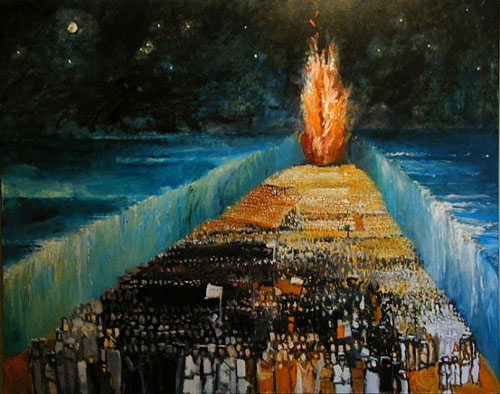
exodus-reed-seaSo as I processed my wife’s news about our impending family Passover seder, I found myself quickly dusting off Toby Janicki’s advice about Christians and the Passover (though he doesn’t phrase it that way).

I still feel like a fraud and I’m incredibly intimidated. I never used to feel this way, but then that’s the difference between historically celebrating Pesach among mostly non-Jews in a somewhat “Jewish-like” environment, and being the only non-Jew leading his Jewish family in the seder. Or as they say in the hood, “Sh*t just got real.”

There’s really only one difference between matzah and chametz.

They’re both made from flour and water, both baked in an oven, and both provide nourishment.

But one stays flat and humble, while the other fills itself with hot air.

That’s why matzah is a key ingredient for leaving your personal Egypt: As long as we are full of delusions of self-importance, there’s no way to break out and grow to a new level. Once we make ourselves small, we can fit through any bars and fly past any cloud.

-Rabbi Tzvi Freeman
“Between Matzah and Chametz”
Based on letters and talks of the Rebbe
Rabbi M. M. Schneerson
Chabad.org

On the other hand, as Rabbi Freeman suggests, maybe a healthy dose of humility is a good thing. But as it turns out, Rabbi Seinfeld’s advice won’t do me much good since it seems geared for a seder with lots of kids. My four-year old grandson will be the only child present (guess which child will find the afrikomen?) so the emphasis for the seder will have to go in a different direction.

Which direction I have no idea at this point. I’ll need to select a haggadah (after so many years, we have several tucked away in various drawers and cupboards around the house) and practice using it, so my leading doesn’t feel and sound so awkward and forced (and my Hebrew pronunciations are going to be traditionally poor).

I suppose if we were an actual Jewish family (in a traditional sense) and we all had grown up celebrating Passover every year, going to other homes where Passover was celebrated every year, and I, as “head of household,” had been leading family Passover seders for the past thirty years or so, it would seem like second nature by now.

But it isn’t, especially after “reinventing myself” a couple of years ago.

On the other hand, I’m approaching going to my first Easter service in well over a decade with an equal amount of dread if not horror. The one saving grace is that I won’t have to lead a thing…I just have to follow. I wonder where I’ll feel more “alien,” the seder or a sunrise Easter service? But I digress.

What am I really complaining about? Being a fish out of water? I’m certainly not afraid of co-opting Jewish identity or position since A) I’m not going to be very good at this, and B) as the husband and father in an intermarried family, it’s actually my place to lead the seder. Maybe I should play it safe and stick to the ABC’s of Passover, keep it simple (stupid), and just try to get by.

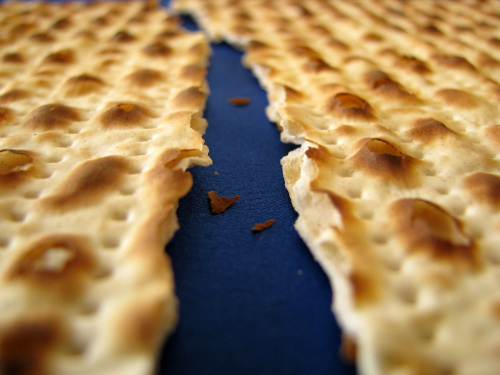
broken-matzah-passoverBut in all of my angst, I’m missing the reason for Passover. If it’s just an event and a performance, then it means nothing and all I’ll get out of it is anxiety in the anticipation and a guilty relief when it’s over. Still, it’s tough to get past what Rabbi Simmons says about “the Seder [being] designed to give each Jew the experience of “going from slavery unto freedom.”

But Christian/Jewish intermarried couples exist. We’re real. There must be some help out there for us…for me. Well, maybe not. I can find material on intermarriage and Purim, but that’s because at the heart of the Purim story is an intermarried couple. But what about intermarriage and Passover?

Shmuel Rosner at Slate Magazine says in part:

Being a pessimist on intermarriage is not easy these days. The Jewish community is tired of gloomy reports conveying what Steven Cohen titled “An Inconvenient Truth” in one of the most controversial studies of the last couple of years. The identity chasm between inmarried and intermarried is so wide, he wrote, as to suggest the imagery of “two Jewries.” One group attends Passover Seders in high percentage—namely, the inmarried—while the other, the intermarried, either refrains from doing so or attends these Seders in much lower numbers.

Rosner also says:

And there will be something different about their Seder itself, too. Passover, more than any other Jewish holy day, is the one in which Jews celebrate not their religion but this strange concept of becoming a people. This idea, of Jewish people-hood—the historic fact that Jews, for generations, didn’t see themselves as just sharing their faith, but also their national fate…

What part of that do I as a Christian share, if any?

But then, Tuvya Zaretsky writes:

“Either/or” thinking is a sadly limited perspective. For example, it sees only the Jewish religious aspects in Passover and misses the universal message of a redeemer God at the heart of Passover observance. Non-Jews who had sanctified themselves to the LORD were welcome to celebrate Passover, to eat unleavened bread and to give thanks to the LORD for His goodness. Gentiles, along with Jews, were welcome to the Lord’s table to eat the matzo and rejoice in the mercy of God. Followers of Y’shua (Jesus) see the message of the deliverer God prominently emphasized within the Passover story.

Although, by definition (my wife and children are not “believers”), our seder will not be “Messianic,” I must allow the seder to have a double meaning for me and not be solely focused on “the Seder [being] designed to give each Jew the experience of “going from slavery unto freedom.”

All this still has me feeling small and inadequate, and while not relative to Passover, I guess I’m not the only one. The following has nothing to do with Passover but everything to do with feeling small.

Blessings.

Lancaster’s Galatians: Sermon Two, Influencers, Circumcision, and What is Torah?

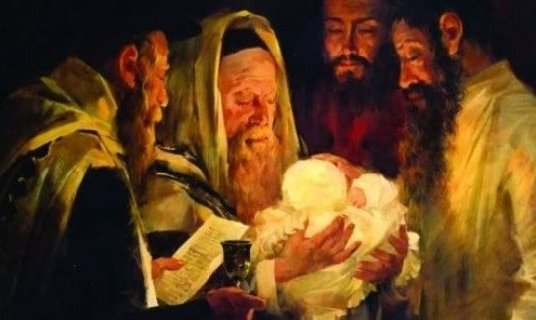
circumcision-mohelNo word in the Jewish religion is so indefinable and yet so indispensable as the word Torah. Torah is the most comprehensive term for the substance of Judaism. Torah is Teaching. Torah is Law. No one can hope to achieve even a minimal appreciation of the Jewish religion without learning, and then reflecting on, the idea of Torah and its place in the life of the Jew. Torah has been for ages the sum and substance of Jewish scholarship. But it would be utterly wrong to conclude from this emphasis on study that Jewish spirituality runs dry in the sands of intellectualism.

-Rabbi Maurice Lamm
“What is Torah”
Aish.com

After greeting them, he related one by one the things that God had done among the Gentiles through his ministry. And when they heard it, they glorified God. And they said to him, “You see, brother, how many thousands there are among the Jews of those who have believed. They are all zealous for the law, and they have been told about you that you teach all the Jews who are among the Gentiles to forsake Moses, telling them not to circumcise their children or walk according to our customs.

Acts 21:19-21 (ESV)

Last night’s conversation with Pastor Randy about the second chapter (sermon) in D. Thomas Lancaster’s book The Holy Epistle to the Galatians wasn’t quite as intense as the previous week’s talk (though it had its moments early on). A lot of the focus was on who Paul’s intended audience was supposed to be, what Paul was trying to say, and why he was saying it.

I think Pastor Randy wanted to pull in all of the material from the letter whilst I wanted to try to contain our investigation to the current chapter of Lancaster’s book, which only covers Galatians 1:6-10. Yes, that’s pretty hard to do, but as I’ve mentioned before, I wasn’t satisfied with my original reading of Lancaster’s book, and I wanted to take this opportunity to go through it again with the proverbial fine-toothed comb, sifting its pages, and uncovering its message, along with Paul’s message to the Galatian churches.

Pastor Randy remains convinced that Paul was writing to the Gentile and Jewish populations in the churches in Galatia, and it’s hard to refute that. Pastor did back away from his comments of the previous week regarding Paul’s addressing of “Brothers” as being only to Jews, but he maintains the term can be applied to both Jews and Gentiles in the community of believers.

And then I brought up how silly it would be for Paul to tell Jews not to become circumcised and convert to Judaism.

And then he brought up how some/many of the Jews in the diaspora may not have been circumcised and may not have been all that Torah observant.

What?

It would seem, summoning Occam’s razor to my rescue, that the most reasonable understanding of the Jewish population of the diaspora was that they were observant to Torah relative to the normative halachah of their day, and that the Jewish males would routinely have been circumcised on the eighth day, even as Jesus was circumcised on the eighth day.

I’ll get back to that in a moment, but before I forget, we also discussed the identity of the influencers:

I am astonished that you are so quickly deserting him who called you in the grace of Christ and are turning to a different gospel—not that there is another one, but there are some who trouble you and want to distort the gospel of Christ. But even if we or an angel from heaven should preach to you a gospel contrary to the one we preached to you, let him be accursed.

Galatians 1:6-8 (ESV)

Who were these “troublers and distorters?” Christian expository preaching for centuries has referred to them as “Judaizers.” We will take a look at that terminology as we wrestle with this question in the ensuing material, but for now, we will adopt a term currently popular in Pauline studies and simply refer to them as the “influencers.” They are within the Galatian communities who are influencing the God-fearing Gentiles to undergo conversion.

One quick observation about the “influencers:” They are most likely believers in Yeshua of Nazareth. This possibility is lost on many interpreters. They might be Jewish believers or believing proselytes to Judaism, but they are almost certainly believers.

How do we know? We will consider the evidence as we work through the epistle, but from the outset, Paul says that they “want to distort the gospel of Messiah.” A non-believer does not want to distort the gospel; he wants to refute it and repudiate it. Only believers distort the gospel. Paul says that they preach “a gospel contrary to the one we preached to you,” but they [are] preaching a gospel, they [are] teachers of good news. For that reason we may deduce that they are believers in Yeshua of Nazareth.

-Lancaster, “Galatians” Sermon Two

When I arrived for my appointment with Pastor Randy, he was working on his computer with translations of Galatians 1:6-8 from the ESV, the KJV, and the Greek text in preparation for our meeting. Here’s the relevant portions of vv. 6-7 from the King James Version with emphasis added:

I marvel that ye are so soon removed from him that called you into the grace of Christ unto another gospel: Which is not another; but there be some that trouble you, and would pervert the gospel of Christ.

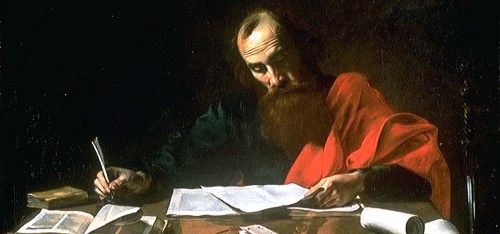
paul-editedI can’t reproduce the Greek but the question Pastor was asking is if the “gospel” being preached by the Influencers was indeed the gospel of Christ, or another preaching altogether. While we can agree that there is no other “gospel” of Christ, there can be other types or fashions of “good news,” and Pastor’s opinion is that the Influencers didn’t have to be believing Jews based on the text or context, and indeed, they might not be believers at all.

There’s a certain merit in this, since during Paul’s time with the Jewish communities in the area of Galatia, he encountered many Jewish people and God-fearing Gentiles who listened to the message of the Gospel, but not all of them came to faith.

One of the big, big problems that all Jewish people had with “the Way,” including many of the Jews within the Way, was how to admit Gentiles as equal covenant members without requiring that they become circumcised and convert to Judaism. Acts 15 answers that question, but Galatians was almost certainly written before the Acts 15 event. The decision that Gentiles were not required to convert seems to have been clear to Paul as he was writing the letter to Galatia, but James and the Council had not yet rendered a halakhic ruling based on legal proof-texts. The “Jerusalem Letter” made the decision official, but at this point, Paul is going by his understanding of the Messiah’s plan for the Gentiles through the guidance of the Holy Spirit.

Getting back to circumcision, Pastor maintains that Paul very well could have been telling both Gentiles and Jews that they did not have to become circumcised and observe the Law in order to be disciples of Jesus Christ, the Messiah.

OK, I accept that was Paul’s message to the Gentiles, but to the Jews? Would Paul ever say such a thing?

…and they have been told about you that you teach all the Jews who are among the Gentiles to forsake Moses, telling them not to circumcise their children or walk according to our customs.

Acts 21:21 (ESV)

That’s what finally got back to the Jews in Jerusalem about Paul, and they were taking it very seriously. What was Paul going to do to quell these rumors?

What then is to be done? They will certainly hear that you have come. Do therefore what we tell you. We have four men who are under a vow; take these men and purify yourself along with them and pay their expenses, so that they may shave their heads. Thus all will know that there is nothing in what they have been told about you, but that you yourself also live in observance of the law.

Acts 21:22-24 (ESV)

That’s the solution, but was Paul being disingenuous? That is, was he just going through the motions to mollify the Jerusalem Jews by undergoing a Jewish vow ritual, something he no longer saw as relevant in his life because of his faith in Messiah?

In other words, was he lying to the Jerusalem Jews (and was James and the Elders supporting his lies) about whether or not he was telling the diaspora Jews not to circumcise their sons and to forsake Moses? Did he really tell all those things to the Jewish populations in Galatia?

“I am a Jew, born in Tarsus in Cilicia, but brought up in this city, educated at the feet of Gamaliel according to the strict manner of the law of our fathers, being zealous for God as all of you are this day.

Acts 22:3 (ESV)

Now when Paul perceived that one part were Sadducees and the other Pharisees, he cried out in the council, “Brothers, I am a Pharisee, a son of Pharisees.

Acts 23:6 (ESV)

If anyone else thinks he has reason for confidence in the flesh, I have more: circumcised on the eighth day, of the people of Israel, of the tribe of Benjamin, a Hebrew of Hebrews; as to the law, a Pharisee; as to zeal, a persecutor of the church; as to righteousness under the law, blameless.

Philippians 3:4-6 (ESV)

arrestedPaul was certainly working to establish his “Jewish credentials” in these circumstances. I know that a lot of people, when in fear of their lives, would lie to save themselves, but if Paul were telling diaspora Jews to not circumcise their sons and to go against the Torah, would he have lied about it, even to save his own life?

That hardly seems likely. We know from the New Testament record that Paul endured enormous hardships for the sake of the Gospel of Christ, and that his own life was worth less to him than preaching the good news of Moshiach to the Jews and the Gentiles. If he was trying to save his own life, he wouldn’t have done what we know he did on numerous occasions, which resulted in him being beaten, left for dead, shipwrecked, arrested, put in prison, and ultimately executed by the Romans.

We also know this about some of the Jews in Jerusalem.

And they said to him, “You see, brother, how many thousands there are among the Jews of those who have believed. They are all zealous for the law…

Acts 21:20 (ESV)

Jewswho have believed and all zealous for the law. Believing Jews zealous for the law. Jewish disciples of Jesus as the Messiah who were also zealous for the Torah.

Of course they were upset at the thought that Paul was rumored to be teaching against the law to the diaspora Jews. Of course they were upset when they thought he had taken Trophimus the Ephesian into the Temple (Acts 21:29).

When the seven days were almost completed, the Jews from Asia, seeing him in the temple, stirred up the whole crowd and laid hands on him, crying out, “Men of Israel, help! This is the man who is teaching everyone everywhere against the people and the law and this place. Moreover, he even brought Greeks into the temple and has defiled this holy place.”

Acts 21:27-28 (ESV)

Paul was believed by the Jews from Asia to have taken a Greek into the Temple, defiling it (think “Maccabees” and Chanukah), and speaking against the people (Jews) and the Torah, and they called to the crowds of Jerusalem Jews to help capture this “traitor.” Either that was true and Paul lied about it to save himself, or it was untrue and Paul was defending himself from these vicious rumors. As I mentioned, Paul lying about this seems completely inconsistent with what we know about his history. If he’s telling the truth and the rumors are false, then Paul never told the diaspora Jews to not circumcise their sons, to not observe Torah, and he never took a Gentile into the Temple or spoke against Jewish people or Israel.

But if Paul supported Jewish observance of Torah and circumcision and if there were Jerusalem Jews who were both believers and zealous for the Torah, then they obviously didn’t see any sort of inconsistency between faith in Messiah Jesus and a traditional Jewish life of Torah observance.

I think I gave Pastor something to think about but he is going to test my beliefs very stringently, as well he should.

What is Torah?

Silly question, right? Not according to the quote from Rabbi Maurice Lamm I put at the top of this blog post. And yet, Pastor Randy said that he and I need to have a working definition of “Torah” so that we can know what we’re supposed to be talking about in these conversations. When I say, Paul was a “Torah observant Jew,” what do I mean? I think I know what I mean, but the answer is far more complex than we might imagine.

simhat-torahIt’s also important to understand what “Torah” was in the days of Paul and the Apostles so that we can establish how that relates to what Torah is today. What “Torah” observance is appropriate for a modern “Messianic Jew” to follow? Are those practices identical to say, an Orthodox Jew? How does that observance relate to modern Jewish halachah, let alone the future of the Torah and the rebuilding of the Temple?

Rabbi Yanki Tauber calls the Torah a guidebook, a contract, an identity, a vision, and a daughter and wife. Rabbi Tzvi Freeman calls Torah “oneness.”

The writers at First Fruits of Zion (FFOZ) say this about Torah:

The Torah is the foundation of faith in Yeshua. All of the concepts associated with the Gospel—such as God, holiness, righteousness, sin, sacrifice, repentance, faith, forgiveness, covenant, grace and the kingdom of heaven on earth—are introduced in the Torah. Basic sacraments and rituals like baptism, communion, prayer and blessing all come from the Torah. Faith in Jesus is meaningful because of the Torah. Without the Torah, the Gospel has no foundation on which to stand.

The Hebrew word torah is translated “law” in most of our English Bibles. The Torah is called the Law of Moses because Moses wrote it, but the Torah is more than just a legal code. The word “Torah” (תורה) is from the Hebrew root, yara (ירה) which means “to instruct,” or “to teach.” Although it does contain laws, Torah itself is not only a “law,” but it is God’s “teaching” and “instruction.” That explains why the word Torah is often used to refer to the whole Bible. From our perspective, even the Gospels, Acts, Epistles, and Revelation fall under the broad definition of Torah. It’s all God’s instruction, and it’s all rooted in the Torah of Moses.

The Torah is the story of God’s people and how they came to be the people of God in the first place. The Torah is something all believers have in common. We all have this common ground. The Torah is our shared origin. It is God’s book.

And that hardly scratches the surface.

What is “Torah” relative to my conversations with Pastor Randy when trying to comprehend Paul, his letter to the Galatian churches, and the wider scope of how to understand Jews in Messiah today?

I am entertaining suggestions and comments. Please let me…let us know what you think and let’s see if we can be pointed in the right direction.

The Divine Arsonist: A Book Review

divine-a“Thank God for David and for the creek. They said the cold water probably saved your life. David called in a Lifeflight helicopter and covered you with a blanket. He stayed with you the whole time. They got you down here to St. Luke’s but you were in a coma by then. That was four months ago. Four months. The doctors are shocked that you made it at all. You were a mess. The whole left side of your body was shattered, ribs, arm, pelvis. The burns were bad but they were more worried about the skull fracture. They kept testing you for brain wave activity and every time they were amazed by the results. Even though you were deep in a coma, they said it was like you were living a parallel life somewhere else.”

-Jacob Nordby from the Epilogue of his book
The Divine Arsonist: A Tale of Awakening

This isn’t the sort of book I normally read but somehow Jacob Nordby ended up being my “friend” on Facebook, and his book “Divine Arsonist” keeps coming up in my Facebook updates. I don’t really know how we got to be “friends” on Facebook (I’ve never met him) except that we both live near Boise and we’re both published authors.

I’m generally skeptical of self-help books or texts that purport to show some sort of inner truth or secret meaning to life, but in the back of my brain, every time “Divine Arsonist” appeared in my web browser, I couldn’t shake a twinge of curiosity. Also, I remember part of a transaction I had with Nordby on Facebook. I don’t remember the conversation specifically, but I do remember him gently chiding me about the “path” I’m on, referring to my faith. So I was curious about his particular path.

And I review books.

I normally receive complementary copies of the books I review from the publisher but this time I purchased a kindle edition, which was very inexpensive. I thought I’d shoot through the text rather effortlessly, but I had to really make myself read his book, and I found myself fighting the temptation to abandon it about halfway through.

I don’t want to be unfair. If this book is the result of Nordby being the victim of a hit-and-run car accident in which he was terribly hurt, and if he has suffered all of the misfortunes the Epilogue of his book records, then I have nothing but compassion for him and his family, and I do not want to make light of his experiences. And yet, so much of his book of spiritual allegory is presented as part of his lived experience, I don’t know where his actual life stops and all the fiction begins.

So what did I think of his book?

The Divine Arsonist is the story of a businessman who worked hard to climb the ladder of success only to have something whisper to him that perhaps there was something more to discover. This is his journey of discovery told in a blend of the personal story and fiction. It immediately spoke to me of the question: When do we start dreaming a new dream for ourselves and our world? The old ways are burning us out. That’s where Jacob is at the beginning of his journey. There are so many elements of a shamanic journey, vision quest or hero’s journey from old mythology: meeting spiritual guides, being challenged to endure rites of passage, time in the wilderness, facing the shadow and opening to all the levels of reality beyond our day-to-day “get it done” consciousness. The writing is luscious, descriptive and an easy read. I could have easily read it in one sitting but I forced myself to turn off the light at night and savor it over the course of several bedtime reading sessions. There are beautiful teachings that you want to grab the highlighter to remember.

Jacob’s journey toward finding his light is an invitation or challenge to go on your own journey, to claim your own light. It is a tale that reminds us that life is short and that we are choosing the world we live in right now with each thought and each action we take. It is a story that reminds us that sometimes we have to let go of everything that we think we know to become the person we came to earth to be. Even though I’ve had my own awakening moments, Jacob’s writing made me want to commit to living them on an even deeper level. Isn’t that what we want a spiritual book to do?

Amazon review by Carol Woodliff

I don’t normally look at the other reviews of a book I intend on reviewing, but after finishing Nordby’s book, I thought I must be missing something. Woodliff’s review is typical of the overwhelming amount of praise “Divine Arsonist” has received, at least on Amazon. So why aren’t I “wowed” too?

“So, back to your book. Emerson said ‘make your own Bible. Select and collect all the words and sentences that in all your reading have been to you like the blast of triumph out of Shakespeare, Seneca, Moses, John and Paul.'”

-Nordby, Chapter Ten

Those few sentences really tell you everything you need to know about the philosophy that Nordby relates in “Divine Arsonist.” The essence is to not rely on any single truth such as, for example, Christianity or Taoism, but to derive truths from whatever seems to touch you as a truth. While Nordby’s story relies on external “guides” such as Lucius and Jack to assist the author on his spiritual journey, the truths that seem to come out in the end are truths that matter most to Nordby…or presumably anyone on a similar path. It’s what you would expect of a person taking different elements from a wide variety of world religions and philosophies and weaving them into what looks, sounds, and feels right to that individual…a completely, subjectively constructed set of truths.

CASTANEDA_kraftensgjerningerAlthough Nordby only mentions the works of Carlos Castaneda in passing, the experiences he relates reminds me of how Castaneda’s “Don Juan” series has been described to me (I’ve been meaning to read Castaneda for years but never got around to it). I guess that’s what impresses me the most, or fails to impress me, about “Divine Arsonist.” It seems all too derivative, all too “borrowed” from other religions to be truly insightful, let alone remarkable.

I swam through a field of unconditional love to explore the Great All-Nothing. Without effort, I was there, face to face with what could only be the Mystery of Mysteries, Yahweh, Baha, Wakan, Tanakh, Allah, Krishna, God the Father-Mother, Rah.

I have to assume that some parts of the book accurately describe Nordby’s past, and if so, then Christianity, or the part he experienced, was extremely…extreme, and restrictive, and joyless. Nordby did manage to salvage some portions of the Christian writings, but a much larger part of his philosophy is founded on nature-based religions such as different Native American beliefs. There was also a fair amount of mysticism involved and I’ve spent enough time reading Kabbalah and Chassidic Tales to recognize some symbols from those sources (I should say that I doubt Nordby has actually read from Jewish mystic texts, but many mystic themes seem to travel across different disciplines).

Here’s a short sample:

Masters and ancient ones have appeared to bring the light. In earlier days men were more simple, natural. They lived with the Earth and were guided by the Great Mother’s voice.

A dual male/female god isn’t unusual, even in Judaism. In mystic thought, the Ein Sof is the powerful, creative, male force God while the Divine Presence, which descended upon the Tabernacle in the desert (see the end of the Book of Exodus) is considered feminine and nurturing.

There also seemed to be some of the eastern philosophies influencing Nordby, “surrendering the ego” and such, and though I doubt it was intentional, I caught a few references that could have been from The Matrix (1999) and even the cave scene from The Empire Strikes Back (1980), though the connections were only superficial.

“Divine Arsonist” seems to be the sort of book that would appeal to someone who is on a spiritual journey (and aren’t we all) but who doesn’t want to choose one of the pre-conceived paths. Well, not exactly, anyway. If a person isn’t attracted to a pre-existing religion or philosophical discipline, then “Divine Arsonist” offers the alternative of borrowing as much or as little from any or all of the traditions human beings have created for themselves over time. It’s actually quite appealing when seen from that light.

I don’t want to minimize the impact of all this, particular in Nordby’s life, since it is obviously quite significant.

However, as you know if you’ve been reading this blog for any length of time, I travel a somewhat different path, and while it isn’t entirely traditional, it is truthful to say that I rely on what I consider to be an objective and external God, the God of Abraham, Isaac, and Jacob, and a book or repository of truth and wisdom that has existed in one form or another for thousands of years. The difference for me in writing my own Bible vs. exploring the one I believe was given to us by God, is that in the former, I’m investigating merely myself and my own symbols in relation to my environment and how I perceive it, even in the spiritual realms. In the latter, I’m delving into not only my relationship with my environment but my relationship with the One, Radical, Creative, Unified, God and how He desires to relate to me.

seeking_the_sunTruth isn’t just what I decide it will be, even below the conscious level (although most humans sometimes attempt to manipulate “truth” to their own advantage), but it’s what God has decided it will be. My task is to search for truth where ever it may be found, uncover it, and let the sparks fly upward back to their source (and you’ll forgive me if I momentarily borrow from the imagery of Chassidic mysticism).

God has created a trail for each of us and in partnership with Him, we walk the trail together, not because God needs us as a companion, but because God wants unity with human beings and He desires to teach us about a relationship with Him. The problem with internally generated symbolism and meaning is that ultimately, you can never surprise yourself or learn something new. Oh I don’t doubt that it can be very beneficial in many ways.

But it’s not God.

However, Nordby did remind me that I always did intend to read Carlos Castaneda, so after I finish the next book in my pipeline, I’ll finally get to The Teachings of Don Juan.

After everything I just said about Nordby’s book, why would I read another book (or book series) that promises to reveal yet another “alternative” spirituality? Curiosity? Yes. But I also want to pursue the history and the mythos that Castaneda’s work contains. After all, Castaneda’s books are considered classics in their genre and not derivatives of previous works (as far as I know).

There is value in unfolding another’s symbolism and following the thread woven into their tapestry…just as long as you remain grounded upon a firmer foundation.

The Problem with Religious People

rob-bellThe former pastor and founder of Mars Hill Bible Church in Grandville, Mich., made the comment during a guest appearance this past Sunday at The Forum at Grace Cathedral in San Francisco to discuss his new book, What We Talk About When We Talk About God.

Grace Cathedral is the Episcopal Cathedral of the Diocese of California and describes itself as “an iconic house of prayer for all” and is home to an “inclusive congregation.” The congregation’s dean, the Very Rev. Dr. Jane Shaw, moderated The Forum discussion before a live audience.

When asked by Shaw if he was in favor of “marriage equality,” the politically-charged term used by some who want “marriage” redefined, Bell said:

“Yes, I am for marriage. I am for fidelity. I am for love, whether it’s a man and a woman, a woman and a woman, a man and a man. I think the ship has sailed and I think that the church needs to just … this is the world that we are living in and we need to affirm people wherever they are.”

-Nichola Menzie
“Rob Bell Supports Same-Sex Marriage, Says He Is for ‘Fidelity and Love'”
March 18, 2013 | 2:42 pm
ChristianPost.com

As for Acts 15, this is not a set of different instructions for Gentiles. But salvation is by faith, for Jew and Gentile alike. We believe they will be saved the same way we will be saved. The Torah is not the yoke that we nor our fathers have been able to bear, but rather, specifically, the Torah “according the custom of Moshe.” So it is that Paul recalls his words to Peter in Galatians, that Peter did not live “like a Jew.” The followers of Messiah Yeshua inherently cannot submit to all of the traditions of Judaism. To do so would be to disobey the Master and the Commandment of God. In separating himself from the Gentiles, Peter was submitting to Jewish halachic rulings that are not in step with the gospel, and requiring Gentiles to do likewise. Gentiles should start with the four prohibitions in Acts 15—which people are cut off from Israel for breaking—so that they can join the assembly and learn the Commandment of God, which is read in every city every Sabbath. They do not need to become Jewish and submit to the Oral Torah, they simply need to have faith in God and His Mashiach and let obedience to the Commandment working through love be the expression of that faith.

-Charles commenting on my blog post
Moshiach Rabbeinu

Why is everyone trying to change my mind?

I saw the news item about Rob Bell a few days ago. The link was posted by a Facebook “friend” (I put “friend” in quotes since I’ve never met the individual and know him solely through Facebook). It wasn’t directed specifically at me, though I did comment about it a few times on Facebook and then dropped the issue.

But Charles came to me or more accurately, to my blog to comment on his views and to disagree with mine. He seems like a nice guy. I don’t doubt that he’s sincere. But in reading my blog, he should have known from the start that we were coming from two different points of view.

Don’t get me wrong, I don’t expect to be universally accepted, agreed with, or liked. Especially in the world of religion, it’s almost a given that if you’re outspoken at all, people are going to “hunt you down like a duck” (to quote Buford Tanner from the third Back to the Future movie) from the four corners of the earth just to tell you that you’re not only wrong, but a total blockhead (with apologies to Charlie Brown, who’s been called a blockhead more times than I can count).

But it occurred to me to ask, and especially in the context of Charles and people like him, people who don’t know me or have any particular reason to read, let alone comment on my blog, why do they care what I think, say, and believe?

I mean, the Internet is full of bloggers. According to dazeinfo.com, by the end of 2011, there were 181 million blogs on the Internet. That was well over a year ago, and I’m sure there must be even more by now (jeffbullas.com has some interesting info on the nature of the blogosphere in 2012, but nothing relevant to the religious blog space).

So why me? Do I comment on your blogs? No, and in fact, I’ve deliberately stopped commenting on blogs where I know my opinions will cause a small and virtual riot just because I’m sick and tired of all the arguments. Discussions? OK. But why charge down my throat just because you know you can?

And it’s not just the blogosphere anymore.

a-j-jacobsMy Pastor recently loaned me a copy of A.J. Jacobs’ book The Year of Living Biblically. I’ve just started reading it and so far, find it entertaining and humorous. Jacobs is Jewish and not religious in the slightest, but he was determined, for the sake of writing a book, to live as close to a literally Biblical life as possible for an entire year.

I might have taken some sort of offense to his approach, but apparently this is the type of book Jacobs writes. He immerses himself in a subject for a significant period of time in order to learn, often with amusing results, records his experiences, and then turns all that into a book.

But then I had a thought. Is it possible that Pastor gave me this book to read for a specific reason, one particularly related to whether or not the Torah is possible to observe by Jews in today’s world? I’ll have to ask him, but I don’t see him until tonight.

I can understand why Pastor would want to instruct me, enlighten me, edify me, since we have a one-on-one, face-to-face relationship and I attend his church, but why does the Internet care?

Even the people I agree with theologically have some sort of interest in maintaining my current belief system which dovetails into their’s. I’ve made a paradigm shift before. What if I do so again? Who will be affected? How will they react? How much of other people’s emotions and interests are tied to what should be a single individual’s personal understanding of God and faith?

And then there’s political correctness to consider. Atheists and the socially and politically liberal religious individuals and movements are interested in convincing me (well, maybe not me personally, but everyone like me) that not only “gay is good” but that being gay is biblical and that I should not only adopt that belief as a matter of religion but as a matter of politics, carrying it all the way to the ballot box.

Does my personal opinion about how “marriage equality” factors into my understanding of the Bible have anything to do with anybody else? It’s not like I’m protesting at gay weddings or writing letters to the editor. I’m not even vocal about the issue except when my hand is forced. I live in a nation of laws and when (I don’t doubt that it will happen, it’s just a matter of time) marriage between same-sex couples becomes legal nationally, I won’t say “boo” about it. Actually, it’s not a law I could break, even if I wanted to, since I’m in no position to affect such a law one way or another.

But some people want or need me to agree with them anyway. Go figure.

After finishing Jacobs’ book, I plan to start reading Carlos Castaneda’s The Teachings of Don Juan: A Yaqui Way of Knowledge. No, I don’t plan to adopt it as my model for a personal spiritual journey, but Castaneda’s books are considered classics in their genre and I’ve been meaning to read at least a few of them for the past thirty years or so. I just never got around to it before.

I’m beginning to get disgusted again with all the little games that people play in the religious blogosphere. I’m really getting tired of all of the “I’m right and you’re wrong” pettiness that is going on out there. If it stayed “out there” it would be easy to ignore, but it’s invading my space. I’m not here to be a target. I want to be free of your chains. But it seems the only way to do that is to abandon contact with religious people and pursue God independently. Yes, that’s full of pitfalls and I returned to church just because of those pitfalls.

But I’m having second thoughts. If God wants me, He’s got me, but that doesn’t mean I have to join your particular club just because it makes you feel better to drag in more members, be ye “One Law,” Two House,” “Hebrew Roots” or any other “label” that comes with a dogma on a leash.

burning-the-sacredI can sort of see why Jacob Nordby wrote his book (which I’ll review shortly) The Divine Arsonist, since it’s the latest in a long line of attempts by people to reinvent God and religion in our own personal image. I can understand why concepts such as free range humans are coming to the surface. People want control of their lives and they’re tired of the environment defining the parameters by which we must live. That includes the parameters by which we must believe and have faith.

Christians like to say “God is in control” but when it comes to faith, it’s more like the religions and the people occupying their favorite religions that want to take control…of me.

OK, I’m exaggerating. I’m not that important to anyone, at least to anyone on the web. I could disappear tomorrow and probably not inspire so much as a raised eyebrow. Which makes it all the more mysterious to me why people want to control what I say, think, and believe.

If I don’t believe the same things as you and through my beliefs, I’m not harming you (I don’t visit you, yell at you, try to change your life, picket your weddings and funerals, pollute your holy water, or otherwise interfere in your life and the practice of whatever faith to which you’re attached), then why do you care about my religious convictions? Honestly, if I believe that God really doesn’t expect me to wear a tallit gadol when praying, doesn’t expect me to not mow the lawn on Saturday morning, doesn’t expect me to not eat a cheeseburger, how does that impact you even slightly?

Yes, I’m ranting. It’s my blogspot and I’m entitled to rant here. Tomorrow, I may wake up and feel better but right now, I’m a little tired of “religion” (and please, don’t drop by and tell me that Christianity “is a relationship, not a religion,” trust me, it’s a religion).

If you want to ask me a question, fine. If you want to deliver a polite and civil comment, fine. Even if you disagree with me and want to tell me why you do what you do, fine. Just don’t feel like you can tell me what I can, should, must do just because you’ve made those decisions for you.

When I refrain from eating bacon or sausage for breakfast, I’m not doing it because I think God will fry me in pork fat if I do. I’m making a personal decision based on my own convictions. Please feel free to enjoy a good pork chop or a steaming hot bowl of shrimp scampi. I won’t mind. If you’re a gay guy and want to marry your partner, fine. If you’re a through and through Gentile without a drop of Jewish blood in your veins and you feel you must pray in Hebrew facing toward Jerusalem and calling Abraham, Isaac, and Jacob your “fathers,” go for it.

But I’m not going to pretend they’re my fathers just because you want me to. My relationship with God is my relationship with God. I blog about it. So what? Deal with it. If you don’t like what I say, don’t come to my blog. I promise, I’ll never come to your blogs and I absolutely promise I’ll never comment on any of them.

I write because that’s what I do. I’m a writer. I write for my job. I write to process information. I write for fun. Maybe someday you’ll succeed in chasing me out of the blogosphere, but I don’t know what would compel me to shut up. On the other hand, there are days like today when I could happily pull the plug and just read and study by myself, no other human beings required.

Got it?

Four Questions, Part 4

tallit_templeThis is a continuation on the topic I started discussing in Lancaster’s Galatians: Introduction, Audience, and What Happened to the Torah? and continued in Broad Strokes. I asked the first three of these four questions in Part 1, Part 2, and Part 3 of this series. Part 4 presents the fourth and final question. Hopefully, the answer will be illuminating.

Just a reminder, all quotes from scripture will be from the ESV Bible unless otherwise stated.

Belief in the coming of the Messiah has always been a fundamental part of both Judaism and Christianity. The Hebrew word for Messiah, Mashiach or Moshiach, means anointed, as does the Greek word, christos. Thus in Christianity, Christ is just another word for the Messiah. Much has been written about Jesus as the Messiah within the Christian realm, but little information has been publicized to the uninformed Jewish community concerning the coming of a Messiah, whom all we know about is that he will be a direct descendant of king David. Although Jesus has been proposed by Christianity to be such a descendant, Judaism does not accept Christ as their savior or king. Because the Messiah cannot be separated from God’s Third Temple and because God’s Third Temple is destined for all people…

“Coming of the Messiah”
ThirdTempleInfo.org

“For thus says the Lord: David shall never lack a man to sit on the throne of the house of Israel, and the Levitical priests shall never lack a man in my presence to offer burnt offerings, to burn grain offerings, and to make sacrifices forever.”

Jeremiah 33:17-18

I’ve written about the Messiah and the Third Temple before, but this is a slightly different approach because of the fourth and last question.

What is the Future of the Torah and the Temple?

Pastor Randy and I both agree that there will be another Temple built in Jerusalem, and if the Jewish understandings of the prophesies about Messiah are accurate, then we know that Messiah will build the Temple.

Here’s a brief refresher about the Messianic prophesies courtesy of Judaism 101:

The mashiach will bring about the political and spiritual redemption of the Jewish people by bringing us back to Israel and restoring Jerusalem (Isaiah 11:11-12; Jeremiah 23:8; 30:3; Hosea 3:4-5). He will establish a government in Israel that will be the center of all world government, both for Jews and gentiles (Isaiah 2:2-4; 11:10; 42:1). He will rebuild the Temple and re-establish its worship (Jeremiah 33:18). He will restore the religious court system of Israel and establish Jewish law as the law of the land (Jeremiah 33:15).

The idea of a Third Temple gets a bad rap from a lot of Christians because it begs the question about future sacrifices. If the sacrificial system only existed to point to Jesus and Jesus has come, gone, and will come again, why would Jesus, upon his return, build another Temple and (supposedly) restart the sacrificial system? Weren’t our sins already paid for once and for all by Christ’s death on the cross?

What makes you think that the only sacrifices made in the Temple were for sin? Also, what makes you think that only Jews made sacrifices in the Jerusalem Temple of the past or that Gentiles won’t make sacrifices in the Third Temple?

That Gentiles as well as Jews brought sacrifices to the Temple is implied in the prayer of Solomon when he dedicated the Temple (I Kings 8:41-3) and in the declaration by the prophet that the Temple will be a house of prayer for all peoples (Isaiah 56:7).

-Rabbi Louis Jacobs
“Sacrifice”
MyJewishLearning.com

Within the Books of the Prophets, we find that in the past, Gentiles were welcomed to the First and Second Temples, and that they will participate even more at the Third Temple.

In his commentary on the Torah section beginning with Gen. 12:1, Ramban (Nachmanides) wrote:

“Even in the time of Joshua, … the Gentiles knew that this place was the most august of all, that it was at the center of the inhabited world; and Tradition had taught them that it corresponds in this world to the celestial Temple where Divine Majesty, called (righteousness), resides.”

When the First Temple was inaugurated by King Solomon, he beseeched G-d with an eloquent prayer that included the following words (Kings I, 8:41-43) (which show that in the past, Gentiles were welcomed to the First and Second Temples, and that they will participate even more in the Third Temple):

“If a foreigner who is not of Your people Israel comes from a distant land for the sake of Your name – for they shall hear about Your great name and Your mighty hand and Your outstretched arm – when he comes to pray toward this House, oh, hear in Your heavenly abode and grant all [!] that the foreigner asks You for. Thus all the peoples of the earth will know Your name and revere You, as does Your people Israel; and they will recognize that Your name is attached to this House that I have built.”

Torah Law holds that Gentiles are allowed to bring burnt offerings to G-d in the Temple when it is standing in Jerusalem. There is a specific commandment to let us know that an animal (sheep, goat or bullock) offered in the Temple by a Gentile must be unblemished, to the same degree as the offering of a Jew. (Leviticus 22:25)

-from “Will Gentiles be permitted to worship at the Third Temple in Jerusalem?”
AskNoah.org

messiah-prayerI know I’m borrowing heavily from my previous blog post and you may be wondering why I just didn’t reblog it as the answer to this fourth question. But here’s the new thought.

If there indeed will be a Third Temple that Messiah will build and if part, most, or all of the sacrificial system will be reinstated, then what is the role of the Torah in Messianic Days?

Pastor Randy and I talk a lot about what the role of Torah was in the days before the destruction of Jerusalem in 70 CE and what the role of Torah is now. He believes, using Orthodox Jewish halachah as a guide, that the Torah is too difficult to keep and has always been too difficult to keep. I’m pretty sure I spelled a lot of that out in my blog post about my last conversation with him a week ago.

“For this commandment that I command you today is not too hard for you, neither is it far off. It is not in heaven, that you should say, ‘Who will ascend to heaven for us and bring it to us, that we may hear it and do it?’ Neither is it beyond the sea, that you should say, ‘Who will go over the sea for us and bring it to us, that we may hear it and do it?’ But the word is very near you. It is in your mouth and in your heart, so that you can do it.”

Deuteronomy 30:11-14

Doesn’t sound like Moses (or God) intended the Torah to be too difficult to obey or too hard to access.

Here’s another reason why the Torah has a future in the days of Messiah.

Then everyone who survives of all the nations that have come against Jerusalem shall go up year after year to worship the King, the Lord of hosts, and to keep the Feast of Booths. And if any of the families of the earth do not go up to Jerusalem to worship the King, the Lord of hosts, there will be no rain on them. And if the family of Egypt does not go up and present themselves, then on them there shall be no rain; there shall be the plague with which the Lord afflicts the nations that do not go up to keep the Feast of Booths. This shall be the punishment to Egypt and the punishment to all the nations that do not go up to keep the Feast of Booths.

Zechariah 14:16-19

I could draw from more scriptural quotes but chances are you know them all and they’re referenced above anyway. If a Third Temple will be built by Messiah, and if sacrifices and festivals that require sacrifices will be reinstated, and if Gentiles will not only be allowed to worship at the Temple and make sacrifices but in some cases, required to do so, then how will all that be possible if the Torah is not observed, at least as far as the Temple is concerned?

It seems clear that the Torah had a vital role in the existence of the Jews of ancient Israel and it will have a vital role in future, Messianic Israel. But what happens to Torah in the meantime? Does it just vanish temporarily from existence, put in cold storage until it’s needed, and then brought out, thawed out, and then be put back into service when Messiah starts his construction work?

Well, no. First of all, religious Jews observe the Torah every day. For that matter, Christians observe substantial portions of the Torah (ideally) every day. Every time a Christian performs any act of kindness in the name of Jesus, he or she is observing one of the mitzvot. They (we) just don’t call it that. Every time a Christian donates money, food, or some other good or service to the poor, they are observing a mitzvah (probably more than one). Every time a Christian comforts a person who is grief-stricken at the loss of a loved one, performs an act of kindness that assists the successful wedding of a bride, visits a sick person in the hospital, visits someone in jail, shovels snow off of a neighbor’s driveway and sidewalk unasked…they are performing Torah mitzvot.

The Torah is hardly obsolete. The Law isn’t dead. In fact, if Christians and Christianity are functioning properly, the Torah is alive and well and being performed in churches around the world and in the lives of Christians and their neighbors every day. The Torah is also alive and well and being performed in synagogues around the world and in the lives of Jews and their neighbors every day. No, not all Christians and not all Jews are doing what God expects of them (us), but some are. Not everything that some Christians think of as “the Word of God” and not everything that some Jews think of as “Torah” is really God’s Word and Torah.

Some Christians have some pretty funny ideas about how they’re supposed to judge people who don’t comply with their personal political and social agenda, and some Jews have some pretty funny ideas about how far to take all of the massive compilation of halachah that has become attached to Torah. I suspect when Messiah returns, he’s going to help us all out by teaching us what God’s expectations are really all about and what the Torah is supposed to mean as applied to Gentile Christians and as applied to Jews.

But be that as it may, the Torah has a past, a present, and a future. It has to, otherwise what even traditional Christians understand about the Bible doesn’t make sense, and many specific passages of scripture don’t make sense.

I have no idea exactly how we are to apply the Torah in the lives of Jews or Christians today except in a general, common sense way. As I’ve said numerous times before, based on Acts 15, Acts 21 and various other scriptures, I don’t believe that Gentile, God-fearing believers in Messiah are expected to observe the mitzvot in the manner of the Jews. I do believe we are to observe it as taught by Messiah, and what he taught focused on the acts of kindness and charity I mentioned above. I also believe that Jewish people, believers in Messiah Yeshua and otherwise, remain under all of the covenants that God made with Israel. The New Covenant extends the part of the Abrahamic covenant that allows the Messiah to bless the nations to the rest of us, providing salvation and relationship to God for the Gentiles who are called by Messiah’s name, and providing reaffirmation of all of the previous covenants to the Jewish people.

renewalWhat’s New about the New Covenant, as I was recently reminded, is that it will be written on our hearts. The actual content of the writing won’t change but how we will perceive it and live it out will be different. I say “will be” as opposed to “is” because if the “writing” were a done deal, we all would be leading very different lives, rising above sin, rising above the cares of the world, all “knowing God” in a way that currently escapes us.

Messiah opened the door and he holds all the keys, but he’s not done yet and until he is, the finger of God is still in motion, slowly inscribing “Torah” on the hearts of Christians and Jews everywhere.

But that Torah is and will be about the Temple, Sukkot, Pesach, Shavuot, and many more things most Christians don’t consider important anymore. That Torah will be a pure product, freed from our biases, our interpretations, our confusion, and our controversies.

But there was a Torah. There is a Torah. And there will be a Torah. Our current understanding is not very good, and like Paul said, we are seeing the Bible and the things of God as through a mirror dimly (1 Corinthians 13:12). We’re all still going to mess up a “free lunch” until Messiah returns. Until then, we still have to eat that lunch, so to speak, even if we do so poorly. At least we’re mindful of God and His will and His Word.

For truly, I say to you, until heaven and earth pass away, not an iota, not a dot, will pass from the Law until all is accomplished.

Matthew 5:18

Do we then overthrow the law by this faith? By no means! On the contrary, we uphold the law.

Romans 3:31

I hope you enjoyed going over these four questions with me. As you read this, it is Wednesday morning, and tonight, I’ll have another conversation with Pastor on Lancaster’s “Galatians” book. May I continue to be inspired and illuminated by my relationship with Pastor Randy and may God grant both of us the eyes to see and the ears to hear what our Master is teaching us all.

Addendum, March 21: My wife emailed me a link to Rabbi Shlomo Yaffe’s article The Dynamic of Sacrifices. Rabbi Yaffe tells a wonderful story about the meaning of the Olah offering, the fire from God, and how the sacrifices in the Third Temple, built by Messiah, will provide the means for a unity between all people.

“I will bring them to My holy mount, and I will cause them to rejoice in My house of prayer; their burnt offerings and their sacrifices shall be acceptable upon My altar, for My house shall be called a house of prayer for all peoples.”

Isaiah 56:7

Amen and may it come soon and in our days.

Moshiach Rabbeinu

rabbeinu1Believe it or not, this week’s message was not inspired by the fact that the Catholic Church has chosen a new Pope; it just offers a convenient contrast. As you probably know, there is, in their beliefs, a doctrine of papal infallibility. When the Pope teaches the rules, he is always right.

It is natural to assume that Judaism has something similar. This is especially true, given the Torah’s demand that we listen to the Rabbis and Judges, and not deviate “right or left” [Deut. 17:11] from what they say.

-Rabbi Yaakov Menken
“Everyone Makes Mistakes”
Commentary on Torah Portion Vayikra
Project Genesis

I’ve been hesitating about writing this particular “meditation” because it has the potential to be rather controversial. As part of my conversations with Pastor Randy, we’ve been discussing what is Torah? That’s an amazingly difficult question to answer. It’s not just the Five Books of Moses, and I believe that it should be at least the entire Tanakh (Old Testament). I believe a great deal of the New Testament and certainly the epistles of Paul should be considered midrash on Torah, specifically in relation to the teachings of Messiah.

As I’ve said before (and will say again when I publish “Four Questions, Part 4” tomorrow), Pastor Randy believes that the Torah is too difficult to observe perfectly and in fact, has always been too difficult to observe. This is pretty much what most of Christianity believes, and along with that, the church sees the primary purpose of Torah as always pointing to Jesus. Once Jesus came, the purpose of Torah expired and grace was substituted.

I don’t happen to believe this, and my understanding is that Jewish people, including those who are disciples of the Master, remain obligated to the Torah of Moses.

But I’m not here to talk about the Torah as such (I’ll do that tomorrow), but rather how it is applied through Rabbinic interpretation and authority. This is the really touchy part. As Rabbi Menken writes, there’s a tendency to view the sages in a manner similar to how Catholics view the Pope, as infallible and that all Rabbinic rulings are automatically correct. But is that really true? Rabbi Menken continues.

We see from this week’s reading, though, that this is definitely not the case. The Torah prescribes special atonement for when the High Priest, the King, or the Sanhedrin [Lev. 4: 13-21], the High Rabbinical Court, makes a mistake. In other words, the Torah highlights for us that it is possible for the Sanhedrin to be mistaken.

This is not about a small matter, either. The commentaries say that the mistake described here is one in which the Sanhedrin teaches that it is permitted to do something, and the Sanhedrin later realizes that the behavior is prohibited — so much so that a person committing the act deliberately would suffer the punishment of Kares, spiritual excision [the exact definition of this is disputed, but severe]. Even in matters of religious law, where the Sanhedrin’s supreme authority is undisputed — even there, they could make a mistake.

So why, then, does the Torah tell us to listen to them? They could, after all, be leading us in the wrong direction!

That is an extraordinarily good question. It’s also the question that comes to the minds of just about all Christians, including many people in the Hebrew Roots movement who believe that the Bible contains everything necessary for a Jew to observe Torah without relying on external interpretation or additional instructions.

Based upon a proof from a Baraisa, the Gemara had concluded that a lechi post is not valid if it is not recognizable from the inside, although it is visible from the outside. Yet, the Gemara proceeds to inform us that the halachah is that such a lechi is valid. Immediately, the Gemara asks, “We have disproven the validity of such a lechi, and yet the halachah rules that it is valid?!”

The Gemara continues to resolve this halachic conclusion, based upon yet another Baraisa which validates such a lechi.

This give and take, where the Gemara proves one point of view, and then immediately concludes the halachah according to the opposite opinion is relatively uncommon. A computer check reveals that it appears only five times in Shas (here, Kesuvos 41b-twice, Bava Kamma 15b-twice, Bava Metzia 22b).

Daf Yomi Digest
Distinctive Insight
“It is disproved – but yet it is the Halachah!”
Eruvin 10

That didn’t help. I admit, the complexities of Talmud escape me most of the time and yet religious Judaism in all of its variants, depends on these rulings, laws, and judgments for so very much.

My question is basic. Is literally every single ruling, judgment, halachah, and word of every sage everywhere across time valid and binding in religious Judiasm, or is it possible that at some point, the sages have gone too far?

Kapparot is a custom in which the sins of a person are symbolically transferred to a fowl. It is practiced by some Jews shortly before Yom Kippur. First, selections from Isaiah 11:9, Psalms 107:10, 14, and 17-21, and Job 33:23-24 are recited; then a rooster (for a male) or a hen (for a female) is held above the person’s head and swung in a circle three times, while the following is spoken: “This is my exchange, my substitute, my atonement; this rooster (or hen) shall go to its death, but I shall go to a good, long life, and to peace.” The hope is that the fowl, which is then donated to the poor for food, will take on any misfortune that might otherwise occur to the one who has taken part in the ritual, in punishment for his or her sins.

-Richard Schwartz, Ph.D.
“The Custom of Kapparot in the Jewish Tradition”
JewishVirtualLibrary.org
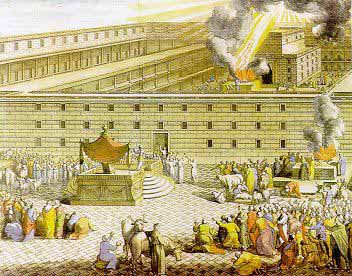
Solomons-TempleThe Torah, particularly the book of Leviticus, provides an extremely detailed description of the various sacrifices to be given at the Temple in Holy Jerusalem, and under what circumstances a Jew must present said-sacrifices. To the best of my knowledge, none of them involve the use of a chicken as described by the modern rite of kapparot. Dr. Schwartz details some of the Jewish objections to this practice.

Some Jewish leaders felt that people would misunderstand the significance of the ritual. The belief that the ceremony of kapparot can transfer a person’s sins to a bird, and that his or her sins would then be completely eradicated, is contrary to Jewish teachings. For, if the ritual could remove a person’s sins, what would be the need for Yom Kippur, the Day of Atonement?

The Mishneh Brurah, an eminent contemporary commentary on Rabbi Joseph Caro’s classical codification of Jewish law, explains the significance of the ritual. Judaism stresses that a person can’t obtain purity from sin, and thus obtain higher levels of perfection, without repenting. Through God’s mercy, we are given the Divine gift of repentance, so that we might abandon our corrupt ways, thereby being spared from the death that we deserve for our violation of the Divine law. By substituting the death of a fowl, one will (hopefully) appreciate G-d’s mercy and be stirred to repentance. By no means, however, does the ritual and the slaughter of the bird eradicate one’s misdeeds, even though the bird is donated to the poor.

If a Jewish person is a disciple of the Master and has studied and accepted the teachings in the Apostolic Scriptures, he or she understands that this particular ritual is not meaningful or necessary. The sins of anyone, Jew or Gentile, who has accepted Jesus (Hebrew: Yeshua) as Savior, Lord, and Messiah, have been forgiven. He died, paying the price for our sin as the ultimate atonement, and when we repent (and we must repent) of our own sins, turning away from them, and turning to God, we are forgiven once and for all without the need for further sacrifices.

So how are we to reconcile the rulings of the sages in relation to the kapparot involving chickens during Yom Kippur and the reality of the Messiah? The better question is, how are Messianic Jews to reconcile this along with any other Jewish practices that seem to contradict the teachings and life of the Master?

The Messianic Jewish Rabbinical Council has established official halachah for its member synagogues and individual members, but that’s hardly a universal standard. On the other hand, how halachah is applied across the rest of the religious Jewish landscape is not entirely consistent either. For example, we can point to the radically extreme differences between how the Haridim vs. Reform Judaism live out Jewish lives they believe are consistent with observing Torah.

It’s obvious that Messianic Judaism has to make a few “adjustments” to how some of the Rabbinic rulings are applied, but even given that, are we to understand that all of the remaining body of Mishnah is fully correct and fully valid? If we accept that the Torah doesn’t change (and there are those who debate even that), can we accept that Jewish interpretation is adaptive and evolutionary across time and culture? I had a recent Facebook conversation that included the following:

There are enduring realities in the Torah…the Shema is one…The pursuit of Justice is another…however there are changes in the way Torah is embraced…David recognizes that G-d wants a contrite and broken heart, not burnt offerings (Psalm 51) Micah gives the same notion (Micah 6)…so there is an evolutionary understanding of the nature and character of G-d that takes place…

David is specific…”burnt offerings you do not desire”…but a contrite broken heart….quite removed from the harsh Levitical code of bloody sacrifices…and those scriptures reflect evolving understanding of the nature and character of G-d…Jesus in the John 8 narrative lays aside the penalty that the Torah prescribes and challenges the lack of personal holiness/integrity of the woman’s accusers…

Part of the problem is that we can “interpret” the Bible to mean just about anything. If we give the Rabbinic sages (or anyone) carte blanche to establish binding interpretations and halachah for their specific streams of Judaism, are they always consistent with God’s intent for the Jewish observance of Torah?

There’s no way to know for sure. Well, there’s one.

Then Jesus said to the crowds and to his disciples, “The scribes and the Pharisees sit on Moses’ seat, so do and observe whatever they tell you, but not the works they do. For they preach, but do not practice. They tie up heavy burdens, hard to bear, and lay them on people’s shoulders, but they themselves are not willing to move them with their finger.

Matthew 23:1-4 (ESV)

phariseesEven as Jesus confirmed that the scribes and Pharisees did indeed have the authority to create binding halachah upon the Jewish people of his day (see the paper Matthew 23:2–4: Does Jesus Recognize the Authority of the Pharisses and Does He Endorse their Halakhah? (PDF) by Noel S. Rabbinowitz, JETS 46/3 (September 2003) 423-47 for details), he also criticized them for failing to follow their own rules. However, he didn’t agree with each and every one of their rulings.

Again he entered the synagogue, and a man was there with a withered hand. And they watched Jesus, to see whether he would heal him on the Sabbath, so that they might accuse him. And he said to the man with the withered hand, “Come here.” And he said to them, “Is it lawful on the Sabbath to do good or to do harm, to save life or to kill?” But they were silent. And he looked around at them with anger, grieved at their hardness of heart, and said to the man, “Stretch out your hand.” He stretched it out, and his hand was restored.

Mark 3:1-5 (ESV)

Now when the Pharisees gathered to him, with some of the scribes who had come from Jerusalem, they saw that some of his disciples ate with hands that were defiled, that is, unwashed. (For the Pharisees and all the Jews do not eat unless they wash their hands properly, holding to the tradition of the elders, and when they come from the marketplace, they do not eat unless they wash. And there are many other traditions that they observe, such as the washing of cups and pots and copper vessels and dining couches.) And the Pharisees and the scribes asked him, “Why do your disciples not walk according to the tradition of the elders, but eat with defiled hands?” And he said to them, “Well did Isaiah prophesy of you hypocrites, as it is written,

“‘This people honors me with their lips,
but their heart is far from me;
in vain do they worship me,
teaching as doctrines the commandments of men.’

You leave the commandment of God and hold to the tradition of men.”

Mark 7:1-8 (ESV)

So what does all this mean?

  • There are some modern Jewish rituals and customs that contradict the reality of the risen Messiah.
  • Jewish ritual and tradition is not applied with universal consistency across all religious Jewish communities and across time.
  • Historically, Jesus affirmed the right of the ancient Pharisees and scribes to establish binding halachah for Jews.
  • Historically, Jesus refuted some of the halakhic rulings by the Pharisees and scribes and offered correction and criticism when necessary.
  • At least one modern Messianic Jewish body has offered an adaptation to Jewish halachah that is more consistent with the reality of the risen Messiah.

Oh. We know one more thing:

The nations will send their emissaries to the King Messiah, and the King Messiah will teach the world how to live in peace, and how to want to live in peace. Then, everyone in the world will enjoy eternal peace, for as long as this world will last. The great Rabbi, Rav Shlomoh Freifeld, of blessed memory, said in a talk he once gave that I attended that the Messiah will be a great teacher.

-from “What is the Messiah Supposed to Do”
BeingJewish.com

He will restore the religious court system of Israel and establish Jewish law as the law of the land (Jeremiah 33:15).

-from “Mashiach: The Messiah”
Judaism 101

It is my understanding that one of the things many Jewish people believe the Messiah will do is to teach Torah, to teach the correct interpretation of Torah and how it is to be lived out. According to BeingJewish.com, as we saw above, he will even teach the Gentiles peace.

So what am I getting at?

This is Rabbi Menken’s solution to understanding the puzzle.

One answer has to do with the power of unity. Different customs and practices are wonderful, but there has to be underlying agreement on “the basics.” One of the problems with calling different Chassidic groups “sects” is that a sect is “a dissenting or schismatic religious body.” Chassidic groups may be led by different Rebbes, but they don’t rewrite the rules. The disagreements of today are disagreements about shapes of branches on individual trees within a massive, unified forest.

And there is another answer, which requires still more humility. It is all well and good to say that everyone is fallible — but who is more likely to be making a mistake? The Torah gives leadership to people who dedicate themselves completely to Torah study, to learning the Torah’s “way of thinking.” Such people are inherently less biased by the latest news reports and the wise opinions of the chattering class, as we are. We recognize that it is much less likely that they will make a mistake, and that is why we trust their guidance.

torah-tree-of-lifeIs there a “unified forest” of Torah? I think there must be, otherwise there is nothing for Jews to observe except traditions (the shapes of branches on the individual trees); there is no root, no foundation, no sense of an absolute God who has core standards that are as unchanging as He is. Beyond a certain point, we can’t simply re-invent the Bible to fit our modern sensibilities so that they agree with whatever “politically correct” causes that may be popular this week, this month, or this year. If we did, our faith (and our God) would be no more consistent or eternal than the shifting viewpoints of a political party or social agenda.

Rabbi Maurice Lamm says in “What is Torah” published at Aish.com:

In fact, far from being enslaved by the law, Jews were enamored of it. We cannot take our leave of the subject of Torah without expressing this most characteristic sentiment of Jewish literature – the love of Torah.

You may ask: can a people “love” a law? Yet, that is the exquisite paradox inherent in the concept of Torah – it is respected and studied and feared, while it is loved and embraced and kissed. All at once. There is no good in this world – no ideal, no blessing, no perfection, no glory – unless it is associated with the law.

To Jews, the Torah is “light”; it is the “glory of the sons of man”; it is the energizing sap of life for “the dry bones” (Ezekiel 37:4) which symbolize the “people in whom there is not the sap of the commandment.”

To Jews, the law is mayim chayim, refreshing, life-restoring, living waters to Jews; the sweetness of honey and milk, the joy and strength of wine, and the healing power of oil. It is an “elixir of life” that brings healing to all.

In Acts 15, Peter called the Law a burden but in Acts 21, Paul defended his observance of the Law. We also see in that same chapter that many of the Jews in Messiah were zealous for the Law.

And God, through Moses, said this about the Torah.

“For this commandment that I command you today is not too hard for you, neither is it far off. It is not in heaven, that you should say, ‘Who will ascend to heaven for us and bring it to us, that we may hear it and do it?’ Neither is it beyond the sea, that you should say, ‘Who will go over the sea for us and bring it to us, that we may hear it and do it?’ But the word is very near you. It is in your mouth and in your heart, so that you can do it.”

Deuteronomy 30:11-14

I think that for the Jewish people, there is an “ideal” Torah, a Torah that God intends for His people Israel. As we’ve seen in the record of the Bible, all things being equal, human beings will mess up a free lunch. We take everything God gives us and turn it on its side, we fold, spindle, or mutilate it, drag it through the mud, drag it through our biases, prejudices, and personalities, drag it through our theologies, our doctrines, our translations, and eventually on the other side, we come out with some approximation of what God wants us to say, do, and be.

How close are all of our approximations to the desires of God, how near is our fidelity to the original? Opinions vary widely. It’s not that we are dishonest and it’s not that we don’t want to do His will as opposed to our will (most of the time, anyway), but we are human beings. Everything we are as flawed, mortal beings gets in the way of everything He is as a perfect, immortal God.

That’s where Messiah comes in. Being human and divine, he can provide (and has provided) the correct “interface” for us. He is a teacher. When he comes, whatever we’ve gotten wrong, he’ll help us understand correctly.

If there’s an answer to how the Law is infinitely accessible, and a delight, and a light, and to be loved by those who have received it from Him, that answer comes on the clouds with Messiah. God is a teacher.