Upon Considering a Virtual Community

Viktor Frankl, a Jewish physician who spent the years of the Second World War in the concentration camps at Auschwitz and Dachau, related, “I remember my dilemma in a concentration camp when faced with a man and a woman who were close to suicide; both had told me that they expected nothing more from life. I asked both my fellow prisoners whether the question was really what we expected from life. Was it not, rather, what life was expecting from us? I suggested that life was awaiting something from them.”

The person who feels despair and discouragement is asking the wrong question. He asks what the world is giving him. As soon as he changes his question to what is the good that he can do, he will always be able to find an answer.

(Gateway to Happiness, p.374)

-Rabbi Zelig Pliskin
“What Does Life Want From You?”
Daily Lift #260
Aish.com

Recently, blogger Judah Gabriel Himango wrote an insightful article called Stop your religious whining! (Lighten up, we live in an amazing time!) He addressed what I’d call “the petty (religious) slights of the hyper-sensitive” and his blog post encourages us to appreciate all that God has provided to us personally and in the world around us.

This got me to thinking about all the complaining I tend to do and what’s really supposed to be important.

My previous blog post Is Messianic Judaism Shrinking Because Almost All Other Judaisms Are Shrinking has received a lot of attention (almost 150 comments as I write this). It addresses an important aspect of religion: community.

Messianic Jewish community is problematic on a number of levels. One of the “problem” issues is the matter of including Gentiles in Messianic Jewish religious and community space. How many Gentiles do you allow into a Jewish space before it ceases to be Jewish? How can the Jewishness of Messianic Judaism be protected? How can Messiah remain central in the minds, hearts, and faith of the Jewish and Gentile believer and still have Messianic Judaism emphasize the centrality of Jewish identity in Jewish community?

I don’t have answers to any of those questions, and they are questions that Messianic Judaism and the various individuals and organizations involved continue to struggle with.

However, there’s another important community issue Messianic Judaism faces: isolation.

Face it, depending on how you define an authentic Messianic Jewish synagogue, such communities are few and far between. I can think of three or four off the top of my head, but at least one of them, Beth Immanuel Sabbath Fellowship, is lead primarily by non-Jews, although there are some Jews who are members (If I’ve gotten this wrong, please feel free to correct me).

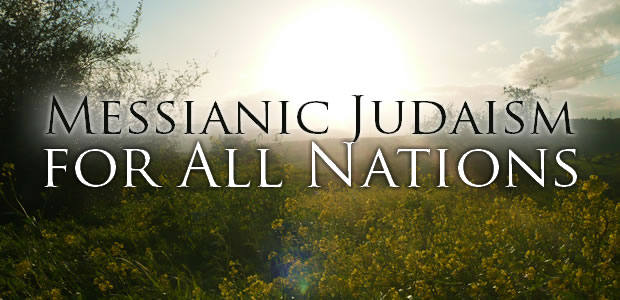
One of the things it says on the Beth Immanuel website is that it provides “Messianic Judaism for the Nations”. It is a community that strongly adheres to traditional synagogue practices and halachah (to the best of my ability to assess such things) and yet is inclusive of the Gentiles in Messiah who regularly or occasionally worship there.

I’ve attended events at Beth Immanuel exactly twice, but since Hudson, Wisconsin is quite a distance from Idaho, I only rarely have the opportunity to make the trip over there.

I think the closest authentic Messianic Jewish synagogue is located in the Puget Sound area and beyond that, I know of one in Virginia and another in Massachusetts.
messianic judaism for the nationsI’ve listened to quite a few of D. Thomas Lancaster’s sermons on the Beth Immanuel audio page and one of the things said on the recordings when introducing each lesson, is for the listener to consider donating to their congregation as a “virtual member.”

What is it to be a virtual member? I don’t know that there’s anything formal about it except donating and consuming audio and video teachings streamed over the Internet. In fact, on Beth Immanuel’s Community page, it says:

Beth Immanuel is not a building, it is people. We are a community of disciples seeking to care for and nurture one another as our lives intersect on the common path of discipleship.

Because the Torah cannot be functionally lived outside of a community context, we are mutually dependent upon one another. This means learning to get along with each other even when we don’t always agree on every point. Community means working through the difficulties and acknowledging that, in the end, we really are family.

At Beth Immanuel, we are dedicated to making community happen. Several families live within walking distance of the congregation building. We regularly host one another in our homes on Friday evenings to welcome the Sabbath. On Saturdays, we share a community meal after service. We keep the building open until after sunset so that we can enjoy common fellowship, prayer and study throughout the Sabbath day.

We desire to be known as disciples of Yeshua of Nazareth by our love for one another.

That would seem to preclude even the concept of being a “virtual member,” since community is defined by the direct contact of the people involved in their congregation. Community is particularly identified as those families who live within walking distance of Beth Immanuel, and families who host each other in their homes on Erev Shabbat. That’s pretty hard to do over the Internet, even with webcams and Skype.

On their Why Do We Exist page, it states in part:

Beth Immanuel provides a venue of worship and a community of support for Jewish and Gentile believers alike. We are here for those drawn to practice Messianic Judaism–the historical mode of Christian faith. We are dedicated to teaching and living out the Jewish Roots of our faith in Messiah.

Again, that “venue of worship and a community of support” requires a physical rather than a virtual presence.

Several months ago, I was offered the opportunity to contact the Rabbi at a Messianic Jewish synagogue (located thousands of miles away) and initiate a process that would admit me as a virtual member. I was assured that it would be very interactive and beneficial and I have no reason to doubt the word of the person who kindly contacted me with this suggestion.

This occurred last year right before the High Holidays and I decided to wait until after they were over, figuring the Rabbi and his synagogue would be very busy preparing for and conducting services for the Days of Awe.

And after they were over, I waited some more, turning things over in my head and trying to figure out what my needs really are and what’s important to me.

Which leads me back to the quote from Rabbi Zelig Pliskin I placed at the top of this missive.

It occurred to me that my own sense of isolation isn’t really as important as I’ve imagined it to be. Certainly, there are many Messianic Gentiles who live great distances from any community that could adequately serve their needs. And more importantly, there are many Messianic Jews who live very far from communities which could fully serve their needs. Some live in areas of the country that have little or no Jewish community at all, let alone Messianic Jewish community.

If Messianic Jewish community exists primarily to serve Jews, who am I to complain because I, as a Gentile, live nowhere near such a shul.

My primary role as a Messianic Gentile isn’t to get my “fix” of “Jewish stuff,” but rather, to do what I can to promote Jewish observance of Torah, particularly among (but not exclusive to) Messianic Jews. I’m well pleased that my wife, who is Jewish and not at all Messianic, is taking Hebrew classes at the local Chabad synagogue and attending other Jewish community events (and she’s even studying Tanya). This is as it should be, and if I can’t participate, the least I can do is stay out of her way and let her continue to explore her own Jewish identity and practice.

hopeI’ve decided that the best thing for me to do is to open my hand and let go my “need” for community. I left church after a two-year sojourn because of the extreme dissonance between their core doctrines and mine, and I knew I couldn’t meekly sit by Sunday after Sunday, and listen to teachings that I believe are detached from what God’s true intent is for the Jewish people and national Israel, even though this church and its staff and members were doing many other fine acts of tzedakah (charity, justice).

I can’t imagine a church environment that would have me let alone serve my needs, but remember, it’s not about serving my needs, but rather, finding what good I can do in the world. I don’t have to belong to a church or synagogue to do that. It’s a mission that we all share as disciples of the Master.

We are only isolated to the degree that we isolate ourselves from God and the performance of deeds of kindness and compassion. It’s almost never about what you can get from another person or any particular community or institution. It’s about what you can give back. That’s not virtual, it’s real.


Is Messianic Judaism Shrinking Because Almost All Other Judaisms are Shrinking?

James (and Chaya) …. what I am seeing today and I already saw that in my messianic days, on the other hand, is another trend, other than than just Gentiles being the majority in MJ places. There are virtually no new Jews coming into the Messianic movement. In my experience as someone who founded and helped run a sizable congregation that was very Jewish in orientation and in a very Jewish area, most of those who did come tended to be older (middle-aged and higher), all intermarried and very assimilated and they tended to migrate from one messianic place to another. There were virtually no young halachially Jewish people around, may be one (and he was mentally unstable and soon went back to the Baptist church no matter how hard we reached out to him). Most of the teens and twenties folks were either 100% Gentile or children of Jewish fathers. Other local messianic congregations nearby were in even worse shape, and I live in a state where there hundreds of thousands of Jews and tons of synagogues of all sorts. I addressed that on my “messianic” blog on numerous occasions. I am also seeing more and more former MJ’s (and messianic Gentiles) leave the messianic movement, in the last 5 years, many returning to Judaism or converting. I attribute it, in part, to much wider availability of information through internet, to aging of the Jewish messianics that are not being replaced by new blood and to the influx of the Gentiles.

-Gene Shlomovich
from his comment on my blog post
Much Ado About the Oral Law

I’m not quoting Gene to put him on the spot (not sure I’d be able to do that anyway) but only because I needed a quote that intimated that Messianic Judaism is neither a Judaism nor a viable religious movement because it contains relatively few halachically Jewish members and most of them are intermarried. Gene also emphasizes that the Jewish leaders are older and that few if any young Jews are joining the movement.

The reason I’m bringing all this up is because of the following:

If you leave out the Orthodox, 71.5% of American Jews marry outside the faith. Only 17% of children of intermarried couples will marry a Jew, and the largest block of American Jews under 40 are the unaffiliated. As Steven Weil, from the Orthodox Union, pointed out, “With a birthrate of only 1.9 children and an astoundingly high intermarriage rate, American Jewry is on a train speeding headlong into self-destruction.”

-Rabbi Nechemia Coopersmith
“The Intermarriage Taboo”
Aish.com

It seems that the issues of intermarriage, assimilation, and lack of a younger Jewish membership aren’t exclusive to Messianic Judaism. However, let’s pursue the following:

On the other hand, the Orthodox are thriving. 83% of Orthodox Jews stay Orthodox. The birthrate among Orthodox Jews is significantly higher than most other religious groups (4.1 children per adult). Sarah Bunin Benor, a professor of Jewish studies at the Hebrew Union College-Jewish Institute of Religion, said “Orthodox Jews will eventually likely be the majority of American Jews.” 60% of Jewish children in the New York City area live in Orthodox homes and that number will only increase.

It would seem as if the only group of Jews who are thriving and growing, at least in the U.S., are Orthodox Jews, specifically in the New York City area, which to the best of my knowledge, is one of the largest concentrations of Jewish people in this country.

JewishThat suggests the problem with Messianic Judaism attracting a larger Jewish base population and matters of intermarriage may not entirely be simply because of Yeshua-faith and a large Gentile membership (although those are certainly contributing factors), but also indicative of a much larger problem in western Jewry.

Of course that’s a lot to assume from a single article published on the web, but it does bring up the question of what Orthodox Judaism is doing that all of the other Judaisms (including Messianic) aren’t.

According to a study published by the Pew Research Center as reported by The Jewish Daily Forward:

The study’s numbers suggest that the Orthodox birthrate in the United States is far higher than that of most other religious groups. Pew found that Orthodox Jews averaged 4.1 children per adult, while America’s. general public averages 2.2 children. The Orthodox number is higher than the average for Protestants (2.2) and Catholics (2.4). Hispanic Catholics (3.1) come close, but still fall short.

Certainly a high birthrate is a significant variable but what keeps the younger population within Orthodox Judaism as they become adults and especially as they start families of their own?

“Orthodox life is very, very different than a conventional lifestyle,” said Alexander Rapaport, 35, a father of seven. Rapaport lives in a Hasidic community in Brooklyn’s Boro Park and runs the soup kitchen network Masbia. He described a social structure designed to encourage and support large families — and that structure has apparently succeeded in more than doubling its share of the Jewish population in less than two decades.

That’s more anecdotal rather than hard data, but conservative communities that espouse adherence to traditional values and have strong internal support systems tend to transmit those values across multiple generations with relatively little “mission drift.” You see this especially among Chasidic Jewish groups such as the Chabad.

The price such groups pay, if you want to think of it in those terms, is the inability to “blend in” with the prevalent culture. In other words, such Orthodox Jewish groups do not bow down at the altar of Political Correctness, even the liberal religious variety.

(As an aside, I should point you to an article I recently read called The Challenges of Parenting an Openly Gay Orthodox Teen to illustrate that Orthodox Judaism also has “shades of gray” woven into its fabric. If it matters, the source website Kveller.com is socially and religiously liberal, so their viewpoints will be biased accordingly.)

Which may be why most or all of the other Judaisms are struggling to maintain their unique identity in a multi-generational fashion beyond “bagels and lox,” as Rabbi Coopersmith put it. To further quote the Rabbi’s article:

Debbie Wasserman Schultz, head of the Democratic National Committee, got into a lot of hot water last week, when a copy of a speech she gave to a Florida branch of the Jewish Federation went public. She had to retract her words in order to calm things down.

Her party affiliation is irrelevant here; it’s not hard to imagine a Republican figure issuing a similar retraction. Outside of Orthodox circles you cannot come out and say that intermarriage and assimilation is a problem. It has become a taboo subject. In a not so distant past, stopping intermarriage and assimilation was the rallying cry used to garner support for Jewish outreach initiatives. Federations used the term “Jewish continuity,” to imply that the Jewish people have something of unique value worthy of preserving. Today it is likely you’ll be attacked for bigotry and racism and that rallying cry will more likely push Jews away.

Go to Aish.com to find out what Ms. Schultz uttered that was so terrible, but suffice it to say, it’s not popular in most branches of Judaism, let alone within many Christian groups (in my opinion), and certainly not in the view of American secular egalitarianism, to believe and publicly declare that maintaining the uniqueness of Jewish identity along with cultural and religious Judaism is not only a big deal, but absolutely vital to the continuation of the Jewish people as a people.

And yet, in spite of its apparent shortcomings, including a lack of Jewish membership and including a lack of a young Jewish presence, Messianic Judaism has repeatedly raised a loud and persistent voice requiring and demanding the protection of religious, cultural, and halachic Jewish identity within its communities.

IntermarriageAnd Messianic Judaism has been shot down from all sides for daring to say such a thing, just as was Debbie Wasserman Schultz in the aftermath of her statements at the Democratic National Committee. Ms. Schultz was forced to retract her “offending” words to calm the outrage leveled against her.

It used to be a taboo for Jews to marry outside, but now the taboo in many Jewish places is to dare to criticize intermarriage. More’s the pity (and I say this as an intermarried person).

Can Messianic Judaism afford to do the same as Ms. Schultz did to placate its critics and further risk the survival of Messianic Judaism as a wholly Jewishly-oriented community?

I’m not proposing any answers, but I think it’s important that, according to the data I’ve presented here, Messianic Judaism is suffering a crisis that is very much the same as many other Judaisms apart from the Orthodox.

I’m probably going to regret this, but for this one blog post only, I’m opening up comments. I may close them down just as fast, and I remind everyone that as the blog owner, I’m a benevolent dictator, not the leader of a democracy. Commenting here is a privilege I grant, not a right you possess. Keep that in mind when you keyboard your responsive missives and press the “submit” button.

Learning to Love from God

“And Moshe said to his father-in-law, the people come to me to seek the Almighty.”

Exodus 18:15

Moshe had arranged for the people to come to him when they had questions. The prophet Shmuel, on the other hand, went to the people to deal with their needs. What can we learn from Shmuel about coming close to the Almighty?

Rabbi Chaim Shmuelevitz comments that one’s closeness to the Almighty is dependent upon one’s love for other people. Shmuel’s going to the people showed that he had great love and concern for them.

-Rabbi Zelig Pliskin
from the Dvar Torah for Torah Portion Yitro
Published in Growth Through Torah
quoted at Aish.com

To what can this be compared?

One of the scribes came and heard them arguing, and recognizing that He had answered them well, asked Him, “What commandment is the foremost of all?” Jesus answered, “The foremost is, ‘Hear, O Israel! The Lord our God is one Lord; and you shall love the Lord your God with all your heart, and with all your soul, and with all your mind, and with all your strength.’ The second is this, ‘You shall love your neighbor as yourself.’ There is no other commandment greater than these.” The scribe said to Him, “Right, Teacher; You have truly stated that He is One, and there is no one else besides Him; and to love Him with all the heart and with all the understanding and with all the strength, and to love one’s neighbor as himself, is much more than all burnt offerings and sacrifices.” When Jesus saw that he had answered intelligently, He said to him, “You are not far from the kingdom of God.”

Mark 12:28-34 (NASB)

Rabbi Pliskin’s commentary continues:

Where did Shmuel get this great love other people? The Midrash says that the garment that his mother made for him when he was a child was with him his entire life. This garment, say Rabbi Shmuelevitz, was made with the profound love his mother had for him. This love became such a part of Shmuel that it manifested itself in his entire way of dealing with other people.

The love a mother shows her infants and young children by getting up in the middle of the night to take care of them implants in them a deep feeling of being loved. When such a child grows older he will have love for others. Any small thing a parent does with love for his children will pay off great dividends. The greater the child becomes the more many people will benefit from that love.

We learn to love other people because of the love shown to us by our Heavenly Father and by learning to love and draw close to Him. We also learn to love God by showing love to your spouses, our children, and anyone else around us, because God loves all those people, too.

Love is the fire in which Sinai burned and the fire in which Moses was with God. Love is the Spirit that dwells in each of us that comes from God.

Pondering the Birth Pangs of Mashiach

Update: I was going to publish this last Friday morning but as you all know by now, certain events have resulted in me making a rather drastic change in my comments policy as well as my writing schedule. I decided to go ahead and let this blog post publish since I already had it ready to go. What happens after this, I really don’t know.

I’ve received a lot of emails that were very encouraging and I want to thank everyone who took the time to reach out to me with such kind remarks. I have other projects that I can pursue and who knows what the future may bring. Blessings.

In these days especially, when by G-d’s kindness we stand at the threshold of redemption, we must make every conceivable effort to strengthen every facet of our religion. Mitzvot must be observed b’hidur, with “beauty,” beyond minimal requirements. Customs must be kept scrupulously, nothing compromised. It is a Mitzva and duty of every Rabbi in Israel to inform his congregation that the current tribulations and agonies are the “birth-pangs of Mashiach.” G-d is demanding that we return to Torah and mitzvot, that we not hinder the imminent coming of our righteous Mashiach.

“Today’s Day”
for Tuesday, Sh’vat 8, 5703
Compiled by the Lubavitcher Rebbe; Translated by Yitschak Meir Kagan
Chabad.org

This is exactly what I was trying to say yesterday. This is the idea communicated in Ezekiel 36:27:

I will put My Spirit within you and cause you to walk in My statutes, and you will be careful to observe My ordinances.

This is a direct link between the New Covenant promises God made “to the house of Judah and the House of Israel” (Jeremiah 31:31), Israel’s observance of Torah, and Israel’s apprehension of the Divine Spirit.

And as we see, this also illustrates a link to the “current tribulations and agonies” of our times, which are defined as the “birth-pangs of Mashiach.”

But those words should also be familiar to most Christians:

And Yeshua (Jesus) answered and said to them, “See to it that no one misleads you. For many will come in My name, saying, ‘I am the Mashiach,’ and will mislead many. You will be hearing of wars and rumors of wars. See that you are not frightened, for those things must take place, but that is not yet the end. For nation will rise against nation, and kingdom against kingdom, and in various places there will be famines and earthquakes. But all these things are merely the beginning of birth pangs.”

Matthew 24:4-8 (NASB -adapted)

Seems to be a close parallel to what you read in the quote at the top of this blog post. Here’s something more:

Rab said: The son of David will not come until the [Roman] power enfolds Israel [2] for nine months, as it is written, Therefore will he give them up, until the time that she which travaileth hath brought forth: then the remnant of his brethren shall return unto the children of Israel. [3]

‘Ulla said; Let him [The Messiah] come, but let me not see him. [4]

Rabbah said likewise: Let him come, but let me not see him. R. Joseph said: Let him come, and may I be worthy of sitting in the shadow of his ass’s saddle. [5] Abaye enquired of Rabbah: ‘What is your reason [for not wishing to see him]? Shall we say, because of the birth pangs [preceding the advent] of the Messiah? [6] But it has been taught, R. Eleazar’s disciples asked him: ‘What must a man do to be spared the pangs of the Messiah?’ [He answered,] ‘Let him engage in study and benevolence; and you Master do both.’

Sanhedrin 98b (emph. mine)

Talmud Study by LamplightI’m periodically accused of misusing Jewish writings and I can see how some folks may see me playing fast and loose with ancient and modern Rabbinic commentary. On the other hand, I don’t see any other valid lens by which to view and comprehend my faith. Chances are I’m getting at least something wrong, and perhaps a good many things in the details. But it’s the only way for me to read the Bible and understand the plan of God as a single unit rather than a “Plan A” shifting to “Plan B” some time around Acts 2, or worse, as the Almighty pulling the world’s biggest “bait and switch” with His people Israel.

The New Covenant promises and prophesies (Jeremiah 31, Ezekiel 36) God made with Israel must come true, otherwise, not only does Israel have no hope but the rest of the nations of the world (i.e, Gentiles and particularly Christians) are hopeless as well.

You worship what you do not know; we worship what we know, for salvation is from the Jews.

John 4:22 (NASB)

That’s the Master speaking to a Samaritan woman and he might as well have been speaking to all the Gentile nations, that is, to us.

For nearly two-thousand years, Gentile Christianity and devout Judaism have charted divergent paths through history, pulling apart starting in the late first century and extending into the second, and traveling many light years away from each other ever since.

But I think that’s changing, at least a little. One of the “birth pangs” I see happening (and this is just my personal opinion), is the dialog and debate occurring between Judaism and Christianity or more specifically between mainstream/normative Judaism and Messianic Judaism, including with those of us who identify as “Messianic Gentiles.”

It almost seems like a (well-mannered) battle at times.

But at least we’re talking.

I mentioned before that Jewish Torah observance is a requirement for the return of the Messiah and particularly for Jewish disciples of Yeshua. We have historical records of individuals and small communities of Jews who were Yeshua disciples and who lived wholly religious and observant Jewish lives. This is also beginning to happen today, although such communities are small and far apart.

There are accusations that the number of Jews in the Messianic movement is actually decreasing. I can’t speak to that except to say if true, this is also part of the birth pangs as I understand them. It’s supposed to get darker, more bleak, and look more hopeless as the “birth pangs” continue. The gate is supposed to be narrow.

“Enter through the narrow gate; for the gate is wide and the way is broad that leads to destruction, and there are many who enter through it. For the gate is small and the way is narrow that leads to life, and there are few who find it.

Matthew 7:13-14

Of course that’s less than an opinion. It’s just a belief that God will call as many as who will listen to Him. I’ve been reminded recently that how God calls people, particularly Jewish people to Him, can be seen in at least a couple of different ways. I think I know just a tiny bit how a Jew might feel being proselytized by a Christian when just about everything I write is challenged from an Orthodox Jewish point of view (Hi, Gene).

pregnantBut I truly believe what I’ve written. I believe that supporting Jewish Torah observance is part of the requirement for the return of Messiah and the establishment of the Messianic age. I just don’t know how to get that point across without both Christians and Jews more or less quarreling with me, forging an unwilling partnership for the sake of my personal growth (as Rabbi Zelig Pliskin would put it).

I guess you could say this is part of the personal “birth pangs” we go through when different individuals and factions are involved and presenting their particular theologies and doctrines. Somehow, I think it’s important to survive with my relationship with God intact, for in the end, I won’t be judged in the religious blogosphere, but in the court of the God of Heaven, in spite of (or maybe because of) the “current tribulations and agonies.” So will we all.

There are questions to which G-d says to be quiet, to be still, to cease to ask.

-Rabbi Tzvi Freeman
“Be Quiet”
Based on letters and talks of the Rebbe, Rabbi M. M. Schneerson
Chabad.org

Sounds like good advice and maybe I’ll take it for awhile. We’ll see.

Oh, if you are looking for me, I’ll be over here. No “religious” comments allowed.

Footnotes

2. I.e., the whole world in which Israel is scattered.
3. Micah V, 2: ‘therefore will he give them up’ is interpreted as meaning to a foreign — viz., the Roman — power, and the duration of their servitude is fixed by ‘until the time etc.’ i.e., nine months, the period of pregnancy.
4. V. n. 7.
5. [Following the reading in Yalkut (v. Levy,) [H]. Our texts read: [H], ‘dung’.]
6. These troubles are generally referred to as birth pangs, being the travail which precedes the birth of a new era.

See You in the Funny Papers

As for people not playing on your blog as you want… quit writing a blog if you want to keep things neat and tidy and simply how “you” feel. Publish a newsletter and ignore the private responses which you disagree with. I have to be honest, I believe you think and write wonderfully. I like the discourse here. However your premises bring with them a perspective that is often open to question. If you do not like the questions, it seems odd you would post things which are so open to critical analyses. In all love, it is like going to the South Pole and questioning why it is cold.

-from Rockey in his January 29, 2015 at 12:24 p.m. comment

Okay. I take the hint. I could use the break.

By the way, that was a pretty diplomatic way to get your point across, Tim.

Thanks. I revisit this idea every now and again and then the comments back off, I receive some encouragement, and I’m writing again.

But not this time.

I’m sure it’s me. I’m sure I’m just being an unreasonable blogger, especially given I’m writing in the religious blogging space. D. Thomas Lancaster mentioned in one of his recorded sermons that he doesn’t maintain a personal blog, and I think for some of the reasons I’m encountering.

As I face various matters in my personal life (in spite of what many of you may think, I really don’t share everything that’s going on with me on this blog) as well as issues of continuing in my faith, I realize I don’t want the additional “drama” that sometimes happens in the comments section of my blog. I rarely comment on the blogs of others (at least compared to a few years ago) for the same reason.

So I’m closing comments on my blog. I was going to publish this blog on Friday morning and later on close comments, but that could seem like I’m just trolling for sympathy or whatever. It makes more sense to come to a clean stopping point this evening. Close comments and publish this blog post at the same time.

I may still write as Tim suggests without providing a venue for feedback. That may be frustrating to some, but not all blogs allow comments so there’s no rule that says I have to. There’s a process that lets anyone who really, really needs to say something to me to email me from within the blog, but that takes a few more steps than writing a comment and I don’t anticipate much of a response.

After some time, I may open the place up for comments again, but I’ll have to see what the experience is like with comments disabled for a while. For all I know, I may get used to the peace and quiet, and even to not having to write about everything that pops into my head.

I’ve actually been toying with the idea of doing a completely different blog, something not involved with religion at all (I do have a couple of other interests). I feel like a Don Quixote who has decided he doesn’t have to tilt at windmills any longer. I want to stop fighting “religious wars” for a while. I’d just like to spend some time enjoying being in the presence of God. There’s a certain freedom in that.

“See you in the funny papers.”

attributed to Walt Kelly
Creator of the Pogo comic strip

Viewing the Truth Through a Dirty Window

Truth is simple, it has no clothes, no neat little box to contain it.

But we cannot grasp the something that has no box. We cannot perceive truth without clothing.

So Truth dresses up for us, in a story, in sage advice, in a blueprint of the cosmos—in clothes woven from the fabric of truth itself.

And then, before we can imagine that we have grasped Truth, it switches clothes. It tells us another story—entirely at odds with the first. It tells us new advice—to go in a different direction. It provides another model of how things are—in which each thing has changed its place.

The fool is confused. He exclaims, “Truth has lied!”

The wise person sees within and finds harmony between all the stories, all the advice, every model we are told.

For the Torah is a simple, pure light, a truth no box can contain.

-Rabbi Tzvi Freeman
“Raw Truth”
Based on the Letters and Talks of the Rebbe, Rabbi M.M. Schneerson
Chabad.org

Depending on our philosophical or theological orientation, we like to think we have a pretty good grasp of “the truth.” This includes the truth of who we are as human beings and, if we’re religious, the truth about the nature of God, Creation, and everything.

But as Rabbi Freeman points out, human beings cannot apprehend “raw truth”. If we could, if we could see truth the way we see the color “red” or hear a particular musical note, maybe we would all perceive “truth” (more or less) in the same way. Humanity wouldn’t be so conflicted. We would all “know truth”.

But we aren’t there, not yet. We don’t perceive raw truth anymore than we can see X-rays with the unaided eye.

So we “clothe” truth with interpretation and tradition. A number of recent conversations have re-enforced the fact (as opposed to truth) that all human beings, and particularly human beings who believe the Bible is the source of truth, are oriented by specific traditional methods of interpretation to believe the Bible says certain things. The problem comes in when we encounter people who have different traditions that tell them different things about the Bible than what our traditions tell us.

While I agree that there is probably a supernal Torah in Heaven that no box can contain, in order to “package” the Torah, or for that matter, the entire Bible in order to deliver it to humanity, it gets put in a box. It has to be clothed. It is a book written (originally) in several languages over thousands of years. The completed “product” is now many thousands of years old and has been translated into innumerable languages. Just in English, there are hundreds if not thousands of translations of the Bible.

And over those thousands of years, both in Christianity (in all its forms) and in Judaism (in all its forms), many traditions have sprung up to tell many different variant religious populations what the Bible is saying. When a tradition persists long enough, it ceases to be perceived as a tradition and it is commonly understood to be the truth…

…whether it is from God’s point of view or not.

suitThey say “the clothes don’t make the man” and “never judge a book by its cover,” but quite frankly, we have no other way of understanding the Bible. We can’t access its “raw truth” and so we have interpretation by tradition. This is stated rather plainly in (especially) Orthodox Judaism. The local Chabad Rabbi told my wife that the Torah can only be understood through tradition. My experiences studying in various churches over the years tells me that Christians interpret the Bible based on traditions too. We just don’t talk about it. We like to think we can read the plain meaning of the text, especially in English, and know just what it is saying. However, the reality of the situation is that we understand, for instance, the letters of the Apostle Paul based on the traditional interpretation of those letters, not necessarily what Paul was actually trying to communicate.

“Your talent is God’s gift to you. What you do with it is your gift back to God.”

-Dr. Leo Buscaglia

I’ve been told I’m a competent writer, talented, occasionally brilliant. I guess I better be since it’s my “day job”. It’s also a joy for me to write. I really get a lot of pleasure crafting a message in text. I usually enjoy talking about what I write, but periodically the joy gets sucked right out of the experience when all people seem to want to do is argue about what I write.

The point of my writing isn’t for me to tell you what the truth is necessarily. I write this blog to chronicle my process in the pursuit of truth. If you read all of my blog posts chronologically, I would hope you’d see a development or evolution in my comprehension of the Bible from a particular point of view (which may not be your point of view). It’s the progression of my traditional interpretive matrix. I’m tailoring the clothing in which to dress the truth of the Bible.

You probably dress the Bible in different clothing and then we argue about what sort of suit “truth” is dressed in this morning. The “Emperor” always wears clothes, and our debate is only over which sort of clothing he’s put on (or rather, what we’ve put on him).

Only God sees the Emperor without clothes.

They will not teach again, each man his neighbor and each man his brother, saying, ‘Know the Lord,’ for they will all know Me, from the least of them to the greatest of them,” declares the Lord…

Jeremiah 31:34 (NASB)

We aren’t there yet. This is a prophesy about the coming Messianic age. From my point of view, Yeshua (Jesus) initiated the very beginning of this age into our world, but it will not reach fruition until his return when each of us will have such a filling of the Spirit of God, that we will apprehend Hashem in a manner greater than the prophets of old. We will literally “know God”. We will see the truth unclothed, the raw truth…

…but only then.

For now we see in a mirror dimly, but then face to face; now I know in part, but then I will know fully just as I also have been fully known.

1 Corinthians 13:12

This is how we see the truth right now, just as a dim reflection, a faint image, hardly perceptible, open to interpretation as to what is really being viewed. Paul knew this truth and preserved it for us but we don’t believe him. We don’t want to believe him, because believing we can know the truth in absolute terms now gives us emotional security. We don’t like a world that is suspended in dynamic tension between seemingly inconsistent and opposing thoughts, beliefs, and faiths. It’s unsettling.

But like it or not, that’s where we are. I’m sure I’ve got a lot of things wrong. I don’t always answer the questions posed to me because I don’t always have even an opinion on the answers. I’m not “the Bible Answer Man.” I don’t always know.

I wrote a completely different “morning meditation” that I had planned to publish today at the usual time (4 a.m. Mountain Time), but I pulled it out of the queue because it was more of the same and I anticipated more of the same comments and responses.

Who wants more of that?

MirrorI used to actually learn a lot from the comments and the insights of the people conversing with me and each other, but now I’m not sure I’m learning so much. Now I feel like we’re just going around and around in circles and the expectation is that I must change my mind and either think and believe like a more traditional Christian, or think and believe like how an Orthodox Jew views a Noahide.

But I’m not those types of people and that’s not how I experience the Bible’s “clothing,” so to speak.

I also feel like there might not always be an interest in me and what I think but rather, that my blog is being used as a pulpit for someone else’s idea, as a platform to convince my readers to take on a different theological point of view. Certainly some people reading my blog could be undecided about Christianity or Judaism. Did I create this blog to promote viewpoints I don’t endorse?

There’s a fine line as to just how much debate and disagreement to tolerate for the sake of learning. How much of it should I allow and where’s the cut off line? How “fair” should I be before exercising my administrative control as the blog owner? I don’t know. I feel like I’ve been pretty liberal in my policy on comments compared to some others. I rarely edit or delete comments (although I did delete a comment just yesterday).

You don’t have to agree with me and I don’t have to agree with you. That doesn’t make any of us either right or wrong. It just means we’re attempting to discuss what clothes the Emperor might be wearing today. It’s like viewing the truth through a dirty window. None of us see it very well. The problem is when we believe we see truth all too clearly.

"When you awake in the morning, learn something to inspire you and mediate upon it, then plunge forward full of light with which to illuminate the darkness." -Rabbi Tzvi Freeman