Why All Our Arguments Will Never Whisper To The Soul

faithIn the comments section of my previous meditation, a number of people debated over their various theological beliefs and offered a number of “proofs” to support their points of view. At about the same time, I read an article called “Why is there no evidence of G-d” at Chabad.org. This inspired a few thoughts about the nature of “truth” and why (probably) no one person or religious organization has the complete corner market on truth. But in the sidebar of the aforementioned article was a series of links to related articles. I clicked the one that said What Does it Mean to “Believe in G-d”?.

The statement, “I believe there is a G‑d” is meaningless. Faith is not the ability to imagine that which does not exist. Faith is finding relevance in that which is transcendent. To believe in G‑d, then, means not that you’re of the opinion that He exists, but that you have found relevance in Him. When a person says “I believe in G‑d” what s/he really means is “G‑d is significant in my life”.

In discussing our relationship with G‑d, the question we first need to ask, is, Who cares? In what way is He relevant?

For some people, G‑d is relevant because they are concerned with the origins of existence. For others, G‑d is relevant because they are concerned with the afterlife, and faith is a prerequisite for getting to heaven. Finally, for others, G‑d is relevant because they believe that life has purpose.

Certainly Christians convince others to come to faith because of the promise of the afterlife (“If you died tonight, do you know what would happen to your soul?”). The Church convinces “sinners” to convert to Christianity based, at least initially, on the fear of going to Hell and suffering for all eternity, and that by being “saved,” they are promised they’ll avoid Hell and ascend to Heaven when they die to be with Jesus.

That seems kind of cheesy. It’s like we have faith in God because it’s all about us and our salvation. Even coming to faith so we have some “grounding” in the origins of the universe, people, and the existence of everything still seems kind of self-centered.

But what about believing because we want life to actually mean something?

In Judaism, particularly in Chassidism, the interest in G‑d comes from the conviction that life has meaning. The recurring question in Chassidic thought is: Why is a soul sent into the world to suffer in a physical body, for 80, 90 years? We know there is a purpose, that G‑d is the author of that purpose, and we want to know and understand it.

One who lives by his heart exclusively, trusts only what he feels. One who lives by his mind exclusively, trusts only what fits. But neither of these tells you the truth. The mind demands that logic be trusted, the heart demands that the emotions be trusted. Yet both can be mistaken. They do not reveal inherent truth. For that, we turn to the soul, the neshamah. Because the soul is a part of the Divine — and that is truth. When we have faith, when we find relevance in G‑d, we are trusting that instinct in the soul that tells us that G‑d is the purpose of life.

In pragmatic terms, the mind, the heart and the soul must each fulfill their function: when we know all that can be known, when we come to the edge of knowledge and logic itself tells us that we have reached its outer limits and it cannot handle what lay beyond this point, faith enters. Where the mind is no longer adequate, the soul responds to truth. This is faith.

Let’s look at the central message:

The mind demands that logic be trusted, the heart demands that the emotions be trusted. Yet both can be mistaken. They do not reveal inherent truth. For that, we turn to the soul, the neshamah.

soulIn an ultimate sense, we can use evidence to support facts but not the truth. Being nice or being smart don’t really lead us to truth, but then we have a problem. How can you or I convince another person of “the truth” since that exists only in the purview of the soul?

This is why in Chabad-Lubavitch it is our approach to invite a Jew — even one who claims not to believe — to do a mitzvah, before we engage them in a discussion on faith. Because in consideration of the existence of the soul, we can assume that we don’t have to convince people of life’s Divine purpose. We just have to get them started, and with each mitzvah they do, their neshama asserts itself more, and questions become answered of themselves. By way of analogy, if a woman’s maternal instinct appears to be absent, you don’t argue the philosophy of motherhood with her. Just put the baby in her lap and her maternal response will emerge.

I can’t even imagine how a Christian would evangelize using this method. In Christianity, doing only matters after believing and is only a reflection of believing. Granted, the Church has a strong practice of charity and service to others, but it’s not the driving force that causes a person to convert to Christianity in the first place (could you imagine being a Christian and approaching a “sinner,” inducing them to join the Church with the promise of a lifetime of service to God and humanity?).

However, that’s more or less what Rabbi Manis Friedman is suggesting in his article. That’s why the Chabad will ask a Jew who is not at all religious to perform at least one mitzvah. Because the mitzvot are what connects a Jew to God.

To encounter God is a transcendent experience that goes beyond thought or emotion, but in order to “operationalize” that encounter, a Jewish person “does”. That is, he or she connects the soul to the author of the soul by performing mitzvot. This isn’t to say that prayer and worship don’t connect Jewish people to God, but at least from the Chabad’s perspective, it all starts with performing a single mitzvah, and then another, and then another, until they are living an increasingly Jewish life.

Christianity has the opposite approach in that reading the Bible, praying, and worshiping come first, and then eventually as the believer’s life is transformed by their faith, they come to the place where they are “doing” Christianity by helping other people.

argumentWhen we argue with each other for the supposed purpose of correcting what we believe others have gotten wrong about the Bible, about God, and about Messiah, and we say we are doing so because we care about those people, we are missing a vital element. We can’t reach their soul, at least not directly, with logical arguments or by appealing to their emotions.

Whether it’s by a Christian having a person they’re evangelizing praying to be saved, or by a Chabad representative having a Jew lay tefillin, the appeal is to the soul, and although we have different actions we put people through to make this happen, it’s really God who is speaking to the neshamah. That’s why, except in very rare instances, our blog conversations will never really be able to convince someone to admit that their theology is wrong, to change their minds, and to adopt a different religious discipline.

Speaking of changing religions, I found this article and it seemed relevant.
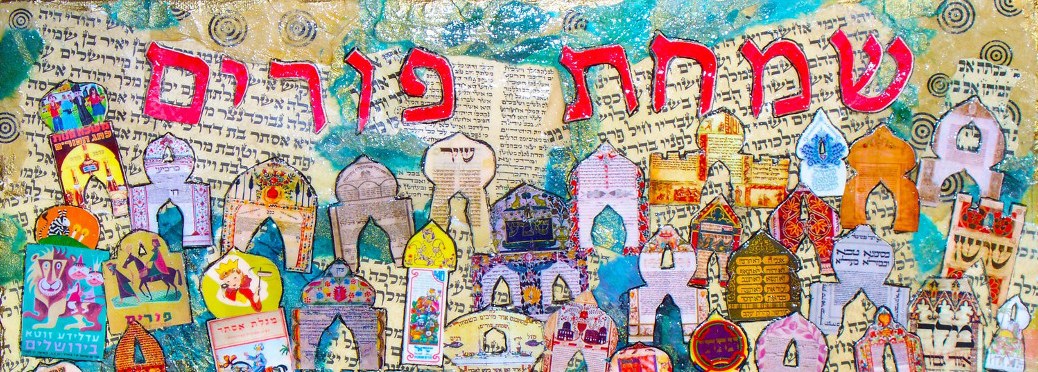
The Meaning of Purim for the Christian Church

I posted this one last year and I think the message needs to be repeated. Purim definitely has applications to the Christian Church. If only they would listen.

James Pyles's avatarMorning Meditations

Super girlI haven’t thought much about Purim in awhile. It’s not something we observe in our home and I tend to think of Purim as being primarily for children, dressing in costume, playing games, telling jokes, that sort of thing. Back in the day, the congregation I used to attend observed Purim with a children’s play, which often took on some sort of Star Wars or other fantasy theme. But those days are gone, my children are grown, and my grandson isn’t even aware of Purim.

I received an audio CD from First Fruits of Zion (FFOZ) a number of days ago, but I didn’t get a chance to listen to it until I was weeding the backyard over the weekend. It’s interesting trying to pull weeds out of muddy plant beds, listening to D. Thomas Lancaster lecture about Purim to the congregation at Beth Immanuel Sabbath Fellowship, and periodically grab my pen and notebook to…

View original post 2,668 more words

Who Am I and Why Am I Here?

Indeed, surveys show that actual converts to Judaism are far outnumbered by Americans born outside the faith who consider themselves Jewish despite having never formally converted to Judaism. However, even in the most liberal Jewish communities, there is a dividing line that excludes non-Jews. Practically no synagogues allow non-Jews to be called to the Torah (unless they are accompanying a Jewish spouse at their kid’s bar mitzvah). Jews married to non-Jews are barred from admission to rabbinical school. And, of course, non-Jews can’t marry Jews under Conservative or Orthodox auspices.

Most importantly, you can call yourself whatever you want – friend of, member of, parent of. But unless you formally join, you’re no Jew.

-from the article “10 Questions About Jewish Conversions You Want to Know but are Afraid to Ask”
VirtualJerusalem.com

Don’t worry. I’m not considering converting. However, I saw a link to this article on Facebook and was interested about which ten questions one might be afraid to ask.

In my two most recent “meditations,” Are Christians Idol Worshipers and Doing It Right, the conversations kept returning to what Derek Leman might call “the intersection of Judaism and Christianity, Jesus and Torah, temple and atonement.”

But while many or most traditional Christians don’t see much of an intersection between their faith and Judaism, those of us involved, at some level in Messianic Judaism find it unavoidable. In a comment to Gene on Doing It Right, I said in part:

From my point of view (and I could be wrong, of course), you have a ready-made world, a Jewish community, to which you belong and in which roles, identity, and expectations are all clearly defined. It would seem to me that all you have to do is step inside of that community, close the door, and never look back.

I, on the other hand, picture myself fighting my way through the Bible tooth and nail, clawing my way through the collision (Derek calls it an intersection) between the Jewish and Christian aspects of my faith, feeling like the inside of a sandwich being squeezed by two opposing slices of bread.

I could make up a story or a series of stories about the Jews and Gentiles who left Messianic Judaism and entered a more mainstream Judaism or entered (re-entered) the Church.

disconnectedI could say that the dissonance (remember, I’m making all this up) experienced living in-between various elements of Jewish and Christian faith are very “crazy making” and that in order to reduce or even eliminate the inherit discomfort of being identified as “Messianic,” these individuals chose to escape into a more internally consistent or at least more readily acceptable religious identity.

I’ve heard stories of more than a few non-Jews in Messianic Judaism who (in my opinion) became confused about what to prioritize in a life of faith and mistook function for devotion by converting to Orthodox Judaism. It’s not being Jewish that makes one acceptable to God, since even the Orthodox readily admit that Gentile conversion isn’t the only way, or even the primary way, a Goy may merit life in the world to come and be considered righteous. It’s living a life that is Holy to God by transforming our lives from being focused on ourselves to being focused on service to others and service to God (think Matthew 22:36-40).

Of course, that’s not the only path leading out of Messianic Judaism. For Jews, there’s going to/returning to a more normative Judaism such as Orthodox Judaism, and for the Gentile, there’s going to/returning to normative Christianity. Those groups disagree with each other, but the world generally accepts them as valid religious expressions.

But the world, including the religious world, doesn’t always know what to do with Messianic Judaism. While many of the Jewish people within the movement strive greatly to live authentically Jewish lives, in some cases, indistinguishable from Jews in Reform, Conservative, and even Orthodox Judaism, the really big question (and I’ve brought this up before) is what to do with all the Goyim in Messianic Jewish community space.

Actually, there are two other escape paths, particularly for the Gentile, I haven’t mentioned. Leaving the world of faith entirely and becoming an atheist, and continuing to adhere to faith but leaving all forms of religious community and considering all such community as non-sustainable.

I rarely quote from Christian articles and blogs, but the other day, I did find something written by A.W. Tozer called The Saint Must Walk Alone.

The idea, based on a number of Biblical precedences, is that the person of faith by definition is isolated from the larger culture. Tozer cited a number of the Prophets including Noah, Abraham, and Moses, but while it’s true that, in the end, Noah only had his family as his form of community, and Abraham had to gather people around him in order to construct community, Moses, though effectively isolated from the community of God for the first forty years of his life, found a ready-made body of millions of Israelites once God commanded him to rescue His people Israel.

In the Apostolic Scriptures. Jesus (Yeshua) called apostles and disciples to himself, and after the crucifixion, resurrection, and ascension, the apostles and disciples, made many more disciples, both Jewish and Gentile, across the latter part of the First Century CE and beyond.

I’ve said before that people gravitate to groups made up of “their own kind”, that is, others who are like themselves. That’s why in older cities in our nation, you have neighborhoods defined by nationality and ethnicity. Visit New York, Chicago, or San Francisco to see what I mean.

And I believe the same is true of religious people. We all want to hang out with people like us, so we don’t get thrown too many theological curve balls. The secular world is a hard place to live in, so it’s comforting to know you have a place to retreat once in a while where you can truly be yourself and be understood without being judged or maligned (ironically, sort of like being a recovering alcoholic at an AA meeting).

Tozer writes:

The pain of loneliness arises from the constitution of our nature. God made us for each other. The desire for human companionship is completely natural and right. The loneliness of the Christian results from his walk with God in an ungodly world, a walk that must often take him away from the fellowship of good Christians as well as from that of the unregenerate world. His God-given instincts cry out for companionship with others of his kind, others who can understand his longings, his aspirations, his absorption in the love of Christ; and because within his circle of friends there are so few who share inner experiences, he is forced to walk alone. The unsatisfied longings of the prophets for human understanding caused them to cry out in their complaint, and even our Lord Himself suffered in the same way.

A.W. Tozer
A.W. Tozer

Of course, Tozer’s “Saint” is only lonely away from the authentic community of the Church, and while he says that there may be few who have great devotion to Christ in the body of believers, he hasn’t taken into consideration the fact that there could be “Saints” who have no access to fellowship, and any such like-minded communities nearby could be too internally conflicted and even unstable to be viable options.

Ultimately, the person of faith may be isolated and alone not only from society but from other religious people, even those who fundamentally conceptualize their theology in similar way.

The problem for many of these “Messianic Gentiles,” is not that they/we are attracted to God, but we’re attracted to a particular exegetical system that allows us to read the entire Bible (Tanakh and Apostolic Scriptures) as a unified Jewish document that upholds the primacy of national Israel and the Gospel message as one of national and even worldwide redemption rather than a truncated plan addressing salvation on an individual-by-individual basis.

By definition, we find Judaism more attractive than Christianity (I speak of institutions, traditions, and lifestyles here). However, as the VirtualJerusalem.com article I quoted from states, “you can call yourself whatever you want – friend of, member of, parent of. But unless you formally join, you’re no Jew.”

Not that I would try to be, but many others like me can’t separate their identities from Jewish (quasi-Jewish really) identities. In the end, we either find others who accept us as we are in religious community, we change our identity by conversion to find acceptance, we retreat into the Church (abandoning Messianic theology) to find acceptance, or we just retreat and call an end to seeking acceptance and community. In the latter case, acceptance comes from secular community. We’ve thrown our net very wide and through the wide gate, everyone can travel together.

Tozer concludes:

The weakness of so many modern Christians is that they feel too much at home in the world. In their effort to achieve restful “adjustment” to unregenerate society they have lost their pilgrim character and become an essential part of the very moral order against which they are sent to protest. The world recognizes them and accepts them for what they are. And this is the saddest thing that can be said about them. They are not lonely, but neither are they saints.

Earlier in his article, Tozer admits that those Christians who say they are never alone because Jesus is always with them, echo a rather hollow message. Remember, he also said man was made for community, and the people of God are made for community with their fellows.

But in the end, all we really have is God. No religious community is perfect, and some of them are downright toxic. There are who knows how many wounded souls who have sought fellowship, but once burned are thereafter “twice shy.”

I’ve been pleased with how discussions have gone on in my two previous blog posts, especially given the rather controversial nature of the topics at hand. After all is said and done, we “odd balls,” many of whom are like me and simply are not made to be in community, or who otherwise have no acceptable peer group at hand, in addition to God, have the Internet. This is the only place we can find each other, through our communication is merely so much binary and electrical chatter across fiber, copper, and wifi.

Since I’ve pulled back from writing so much, I can feel my intellectual and emotional attachment to the “Messianic blogosphere” wane correspondingly. I don’t scour the web looking at other blogs the way I used to. I don’t view each article and quote at Aish.com or Chabad.org as inspiration for yet another “morning meditation.” I no longer even peek out of my home office on Friday evenings to see if my wife is about to light the Shabbos candles. They either are lit or not as she wills.

purim
Purim Parade in Hebron

Right now (Sunday afternoon), she’s at the Chabad helping to prepare for the upcoming Purim celebration. I couldn’t be more pleased. That’s where she belongs, in Jewish community because that’s who she is. Given the enormous barriers she’s had to cross, I’m glad she’s found her way home. Her experience has taught me that my having community doesn’t seem to be part of the reason I exist. If my marriage to a Jewish woman has previously inhibited her from a Jewish life, maybe our union also helps to reveal my purpose in supporting and encouraging her pursuit of that Jewish life.

I believe for the Messianic Gentile, that’s why we are here, not to promote ourselves but to support Jews, both in Messiah and otherwise, to return to devotion to Torah, devotion to Jewish community, and devotion to Hashem.

As a “Messianic Gentile,” if that’s who I am and why I’m here, it’s enough.

Doing It Right

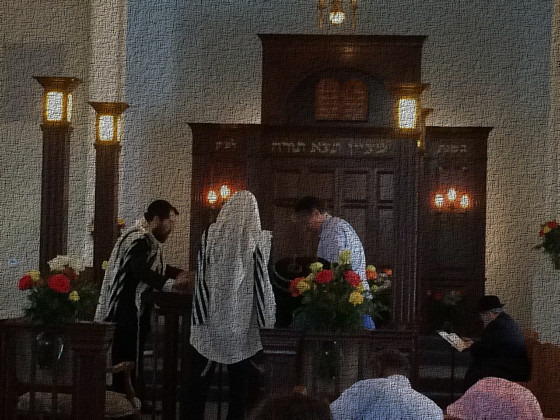
My family lives in Greenwood, Mississippi. Nestled in the heart of the Delta, we are proud of our small-but-vibrant shul; even when only a dozen or so folks fill the pews, time spent in our building is meaningful. However, recently we saw our sanctuary overflowing with guests for the first time in years—and we were honored to host an event that led to powerful connections and conversations with our Delta neighbors.

-Gail Goldberg
“Christians and Jews Sharing Shabbat in the Delta”
MyJewishLearning.com

Derek Leman on this blog Messianic Jewish Musings, refers to himself as:

…a rabbi, writer, and speaker at the intersection of Judaism and Christianity, Jesus and Torah, temple and atonement.

That last part about being at an intersection probably describes any Jew or Gentile who is involved in the Messianic movement in any sense, for we hold views and convictions that aren’t exactly typical in more normative Judaism or Christianity. In fact, we end up getting into plenty of arguments with just about everyone because we don’t fit into anyone’s convenient religious mold.

But Gail Goldberg’s article attracted my attention because it shows a portrait of Jews and Christians “doing it right,” of laying aside the ancient apprehension and animosity and for one brief evening, sharing the Shabbat in a synagogue in peace.

People came from all over to hear her speak; Christians were challenged and enriched by her teachings on Christianity, and Jewish attendees were similarly riveted by her approach to scholarship and religious studies transcending both religions. Though the program took place in a synagogue, AJ knew her audience was primarily Christian. She addressed all equally, and encouraged all to be open to challenge and new notions. As local bookstore employee and program partner Steve Iwanski noted in his wonderful blog following AJ’s presentation: “…she sought to bring light to the parts of Jewish faith that may be unfamiliar to the typical Christian.

beth immanuel
Beth Immanuel Sabbath Fellowship

This isn’t describing a Messianic anything. These are Jews and Christians outside our little movement who nevertheless, found a bridge by which they could cross a two-thousand year old gap and find some common ground. There could be a majority of Christians amid Jewish community and no one felt threatened.

Ms. Goldberg’s article finishes with:

That night, I felt the pride of our ancestors – Ilse (Ilse Goldberg, Gail Goldberg’s 86-year-old mother-in-law) in the room, and others no longer with us. If they could have seen the full pews and felt the support and investment of our neighbors, I know how proud the previous generations of the congregation would be. I’m just honored that I could be part of such a wonderful communal experience, and grateful to see our shul stuffed to the gills with long-time supporters and first-time visitors. I hope to see our friends and neighbors joining us in fellowship many more times in the future.

The Messianic Jewish movement purports to share a common Messiah and a common God between Jewish and non-Jewish disciples of the Master, and yet we see a lot of friction and many separate ways of attempting to operationalize our “union”. Some Jews who aren’t Messianic like my friend Gene, find it necessary to point out the rather stark differences between Messianic Judaism/Christianity and Orthodox Judaism, which, whether he means to or not, continues to drive a wedge between Jew and Christian.

But as we’ve seen in the quotes above, it doesn’t have to be that way.

But this isn’t the only example:

We moved to the Czech Republic eight years ago to serve God and our new community and I had expectations of what life would be like. When I stand in the synagogue now on Friday nights, looking out at our growing group of spiritual sojourners singing and praying in Hebrew, Czech, and English, I am taken aback by what God has done. He has demolished my expectations and from the rubble built something worthy, something glorious.

My husband and I had just started being observant. We started slowly, first lighting candles on Shabbat, then observing festivals. He began to wear his kippah, I would cover my head during prayer. I started learning Hebrew and to sing the prayers in my new siddur. Each tentative step brought me closer to my heritage and closer to the way I found to truly express my love for God. As we strolled one day through the medieval alleyways of Cesky Krumlov, we stumbled upon a synagogue, hidden away off the beaten path. It was just finished being reconstructed and I felt a leap from within me. “Wouldn’t it be amazing if we could sometime light the Shabbat candles here at the synagogue?”, I whispered in my heart and ever so quietly to my husband. It was as if saying the words too loudly would damage them extinguishing the hope that had been lit..

Derek Leman
Derek Leman

This was written by Krista, one of Derek’s students, for his blog post A Synagogue in the Czech Republic. You can click on the link to get the whole story, but here’s what I want to show you:

Ours is an inter-faith group. All are welcome. “Isms” are left at the door. Though the service is conservative and very traditional, there is an atmosphere of family here, humanity seeking the Creator and learning how to worship together. Many who come are Christian, Baha’i, Hindu, Jewish and agnostic. We save the discussions for the café which used to be the Rabbi’s house. Ruth remembers it as it was when her dear Rabbi lived there. Now we sing and pray and talk about deep topics there over tea and cake. I invite those who might want to delve deeper to our house for once a week gatherings, Mussar and Bible Studies. As a Messianic Jew, I share my thoughts and beliefs about Messiah during these group times at our home.

I’m not saying every synagogue, Messianic or otherwise, has to be this way, but here we have two examples where in Jewish religious and community space, not everyone was Jewish and in the latter case, there was acceptance of a Messianic Jew as a Jew by non-Messianic Jews and by many other faith traditions including Christianity.

Krista also wrote:

This burgeoning community is in need. We have just filled out the paperwork to be recognized as a Jewish Community by the Ministry of the Interior.

Unfortunately, it was suggested that this Czech synagogue was pulling a “bait-and-switch” since Krista describes it as an interfaith community, but in his response to that comment, Derek said that:

Gene is wondering if a bait and switch is going on in Cesky Krumlov and I answered that: no. The people there are happy with an interfaith community and there is nothing deceptive about it.

Derek also said to Gene (sorry to keep bringing you up Gene, but I can’t avoid it in this context):

Your idea that Jews don’t like Christians or that Jews want to keep Jesus away with a ten foot pole, just isn’t true. Maybe your journey away from Jesus into Orthodox Judaism colors your perception. Most Jews are open to all sorts of things, including Bahai and Buddhism. People who insist on sharp borderlines do not represent most people in the world who take joy in learning from many streams of religion, philosophy, arts, politics, etc. If you were to approach these people and say, “This is bad, you shouldn’t do it,” I think they’d ask who the heck you think you are. Now having said that, the services in the synagogue are simply Jewish prayers and songs. The groups that meet at other times are not in the synagogue. It is called Interfaith. Some people like it. You might not be one of them.

I found that statement slightly ironic given that within Messianic Judaism, there are voices who advocate for a sharp division between Gentiles and Jews, and at times I’ve been one of those voices.

sky bridgeBut there’s got to be someplace where we too can build our bridge, stand together in a common place, break bread together, and find a mutual peace.

Maybe Gail Goldberg’s synagogue in Greenwood, Mississippi, and Krista’s shul in Cesky Krumlov are giving us just a tiny peek into the world of the Messianic Kingdom of peace. Maybe someday we can all learn to “do it right.” Someday, we can put aside our differences and while being distinct, also as one bow our knee to One God.

Are Christians Idol Worshipers?

More to the point, by Christians worshiping Jesus as divine, does that automatically make Christians idol worshipers according to Judaism?

The Jewish criterion regarding idolatry – as it relates to non-Jews – is also subject to debate. The accepted ruling is that if a non-Jew believes in a single all-powerful God, even if he accepts other forces together with God (such as the Christian belief in the Trinity), it is not idolatry. (Note that this distinction only pertains to non-Jews.) However, any other type of belief in a deity independent of God is idolatry (Code of Jewish Law – Rema O.C. 156:1).

-from “Ask the Rabbi”
Aish.com

Granted, the various branches of Judaism would have other issues with the worship of Jesus as part of the Trinity, but it is only idol worship if we are assigning an inanimate object with directly being God.

I’m not going to address the whole idea of the Trinity or the divine nature of Yeshua, and how all that’s supposed to work and, for once, I’m not going to write a lengthy missive on the topic. I just wanted to clarify for those folks out there who have accused Christians of being idol worshipers, that according to Jewish thought based on the above-quoted passage, we/they certainly aren’t.

As far as “the Father and I are one” (John 10:30) is concerned, there are other ways to understand why no one comes to the Father except through the Son.

But as the Aish Rabbi above explains, this applies only to non-Jews. For Jewish disciples of Yeshua, I can only imagine things may be a little harder to understand.

The Wild and Dangerous Jungle of Religious Blogging

In all my days I have never had to look behind me before saying anything.

-Shabbos 118b

Lashon hara (gossip or slander) is not necessarily untruthful. The Torah forbids saying something derogatory about a person even if it is completely true.

-Rabbi Abraham J. Twerski
from “Growing Each Day” for Shevat 30
Aish.com

The primary reason I was compelled to close comments on this blog was the startling amount and frequency of (sometimes) true but disturbing, harassing, and occasionally derogatory comments being made by others.

whisperIn reading Rabbi Twerski’s commentary on Lashon Hara, I was reminded of those times many years ago when my wife would say something truthful about me that nonetheless was painful to hear. On occasion, she’d make these statements in front of others, which was certainly embarrassing, and when I would complain about this, she’d say, “Well, it’s true, isn’t it?”

According to Rabbi Twerski and the Talmud, it doesn’t matter if the statement is true or not if it also causes pain.

Derek Leman, who describes himself as “a rabbi, and speaker at the intersection of Judaism and Christianity,” recently wrote a blog post called The Infamous Incident at Antioch. While I generally agree with Derek’s “take” on the topic at hand, a large number of the 80 plus (as I write this) comments different people have composed in response to Derek’s blog (and to the other people commenting) are disturbing.

Yes, each person is telling the “truth” from their point of view, but the debate for some has gotten quite personal. It seems in this case, as in many or most other cases in the religious blogosphere, that “truth” always trumps kindness.

More’s the pity, for we are also commanded to love one another:

I am giving you a new mitzvah: that you love one another. As I have loved you, so you must love one another. With this all will know that you are my disciples: if love dwells among you.

John 13:34-35 (Delitzsch Hebrew Gospels)

From many of these blog commentaries, it would be very difficult for an outside observer to determine who the disciples of Messiah are based on this commandment.

Of course, at least one person commenting on the aforementioned article is Jewish and not Messianic, so I suppose this commandment does not apply to him, but to the degree that Shabbos 118b does apply to Jewish people, what does that say?

bullyingI should mention that the litmus test for Lashon Hara is whether or not you’d make such a statement in public. Since all these dialogs are incredibly public and available to anyone with an Internet connection, does that mean anything we’re willing to write on a person’s blog, regardless of the lack of kindness, cannot be considered gossip, slander, or hurtful just because we dare to press the “Post Comment” button? I hope the answer is abundantly apparent, but just in case it isn’t, the answer is “no”.

Targum Yonoson states that the center crossbar was made with wood that came from the trees that Avraham planted. I heard Rabbi Mordechai Mann of Bnai Brak comment on this that these trees were planted by Avraham for the purpose of doing kindness for travelers. The center crossbar was placed right in the middle of the tabernacle to remind us that even when we are devoting ourselves to serving the Almighty we should never forget to have compassion for our fellow men, who are created in the image of the Almighty.

-Rabbi Zelig Pliskin
“Even when serving the Almighty remember to do acts of kindness for people,” pp 207-8
Commentary on Torah Portion Terumah
Growth Through Torah

I don’t doubt that each and every person commenting on Derek’s blog, or who have made problematic comments on mine in the past, sincerely believes they are serving God in what they say, trying to straighten me and many others out, so to speak, correcting the “error” of our ways.

However, in (from their points of view) serving God, they are forgetting that some of what they say and write is not kind at all nor acknowledging that the objects of their criticism are indeed made in the image of God.

Some are even a little smug about it:

You could be 90 years old, standing right in front of me and I’d still tell you to your face that you need to be more mature in your online interactions. It’s the truth.

“It’s the truth.” As if that is sufficient moral justification for tearing down another human being.

But I suppose this could also make me guilty of Lashon Hara for I’m also trying to tell the truth at the cost of the dignity of other people.

If I am guilty of this, I ask forgiveness, but it would have been even better had I never written and published this missive.

So what’s my point?

If you want to serve God, is the best way to go about it to charge into battle or to do kindness and show compassion?

This concept of the Chinuch is a basic one for becoming a better person. Even if you are not able to have elevated thoughts at first, force yourself to behave in the way in which you hope to eventually become. If you want to become a giving person, even though you are inwardly very selfish you will eventually succeed if you continue to behave in a giving manner.

-Rabbi Zelig Pliskin
“You create yourself by your behavior. This allows you to become the person you wish to be,” p.168
Commentary on Torah Portion Bo
Growth Through Torah

closedI suspect if this principle were applied to becoming kinder human beings while in the service of the Almighty, the comments made on various religious blogs would be quite a bit more gentle, or maybe these comment sections would become astonishingly quiet.

Since it is unlikely that such a principle will ever become a reality among many religious people who comment on blogs (see my rants on this topic here, here, and here), and given that there is a significant overlap between Derek’s readership and mine, I’m convinced I’m doing the right thing by continuing my “closed comments” policy.

Addendum: Sunday Morning I’ve gotten a number of encouraging emails this morning and also a link to the definition of Insult at Jewish Virtual Library. That definition re-enforces the idea that even if you feel responsible to rebuke someone, you are required to do so in a manner that causes no embarrassment or other emotional discomfort. That’s pretty rare in the religious blogosphere. I’ve also been reminded that in 170 comments on this blog post of mine, no one tried to turn it into the “wild west shootout” that has recently occurred on Derek’s aforementioned blog article. So I’ll try a little experiment and temporarily reverse my decision by opening up comments on this one blog post and “take the temperature,” so to speak, of this matter. Can we be civil and non-exploitive in dialog?

"When you awake in the morning, learn something to inspire you and mediate upon it, then plunge forward full of light with which to illuminate the darkness." -Rabbi Tzvi Freeman