Tag Archives: boaz michael

12 Days: Staring at the Clouds

staring-at-the-clouds“On the twelfth day of Christmas, my true love gave to me…”

OK, stop right there. It’s twelve days until the end of the year and less than a week until Christmas. There are only twelve days left in my arbitrary “countdown to oblivion” (yeah, I think it’s overly dramatic, too) or at least my countdown to “church or not church.”

I still haven’t made up my mind.

I didn’t go to church last Sunday. I suppose I could have gone, but every Sunday morning, I have to get up at around 4 a.m. so I can drive my daughter to work (she has to be there by 5 a.m.). Afterwards, I get to go back to sleep and last Sunday, sleep I did. I very deliberately didn’t set my alarm so I could get up in time to make it to church. I did periodically wake up, peek at the clock, briefly have an internal dialogue about whether to get up or not, and then I went back to sleep.

And I kept doing that until I determined that it was too late to make it to church on time.

Oh sure, I could have gotten there late. It’s not like anything depends on me being at church on time. But I decided that once it was too late to make it to church before services began, it was just plain too late.

And sleeping in was glorious. I enjoyed it tremendously.

My wife didn’t realize that I wasn’t going to church at first. At about 10 a.m. she mentioned it and I said I decided not to go that morning. That was the end of the conversation.

But I’ve been feeling guilty. I’m not exactly sure why, since my connection to anyone and anything at church is so tenuous. Of course, I already found out that if I miss a Sunday at church people notice. On the other hand, I also discovered that my primary (current) motivation for going to church is a sense of obligation. It’s sort of like the obligation I feel to go to the dentist for regular teeth cleaning. In fact, I’d prefer to go to the dentist to have my teeth cleaned than go to church because I only have to go to the dentist every so many months, and I at least have a long-standing relationship with my dentist and his staff, so we are very familiar with each other.

It’s only a community if you belong and as I also said recently, I don’t have that sense of belonging at church. If predictions are correct, any sense of belonging at all will take about a year.

365 days and counting?

Twelve days left. That’s two more Sundays, one right before Christmas and one right afterward.

I know I should go, I know I should go, I know I should go.

But I don’t want to.

There’s just nothing for me to do there. There’s no one to talk to, at least beyond a friendly, casual, and superficial conversation. The one sort of transaction that would engage me is exactly what I must avoid if I am to have any hope of establishing relationships at all.

More’s the pity, because without the ability to converse and interact, going to church is a really boring way to kill three hours or so.

I’m sure there are Christians out there who are shocked and appalled to read those words.

I started this series at 78 days, made the final determination to return to church at 62 days, and had a private meeting with Pastor Randy at the church I now attend at 57 days (you can see what a cautious fellow I am, slowly sneaking up on an objective).

And it was at 57 days that I went back to church…45 days ago.

Now I only have twelve days left, unless I choose to reset the clock once I reach zero days. I was hoping that I could have a chance to review Boaz Michael’s book Tent of David within the context of a church experience, but I don’t know now. Maybe this effort represents a failure on my part or maybe getting “cold feet” is part of the developmental process of returning to church.

I don’t know.

As I see it, I have two basic choices. One: I can let the twelve days elapse, with or without returning to church for one or both of the Sundays left. Then that is that. Church is no longer an option for fellowship and community. Endgame. Two: I can let the twelve days elapse, with or without returning to church for one or both of the Sundays left, then reset the clock to 365 days. That would mean letting 2013 be “the year of church.” I’d give myself a full calendar year to explore “the church experience.”

Option one seems like a relief and option two seems like a long haul to face, particularly alone. But if I haven’t been giving church a fair chance, then option two is the only one that lets me be fair.

When I look back boy I must have been green
Bopping in the country, fishing in a stream
Looking for an answer trying to find a sign
Until I saw your city lights honey I was blind

You better get back honky cat
Living in the city ain’t where it’s at
It’s like trying to find gold in a silver mine
It’s like trying to drink whisky from a bottle of wine

from “Honky Cat” (1972)
music by Elton John
lyrics by Bernie Taupin

I’ve got a scant twelve days to make up my mind. Until then, I’m staring up at the clouds looking for an answer.

A Human Heart…and Courage

vicki-sotoWhen a crazed gunman opened fire inside a Connecticut elementary school – murdering 26 children and adults – first grade teacher Vicki Soto responded with an astonishingly selfless act.

Upon hearing the first rounds of gunfire in an adjacent classroom, the 27-year-old teacher went into lockdown mode, quickly ushering her students into a closet. Then suddenly, as she came face to face with the gunman and the bullets flew, she used her body to shield the children.

Vicki Soto was found dead, huddled over her students, protecting them.

We all mourn this unspeakable tragedy.

Yet where did this young woman get the strength and conviction to perform such an extraordinary act of bravery?

-Rabbi Shraga Simmons
“A Hero in Connecticut”
Aish.com

The world we live in is certainly broken. This broken state is causing us to ask questions on ways to begin to fix it. The issues are complex and go way beyond single issues or problems like guns, video games, violence in movies, etc. The generational problems and patterns have brought us to this place. It will take new behaviors and patterns to eventually repair it. It will not come fast, or easy.

I think the world has become increasingly rude and mean. This has devastating effects on our culture—and leads to permanent scars and horrifying behaviors.

I recently read an article by Dr. Douglas Fields entitled, Rudeness is a Neurotoxin, where he states, “A disrespectful, stressful social environment is a neurotoxin for the brain and psyche, and the scars are permanent.”

-Boaz Michael
“Why are Some People so Rude?”
boazmichael.org

Boaz wrote about one of my “favorite themes” on his personal blog earlier today, but in light of the shootings at Sandy Hook Elementary School in Newtown, Connecticut (which he was obviously alluding to) and the resulting verbal response (onslaught) in the news media and on the web, he probably didn’t take it far enough.

I don’t mean to say that rude people are potentially dangerous and violent people, but on the other hand, the Master had this today about both situations.

“You have heard that it was said to those of old, ‘You shall not murder; and whoever murders will be liable to judgment.’ But I say to you that everyone who is angry with his brother will be liable to judgment; whoever insults his brother will be liable to the council; and whoever says, ‘You fool!’ will be liable to the hell of fire.

Matthew 5:21-22 (ESV)

Does anger equal murder? Certainly anger and jealousy has led to murder, including the first one ever recorded, but in adding rudeness to this discussion, am I taking things too far? Am I exaggerating my issues with rudeness? And what does any of this have to do with Vicki Soto and her courageous and selfless act of heroism?

One of the definitions of “rude” or “rudeness” at The Free Dictionary is “Ill-mannered; discourteous.” When we think of a rude person, it’s difficult not to think of someone who is more focused on their own emotional gratification than on the well-being of others. A rude person shoves and cuts in line. A rude person at a shared meal, takes the largest portion. A rude person reveals an embarrassing detail about a friend in public.

In other words, a rude person cares more about themselves than about others.

Kind of the opposite of 27-year old teacher Vicki Soto who purposely put herself in harm’s way and gave her life for the care and safety of small children. She literally used herself as a human shield, taking the bullets that would have otherwise penetrated the bodies of the tiniest, most cherished ones; our children (and they are all our children).

Boaz says on his blog, Rude people are not godly people. Then he continues:

A reminder from a biblical source:

“Love is patient and kind; love does not envy or boast; it is not arrogant or rude. It does not insist on its own way; it is not irritable or resentful …” (1 Corinthians 13:4-5 ESV)

A reminder through Jewish wisdom:

It is a mitzvah for every person to love every Jew as himself, as it is written “And you shall love your neighbor as yourself.” Therefore we must relate his virtues. To be concerned about his property the way we are about our own, and about his honor the way we are about our own. If a person glorifies himself in the shame of his neighbor even if his neighbor is not there, and the shame does not reach him, and is not embarrassed, but he compared his good deeds and his wisdom to compare with the good deeds, and wisdom of his neighbor, so that from this it may appear that he is a very honorable person and his neighbor a despicable person. This person has no share in the world to come, until he repents with complete repentance. (Kitzure Shulchan Aruch 29:12)

A reminder through apocryphal literature:

Yeshua said, “Love your brother like your soul, guard him like the pupil of your eye.” Gospel of Thomas 25

Rabbi Simmons summed up the life of Vicki Soto and her inspiration to us in this way.

Vicki Soto’s great act of devotion should inspire us to take 10 minutes today and ponder: “What am I living for?”

Finding the answer is a big project. But there’s no better use of our time and energy. Because if we don’t know what higher purpose we’re pursuing, then we’re living like zombies, just going through the motions.

Vicki Soto was up to the challenge. “She didn’t call them her students,” her sister Carlee told NBC. “She called them her kids. She loved those students more than anything.”

She loved her students so much that she referred to them as her “little angels.” In reaching the ultimate level of devotion and saving their lives, Vicki Soto reached beyond the angels.

APTOPIX Connecticut School ShootingWhen we get into our little “Internet spats” in the blogosphere, in discussion boards, or in social networking applications such as Facebook, we often believe we are fighting for what is really important to us. Somehow, we use that as a way to internally justify our rudeness. But as Rabbi Simmons points out, when we find something or someone, some small collection of “little angels” who really are important, then exhibiting behaviors indicative of selfishness and self-gratification doesn’t even enter the picture. Quite the opposite. Courage, like love, is selfless, patient, and kind. Like Vicki Soto, love and courage bears all things and endures all things.

And it never ends even though life may end.

But everything else we do ends. As Paul says, “As for prophecies, they will pass away; as for tongues, they will cease; as for knowledge, it will pass away. For we know in part and we prophesy in part, but when the perfect comes, the partial will pass away. “ (1 Corinthians 13:8-10 ESV)

I have been trying to stop being so foolish as to participate in online interactions with human attack dogs. Vicki Soto’s remarkable self-sacrifice has provided me another reason not just to cease such fruitless activities, but to strive to become a better person, both in my private life and in my “blogging persona.”

Nothing I can say, no goal I could ever achieve, both professionally as a writer or in any personal sense could equal Vicki’s greatest qualities, which writer Archie Goodwin once described as:

“A human heart…and courage.”

Most of us will never find ourselves in a situation where we have to choose between our life and someone else’s, but as Rabbi Simmons suggests, we can take a few minutes out of our busy day to ask ourselves, “what am I living for?” If you want to give Vicki’s life and the lives of all who have suffered and died for the sake of love, caring, and compassion any sort of meaning, let your answer be to help another human being in some way, great or small.

And, to go Paul McCartney one better, in the end, may the love you make be greater than the love you take.

An Invitation to Keruv

Shabbat-Made-Easy-paintingThough there are an estimated 175,000 to 250,000 Messianic Jews in the U.S. and 350,000 worldwide, according to various counts, they are a tiny minority in Israel — just 10,000-20,000 people by some estimates — but growing, according to both its proponents and critics. Messianic Jews believe that Jesus is the Jewish messiah, and that the Bible prophesizes that God’s plan is for him to return to Jerusalem, prevail in an apocalyptic battle with the Antichrist, and rule the world from the Temple Mount. Unlike Jews for Jesus, which focuses on bringing Jews into churches, Messianic Jews seek to make Jews believers in Jesus while still maintaining congregations that identify as Jewish and observe Jewish customs and holidays.

While these Messianic Jews are derisive of Orthodox Jewish fundamentalism (particularly what they call its “legalism”), they pick and choose some of the practices of traditional Judaism, such as weekly Torah readings — although they add New Testament verses to it.

They import to Israel many of the worship practices and the political agenda of the American Christian right. They are tightly knit with an American-born global revival movement that holds that modern-day prophets and apostles receive direct revelations from God, forming an elite army of prayer warriors on a mission to carry out God’s plans to purify Christianity, “restore” Israel, and bring the Messiah back.

-Sarah Posner
“Kosher Jesus: Messianic Jews in the Holy Land”
An article written for
the Atlantic

In a previous blog post, I mentioned that it’s helpful to take a look at that entity we call “Messianic Judaism” from outside the Messianic Jewish and Hebrew Roots contexts. We have a tendency to see our arguments through a very narrow tube that significantly limits our vision, not only of who and what Messianic Judaism is (along with Hebrew Roots and its variants such One Law, One Torah, Sacred Name, and Two-House), but how the rest of the world perceives it and them.

The above-quote from a recent online magazine article was apparently written by a Jewish reporter who, in all likelihood (but I can’t know for sure), is not religious (I say this based on the overall content of the full article). Her description of Messianic Jews in Israel was either so biased as to make the Jews she interviewed seem overly Christian (and certainly not Jewish in a cultural or halakhic sense) or indeed, the Jews she spoke with were very “Christianized.” But if the latter is true, then did this reporter choose a representative sample of the Messianic Jews in the Land or did she bias her research to only select the most “Christian-like” Jews in the Israeli Messianic environment?

In other words, are there any authentically, halachically, and culturally Jewish Messianic Jews in Israel, and can Messianic Judaism be fairly assessed by a Jewish reporter who may have “issues” with whether or not the Jewish participants in Messianic Judaism are actually Jewish?

When I write about Messianic Judaism as a Judaism (as opposed to “a Christianity”), I’m usually criticized, typically from Hebrew Roots proponents, saying that the majority of people involved in what I term as Messianic Judaism are not Jewish. True enough. As I’ve said before, Messianic Judaism as it exists today is a goal or an ideal. It is not a fully realized movement among the other Judaisms of our era.

And that’s probably Christianity’s fault.

Granted, “ownership” of the Jewish Messiah passed from Jewish to Gentile hands nearly 2,000 years ago and it’s only within the past century or less that any Jews at all have even considered the possibility that Jesus is the Messiah and that it’s “Jewish” to honor him. Tsvi Sadan in his article “You Have Not Obeyed Me in Proclaiming Liberty”, written for the Fall 2012 issue of Messiah Journal, says of past and present Messianic Judaism in Israel:

In the past, leadership was largely in the hands of Christian missionaries. Today leadership is predominately held by American Jews, American “wannabe” Jews, and American Christians. Where Jewish Israelis are in leadership, they have received their education – if they have any – from Christian institutions either in North America or Great Britain. In addition, with the influx of immigrants from the former Soviet Union in the 1990s, Russian speakers began to establish new churches and assume leadership positions in existing churches (congregations). Yet though some of the people and organizations have changed, the present-day leadership is essentially operating in the same way as their missionary predecessors did. While Hebrew is now the spoken language in most Israeli churches, modes of operation and models of leadership which grew mostly out of evangelical worldviews still dominate the scene.

christians-love-israelSo perhaps Ms Posner’s report on Messianic Jews in Israel wasn’t particularly inaccurate or biased after all. However, Posner ends her article with a chilling pronouncement:

In the meantime, Messianic Jews are assiduously attempting to, essentially, redeem Israel from its Jewishness. That seems to be the task at hand at the Jerusalem Prayer Tower, another 24-7 prayer meeting place located on the top floor of an office building on the bustling downtown thoroughfare Jaffa Street. At the “Restoring Jerusalem” prayer meeting, an American Christian woman read about Jezebel from the Book of Revelation, and exhorted the half dozen people in the room to pray to “purify” and “cleanse” Jerusalem.

Another woman prayed for the Jews “to change their mind, to feel you, Lord, to convert to you, Lord.” The first woman resumed her prayers, hoping that Jesus will give Israeli Prime Minister Benjamin Netanyahu “a great understanding of who you are.” She seems to earnestly believe this is a plausible scenario. “Help him, Lord,” she implores. “Bring him to Messiah.”

I was especially taken by the statement, “Messianic Jews are assiduously attempting to, essentially, redeem Israel from its Jewishness.” This comment clashes incredibly against what most of the Jewish Messianics I interact with tell me. In the article “Messianic Judaism: Reconsidering the One-Law, Two-House Trajectories” written by Boaz Michael, also for Messiah Journal, in addressing Gentile and Jewish roles, Boaz states:

In rejecting the right and responsibility of the Jewish people to define what it means to be Jewish and to practice Judaism, One-Law theology strikes directly at the core of authentic Judaism. One-Law replaces the Jewish rabbis and sages with self-appointed Gentiles who believe that they are divinely sanctioned to interpret the Torah outside of a Jewish context: whatever conclusions they come to are given greater weight than those of Jewish halachic authorities.

There is a struggle to define Messianic Jewish practice as Jewish and some of the Jews in the Messianic Jewish movement are caught between two forces: Evangelical Christianity and Hebrew Roots. Both groups of non-Jews are vying for the opportunity to define the Jewish worshipers of Christ in some manner that removes significant parts of what it is to be a Jew. In the vast majority of cases, this isn’t done from the malicious desire to harm Jews or Judaism, but intentions aside, the results are obvious. Even many Jews in Messianic Judaism believe that to accept Jesus as the Jewish Messiah, they must reduce or eliminate their Jewish identities. Those Jews who accept the One Law proposal are required to surrender their unique Jewish identity to any Christian demanding an equal share in the Torah.

111-mjThe latest discussion (as I write this) in the “Messianic blogosphere” on this struggle is Derek Leman’s article, CRITIQUE: Tim Hegg’s Article on Acts 15. By the time you read this “morning meditation,” the comments section of Derek’s blog will most likely have heated up to the temperature where lead melts (621.5 degrees F or 327.5 degrees C). There is a great deal of tension in this communications dynamic largely because each group, Evangelical Christianity, Hebrew Roots (One Law, Two House), and Messianic Judaism, have “turf” to defend. But while both Evangelical Christianity and Hebrew Roots see themselves as pro-Judaism and pro-Israel, it has been strenuously asserted by Messianic Jews that their impact is otherwise.

Boaz Michael says:

These movements damage and diminish Jewish identity in several ways. In one way, a very practical and real diminishing of Jewish identity occurs when people who are not Jewish begin to dress and act like they are Jewish (particularly like Orthodox Jews). When Jewish customs and Jewish apparel are taken on outside the context of a Jewish community and authentic Jewish identity, it diminishes real Judaism and real Jewish life. It sends a message to the Jewish people: “All of the things that make you unique and identifiably Jewish are mine too.”

Tzitzit are a prime example. In a traditional Jewish context, tzitzit have real meaning. They send a specific message: “The person wearing these is shomer Shabbos. They keep a high standard of kashrut. They are serious about traditional Judaism.” To see a person with tzitzit, for example, eating a cheeseburger or driving on the Sabbath actually diminishes the Torah and casts Messiah (and Messianics) in a negative light. It is application without understanding. It strips tzitzit of their meaning and significance.

That final statement could be extended to say that such a person “strips Judaism of its meaning and significance.”

Again, the large portion of the blame for this mess is Christianity, not in its intent but in its approach. Sadan stated that many Jews in Israel have come to know the Messiah, not through Jewish people or contexts, but through Evangelical Christians or Jews who have an Evangelical mindset. In the United States, many Jews come to know the Messiah, either through the traditional Church or through Hebrew Roots churches, and particularly One Law groups. My wife and I were introduced to “Messianic Judaism” through a local One Law congregation and for quite some time, we thought this was the only expression of Messianic Judaism. It was our introduction to “Judaism” without having to actually enter into a Jewish community (the vast, vast majority of people present were Gentiles). Jewish customs and practices were very poorly mimicked and an understanding of even the prayers was only elementary.

It wasn’t until my wife joined first our local Reform-Conservative shul and later the Chabad, that we both began to understand actual Judaism. From my wife’s point of view, it was in the form of a real, lived experience, and for me, it was largely by observation.

But I got to observe a lot.

Tsvi Sadan’s article presents an alternate method of introducing the Jewish Messiah to Jewish people in Israel:

Instead of this traditional Mission approach with its “proclamation of alienation,” Messianic Jews should consider the “proclamation of Keruv,” not as a tactical maneuver but as a state of being. Keruv is a Hebrew word that comes from “near” (karov). Essentially therefore, Keruv is a mission to call Jews to draw nearer to God and one another, first and foremost through familiarity with their own religion and tradition. The Jewish people, as taught by Jesus, cannot comprehend his message apart from Moses (John 5:46). Talking about the significance of Jesus apart from the everlasting significance of Israel is that which renders evangelism ineffective. Keruv on the other hand is all about reassuring the Jewish people that Jesus came to reinforce the hope for the Jews as a people under a unique covenant.

elul-shofarIt’s impossible to change the past but we have the power to summon the future. We have the ability to change directions and to correct our mistakes. In order to introduce the Jewish Messiah to Jewish people without damaging Jewish identity, either by removing it or co-opting it from Jews, it must be communicated that Judaism and the Jewish Messiah are mutually confirming and supporting. Instead of Messianic Judaism being seen as trying to “redeem Israel from its Jewishness,” it must behave in a manner that is totally consistent with restoring Jewishness to Israel and the Jewish people. This is not to say that Israel and Jewish people aren’t currently Jewish, but that the Messiah affirms, supports, and restores the rightful place of Israel and the Jewish nation as the head of nations and as a people called out by God to be completely unique from among the nations and peoples of the earth, including Gentile Christians.

This doesn’t diminish the Christian in the slightest. Even non-Messianic Jews assert that Jews are not better than Christians or any other group of Gentiles, just different and unique. I’ve said many times before that we Christians have a responsibility to support Jews, both materially and in their return to the Torah of their Fathers, all for the sake of the Kingdom and the return of the Messiah. As Boaz Michael said in a recent blog post, “The completion or resolution of Israel’s story does not and will not occur until she is redeemed from her exile, planted firmly in the land God has promised to her, and returned to a state of loving obedience to the Torah under the leadership of the Son of David, Yeshua the Messiah.”

We serve One God and we have one Messiah King who will return to rule over all of Creation. As servants and sons, we each have our roles and duties. We can’t afford to let our limitations, biases, and human ambitions restrict who we are and who God created us to be…both the Jew and the Gentile. Christian support of Israel does not mean taking control of the process of defining Israel. It’s allowing the Jewish people and nation the space to define themselves, and supporting them in this effort through whatever means are at our disposal. That is a Christian’s unique role and purpose in life. It’s time we start living it.

God is in Jerusalem

It shall be on that day that God comes against the soil of Israel – the word of the Lord Hashem/Elohim – My raging anger will flare up; for in My vengefulness, in the fire of My fury, I have spoken: [I swear] that on that day a great earthquake will take place upon the soil of Israel. They will quake before Me – the fish of the sea, the bird of the heavens, the beast of the field, every creeping thing that creeps on the ground and every human being that is on the face of the earth; the mountains will be broken apart and the cliffs will topple, and every wall will topple to the ground. I will summon the sword against him to all My mountains – the Word of Lord Hashem/Elohim – each man’s sword will be against his brother. I will punish him with pestilence and with blood; torrential rain and hailstones, fire and sulfur will I rain down upon him and upon his cohorts and upon the many peoples who are with him. I will be exalted and I will be sanctified, and I will make Myself known before the eyes of many nations; then they will know that I am Hashem.

I will make My holy Name known among My people Israel, and I will not desecrate My holy Name any longer; then the nations will know that I am Hashem, the Holy One in Israel.

Ezekiel 38:18-23, 39:7 (The Kestenbaun Edition Tikkun)

This is part of the Haftarah reading for Sukkot Shabbat Chol Hamoed which was read yesterday in synagogues all over the world. Although I attend no synagogue or other congregation where the Torah is read on Shabbat, I privately read and study each week’s Torah portion, including the Prophets, Psalms, and if applicable, the writings of the Apostles.

Although I rarely (if ever) write or teach from the Haftarah portion, I was rather struck by the words of the prophet Ezekiel and by the choice of this passage for the Shabbat that occurs during Sukkot. The words of the prophet seem rather harsh for this season of joy, relating the events of the war of Gog and Magog at the end of time, according to the commentary I found in the Tikkun. And yet there is an important reminder to attend to in this lesson.

God speaks of making His holy Name known, both among the nations and in Israel, and that His holy Name will not be desecrated any longer. In fact, He says, through the prophet, two rather interesting things:

I will not desecrate My holy Name any longer.

Then the nations will know that I am Hashem, the Holy One in Israel.

I quoted from the passage above generally to illustrate that both in most of modern Israel and in most of the rest of the world, the holy Name of God is not recognized, acknowledged, esteemed, or given any honor at all. Most of humanity does not know that “God is Hashem” (Heb. literally, “the Name”). I even mentioned recently that among many religious people, the Name of God is desecrated and not sanctified due to their (our) rude and hostile attitudes when we’re communicating with each other online. Relative to the population of our planet, only a tiny fraction of humanity currently cares about God and His Name at all.

But what peculiar things did God say in the passage from Ezekiel? He said that He will no longer desecrate His own Name. Really? I thought that we human beings were doing the desecrating, not God. The commentary for Ezekiel 39:7 in the Stone Edition Tanakh says that God will no longer desecrate His own Name by “allowing” His “people to be subjugated and humiliated.” That is very interesting because it points to the thought that by subjugating and humiliating the Jewish people (and within the context of this verse, there can be no other people group being addressed), we among the nations (including Christians) are desecrating the holy Name of God.

That’s a rather interesting thought. It goes along with this:

I will bless those who bless you, and him who curses you I will curse; and all the families of the earth shall bless themselves by you.

Genesis 12:3 (Stone Edition Chumash)

To bless Israel is to be blessed and to curse Israel is to be cursed. Furthermore, all of the families, the nations of the earth will bless themselves by you, by Israel.

This tells us something I’ve said on numerous occasions in other blog posts, that we Christians are only connected to God and we only receive the blessings of God through Israel, and specifically through Israel’s “firstborn son,” the Messiah, the King, Jesus Christ.

Every time we throw a Jew under a bus, so to speak, or insult, denigrate, or attack Israel in any way, we are causing God to curse us and canceling our ability to bless ourselves by Israel.
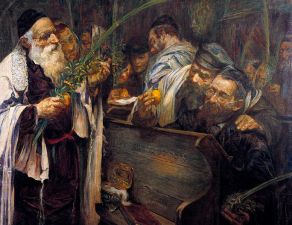
How could we be so blind?

It has been said that during the festival of Sukkot, during the days of the Holy Temple in Jerusalem, that the priests would sacrifice seventy bulls, representing the nations of the earth, in order to atone for our sins. It is also said that if the Romans, representing the nations of the earth, had realized the importance of the Temple in atoning for them, for us, they (we) would never have leveled the Temple (which to this day, has not been rebuilt) and sent the vast majority of the Jews out from their land for nearly 2,000 years.

That leads us to the second rather compelling thing God said through Ezekiel: “Then the nations will know that I am Hashem, the Holy One in Israel.”

Read that last part again. “…the Holy One in Israel,” not the Holy One of Israel. This paints a picture not of possession but of belonging and of unity. God is not just the God of the Jewish people, but He resides in Israel. He has belonging in Israel. He is united with Israel.

Particularly during this time of year, the statement of God in Israel is punctuated by the following:

It shall be that all who are left over from all the nations who had invaded Jerusalem will come up every year to worship the King Hashem, Master of Legions, and to celebrate the festival of Succos. And it shall be that whichever of the families of the land does not go up to Jerusalem to bow down before the King, Hashem, Master of Legions, there will be no rain upon them. But if it is the family of Egypt that does not go up and does not come [to Jerusalem], there will be no [water] for them; the same plague will come to pass with which Hashem will strike the nations that do not go up to celebrate the festival of Succos. This will be the punishment of the Egyptians and the punishment of all the nations that will not go up to celebrate the festival of Succos.

Zechariah 14:16-19 (Stone Edition Tanakh)

In other words, after the end of all things, when God once more establishes His rule over all the world from Israel and in Holy Jerusalem, if the rest of us, all of us, want to go and properly worship the God of Israel, we will need to go and worship our God in Israel.

Really everyone, I’m not making this stuff up. It’s not some arcane and esoteric commentary from the medieval Jewish sages. It’s right there in your Bibles. Look it up if you don’t believe me. As Christians, we may not be commanded to celebrate Sukkot or any of the other festivals, either in our own lands or in Jerusalem, but the day is coming when we will be compelled to send representatives from every nation, people, and tongue, to go up to Jerusalem and pay homage to the King, and to celebrate the festival of booths with our brothers and our mentors, the Jewish people.

But after all, that’s rather appropriate I think, given what was said by James, the brother of the Master:

After they finished speaking, James replied, “Brothers, listen to me. Simeon has related how God first visited the Gentiles, to take from them a people for his name. And with this the words of the prophets agree, just as it is written,

“‘After this I will return,
and I will rebuild the tent of David that has fallen;
I will rebuild its ruins,
and I will restore it,
that the remnant of mankind may seek the Lord,
and all the Gentiles who are called by my name,
says the Lord, who makes these things known from of old.’”

Acts 15:13-18 (ESV)

James is quoting the prophet Amos (Amos 9:11-12) in regards to “David’s fallen booth,” which we might render as “sukkah,” when describing how the Gentiles will also come to worship the God of Israel. Boaz Michael, President and Founder of the educational ministry First Fruits of Zion (FFOZ) referred specifically to this teaching in the Introduction of an early manuscript of his forthcoming book (of which I’ve read an advanced copy), Tent of David: Healing the Vision of the Messianic Gentile:

The Tent of David is a reference to the Davidic kingdom, which Amos envisions will encompass even the Gentiles, non-Jews who attach themselves to Israel and to Israel’s Messiah. James reckoned that the believing Gentiles of his day were the first fruits of the fulfillment of Amos’ prophecy.

The concept of the Tent of David, central as it is to the identity of the church and the Messianic Gentile, is seriously underappreciated. The prophets envisioned a kingdom that brought myriads of Gentiles to the knowledge of the Messiah and submission to his rule. Isaiah (2:2) prophesied that people from all nations—Gentiles—would flow to Jerusalem and worship there. Later in Isaiah (11:10–12), Messiah is said to inspire Gentiles to come to him as well as regather the scattered Jewish people. Isaiah 49:6; Micah 4:2; and Zechariah 8:22–23 contain similar prophecies.

The Lord’s brother saw the potential and the prophetic necessity for Yeshua-believing Gentiles and Jews to partner in making the prophets’ vision a reality. The Messiah had come and Gentiles were coming to him in droves. Paul’s ministry was devoted to making the “obedience of faith” a reality in the Gentile community, connecting his Gentile believers to Israel and teaching them how to properly submit to the rule of King Messiah. (Mark Nanos, The Mystery of Romans (Minneapolis: Fortress, 1996), 166–238.)

Not only must we cease to desecrate God’s holy Name by desecrating His holy people, the Jewish people, we must bless them in order to receive the blessings that God has reserved for us. Part of those blessings is a commandment to worship God in Jerusalem once the Messianic reign of Jesus is fully established. Part of our role as recipients of those blessings is to support Israel so that David’s “fallen booth” can once more be built up. Boaz Michael says it this way:

Gentile believers had a unique and vital role, using their numbers and resources to empower and bless the Jewish community and spread the message of the kingdom in their own culture.

I believe that remains our role in the world and in relation to the Jewish community. We must bless them and build them up, support them in returning to Torah and in re-claiming the Messiah as their own. This is what it is to rebuild the fallen sukkah of David, so that one day, Jews, Christians, and all of the world will gather together in Jerusalem and worship under the shelter of God.


Messiah Journal: Excerpt from “Origins of Supersessionism in the Church, Part 2”

Before I launch into the second part of my series on supersessionism in the church, I want to make a point of saying that I am not hanging the full weight of replacement theology of all Christian churches everywhere. I know, especially from my comments in Part 1, that it appears as if Christianity has much to answer for in its treatment of the Jews across history, but I haven’t forgotten that the church has also done an enormous amount of good in the world as the representatives of the Messiah for nearly 2,000 years. The specific scholars and theologians I’ve selected who represent supersessionism don’t represent all of Christianity. I’m not writing this series to drive a wedge between Christians and Jews (and since I’m a Christian, I have no motivation to do so), but to point out a legacy that we have inherited from our fathers and that we need to search out and continue to correct. To any Christian who feels I have treated them unfairly in my previous article, I apologize. Unfortunately, I have to point out some uncomfortable facts, so that we can recognize them for what they are. Once we’ve done that, we can move forward as disciples of the Master and stand side-by-side with our Jewish brothers in the faith before the throne of God.

-from the introduction to
“Origins of Supersessionism in the Church, Part 2”
by James Pyles
Messiah Journal, issue 110, pg 13

I sometimes “accuse” First Fruits of Zion (FFOZ) of “stealth marketing.” Issue 110 of Messiah Journal (MJ) was on display last week at FFOZ’s product table at the Shavuot conference I attended. Several other attendees told me they had already received the current issue in the mail before the conference. By the time I got home after the conference, my copy had arrived in the mail. But on FFOZ’s most recent issues web page for MJ, Issue 109 is listed as the current issue.

I love the people at FFOZ a lot but…Oy.

As you may recall, Part 1 of my Supersessionism series covered the historical origins of supersessionism from Biblical times to the present or at least the “near-past.” Part 2 covers the theological underpinnings of supersessionism in the church as it applies to three critical areas:

  1. Salvation
  2. Eschatology
  3. Religious Festivals

I know that there’s a lot more I could have written about, but when I was discussing how best to approach this part of the series with Boaz Michael, he suggested that these three areas were the most important. Also, I have a word count limit to observe, so I have to zero in on the most informative areas of each article’s main topic.

Salvation, relative to supersessionism, addresses the mechanism by which Jews must be saved. Christianity not only requires that a Jew come to faith in the Jewish Messiah, but that he or she completely give up any Jewish lifestyle or religious observance as a condition of that salvation.

Eschatology involves what most people think of as “the end times” (cue scary thunder and lightning noises, please). First of all, will Jews even be there and second of all, what will be their role? Who are the “144,000 sealed from every tribe of the sons of Israel?” (Revelation 7:4 ESV). Many Christians aren’t convinced they are literally members of the twelve tribes but some spiritual representation of Israel held by (Gentile) Christians.

Religious Festivals has to do with what Jews celebrate vs. what the church celebrates. Why was Easter created as a Christian observance and were Christians actually barred from any observance of Passover by the early church? Were all Jewish festivals considered invalid for Christians and how does that affect church celebrations today?

How conscious are these ideas in the church today? Do people actually think about the role (or lack thereof) of Jews in their relationship with God and in terms of these three topic areas, or are these wholly assumed and therefore beneath the lived Christian awareness?

To find out the answers to these questions and more, contact First Fruits of Zion and ask to purchase a copy of issue 110 of Messiah Journal.

Oh, and by the by, I’ll be reviewing other selected articles from this same issue, so you’ll get an inside glimpse of what writers such as Russ Resnik, Aaron Eby, and Toby Janicki have to say about a number of interesting and even critical subjects in the realm of Messianic Judaism.

Stay tuned.

God-Fearers: Gentiles and the God of Israel, A Book Review

When I first started writing this review, I couldn’t find anything about Toby Janicki’s new book, God-Fearers: Gentiles and the God of Israel either on First Fruits of Zion’s (FFOZ’s) website or through a general Google search. The book hadn’t been released for public sale when I got my advance copy at FFOZ’s recent Shavuot conference, but I didn’t realize it was so new that there was no advance publicity available. I emailed Boaz Michael and he asked me to hold off publishing my review for a few days. As a consequence, this review is a bit different than the one I originally created. Not too different though, and my conclusions are the same.

The question of when the book would become available for purchase was kept as an unexpected announcement for the Shavuot conference. Boaz and Daniel Lancaster wanted to surprise Toby by presenting him with a copy during one of Toby’s presentations. No one, including me, expected to be able to actually get their hands on “God-Fearers” as early as last week. Boaz gave me my personal copy at the conference so I’d be able to write a review soon after I returned home. I had it completely read by the time I had to board my flight at the Minneapolis-St. Paul airport to return to Boise last Monday night.

I have to admit that I was a little disappointed when I read the book and discovered that it didn’t contain the one piece of content I had anticipated. I think both Toby and Boaz mentioned at the conference that this book would describe Toby’s personal journey from a One Law position to his current theological stance, which I guess we now call (more or less) “divine invitation” (I put that in quotes because when you’re invited but not commanded to take on additional Torah mitzvot beyond what a Christian would consider obligation, the results from one person to the next can be variable). I was really hoping Toby would write what it was like from inside FFOZ as their formal policy and faith structure transitioned into its current form. I was hoping to be able to actually see Toby’s personal journey against the backdrop of FFOZ’s ethical, moral, and spiritual development from what it was originally to what it has become today. At the conference, Toby even shared a story (which I’ll write about in a later “meditation”) about an “epiphany event” in his life that dramatically illustrated for him the dissonance between a Gentile publicly practicing Jewish identity behaviors and how it actually looks to Jewish people. None of that kind of content actually made it into the book.

What did make it into the book is a worthy read, however there is a fair amount of repurposed materials from articles Toby wrote for Messiah Journal (MJ). Since I read MJ regularly, the vast majority of what Toby’s book contained was familiar to me. Of course, if you don’t subscribe to MJ or you want all of this information collected in one place, God-Fearers is definitely for you. The material is also “fleshed out” somewhat so that articles that were only loosely related and published across the span of many months, are integrated into a fairly seemless set of topics focusing on the history and evolution of the presence of Gentiles in the worship of the God of Abraham.

OK, what’s the book about? Toby researches and investigates the history and context of non-Jewish people who, across the long centuries from Sinai to the fall of the Second Temple, have attached themselves to the God of Abraham, Isaac, and Jacob, but without the benefit of a formal convenant relationship with that God being available (unless you count the Noahide covenant). Toby presents to his audience, a set of pictures of what Gentiles looked like as they became aware of the God of Israel, began to grasp the concept of ethical monotheism as opposed to pagan polytheism (which was universal among the non-Jewish nations throughout the vast majority of our history), and how we non-Jews began to enter, however hesitantly, into the presence of God through the “interface” of normative Judaism.

When Christians think about God-fearers, they tend to think of the Roman Centurion Cornelius in Acts 10, who Jews would tend to call “a righteous Gentile.”

Now while Peter was inwardly perplexed as to what the vision that he had seen might mean, behold, the men who were sent by Cornelius, having made inquiry for Simon’s house, stood at the gate and called out to ask whether Simon who was called Peter was lodging there. And while Peter was pondering the vision, the Spirit said to him, “Behold, three men are looking for you. Rise and go down and accompany them without hesitation, for I have sent them.” And Peter went down to the men and said, “I am the one you are looking for. What is the reason for your coming?” And they said, “Cornelius, a centurion, an upright and God-fearing man, who is well spoken of by the whole Jewish nation, was directed by a holy angel to send for you to come to his house and to hear what you have to say.” –Acts 10:17-22 (ESV)

Most Christians are familiar with these verses and based on this text, we imagine that God-fearers sprang abruptly into history as fully realized as Cornelius sometime in the late Second Temple period. But Toby shows us that the concept of God-fearers goes way, way back, possibly as early as the time of Moses and the Sinai covenant. His book presents Biblical evidence of God-fearers in the psalms, such as Psalms 115, 118, and 135. He also cites Midrashic references, such as Numbers Rabbah 8:2 and Genesis Rabbah 28:5 to show us that normative Judaism acknowledged the presence of God-fearing Gentiles within their midst across the span of Jewish history.

Conceptualizing the relationship between Gentile God-fearers and the Torah is complex. It can even be complex (depending on your point of view) for the Gentiles who have become disciples of the Jewish Messiah (i.e. “Christians”). We see the bare bones of the expectations for the non-Jews who wanted to enter the Messianic covenant in Acts 15, and the book reveals itself to be a commentary not only of God-fearers the way the church traditionally thinks of Cornelius, but of the Gentile who is on a journey of discovery from first becoming aware of the God of Israel, to attaching to that God, perhaps as a Noahide or something similar, and then finally being adopted as sons and daughters of the Most High when we confess the Jewish Messiah as Lord and Master, formally becoming disciples of Jesus and members of the Messianic covenant.

Additionally, Toby describes many of the detailed questions a lot of us have in terms of Gentiles and Jewish identity markers such as Shabbat, tzitzit, tefillin, the Festivals, and other examples of the mitzvot. Please keep in mind that in writing this review, I’m shooting through material that covers over 150 pages in barely 1600 words so I’m just hitting the high points. There’s a lot more elucidating information contained in Toby’s “God-Fearers” book which of course, you’re going to have to read for yourself.

god-fearers mosaicI can see “God-Fearers” being a really great resource either for a non-Jew just entering into the Messianic movement, or for someone who has been active in the movement for awhile but who experiences significant gaps in understanding the role of a non-Jewish disciple in a Messianic Jewish context (I met many people in both of these groups last week at the conference). For those of you who fear that FFOZ is using this book to say, “Gentiles can’t study and take on anything in the Torah,” this book will reassure you that nothing could be further from the truth. In fact, the book represents a great deal more flexibility as far as what Gentiles are allowed and even obligated to do under Torah than I originally anticipated (I discovered this when I read part of this material in Messiah Journal some months ago). If you keep an open mind and let the book tell its own story, I don’t think you’ll be disappointed as a non-Jewish person who feels “called” to some form of Torah mitzvot observance.

As I mentioned before, I really was hoping that at least the last chapter would have told something of Toby’s personal journey. It’s one thing to provide scholarly information about “generic” non-Jews and how we relate to the Torah and the Messianic movement, but I think the book would have really come alive if Toby had shared his personal thoughts and emotions as FFOZ and he both moved away from the One Law perspective. I got a sense in having talked with Toby for a bit at the conference (he was really busy for those four or five days so I didn’t get to spend any significant time with him) that there is a lot more for him to tell than what finally made it into God-Fearers.

Do I recommend Toby’s book? Absolutely. I think it’s an extremely valuable asset for the audience I described above. I hope if this book goes to a second printing or, if it be God’s will, a second edition, that Toby will include some of his lived, personal experience into the text. The intellectual, emotional, and spiritual value of God-Fearers: Gentiles and the God of Israel would increase immeasurably if he did. That said, if you get your hands on a first edition now, consider it a terrific resource and possibly even a collector’s item.

As I mentioned before, I have a story to tell about Toby (he knows I’m going to share it on my blog) and how it is part of my own.

Blessings.