Tag Archives: book review

Book Review: Mishnah and the Words of Jesus

Midrash is the art of keeping an ancient text alive. The Rabbis were masters of drawing water from stone, of transforming the most mundane passages of Torah into luminous nuggets of spirituality.

-Ismar Schorsch
“Accountability,” pg 330, March 8, 2003
Commentary on Torah Portion Pekudei
from his book Canon Without Closure: Torah Commentaries

Probably anyone who has ever focused on the teachings of Jesus is aware that he was a product of the religious milieu that emerged in the 1st century of the present era.

-Roy B. Blizzard
“Chapter 3: A Good Eye”
Mishnah and the Words of Jesus (Kindle Edition)

I sometimes complain that certain teachers and scholars in the realm of Messianic Judaism periodically “flirt” with taking some of the various texts compiled in the Talmud and anachronistically applying them, some composed many centuries after the Apostolic Era, to the letters of Paul and the teachings of Jesus. If we were to assume that the author of, for example, the Zohar (which is not part of the Talmud) spoke in the same voice as Jesus and the apostles and applied no other methods of examining how this could be reasonably and rationally accomplished, then we would be making a terrible mistake. I don’t say this is done routinely, but in reading or listening to lessons such as D. Thomas Lancaster’s sermon series Holy Epistle to the Hebrews (which he has been conducting for well over a year and the series shows no signs of abating), we must be cautious to make sure that when we apply midrashic methods of studying the New Testament epistles, we are not projecting the later voices of the Rabbis backward in time, making the writer of Hebrews speak lessons that he (or she) would not have known or intended.

On the other hand, there is a way we can justify viewing Hebrews, or Paul’s epistles, or the Gospels, through a “midrashic lens,” or perhaps better said, a “mishnahic lens,” so to speak, and I think that’s the point of Dr. Blizzard’s book Mishnah and the Words of Jesus. Instead of starting in the future and working his way into the past, Blizzard begins with the scholars and sages contemporary to Jesus or appearing just before and after him historically, and then works his way forward. Blizzard suggests, and I agree with him, that the teachings of Jesus were understood as completely consistent with the way the various Rabbinic branches of the normative Judaisms of his day were teaching.

Continuing in Chapter 3, Dr. Blizzard writes:

In the Sermon on the Mount, recorded in Matthew 5 and following, Jesus said, “Blessed are the meek for they shall inherit the earth.” Where did Jesus get that idea? Who are the meek? What does it mean to be meek? If we did not know that Jesus was a rabbi, speaking Hebrew, using rabbinic methods in his teaching, hinting back at something that has already been said or written, and that his listeners basically have all of this material memorized, we would not understand. (emph. mine)

And as I’ve said before I think most of us in the Church don’t understand. Instead of reading the teachings of the Master with an eye on these first century Jewish “rabbinic methods of teaching,” Christianity in all of its various flavors, imposes its own interpretive traditions on the text, forcing anachronistically, meanings onto and into the words of Jesus, Peter, Paul and the other New Testament teachers, that were formulated (at best) decades after the end of the Apostolic Era, but more than likely many, many centuries after, and these traditional interpretations are wholly detached from anything that would have occurred in the thoughts of Jesus and the apostles.

In Chapter 2: “Teaching, Tithing and Silence,” Blizzard states:

Perhaps we would all do well to heed Gamaliel’s injunction to provide ourselves with a teacher in he matter of tithing to relieve ourselves not just of doubt, but of the erroneous teaching that has been prevalent in the Church for over a thousand years. (emph. mine)
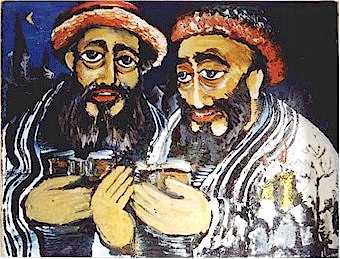
Hillel and ShammaiIn this instance, Dr. Blizzard is referencing associations between the teachings of Jesus as related to the Mishnah, specifically the sages Shammai, Hillel, and Gamaliel, as related to passages in Torah that speak of generosity and compassion toward the poor, which modern Judaism refers to as tzedakah or charity, but with the underlying meaning of justice and righteousness. However, I think Blizzard’s words can be applied to a much wider scope and indeed, to many of the common teachings of the Church about the meaning of the Bible, particularly in terms of the continuance of Torah in the lives of the Jewish people, the continuance of the Jewish people in God’s love and plans for the present and future, and the continuance of Judaism as a valid lifestyle by the Jewish people of devotion to and worship of the God of Israel.

If, on the other hand, the Church could see the strong parallels between the teachings of Jesus, his contemporaries, and those Rabbis who closely followed him in history, such as Rabbi Yochanan ben Zakkai, who was present at the fall of Jerusalem and is considered single-handedly responsible for formulating “the direction that Judaism would take” after the destruction of Herod’s Temple and the great exile of the Jewish people into the diaspora, then perhaps we could initiate a desperately needed corrective action in the Christian Church and in Christian hearts.

Blizzard emphasizes this in the following quote from Chapter 4: “The Will of the Father.”

How important it is that we study rabbinical literature, the sayings of the rabbis. The way in which they teach, the word pictures they paint, the images upon which they draw, because it gives us an understanding of the words of Jesus, the ideas, the concepts upon which he is drawing. In many instances, without a knowledge of this background, because of the images, the idioms, the metaphors, etc., so widely used by the sages and rabbis, we are unable to understand the depth, the meaning, of the words of Jesus.

It’s not only ironic but profoundly sad that most churches reject the very lessons and teachings that would enable the clergy and laity to understand Jesus Christ the most. By rejecting the teachings of the Mishnah which sit at the very heart of the various ancient and modern streams of Judaism, Christianity rejects the very heart of the meaning of the teachings of her Savior.

Chapter 4 of Blizzard’s brief but powerful book is a tour de force of comparisons between the specific teachings of Jesus and quotes from the different rabbis recording in the Mishnah. There are too many of them for me to record here, but fortunately, Blizzard’s book is quite affordable (especially the Kindle version, which can be downloaded in seconds), so I heartily recommend you purchase a copy and read it for yourself.

Not only is the Mishnah very Pharisaic, it is also very Pauline which, of course, is to be expected in view of the fact that Paul refers to himself as “a Pharisee of Pharisees.”

Blizzard shifts his focus at this point, from comparing the teachings of Jesus to the Mishnaic rabbis to making comparisons between the Mishnah and the Pharisaic Apostle Paul. Blizzard further states:

I want to emphasize that the ideas reflected here in the Chapters of the Fathers can be found in the teachings of all the New Testament writers, which, again, is just what we should expect. Why? Because they are all Jews. They all came from the same background, the same religious and spiritual heritage.

The Rebbe and the ChildBlizzard introduced the first chapter of this book, “Tzedakah and Righteousness,” by saying he intended to compare the teachings of Jesus to “the words of the rabbis prior to, and contemporary with, and following Jesus, recorded for us in the Mishnah, Order Nezikin, Tractate Avot…” and then he said something that especially attracted my attention:

In the teachings of Jesus, there is one underlying and overriding theme, a theme on which Jesus constantly dwells, a theme that serves as the foundation upon which biblical faith is built. If one looks at the Bible as a whole, if one includes additionally all Jewish literature that is extant, the Oral Law, the Written Law, the commentaries, and search for one, single, overriding theme that is the foundational theme of biblical faith, one would have to conclude that that foundational theme is summed up in the Hebrew word tzedakah… (emph. mine)

Blizzard follows the thread of tzedakah, which as I said, in Judaism is associated with charity, righteousness, and justice, through the teachings of Jesus, the rabbis of the Mishnah, and across the Torah, the Prophets, and the Writings to paint an overarching landscape of God’s message to human beings.

This is a concept I harp on with some regularity; that we must engage the Bible as a single document that is inexorably interconnected, rather than “cherry pick” various verses and passages of scripture willy-nilly as they seem to map to our preconceived theologies and doctrines, and then string them together to create the illusion that the entire theme of the Bible is represented by those few bits and pieces we’ve jumbled into our religious collage. I think by now, most Christians realize that you can prove just about anything if you connect the dots between carefully selected words and phrases in the Bible. But that doesn’t mean the Bible as a cohesive unit really says what you are making it say.

I know. I could be accused of the same thing. After all, I have a point to prove just like everyone else. But although I think there’s a lot of truth in Blizzard’s belief that the Bible’s central theme is tzedakah, I have been trying to make the argument in my various blog posts, that the central theme is actually about God’s desire and His plan to unite all of humanity under a single King, and for God to dwell among His people without requiring that His Jewish people stop being Jewish or stop practicing Judaism in order to bring honor and glory to the Jewish Messiah and the God of Israel.

What is the central theme of the Bible according to the various streams of normative Christianity? Here’s a rather harsh sounding rebuke from Dr. Blizzard in Chapter One:

Jesus has become an idol, if you will, our focus of attention, our focus of worship, and it seems that very few think of God anymore. Seldom do we hear anyone speak of the glory of God, his grandeur and mercy, the holiness of God, and the other many attributes and characteristics of God.

I should mention at this point, that a good friend of mine, once a Jewish believer, has rejected Jesus as the Messiah, in part, because of what Dr. Blizzard said in the above-quoted paragraph. My friend spares no effort in explaining on his blog what he sees are the errors in Christianity.

Now before my Christian readers get really mad at Blizzard, he went on to say…

Please understand that I am not trying to lessen the importance of Jesus. What I am trying to do is emphasize that, in all the teachings of Jesus recorded for us in the gospels, his focus is not upon himself, what he is, what he is doing, or what he is to become. Additionally, Jesus has very little to say about God and, in particular, the Worship of God.

My point is that, in the teachings of Jesus, there is not all that much emphasis upward.

Blizzard then maps the teachings of Jesus and the sayings of the rabbis in the Mishnah, back to what he sees as the central emphasis of Jesus and of Judaism which is the care and concern for other human beings as the primary means of living our faith and worshiping God.

tzedakah-to-lifeIn addition to the focus on Jesus as Savior, the Church tends to focus on the concept of preaching the gospel, which translates into God’s personal plan of salvation for the elect. And that’s where it stops for a lot of churches. Fortunately, Blizzard’s rebuke of Christianity doesn’t include each and every church. Many churches, such as the one I currently attend, focus heavily on studying the Bible as a means of knowing how to serve God and other human beings, primarily through acts of charity and support of missionary efforts to some of the more desperately needy people groups on our planet.

In fact, one of the things some churches do really well are acts of tzedakah as well as something called Gemilut hasadim, which can be translated as acts of loving-kindness. Christians get the idea of grace from this Hebrew term. The difference is that tzedakah or acts of charity can be performed only on the poor, while gemilut hasadiam, which involves giving money or a personal service, can be done for anyone.

However, Blizzard’s distinctly “Jewish” presentation of these concepts alongside the teachings of Jesus and the Mishnah, provide an exceptionally fresh look at an essential something that often goes stale in many churches or in many individual Christian hearts. By linking something that the church actually does with how vital those actions are in ancient and modern Judaism, Blizzard successfully creates a link between what else is vital in Judaism, especially the Judaism of the time period around the Apostolic Era, and what the Church isn’t doing and isn’t teaching because these are things the Church has ultimately dismissed as having been “nailed to the cross” with Jesus.

Roy Blizzard’s book Mishnah and the Words of Jesus is a perfect example of why I find it absolutely necessary to access my faith in Christ by way of studying Judaism and, in my case, particularly Messianic Judaism. I’m certainly not Jewish, but it is quite possible and even desirable to be a Christian and to study Messianic Judaism in order to understand and then practice what I learn from the Bible.
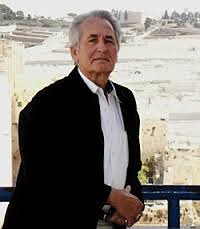
Roy Blizzard
Dr. Roy B. Blizzard

There were quite a number of other gems in Blizzard’s book, but I should limit my review, not only for the sake of length, but to permit readers such as you to allow “Mishnah and the Words of Jesus” to unfold itself in your own experience.

However, I do want to say something else in wrapping up this blog post. It may sound like I’m distinctly “anti-Church” and interestingly enough, “anti-Christian,” even though I identify myself as a Christian, a disciple of Christ or Messiah. This isn’t actually true. While I point to the warts and moles I see on the Church and which, for the most part, the Church choses to ignore, I also see the beauty that has been maintained among those whose highest goal is to wholeheartedly serve Jesus Christ by serving humankind.

I’ve written God Was In Church Today and In Defense of the Church recently as much to remind myself as to remind everyone else that the Church is good. But in the words of Boaz Michael of First Fruits of Zion (FFOZ), “the Church needs to change.” Hopefully, scholars such as Dr. Roy Blizzard, Messianic Jews such as Boaz Michael, and even ordinary, everyday people like you and me, can contribute to that change for the sake of Israel and in the service of God.

One final thing. At the top of this blog post, I quoted Ismar Schorsch briefly commenting on Midrash. It is true that Midrash and Mishnah are not the same thing but they do have something in common. They both represent a way of thinking about God and a way of communicating about God as we study the Bible. You can study the Bible apart from any acceptance and understanding of the rabbinic sages and still learn a lot, but I believe you will not only miss a great deal of important detail in your study, but you’ll perpetuate a system of misunderstanding the Bible’s panoramic message, especially about God, Israel, the Jewish people, Judaism, and the role we non-Jews play as the crowning jewels of the nations. For the sake of Israel, and for the sake of the return of the Messianic King, we owe it to ourselves, to the Church, to Israel, and to God to learn all we can learn by setting aside our “institutionalized Christian learning,” and stepping outside the box, so to speak. If you’re not sure how to begin, Dr. Roy Blizzard’s Mishnah and the Words of Jesus is a good place to start.


The Ironic Good News of Galatians

Commentators sense the need to argue this point to varying degrees, although none finds it necessary to go to any great lengths. In other words, this conclusion is apparently self-evident. James Dunn’s approach is representative: “The fact that Paul uses the Christian technical term for ‘the gospel’ also is clear indication that those whom he was about to attack were also Christian missionaries. He calls their message ‘another gospel’ because it was significantly different from his own; but he calls it ‘gospel‘ because that was the term they no doubt also used in their capacity as missionaries like Paul.”

-Mark D. Nanos
“Chapter 10: Paul’s ‘Good News Of Christ’ Versus The Influencers’ ‘News Of Good,” pg 285
The Irony of Galatians: Paul’s Letter in First-Century Context

As I write this, I have just finished reading this book (I know, it took a long time) and I really do intend to review it as a unit rather than chapter-by-chapter as I’ve historically reviewed other books. However, gathering my notes together for a comprehensive review will take a little more time and I have a good reason for pulling Chapter 10 out of the stream and devoting special interest to this topic.

As Nanos points out in this chapter and more generally in his book, the issue of what exactly the “gospel of Paul” vs. the “gospel of the influencers” indicates is of great importance in understanding Paul’s letter to the Galatian assemblies as well as the identity of the influencers.

I’ve commented before about how the word “church” (ekklesia) has taken on a life of its own in modern Christianity when the most general use of the word in the time of Paul simply meant “assembly,” as in any group of people coming together for a common purpose. This does not deny that the “ekklesia of Messiah” isn’t something quite a bit more specific, but the twenty-first century technical term “church” seems to be used in a way that we may not be able to anachronistically retrofit back into the first century text.

And so it goes with the word “gospel” (I can’t reproduce the original Greek here as Nanos does in his book). If we believe, as modern normative Christianity does for the most part, that Paul’s use of the word “gospel” in Galatians and his other letters must always specifically mean “the good news of salvation through the death and resurrection of Jesus Christ” and can never mean any other kind of “good news,” then we (Christianity or at least Christian doctrine and scholarship) may again be guilty of employing anachronistic retrofitting to force modern Christian theology back, two-thousand years in time and halfway around the world, into Paul’s thoughts, intentions, and writing when it may not have been what he meant at all or at least not all of the time.

I am surprised that you are so quickly defecting from him who called you in [the] grace [of Christ] for a different good news, which is not another except [in the sense] that there are some who unsettle you and want to undermine the good news of Christ.

Galatians 1:6-7 (Nanos, pg 286)

In the original quote from the book, Nanos inserts the Greek text alongside the English words, which I’ve already indicated I am unable to duplicate here. But focusing on this bit of scripture, can the “good news” of the influencers be related to the “gospel message of Christ” and at the same time be “not another” and “different”? For that matter, what is Paul’s “good news” to the Gentiles and is it what we think of when we read our Bibles or listen to a message from a Pastor on Sunday morning?

Paul actually denies that this other “good news” should rightfully be considered “another.” Paul does not exactly say with F.F. Bruce that it is “no gospel,” but he gets thereby at the sense of Paul’s usage, for Paul does reverse himself in calling it that “which is not another…”

-ibid, pg 287

As I was reading this chapter, I was reminded of the First Fruits of Zion television series episode The Gospel Message which I reviewed last summer. According to the introduction to this episode:

The gospel message of Jesus is often simplified down to believe in Christ and your sins will be forgiven and you will go to heaven when you die. In episode eight this common misconception will be challenged. Viewers will discover that the main message of the gospel is one of repentance and entering into the kingdom of heaven. The kingdom of heaven is not the place we go to when we die but rather God’s kingdom coming down here on earth. The gospel message is about preparation for the Messianic Age.

Scot McKnight
Scot McKnight

Scot McKnight in his book The King Jesus Gospel: The Original Good News Revisited also produces strong evidence that the way “the Church” commonly understands the term “gospel” today does not entirely (or even mostly, sometimes) fit its original and intended meaning. Moreover, the term “gospel” meaning “good news” can mean different kinds of “good news” depending on context.

The good news of Jesus Christ is the centerpiece of Paul’s life and work. But the issue for identifying the influencers and their relationship with Jesus Christ is whether Paul’s use of…must be limited to the lips of believers in Jesus or even to a declaration about Jesus in a formal sense that it has come to have in the Christian tradition, with the results then applied to exegesis of Gal 1:6-7, as the conclusions of the prevailing views assume…

Because gospel is and has been for a long time used as a uniquely Christian term, it is anachronistic for our investigation, having lost the more fluid sense of good news or announcement or message of good originally communicated, and its verbal cognate is further limited by the lack of an English verbal form of “gospel” (i.e., “to gospel”), thus the translation “announcing” or “proclaiming the gospel.”

-Nanos, pg 288-9

Mark Nanos
Mark Nanos

This suggestion is bound to offend some Christians, and it’s certainly not my intention to do so. It is my intention to use what Nanos presents in his book to “shake the establishment” so to speak, and investigate an aspect of the writings of Paul that I think has been long neglected, especially at the level of the local community church: reading Paul specifically within the intent and context of his letters and letting Paul tell us what he meant rather than letting centuries old Christian tradition tell Paul and us what he meant. While I can’t promise that Nanos’ viewpoint is 100% correct in all respects, I think his approach shows much promise and has the ability, if we let it, to shake Christianity out of its apathy regarding our understanding of the Bible, and getting us to see the scriptures in a way that has been abandoned since the death of the last apostle.

On page 290, Nanos defines the usage of the plural of the word we translate as “gospel” in the time period of Paul and how it functioned within the “imperial cult for the announcement of significant event concerning the divine ruler: birth, coming of age, enthronement, speeches, decrees, and actions are ‘glad tidings’ of happiness and peace…” He also presents this by way of illustration:

How beautiful upon the mountains are the feet of the messenger who announces peace, who brings good news, who announces salvation, who says to Zion, “Your God reigns.” (emph. mine)

Isaiah 52:7 (NRSV)

We can start to see the Greek word we read in English as “gospel” or “good news” having a somewhat more diverse or expanded meaning beyond what we consider in the Church, but lest I cast Nanos in an uncomplimentary role or misrepresent him, he did also say the following:

It should be clear by now that I do not intend to suggest that the usage of…in its various forms for the message or proclamation of the good news of Jesus Christ by Paul generally represented anything other than messianic eschatology, but at the same time I want to make it clear that this was not the only way in which it could be or was used by Paul or his Jewish or pagan contemporaries, to which I now turn.

-Nanos, pg 292

In other words, Nanos isn’t saying that “gospel” is never used by Paul to refer to “messianic eschatology”, only that Paul doesn’t always use the Greek word for “good news” in the same way. It isn’t a matter of either/or but depends on the immediate context of the message.

However…

That instance (2 Sam 4:10; 2 Kgdms 4:10 in LXX) also constituted an ironic twist on the double meaning of… (though in the plural): the messenger thought that he was “bringing” David “good news” … about the death of Saul, only to be killed, for the value of the news was perceived differently by David… (emph. mine)

-ibid

PaulThis brings up the point of how the difference in the good news of Paul vs. the good news of the influencers was intended. We know that Paul intended his good news to be good for the Gentile addressees of his letter, but what about the influencers (I’ll speak more about the identities of the addressees and influencers in my forthcoming general review of “Irony”)? On page 314, Nanos says that “it is not to say that the influencers did not regard their message as good news for these Gentiles. I think they did.” I’ll expand on this in my next review, but from the influencers’ point of view, as understood by Nanos, the Jewish influencers really did think they were doing the Gentile believers in Christ a big favor by “completing” their transition of identities from pagan worshiping goyim, to God-fearing Gentiles, and finally to fully integrated members into the Jewish community in which the Gentiles were then worshiping and participating through entry into the proselyte rite.

In other words, “good news” is in the eye of the beholder. While Paul may have referred to the message of the influencers as “good news” ironically and even sarcastically, Nanos maintains that the influencers were sincere in their intent to bring good to the Gentiles, not understanding or not wanting to understand that through Christ, the Gentiles would be equal co-participants in Messiah-devotion and worship of the God of Israel in a Jewish synagogue and community context.

But this flies in the face of how Nanos defines the following verse:

For those who are circumcised do not even keep the Law themselves…

Galatians 6:13 (NASB)

While many Christians understand that piece of scripture to be Paul’s accusation that the Jewish people who were trying to entice the Gentiles to convert and to “keep the Law” hypocritically did not observe the mitzvot themselves, Nanos says that Paul had one very specific Law in mind:

…but you shall love your neighbor as yourself…

Leviticus 19:18 (NASB)

While the Jewish influencers in the Galatian synagogues may not have been aware that Yeshua of Nazareth cited this as one of the two greatest commandments (see Mark 12:31 for example), they would have been quite aware of the commandment in Torah. Nanos says that Paul accuses the influencers of not observing this specific mitzvot by ignoring what was actually in the best interests of their Gentile neighbors in Christ for the sake of the influencers’ own interests. Again, I’ll speak more on this at a later time, but I mention it now only to draw attention to the seemingly contradictory motivations of the influencers as presented in the Nanos book.

Moreover, the association of the declaration to Abraham of the promise of a son with the label good news continued in the rabbinic tradition on Genesis, though obviously with no association with Jesus: Gen 18:1-15; b. Baba Mesia 86b; Mekita, Pischa 14; cf. Fragment Targum to Gen 21:7 and Gen. Rabbah 50:2.

-Nanos, pg 294

A Jewish person recently commented on one of my blog posts how Christians have sometimes erroneously misinterpreted the sages to support their (our) stance that Yeshua is the Messiah and that the Messiah is Divine. Further, in one of my reviews of D. Thomas Lancaster’s sermon series Holy Epistle to the Hebrews, I stated that there is a very real danger in reading Talmud and interpreting Midrash written well after the Apostolic Era as if it existed in the same form during the time of the apostles. On the other hand, Nanos is presenting his argument by establishing the usage of the Greek word for “gospel” at the time of Paul first, and then projecting it forward in time rather than trying to make the future apply to the past.

It occurs to me now that without saying so explicitly, what Nanos does in “Irony” may also be (though I say this rather provisionally) what Lancaster is doing in his lectures. That still doesn’t excuse deliberately reading into the Rabbinic sages what they never intended relative to the identity of the Messiah (which is something I’ll need to write about someday), but I think it’s valid to establish a method of reading the Apostolic scriptures “Jewishly” and then looking forward in time through Jewish literature at how that perspective has been maintained or evolved across history.

Another important aspect of Paul’s application of the broader semantic field of…comes to the front when we consider his usage of this language with regard to the figure of Abraham. Paul appeals to “the good news proclaimed beforehand…” to Abraham (i.e., before his circumcision). The content of this good news was that “In you shall all nations be blessed” (3:8). This good news was obviously proclaimed before Jesus or any message could be directly attributed to him or his followers…

-ibid

Certainly the scripture in the above-referenced quote is about Jesus as the Messiah, but said-good news was not delivered by the followers of Jesus (which would have been historically impossible) and thus while the good news does address a future Messiah who would be a blessing to the nations, it was not specifically describing the “mechanics” of the death and resurrection of Jesus Christ as a means of personal salvation, which is how the Church understands the “good news” today.

The Jewish PaulNanos continues to deliver additional examples of how “gospel” could have been meant differently by Paul in different contexts, and how “gospel” as attributed to the influencers could have been considered “good” to the Gentiles by them, even as Paul considered it “another gospel” which is “not a gospel” at all, for it undermined the good news of the Messiah for Paul’s Gentile students in the Galatian communities.

Nanos paints a portrait of the letter-writing Paul not as crafting a cold, calculated, and logical religious treatise as much as he was delivering a “snarky” commentary as an offended parent to misbehaving teenagers who were being led astray by a misinformed group of “agents of social control” in their local Jewish communities. While being “snarky” doesn’t mean Paul checked his brain at the door and was incapable of composing a complex and scholarly dissertation in letter form, it does mean that Paul was writing a letter in response to a specific event or set of events, and he was quite possibly hurt and angry as he addressed the error of the addressees and the troublesome actions, though possibly even well intended on some level, of the influencers.

My take away from this chapter is that we need to stop being married with the highly technical meanings we assign to certain words and phrases in Christianity, and instead, we should “get down in the mud” so to speak, with Paul as he’s writing his letters, get into his head, get into the situation, as much as history will allow, and experience, in this case, Paul’s Holy Epistle to the Galatians as a letter fired off by a fired up Paul trying to avert what he could only see as a disaster, if his Gentile protegés were led off the path of Paul’s “gospel” to believe in another “gospel,” one that said they would never be equal co-participants in the Jewish community of Messianic followers and worshipers of the God of Israel unless they were circumcised and converted through the proselyte rite into Judaism.

Paul had the good news of the Messiah for the Gentiles that through the covenant promises God made to Israel, by faith as Abraham exhibited before his circumcision, the people of the nations could be grafted in and be made part of the glorious hope that began with God’s elevating the Hebrews, continued with the first stirrings of the New Covenant in the life of Jesus and the Apostolic Era, and that will ultimately be realized with Messiah’s return, a promise of what is to come.

Addendum: The full book review is now online.

Prologue to the Irony of Galatians

The Irony of GalatiansFinally, I want to acknowledge the victims of certain interpretations of Paul’s voice, especially those who have suffered the Shoah. Their suffering cannot be separated from the prejudices resulting from those interpretations any more than it can be wholly attributed to them. To them I dedicate the effort represented in this book.

-Mark D. Nanos
from the Acknowledgments, pg ix
The Irony of Galatians: Paul’s Letter in First-Century Context

Such a strange way to end a series of acknowledgments for a book. The author usually thanks his/her publisher, editor, spouse, and whoever else contributed to or who were sometimes inconvenienced by the author’s writing of the book. Occasionally, religious people will thank God, their congregation, and so forth, in addition to the “usual suspects.” Having written a few books myself (though not in the religious studies space), I know the author’s side of composing acknowledgments.

That said, I normally blow past the acknowledgment page quickly when I get a new book in my hands, but something told me to slow down a bit before getting to the “meat” of the content. What we have here is a suggestion that the traditional way Paul has been understood by Christian interpreters has, in some manner or fashion, contributed to the injury of the Jewish people, including the most glaring injury in recent history, the Holocaust. There have been two injustices committed by the “consensus view” of Paul which includes his letter to the Galatians: a gross misunderstanding of Paul himself and his missives to various First Century churches, and as a result of that misunderstanding, a terrible injustice to Jewish people across the last nearly two-thousand years of history.

That’s a heavy burden to place upon collective Christianity, but it’s not a burden that is undeserved, nor is it one that cannot be lightened. What is needed is a fresh reading of Paul from a First Century Jewish context.

While Nanos states in the book’s Prologue that he attempts to make no direct comparison between the Paul of Galatians and how Nanos depicted Paul in his previous book The Mystery of Romans, I don’t doubt that I’ll be making the comparison anyway, considering my several recent reviews of that work. After all, we are talking about the same human being, and unless Paul received a “personality transplant” between writing one letter and the next, he should be transmitting the same basic understanding of the role of Jews and Gentiles in the Jewish religious stream once known as “the Way.

Because the prevailing interpretations have probed Paul’s text without sufficient appreciation of the powerful role of ironic inversion at work, at the formal as well as functional level, the interpretation of the apostle’s scathing rhetoric has exaggerated and, regardless of other plans, continues to accentuate the differences that are imagined to separate Christian and Jewish identity, behavior, and even intentions toward God and neighbor. The legacy of this perception of the Jewish other has proven often tragic for the Jewish people, at least in a world that has been often dominated by those who look to Paul to shape reality, and for others, as a foil to justify their twisted construal of what is right.

-Nanos, Prologue, pg 2

This reads more like an indictment than, as Nanos puts it, a project that “represents a revised and expanded version of (his) Ph.D. dissertation…in 2000.” There’s a sense that Nanos has more invested in this project than simply a serious and scholarly re-investigation into the traditional interpretation of Paul relative to ancient and modern Christian and Jewish relationships and identities.

No interpretation is independent of context, that realized or assumed for the original author and audience, and that of the interpreter him-or herself. I am a product of many factors, not the least the long shadow of the Holocaust, which claimed so many Jewish people, my people, as well as exposure to critical tools now available to the interpreter.

ibid, pg 4

PaulNanos goes on in the Prologue to compare the “Consensus View” which he states has “not changed that significantly in the history of Christian interpretation” to his perspective which he calls “The Irony of Galatians,” characterizing Paul’s letter as an “ironic rebuke”. He challenges the consensus view of Paul as Law-free and in opposition to Jewish Law (Torah) and religiously obedient Jews, which is an interpretation of Paul’s message in Galatians that has been “undeniably colored by the interpreter’s understanding” rather than “producing a disinterested portrait” of the subjects of the letter, “considering their identity, motives, messages, or methods on their own terms.”

Of course, we have to consider that Nanos, in partially attributing Shoah and the murder of six million of his people to the traditional interpretation of Paul renders him less than completely objective, but then again as Nanos has already alluded, no one fails to bring something to the table when interpreting the Bible. In the book’s Prologue, Nanos leaves it up to the reader to determine if he has “constructed a probable context for interpretation of Paul’s voice…”

I know a fellow who is quite an erudite scholar and it is his opinion that more often than not, a book’s prologue may contain enough of the contents of the book itself to tell the entire story, sort of how some movie trailers give away most or all of the story of the films they are advertising. This may also be true of Nanos’ “Irony,” but not having cracked even the first page of the first chapter yet (as I write this), I’ll have to wait and see.

On the other hand, Nanos does reveal that he considers the “influencers” to also be Galatians and Jews who have a certain responsibility to initiate the Gentiles in the Galatian synagogues into their entry into Judaism. If these influencers were like those Jewish people we encounter in Acts 15:1-2, we may be seeing a heavy bias in the non-believing and believing Jewish communities in the days of Paul toward the proselyte ritual as the only means by which a Gentile may enter “the Way.” That makes Paul’s Galatian letter, according to Nanos, an “ironic rebuke” to the Gentile readers and an intra and inter-Jewish communal dispute between Paul and the Jewish influencers.

As I read in Nanos’ “Romans” book, he continues to depict Paul as Torah-observant, which only makes sense, given that Paul wrote that a Gentile being circumcised and converting to Judaism is obligated to the full yoke of Torah (Galatians 5:3). Being Jewish then, by definition, would mean that Paul considered himself as obligated to said “full yoke” of Torah in the same manner as his fellow believing and unbelieving Jews.

Paul is himself an example of status and observance, and his message in this letter does not abrogate the identity or observance of Torah for Jewish people (i.e. Israelites) in the least but is instead predicated upon their continued validity for himself and other Jewish members of this movement.

-Nanos, pg 9

The remainder of the prologue covered a summary of each of the three parts of the book and what the reader can expect to discover. What remains are the detailed arguments presented by the author, which I have yet to experience.

For the “Romans” book, I reviewed the material almost chapter by chapter in some cases, and I have a tendency to write book reviews in parts, often before I’ve completed my reading of the entire work. I don’t know if I’ll do that here since such an analysis takes a fair amount of time. On the other hand, it’s difficult in just a few sentences, to impart complex ideas and descriptions accurately when presented in a “book-length” form. Also, as much as I report for the sake of my audience, I write these blogs to process my own experience as I encounter new thoughts and concepts, so the level of detail in which I engage is sometimes more for me, the writer and learner, than it is for you the reader. Of course, my benefit is also your benefit as long as you don’t mind having to consume the output of my internal dialogue.

Mark NanosSince I’ve liberated myself from having to produce daily morning meditations, I can’t say when the next installment of my review on “Irony” will be written, but know, compulsive blogger that I am, that it will appear before too long. Galatians is one of my Biblical “pet peeves” along with the traditional Christian interpretation of Paul as either suffering from multiple personality disorder or as a liar and hypocrite.

I’m searching for an interpretation of Paul’s letters that renders him sane, internally consistent, consistent relative to his personal history as an observant Jewish Pharisee, and as a living expression of generations of Torah-observant Jews who came before him, worshiping the God of his fathers, obeying the Torah, and honoring the Temple, all within the context of a zealous faith in the Jewish Messiah. No other Paul makes sense, and a Paul (as the Christian consensus view defines him) who is mentally ill, a duplicitous liar, or a two-faced hypocrite makes the apostle completely disingenuous and an unreliable author of the majority of the canonized New Testament.

So much for the Christian faith if the consensus view is true.

I can only take Paul seriously if I can find another way to hear his voice. I believe I have found that sane and reliable Pauline voice. Now I want to see how that voice speaks in Paul’s letter to the Galatians.

One of These Things is Not Like the Others

One of these things is not like the othersCommunity. It’s that thing, the way of life, that we all want but we’re just not quite sure how to pull it off successfully. It’s that tantalizing concept that promises so much reward, and yet it seems so elusive. Its promise sometimes causes us to cut ties where we are and move somewhere else where we hope to find greener pastures, better friends, and/or become part of a different community. Then when we do get a taste of real community, it’s only a matter of time before our hearts are stunned with hurt or insult. But a lack of community causes us to feel despondent, alone, and often times as if we’re missing out on something significant that was intended for us all along. This community thing can really be disappointing!

-Lisa
“Community Disappointment”
Following the Ancient Paths

I wrote a lengthy response to this blog post, but when I pushed “Post Comment,” I received an error message and my comment was lost forever. It was a rather lengthy comment (go figure) and I suspect the blog application was complaining to me about it. I thought about re-writing the comment but decided to blog instead.

Lisa’s blog post addresses what we should already know. Being part of any group or community is hard work. It’s hard to join, it’s hard to sustain, it’s hard to adapt over time. This includes families, employers, and Lisa’s specific topic, religious organizations.

I can sympathize. A little over a year ago I “went back to church” and in that time have had many interesting, educational, and dismaying “adventures.” But as Lisa’s blog post suggests, this is to be expected. No group that involves multiple human beings is always going to run smoothly.

Over a year apart, I wrote the blog posts Why I Don’t Go to Church and Why I Go to Church, chronicling my internal struggle, the same one Lisa seems to be describing.

We live in a world that seems to praise isolationism, yet we instinctively know that we weren’t created to be loaners (sic). Somehow it’s considered a good thing when we can handle things alone, when we can appear stand tall with a backbreaking burden strapped to our backs, when we live such private lives that nobody knows what is really going on with us. Deep inside we know that it isn’t right to go through life all alone. We wrestle with wanting something yet not wanting the very same thing, pursuing it and rejecting it all at the same time.

-Lisa

As Lisa says, we want to go it alone to avoid all of the messiness of being part of a community, but when alone, we know that being isolated from community isn’t right, either. Sort of a “can’t live with ’em, can’t live without ’em” situation.

The main point of my lost comment was the issue of competing interests. Affiliation with one community may conflict with another affiliation. In my case, I’m a Christian living with Jewish family members while attending a Christian church. How does that work?

Another set of competing interests has to do with entering into and finding a niche within a community. I recently declared that I’m a Christian who studies Messianic Judaism, and yet I attend a very fundamentalist Baptist church in Southwestern Idaho. If you’ve read any of my blog posts about my conversations with my Pastor, you know that although we get along, we disagree on a number of fundamental (no pun intended) elements of what faith in Messiah means, particularly to the Jewish people.

Can a square peg successfully integrate into a church of round holes? Good question.

I recently finished the book Life of Pi by Yann Martel. It tells the story of Pi, born and raised in India, from childhood to adulthood through a series of flashbacks, with the main action taking place aboard a lifeboat shortly after Pi’s family died in a shipwreck in the middle of the Pacific Ocean. Pi is the only human survivor, but finds that he must share the lifeboat with an injured Zebra, an Orangutan, a Hyena, and a 450 pound, male adult Bengal Tiger named Richard Parker (Pi’s father was a zookeeper and they were transporting a number of their animals from India to their new home in Canada).

life_of_pi_by_megatruh-d5noigdThe other interesting thing besides how Pi manages to survive seven months adrift at sea sharing a lifeboat with a Tiger (the other animals didn’t make it), is that as a child, Pi adopted three religious traditions, first Hinduism, then Christianity (Catholicism), and finally Islam. Pi practiced all three religions simultaneously, ignoring the basic tenet of each that these religions are exclusivist. That is, if you belong to one, you cannot also belong to any other religion.

Pi managed to observe each religious tradition in parallel without arousing suspicion for a while, but eventually it caught up with him, and he was finally confronted by all three congregational leaders at the same time in a public place in front of his parents.

When questioned about why he thought he could be a Hindu, a Christian, and a Muslim all at the same time, he responds by saying that he “just wants to love God.” (Martel, pg 69)

The book follows Pi’s life into adulthood and middle age where he is married with two children and a small dog and living in Toronto. He still practices all three religions, with no mention of any conflict in his family or in any of the involved congregations, but “Life of Pi” is a work of fiction and operates often at the level of religious allegory (I still haven’t figured out what the carnivorous island is supposed to mean).

In real life, Pi would never be able to successfully manage practicing all three religions, not only because of the conflicts between those communities, but the likely conflict with his own family, particularly his wife, who almost certainly had formed her religious or irreligious affiliations before she ever met and married Pi.

I have to admit, when I read about the sheer audacity and innocence of Pi’s devotion to three different religious branches, cherishing the best in all three, I felt a moment of admiration and even envy. What would it be like to open your arms wide and to take in and accept humanity’s vast range of traditions in worshiping God just for the sheer love of God?

It isn’t practical, which I suspect is one of the reasons why Martel’s novel is called a fantasy.

But Interfaith communities aren’t unheard of in our world. Author Susan Katz Miller maintains the On Being Both blog which celebrates a variety of interfaith families and communities, but such celebrations aside, one does not easily navigate the stormy seas that occur when theologies, doctrines, and dogmas clash in the narrow straits between one religion and another.

The solution in my own family, as it stands now, is something of a compartmentalization of each religion. In my home, Christianity and Judaism exist in separate silos, rarely communicating across the gap between them for the sake of peace. I do occasionally get emails from my wife containing links to news or information items on Israel or Judaism but I’m very careful not to bring up Christianity.

The ugly times is where our communities can grow stronger, more dedicated to one another, where each member grows in righteousness and in the image of our Master. The challenge is on the table. Are we ready to accept it?

-Lisa

Sesame StreetIt is true that adversity can produce stronger communities, but there’s a line that, if crossed, means that adversity has exceeded manageable limits and is destructive, not constructive. Sort of like lifting weights at a gym to build strength but overtraining resulting in injury, sometimes serious injury.

The television show “Sesame Street” sometimes has a lesson in the form of a song called One of these things is not like the others and I know what that experience is like in spades. There are interfaith communities that (seemingly) successfully co-exist within the same larger group, and there are interfaith families that are created and thrive for decades (such as my own), but that doesn’t mean it’s easy (which is what Lisa’s blog is all about).

But beyond being “not easy,” there are times when “not easy” becomes impossible or at least highly improbable, like a fourteen-year old boy from India who is a practicing Hindu, Christian, and Muslim, or the same boy two years later who manages to survive for seven months in the Pacific Ocean sharing a lifeboat with a large Bengal Tiger. How long can such a relationship between communities last before something gives?

Book Review: The Four Responsibilities of a Disciple

The Four ResponsibilitiesThis book addresses the question, “What will it take to change the world for our Master?” After many years of searching, my answer is that it has to start with a Personal Revelation. Here’s what I mean…

There’s a story told of a rabbi from the late nineteenth century who set out to change the world, but very soon realized that he could not. So, he decided to focus on changing the Jewish community of his country but he failed there as well. He then decided to focus on changing the people of his hometown but didn’t get any further. Finally, in a last effort, he believed he could change his family and sought to do so. Failure was the result there as well. In the end, he realized that the only person he could really change was himself. Therefore, he began to do so. And today, long after his death, his teachings are the cornerstone of Jewish life, particularly in proper speech and ethical conduct.

This is our path.

-Darren Huckey
“Introduction: Why Discipleship,” pg 5
The Four Responsibilities of a Disciple

This is how Darren begins his small (85 pages) booklet and primer on promoting authentic discipleship under our Master, Jesus.

When Darren contacted me and asked me to review this book, I wasn’t sure what to think. I am aware of Darren in various social media venues but can’t say I actually “know” him as well as I know other people I regularly communicate with over the web but have never met. But I was curious and agreed to do the review and subsequently, Darren’s book arrived in the mail.

I must say that I’m impressed. I was barely aware of Emet HaTorah so I wasn’t sure of the quality of the materials they (he?) produce. Both the “look and feel” and quality of content are high and represent a professional job of writing and publishing. I’ll cut to the chase and say right now that I’d recommend this book for anyone who is really interested in what being a disciple of the Jewish Messiah is like as a lived experience.

The booklet is laid out along the pattern of steps Darren establishes for discipleship:

  • Devotion
  • Memorization
  • Imitation
  • Replication

Except for the Introduction, each chapter has a series of study questions at the end as well as the endnotes for references used in the chapter. The book then is suitable for either group study or for the individual reader/student.

Actually, Chapter One is “What is a Disciple?”, which is a critical question to answer. If you don’t know the answer, you certainly can’t make a disciple or even be one.

The Master of whom Darren refers and who leads us in discipleship is Jesus, and the pattern of how to make/be a disciple comes from very Jewish sources. In terms of “the Church,” Darren called discipleship a “lost art.” If a church has any sort of “discipleship program” at all, it’s based on “intangibles” such as defining the disciple as one who “will love Jesus more than anything,” “will carry his cross,” “will count the cost,” and “will surrender everything to Christ.”

The ancient and modern Jewish discipleship is based on “doing” or direct imitation of the Rabbi or teacher, not just being devoted to an abstract set of principles. If you had to live your life based on the “intangibles” I listed above, what exactly would that look like? What would you do? How would someone who knows next to nothing about a “Christian lifestyle” of holiness implement those principles in day-to-day living? Would you recommend that he or she fashion a large, wooden cross and then shlep it on their backs from morning to evening to “carry his cross?”

Darren makes a good point when he calls a disciple a “lifestudent,” but that only helps the reader realize how challenging being a true disciple of Christ is. Discipleship isn’t a six, twelve, or eighteen-week program you run a new member of your church through and at the end, they are a “full-fledged Christian.” Discipleship takes a lifetime of continual studying and mentoring.

Devotion

In one sense, how the church defines a disciple, “love Jesus more than anything,” is the center of devotion to one’s “Rebbe.” But the concept of devotion has to be actualized. That is, you have to understand how devotion is acted out and then do it.

jewish-czech-boys-studying-talmudIn Chapter Two, devotion is a matter of commitment. Think of it like a marriage. Being married is more than just a ceremony and signing a license, it’s a life-long (ideally) commitment of two people to each other to meet not only a set of wants and needs recognized at the beginning of the relationship, but to adapt over time and meet commitments that were never even imagined at the beginning. If you can grasp that concept and better yet, if you’ve actually done it (been married for years or decades), you have a pretty good idea of what living a life of discipleship is all about.

The analogy falls apart when you realize that a marriage is a commitment between two equals and discipleship is being devoted to someone who will always be greater than you.

“Truly, truly, I say to you, a slave is not greater than his master, nor is one who is sent greater than the one who sent him.”

John 13:16 (NASB)

Memorization

This is actually something some Christians do pretty well. A lot of churches encourage their members to judiciously read the Bible and to memorize verses, but in the Jewish model of discipleship, students memorize all of the teachings of their Master. That’s a tall order, even if you just interpret this as memorizing everything Jesus said in the Gospels. However, since our Master’s “source material” was the Torah and the Prophets, we’re talking about a much larger body of text being involved.

But Peter told Jesus that Messiah had “words of eternal life” (John 6:68). Writing those words on our minds and hearts leads to such a life, both in the now and in the World to Come.

However, rote memorization isn’t all there is to it. Correct interpretation and then living out these teachings is part and parcel of the task. If we don’t understand the original meaning of the Master’s teachings, they will either seem like nonsense, or we’ll end up completely missing the mark of what he was trying to say. Darren references First Fruits of Zion (FFOZ) author and teacher D. Thomas Lancaster and his “Macaroni Principle.” As children, we all probably heard and sung this little tune once or twice:

Yankee Doodle went to town,
riding on a pony;
He stuck a feather in his hat,
and called it macaroni

I won’t reveal the definitions here, but if you don’t know the meaning of “yankee,” “doodle,” “macaroni,” and why someone would put a feather in their hat, you won’t have the faintest idea what this really means (and it really means something quite specific).

Our Rebbe Yeshua may be the wisest and greatest prophet and teacher who ever lived, but if we don’t understand what his original students would have understood when they listened to him, we will proceed to understand, teach, and live lives of folly and error. One of the reasons I have written about the Didache is to illuminate some of the probable details of a life of discipleship and training of the very early Gentile believers. The Didache gets disciples out of their heads and actually “doing” Christianity. That’s what Darren is trying to do with his book, too.

Imitation

I know some people reading this will take the suggestion quite literally and say this is proof that Gentile Christians are commanded to wear tzitzit, lay tefillin, eat Biblically (as opposed to Rabbinically, for some reason) kosher, pray in Hebrew, and try to live as how they imagine observant Jews live without actually converting.

studying_tanakh_messiahThat’s not how I see imitation and such superficial behavior misses the point of this principle. What do we do to imitate our Master, which is the application of his teachings in our lives?

Darren produced a short bullet list (I won’t replicate the whole thing here) that includes showing compassion to others, leading through serving, loving children, having a passion for justice, and loving the Torah and the Temple. I note that I can love the Torah without believing I am commanded to live as a Jewish person. I can believe that the Torah applies to me differently than to the descendants of the ancient Israelites and, as the Didache states:

6:2 For, on the one hand, if you are able to bear
the whole yoke of the Lord, you will be perfect;
but if, on the other hand, you are not able,
that which you are able, do this.

I can take my observance of the Torah of Moses to the extent I am able, as I understand this, but my imitation of the Master does not include a commandment to act as “Jewish” as the Master.

Actually, at the end of Chapter Four, Darren uses “praying like Jesus” as an excellent example of how we can imitate our Master. I think it would be a good place for anyone to start on the path of being a disciple in imitation of his Rebbe.

Replication

Implementing Chapter Five is a bit tricky, because we don’t really have a system in the Church that functions like the Jewish model of multi-generational discipleship. The idea is that a group of disciples study under a Master Teacher for many years, holding him as more dear than even their own parents, being totally devoted to him, spending long hours and days literally following him wherever he went, listening to him, imitating his dress, his patterns of speech, memorizing his every word and deed.

Eventually, one by one, each disciple would be elevated to the point to where he could begin to take on his own disciples and to be a Master to them. He would then pass on everything he learned from his Master (which would include the teachings of his Master’s Master, and so on, preserving all of those teachings in the next generation).

And so it would go, at least ideally, generation after generation.

In Christianity, the original apostles are long dead and the discipleship model died with them. What we have to learn from are the written teachings of the Master and the first apostles and disciples. Only the Bible is our guide to becoming disciples of Jesus and somehow replicating what we learn to a next generation.

The Church doesn’t even come close to doing this in terms of discipleship, although to their credit, they have preserved (though in many cases, the interpretations have been skewed) the teachings of Jesus for nearly two-thousand years.

As I was reading this chapter, I thought about my every other week Sunday afternoon coffee conversations with a good friend of mine. Although we don’t exactly have a mentor/student relationship, he has been a Christian for forty years and I learn a great deal from him, including how to clarify my confusion on a good many things. I suppose you could also include my weekly conversations with my Pastor in this category, since I do have a one on one relationship with someone who is far better educated in the teachings of our Master than I am.

But both of those situations fall short of actual discipleship. A true disciple will study under his Master for years or decades. How can the church even begin to do this, especially in a highly mobile western society where people move from city to city and state to state every few years?

Remember, in order to engage in this process of Replication, we first have to be in the process of becoming a disciple ourselves. Brad Young tells us, “For disciples to be made, there is first a need for master teachers.”

-Huckey, pg 74

Where do we start? Who are the Master Teachers in the Church who will commit to a multi-year, multi-decade process of raising up disciples in our Master Yeshua and then in turn, having those disciples raise up their own disciples? How can this even be possible in our modern Christian culture?

What I Learned

Jesus followed the traditional pattern of the Jewish discipleship model of his day. He raised hundreds to thousands of disciples, including a core group of apostles who would go on to become Master Teachers in their own right. His disciples followed Jesus around everywhere he went, listened to his teachings, memorized his words, conformed every action of their lives to his example, and later, they recorded his teachings from memory and raise up disciples in his sacred name.

walking_discipleThe process fell apart pretty quickly, especially once Paul started taking the teachings of the Master to the Jewish and Gentile disciples of the Master in the Diaspora. You see, in most cases, Paul couldn’t stay in one place for the years or decades it would take to follow the discipleship model that would allow the new believers to assimilate the teachings of Jesus into their lives. In many cases, Paul would have to leave a Gentile leader in charge of a “church” who barely grasped the basics of “Judaism 101,” and didn’t even come close to being a competent disciple, let alone a “Master Teacher” for his local group.

I wonder if that’s why most of Paul’s letters take the tone of “course corrections,” defining where the various churches have gone wrong and, at a distance, trying to provide the teachings necessary to get them back on track.

All of the other “Judaisms” going forward in history (actually, only the stream of the Pharisees survived beyond the destruction of the Temple) managed to preserve the discipleship model much better. In our modern era, this only exists in certain segments of religious Judaism, but the model still exists. In the Church, it disintegrated early on and except in fairly rare cases, was never resurrected.

Conclusion

Darren Huckey’s book will give you a starting point. It’s well written and well researched, and I think it’s a valuable resource for people who want to become and/or to raise up serious and correctly oriented disciples of our Master, but there’s a limit to what you can do with such a small booklet. This work won’t turn you into a disciple. Actually, no book, including the Bible, will change anything there is about you unless you dedicate your life to the teachings therein and walk the walk from the moment you wake up until you drift to sleep at night, day after day after day…for all of your life.

Huckey’s book is best done by doing or rather, using it as a template to discover how to “do” discipleship under Jesus. You’ll need more resources to fully explore a life of discipleship, which is what I suspect Darren plans to do with his ministry. It’s what First Fruits of Zion has been doing with their ministry for over twenty years (and especially after experiencing significant “course corrections” of their own).

The Four Responsibilities of a Disciple is a tool in your collection of resources that will guide you to a life of Jesus discipleship, but it’s only one tool. I must emphasize that this one book will not be sufficient to make you into a disciple. It will however, point you in the right direction.

Pray, love, serve, and study, but most of all, do discipleship, and you will not be far from the Kingdom of Heaven.

Lancaster’s “Galatians” Book Revisited and Reviewed

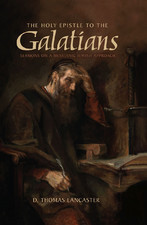
galatians-book-lancasterChristians often wonder if the Old Testament saints are “saved.” Have you ever heard that question? It’s problematic. Like most of these questions, the person asking it usually does not know what he means by it. What the person probably thinks he means is this: “Did Noah, Abraham, Isaac, Jacob, David, and Isaiah, and others go to heaven when they died?” What they are trying to ask is this: “Did the divine souls of the men of faith who lived prior to the atoning death of the Messiah find repose in paradise while they await resurrection? Will those men and women who did not confess the name of Yeshua attain the resurrection?”

-D. Thomas Lancaster
“Sermon Thirteen: Abraham’s Gospel (Galatians 3:8-9),” pg 131
The Holy Epistle to the Galatians

As many of you know, I previously started going through this book with My Pastor on Wednesday nights starting many months ago, debating our different viewpoints on Lancaster’s take on one of Paul’s most well-known epistles. This is the letter that Christianity most often uses to prove that Paul preached against the Law of Moses for both Jews and Gentiles. Unfortunately, that take on Paul, especially relative to his behavior in the latter chapters of Acts, makes him seem like a liar and a hypocrite. Interestingly enough, most Christians and most Jews believe that Paul really was a traitor to Judaism, the Temple, and the Torah, and that he took the teachings of Jesus and morphed them into a brand-new religion: Christianity.

If he had done that, then how can we possibly trust the teachings of such a disreputable fellow? Most of our New Testament would be a fabric of lies and half-truths, not the inspired Word of God. Christianity would be a farce. But nearly twenty centuries of post Biblical Christian doctrine have spun this interpretation so that Paul comes out smelling like a rose. Not so the Jewish people and Judaism, however, who for that same amount of time, have played the villain in the tale of the rise of the Gentile Church.

What Lancaster is attempting to do with this landmark book from First Fruits of Zion (FFOZ), based on his original sermon series, is to recast Paul in the role of the apostle to the Gentiles who remained zealous for the Torah, zealous for the Temple, even as he was zealous for the Messiah. Paul is not the liar and hypocrite but the misunderstood hero of the early Messianic movement, trying by long distance correspondence, to hold together a fragile string of communities of Messiah-faith scattered across the diaspora.

I wrote my original review of Lancaster’s book back in 2011 when the book was published, and since then, I wrote a short series of commentaries based on my conversations on Lancaster with my Pastor, but I haven’t completely read through the book again before now.

A number of weeks ago, my Pastor and I agreed to pursue other topics in our discussions, having hit a rather firm impasse on whether or not Jewish Torah observance was intended to continue on this side of the cross (you can surely guess my position in this matter). He subsequently said he’d be willing to continue our discussions on Lancaster, but I’m convinced at this point that each of us are well entrenched in our perspectives to the point where the conversation would only serve to frustrate both of us. I want my time with my Pastor to be productive, illuminating, and in service to God, not a once-a-week head-banging-against-brick-wall session.

Having made that decision, I decided to pick up in the book where Pastor and I had left off and go through it again. I’m not going to rehash all of the content but I want to post a few highlights that probably didn’t occur to me before.

Actually, a few months back, after reading A Torah-Positive Summary of Sha’ul’s Letter to the Galatians written by Ariel Berkowitz and published at MessianicPublications.com (I don’t agree with their general premise on Gentiles and the Torah, but I found the Berkowitz paper worthwhile), I revisited relevant sections of Lancaster’s book and “re-reviewed” them in comparison to Berkowitz.

BerkowitzMy comparison of Berkowitz and Lancaster on the “Torah-Positive Paul” is chronicled in Nitzvaim-Vayelech: The Torah of Paul. Commentary on Paul’s Hagar and Sarah midrash (Galatians 4:21-31) can be found in Paul’s Hagar and Sarah Midrash. My last contrasting of Berkowitz and Lancaster on the matter of circumcision and uncircumcision (Galatians 5:1-6) can be read in Abraham, Paul, Circumcision, and Galatians. I also wrote a separate commentary on the same subject in If Paul Had Circumcised Gentiles.

Now that I’ve covered all that territory, what is there left to talk about?

But that theory does not seem credible. To be fair, God must have done so for all his people for all of the years up until the death and resurrection of Yeshua. And if that is the case, why did he stop doing so in the generation of Messiah? When did he stop doing so? Another way of putting this: “In the Old Testament times, God had some different means of bringing people to salvation, and it worked up until the death of Messiah, at which point people now need to believe in Yeshua. If so, that makes the “good news” actually “bad news” because, prior to the coming of Messiah, Jews received a special revelation from God, but now God has cancelled that program and that is why Jewish people are not believers in Yeshua. That’s a bad deal for Jews.

-Lancaster, pg 132

In order for the traditional Christian view of salvation to be correct, God had to change the rules, rather dramatically too, and cause the course of Biblical history and His own plan to “jump the tracks,” so to speak, and take an entirely different direction. For thousands of years, Jewish faith and devotion to Hashem, God of Heaven, Savior of Israel, and walking in obedience to His statues, was sufficient to ensure God’s continued love and a place in the World to Come for all faithful Jews. Now, something has changed and the focus of faith has shifted from God (the Father) to Jesus (the Son).

And the Scripture, foreseeing that God would justify the Gentiles by faith, preached the gospel beforehand to Abraham, saying, “In you shall all nations be blessed.”

Galatians 3:8

Lancaster supports the idea of progressive revelation, the idea that more and more information is revealed to humanity by God as time goes on. Abraham didn’t know as much as Jacob, Jacob didn’t know as much as Joseph, Joseph didn’t know as much as Moses, and so on. Put that way, I can see the point, but that continual process of God’s revelation to people can’t result in God saying something later that directly (or even indirectly) contradicts what He said earlier. If God said that the Sabbath is an eternal covenant between God and the Children of Israel, and a sign forever, then no later revelation can turn what God said was “eternal” and “forever” into “temporary” with an expiration date stamped on it in invisible ink.

hagar_and_sarahI think we can find the clue to answering the dilemma of whether or not ancient Israel was “saved” in Paul’s Hagar and Sarah midrash. The later covenant cannot take the place of the earlier covenant, and so it is between the Abrahamic promise and Sinai. Faith was always the “mechanism” by which Israel, and later the rest of us, was saved, not obedience to the Torah mitzvot.

But why the shift from God (the Father) to Jesus (the Son)? Jesus only said “No one comes to the Father except through me,” (John 14:6) not “You must come to me and not the Father.” Galatians 3:8 is the link between faith and Messiah, the blessing to the nations, and ultimately, the fulfillment of Israel’s national as well as personal redemption. Devotion to Messiah King is the “doorway” by which we are all ushered into the presence of God, always by faith, not who we are or what we do.

This is actually the whole point of Paul’s letter to the Galatians. No one is justified by their ethnicity or their behavior, but by faith in God by the “merit” of Messiah Yeshua. Faith is the ultimate common denominator between all human beings, Jews and Gentiles alike.

So if the Jewish people were always saved by a faith like Abraham’s, then so too are the Gentiles by being grafted into the Abrahamic (but not Mosaic) blessings of the “good news” as we see in the aforementioned Galatians 3:8. Everything else promised to Abraham by God flows through the descendents of Abraham through Isaac and Jacob, and ultimately Israel’s children, the twelve tribes, on down through the Jewish people, but faith is the one promise we can all apprehend. Lancaster calls it “Abraham’s Gospel” since after all “gospel” just means “good news” and is an Old Testament concept, not a New Testament invention.

Abraham may not have fully understood all of the implications of his seed being a blessing to all nations, but nothing God promised Abraham had to be contradicted or nullified by later revelations. This is why, if Paul and Galatians seem to contradict earlier promises and prophecies of God, then the fault can’t be Paul or the Bible or God, but our incorrect interpretations, which have historically been driven by anti-Semitic and supersessionistic teachings of the Church designed to separate Christianity and Judaism since the earliest days of the Gentile Church. Even when many Christians are no longer seeing themselves as replacements of the Jewish people in God’s covenant promises, the foundation of those ancient anti-Jewish doctrines still color our perceptions.

That’s why it’s important for us to read men like Lancaster and to take the “risk” of adjusting or even changing the lens by which we view the apostle Paul.

Paul knew that the ignorant and unstable would twist his words to their own destruction. He knew that some would take his declarations about Gentiles “not under the law” as a license for sin. Therefore, he warned his readers, “Do not be deceived: God is not mocked, for whatever one sows, that will he also reap” (Galatians 6:7).

-Lancaster
“Sermon Twenty-Five: Torah of Messiah,” pg 266

I chose to read that statement differently than Lancaster (and Paul) intended. I don’t think you have to be ignorant and unstable to misunderstand Paul. I think you can even be intelligent, well-educated, and well-meaning, and still let historically established religious tradition color Paul’s writing. It’s probably impossible to read the Bible without having some sort of interpretive filter between you and the text. That’s just as true with the perspectives of the various “flavors” of Messianic Judaism as it is for the different branches of Hebrew Roots and all the different denominations of the Christian Church. The trick is to find a perspective that brings you the closest to the original intent of the writer and how the intended audience would have heard those words. That’s why I think a Jewish or Hebraic perspective is necessary for us to understand Jewish and Hebraic writers, writings, and audiences.

I know my opinion on Galatians is in the minority, but I think Christianity and Judaism have both gotten Paul all wrong for nearly two-thousand years. I think Lancaster and this book is one effort to try to correct centuries of error.

D. Thomas LancasterIn re-reading D. Thomas Lancaster’s The Holy Epistle to the Galatians, I find it more illuminating than my first pass-through, probably because I’ve continued to study and learn over the past two years, and my discussions with my Pastor have forced me to hone my interpretive skills. I don’t think the book is perfect and in fact, there are a number of points Lancaster makes I don’t agree with (cheeky of me, I know). I think the letter still works if it is addressed to both Jews and Gentiles in the faith communities in Galatia. I think his explanation, as you can read elsewhere, on the Hagar and Sarah metaphor was overly complicated and addressed a different audience than Lancaster surmises.

But, in the majority of his general perspective, I agree with Lancaster. Paul was not nullifying the Torah of Moses. He was explaining to the Gentile believers that conversion to Judaism and full Torah obedience was not a requirement for salvation. He was also explaining to people born Jewish and to righteous converts that neither being ethnically Jewish or being a convert conveyed salvation. Taking on the full yoke of Torah as a Jew does not justify anyone before God. You can’t do enough for God to buy your way into reconciliation. Only faith like Abraham’s does that.

Jews should remain Jews and observe the Torah, for no later covenant, as Paul stated, invalidates the earlier ones. Sinai did not undo Abraham, and the New Covenant, for a Jew, does not undo Sinai. Jewish observance of Sinai is in effect because a Newer Covenant cannot take the place of an older one, it can only ratify it. That’s why we Gentiles don’t have to convert to Judaism and observe the Torah: because Sinai’s Torah did not undo Abraham’s faith. And the New Covenant, in spite of how it is seen in the Church, is generally a repetition of all the previous covenants with some portions being amplified.

After two years, I continue to recommend Lancaster’s Galatians book which is available in hardcopy from First Fruits of Zion and in hardcopy or kindle versions from Amazon (and by the way, the reviews for this book at Amazon are excellent).