Tag Archives: church

Book Review: The Irony of Galatians

The Irony of GalatiansFinally, I want to acknowledge the victims of certain interpretations of Paul’s voice, especially those who have suffered the Shoah. Their suffering cannot be separated from the prejudices resulting from those interpretations any more than it can be wholly attributed to them. To them I dedicate the effort represented in this book.

-Mark D. Nanos
from the Acknowledgments, pg ix
The Irony of Galatians: Paul’s Letter in First-Century Context

I know I also began my blog post Prologue to the Irony of Galatians with this quote, but I think it’s important to remember a little bit about where Nanos is coming from in writing “Irony”. It’s not just another scholarly book addressing an interpretation of a New Testament letter, and it’s not even just presenting a new perspective on Paul. It’s aimed at correcting a nearly two-thousand year old injustice to the Jewish people by what eventually became the Christian Church, started by the so-called Church Fathers who reinvented the Bible to say that the Jewish people and Judaism became passé if not completely evil, perpetuated by the authors of the Reformation, and culminated in the most incredible evil of the twentieth century, an evil that still sends echos into this day and this hour: the Holocaust.

I know that some hard-core Evangelicals such as John MacArthur might say that the classic Christian interpretation of Galatians is the correct one and that the Church can hardly be blamed for how it’s been used against the Jewish people over the long centuries of exile, all the pogroms, all the torture, all the forced conversions, all the assimilation, all the deaths. He might say (I’m not saying he ever breathed a word of this, I’m just “supposing”) that most Jewish people have failed to “move on” and leave the Law behind, and that they should give up the past and embrace grace and Jesus Christ instead.

But what if that’s wrong? What if Paul never wrote something that he intended to be twisted into a declaration of condemnation against his own people, against the Torah, against the Temple, and even against himself? Christian apathy and the reluctance to overcome its own inertia (in most cases) has resulted in an almost total lack of desire, let alone any activity directed at reading Paul’s letters through fresh eyes, removing the “tradition” colored glasses and donning lenses more appropriate to how a first-century Jewish scholar would have seen the Messiah in context and how he intended his audience, in this case the Gentile believers in the various synagogues in the area of Galatia, to read his “ironic rebuke” of their apparent foolishness (I’m getting to all of that).

What if we’ve got Paul all wrong? What if that results in our having to re-examine and even to re-create what it is to be a non-Jewish worshiper of the God of Israel with the Son of God, the Moshiach, Yeshua of Nazareth as the doorway?

Nanos doesn’t go that far in his book, but it’s the logical consequence of his writing if we accept his conclusions.

Let’s dive in.

Before reading/hearing Paul’s polemical assault, the influencers appeared very differently to those he now addresses in Galatia, as trusted guides, likely even friends, who had their best interests in mind. Rather, I suggest that the influencers represented Jewish communities in Galatia that were concerned about the integration of these particular Gentiles, who were, through their involvement in the (still Jewish) Jesus subgroups, an integral part of the larger Jewish communities at this time. But their appeal to traditional norms maintained in the present age apart from Christ to modify the identity expectations of Paul’s children in Christ threatened the addressees’ interests in ways that neither the influencers nor the addressees perceived accurately–according to their parent, Paul. We have only his response.

This response implies that these Gentiles declared themselves to be identified with the Jewish communities in a new and disputable way, as righteous ones apart from proselyte conversion.

-Nanos, “Conclusion: The Irony of Galatians,” pg 317
The Mystery of RomansI probably should have started with the Conclusion and then worked through the body of the book. Like Nanos’ Romans book, “Irony” is densely packed with details as Nanos first attempts to refute the traditional Christian interpretations of Paul in general and the Galatians letter in specific, and then presents his own evidence for the premise he suggests, that this letter is not Paul’s major attempt to torpedo the Torah, Judaism, and the Jewish people, but rather what he calls an “ironic rebuke” written to his Gentile disciples who frankly he believes should have known better than to listen to the Jewish (quite possibly proselytes themselves) influencers who neither had faith in Yeshua as Messiah nor believed that Gentiles could ever fully integrate and participate in Jewish worship and community life without undergoing the proselyte rite and converting to Judaism.

While reading this book, on more than one occasion, I felt I had gotten lost in the forest, unable to see the grand landscape for the trees, and there are a lot of “trees” in this book. I took an amazing number of notes that still riddle the pages of “Irony,” and could possibly form a small book themselves if bound between their own covers. However, this book is the result of Nanos’ doctoral dissertation so you can expect it to be tough reading (for most of us, anyway).

Like “Romans”, “Irony” presupposes that the Gentile believers in Galatia were involved in the local synagogues as the only likely venue for them to practice worship of Israel’s God and to learn more about the teachings of Messiah which after all, were contained in the Torah and the Prophets. Where else does one learn Torah than among Jewish teachers and students in a synagogue?

But as Nanos presents the situation, some of the Jewish people, “agents of social control” in the Jewish community, had a problem. As I stated above, how could they understand, since Nanos states these Jewish influencers were not disciples of Yeshua/Jesus, that these righteous Gentiles could be fully equal co-participants in Jewish worship and community without undergoing the proselyte rite? Apparently, these Gentiles, in the absence of Paul or any other Jewish believer and teacher, were being successfully convinced that faith in Messiah was not enough and that they must too undergo circumcision and take on the full yoke of Torah, as it applies to the Jewish people, in order to complete their devotion to God as “Messianic” disciples.

But the ideas Nanos presents in “Irony” aren’t exactly radical.

The next Sabbath nearly the whole city assembled to hear the word of the Lord. But when the Jews saw the crowds, they were filled with jealousy and began contradicting the things spoken by Paul, and were blaspheming.

Acts 13:44-45 (NASB)

Some men came down from Judea and began teaching the brethren, “Unless you are circumcised according to the custom of Moses, you cannot be saved.”

Acts 15:1 (NASB)

You may have to read all of Acts 13 for context, but as you may recall, on Paul’s first trip to the synagogue at Pisidian Antioch, his message of the good news of Messiah for all of the people present, born Jews, proselytes, and God-fearing Gentiles, met with great success. The Jewish members of the synagogue followed Paul and his companions after they left Sabbath services for the day, urging them to return the following Shabbat and to teach more. It was only when large numbers of pagan Gentiles who had heard of this good news invaded the synagogue that the synagogue leaders, threatened by their presence and the implications involved, turned against Paul and drove him out.
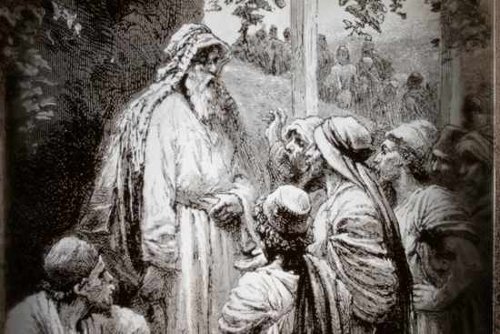
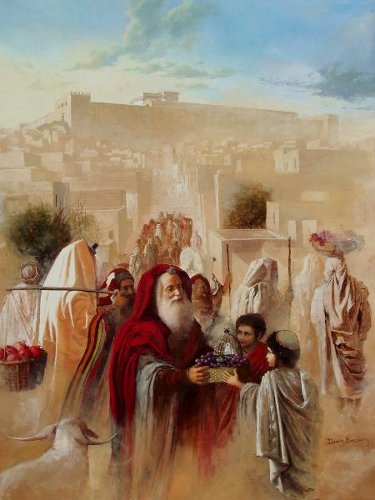
ancient-rabbi-teachingAccording to Nanos, something similar may have been operating among the influencers since how could they be sure these “righteous Gentiles” who in no way were progressing on the path to becoming proselytes, weren’t also involved in community pagan rites? The only way to be sure, would be to confirm their commitment to Hashem and the Jewish people by having them convert to Judaism.

Also, in the eyes of most Jews, the statement of Acts 15:1 seemed incredibly obvious. One does not come to Hashem except through Judaism.

Paul knew the truth, but he wrote his letter to the Galatians most likely before the Acts 15 legal decision handed down by the Council of Apostles that dictated the formal status and identity of the Gentile disciples within the Jewish community as something like “strangers living among us (Israel)”. Paul’s “gospel” was a radical idea at the time (and still is for most Jewish people today), that by faith could the Gentiles be grafted in to the community of Israel, coming to the Father by way of the Son.

As I mentioned in my previous review, according to Nanos, Paul was not a happy camper at hearing his students were defecting from their faith in Messiah and joining the more traditional path toward becoming proselytes. But rather than crafting a logical, dispassionate, and scholarly theological paper, he wrote a hopping mad “ironic rebuke,” whereby he took his Gentile followers to task for acting like inconsistent teenagers following after the “cool kids” in school rather than what they knew to be the truth.

But without understanding that Paul was being ironic, and sarcastic, and “snarky,” we could completely misunderstand what he was saying and who he was saying it to. If we believed that he was talking to Gentile and Jewish believers, and if we believed he was condemning circumcision, the Torah, and the Temple to that entire population, then we might conclude that Paul was himself “Law-free” and advocating for all Yeshua-believers, including Jewish disciples, that they become “Law-free” as well. Sounds like the exact accusations leveled against Paul in Jerusalem by Jewish people from the diaspora we find in Acts 21 (specifically from verse 17 onward), accusations that Paul steadfastly denied throughout a number of legal proceedings for the remainder of the book of Acts.

Assuming Paul wasn’t lying, then believing that Paul was against the Law, against the Temple, and against the formal practice of Pharisaic Judaism for believing Jewish people as most Christians interpret the Galatians letter just doesn’t make sense.

If approached as a theological tractate or an oration in a court of law, for example, or as a polemical attack on Jewish identity and Law observance as Galatians has often been read, then an entirely different set of expectations shapes the interpretive process than those suggested herein. But if Galatians exemplifies a letter of ironic rebuke designed to address the source they had been running when confident that their understanding of the meaning of Christ was legitimate–rightly so according to Paul’s revealed good news–then the guardians of the majority or dominant communities, who are guided in their sensibilities and responsibilities by long-standing membership and reference group norms, will no doubt consider it their rightful duty to obstruct such a course.

-Nanos, pg 319

It’s not a matter of changing a single word of the Galatians letter, but rather, shifting your perspective on what Paul was intending when he wrote it. We only have this letter to tell us what was going on with his addressees in Galatia and to suggest (Paul doesn’t tell us outright) who the influencers were. The method of interpretation makes all of the difference and as I’ve said before, Protestant Christianity has a very definite tradition about how to interpret Galatians and the rest of the Bible. The real challenge is getting the Church, from the average person sitting in a pew on Sunday morning, to the Pastoral staff, to the governing bodies of the various denominations, to the New Testament scholars and students in seminaries and universities, to set aside those traditions long enough to read what Paul is saying as a devoted disciple of Moshiach who was zealous for the Torah and never taught against the Law of Moses or the Temple of God.

Not an easy task to be sure.
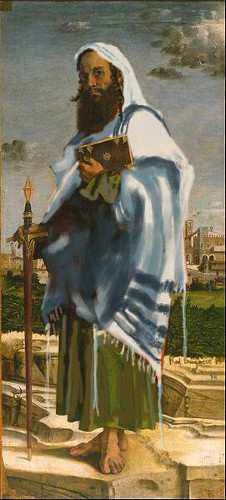
The Jewish PaulBut if we read not just Galatians, but the rest of the record of Jewish and Gentile interactions in the Apostolic era with an eye on the tremendous social difficulties involved in even attempting to integrate these two populations in the synagogue under the radical notion that Gentiles did not have to adopt Jewish identities in order to be fully equal co-participants in the worship of God through Messiah, then we come up with a very different picture of the lives of the first Gentile believers and even what our lives as Christians should be today, particularly relative to the Jewish people and Judaism.

Which brings us back to Nanos’ statement about Shoah in the introduction to “Irony”.

The vast majority of the text, while it seems quite logical to me, would really require someone well-studied in New Testament scholarship to critically analyze. What Nanos writes makes sense to me primarily because it fits my own overarching view of the message of the Bible, but without traveling a similar educational path to Nanos or others like him, I don’t doubt I could miss quite a lot. But while I don’t have the ability to intimately examine each and every bit of research and evidence “Irony” presents, I can see that the final conclusion, at least generally, fits the portrait in which I have come to see the Apostle to the Gentiles, a Jewish man who was given the extraordinary task of bringing the good news of the Messiah to the pagan nations of the world; a man who centuries after his death, has been (in my opinion) falsely accused both by Christians and Jews, of being a traitor to his own people, of abandoning the Torah, abandoning the practice of his forefathers in the worship of God, and twisting the teachings of a humble itinerant Rabbi in the Galilee into a brand-new religious form that has no resemblance to the way Jesus taught the Torah of Moses to the “lost sheep of Israel.”

I’m glad I read this book but it certainly wasn’t easy. I consider myself educated but not in this field of study. However, this is a necessary book to work through for Christians because we must be shaken up and startled out of our complacency and our interpretive traditions. Even if you’re not willing to accept a view of Paul and his letter to the Galatians that exactly matches Nanos’ description, the very attempt should help convince you as it continues to convince me, that historic and modern Christianity has made a terrible mistake in how we see Paul. There’s a lot more to learn or relearn about Paul. “The Irony of Galatians” by Mark Nanos is but one step on that journey.

In Defense of the Church

I know after today’s morning meditation, it probably seems like I’m becoming really “anti-Church,” but I want to correct that perception. I’m writing this on Sunday afternoon, February 16th after returning home from services. Actually, I started to mentally compose this blog post while in church, realizing that my last several missives were particularly critical of normative Christianity. After I’ve said all that, can I really be supportive of the Church?

I reminded myself earlier that, in spite of the Church’s imperfections, God is in church. I know He was there today (as I write this). Here’s one of the reasons I know:

Pastor Bill and his wife Joan: We visited Millie in her Life Care Center in Florida where she is receiving treatments for the neuropathy in her hands and feet brought on by the chemo/radiation cancer treatments — this condition is reversible, but it takes a long time — thanks for your prayers for Millie.

I can actually see Pastor Bill and Joan doing this. Pastor Bill is an older gentleman with a penchant for the old, traditional hymns. I can see him expressing compassion, warmth, and gentle humor as he was making this visit, offering care to the sick as Jesus has taught us.

I took the above quote from the Prayer Bulletin that’s included in the general Sunday bulletin handed out at the door when anyone enters for services. The bulletin contains all kinds of information. If you’ve ever visited a church on Sunday, you know what I’m talking about, but for me, the prayer bulletin is the most “Christ-like” piece of paper I anticipate. It tells me that the church cares, not just the entity of the local church, but the church that is made up of hundreds of individual believing human beings, each doing their best to walk with God and to be a faithful disciple of Jesus Christ.

Yes, as I’ve said before, the theology and doctrine needs some work, perhaps a lot of work in my humble opinion, but if I’m in a church where the people pray for one another, and where Pastors, members, and attendees visit the sick, donate food to the hungry, and ask God to help the needy (and who among us doesn’t need God?), then they obviously correctly understand some of the most important lessons the Bible teaches us.

Today (as I write this) we had a guest speaker, a young missionary to the Congo which this church sent out four years ago, and who is now back on furlough to give his report. He’s a farmer from the small town of Notus, Idaho, and yet he’s also a dynamic speaker (a little too dynamic sometimes) who has a passion for his work with the Congolese people. He had to hold himself back to an hour since he’s used to preaching anywhere between three to eight hours during any given service in the Congo.

CongoA lot of what Sparky (yes, that was the young missionary’s name) had to say reminded me of the message Conrad Mbewe presented during John MacArthur’s Strange Fire conference, how although about ninety percent of the people in the Congo are considered “Christian,” it’s a strange and bizarre form of Christianity that blends Christian beliefs with indigenous religion and superstition, combined with other Christian groups’ teachings of health and prosperity theology. It’s really mixed up stuff, driven by demonology and magic fetish objects.

Sparky’s message came from a number of Biblical sources and essentially said “Don’t be afraid.” The Congolese Christians are always afraid. They’re afraid of Satan, of demons, of magic, of curses, of all kinds of things. Sparky tries to counter that in his mission as he did in his message, by saying we are not given a spirit of fear but of love and courage when we become believers.

While Sparky was teaching, I thought of my own so-called “mission” into the Christian Church. Although I see the Church, and particularly people like Sparky as doing a tremendous amount of good, there’s still something missing that, when restored, will take the Church the final mile that leads to the return of the Messiah King. As I mentioned, that’s why I’m here, why I write, and why I strive to move forward and to not give up on the Church.

There’s a lot of good in the Church. It’s easy for me and those like me to just toss the Church aside because our theologies clash in the extreme in certain areas, but that’s not all the Church is. The Church is praying for people. The Church is visiting the sick. The Church is teaching courageous faith in God that never gives up and that is never defeated. The Church feeds the hungry. The Church shows compassion. The Church loves.

And even though the Church has flaws and labors under a lot of misunderstanding, God has not abandoned the Church and on any given Sunday, you will find God in Church.

From a Messianic Jewish or Hebrew Roots perspective, it’s easy to miss seeing God in Church, but that’s because we are looking at the Church’s imperfections and not her beauty. This is the same reason Christians often miss the fact that God (again, in my humble opinion) is also in the synagogue on any given Shabbat, any time a minyan is davening, whenever the Torah scroll is removed from the ark.

God hasn’t given up on the Jewish people either, even though, at this time, they resist or do not recognize the face of Messiah, he who has come and he who will come again in power and glory as King.

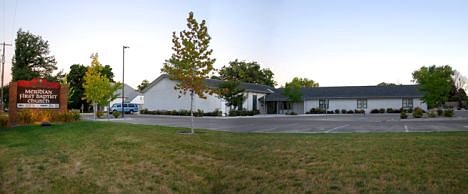
first-baptist-churchIt’s for the sake of both those worlds and the hope that when Messiah returns, he will find faith among people, that I must remind myself the Church, even as she exists today, still contains God within her walls. God is with His people, Jews and Gentiles. God is waiting. God is patient. God has a plan. He has a plan in the Congo with Sparky. He has a plan for Jewish people in Virginia. He has a plan for Baptists in Idaho. We each have a different role to play in that plan. We are all unique in that plan. The plan requires tremendous diversity of roles and people but all to an identical goal…the goal of bringing glory to God and the coming of King Messiah.

Once again, God reminded me that I’m only one small part of the plan, but that I do have my role to play.

It is not incumbent upon you to complete the work.

-Ethics of the Fathers 2:21

I don’t have to do everything. I don’t have to change everything. From my point of view, it may be that I don’t see me changing anything. But if I’m faithful to play out my role, God will do the changing.

Sampling Tent Builders

The church is supposed to be a partner with Israel. If it doesn’t see this then it’s not fulfilling it’s function.

-Boaz Michael
“Envision the Ideal Church” session
Tent Builders presentation

I mentioned a few days ago that I’d received a DVD in the mail from First Fruits of Zion (FFOZ) providing an eighty-two minute “sampler” of the day-long conference called “Tent Builders” which is meant to accompany and augment the message in FFOZ President Boaz Michael’s book Tent of David: Healing the Vision of the Messianic Gentile.

I’ve read Boaz’s book more than once but never had any of the education or training that is supposed to equip the target audience on methods of approaching the Church with the Messianic message of just how Jewish the Jewish Messiah is and what it means to “partner” the Church with Israel.

The sampler DVD is divided into four portions:

  1. Envision the Ideal Church
  2. The Strategic Mission
  3. Interview with Boaz’s Pastor
  4. About the Book Tent of David

This review focuses on the first two portions which were taken from a presentation Boaz gave in Atlanta, Georgia. I won’t try to dissect everything Boaz taught and certain sections of his teaching came, more or less, out of the book, so if you’ve read “Tent of David,” you already have some familiarity with the message. The sampler disc contains excerpts of what I imagine is supposed to be a DVD containing the entire conference sessions, so that people who weren’t able to attend the in-person conferences, could still benefit from everything that was taught. It’s also meant to be accompanied by a workbook and presumes that the audience has already read “Tent of David.”

The goal of the conference and of participation is to become a “sent out one” or an emissary into the Church, to share the wonderful message we as “Messianic Gentiles” were given in order to assist the Church in ceasing to be the stumbling block standing in the way of Israel seeing the truth of Messiah. One of Boaz’s key phrases is that we must change the Church for the sake of Israel.

This was actually born out of Boaz’s own experience at a small Baptist church in Marshfield, Missouri where he and his family have been living. He actually began attending this church almost by accident, thanks to a visit to Marshfield by Rabbi and Messianic blogger Derek Leman. It was out of the development of the relationship between Boaz and his wife with the members of their local church that Boaz realized this “model” could be replicated “on the ground” so to speak, by many, many other Christians across the country.

For over two decades, FFOZ has been producing books, magazines, seminars, and many other educational materials trying to get its message out, but in spite of the expectation that at any minute, the floodgates would open and the Christian Church as an entire unit across the world would “see the light,” nothing happened. Groups of Christians would leave the Church disillusioned by shallow teachings and Christian disdain for Israel, and they would join small groups of like-minded Gentile believers, but over the years and decades, these groups didn’t grow, didn’t show fruit, and nothing happened. The Church certainly didn’t change and most of these small groups stayed small groups, generally spinning their wheels and sometimes complaining about “Christians.”

BoazOccasionally, through his contacts, Boaz would know of a motivated family of Gentiles who were “Messianically” minded and know of a willing and open Pastor in the same community. He’d put them together and the combination would result in change in the local church. Boaz and his wife Tikvah in their own local church had the same experience. It seemed like something that could be replicated on a large-scale, but at the grass-roots level.

But it’s not that easy. It wasn’t easy for Boaz and Tikvah and it isn’t easy for anyone else. While some churches have managed to change trajectories away for teaching supersessionism and toward an enlightened view of the Jewish Messiah (which is a lot more than just saying “Jesus was Jewish”) and the significance of Israel and Torah, it required tremendous sacrifices in time, money, and participation in portions of church teachings that are not always spiritually enlightening. It also isn’t always accepted and Boaz even said that it’s a message the Church usually doesn’t want to hear.

Boaz challenged his audience in the first session to envision the ideal church, write down their description, and then participate in making that ideal church happen at the local level.

I have a vision about what an “ideal church” would look like too, but I haven’t the faintest idea how to make it happen, especially all by myself. But as I listened to Boaz, I began to feel guilty because he described many Messianic Gentiles as either complainers or just people who wanted others to do the work of changing the Church for the sake of Israel. Am I a bad, complaining, lazy person for feeling discouraged?

Moving to the “Strategic Mission” session, Boaz expanded on what was needed. He used to think that having a good message was enough, but that hasn’t worked for the past twenty years. He finally discovered, though a gentle rebuke by someone he trusted, that without the involvement in the Holy Spirit and without relationship and familiarity, the message was never going to be successfully delivered.

The core of “Tent of David” is derived from a passage in Amos 9:11-12 that’s quoted by James in Acts 15:16-18. You can look up the text, but it paints portrait and prophesy of a time when the people of the nations will partner with Israel in rebuilding the fallen tent of David and restore Israel in the Messianic Age. James, leader of the Apostolic Council in Jerusalem saw the participation of the first Gentile disciples in the Jewish movement of “the Way” as the beginning of the fulfillment of that prophesy. The prophesy of Gentiles coming alongside Israel to strive for a mutual goal without requiring that those Gentiles convert to Judaism and take on the full yoke of Torah. In fact, the prophesy can’t be fulfilled if Gentiles convert to Judaism or otherwise are circumcised to become “pseudo-converts” with the belief that they are obligated to the full yoke of the mitzvot in the manner of the Jewish people. Jews and Gentiles must continue distinct roles and identities within the body of Messiah and become interdependent elements in the creation of the Messianic future.

ChurchIs this how the Church sees its role in relation to Christ? In most cases, probably not. In fact, the apostles including Paul, would not even recognize what most Churches teach today as having much or anything to do with the original gospel message they transmitted to Jews and Gentiles in the first decades after the resurrection and ascension of the Master. The Church, for the most part, thinks the greatest revelation and the only revelation of Jesus has already happened: the message of Salvation through the life, death, and resurrection of Christ.

Of course that is amazingly good news, but the story doesn’t stop there and in fact, according to Boaz, the best part is yet to come…the establishment of the Messianic Kingdom with Jesus on the Throne of David in Jerusalem, raising Israel to the head of all the nations, returning all the exiled Jews to their Land, and establishing a reign of world-wide peace. It’s the promise of what is yet to come.

And the Church has missed it. Oh sure, churches talk all the time about the “end times” and the “return of Jesus” and how “the Church” will be the thing that’s elevated and glorified, but at the end, people go up to Heaven as opposed to what it actually says in the Bible of God coming to earth and living among His people as He once did in Eden.

Boaz unpackaged the message that he believes the “grass-roots tent builders” need to be taking back into their local churches. I won’t go into all of his points, but I want to cover the one that I think is most important but also the message that the Church will find most difficult. The centrality of Israel. What does that mean?

The Church believes that it’s all about “the Church.” The Church will be raptured to Heaven, the Church will return with Jesus, the Church will rule and reign.

In reading the Bible, if I substitute the Greek word “ekklesia” for “church,” and I realize that generically “ekklesia” just means an assembly of people gathered for a common purpose, the “magical significance” of the word “church” is taken down a peg or two. When Jesus speaks of his “church” he is speaking of an assembly of human beings gathered together to begin to fulfill the prophesy of Amos (and many other prophesies) to establish the first fruits of a partnership of Jews and Gentiles together in the body of Messiah, to ultimately summon the coming Messianic Age which will see Jesus as the King of Israel who will bring total peace to humanity.

ancient_jerusalemBut this requires we realize that in all of the ancient prophesies and how they were understood by the apostles and first century Jewish and Gentile disciples, it was always Israel that was restored, and Israel that was central to God’s entire redemptive and restorative plan, and Israel that was the center and lynchpin of the entire Biblical message and the good news of Messiah. This is not the message Christianity has promoted and instead, they have caused the basic concept of “ekklesia” to evolve, morph, and develop into a separate and self-defined entity known as “the Church,” which across Christian history and into modern times has wholly separated from Israel, from its original purpose and mission, and has watered down the gospel message into “merely” one of personal salvation, denying the vast, panoramic scope of the Messianic Kingdom to come that we must all strive to bring to fruition.

As Boaz continued to lay out everything involved in this grand plan, I started to feel overwhelmed. Every time he said something meant to inspire his audience to greatness, I compared it to my actual experience in my local church. Boaz sees success in the Tent of David plan because it puts together enthusiastic Messianics with Pastors in local churches who are at least receptive to relationship and partnering, but what if the local church leaders are so assured of their theology and doctrine that they see the relationship as one where the church needs to convince the intelligent but misguided Messianic that Church tradition based on the Reformation, Calvinism, and Dispensationalism (none of which existed in the time of the apostles) is actually the true message of Jesus Christ?

So my primary take away as I ejected the DVD from my computer and prepared for bed was a combination of guilt and feeling overwhelmed with more than a hint of failure added to the mix.

Boaz ended his “Strategic Mission” session with a story about his daughter who is currently serving with the IDF. I don’t know how much I should reveal about her, even though she has been uncompromising in her devotion to Messiah and has not hidden this from anyone who knows her in Israel. Also, as Boaz said, he’s a public figure, so it wouldn’t be hard to find out who his daughter is and what her family believes.

It’s actually an amazing story. I knew some of it just because I’ve briefly spoken with Shayna a few times and am her “friend” on Facebook, but Boaz filled in the details as only a very proud father can. Boaz and Tikvah raised all their children with a strong sense of mission. I guess growing up within the context of the development and progression of First Fruits of Zion’s mission must have had a strong impact.

Boaz laid that sense of mission and dynamic struggle squarely at the feet of his audience. Of course, I only got to see a small portion of the conference and nothing at all about how the students received the message or interacted with Boaz and each other. I have absolutely no idea at all how this is actually playing out in churches across America and I don’t know anyone else who is a “Tent of David” graduate and how they have met with success, failure, or anything else.

Boaz in churchBoaz said that in the church he attends, two HaYesod classes had been taught, one Torah Club cycle had been completed, and there was a group viewing the various episodes of FFOZ’s television series A Promise of What is to Come and using them as topics of discussion.

I won’t lie. That really sounds wonderful, but in my current context, none of that will ever be received. I previously mentioned that having Tent Builders graduates attempt to go into some place like Pastor John MacArthur’s congregation would likely result in a less than enthusiastic reception. It is true that time, relationship, and familiarity helps the “Messianic Gentile” in church gain credibility and even a minority voice in Sunday school discussions, but there will always be churches that will listen and decide that they see and hear nothing that should deter them from what they have always believed to be true about the Bible, about Jesus, and about God, Judaism and Israel notwithstanding.

I’m enjoying D. Thomas Lancaster’s sermon series Holy Epistle to the Hebrews and recently I discovered the sermons of Rabbi David Rudolph. I can “feed my head” all I want and struggle in my personal relationship with God and what all this is supposed to mean, but except for how some people see my blog as a positive or even inspirational influence, that still has little or no effect at the level of the local church, and it certainly isn’t a testimony to changing the Church for the sake of Israel.

Do I think the “Tent Builders” mission is good? Yes, of course I do. You may be surprised to read that sentence after everything else I’ve said, but I still think it’s essentially sound. The thing that Boaz didn’t say in the DVD sampler though he mentions it in his book, is that the mission isn’t for everyone. He also doesn’t mention, though it should be obvious (it certainly is to me) that not only does the Church not want this message, but in some cases (how many, I don’t know), the message will be continually resisted, regardless of relationship, and ultimately rejected.

The Messianic Gentile can then decide (assuming he or she hasn’t been ejected from the local church) to either continue going for the sake of fellowship (which Boaz recommends) and perhaps with hope beyond hope that eventually some people will be more accepting of the paradigm shift Boaz suggests, or that Messianic person can leave.

I don’t know if there’s a “plan B” built into the Tent Builder’s mission profile. Try again at another church after months or years at the first? Try a less formal venue such as a local Bible study or home fellowship? Retire into the world of virtual study and quiet contemplation? Boaz maps out a highly public, visible, dynamic mission of reaching out to the local church, all of the local churches with the Tent Builders message built on relationship and familiarity, inspired and supported by the Holy Spirit, with the ultimate end goal to show the Church their true priority and purpose in partnering with Israel to bring the time of the return of the Messiah.

a-better-placeI suspect that it is not going to come very quickly. Conferences aside, it’s like the ads for going back to the gym that are popular right after New Years when people are feeling the remorse of eating too much during the holidays. People get pumped up and excited and join a gym, but I can tell you from personal experience that after the enthusiasm wanes or, in this case, the conference is over and months have passed, there’s only you and the weights. You either show up each morning and start working, or you stay home and get fat.

This metaphor breaks down when you realize that exercising is between you and the exercise machines. All you need is motivation and the will to carry on over the long haul. In the local church, what people think about you, about your message, about Jews, about Judaism, and about the very real threat that change represents makes a huge difference, and you have control over none of that. You can do everything “right” and still fall flat on your face.

There are no “magic” answers. Win, lose, or draw, there is only God.

Good Shabbos.

Twoness and Oneness: From Sermons by David Rudolph

So if we synthesize what Rudolph is saying this is what we get:

(1) ethnic prioritization is Biblical even though it results in non-ethnic members feeling like “second-class citizens” (to use Rudolph’s phrase);
(2) just as Yeshua’s mission excluded non-Jews, Tikvat Israel’s mission excludes non-Jews, seeking to build a community from within the Richmond JEWISH community.

-Peter Vest
“David Rudolph to Gentiles: ‘Like Yeshua, Our Mission is to Jews, not Gentiles'”
orthodoxmessianic.blogspot.com

I don’t often interact with Peter let alone comment on his blog. I especially hesitate to write about his content on my blog since this type of conversation often degrades into the unresolvable debates our little corner of cyberspace is known for. Religious arguments can get very ugly.

But in reading Peter’s commentary on David Rudolph and Rudolph’s congregation Tikvat Israel, I wanted to learn more about the source of Peter’s allegations. Unfortunately, he hadn’t posted a link to his source material. Fortunately, Peter was willing to provide it when I asked, so I clicked the link he gave me and started listening to Rabbi David Rudolph’s twenty-minute sermon called Our Mission.

I don’t know Rudolph except through his writing and editing. I read the book he and Joel Willitts co-created, Introduction to Messianic Judaism: Its Ecclesial Context and Biblical Foundations and wrote a fairly large number of reviews of most of the different contributions to this book. Given that Rudolph’s co-editor and friend Joel Willitts is a Christian and that about half of the book’s contributors are Gentiles, it didn’t seem to me that Rudolph had some sort of bias against non-Jewish people.

Still, I was just slightly nervous about what I would hear when I clicked the “play” button on the recording. Actually, I didn’t find anything even slightly disturbing.

Is it OK to have a Chinese church?

That’s one of the questions Rudolph asked during his sermon. No one in his audience complained. I wouldn’t complain. I pass a Korean Christian Church every time I drive to the Meridian Public Library a few miles from my home. Often Christians who have a particular ethnic, national, and linguistic commonality will form churches on those platforms. I suppose I’d be welcome at the Korean church if I chose to go one Sunday, but likely I’d feel out-of-place since I don’t speak Korean and am not familiar with their cultural and ethnic practices. For the Koreans present however, it would be “home.”

Is it OK to have a Messianic Jewish congregation that has a mission specific to the local Jewish population? That’s just a bit more dicey, at least from the point of view of some Christians. I’ve attended the Reform/Conservative synagogue in my community and I wasn’t the only Gentile present (I suspect I wasn’t the only Jesus-believer present, but that’s beside the point), but I never lost the sense that this was a Jewish community. Nor would I, even in some moment of insanity, demand that the Rabbi be “inclusive” and adapt the synagogue to be more “Gentile-friendly.” In fact, that particular synagogue is already pretty inclusive, but as I said, it’s still Jewish.

Even the local Chabad synagogue will accept Gentiles, typically those who are married to Jews, although I’ve known some Christian Gentiles who have attended a number of the Rabbi’s classes. He’s OK with this on the principle of peace within the community, as long as the Gentiles don’t try to proselytize the Jews present.

But Messianic Judaism is unique in that it professes a faith in Yeshua, in Jesus of Nazareth as the Messiah, a faith that is accessible to Jew and Gentile alike. Should Tikvat Israel’s mission be aimed generically at all human beings in the Richmond, Virginia area? Is it racism or bigotry to reach out only to the Jewish people in the vicinity? Is it racism or bigotry for the Korean Church in Meridian, Idaho to reach out only to the larger Korean community? Can the Korean church offer an environment that specifically meets the needs of the larger Korean community in a way that other churches could not?

No, it’s not racism and bigotry and yes, the Korean church can offer a specific and specialized environment that’s particularly friendly and adapted to Koreans. So it is with Jewish congregations, including Messianic Jewish congregations.

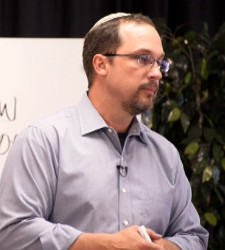
david_rudolphRudolph made a large number of what I considered convincing arguments about why it was OK for his congregation Tikvat Israel, to have a mission specific to the Jews in and around Richmond. For one thing, many Jews traditionally don’t feel comfortable in normative Christian churches, particularly those believing Jews who also practice Judaism as Jews, which many Christians don’t understand and which some Christians find offensive.

A Messianic Jewish congregation makes sense for Jews who are believers and who are observant Jews. Rudolph didn’t fail to acknowledge the Gentiles who attend Tikvat Israel as Gentiles who love the Jewish people and who desire to come alongside Messianic Jews within a Jewish context. Rudolph further said that if Gentile Christianity in general over the last nearly two-thousand years, had loved the Jewish people the way that the Gentiles in Tikvat Israel love the Jewish people, Jewish people wouldn’t have learned to be afraid of Christians and Church.

From an article Rudolph wrote, I know he believes in unity between believing Jews and Gentiles within a Messianic context and indeed, that believing Jews and Gentiles are interdependent. Based on many of the writings of the staff and contributors of the Messianic ministry First Fruits of Zion (FFOZ), I have experienced and commented on that interdependence.

I performed a wider search and came across a larger listing of Rabbi David Rudolph’s sermons including one called “We Need Each Other” (on the “Sermons” page, scroll down until you see a heading called “Unity”).

Rudolph’s sermon was focused on the following piece of scripture:

…by abolishing in His flesh the enmity, which is the Law of commandments contained in ordinances, so that in Himself He might make the two into one new man, thus establishing peace…

Ephesians 2:15 (NASB)

By odd coincidence, in reviewing some commentary by Pastor John MacArthur, I came across the following statement which seems to apply to the current circumstance:

Because the Bible would never tolerate a Jewish church and a Gentile church.That is the one thing that the Apostle Paul spent the last months of his ministry trying to resolve,trying to get those two together; and when he wrote Ephesians, he said, “The middle wall is…what?…broken down and they two have become one new man.” And my own belief is that it is ludicrous to have a Messianic Jewish temple, as much as it would be to have announced out here that this is the Grace Community Gentile church. Now, how do you think that would sit with Jewish people? They would say one thing. They’re anti-Semitic. See? There’s no reason for that.

Rudolph quoted well-known American biblical scholar Harold Hoehner as saying something similar (I’m copying this quote from an audio recording, so the accuracy of the quote here is only as good as my notes):

Paul referred to a whole new race that is raceless. Not Jewish or Gentile, but a body of Christians who make up the Church.

This is much like how MacArthur and my own Pastor see Ephesians 2 in particular and the identity of “the Church” in general.

0 RInterestingly enough, Rudolph once had a very lengthy conversation with Dr. Hoehner on Ephesians 2:15, and it should be noted here that Rudolph referred to Hoehner in very complementary ways and called him a “man of God.”

Rudolph suggested alternative ways to read this passage. I won’t go into all the details. You can listen to the twenty-five minute sermon yourself, since I provided the link. Briefly though, Rudolph felt that what was torn down was a specific set of ordinances that inhibited Jews from associating with Gentiles, particularly in relation to the Temple.

However, Rudolph emphasized that the body of Messiah is a single body made up of Jewish and Gentile members who remain Jewish and Gentile, much as how Paul described the Messianic body in Ephesians 5:21-33 and referenced Genesis 2:24 where one man and one woman both became “one flesh” and yet remained distinctly one man and one woman. The married “one flesh” does not delete or replace the man and woman any more than the body of Messiah, “the Church” replaces or deletes the identities or uniqueness of the Jews and Gentiles in the body.

We become what in Hebrew is called (forgive my faulty transliteration) “Besar Echad,” one flesh, a composite unity.

At the end of his sermon (and I’m skipping over quite a bit of content), Rudolph asked how Tikvat Israel’s “twoness” and “oneness” is expressed. The “twoness” is what you’d expect if you have any sort of familiarity with the more “conservative” forms of Messianic Judaism. Jewish people in Messianic Judaism and specifically at Tikvat Israel, should remain Jewish and not assimilate into Gentile Christianity. In fact, they should endeavor to become even more observant as Jews. The Gentiles in the congregation should not try to pretend to be Jewish but to come alongside their Jewish co-participants, and support and love the Jewish people and Israel.

The “oneness” exists most obviously at the “macro” level or the overarching expression of Messianic Judaism, but it can also be observed on the “micro” level of the Tikvat Israel community. In that community you have two peoples who are of one mind and one spirit, all working together to build a community for Yeshua with a mission to reach out to the larger Jewish community. To the degree that there are Gentiles present, then it should be obvious that Gentiles are also reached by and respond to this mission, but that is part of the interdependence of Jews and Gentiles within the Messianic body.

To understand the concept of Jewish/Gentile interdependence within the Messianic Jewish community, see my commentary on articles appearing in Rudolph’s and Willitts’ book. The relevant reviews are An Exercise in Wholeness and Interdependence or Collapse.

Rudolph summed up the point of his sermon with the four words of its title: We Need Each Other. The congregation of Jews and Gentiles broke out in spontaneous applause.

I don’t find anything bigoted, racist, or exclusionary about how David Rudolph describes Tikvat Israel. I do understand why Messianic Judaism needs to reach out primarily or even exclusively to the larger Jewish population. Reading the sermons of John MacArthur makes me appreciate how “dangerous” and even “hostile” many Christian venues are to Jewish believers who have chosen not to assimilate into a Gentile Christian lifestyle but who continue to be a part of the larger Jewish community, a part of national Israel, and to be loyal to their covenant connection to Hashem and Moshiach through the observance of the mitzvot.

jewish-davening-by-waterI’ve seen how important it is for my wife to be a part of the local Jewish community, especially since she was not raised in an observant Jewish home. It’s taken a lot of courage and struggle for her to even walk through the doors of a synagogue let alone become a functioning member. This is something that most Christians would never understand but something Jewish people comprehend all too well.

Here’s something else:

Many non-Jews, and increasingly many Jews as well, find Judaism’s stress on endogamy to be racist. That’s nonsense. Membership in the Jewish people is open to any human being who is willing to take on the same commitment as those who stood at Sinai. Judaism does not sanctify gene pools but rather commitment to a mission.

One need not be Jewish to serve God. Judaism is unique among major monotheistic religions in not viewing eternal reward as contingent on becoming Jewish. Yet Jews have always believed that they were chosen for a unique mission.

-Jonathan Rosenblum
“Yair Netanyahu and His Non-Jewish Girlfriend”
Aish.com

Most non-Jews are unconscious of the critical mission required to maintain the tiny population of Jews worldwide rather than let the Jewish people fall into extinction due to assimilation. This is an even more vital and difficult mission in the Messianic Jewish movement with its continual struggle to maintain Jewish distinctiveness in the face of overwhelming Christian (including Gentile Hebrew Roots) pressure to either make Messianic groups more “Gentile-friendly” by de-emphasizing Jewish identity or by demanding that all Jewish identity also belongs to the “Messianic Gentile.” While Rosenblum is unlikely to be Messianic, his assessment of the needs of the Jewish community is spot on and applies very well to Rabbi Rudolph’s mission and message.

While I expect men like MacArthur to be relatively “clueless” to this process, many Gentile Hebrew Roots practitioners, even if they have some familiarity with their local Jewish communities, operate on the same belief that, to use MacArthur’s words, “the Bible would never tolerate a Jewish church and a Gentile church.” Both Fundamentalist Christianity and Gentile Hebrew Roots (yes, I know I’m generalizing) demand the elimination of Jewish uniqueness either by forming “one church/congregation” of one homogenous “non-racial” group, or they play the “racism” card. There can be no “twoness” only “oneness,” no matter what the cost to the continued distinctiveness and even the continued existence of the Jewish people.

I’m sorry if something Rudolph said in a sermon seems distasteful to some non-Jewish (and even a few Jewish) people. Rudolph says he wants to do what Paul tried to do; break down specific barriers that prevent Jewish and Gentile fellowship within the body of Messiah, but all the while, first going to the Jew because of the covenant connection between Hashem and the Jewish people, and only afterward, also going to the Gentile with the good news of the Messiah, that all human beings can be reconciled to God without surrendering their nationality or identity, which includes Jewish nationality and identity, as well as what each of us possesses as people of the nations who are called by His Name.

Read more in Oneness, Twoness, and Three Converts.

God Was In Church Today

ChurchI went back to church today after a three-week absence. I’ll admit that I was avoiding Christmas. I’m OK with people in the general public wishing me a “Merry Christmas” but knowing the additional meaning those two words carry in Christianity, I thought it best to keep a low profile. No one mentioned my not being around and they probably just assumed I was spending the holidays out-of-town with relatives.

God reminded me that He is still in church today. No, I didn’t have a vision or hear a loud, booming voice or anything like that. Three things happened.

The first was a missionary to Ireland (I never heard of such a thing before) who was diagnosed with cancer back in August while serving on his mission, was in our church with his wife today (they attended our church until leaving for Ireland on their mission in 2005). He still walks with a limp and a cane, but the tumor was removed from the bone in his leg and the radiation treatments are done, so he’s finally beginning to heal and go into physical therapy.

I was surprised how young Dean (the missionary) was. Not a grey hair in his head. For some reason, I expected him to be older. He also was very gracious about having cancer. He said it opened up opportunities while in Ireland once word got around. People approached him with their own physical or medical difficulties or crises in relation to faith and their spiritual lives. Sure, maybe between him, his wife, and God, Dean had a lot of hurt and angry things to say, but you’d never know it by listening to him in church this Sunday.

The second thing that happened was Pastor Dave leading prayer. No, that’s not unusual of course, but he’s going in for some surgery tomorrow (three people in church are all having surgery on Monday). Dave is also a young guy, in his 40s but he looks younger to me (I guess that doesn’t hurt when you’re the youth Pastor). I didn’t write down the prayer and I don’t remember the words, but the “feeling” of graciousness is what sticks with me. I know that some people in Hebrew Roots and related movements have left “the Church” because of some harm (real or perceived) they endured at the hands of Christians, but even though I don’t always agree with the standard theology and doctrine, I will never criticize the people I worshiped with today for a lack of compassion and love of God and each other.

The third thing that happened was during the music. Pastor Bill (who is an older gentleman) sometimes leads the singing when the usual people who are more “officially” musical are unavailable. There are hymn books, but most people use the projection of the lyrics on the screen at the front of the room. At one point early in the first hymn, Pastor Bill stopped the singing. There was a lyric about surrendering everything to Jesus. He pointed out that it doesn’t mean just “Sundays” or just a few things, but everything. I wonder how many of us really, really have surrendered everything? I know I have a long way to go in working through my imperfections as a human being who purports to be a disciple of Messiah.

God was in church today.

Be the ChurchTrue, I felt a few disturbing tremors in Pastor Randy’s sermon, reminding me that he still reads my blog (though I could be reading too much between the lines of his message) and doesn’t always agree with my opinions, but his grasp of history related to scripture always opens up new worlds in the Bible for me. It’s also true that when I got to the Sunday school class, it was uncharacteristically dark, with no indication that the teacher or anyone else had set the room up for us. Since we have a “guest missionary” with us today, and since plans change at church quickly sometimes, I figured we weren’t having class after all, so I turned around and headed on home. I was disappointed, but things happen.

Pastor Randy’s been out-of-town for a few weeks for a family reunion, and I just found out that he’s going to be gone in relation to his doctorate program for most of January, so I guess our conversations are on an extended hiatus. Another disappointment.

But God was in church today, so that makes up for those few things that didn’t quite work out.

I’ve been struggling with church for a while now and being out for three weeks only made it that much more difficult to go back today. But instead of focusing on the differences I experience between my viewpoint and the “official story” of doctrine and dogma, I need to look at what we all have in common and what I am learning about God, the Bible, and myself.

God was in church today. Maybe He’ll be there next Sunday, too.

One of These Things is Not Like the Others

One of these things is not like the othersCommunity. It’s that thing, the way of life, that we all want but we’re just not quite sure how to pull it off successfully. It’s that tantalizing concept that promises so much reward, and yet it seems so elusive. Its promise sometimes causes us to cut ties where we are and move somewhere else where we hope to find greener pastures, better friends, and/or become part of a different community. Then when we do get a taste of real community, it’s only a matter of time before our hearts are stunned with hurt or insult. But a lack of community causes us to feel despondent, alone, and often times as if we’re missing out on something significant that was intended for us all along. This community thing can really be disappointing!

-Lisa
“Community Disappointment”
Following the Ancient Paths

I wrote a lengthy response to this blog post, but when I pushed “Post Comment,” I received an error message and my comment was lost forever. It was a rather lengthy comment (go figure) and I suspect the blog application was complaining to me about it. I thought about re-writing the comment but decided to blog instead.

Lisa’s blog post addresses what we should already know. Being part of any group or community is hard work. It’s hard to join, it’s hard to sustain, it’s hard to adapt over time. This includes families, employers, and Lisa’s specific topic, religious organizations.

I can sympathize. A little over a year ago I “went back to church” and in that time have had many interesting, educational, and dismaying “adventures.” But as Lisa’s blog post suggests, this is to be expected. No group that involves multiple human beings is always going to run smoothly.

Over a year apart, I wrote the blog posts Why I Don’t Go to Church and Why I Go to Church, chronicling my internal struggle, the same one Lisa seems to be describing.

We live in a world that seems to praise isolationism, yet we instinctively know that we weren’t created to be loaners (sic). Somehow it’s considered a good thing when we can handle things alone, when we can appear stand tall with a backbreaking burden strapped to our backs, when we live such private lives that nobody knows what is really going on with us. Deep inside we know that it isn’t right to go through life all alone. We wrestle with wanting something yet not wanting the very same thing, pursuing it and rejecting it all at the same time.

-Lisa

As Lisa says, we want to go it alone to avoid all of the messiness of being part of a community, but when alone, we know that being isolated from community isn’t right, either. Sort of a “can’t live with ’em, can’t live without ’em” situation.

The main point of my lost comment was the issue of competing interests. Affiliation with one community may conflict with another affiliation. In my case, I’m a Christian living with Jewish family members while attending a Christian church. How does that work?

Another set of competing interests has to do with entering into and finding a niche within a community. I recently declared that I’m a Christian who studies Messianic Judaism, and yet I attend a very fundamentalist Baptist church in Southwestern Idaho. If you’ve read any of my blog posts about my conversations with my Pastor, you know that although we get along, we disagree on a number of fundamental (no pun intended) elements of what faith in Messiah means, particularly to the Jewish people.

Can a square peg successfully integrate into a church of round holes? Good question.

I recently finished the book Life of Pi by Yann Martel. It tells the story of Pi, born and raised in India, from childhood to adulthood through a series of flashbacks, with the main action taking place aboard a lifeboat shortly after Pi’s family died in a shipwreck in the middle of the Pacific Ocean. Pi is the only human survivor, but finds that he must share the lifeboat with an injured Zebra, an Orangutan, a Hyena, and a 450 pound, male adult Bengal Tiger named Richard Parker (Pi’s father was a zookeeper and they were transporting a number of their animals from India to their new home in Canada).

life_of_pi_by_megatruh-d5noigdThe other interesting thing besides how Pi manages to survive seven months adrift at sea sharing a lifeboat with a Tiger (the other animals didn’t make it), is that as a child, Pi adopted three religious traditions, first Hinduism, then Christianity (Catholicism), and finally Islam. Pi practiced all three religions simultaneously, ignoring the basic tenet of each that these religions are exclusivist. That is, if you belong to one, you cannot also belong to any other religion.

Pi managed to observe each religious tradition in parallel without arousing suspicion for a while, but eventually it caught up with him, and he was finally confronted by all three congregational leaders at the same time in a public place in front of his parents.

When questioned about why he thought he could be a Hindu, a Christian, and a Muslim all at the same time, he responds by saying that he “just wants to love God.” (Martel, pg 69)

The book follows Pi’s life into adulthood and middle age where he is married with two children and a small dog and living in Toronto. He still practices all three religions, with no mention of any conflict in his family or in any of the involved congregations, but “Life of Pi” is a work of fiction and operates often at the level of religious allegory (I still haven’t figured out what the carnivorous island is supposed to mean).

In real life, Pi would never be able to successfully manage practicing all three religions, not only because of the conflicts between those communities, but the likely conflict with his own family, particularly his wife, who almost certainly had formed her religious or irreligious affiliations before she ever met and married Pi.

I have to admit, when I read about the sheer audacity and innocence of Pi’s devotion to three different religious branches, cherishing the best in all three, I felt a moment of admiration and even envy. What would it be like to open your arms wide and to take in and accept humanity’s vast range of traditions in worshiping God just for the sheer love of God?

It isn’t practical, which I suspect is one of the reasons why Martel’s novel is called a fantasy.

But Interfaith communities aren’t unheard of in our world. Author Susan Katz Miller maintains the On Being Both blog which celebrates a variety of interfaith families and communities, but such celebrations aside, one does not easily navigate the stormy seas that occur when theologies, doctrines, and dogmas clash in the narrow straits between one religion and another.

The solution in my own family, as it stands now, is something of a compartmentalization of each religion. In my home, Christianity and Judaism exist in separate silos, rarely communicating across the gap between them for the sake of peace. I do occasionally get emails from my wife containing links to news or information items on Israel or Judaism but I’m very careful not to bring up Christianity.

The ugly times is where our communities can grow stronger, more dedicated to one another, where each member grows in righteousness and in the image of our Master. The challenge is on the table. Are we ready to accept it?

-Lisa

Sesame StreetIt is true that adversity can produce stronger communities, but there’s a line that, if crossed, means that adversity has exceeded manageable limits and is destructive, not constructive. Sort of like lifting weights at a gym to build strength but overtraining resulting in injury, sometimes serious injury.

The television show “Sesame Street” sometimes has a lesson in the form of a song called One of these things is not like the others and I know what that experience is like in spades. There are interfaith communities that (seemingly) successfully co-exist within the same larger group, and there are interfaith families that are created and thrive for decades (such as my own), but that doesn’t mean it’s easy (which is what Lisa’s blog is all about).

But beyond being “not easy,” there are times when “not easy” becomes impossible or at least highly improbable, like a fourteen-year old boy from India who is a practicing Hindu, Christian, and Muslim, or the same boy two years later who manages to survive for seven months in the Pacific Ocean sharing a lifeboat with a large Bengal Tiger. How long can such a relationship between communities last before something gives?