Tag Archives: Jesus

FFOZ TV Review: Raising Disciples

ffoz_tv12_startEpisode 12: Everyone knows that Jesus had twelve disciples but many would be surprised to find out that the institution of discipleship existed centuries before the time of the apostles. In episode twelve viewers will gain a better understanding of what it means to be a disciple from the understanding of Judaism in the days of Messiah. Jesus tells us that “Every disciple fully trained will become like his teacher.” Indeed, to be a Christian means to be a disciple of Jesus, a student responsible for learning and becoming like one’s rabbi.

-from the Introduction to FFOZ TV: The Promise of What is to Come
Episode 12: Raising Disciples

The Lesson: The Mystery of the Meaning of Discipleship

Whenever we consider being disciples of Christ, most of us in the church probably think that means being believers in Jesus. However, according to First Fruits of Zion (FFOZ) teacher and author Toby Janicki, it’s really much more. But how much more? What does it really mean to be a disciple of Jesus?

Toby first spends a lot of time in this episode showing the audience what discipleship meant in Judaism in the late Second Temple period; during the earthly lifetime of Jesus:

The disciples of Yochanan and the disciples of the Prushim would often fast, and they came and said to him, “Why do the disciples of Yochanan and the disciples of the Prushim fast, but your disciples do not fast?”

Mark 2:18 (DHE Gospels)

Here we see that not only did Jesus have disciples but that John the Baptist and the Pharisees had disciples. In fact, all of the teachers or Rabbis in all of the streams of Judaism in that day had disciples. But we still need to understand what it is to be a disciple in general and a disciple of Jesus of Nazareth in particular.

To me, a lot of the information presented about discipleship wasn’t a great revelation since I’ve been exposed to it before, but it may be that some Christians believe only Jesus had disciples and that he only had twelve of them. This, of course, is not correct:

After this the Lord appointed seventy-two others and sent them on ahead of him, two by two, into every town and place where he himself was about to go.

Luke 1:10 (ESV)

While some translations say that seventy were sent out and others say seventy-two, Toby says that from the context in the rest of this chapter, those sent out were also disciples of Jesus. This illustrates how common disciples were in that day and age. He also cites Acts 9:36 to illustrate that women were disciples, Acts 6:1 and 6:7 to illustrate how there were many, many disciples, and Acts 11:26 to show that there were both Jewish and Gentile disciples of Jesus.
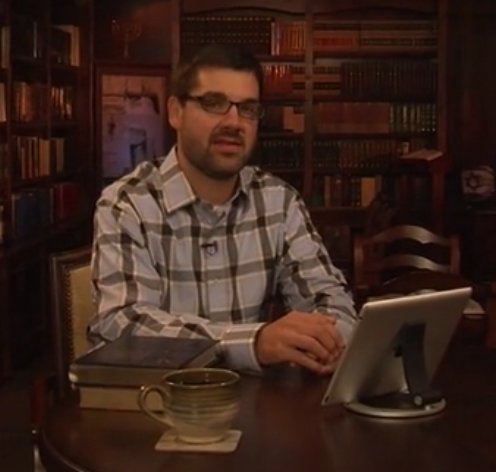
ffoz_tv12_tobyAccording to Toby, the word “Christian” is used only three times in the Bible, but the words “disciple” and “disciples” relating to followers and students of Jesus were used many times. Perhaps it’s more accurate to call ourselves disciples of Christ rather than Christians. But then again, that would depend on the meaning of disciples and discipleship. Which brings us to our first clue:

Clue 1: All early believers of Jesus were called disciples.

But going back to the question I just asked and the question Toby repeatedly asks, we need to understand how Christ’s original Jewish audience and the first Jewish readers of the Gospels would have understood discipleship. To get the answer, we turn to FFOZ teacher and translator Aaron Eby in Israel.

Aaron provides a great deal of background information on early Jewish discipleship including the fact that discipleship predates Jesus by quite a bit. Discipleship was considered the primary method of higher Jewish education, but it wasn’t just a matter of going to school and studying different subjects. A disciple was a student but specifically, a student of a Torah teacher. In the days of Jesus and before, when a young man thought he wanted a life of Torah learning, he would apprentice himself to a Torah master, however, this apprenticeship might not be what you imagine.

A disciple was to be a learner/imitator. He would memorize all of his Master’s teachings, learn to imitate his Master’s style of dress, mannerisms, inflections of speech. The disciple in some ways considered himself a servant or even a slave to his Rabbi, his “great one.” In some ways, he thought of himself as a son to a Father, but the Rabbi was considered greater than the disciple’s biological Father. Disciples were tremendously devoted to their Masters, more so than to their own families or even their own lives. And so it was with the disciples of Jesus, their Master and ours.

Back in the studio, Toby describes the concept of discipleship as a job description.

A pupil is not above his teacher; but everyone, after he has been fully trained, will be like his teacher.

Luke 6:40 (NASB)

That the disciples of Jesus were imitators of their Master and memorized his teachings is the reason why we have the Gospels today.

Be imitators of me, just as I also am of Christ.

1 Corinthians 11:1 (NASB)

Here we see that Paul considered himself a disciple of Christ as his imitator, and he suggests to the readers of his letter that they should imitate Paul. Were they then Paul’s disciples? I’ll answer that in a bit, but we have arrived at our second clue:

Clue 2: The primary job of a disciple was to be like his teacher.

Even the Pirkei Avot or “Ethics of our Fathers,” a set of Jewish teachings that predated Jesus says, “Raise many disciples.”
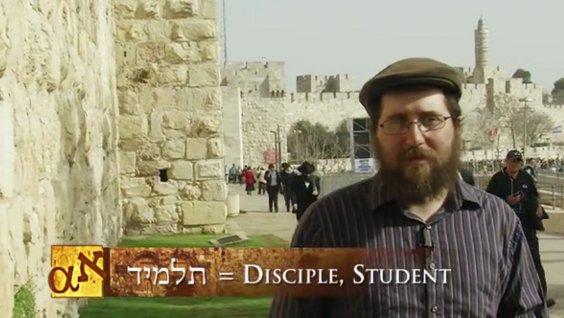
ffoz_tv12_aaronA Rabbi’s job was to create a new generation of disciples who would learn everything from the Rabbi and about the Rabbi and then, when they were fully trained, the disciples would become Rabbi’s themselves, raising up their own generation of disciples in order to preserve the Torah teaching and wisdom of their own Master. This process would be repeated from one generation to the next with the goal of creating an unbroken line of discipleship, generation by generation, that would preserve the teachings of Torah for each Teacher, often by establishing great schools such as the Houses of Study of Shammai and Hillel. This maps well to Matthew 28:19-20 where Rabbi Yeshua instructed his Jewish disciples to raise up a generation of disciples from the people of the nations, which the Church often refers to as “the great commission.” However, as we’ve seen, the idea of “the great commission” hardly does justice to what Jesus was actually commanding.

Now we have arrived at the third and final clue:

Clue 3: The job of a disciple was to raise up more disciples.

But here Toby introduces a strong caveat:

But do not be called Rabbi; for One is your Teacher, and you are all brothers. Do not call anyone on earth your father; for One is your Father, He who is in heaven. Do not be called leaders; for One is your Leader, that is, Christ. But the greatest among you shall be your servant. Whoever exalts himself shall be humbled; and whoever humbles himself shall be exalted.

Matthew 23:8-12 (NASB)

This set of verses has often been misunderstood or just not understood at all. Does this mean we shouldn’t have respect for our Bible teachers and Pastors? Here’s where having a Jewish perspective on the New Testament comes in especially handy. According to Toby, this is Jesus defining the difference between the relationship of Jewish disciples to the Sages and disciples of Jesus, our Master, to himself.

Remember, the purpose of discipleship was to learn all there was to learn from your Master and then to establish your own House of Study in your name passing on what you originally learned. Your disciples would be taught in your name, not in the name of your own Master, and your disciples would teach in their own names, not in yours (actually it was more like, “I teach you in the name of my Master, who taught in the name of his Master,” and so on).

Jesus said his disciples would be different. Each Torah Master would eventually age and die, but his teachings would be preserved in his disciples and in each generation of disciples that followed. Jesus is alive! We hear this enthusiastically declared every Easter or Resurrection Day in Church. James, Peter, and Paul were not to set up their own houses of study and teach in their own names by making their own disciples (in spite of what we saw relative to Paul in 1 Corinthians 11:1). They were not to raise up disciples for themselves but instead, they were and we are to raise up disciples for our Master, our one and only Master, Jesus the Messiah, Yeshua HaMashiach.

What Did I Learn?

I learned the meaning behind Matthew 23:8-12 which I tended to ignore in the past because I couldn’t figure it out. It makes a lot of sense now. I used to think that we inherited a broken system of discipleship since the teachings of Jesus were never transmitted generation to generation in the manner we have seen described in this FFOZ TV episode. Now I realize that it was by design, since we were never intended to be the students of any Master except Jesus. He is our only teacher, our only Torah Master. This does not mean we shouldn’t respect any Bible teacher or Pastor in our Church, but we must always remember that none of them take the place of Jesus. If we see a group of believers who esteem their Pastor or spiritual leader as anything approaching our true Master, then there is something wrong (and sadly, such situations make an appearance the news media from time to time, usually as scandals involving some highly public and popular religious leader).
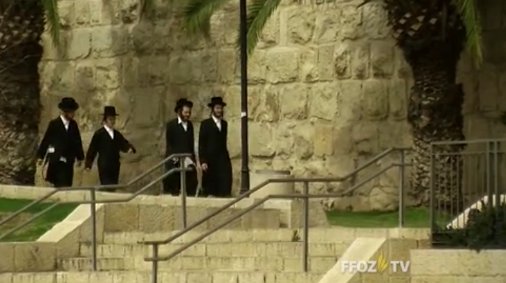
ffoz_tv12_extra2I also thought of some questions as I was watching this episode and in fact, I was reminded of some of the narratives of Toby from other episodes that involve how he commonly introduces himself. He says that he isn’t Jewish but rather a Gentile who practices Messianic Judaism. It isn’t always apparent, but he usually wears a kippah while on camera (A kippah is a head covering typically worn by religious Jews either just in synagogue or during their waking hours, depending on their level of observance).

What is the difference between being a Gentile who practices Messianic Judaism and a Gentile who practices Christianity? More importantly, how do these two “states” relate to being a disciple of Christ, our Master? Since this television show was created to present the Gospels and Jesus Christ to a more traditional Christian audience by introducing a more Jewish perspective and interpretation, what does that say about the level of discipleship and imitation of our Master relative to “Messianic Gentiles” and Christians?

This question is especially important to me, since it factors into how I think of myself as a disciple of the Master by calling myself a Christian and attending Church. One of the motivations for me to return to Church after an absence of many years was the book Tent of David: Healing the Vision of the Messianic Gentile written by FFOZ president and founder Boaz Michael. Have I become a better imitator of my Master by following this template of church attendance and Christian affiliation or a worse one? At some point in the near future, as the one year anniversary of my returning to Church comes near, I plan to write one or more “meditations” on the application of Boaz’s Tent of David in my life and the results I see so far.

Closely related to this situation, Toby also didn’t drill down into something that I think it’s vital to know. When we say that a disciple of Christ is an imitator or Christ, just exactly what are we imitating? This isn’t an idle question. Many in the Hebrew Roots movement insist that discipleship means imitating the Jewish Jesus in every aspect of his Judaism, including wearing kippot (plural of kippah) and tallitot (plural of tallit) and to otherwise look and act in a manner identical to modern religious Jews (in spite of the fact that Jesus isn’t a “modern religious Jew,” but rather, he was an ancient Jewish Rabbi and he is the Jewish Messiah King).

The clue that may lead to an answer was provided at the end of this episode by Boaz Michael who appeared on camera and said that next week (episode 13), the topic would be how the Torah is the foundation of Messiah Yeshua’s instructions to his disciples. How can the Torah be applied to both the Jewish and Gentile disciples of our Master?

I’m hoping my review next week will help answer these questions.

Today is Hoshana Raba, the last day of Sukkot. Lord, please abundantly save us. Candle lighting for Shmini Atzeret is tonight at sundown. God, continue to be with us.

Day Zero.


The Obscured Messiah in the Bible

tallit-prayer“My servant David will be king over them, and they will all have one shepherd; and they will walk in My ordinances and keep My statutes and observe them. They will live on the land that I gave to Jacob My servant, in which your fathers lived; and they will live on it, they, and their sons and their sons’ sons, forever; and David My servant will be their prince forever. I will make a covenant of peace with them; it will be an everlasting covenant with them. And I will place them and multiply them, and will set My sanctuary in their midst forever. My dwelling place also will be with them; and I will be their God, and they will be My people. And the nations will know that I am the Lord who sanctifies Israel, when My sanctuary is in their midst forever.”’”

Ezekiel 37:24-28 (NASB)

Tales of the Messianic Era series

I think most Christians and Jews would agree that this passage of scripture is referring to the Messianic age when David, King Messiah, will rule as Israel’s “prince” forever. Jews believe this text also confirms that Messiah will build the Temple in Holy Jerusalem, while some Christians believe the Temple is only a spiritual manifestation rather than a physical structure.

In the past several weeks, I’ve been challenged by a Jewish friend of mine to see if I can (or can’t) find Jesus in the Old Testament (Tanakh). Like most Christians, it’s difficult for me not to see Jesus in the Torah and the Prophets, but I want to be honest and actually make as much of an unbiased examination as I can. Interestingly enough, it was in last Sunday’s Bible study at church where some serious questions about Christian hermeneutics came up for me. I listened to my teacher explain some of the Jewish texts in a way that didn’t make sense. On the other hand, he had to interpret the scriptures in this manner if he was to locate Jesus there.

‘Behold, days are coming,’ declares the Lord, ‘when I will fulfill the good word which I have spoken concerning the house of Israel and the house of Judah. In those days and at that time I will cause a righteous Branch of David to spring forth; and He shall execute justice and righteousness on the earth. In those days Judah will be saved and Jerusalem will dwell in safety; and this is the name by which she will be called: the Lord is our righteousness.’ For thus says the Lord, ‘David shall never lack a man to sit on the throne of the house of Israel; and the Levitical priests shall never lack a man before Me to offer burnt offerings, to burn grain offerings and to prepare sacrifices continually.’”

The word of the Lord came to Jeremiah, saying, “Thus says the Lord, ‘If you can break My covenant for the day and My covenant for the night, so that day and night will not be at their appointed time, then My covenant may also be broken with David My servant so that he will not have a son to reign on his throne, and with the Levitical priests, My ministers. As the host of heaven cannot be counted and the sand of the sea cannot be measured, so I will multiply the descendants of David My servant and the Levites who minister to Me.’”

Jeremiah 33:14-22 (NASB)

This passage from Jeremiah 33 says several important things:

  1. In the Messianic Kingdom, God will fulfill the good news he has announced to Israel and Judah, in other words, the Jewish people.
  2. Messiah, a descendent of David, will be raised up as a “righteous branch.”
  3. Peace will be established for Israel and there will be safety in Jerusalem.
  4. Messiah, a descendant of David, will sit on the throne of Israel forever and the Levitical priests will once again offer sacrifices in the rebuilt Temple.
  5. The descendants of David and the Levitical priests will be multiplied to a number that cannot be counted.

temple-prayersSome Christians believe there will be a Temple and that sacrifices will be offered, but they believe Jesus, the Messiah, will be offering those sacrifices as a memorial (as opposed to an actual, functioning, sacrificial system). And yet, we see it is the Levites who will be sacrificing, not Messiah as a King-Priest. It’s understandable that the Priests would have families, children, and grandchildren across the future years but is this saying that Messiah also marries and has children (descendants)? Interesting, but I suppose you could also say that’s metaphorical and “David’s descendants” are the Jewish people.

“In the first month, on the fourteenth day of the month, you shall have the Passover, a feast of seven days; unleavened bread shall be eaten. On that day the prince shall provide for himself and all the people of the land a bull for a sin offering.”

Ezekiel 45:21-22 (NASB)

Waitaminute? What? Who makes an offering for his sins and the sins of the people? The prince? Who’s the prince? It can’t be Jesus because Jesus never sins.

My Bible teacher says that the prince is David not Christ. Matthew Henry’s Concise Commentary treats this concept a little differently:

In the period here foretold, the worship and the ministers of God will be provided for; the princes will rule with justice, as holding their power under Christ; the people will live in peace, ease, and godliness. These things seem to be represented in language taken from the customs of the times in which the prophet wrote. Christ is our Passover that is sacrificed for us: we celebrate the memorial of that sacrifice, and feast upon it, triumphing in our deliverance out of the Egyptian slavery of sin, and our preservation from the destroying sword of Divine justice, in the Lord’s supper, which is our passover feast; as the whole Christian life is, and must be, the feast of the unleavened bread of sincerity and truth.

My teacher didn’t see these verses the same way and used the following to establish that the prince must be literally David:

“Then I will set over them one shepherd, My servant David, and he will feed them; he will feed them himself and be their shepherd. And I, the Lord, will be their God, and My servant David will be prince among them; I the Lord have spoken.

Ezekiel 34:23-24

“My servant David will be king over them, and they will all have one shepherd; and they will walk in My ordinances and keep My statutes and observe them. They will live on the land that I gave to Jacob My servant, in which your fathers lived; and they will live on it, they, and their sons and their sons’ sons, forever; and David My servant will be their prince forever. I will make a covenant of peace with them; it will be an everlasting covenant with them. And I will place them and multiply them, and will set My sanctuary in their midst forever. My dwelling place also will be with them; and I will be their God, and they will be My people. And the nations will know that I am the Lord who sanctifies Israel, when My sanctuary is in their midst forever.”’”

Ezekiel 37:24-28

messiah-prayerBut we are presented with a problem. The term “David” in Messianic prophesy, almost assuredly refers to Messiah, not literally David. Also, Ezekiel 37:24 refers to David as “king” and “one shepherd” which must certainly be Messiah. It also describes this figure as walking in God’s “ordinances and statues to observe them,” which can’t mean anything else other than Torah, which means for the Jewish Messiah and the Jewish people, the Torah of Sinai will still be in effect in the Messianic era and apply to all Israel.

If we believe that the “prince” is the Davidic Messiah, that is to say, Christ, then Christians have a serious problem. How can a future Jesus Christ as King of Israel offer sacrifices for sin? Christians have to assign the identity of the “prince” either to another individual such as David or to a set of generic princes (who do sin), then it would be more appropriate for them to offer such sacrifices. But given what I said above, the prince can be none other than Messiah, at least if my teacher’s “proof texts” are really proof.

Additionally, we have the matter of whether or not this is a “real” sin offering or simply a memorial, harkening back to days of old, and reminding us that Christ made the offering for sin once and for all with his body on the cross.

Going back to some more traditional interpretations, we find that Jeremiah 23:3-6 also describes a righteous branch rising up, but we find something interesting in Zechariah 6:11-13:

Take silver and gold, make an ornate crown and set it on the head of Joshua the son of Jehozadak, the high priest. Then say to him, ‘Thus says the Lord of hosts, “Behold, a man whose name is Branch, for He will branch out from where He is; and He will build the temple of the Lord. Yes, it is He who will build the temple of the Lord, and He who will bear the honor and sit and rule on His throne. Thus, He will be a priest on His throne, and the counsel of peace will be between the two offices.”’

If “Branch” is a name for the Messiah, then we seem to see him sitting on the throne as both King and Priest. Since Messiah is of the house of David and the tribe of Judah, where does this leave the Levitical Priests? Or does the Priesthood of Melchizedek (Hebrews 7) trump the Levitical priests both in the Heavenly Court and on earth?

Ezekiel 43:2-7 was used by my teacher to describe the Divine Presence inhabiting the Temple in the future Messianic age but that creates an interesting situation for Christians. If the Divine Presence is God and Jesus is God and they’re both in the Temple how are we to understand this? How do they co-exist as two, separate physical entities within a single structure (the Temple)?

These are just the examples that came to mind and that I took notes on during my Sunday school class (no, I didn’t breathe a word to anyone about what I was thinking). But can we prove, just from the Old Testament scriptures, that Jesus is Messiah and God? I’m not sure we can without factoring in the New Testament record and lots and lots of Christian theology and doctrine.

No, I’m not going to throw my faith out the window, but try to look at all of this from a religious Jewish person’s point of view. In order to establish Jesus as Messiah King, we need to seriously morph the original meaning of the ancient scriptures that point to Messiah, the Temple, and the Priesthood. I don’t know that Occam’s Razor is the best hermeneutic tool to use, but if we accept that the most succinct and straightforward explanation in the bunch is probably the correct one, then Christians are obviously jumping through a few extra hoops to get Jesus to fit in all of the Messianic prophesies, at least Jesus as he’s understood in the modern Protestant church.

up_to_jerusalem

The Tanakh doesn’t speak of the sacrifices in the Messianic era as being memorials, but indicate they are the sacrifices that would have been familiar to any Israelite in the days of the Tabernacle or Solomon’s Temple. Also, the same ancient Israelites wouldn’t have had a problem with King Messiah offering sacrifices for his own sins, since they would have believed any descendant of David would be as human as David and would thus have sin. Even the greatest tzaddik who ever lived wouldn’t be completely sinless, but given that Jesus is sinless, how are we to reconcile these differences?

Obviously I’m playing, you should pardon the expression, “devil’s advocate” in this situation, but as I said before, I want to give this challenge an honest examination. I believe there are answers to all these questions, but I don’t think we can always rely on traditional Christian thought to provide those answers.

One of the messages presented by the First Fruits of Zion (FFOZ) television series, A Promise of What is to Come, is that the Bible and especially what we read about the coming Messianic age, the Kingdom of Heaven, seems to make a lot more sense when we look at the information from a more Jewish perspective. That’s the whole point of the television show.

I will probably get some pushback from my Christian readers, but one of the reasons I can’t simply walk away from Messianic Judaism is that nearly twenty centuries of Christian reinvention of the Jewish Messiah and Jewish history has obscured much of the original interpretation and meaning to the Biblical text, both in the Tanakh and the Apostolic Scriptures.

I will be honest and say that I have learned much from my Sunday school classes, but I’ve also been exposed to material that is hardly sustainable (if it’s sustainable at all) based on my reading of the Bible. I know we can’t always get the full meaning of what the Word is saying by relying on just the plain meaning, but how many knots do we have to tie in the string, and how many twists do we bend the pretzel in, before we divorce the Word of God from the “lips” of God?

The next part of this series is: Trouble Breaking into Church with Messianic Prophesy.

A Question of the Division of Abijah

levites-aaronic-blessingIn the days of Herod, king of Judea, there was a priest named Zacharias, of the division of Abijah; and he had a wife from the daughters of Aaron, and her name was Elizabeth.

Luke 1:5 (NASB)

I very recently wrote a blog post called Was He Born in a Sukkah and, based on a teaching by First Fruits of Zion (FFOZ) theologian and teacher D. Thomas Lancaster, I suggested that Jesus was not born either on Christmas or on Sukkot. I received some pushback as a result and some readers provided further evidence on how the Master was very probably born on Sukkot.

My original source was an article in Messiah Journal 111 (Fall 2012 issue) called “The Birth of Yeshua at Sukkot: Evidence from an Old Source” but I later listened to an audio CD of Lancaster teaching the same material. The audio contained more information that expanded upon Lancaster’s reasons as to why we can’t really know if Jesus was or wasn’t born on Sukkot.

I just found Lancaster’s sermon online at the Beth Immanuel Sabbath Fellowship website. If you click that link, you’ll be taken to the Audio page specific to the material. To listen to the relevant recording, scroll down until you locate “Birth of Yeshua at Sukkot.” At about 8:29 on the audio, Lancaster introduces the information about Zacharias (father of John the Baptist) that I’m also going to summarize here.

The strongest evidence anyone has presented me about Yeshua (Jesus) being born on Sukkot has to do with the timing of Zacharias’ service in the Temple. But let’s take a step backward:

Now in the sixth month the angel Gabriel was sent from God to a city in Galilee called Nazareth, to a virgin engaged to a man whose name was Joseph, of the descendants of David; and the virgin’s name was Mary. And coming in, he said to her, “Greetings, favored one! The Lord is with you.” But she was very perplexed at this statement, and kept pondering what kind of salutation this was. The angel said to her, “Do not be afraid, Mary; for you have found favor with God. And behold, you will conceive in your womb and bear a son, and you shall name Him Jesus. He will be great and will be called the Son of the Most High; and the Lord God will give Him the throne of His father David; and He will reign over the house of Jacob forever, and His kingdom will have no end.” Mary said to the angel, “How can this be, since I am a virgin?” The angel answered and said to her, “The Holy Spirit will come upon you, and the power of the Most High will overshadow you; and for that reason the holy Child shall be called the Son of God. And behold, even your relative Elizabeth has also conceived a son in her old age; and she who was called barren is now in her sixth month.

Luke 1:26-36 (NASB)

Here we see the angel Gabriel announcing to Miriam (Mary) that she has been chosen to be the mother of Jesus, and popular opinion states that at this time Mary was already pregnant or would become pregnant very soon afterward. We also see that her cousin Elizabeth was six-months pregnant with her child, John the Baptist. The Priest Zacharias is John’s father.

Remember, Zacharias is a Priest in the division of Abijah and we know, based on 1 Chronicles 24, the order of the service of the Priestly divisions. We know that the division of Abijah, like the other divisions, served twice a year for a full week each time. If we could figure out when the course of Abijah was, we could figure out when Elizabeth became pregnant (since she became pregnant immediately after the end of Zacharias’ service in the Temple), count ahead six months and then nine months, and then figure out the birthdate of Jesus.

But Lancaster says it’s not that easy.

First of all, there were 24 courses which meant that each division cycled through the year twice making 48 week-long courses in a year. But in the solar calendar, there are 52 weeks in a year, so unless there was some way to compensate, each course would drift across the calendar making it very difficult to determine when a particular division was serving at any given year.

D.T. LancasterThe assumption though is that the Abijah division was serving in the spring or the fall. But Luke doesn’t tell us what season it was when describing Zacharias’ service, so we have no way of knowing if it was during springtime or autumn.

On top of that, one out of every three years in the Jewish religious calendar contains 13 months. Rabbinic sources don’t tell us how or if the priesthood compensated for an extra four weeks in their calendar every three years. We assume that they must have, but without knowing the exact method they used, we’re stuck as far as calculating the timing of the service of divisions.

And after all that, the entire priesthood was called to serve during each of the three pilgrim festivals: Pesach, Shavuot, and Sukkot, and Lancaster says we can’t rule out that it was during one of the festivals that Zacharias was serving.

The icing on the cake, so to speak, is that experts don’t agree on whether the priestly rotation began on Nisan 1 or Tishrei 1.

Add all this up, and it becomes impossible to calculate when Zacharias served in the Temple in the Luke 1 text, and thus the entire basis for calculating the birth of Messiah disintegrates like wet tissue paper.

Since this is just a summary, I encourage you to click on the link I provided above and listen to the entire recording for yourself. I can’t speak for Lancaster, but unless some additional data comes to light that modifies everything I just said, the information about Zacharias and the Abijah division of priests is a dead-end in terms of discovering the birthdate of the Master.

Was He Born in a Sukkah?

born_in_sukkahWhen was Yeshua born? The Gospel writers either did not know when the event happened or they did not feel the information was important enough to pass along. We can only speculate.

Two centuries after it happened, Clement of Alexandria discussed the dating of the Master’s birth, but he did not mention December 25 or January 6 at all. Instead, Clement reported one tradition corresponding to April 20 on our civil calendar and another tradition corresponding to May 20. By the middle of the fourth century, however, the Roman church had begun to honor December 25 while churches in the East, Asia Minor, and Egypt observed Jesus’ birth on January 6. Both are late developments and unsupported by early tradition or biblical evidence. No trace of a tradition from the early Jewish believers connects the birth of the Messiah with December 25 or January 6.

-D. Thomas Lancaster
“The Birth of Yeshua at Sukkot: Evidence from an Old Source,” pg 21
Messiah Journal, issue 111 (Fall 2012)
Published by First Fruits of Zion (FFOZ)

This is normally the sort of conversation you have in December when the vast majority of the Christian world prepares to celebrate the birth of Christ. One thing we can be certain of is that Jesus was born nowhere near December 25th. But it has been suggested that he might have been born on or near the festival of Sukkot. Could this be true?

I recently had a private request for any information I knew about this possibility. Alas, it’s not something I’ve written on before (although I’ve heard some commentaries on the topic). Fortunately, D. Thomas Lancaster has written on this in the above quoted article in Messiah Journal 111, which was published last year. Does Lancaster conclude that the Master was born during this season and if so, what is his evidence?

Other Sukkot-theory proponents claim, “Yeshua was born in a sukkah because the word ‘stable’ is sukkah in Hebrew.” These arguments are not at all convincing and fall apart under scrutiny. Is there any legitimate evidence of a Sukkot birth, or is the birth of Yeshua at Sukkot just more Hebrew roots movement apocrypha?

-Lancaster, pg 22

That doesn’t sound too encouraging. As much as the symbolism may attract us and fit into the theories and emotional dynamics of certain individuals and groups, is there any real evidence to establish the idea that Jesus was born during Sukkot? What line of reasoning and investigation could we use to support or refute this viewpoint?

Lancaster suggests that we could compare the birth narrative of John the Baptist to that of Jesus. We know, based on Luke 1:26 and 1:36 that the conception of Jesus came about six months after the conception of John, thus we can assume that Jesus was born about six months after John was. If we could determine when John was conceived and/or born, we could reasonably deduce when Jesus was born.

And now you will be silent and not able to speak until the day this happens, because you did not believe my words, which will come true at their appointed time.”

Luke 1:20 (NIV)

And now you will be dumb and unable to speak until the day when this has taken place; because you did not believe my words–words which will be fulfilled at their appointed time.”

Luke 1:20 (Weymouth New Testament)

zechariahThese are the only two translations of the New Testament where it specifically mentions “appointed time,” which is important because of the following:

“Is anything too difficult for the LORD? At the appointed time I will return to you, at this time next year, and Sarah will have a son.”

Genesis 18:14 (NASB)

But what’s “appointed time” got to do with it? Doesn’t it just mean some random date God selected for the birth of John the Baptist and Isaac, the son of Abraham and Sarah?

In the Torah, the biblical festivals are called “appointed times.” According to one Jewish interpretation, “the appointed time” at which Sarah gave birth to Isaac was the first day of Passover:

And how do we know that Isaac was born at Passover? Because it is written, “At the appointed time I will return to you […and Sarah will have a son].” (b.Rosh Hashanah 11a)

In the Gospels, John the Immerser comes in the role and spirit of Elijah. Jewish tradition maintains that Elijah will appear at Passover to announce the coming of Messiah. For that reason, we read Malachi’s prophecy about the coming of the Messiah on the Sabbath before Passover, and Jewish homes set a place at the Passover Seder table for Elijah.

-Lancaster, ibid

Lancaster covers two other traditions. One involving the Biblical record of Joseph and Mary traveling (supposedly) to Jerusalem to attend the festival of Sukkot, and they happened to be near Bethlehem when Mary went into labor. If Bethlehem were on the pilgrim trail to Jerusalem, the multitude of travelers going up to Jerusalem for the festival could account for all the “no vacancy” signs at the inns.

The other tradition has to do with assigning a double meaning to the phrase “the Eighth Day.” Of course, all Jewish boys were to be circumcised on the eighth day after birth, but the last day of Sukkot, which is actually a separate festival, Shemini Atzeret, is also referred to as the “Eighth Day.” This would mean Jesus would have been born on the first day of Sukkot and circumcised on the eighth day of the festival. Pretty neat timing.

Admittedly, this is all speculative. The Gospels do not actually indicate that John was born on the first day of Passover, that Yeshua was born on the first day of Sukkot, or that he was circumcised on the eighth day of Sukkot.

-ibid, pg 23

Lancaster’s article goes on for another page or so where he quotes from a “medieval collection of anti-Christian Jewish folklore titled The story about Shim’on Kefa (Aggadta DeShim’on Kefa),” which may offer certain hints suggesting that the early Jewish believers could have commemorated the Master’s birth at Sukkot, but all in all, support for this perspective is very thin.

Sukkah in the rainI’m not saying it couldn’t work out this way and I suppose it would be very symbolic if it did work out that Jesus was born on Sukkot, but in fact, we just don’t know. Evidence from the Gospels and from various Christian and Jewish sources simply do not provide enough light on this matter to bring it to any sort of resolution. Thus, for Christians and other Gentile believers involved in the Hebrew Roots and Messianic Jewish movements, we must find other reasons to celebrate Sukkot. Don’t worry, we have reasons enough, as one person said on my blog recently.

It is appropriate, not only that you have built the family sukkah, but also that you should participate in its celebration, as an anticipation of the prophetic fulfillment in the Messianic Era when the nations will come up to Jerusalem to celebrate this feast (or suffer drought), as described by Zacharyah. Indeed, Jewish tradition perceives reflections of a sort of Yom Kippur repentance and redemption for the non-Jewish nations in the Sukkot celebration.

As for Messiah, he temporarily lived among people once in the fragile shelter of a human body. Some day, he will return and be with us forever.

I’ve been reviewing some of my past Sukkot related blog posts and thought you’d find these interesting:

Sukkot: Drawing Water from Siloam.

Plain Clothes Sukkah.

May you drink from springs of living water. Chag Sameach Sukkot!

Addendum: This conversation is continued in A Question of the Division of Abijah.

Finding the Path

Jewish_men_praying2That God is a redeeming God is a testament to God’s power, but that redemptive power is strangely ambiguous, for if God’s redemptive power will be manifest only at the end of days, then the inescapable implication is that in the here and now God’s power is not fully manifest. The final verse from the prophet Zechariah (14:9), with which we conclude every formal Jewish service of worship…has a significant implication here. The context is a vivid description of “the day of the Lord,” a common prophetic characterization for the age that will mark the culmination of history as we know it. The vision is apocalyptic: the familiar structures of nature will be overturned; there will be neither sunlight nor moonlight, just one continuous day; God will wage war against the evil nations and smite them with a plague. All who survive will make a pilgrimage to Jerusalem to worship the God of Israel. And then “the Lord will be king over all the earth; on that day there shall be one Lord with one name,” or as other translations would have it, on that day, “the Lord alone shall be worshiped and shall be invoked by His true name.”

-Rabbi Neil Gillman
“Chapter 9: God Redeems,” pg 139
The Jewish Approach to God: A Brief Introduction for Christians

I, John, your brother and fellow partaker in the tribulation and kingdom and perseverance, which are in Jesus, was on the island called Patmos because of the word of God and the testimony of Jesus. I was in the Spirit on the Lord’s day…

Revelation 1:9-10 (NASB)

If you’re at all familiar with the imagery presented in John’s Revelation, you’ll notice a number of similarities to my quote from Rabbi Gillman above. Of course, this imagery is also available in several sections of the Tanakh (Old Testament), so it’s not unreasonable or unanticipated that Rabbi Gillman should sound as if he’s channeling the words of the apostle. What may seem strange to some Christians is the idea that Israel is not only involved in the apocalyptic future, but that it is (they are) the conduit by which the rest of the world approaches redemptive history.

If you have been reading my blog for any length of time, this bit of news shouldn’t be completely unfamiliar. A number of my reviews of episodes of the FFOZ TV: The Promise of What is to Come television show have touched on this history. These include the topics exile and redemption, the ingathering of Israel, the Gospel message, Jewish repentance and the Kingdom being now. If you put all of this information together, you come up with a startling picture….well, startling if you are traditionally Christian.

Most of the time, in the church, we are taught that if anyone, including Jewish people, want to be reconciled with God, they must convert to Christianity and start worshiping Jesus Christ. Almost no one is teaching that in order to be saved by God, we have to go through Israel.

What? Am I saying we all have to convert to Judaism? Not at all. But we have tended to reverse causality as Christians, believing that Israel has lost significance with God and that the Church (big “C”) has overshadowed if not replaced her in God’s covenant promises. But if you read this blog post and especially the comments section, you’ll see there’s a strong indication that the return of Messiah and the final acts of redemptive history will only occur when Israel corporately repents and returns to God and the Torah! To that end, we in the Church (big “C”, all of us) have a responsibility and a duty to encourage Jewish Torah observance and repentance.

Yom-KippurThere was nothing preventing me from observing Yom Kippur in a traditionally Jewish fashion, but I chose not to fast this year. I know some of you will think I’m terrible for abstaining from “the fast,” and others will think not a thing about it. I suppose I could have fasted in order to encourage my wife and daughter, but it’s like the reason I stopped lighting the Shabbos candles. There’s little point in the only Goy in the home acting more “Jewish” than the Jewish people in the home.

Fortunately, my wife has started lighting the candles again, so there’s hope that she is participating in the forward flow of Jewish history that will culminate in the return of the Jewish King.

I feel a little guilty anyway, but if I believe that it is Jewish Torah observance that is the key to the coming of Moshiach, then shouldn’t I draw the distinction in my family? After all, my wife always thinks it’s strange of me when I avoid a pork chop or a plate of hot, buttery shrimp (not that such food would ever be found in our home). She’d no doubt have wondered why I was fasting on Yom Kippur (and I’m encouraged because for the first time in years, she fasted on Yom Kippur).

I’m meeting with my Pastor this week for our usual Wednesday night talk. I noticed on my calendar that our 7:30 meeting will also be the candle lighting time for Erev Sukkot. I experienced momentary guilt at this, and then regret that I’d miss my wife lighting the candles again. Fortunately, I just finished building and decorating our sukkah, so it’s all ready for the festival.

I must admit, Sukkot is one of my favorite holidays. Am I being a hypocrite by not fasting on Yom Kippur but building a sukkah in my backyard? I hope not. My wife and daughter won’t be building anything very soon, so it’s one of those gender-specific activities that lands on my side of the fence. I also find that the image of the Word which became flesh and “sukkahed” among us (John 1:14) is eminently portrayed at this time of year, so building a sukkah is my way of participating in the commemoration of the first Advent.

I have to admit that as the Days of Awe draw to a close and the next Torah cycle is poised to launch, I’m not sure what I’m supposed to do. Old friends in the Messianic movement have pulled away from me. Maybe I should have repented to them before Yom Kippur. Maybe I’m becoming too “Christian”. Maybe I just don’t matter in that world anymore. Who knows?

If Judaism is accelerating toward its own redemptive history, what future should I, a Goyishe Christian, anticipate? I believe the Jewish people and Israel (and especially Israel’s firstborn son, Messiah) are the doorway into redemption for the rest of the human race, but is viewing the world of faith through a Jewish lens becoming a closed door for me ? I don’t know.

God’s choosing is beyond our ability to understand. The Hebrew prophet, Amos put it this way:

To Me, O Israelites, you are
Just like the Ethiopians, declares the Lord.

True, I brought Israel up
From the land of Egypt,
But also the Philistines from Caphtor
And the Arameans from Kir.

-Amos 9:7

To equate God’s redemption of Israel from Egyptian bondage with God’s redemption of other nations — indeed, a nation such as the Philistines, one of ancient Israel’s enemies — is a striking acknowledgment that God loves all peoples equally.

-Gillman, “Chapter 8 God Reveals,” pg 119

Children of GodRabbi Gillman is observing Jewish “chosenness” from the point of view of Reform Judaism. I don’t think an Orthodox Rabbi would hold such an opinion. Nevertheless, Rabbi Gillman hits on something important, especially for Christians. God doesn’t just love Israel and He may not even bathe Israel with more love than any other nation. God may love all of humanity in exactly the same way, even as He has chosen Israel for a specific and special purpose that is separate from the nations of the world, including the people of the nations who are called by His Name (Amos 9:11).

For Jews, what precisely was the “content,” the substance, of God’s revelation to our ancestors? Torah can be defined in many ways. It can be understood as (1) the first five books of the Bible (the Chumash, or Pentateuch, both referring to “five”); (2) the entirety of Hebrew Scripture, from Genesis to 2 Chronicles; (3) all of Scripture plus the body of rabbinic interpretation that emerged in the talmudic era (from the first to the seventh centuries C.E.); or, even more broadly, (4) the ongoing interpretation of that material through our very own day. However we define it, Torah is a complex body of doctrines, history, narratives, prayers, and legal codes. It constitutes the entire body of Judaism’s distinctive religious message.

What authority does this body of teaching have for us? Are we to accept the entire body of tradition as absolutely binding on all Jews for eternity? How free are we to depart from it, and how do we decide? The different answers to these questions account for the denominational structures that characterize the Jewish community today, from right-wing Orthodoxy to left-wing Reform and everything in between.

-Gillman, pg 120

If we are all loved and we are all invited by God to participate in His redemption through the history and future of Israel, what then is the Torah to the faithful among the nations? Of course, being loved identically and even having identical access to salvation through faith and grace does not make Jews and Christians functionally identical in terms of all the covenants. As we see from the above-quoted statement, even among collective Judaism, how Jewish authority, teaching, and obedience to God is understood is highly variable. How much more variable should it be when Gentiles are thrown into the mix by our faith in Jesus through a single condition in the Abrahamic covenant?

In addition, Israel’s “daughter religions” inherited the notion of redemptive history, which led them to believe that God’s choice had passed to another, different community. The first Christians understood that God’s revelation in and through Jesus of Nazareth superseded the Sinai covenant with “the old Israel.” (In this post-Holocaust age, however, many Christians have come to question the accuracy of this reading of Christian Scripture and to abandon it.) Islam claimed that God’s revelation to Mohammed in the Arabian desert in the seventh century C.E. constituted the seal of prophecy, God’s final revelation.

-Gillman, pg 118

path-to-godChristianity tends to believe it is the “lead dog” in the pack, so to speak, so being referred to as a “daughter religion” may be a little disconcerting. However, invoking the perspective of Messianic Judaism, at least as I understand the movement, it’s certainly an appropriate term, as it fixes us in place in terms of sequence, not only regarding where we’re coming from, but in some sense, where we have to return to in order to fulfill prophesy and take our place as the crown jewels of the nations.

Even had he remained a tzaddik, the descent would still have been worthwhile; all the more so now that he has sinned.

He was meant to have confined himself to the permissible; he would have enlightened that portion of the world, healed it and carried it upward. He was meant to remain there, for if he would break out, intending to return, who knows that he could ever succeed in his gambit?

But now that he has fallen, let him return, and in doing so he will transform to light that which the tzaddik could never have touched.

-Rabbi Tzvi Freeman
“Even Better”
Based on letters and talks of the Rebbe, Rabbi M. M. Schneerson
Chabad.org

I know Rabbi Freeman never intended this, but I cannot help but be somewhat reminded of Messiah, of Yeshua (Jesus), the tzaddik who had fallen but who rose and who will return greater than ever. I’m also reminded that it is not me and it’s not Christianity or even Judaism that means anything to the future and to God. It’s the human desire to encounter God through the doorway of a broken and bleeding heart and spirit. From that encounter, we may not learn everything, but we learn where we are on the path He has placed before each of us.

I will educate you and enlighten you in which path to go…many are the agonies of the wicked, but as for one who trusts in Hashem, kindness surrounds him.

Psalm 32:8, 10 (Stone Edition Tanakh)

Whatever I end up doing in the coming year must conform to the path that God has designated for me, not the one being walked by anyone else.

How Forgiving is Our Teacher?

teaching-childrenMy late teacher Rabbi Louis Finklestein used to say, “When I pray, I speak to God; when I study, God speaks to me.” In the words of our liturgy:

Blessed are You, Lord our God, Sovereign of the universe…who commanded us to study the words of Torah. May the words of Torah…be sweet in our mouths and in the mouths of all Your people so that we, our children, and all the children of the House of Israel may come to love You and to study Your Torah…Blessed are You, Lord, who teaches Torah to the House of Israel.

Note the tense of the verb: God “teaches,” not “has taught,” Torah to Israel. God, then, is a teacher not only at Sinai, in antiquity, but today as well, and not only today but also in the world to come. The souls of the righteous who have perished are described as having gone to “the yeshiva on high,” where God will be their teacher and will elucidate all the puzzles of the Torah that were never clarified while they lived on earth.

-Rabbi Neil Gilman
“Chapter 4: God is Nice (Sometimes),” pp 62-3
The Jewish Approach to God: A Brief Introduction for Christians

I’ve mentioned before that I think of God as a teacher, at least sometimes, a bringer of enlightenment and truth. There are also some in religious Judaism who believe that when Messiah comes (or comes back), he will teach Torah perfectly. I suppose this means he’ll teach the Gentiles as well as the Jews how Torah is to be correctly applied to our lives and all of the messy confusion we experience now will finally go away…as long as we choose to accept his teaching and incorporate them into our daily practice.

It seems amazing that we might not, but as I read the Bible, even after the second advent, there will be plenty of people who won’t recognize him as King, even as he sits on the Throne of David in Holy Jerusalem.

But then again, even when we acknowledge God, sometimes we can still be opposed to Him; we can still be angry with Him. But that may not be as strange as it seems:

Yet even then, their anger at God’s behavior was always expressed from within their long-standing relationship with God. They never allowed their sense of being mistreated by God to drive them out of the religious community and its belief structure.

-Rabbi Neil Gillman
“Chapter 5: God is Not Nice (Sometimes),” pg 65

I know the idea of being angry at God usually elicits a certain amount of “pushback” from some readers, but I maintain that it’s a common human response to God…we just don’t talk about it. But what is God’s response to us when we are angry at Him?

Job’s “comforters” arrive and evoke the classical Torah interpretation of suffering: Job must have sinned. But Job retorts that he has not sinned, or that he has not sinned nearly enough to justify this punishment. At the end of the book, God addresses Job in the speeches “out of the whirlwind.” These are a paean to God’s power and to the complexity of God’s creation. Their message is “Job, don’t try to understand Me. Don’t try to fit Me into your neat moral categories. I am God; you are a human being.” Surprisingly, Job acknowledges the difference:

I know You can do everything,
That nothing You propose is impossible for You…
I had heard You with my ears,
But now I see You with my eyes;
Therefore, I recant and relent,
Being but dust and ashes.

-Job 42:2, 5-6

This implies that Job has now achieved a clearer understanding of God’s ways and a measure of closure.

-Gillman, pg 69

forgiveness_jayThis seems not unlike the article Jay Litvin wrote about his own need to attain closure or at least regain closeness with God, in Mr. Litvin’s case, by “forgiving” God for Litvin’s terminal illness. But Job’s and Litvin’s approaches are quite different. Whereas Job acknowledges God’s statement that he cannot understand the ways of God and thus should abandon any attempt to put God in a theological or doctrinal box, Litvin sets all this aside and treats God, not as understandable, but nevertheless, forgivable.

I suppose you could argue that having the temerity to “forgive” God might require that we would then need to be forgiven by God, that too is the act of a loving Father rather than a harsh and punitive Judge:

He will not always strive with us,
Nor will He keep His anger forever.
He has not dealt with us according to our sins,
Nor rewarded us according to our iniquities.
For as high as the heavens are above the earth,
So great is His lovingkindness toward those who fear Him.
As far as the east is from the west,
So far has He removed our transgressions from us.
Just as a father has compassion on his children,
So the Lord has compassion on those who fear Him.
For He Himself knows our frame;
He is mindful that we are but dust.

Psalm 103:9-14 (NASB)

Then comes the theological underpinnings for the power of repentance: “For He knows how we are formed; He is mindful that we are dust” (Psalm 103:14). God grants us the power of repentance because God knows how we were created: from the dust (Genesis 2:7).

-Gillman, “Chapter 6: God Can Change,” pg 91

In Rabbi Gilman describing the Jewish relationship to God for Christians, he says that God gives human beings the ability to repent because God knows how weak and frail we are (dust and ashes). Out of that knowledge, God desires to forgive us, which, of course, requires that we first repent.

Jonah chapter 3 tells the simple but powerful tale of Jonah prophesying to the great city of Nineveh that unless they repent of their sins, they will be destroyed by God. Amazingly, this Gentile and corrupt city, from the King to the lowest commoner, repent, and because of this, God relents and forgives.

There’s a certain irony, at least to me, in Rabbi Gillman final commentary in this chapter:

The poem then concluded with a theological justification for God’s compassion:

You are slow to anger and ready to forgive. You do not desire the death of the wicked but that we return from our evil ways and live. Even until our dying day, You wait for us, perhaps we will repent, and You will immediately receive us. Our origin is dust and we return to the dust. We earn our bread at the peril of our life. We are like a fragile potsherd, as the grass that withers, as the flower that fades, as a fleeting shadow, as a passing cloud, as the wind that blows, as the fleeting dust, and as a dream that vanishes. But You are ever our living God and sovereign.

The echo of Psalm 103:14…is unmistakable here. God must forgive because God above all knows what it means to be a human being and to live a human life (not because of Jesus, according to Jewish thought, but because God is the creator of all).

-ibid, pg 96

Jonah's KikayonAs a Reform Jewish Rabbi, Rabbi Gillman isn’t about to acknowledge the Christian view of Jesus, but comparisons between his closure to Chapter 6 and the following are unavoidable:

The Lord is not slow about His promise, as some count slowness, but is patient toward you, not wishing for any to perish but for all to come to repentance.

2 Peter 3:9 (NASB)

Therefore, since we have a great high priest who has ascended into heaven, Jesus the Son of God, let us hold firmly to the faith we profess. For we do not have a high priest who is unable to empathize with our weaknesses, but we have one who has been tempted in every way, just as we are—yet he did not sin. Let us then approach God’s throne of grace with confidence, so that we may receive mercy and find grace to help us in our time of need.

Hebrews 4:14-16 (NASB)

It’s not that God couldn’t feel compassion and empathy for human beings without experiencing a human life. What creator is unable to understand his creation? And yet, Jesus as both divine and human is uniquely positioned to understand human frailty and to act as intercessor between a fallen mankind and an ultimately Holy, Ein Sof God. Peter also echos Psalm 103 and “foreshadows” the Yom Kippur service in his words.

I sometimes wonder why we have a Christianity that is completely separate from Judaism. If modern religious Judaism is correct and the Gentiles are to come to God through Israel but without the Jesus of the Bible, then why isn’t modern Israel, the Jewish people, a light to the world, opening that door for the rest of humanity? I know the only “Jewish” requirement for Gentiles is our obedience to the Seven Noahide Laws, but without Jewish mentors and a Jewish understanding of this framework, non-Jewish humanity is without comprehension, let alone community (as far as I know, there are no exclusively Gentile Noahide “synagogues” or “churches”). Does modern Judaism truly believe that God left each generation of Gentiles without a means of redemption? It would seem so, since Judaism, for the most part, does not encourage “Noahidism” among the Gentiles.

Christianity was born of Judaism but we have been separated. Jewish people say the separation occurred when Paul developed an anti-Law religion for the Gentiles, effectively making Paul a Jewish traitor and perverter of Jewish teachings into a new Gentile religion. Christians say that Paul understood that the Law had been replaced by the grace of Christ and Torah entered into a period of obsolescence, making Paul the Jewish vanguard out of Judaism and into Christianity. Even my Pastor, who believes there will be a Third Temple and that there will be sacrifices again, tells me that the Torah was always intended to be temporary, and Paul was the instrument of closure for that part of Jewish existence.

I don’t accept either viewpoint. I can’t. One of the comments made on a recent blog post said in part:

In the case of the biblical literature, re-interpretation is a necessary part of such developments because many adherents to a given system are not native to the languages of the source literatures.

It may have become necessary for the form and structure of religious thought and practice to also have been reinterpreted because of the innate differences between Jewish and Gentile disciples of Messiah. Not only are the covenant structures different (or at least overlapping), but based on the much longer and unique Jewish history with God at the point of the apostolic period, how discipleship was transmitted by the Jewish apostles and received by the various Gentile populations in the then-civilized world, may have well required a sort of cultural “morphing,” even when Gentile Christianity and Jewish “Messianism” were still on speaking terms in the late Second Temple and early post-Temple time frame.

infinite_pathsGod is God of all and God desires to forgive all so that none should perish, but it seems apparent, given the wide variety of Jewish and Gentile approaches to God we’ve seen over the past two-thousand years, that God’s people have yet to come to any sort of consensus as to how that approach should look. Maybe this too is part of God’s gracious forgiveness, not locking human beings into a too tightly structured “approach pattern.”

I know that Jesus said that we only enter through the narrow gate (Matthew 7:13-14), but some Christians believe that gate is as narrow as a single denomination. Some Christians believe you are only “saved” is you are baptized in running water vs. a wading pool. As for observant Jews, how many believe other Jews who do not observe Shabbos will not merit a place in the world to come? How many Jews believe that only their branch of Judaism or only their Rebbe has the true teachings of Torah?

But if God is our teacher and perhaps ultimately, our only teacher, where can we go to learn from Him without having to endure endless layers of human filters? Ourselves and delving into the Bible by the power of the Holy Spirit you say? Many claim to possess the true Spirit and thus out of that (or their own imagination), possess the true teachings of Christ, but I still maintain that there is a lot more chaff than wheat in human understanding of God. I can only hope and pray that God is a lot more merciful and forgiving than some people of faith say He is, so that our honest but fumbling attempts to know Him aren’t in vain.