Tag Archives: Messiah

FFOZ TV Review: Seek First the Kingdom

ffoz_14mainEpisode 14: For Christians, nothing should be more important than seeking first the kingdom. Episode fourteen will take a deeper look at what it means to “Seek first the kingdom of God” from a Jewish perspective. Viewers will learn that the kingdom of God is the Messianic Era. To seek first the kingdom is to obey the teachings of Jesus and do the will of God while always leaning on God’s grace. The Sermon on the Mount is the long answer to what it means to seek to enter his kingdom.

-from the Introduction to FFOZ TV: The Promise of What is to Come
Episode 14: Seek First the Kingdom

The Lesson: The Mystery of Seeking First the Kingdom of God

What is it to seek first the Kingdom of God? We’ve learned from previous episodes of this program, that the Kingdom of God is actually the Messianic Era, not “going to Heaven.” It’s the Kingdom that Jesus will establish upon his second advent into our world, where he will rule and reign over Israel as her King, and as King of all the nations of the Earth.

But let’s take a closer look at an important saying of the Master from Matthew 6:31-34 using the Delitzsch Hebrew Gospels translation to begin to address this mystery:

Therefore, do not worry, saying, “What will we eat?” or “What will we drink?” or “What will we wear?” For the Gentiles request all of these. Does your Father who is in heaven not know that you need all these? But seek first the kingdom of God and his tzedakah, and all these things will be added to you. Therefore do not worry about tomorrow, because tomorrow will worry for itself. It is sufficient for trouble to come at its time.

As always, First Fruits of Zion (FFOZ) teacher and author Toby Janicki tells his audience that we may be led into error if we do not look at these scriptures from the original linguistic, historical, and cultural context, the context of the audience for whom Matthew wrote his gospel, the context of the audience of Jesus and his Sermon on the Mount. This is the lynchpin that holds together FFOZ’s interpretation of the New Testament and folds it into the overall Jewish context of the entire Bible.

Toby says that Jesus is telling us we are not to focus on our immediate, material needs, but rather to seek first the Kingdom of God and His righteousness. Toby summarizes the Kingdom using material presented in previous episodes:

  • The Kingdom of God is Messiah’s rule over the earth upon his second coming.
  • The exiles of Israel, the Jewish people, will be regathered to their nation.
  • God will defeat all of Israel’s enemies.
  • Messiah establishes a rule of peace over all the Earth.
  • The Torah will go forth from Zion.
  • Everyone will be filled with the Knowledge of God through the Holy Spirit.

I immediately thought of my conversation with my Pastor last week. Part of our discussion included a quick summary of the Book of Revelation, and I noticed that Toby didn’t touch on the “rapture of the Church” to Heaven with Jesus for the seven years of tribulation. I suppose that will be a topic for another time, although previously, Toby mentioned that “the Church” would be raptured with Jesus to Jerusalem. I suppose that means “the Church” won’t be “off planet” for the seven years of woe and judgment, but that’s a topic for another time.

Toby said that the Sermon of the Mount is the overall context for today’s lesson and that Matthew 5:20 is the key to understanding the Sermon. It functions like a thesis statement, and not correctly understanding this single verse will lead to misunderstanding the entire sermon.

I found this terrifically compelling, because Pastor and I got “hung up” on this very verse last week. I was presenting my understanding of the terms “abolish” and “fulfill” we encounter in Matthew 5:17-19 based on the previous episode of the show: The Torah is Not Canceled (see my review of that episode for more details).

However, verse 20, as I mentioned, was a problem:

For I say to you that unless your righteousness surpasses that of the scribes and Pharisees, you will not enter the kingdom of heaven.
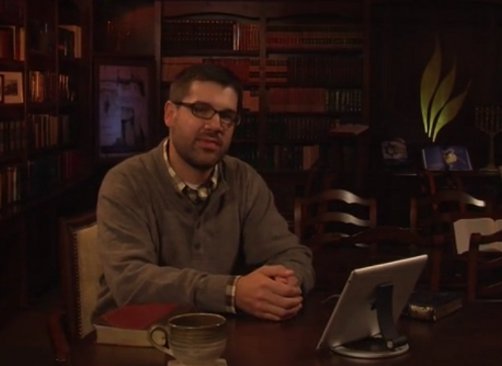
ffoz_tv14tobyThe context of verses 17-19 discuss the Torah and how Messiah did not come to disobey (abolish) the Torah, but to obey (fulfill) it. Pastor says that “fulfill” can’t possibly mean “obey” in context because of verse 20. No amount of obedience of the mitzvot can lead to saving righteousness. The only answer I had to give was that Jesus was contrasting Torah obedience with faith, essentially saying that the scribes and Pharisees were depending on what they did to save them, and, as important as obedience is relative to Jews and the Torah, it’s only faith that saves. I was trying to pull a rabbit out of my hat, so to speak, thinking “theologically” on the fly.

So I was hoping that Toby was going to offer a link from verse 20 back to verses 17-19 and give me a more “fleshed out” explanation. What ultimately happened was unexpected.

Toby forged a direct connection between Matthew 5:20 and Matthew 6:33

For I say to you that unless your righteousness surpasses that of the scribes and Pharisees, you will not enter the kingdom of heaven.

Matthew 5:20

But seek first His kingdom and His righteousness, and all these things will be added to you.

Matthew 6:33

As I’ve said in the past, it would be helpful to know the source for making such connections in the Bible. A bibliography for each episode would enhance my ability to understand. But we have arrived at our first clue:

Clue 1: Make it your top priority to enter the Messianic Era.

But there’s another part to all of this. While we can grasp the meaning of the Kingdom of Heaven, what does “righteousness” mean in these contexts? Seek first the Kingdom of Heaven and his righteousness. You might think you know what “righteousness” is, but remember, this show is all about presenting familiar parts of the Bible as seen through the historical, cultural, and linguistic lens of first century Judaism. What does “righteousness” look like when you put those glasses on?

To learn the answer, the scene shifts to FFOZ teacher and translator Aaron Eby in Israel. Aaron teaches us (and I apologize for the poor spelling of the transliterations) that “righteousness” can be mapped back to two Hebrew words: “Tzeddik” and “Tzadakah”. “Tzeddik” gives us the sense of “justice,” “correctness,” “equitability,” and “uprightness.” It’s an abstract concept and is more about being righteous. “Tzadakah,” on the other hand, is a more “hands on” term, according to Aaron. It’s more about doing right things, doing the correct thing, and doing righteousness rather than being righteous.

It will be righteousness for us if we are careful to observe all this commandment before the Lord our God, just as He commanded us. (emph. mine)

Deuteronomy 6:25 (NASB)

Aaron explains that the word “righteousness” or “tzedakah” used in this verse speaks of doing the correct thing, which here is performing particular Torah mitzvot. The concept of righteousness and doing right are completely fused. One cannot be righteous without doing righteousness. This should remind most Christians of the following:

But someone may well say, “You have faith and I have works; show me your faith without the works, and I will show you my faith by my works.” You believe that God is one. You do well; the demons also believe, and shudder. But are you willing to recognize, you foolish fellow, that faith without works is useless? Was not Abraham our father justified by works when he offered up Isaac his son on the altar? You see that faith was working with his works, and as a result of the works, faith was perfected; and the Scripture was fulfilled which says, “And Abraham believed God, and it was reckoned to him as righteousness,” and he was called the friend of God. You see that a man is justified by works and not by faith alone.

James 2:18-24 (NASB)

ffoz_tv14aaronOver time, the meaning of the word “tzedakah” has changed. It is commonly thought of today as specifically giving to charity, but Aaron says that it did not lose its previous meaning in taking on a more modern way of being understood. The underlying concept of the word is doing kindness to others, kind treatment of others. When God shows us His righteousness, he is being kind to us. When we show others righteousness, we are doing good things for them. Although Aaron and Toby didn’t say this specifically, I think we can link tzedakah back to being a tzeddik (a righteous one). You cannot be righteous without doing righteousness. Let’s look at Matthew 5:20 again.

For I say to you that unless your righteousness surpasses that of the scribes and Pharisees, you will not enter the kingdom of heaven. (emph. mine)

So, given all that we’ve learned up to this point, are Aaron and Toby telling us that entering the Messianic Era, the Kingdom of God, is dependent on how much kindness we do for other human beings? But how can we be more “righteous” than the scribes and the Pharisees, who set the bar pretty high?

Woe to you, scribes and Pharisees, hypocrites! For you tithe mint and dill and cummin, and have neglected the weightier provisions of the law: justice and mercy and faithfulness; but these are the things you should have done without neglecting the others.

Matthew 23:23 (NASB)

While the scribes and the Pharisees were all about doing “righteousness,” that is, acts of kindness and justice (the two can’t be separated in our understanding of tzedakah) toward others, still, they had problems, and these were problems Jesus brought to light. They were hypocritical (or some of them were). They taught righteousness but didn’t do righteousness. This is why Jesus told his disciples to do what the Pharisees taught but not to emulate their actual behavior (Matthew 23:1-3). There was nothing wrong with the teaching of righteousness of the Pharisees, but in many cases, they didn’t “walk the walk”. Jesus seems to be telling his disciples (and us) that our righteous deeds must exceed those of the Pharisees if we are to enter into the Kingdom of God.

Let’s refactor the two scriptures that Toby says are key to our understanding of today’s mystery:

For I say to you that unless your good deeds surpass that of the scribes and Pharisees, you will not enter the kingdom of heaven.

Matthew 5:20 (NASB)

But seek first His kingdom and His good deeds, and all these things will be added to you.

Matthew 6:33 (NASB)

Returning to Toby in the studio, we have arrived at our second clue:

Clue 2: Righteousness = Acts of the Law; Good Deeds of God’s Torah.

Toby says that if Jesus has to give this instruction, it begs the question of whether or not some disciples of the Master will not enter the Messianic Era. He offers the following as an answer:

“Not everyone who says to Me, ‘Lord, Lord,’ will enter the kingdom of heaven, but he who does the will of My Father who is in heaven will enter. Many will say to Me on that day, ‘Lord, Lord, did we not prophesy in Your name, and in Your name cast out demons, and in Your name perform many miracles?’ And then I will declare to them, ‘I never knew you; depart from Me, you who practice lawlessness.’

Matthew 7:21-23 (NASB)

charity-tzedakahToby’s coming really close to saying that all disciples of Jesus who do not practice the Torah mitzvot, or at least those that command acts of kindness and charity to others, will not enter into the Messianic Era. In other words, they “practice lawlessness.” However, Toby was quick to point out that this isn’t a matter of salvation. Even if you do no acts of kindness, you can still be saved by the grace of Jesus Christ through faith (though if you have faith, then why aren’t you performing tzadakah?). But this brings up a critical question. How can you be saved but not enter the Messianic Age? Where will you be if you’re not there?

Oh, and this is the third and final clue:

Clue 3: Not everyone will enter the Messianic Era.

Toby again tells us that not entering the Kingdom and not performing acts of kindness and charity to others does not negate the free gift of grace through Christ. But the Messianic Era is a span of historical time in which all those resurrected and all those who are born in it are in that Era. How can you not enter a span of history unless you’re dead…but if you’re saved, you’re not dead?

What Did I Learn?

Linking last week’s review to today’s, let’s have another look at a key passage of scripture:

“Do not think that I came to abolish the Law or the Prophets; I did not come to abolish but to fulfill. For truly I say to you, until heaven and earth pass away, not the smallest letter or stroke shall pass from the Law until all is accomplished. Whoever then annuls one of the least of these commandments, and teaches others to do the same, shall be called least in the kingdom of heaven; but whoever keeps and teaches them, he shall be called great in the kingdom of heaven.

“For I say to you that unless your righteousness surpasses that of the scribes and Pharisees, you will not enter the kingdom of heaven.

Matthew 5:17-20 (NASB)

Here I see that, at least from FFOZ’s point of view, my response on verse 20 was wrong. Putting all this in one basket, the FFOZ perspective is that Jesus, having been criticized and accused of not living out and teaching the Torah correctly by the scribes and Pharisees, uses this opportunity to clarify his position. He has not come to abolish (disobey) the Torah, but rather to fulfill (obey) the Torah. Any Jew (his intended audience in this context was Jewish) who annuls even the least of the mitzvot (in contrast to Jesus who says he doesn’t) will be called least in the Kingdom of Heaven (the Messianic Age). Anyone who keeps and teaches the Torah mitzvot will be called great in the Kingdom (and since Jesus was the only person who kept the mitzvot perfectly, this implies that he will be the very greatest in the Kingdom).

(I should note at this point, that Aaron chose to interpret the term “righteousness” we see in Matthew 5 and 6 as “tzedakah” rather than “tzeddik.” If it could be either/or, it would be helpful to understand on what basis “tzedakah” was selected over “tzeddik” … on the other hand, as I mentioned above, can we really separate these two words … can one be a tzeddik without performing tzedakah?)

Continuing to address his audience and building on what he’s just said, Jesus instructs that unless their good deeds according to the performance of the Torah mitzvot, exceed those of the scribes and Pharisees (who later Jesus accuses of teaching well but not performing well), then they will not merit entering the Kingdom of Heaven (the Messianic Age).

On the one hand, a person who annuls the least of the mitzvot and teaches others to annul them will be in the Kingdom of Heaven but will be least there, and on the other hand, unless a person’s performance of the mitzvot related to good deeds does not exceed the hypocritical scribes and Pharisees, they will not enter the Kingdom at all, not even as the least.

I think this needs some clarification. I know my Pastor would not likely be convinced by this argument. For him, righteousness is a state of being (being a tzeddik, which no one achieves without faith in Christ) that no person can earn regardless of what they do. He would call this “salvation by works,” even though Toby is saying that it’s actually admission into the Messianic Kingdom for the already saved. Salvation isn’t earned but admission to the Messianic Kingdom apparently is.

waiting-for-mannaI will admit to being confused by this one for the reasons I’ve already stated. However, like other episodes of this program, complete ideas are expressed not in one episode, but in connecting many episodes together to form the total message. Hopefully, that’s what’s happening here.

FFOZ President and Founder Boaz Michael, as always, came on camera at the very end of the episode to announce that next week’s show would address “the Lord’s Prayer.” Maybe the part that says, thy Kingdom come, they will be done, on Earth as it is in Heaven” will be used to help clarify today’s commentary on the Mystery of Seeking First the Kingdom of God.

I will review another episode next week.

Straightening the Road of the King

what-is-the-churchWhat is the “church?” Who belongs to the church? How is the church related to Judaism or is the church related to Judaism in the current age? These are the questions my Pastor and I discussed last Wednesday night. Sometimes, when we talk of these puzzling subjects, I have a difficult time conceptualizing my thoughts and feelings and articulating them while I’m with him in his office. So I ponder, and think, and occasionally, I draw (you’ll see what I mean as you scroll down while reading).

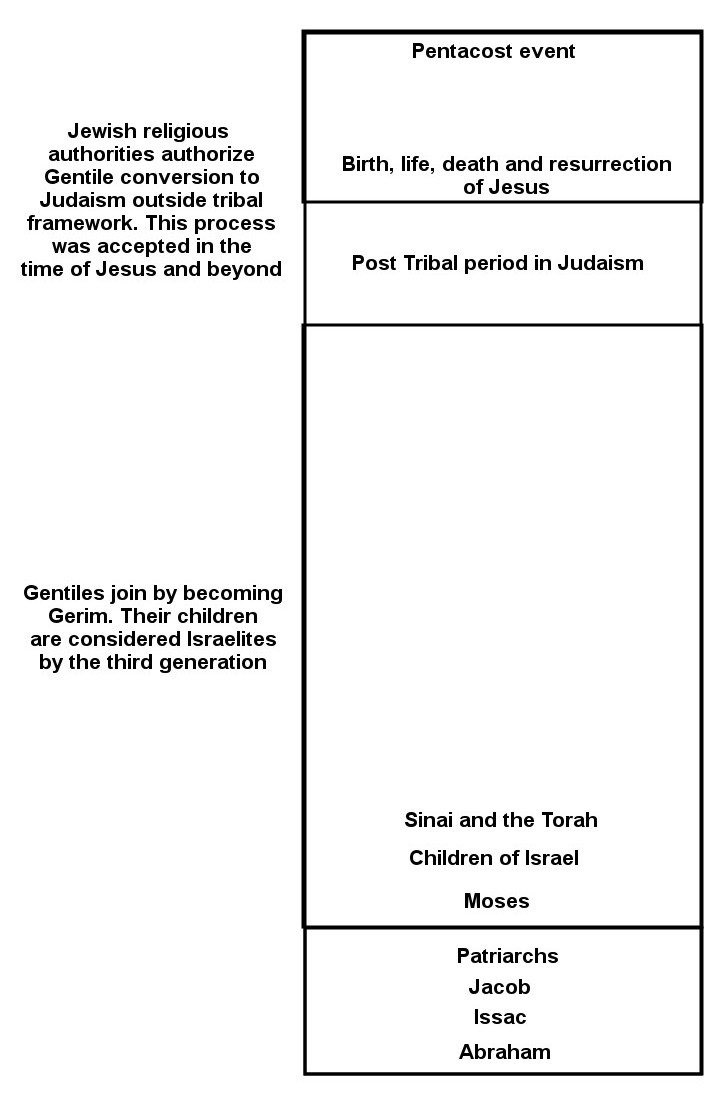
I think I’ve come up with a “vision” of Pastor’s understanding of the evolution of the church from its beginnings in Judaism as well as my own “vision.” I apologize to Pastor and to you in advance for any misunderstanding I have of his point of view. He recently pointed out to me how I didn’t have a correct understanding of his view of the “end times” (which I blogged about) and sometime soon, I’ll need to post a retraction (he told me he doesn’t find a retraction or correction necessary, but I find it necessary if I intend to be honest in my transactions with him and everyone else).

First things first. There are some areas we necessarily agree upon. God made a covenant with Abraham, with Isaac, and with Jacob involving promises relating to the Land of Israel, making their descendants very numerous, promises that they would be a blessing to all nations (through Messiah), and that circumcision would be the physical sign between God and the specific, biological descendants of Abraham and Isaac, and Jacob that their descendants would be the inheritors of these covenant promises.

The patriarchs came from Jacob and the twelve tribes of Israel came from the patriarchs. Moses led the twelve tribes out of slavery in Egypt and God redeemed them as His special people, as per the promises made to Abraham and his descendants. God then added to His promises at Sinai and gave the Torah, the teaching and instruction for righteous living to the physical descendants of Abraham, Isaac, and Jacob. This also functions as the national constitution of Israel, and has multiple other purposes.

At this point in history, Gentiles can only join Israel as gerim, which isn’t exactly conversion. The idea is that a Gentile would do what the Israelites would do in terms of the mitzvot, but the Gentiles would never become Israelites in their generation. More like resident aliens. No one can convert to a tribe or a family clan. Only after the third generation, would the ger’s children have intermarried into tribal Israel and ultimately assimilate into the Israelites. This was the only path for a Gentile to join the covenant people of God.

After the Babylonian exile and a lot of history passed by, tribal and clan affiliations were all but lost. The Jewish religious authorities instituted what we understand as the ritual of conversion. Now, if a Gentile wants to join national Israel and the Jewish people, they must undergo a process supervised by Jewish religious authorities (in modern Orthodox Judaism, it is a group of three Rabbis who form a Beit Din). The men are circumcised and both men and women are “mikvahed” as the final act of conversion. They go down into the water as a Gentile and come up as a Jew. There is no multi-generational “delay” and the individual Gentile who desires to be Jewish can become Jewish and thereafter, they and all of their descendants are considered Jews.

stream1Then Jesus comes. At this point, there are born Jews and there are Jewish converts or proselytes to Judaism. Jesus doesn’t speak against the ritual of the proselytes and does not overturn this institution, even though it is not directly found in the Torah. Remember, Jesus wasn’t adverse to opposing Jewish traditions and he did overturn or object to other halachah of the scribes and Pharisees on occasion (Matthew 15:1-14 for example). We also see that Paul encountered Jewish proselytes (Acts 13:43 for instance) and he too never said a cross word about the Jewish converts or the practice of converting Gentiles to Judaism (though in Galatians, he spoke strongly against Gentiles converting to Judaism as the only way to be justified before God). Both Jesus and Paul were very direct about expressing their thoughts and feelings and if either one had a problem with the Jewish conversion process, they would have said so…but they never did.

But something new happened after the death and resurrection of Jesus.

And Jesus came up and spoke to them, saying, “All authority has been given to Me in heaven and on earth. Go therefore and make disciples of all the nations, baptizing them in the name of the Father and the Son and the Holy Spirit, teaching them to observe all that I commanded you; and lo, I am with you always, even to the end of the age.”

Matthew 28:18-20 (NASB)

I wonder if the Jewish apostles truly understood the implications of Messiah’s words. Did they believe he wanted them to make converts of the Gentiles, “mikvahing” them into Judaism? All of the other streams of Judaism accepted Gentile converts, why should “the Way” be any different?

But it was and is.

While Peter was still speaking these words, the Holy Spirit fell upon all those who were listening to the message. All the circumcised believers who came with Peter were amazed, because the gift of the Holy Spirit had been poured out on the Gentiles also. For they were hearing them speaking with tongues and exalting God. Then Peter answered, “Surely no one can refuse the water for these to be baptized who have received the Holy Spirit just as we did, can he?” And he ordered them to be baptized in the name of Jesus Christ.

Acts 10:44-48 (NASB)

stream2Here we see our answer. Gentile believers, like the Jewish believers, received the Holy Spirit and were baptized by water without being circumcised and converting to Judaism! This was revolutionary. This was astounding. This had never, ever happened before. It was without compare. Paul perceived this vision clearly in his subsequent work with Gentiles, but it wasn’t until the matter was brought before the council of apostles and elders of the Way in Jerusalem that a formal, legal status was granted to the Gentiles entering into a wholly Jewish religious stream (see my Return to Jerusalem series for a detailed analysis of this process).

But it’s at Acts 2 that Pastor and I disagree. He believes that Pentecost is the “Birthday of the Church” and that sometime remarkable happened. Something remarkable did happen, but we don’t agree on exactly what it is. To the best of my ability to relate (and again, I apologize in advance if I mess any of this up), Pastor believes that an entirely new entity, “the Church” emerged from a Jewish religious stream and although it is made up of both Jewish and Gentile members, the members all form a single, uniform body of Messiah. At this point, the Torah is “fulfilled” and is no longer a set of commandments or obligations for the Jewish Christians. Jewish and Gentile Christians share a single set of obligations under the grace of Jesus Christ.

This effectively separates the Jewish members in the Church from larger Israel and the Jewish people. Pastor says that all Jews share in the covenant promises of God, particularly possession of the Land of Israel in perpetuity, but that only the Jewish Christians are saved.

My point of view is different.

I see the creation of the Body of Messiah (I’m not going to call it “the Church” in order to distinguish Pastor’s perspective from mine) as the natural and logical extension of everything that happened in Biblical and historical Judaism before it. The entire stream of history and prophesy for Israel pointed inevitably to the Jewish Messiah, so when Jesus came, it was the pinnacle, the focal point, the historical hinge upon which everything in Judaism was aimed at and upon which it turned.

But while it was revolutionary for Gentiles to be allowed to enter a stream of Judaism without converting to Judaism and being considered Jewish, their admittance wasn’t the end of the Jewish stream that accepted Jesus as Messiah as a Judaism, nor was it replaced by another religion or religious entity. It was a Judaism that had Gentiles admitted as equal members in relation to salvation and access to God, but it didn’t turn “the Way” or “Messianic Judaism” into “the Church.”

That happened unfortunately, after the Jewish/Gentile schism in the movement (and there’s a lot of history available to describe the details, so I won’t replicate it here) and in my opinion, the “Gentile Church” was born when the Gentile Church leadership agreed that it was no longer a Judaism and that Jews were not welcome unless they converted to Christianity!

If Pastor is right, then we have to consider the Jews in the Church as irrevocably separated from their Jewish brothers and sisters and perhaps even national Israel, since they no longer can identify with Israel, the Torah, and the connection the Torah provides a Jew with his nation and his God. If I’m right, then we have to consider the Body of Believers in Messiah as a Jewish stream, albeit a somewhat unique one because of such a large Gentile membership, that runs parallel to all other Jewish religious streams pointing toward the future and the eventual return of the King. We also have to admit that the Torah is not canceled and that Messianic Jews share an equal obligation to the mitzvot as all other Jewish people.

stream3Again, I sincerely apologize to my Pastor and to everyone reading this if I got his perspective on these matters wrong, in even the slightest detail. It is not my intention to misrepresent anyone, but it is my intention to draw a distinction between our two viewpoints.

Does it matter who is right? Is my purpose in the church, let alone the reason for my existence, simply to be right? As I’ve discovered (or re-discovered) recently, the answer is yes and no. No, it doesn’t matter if I personally am right. The world doesn’t depend on my one, small opinion. Statistics vary, but recent research indicates that there are anywhere between one and three-quarter million blogs to perhaps up to 164 million blogs in existence, and even the people compiling these numbers admit the list is incomplete. The number of individual blog posts goes into the billions and billions. Compared to all that, my one little blog can hardly matter, even in the human realm, let alone God’s. Any religious blogger who thinks they’re “all that and a bag of chips” can only make me laugh.

On the other hand, it’s vitally important to examine the question “who is the Church” and especially “what is the Church”. If “the Church” turns out to be a terribly misguided Judaism that has wildly deviated from its original course, then we require an exceptionally radical “course correction.” No, I’m not suggesting a revolution in the Church as such, where we strip away 100% of church culture as it has evolved over the past twenty centuries, but I am suggesting some form of change.

This is exactly the sort of process described by First Fruits of Zion (FFOZ) Founder and President Boaz Michael in his book Tent of David. The answer to the question of who and what “the Church” is has profound implications if we believe that the modern Messianic Jewish opinion is correct and that “the Church” was never intended to be a totally unique religious unit, disconnected forever from Israel, the Torah, and the Jewish people.

In my opinion, everything God did across human history was ultimately additive, no replacements or substitutions accepted. Abraham and God make a covenant, and as part of the conditions of that covenant, Isaac is added, then Jacob is added, then Jacob’s children are added as the patriarchs, and then their descendants, the Children of Israel are added, and they are made into a nation and the Torah is added, and possessing the Land of Israel is added, and all of the prophesies by all of the prophets pointing to the Messiah and the Kingdom of Heaven are added, and the birth of Messiah is added, and the death and resurrection of Messiah are added, and the Jewish religious stream that is identified by faith in Messiah is added, which includes the Gentiles entering this Jewish stream being recipients of the blessings of the covenant God made with Abraham…all in one, nice, neat, straight line across history as drawn on the canvas of time by God.

What we have now in the 21st century is something of a mess, but that’s what happens when God gives us a gift and then lets us play with it for 2,000 years. We’ve bent, folded, spindled, and mutilated it, but not beyond repair. Repair is what I think Messianic Judaism is all about. It’s tikkun olam or repairing the world with a Messianic twist. It’s a voice in the wilderness calling out to the synagogue and the church saying, “It’s time to take a fresh look at all this so we can clean the place up and get ready for the King’s return.”

The roadOne nice, neat, straight line from Abraham to Moshiach. Any bends in the road, any wrinkles in the asphalt, any potholes, any mudslides, any detours, have nothing to do with God and His intent. We’re the ones with the jack hammers and sledge hammers pounding away at that line, making it crooked and not straight. But we’re the ones who were charged with caring for the road, just as Adam was charged with caring for the Garden (and look how that one turned out).

I’m not in charge with being “right” but God did say that I’m supposed to take care of my little section of the road upon which the King will walk as he returns. I can’t fix it all, but I have to do something. He’s coming soon. I can’t just lie down on the job and call it good. He’s coming soon. I’ve got to do my best, with the help and by the will and grace of God, to make and keep my little piece of the road of the King straight.

For more about the relationship between Jewish and Gentile believers in the Body of Messiah, see Derek Leman’s short article, Citizens, Not Natives.

Trouble Breaking Into Church With Messianic Prophesy

daniel“Seventy weeks have been decreed for your people and your holy city, to finish the transgression, to make an end of sin, to make atonement for iniquity, to bring in everlasting righteousness, to seal up vision and prophecy and to anoint the most holy place. So you are to know and discern that from the issuing of a decree to restore and rebuild Jerusalem until Messiah the Prince there will be seven weeks and sixty-two weeks; it will be built again, with plaza and moat, even in times of distress. Then after the sixty-two weeks the Messiah will be cut off and have nothing, and the people of the prince who is to come will destroy the city and the sanctuary. And its end will come with a flood; even to the end there will be war; desolations are determined. And he will make a firm covenant with the many for one week, but in the middle of the week he will put a stop to sacrifice and grain offering; and on the wing of abominations will come one who makes desolate, even until a complete destruction, one that is decreed, is poured out on the one who makes desolate.”

Daniel 9:24-27 (NASB)

Then I saw thrones, and they sat on them, and judgment was given to them. And I saw the souls of those who had been beheaded because of their testimony of Jesus and because of the word of God, and those who had not worshiped the beast or his image, and had not received the mark on their forehead and on their hand; and they came to life and reigned with Christ for a thousand years. The rest of the dead did not come to life until the thousand years were completed. This is the first resurrection. Blessed and holy is the one who has a part in the first resurrection; over these the second death has no power, but they will be priests of God and of Christ and will reign with Him for a thousand years.

Revelation 20:4-6 (NASB)

Tales of the Messianic Era series

The previous entry is The Obscured Messiah in the Bible.

Last Wednesday night, my Pastor and I got through the majority of Chapter 8 (it’s not a long chapter and only covers Galatians 2:11-14) in D. Thomas Lancaster’s book The Holy Epistle of the Galatians. We disagreed so much about the content, that I apologized for seeming so oppositional. We continue to “butt heads” over the purpose and function of the Torah in the lives of the Jewish disciples of the Jewish Messiah in the Apostolic age and beyond.

But we got sidetracked again. Pastor asked me about the nature and function of “the Church,” the collection of Jewish and Gentile disciples of Messiah. I knew Pastor saw the Church as separate from Judaism…well, sort of, but I had no idea how separate it was supposed to be.

From my point of view, “the Church,” the body of Jewish and Gentile disciples of Messiah, is the logical extension of Biblical and historic Judaism that began with Abraham and was formalized in law at Sinai. Judaism has always looked forward to Messiah, so when Jesus was revealed as Moshiach, it wasn’t a departure from Jewish history but rather, the fulfillment of Jewish hopes and dreams. Of course, that fulfillment isn’t really filled full and it won’t be until his second advent when he will establish his reign of peace in Israel and across the entire world.

messiah-prayerSo if Jewish discipleship in Messiah is the natural and logical extension of Jewish history in the first century CE, then what was Gentile discipleship? I’ve said over and over that it was a major chore for Paul and the other Apostles to figure out a way to legally include Gentile disciples into the community of Jewish faith in Messiah without requiring that they convert to Judaism through the ritual of the proselyte and become obligated to the full yoke of Torah (and my Pastor and I also continue to debate what the Torah is and what purpose it has in Judaism) in the manner of the Jews.

It’s like Israel is the main event and enters through the front door of the mansion, while Gentiles get to come in but have to be admitted through the side entrance near the kitchen (but once we’re in, we’re in). I know that’s an unflattering image for most Christians, but that’s how the Bible reads. Going to the Old Testament (Tanakh), all of the prophesies about Messiah and what he will do emphasize blessings for Israel, not particularly for “the Church” (since “the Church” isn’t even a glimmer in any prophet’s eye in the Tanakh), but thanks to a single line in the Abrahamic covenant, the Gentiles in the world will receive blessings as well.

Did you get that? Israel is the main beneficiary of the blessings of the Messiah and the rest of the world benefits from the “spillover,” so to speak.

“Arise, shine; for your light has come,
And the glory of the Lord has risen upon you.
“For behold, darkness will cover the earth
And deep darkness the peoples;
But the Lord will rise upon you
And His glory will appear upon you.
“Nations will come to your light,
And kings to the brightness of your rising.”

Isaiah 60:1-3 (NASB)

I’ve said before that only a single verse in Genesis 12 links the people of the nations to the Abrahamic covenant, and it is only that verse that allows us to have a connection with God at all, through our faith in Messiah. All of the conditions of all of the covenants God made with Israel continue forward in time and, although major sections of the Torah are held in abeyance until such time as the Messiah comes, rebuilds the Temple, re-establishes the priesthood and the Sanhedrin, and ascends the Throne of David, everything else that God “covenanted” with the Jewish people remains in effect.

So how did the tail end up being the head? How did the Church get to think of itself as first and the Jewish people second.

Here, I’ll give you an example. Let’s go back to my conversation with Pastor about the Church and all that must occur when Messiah returns.

rapturePastor, like most Christians, believes that when Messiah comes, all members of the Church, Jews and Gentiles alike, will be taken up into the air with him and be raptured to Heaven. And there we’ll stay. Meanwhile, a lot of bad, ugly things will be happening on the earth. Lots of people will be “left behind” and many will come to faith at that time. But they won’t be “the Church”. According to Pastor, they’ll be believers, but they’ll form a distinct group outside of the Church. The Church at that time will be in Heaven with Christ. Only believers and non-believers will be on earth enduring the tribulation.

Pastor said he wasn’t sure of the timing, but that all of the Israelites, the ancient Jewish people who lived and died before the first advent of Christ, will be resurrected and they will stay on earth. They are “believers” but not the Church. They will have a special and unique role as the 144,000 (Revelation 7:4-8), but the Church disappears from the face of the planet with Jesus and they (we?) don’t return until Jesus returns, all the way down into Revelation 20. But how can Israel, the Jewish people, be fractured into two groups: those who are in the Church in Heaven, and those who are “mere” believers on earth? Abraham saw Messiah’s day (John 8:56) but he lived before the first advent. Does that mean Abraham is in Heaven as part of the Church or on earth as a “believer?” It all doesn’t make sense.

No wonder my Sunday school teacher balked when I said his calling the people of the nations in Zechariah 14:16 “unsaved Gentiles” was anachronistically projecting a “Christianism” into the Jewish text. But then again, I still think my teacher was wrong, because according to both him and Pastor, it is possible for people to come to faith during the Messianic reign, although they won’t be part of “the Church,” they will still be “saved.”

But I’ve got a problem. Whenever I read Isaiah, Jeremiah, Ezekiel, and the other prophets who speak of Messiah, I get one picture. But when I read Revelation and the sections of the Gospels and Epistles that mention the second coming of Jesus, I get a faintly related but mainly different picture.

I’ve avoided the whole issue of the second coming and the “end times” for most of my “career” as a believer because, frankly, I’ve met so many “nuts” in the Hebrew Roots movement who were incredibly obsessed about “the end times” and who weaved all kinds of bizarre scenarios around it. However, if I ever hope to understand the past, present, and future of the Jewish Messiah King, I’m going to have to take all this head on.

My Sunday school class just finished a multi-week inventory of the end times, the Messianic age, and the final events leading into eternity, but I prefer a fresh look at the material. I’m probably not going to throw myself headlong into the subject if, for no other reason, than the only information sources I have immediately handy are Christian sources (I know that sounds strange, but how does Judaism in general and Messianic Judaism in particular treat this topic?).

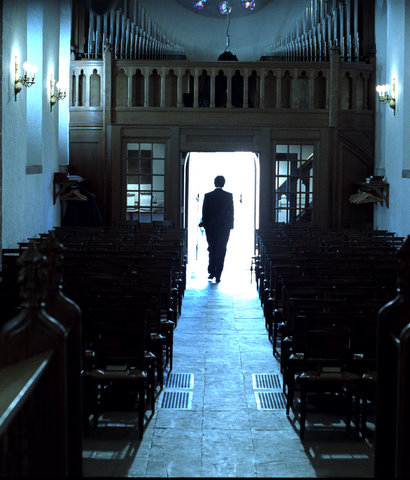
walking-into-churchAfter nearly a year of going back to church (although I guess I’ve been a part of “the Church” all along), I still find it hard to break into the church. Break into the church? I mean I still lack the ability to take on traditionally Christian concepts and doctrines with any amount of ease. I question everything. Everything seems strange or at least unanticipated. Is it just my ignorance of the Bible and how to interpret it, or has the Church become so comfortable with its historic perspectives that it has lost the ability (or the will) to ask itself if it could possibly be wrong?

I’m going to have to “cut and paste” everything the Bible says about the future Messianic age together on one page to even begin to make sense of it. Is there any hope of reconciling the prophesies of the Jewish Messiah in the Tanakh with the prophesies about the risen Christ in the New Testament?

“Every day people are straying away from the church and going back to God.”

Lenny Bruce

The Obscured Messiah in the Bible

tallit-prayer“My servant David will be king over them, and they will all have one shepherd; and they will walk in My ordinances and keep My statutes and observe them. They will live on the land that I gave to Jacob My servant, in which your fathers lived; and they will live on it, they, and their sons and their sons’ sons, forever; and David My servant will be their prince forever. I will make a covenant of peace with them; it will be an everlasting covenant with them. And I will place them and multiply them, and will set My sanctuary in their midst forever. My dwelling place also will be with them; and I will be their God, and they will be My people. And the nations will know that I am the Lord who sanctifies Israel, when My sanctuary is in their midst forever.”’”

Ezekiel 37:24-28 (NASB)

Tales of the Messianic Era series

I think most Christians and Jews would agree that this passage of scripture is referring to the Messianic age when David, King Messiah, will rule as Israel’s “prince” forever. Jews believe this text also confirms that Messiah will build the Temple in Holy Jerusalem, while some Christians believe the Temple is only a spiritual manifestation rather than a physical structure.

In the past several weeks, I’ve been challenged by a Jewish friend of mine to see if I can (or can’t) find Jesus in the Old Testament (Tanakh). Like most Christians, it’s difficult for me not to see Jesus in the Torah and the Prophets, but I want to be honest and actually make as much of an unbiased examination as I can. Interestingly enough, it was in last Sunday’s Bible study at church where some serious questions about Christian hermeneutics came up for me. I listened to my teacher explain some of the Jewish texts in a way that didn’t make sense. On the other hand, he had to interpret the scriptures in this manner if he was to locate Jesus there.

‘Behold, days are coming,’ declares the Lord, ‘when I will fulfill the good word which I have spoken concerning the house of Israel and the house of Judah. In those days and at that time I will cause a righteous Branch of David to spring forth; and He shall execute justice and righteousness on the earth. In those days Judah will be saved and Jerusalem will dwell in safety; and this is the name by which she will be called: the Lord is our righteousness.’ For thus says the Lord, ‘David shall never lack a man to sit on the throne of the house of Israel; and the Levitical priests shall never lack a man before Me to offer burnt offerings, to burn grain offerings and to prepare sacrifices continually.’”

The word of the Lord came to Jeremiah, saying, “Thus says the Lord, ‘If you can break My covenant for the day and My covenant for the night, so that day and night will not be at their appointed time, then My covenant may also be broken with David My servant so that he will not have a son to reign on his throne, and with the Levitical priests, My ministers. As the host of heaven cannot be counted and the sand of the sea cannot be measured, so I will multiply the descendants of David My servant and the Levites who minister to Me.’”

Jeremiah 33:14-22 (NASB)

This passage from Jeremiah 33 says several important things:

  1. In the Messianic Kingdom, God will fulfill the good news he has announced to Israel and Judah, in other words, the Jewish people.
  2. Messiah, a descendent of David, will be raised up as a “righteous branch.”
  3. Peace will be established for Israel and there will be safety in Jerusalem.
  4. Messiah, a descendant of David, will sit on the throne of Israel forever and the Levitical priests will once again offer sacrifices in the rebuilt Temple.
  5. The descendants of David and the Levitical priests will be multiplied to a number that cannot be counted.

temple-prayersSome Christians believe there will be a Temple and that sacrifices will be offered, but they believe Jesus, the Messiah, will be offering those sacrifices as a memorial (as opposed to an actual, functioning, sacrificial system). And yet, we see it is the Levites who will be sacrificing, not Messiah as a King-Priest. It’s understandable that the Priests would have families, children, and grandchildren across the future years but is this saying that Messiah also marries and has children (descendants)? Interesting, but I suppose you could also say that’s metaphorical and “David’s descendants” are the Jewish people.

“In the first month, on the fourteenth day of the month, you shall have the Passover, a feast of seven days; unleavened bread shall be eaten. On that day the prince shall provide for himself and all the people of the land a bull for a sin offering.”

Ezekiel 45:21-22 (NASB)

Waitaminute? What? Who makes an offering for his sins and the sins of the people? The prince? Who’s the prince? It can’t be Jesus because Jesus never sins.

My Bible teacher says that the prince is David not Christ. Matthew Henry’s Concise Commentary treats this concept a little differently:

In the period here foretold, the worship and the ministers of God will be provided for; the princes will rule with justice, as holding their power under Christ; the people will live in peace, ease, and godliness. These things seem to be represented in language taken from the customs of the times in which the prophet wrote. Christ is our Passover that is sacrificed for us: we celebrate the memorial of that sacrifice, and feast upon it, triumphing in our deliverance out of the Egyptian slavery of sin, and our preservation from the destroying sword of Divine justice, in the Lord’s supper, which is our passover feast; as the whole Christian life is, and must be, the feast of the unleavened bread of sincerity and truth.

My teacher didn’t see these verses the same way and used the following to establish that the prince must be literally David:

“Then I will set over them one shepherd, My servant David, and he will feed them; he will feed them himself and be their shepherd. And I, the Lord, will be their God, and My servant David will be prince among them; I the Lord have spoken.

Ezekiel 34:23-24

“My servant David will be king over them, and they will all have one shepherd; and they will walk in My ordinances and keep My statutes and observe them. They will live on the land that I gave to Jacob My servant, in which your fathers lived; and they will live on it, they, and their sons and their sons’ sons, forever; and David My servant will be their prince forever. I will make a covenant of peace with them; it will be an everlasting covenant with them. And I will place them and multiply them, and will set My sanctuary in their midst forever. My dwelling place also will be with them; and I will be their God, and they will be My people. And the nations will know that I am the Lord who sanctifies Israel, when My sanctuary is in their midst forever.”’”

Ezekiel 37:24-28

messiah-prayerBut we are presented with a problem. The term “David” in Messianic prophesy, almost assuredly refers to Messiah, not literally David. Also, Ezekiel 37:24 refers to David as “king” and “one shepherd” which must certainly be Messiah. It also describes this figure as walking in God’s “ordinances and statues to observe them,” which can’t mean anything else other than Torah, which means for the Jewish Messiah and the Jewish people, the Torah of Sinai will still be in effect in the Messianic era and apply to all Israel.

If we believe that the “prince” is the Davidic Messiah, that is to say, Christ, then Christians have a serious problem. How can a future Jesus Christ as King of Israel offer sacrifices for sin? Christians have to assign the identity of the “prince” either to another individual such as David or to a set of generic princes (who do sin), then it would be more appropriate for them to offer such sacrifices. But given what I said above, the prince can be none other than Messiah, at least if my teacher’s “proof texts” are really proof.

Additionally, we have the matter of whether or not this is a “real” sin offering or simply a memorial, harkening back to days of old, and reminding us that Christ made the offering for sin once and for all with his body on the cross.

Going back to some more traditional interpretations, we find that Jeremiah 23:3-6 also describes a righteous branch rising up, but we find something interesting in Zechariah 6:11-13:

Take silver and gold, make an ornate crown and set it on the head of Joshua the son of Jehozadak, the high priest. Then say to him, ‘Thus says the Lord of hosts, “Behold, a man whose name is Branch, for He will branch out from where He is; and He will build the temple of the Lord. Yes, it is He who will build the temple of the Lord, and He who will bear the honor and sit and rule on His throne. Thus, He will be a priest on His throne, and the counsel of peace will be between the two offices.”’

If “Branch” is a name for the Messiah, then we seem to see him sitting on the throne as both King and Priest. Since Messiah is of the house of David and the tribe of Judah, where does this leave the Levitical Priests? Or does the Priesthood of Melchizedek (Hebrews 7) trump the Levitical priests both in the Heavenly Court and on earth?

Ezekiel 43:2-7 was used by my teacher to describe the Divine Presence inhabiting the Temple in the future Messianic age but that creates an interesting situation for Christians. If the Divine Presence is God and Jesus is God and they’re both in the Temple how are we to understand this? How do they co-exist as two, separate physical entities within a single structure (the Temple)?

These are just the examples that came to mind and that I took notes on during my Sunday school class (no, I didn’t breathe a word to anyone about what I was thinking). But can we prove, just from the Old Testament scriptures, that Jesus is Messiah and God? I’m not sure we can without factoring in the New Testament record and lots and lots of Christian theology and doctrine.

No, I’m not going to throw my faith out the window, but try to look at all of this from a religious Jewish person’s point of view. In order to establish Jesus as Messiah King, we need to seriously morph the original meaning of the ancient scriptures that point to Messiah, the Temple, and the Priesthood. I don’t know that Occam’s Razor is the best hermeneutic tool to use, but if we accept that the most succinct and straightforward explanation in the bunch is probably the correct one, then Christians are obviously jumping through a few extra hoops to get Jesus to fit in all of the Messianic prophesies, at least Jesus as he’s understood in the modern Protestant church.

up_to_jerusalem

The Tanakh doesn’t speak of the sacrifices in the Messianic era as being memorials, but indicate they are the sacrifices that would have been familiar to any Israelite in the days of the Tabernacle or Solomon’s Temple. Also, the same ancient Israelites wouldn’t have had a problem with King Messiah offering sacrifices for his own sins, since they would have believed any descendant of David would be as human as David and would thus have sin. Even the greatest tzaddik who ever lived wouldn’t be completely sinless, but given that Jesus is sinless, how are we to reconcile these differences?

Obviously I’m playing, you should pardon the expression, “devil’s advocate” in this situation, but as I said before, I want to give this challenge an honest examination. I believe there are answers to all these questions, but I don’t think we can always rely on traditional Christian thought to provide those answers.

One of the messages presented by the First Fruits of Zion (FFOZ) television series, A Promise of What is to Come, is that the Bible and especially what we read about the coming Messianic age, the Kingdom of Heaven, seems to make a lot more sense when we look at the information from a more Jewish perspective. That’s the whole point of the television show.

I will probably get some pushback from my Christian readers, but one of the reasons I can’t simply walk away from Messianic Judaism is that nearly twenty centuries of Christian reinvention of the Jewish Messiah and Jewish history has obscured much of the original interpretation and meaning to the Biblical text, both in the Tanakh and the Apostolic Scriptures.

I will be honest and say that I have learned much from my Sunday school classes, but I’ve also been exposed to material that is hardly sustainable (if it’s sustainable at all) based on my reading of the Bible. I know we can’t always get the full meaning of what the Word is saying by relying on just the plain meaning, but how many knots do we have to tie in the string, and how many twists do we bend the pretzel in, before we divorce the Word of God from the “lips” of God?

The next part of this series is: Trouble Breaking into Church with Messianic Prophesy.

Was He Born in a Sukkah?

born_in_sukkahWhen was Yeshua born? The Gospel writers either did not know when the event happened or they did not feel the information was important enough to pass along. We can only speculate.

Two centuries after it happened, Clement of Alexandria discussed the dating of the Master’s birth, but he did not mention December 25 or January 6 at all. Instead, Clement reported one tradition corresponding to April 20 on our civil calendar and another tradition corresponding to May 20. By the middle of the fourth century, however, the Roman church had begun to honor December 25 while churches in the East, Asia Minor, and Egypt observed Jesus’ birth on January 6. Both are late developments and unsupported by early tradition or biblical evidence. No trace of a tradition from the early Jewish believers connects the birth of the Messiah with December 25 or January 6.

-D. Thomas Lancaster
“The Birth of Yeshua at Sukkot: Evidence from an Old Source,” pg 21
Messiah Journal, issue 111 (Fall 2012)
Published by First Fruits of Zion (FFOZ)

This is normally the sort of conversation you have in December when the vast majority of the Christian world prepares to celebrate the birth of Christ. One thing we can be certain of is that Jesus was born nowhere near December 25th. But it has been suggested that he might have been born on or near the festival of Sukkot. Could this be true?

I recently had a private request for any information I knew about this possibility. Alas, it’s not something I’ve written on before (although I’ve heard some commentaries on the topic). Fortunately, D. Thomas Lancaster has written on this in the above quoted article in Messiah Journal 111, which was published last year. Does Lancaster conclude that the Master was born during this season and if so, what is his evidence?

Other Sukkot-theory proponents claim, “Yeshua was born in a sukkah because the word ‘stable’ is sukkah in Hebrew.” These arguments are not at all convincing and fall apart under scrutiny. Is there any legitimate evidence of a Sukkot birth, or is the birth of Yeshua at Sukkot just more Hebrew roots movement apocrypha?

-Lancaster, pg 22

That doesn’t sound too encouraging. As much as the symbolism may attract us and fit into the theories and emotional dynamics of certain individuals and groups, is there any real evidence to establish the idea that Jesus was born during Sukkot? What line of reasoning and investigation could we use to support or refute this viewpoint?

Lancaster suggests that we could compare the birth narrative of John the Baptist to that of Jesus. We know, based on Luke 1:26 and 1:36 that the conception of Jesus came about six months after the conception of John, thus we can assume that Jesus was born about six months after John was. If we could determine when John was conceived and/or born, we could reasonably deduce when Jesus was born.

And now you will be silent and not able to speak until the day this happens, because you did not believe my words, which will come true at their appointed time.”

Luke 1:20 (NIV)

And now you will be dumb and unable to speak until the day when this has taken place; because you did not believe my words–words which will be fulfilled at their appointed time.”

Luke 1:20 (Weymouth New Testament)

zechariahThese are the only two translations of the New Testament where it specifically mentions “appointed time,” which is important because of the following:

“Is anything too difficult for the LORD? At the appointed time I will return to you, at this time next year, and Sarah will have a son.”

Genesis 18:14 (NASB)

But what’s “appointed time” got to do with it? Doesn’t it just mean some random date God selected for the birth of John the Baptist and Isaac, the son of Abraham and Sarah?

In the Torah, the biblical festivals are called “appointed times.” According to one Jewish interpretation, “the appointed time” at which Sarah gave birth to Isaac was the first day of Passover:

And how do we know that Isaac was born at Passover? Because it is written, “At the appointed time I will return to you […and Sarah will have a son].” (b.Rosh Hashanah 11a)

In the Gospels, John the Immerser comes in the role and spirit of Elijah. Jewish tradition maintains that Elijah will appear at Passover to announce the coming of Messiah. For that reason, we read Malachi’s prophecy about the coming of the Messiah on the Sabbath before Passover, and Jewish homes set a place at the Passover Seder table for Elijah.

-Lancaster, ibid

Lancaster covers two other traditions. One involving the Biblical record of Joseph and Mary traveling (supposedly) to Jerusalem to attend the festival of Sukkot, and they happened to be near Bethlehem when Mary went into labor. If Bethlehem were on the pilgrim trail to Jerusalem, the multitude of travelers going up to Jerusalem for the festival could account for all the “no vacancy” signs at the inns.

The other tradition has to do with assigning a double meaning to the phrase “the Eighth Day.” Of course, all Jewish boys were to be circumcised on the eighth day after birth, but the last day of Sukkot, which is actually a separate festival, Shemini Atzeret, is also referred to as the “Eighth Day.” This would mean Jesus would have been born on the first day of Sukkot and circumcised on the eighth day of the festival. Pretty neat timing.

Admittedly, this is all speculative. The Gospels do not actually indicate that John was born on the first day of Passover, that Yeshua was born on the first day of Sukkot, or that he was circumcised on the eighth day of Sukkot.

-ibid, pg 23

Lancaster’s article goes on for another page or so where he quotes from a “medieval collection of anti-Christian Jewish folklore titled The story about Shim’on Kefa (Aggadta DeShim’on Kefa),” which may offer certain hints suggesting that the early Jewish believers could have commemorated the Master’s birth at Sukkot, but all in all, support for this perspective is very thin.

Sukkah in the rainI’m not saying it couldn’t work out this way and I suppose it would be very symbolic if it did work out that Jesus was born on Sukkot, but in fact, we just don’t know. Evidence from the Gospels and from various Christian and Jewish sources simply do not provide enough light on this matter to bring it to any sort of resolution. Thus, for Christians and other Gentile believers involved in the Hebrew Roots and Messianic Jewish movements, we must find other reasons to celebrate Sukkot. Don’t worry, we have reasons enough, as one person said on my blog recently.

It is appropriate, not only that you have built the family sukkah, but also that you should participate in its celebration, as an anticipation of the prophetic fulfillment in the Messianic Era when the nations will come up to Jerusalem to celebrate this feast (or suffer drought), as described by Zacharyah. Indeed, Jewish tradition perceives reflections of a sort of Yom Kippur repentance and redemption for the non-Jewish nations in the Sukkot celebration.

As for Messiah, he temporarily lived among people once in the fragile shelter of a human body. Some day, he will return and be with us forever.

I’ve been reviewing some of my past Sukkot related blog posts and thought you’d find these interesting:

Sukkot: Drawing Water from Siloam.

Plain Clothes Sukkah.

May you drink from springs of living water. Chag Sameach Sukkot!

Addendum: This conversation is continued in A Question of the Division of Abijah.

How Forgiving is Our Teacher?

teaching-childrenMy late teacher Rabbi Louis Finklestein used to say, “When I pray, I speak to God; when I study, God speaks to me.” In the words of our liturgy:

Blessed are You, Lord our God, Sovereign of the universe…who commanded us to study the words of Torah. May the words of Torah…be sweet in our mouths and in the mouths of all Your people so that we, our children, and all the children of the House of Israel may come to love You and to study Your Torah…Blessed are You, Lord, who teaches Torah to the House of Israel.

Note the tense of the verb: God “teaches,” not “has taught,” Torah to Israel. God, then, is a teacher not only at Sinai, in antiquity, but today as well, and not only today but also in the world to come. The souls of the righteous who have perished are described as having gone to “the yeshiva on high,” where God will be their teacher and will elucidate all the puzzles of the Torah that were never clarified while they lived on earth.

-Rabbi Neil Gilman
“Chapter 4: God is Nice (Sometimes),” pp 62-3
The Jewish Approach to God: A Brief Introduction for Christians

I’ve mentioned before that I think of God as a teacher, at least sometimes, a bringer of enlightenment and truth. There are also some in religious Judaism who believe that when Messiah comes (or comes back), he will teach Torah perfectly. I suppose this means he’ll teach the Gentiles as well as the Jews how Torah is to be correctly applied to our lives and all of the messy confusion we experience now will finally go away…as long as we choose to accept his teaching and incorporate them into our daily practice.

It seems amazing that we might not, but as I read the Bible, even after the second advent, there will be plenty of people who won’t recognize him as King, even as he sits on the Throne of David in Holy Jerusalem.

But then again, even when we acknowledge God, sometimes we can still be opposed to Him; we can still be angry with Him. But that may not be as strange as it seems:

Yet even then, their anger at God’s behavior was always expressed from within their long-standing relationship with God. They never allowed their sense of being mistreated by God to drive them out of the religious community and its belief structure.

-Rabbi Neil Gillman
“Chapter 5: God is Not Nice (Sometimes),” pg 65

I know the idea of being angry at God usually elicits a certain amount of “pushback” from some readers, but I maintain that it’s a common human response to God…we just don’t talk about it. But what is God’s response to us when we are angry at Him?

Job’s “comforters” arrive and evoke the classical Torah interpretation of suffering: Job must have sinned. But Job retorts that he has not sinned, or that he has not sinned nearly enough to justify this punishment. At the end of the book, God addresses Job in the speeches “out of the whirlwind.” These are a paean to God’s power and to the complexity of God’s creation. Their message is “Job, don’t try to understand Me. Don’t try to fit Me into your neat moral categories. I am God; you are a human being.” Surprisingly, Job acknowledges the difference:

I know You can do everything,
That nothing You propose is impossible for You…
I had heard You with my ears,
But now I see You with my eyes;
Therefore, I recant and relent,
Being but dust and ashes.

-Job 42:2, 5-6

This implies that Job has now achieved a clearer understanding of God’s ways and a measure of closure.

-Gillman, pg 69

forgiveness_jayThis seems not unlike the article Jay Litvin wrote about his own need to attain closure or at least regain closeness with God, in Mr. Litvin’s case, by “forgiving” God for Litvin’s terminal illness. But Job’s and Litvin’s approaches are quite different. Whereas Job acknowledges God’s statement that he cannot understand the ways of God and thus should abandon any attempt to put God in a theological or doctrinal box, Litvin sets all this aside and treats God, not as understandable, but nevertheless, forgivable.

I suppose you could argue that having the temerity to “forgive” God might require that we would then need to be forgiven by God, that too is the act of a loving Father rather than a harsh and punitive Judge:

He will not always strive with us,
Nor will He keep His anger forever.
He has not dealt with us according to our sins,
Nor rewarded us according to our iniquities.
For as high as the heavens are above the earth,
So great is His lovingkindness toward those who fear Him.
As far as the east is from the west,
So far has He removed our transgressions from us.
Just as a father has compassion on his children,
So the Lord has compassion on those who fear Him.
For He Himself knows our frame;
He is mindful that we are but dust.

Psalm 103:9-14 (NASB)

Then comes the theological underpinnings for the power of repentance: “For He knows how we are formed; He is mindful that we are dust” (Psalm 103:14). God grants us the power of repentance because God knows how we were created: from the dust (Genesis 2:7).

-Gillman, “Chapter 6: God Can Change,” pg 91

In Rabbi Gilman describing the Jewish relationship to God for Christians, he says that God gives human beings the ability to repent because God knows how weak and frail we are (dust and ashes). Out of that knowledge, God desires to forgive us, which, of course, requires that we first repent.

Jonah chapter 3 tells the simple but powerful tale of Jonah prophesying to the great city of Nineveh that unless they repent of their sins, they will be destroyed by God. Amazingly, this Gentile and corrupt city, from the King to the lowest commoner, repent, and because of this, God relents and forgives.

There’s a certain irony, at least to me, in Rabbi Gillman final commentary in this chapter:

The poem then concluded with a theological justification for God’s compassion:

You are slow to anger and ready to forgive. You do not desire the death of the wicked but that we return from our evil ways and live. Even until our dying day, You wait for us, perhaps we will repent, and You will immediately receive us. Our origin is dust and we return to the dust. We earn our bread at the peril of our life. We are like a fragile potsherd, as the grass that withers, as the flower that fades, as a fleeting shadow, as a passing cloud, as the wind that blows, as the fleeting dust, and as a dream that vanishes. But You are ever our living God and sovereign.

The echo of Psalm 103:14…is unmistakable here. God must forgive because God above all knows what it means to be a human being and to live a human life (not because of Jesus, according to Jewish thought, but because God is the creator of all).

-ibid, pg 96

Jonah's KikayonAs a Reform Jewish Rabbi, Rabbi Gillman isn’t about to acknowledge the Christian view of Jesus, but comparisons between his closure to Chapter 6 and the following are unavoidable:

The Lord is not slow about His promise, as some count slowness, but is patient toward you, not wishing for any to perish but for all to come to repentance.

2 Peter 3:9 (NASB)

Therefore, since we have a great high priest who has ascended into heaven, Jesus the Son of God, let us hold firmly to the faith we profess. For we do not have a high priest who is unable to empathize with our weaknesses, but we have one who has been tempted in every way, just as we are—yet he did not sin. Let us then approach God’s throne of grace with confidence, so that we may receive mercy and find grace to help us in our time of need.

Hebrews 4:14-16 (NASB)

It’s not that God couldn’t feel compassion and empathy for human beings without experiencing a human life. What creator is unable to understand his creation? And yet, Jesus as both divine and human is uniquely positioned to understand human frailty and to act as intercessor between a fallen mankind and an ultimately Holy, Ein Sof God. Peter also echos Psalm 103 and “foreshadows” the Yom Kippur service in his words.

I sometimes wonder why we have a Christianity that is completely separate from Judaism. If modern religious Judaism is correct and the Gentiles are to come to God through Israel but without the Jesus of the Bible, then why isn’t modern Israel, the Jewish people, a light to the world, opening that door for the rest of humanity? I know the only “Jewish” requirement for Gentiles is our obedience to the Seven Noahide Laws, but without Jewish mentors and a Jewish understanding of this framework, non-Jewish humanity is without comprehension, let alone community (as far as I know, there are no exclusively Gentile Noahide “synagogues” or “churches”). Does modern Judaism truly believe that God left each generation of Gentiles without a means of redemption? It would seem so, since Judaism, for the most part, does not encourage “Noahidism” among the Gentiles.

Christianity was born of Judaism but we have been separated. Jewish people say the separation occurred when Paul developed an anti-Law religion for the Gentiles, effectively making Paul a Jewish traitor and perverter of Jewish teachings into a new Gentile religion. Christians say that Paul understood that the Law had been replaced by the grace of Christ and Torah entered into a period of obsolescence, making Paul the Jewish vanguard out of Judaism and into Christianity. Even my Pastor, who believes there will be a Third Temple and that there will be sacrifices again, tells me that the Torah was always intended to be temporary, and Paul was the instrument of closure for that part of Jewish existence.

I don’t accept either viewpoint. I can’t. One of the comments made on a recent blog post said in part:

In the case of the biblical literature, re-interpretation is a necessary part of such developments because many adherents to a given system are not native to the languages of the source literatures.

It may have become necessary for the form and structure of religious thought and practice to also have been reinterpreted because of the innate differences between Jewish and Gentile disciples of Messiah. Not only are the covenant structures different (or at least overlapping), but based on the much longer and unique Jewish history with God at the point of the apostolic period, how discipleship was transmitted by the Jewish apostles and received by the various Gentile populations in the then-civilized world, may have well required a sort of cultural “morphing,” even when Gentile Christianity and Jewish “Messianism” were still on speaking terms in the late Second Temple and early post-Temple time frame.

infinite_pathsGod is God of all and God desires to forgive all so that none should perish, but it seems apparent, given the wide variety of Jewish and Gentile approaches to God we’ve seen over the past two-thousand years, that God’s people have yet to come to any sort of consensus as to how that approach should look. Maybe this too is part of God’s gracious forgiveness, not locking human beings into a too tightly structured “approach pattern.”

I know that Jesus said that we only enter through the narrow gate (Matthew 7:13-14), but some Christians believe that gate is as narrow as a single denomination. Some Christians believe you are only “saved” is you are baptized in running water vs. a wading pool. As for observant Jews, how many believe other Jews who do not observe Shabbos will not merit a place in the world to come? How many Jews believe that only their branch of Judaism or only their Rebbe has the true teachings of Torah?

But if God is our teacher and perhaps ultimately, our only teacher, where can we go to learn from Him without having to endure endless layers of human filters? Ourselves and delving into the Bible by the power of the Holy Spirit you say? Many claim to possess the true Spirit and thus out of that (or their own imagination), possess the true teachings of Christ, but I still maintain that there is a lot more chaff than wheat in human understanding of God. I can only hope and pray that God is a lot more merciful and forgiving than some people of faith say He is, so that our honest but fumbling attempts to know Him aren’t in vain.