
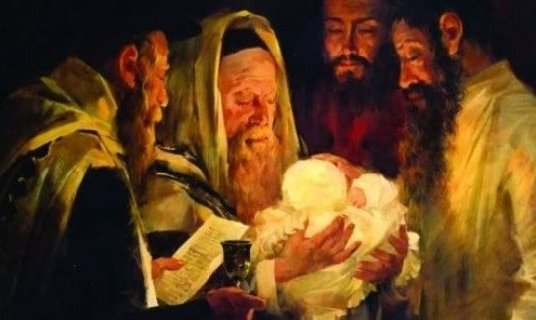
 No word in the Jewish religion is so indefinable and yet so indispensable as the word Torah. Torah is the most comprehensive term for the substance of Judaism. Torah is Teaching. Torah is Law. No one can hope to achieve even a minimal appreciation of the Jewish religion without learning, and then reflecting on, the idea of Torah and its place in the life of the Jew. Torah has been for ages the sum and substance of Jewish scholarship. But it would be utterly wrong to conclude from this emphasis on study that Jewish spirituality runs dry in the sands of intellectualism.
-Rabbi Maurice Lamm
“What is Torah”
Aish.com
After greeting them, he related one by one the things that God had done among the Gentiles through his ministry. And when they heard it, they glorified God. And they said to him, “You see, brother, how many thousands there are among the Jews of those who have believed. They are all zealous for the law, and they have been told about you that you teach all the Jews who are among the Gentiles to forsake Moses, telling them not to circumcise their children or walk according to our customs.
–Acts 21:19-21 (ESV)
Last night’s conversation with Pastor Randy about the second chapter (sermon) in D. Thomas Lancaster’s book The Holy Epistle to the Galatians wasn’t quite as intense as the previous week’s talk (though it had its moments early on). A lot of the focus was on who Paul’s intended audience was supposed to be, what Paul was trying to say, and why he was saying it.
I think Pastor Randy wanted to pull in all of the material from the letter whilst I wanted to try to contain our investigation to the current chapter of Lancaster’s book, which only covers Galatians 1:6-10. Yes, that’s pretty hard to do, but as I’ve mentioned before, I wasn’t satisfied with my original reading of Lancaster’s book, and I wanted to take this opportunity to go through it again with the proverbial fine-toothed comb, sifting its pages, and uncovering its message, along with Paul’s message to the Galatian churches.
Pastor Randy remains convinced that Paul was writing to the Gentile and Jewish populations in the churches in Galatia, and it’s hard to refute that. Pastor did back away from his comments of the previous week regarding Paul’s addressing of “Brothers” as being only to Jews, but he maintains the term can be applied to both Jews and Gentiles in the community of believers.
And then I brought up how silly it would be for Paul to tell Jews not to become circumcised and convert to Judaism.
And then he brought up how some/many of the Jews in the diaspora may not have been circumcised and may not have been all that Torah observant.
What?
It would seem, summoning Occam’s razor to my rescue, that the most reasonable understanding of the Jewish population of the diaspora was that they were observant to Torah relative to the normative halachah of their day, and that the Jewish males would routinely have been circumcised on the eighth day, even as Jesus was circumcised on the eighth day.
I’ll get back to that in a moment, but before I forget, we also discussed the identity of the influencers:
I am astonished that you are so quickly deserting him who called you in the grace of Christ and are turning to a different gospel—not that there is another one, but there are some who trouble you and want to distort the gospel of Christ. But even if we or an angel from heaven should preach to you a gospel contrary to the one we preached to you, let him be accursed.
–Galatians 1:6-8 (ESV)
Who were these “troublers and distorters?” Christian expository preaching for centuries has referred to them as “Judaizers.” We will take a look at that terminology as we wrestle with this question in the ensuing material, but for now, we will adopt a term currently popular in Pauline studies and simply refer to them as the “influencers.” They are within the Galatian communities who are influencing the God-fearing Gentiles to undergo conversion.
One quick observation about the “influencers:” They are most likely believers in Yeshua of Nazareth. This possibility is lost on many interpreters. They might be Jewish believers or believing proselytes to Judaism, but they are almost certainly believers.
How do we know? We will consider the evidence as we work through the epistle, but from the outset, Paul says that they “want to distort the gospel of Messiah.” A non-believer does not want to distort the gospel; he wants to refute it and repudiate it. Only believers distort the gospel. Paul says that they preach “a gospel contrary to the one we preached to you,” but they [are] preaching a gospel, they [are] teachers of good news. For that reason we may deduce that they are believers in Yeshua of Nazareth.
-Lancaster, “Galatians” Sermon Two
When I arrived for my appointment with Pastor Randy, he was working on his computer with translations of Galatians 1:6-8 from the ESV, the KJV, and the Greek text in preparation for our meeting. Here’s the relevant portions of vv. 6-7 from the King James Version with emphasis added:
I marvel that ye are so soon removed from him that called you into the grace of Christ unto another gospel: Which is not another; but there be some that trouble you, and would pervert the gospel of Christ.
 I can’t reproduce the Greek but the question Pastor was asking is if the “gospel” being preached by the Influencers was indeed the gospel of Christ, or another preaching altogether. While we can agree that there is no other “gospel” of Christ, there can be other types or fashions of “good news,” and Pastor’s opinion is that the Influencers didn’t have to be believing Jews based on the text or context, and indeed, they might not be believers at all.
There’s a certain merit in this, since during Paul’s time with the Jewish communities in the area of Galatia, he encountered many Jewish people and God-fearing Gentiles who listened to the message of the Gospel, but not all of them came to faith.
One of the big, big problems that all Jewish people had with “the Way,” including many of the Jews within the Way, was how to admit Gentiles as equal covenant members without requiring that they become circumcised and convert to Judaism. Acts 15 answers that question, but Galatians was almost certainly written before the Acts 15 event. The decision that Gentiles were not required to convert seems to have been clear to Paul as he was writing the letter to Galatia, but James and the Council had not yet rendered a halakhic ruling based on legal proof-texts. The “Jerusalem Letter” made the decision official, but at this point, Paul is going by his understanding of the Messiah’s plan for the Gentiles through the guidance of the Holy Spirit.
Getting back to circumcision, Pastor maintains that Paul very well could have been telling both Gentiles and Jews that they did not have to become circumcised and observe the Law in order to be disciples of Jesus Christ, the Messiah.
OK, I accept that was Paul’s message to the Gentiles, but to the Jews? Would Paul ever say such a thing?
…and they have been told about you that you teach all the Jews who are among the Gentiles to forsake Moses, telling them not to circumcise their children or walk according to our customs.
–Acts 21:21 (ESV)
That’s what finally got back to the Jews in Jerusalem about Paul, and they were taking it very seriously. What was Paul going to do to quell these rumors?
What then is to be done? They will certainly hear that you have come. Do therefore what we tell you. We have four men who are under a vow; take these men and purify yourself along with them and pay their expenses, so that they may shave their heads. Thus all will know that there is nothing in what they have been told about you, but that you yourself also live in observance of the law.
–Acts 21:22-24 (ESV)
That’s the solution, but was Paul being disingenuous? That is, was he just going through the motions to mollify the Jerusalem Jews by undergoing a Jewish vow ritual, something he no longer saw as relevant in his life because of his faith in Messiah?
In other words, was he lying to the Jerusalem Jews (and was James and the Elders supporting his lies) about whether or not he was telling the diaspora Jews not to circumcise their sons and to forsake Moses? Did he really tell all those things to the Jewish populations in Galatia?
“I am a Jew, born in Tarsus in Cilicia, but brought up in this city, educated at the feet of Gamaliel according to the strict manner of the law of our fathers, being zealous for God as all of you are this day.
–Acts 22:3 (ESV)
Now when Paul perceived that one part were Sadducees and the other Pharisees, he cried out in the council, “Brothers, I am a Pharisee, a son of Pharisees.
–Acts 23:6 (ESV)
If anyone else thinks he has reason for confidence in the flesh, I have more: circumcised on the eighth day, of the people of Israel, of the tribe of Benjamin, a Hebrew of Hebrews; as to the law, a Pharisee; as to zeal, a persecutor of the church; as to righteousness under the law, blameless.
–Philippians 3:4-6 (ESV)
 Paul was certainly working to establish his “Jewish credentials” in these circumstances. I know that a lot of people, when in fear of their lives, would lie to save themselves, but if Paul were telling diaspora Jews to not circumcise their sons and to go against the Torah, would he have lied about it, even to save his own life?
That hardly seems likely. We know from the New Testament record that Paul endured enormous hardships for the sake of the Gospel of Christ, and that his own life was worth less to him than preaching the good news of Moshiach to the Jews and the Gentiles. If he was trying to save his own life, he wouldn’t have done what we know he did on numerous occasions, which resulted in him being beaten, left for dead, shipwrecked, arrested, put in prison, and ultimately executed by the Romans.
We also know this about some of the Jews in Jerusalem.
And they said to him, “You see, brother, how many thousands there are among the Jews of those who have believed. They are all zealous for the law…
–Acts 21:20 (ESV)
Jews…who have believed and all zealous for the law. Believing Jews zealous for the law. Jewish disciples of Jesus as the Messiah who were also zealous for the Torah.
Of course they were upset at the thought that Paul was rumored to be teaching against the law to the diaspora Jews. Of course they were upset when they thought he had taken Trophimus the Ephesian into the Temple (Acts 21:29).
When the seven days were almost completed, the Jews from Asia, seeing him in the temple, stirred up the whole crowd and laid hands on him, crying out, “Men of Israel, help! This is the man who is teaching everyone everywhere against the people and the law and this place. Moreover, he even brought Greeks into the temple and has defiled this holy place.”
–Acts 21:27-28 (ESV)
Paul was believed by the Jews from Asia to have taken a Greek into the Temple, defiling it (think “Maccabees” and Chanukah), and speaking against the people (Jews) and the Torah, and they called to the crowds of Jerusalem Jews to help capture this “traitor.” Either that was true and Paul lied about it to save himself, or it was untrue and Paul was defending himself from these vicious rumors. As I mentioned, Paul lying about this seems completely inconsistent with what we know about his history. If he’s telling the truth and the rumors are false, then Paul never told the diaspora Jews to not circumcise their sons, to not observe Torah, and he never took a Gentile into the Temple or spoke against Jewish people or Israel.
But if Paul supported Jewish observance of Torah and circumcision and if there were Jerusalem Jews who were both believers and zealous for the Torah, then they obviously didn’t see any sort of inconsistency between faith in Messiah Jesus and a traditional Jewish life of Torah observance.
I think I gave Pastor something to think about but he is going to test my beliefs very stringently, as well he should.
What is Torah?
Silly question, right? Not according to the quote from Rabbi Maurice Lamm I put at the top of this blog post. And yet, Pastor Randy said that he and I need to have a working definition of “Torah” so that we can know what we’re supposed to be talking about in these conversations. When I say, Paul was a “Torah observant Jew,” what do I mean? I think I know what I mean, but the answer is far more complex than we might imagine.
 It’s also important to understand what “Torah” was in the days of Paul and the Apostles so that we can establish how that relates to what Torah is today. What “Torah” observance is appropriate for a modern “Messianic Jew” to follow? Are those practices identical to say, an Orthodox Jew? How does that observance relate to modern Jewish halachah, let alone the future of the Torah and the rebuilding of the Temple?
Rabbi Yanki Tauber calls the Torah a guidebook, a contract, an identity, a vision, and a daughter and wife. Rabbi Tzvi Freeman calls Torah “oneness.”
The writers at First Fruits of Zion (FFOZ) say this about Torah:
The Torah is the foundation of faith in Yeshua. All of the concepts associated with the Gospel—such as God, holiness, righteousness, sin, sacrifice, repentance, faith, forgiveness, covenant, grace and the kingdom of heaven on earth—are introduced in the Torah. Basic sacraments and rituals like baptism, communion, prayer and blessing all come from the Torah. Faith in Jesus is meaningful because of the Torah. Without the Torah, the Gospel has no foundation on which to stand.
The Hebrew word torah is translated “law” in most of our English Bibles. The Torah is called the Law of Moses because Moses wrote it, but the Torah is more than just a legal code. The word “Torah” (תורה) is from the Hebrew root, yara (ירה) which means “to instruct,” or “to teach.” Although it does contain laws, Torah itself is not only a “law,” but it is God’s “teaching” and “instruction.” That explains why the word Torah is often used to refer to the whole Bible. From our perspective, even the Gospels, Acts, Epistles, and Revelation fall under the broad definition of Torah. It’s all God’s instruction, and it’s all rooted in the Torah of Moses.
The Torah is the story of God’s people and how they came to be the people of God in the first place. The Torah is something all believers have in common. We all have this common ground. The Torah is our shared origin. It is God’s book.
And that hardly scratches the surface.
What is “Torah” relative to my conversations with Pastor Randy when trying to comprehend Paul, his letter to the Galatian churches, and the wider scope of how to understand Jews in Messiah today?
I am entertaining suggestions and comments. Please let me…let us know what you think and let’s see if we can be pointed in the right direction.













 Morning Meditations