Speak to the Children of Israel and say to them: The appointed times of Hashem, that you are to designate as holy convocations; these are My appointed times.
–Vayikra (Leviticus) 23:2
The Sabbath is a special, Divine gift, given to us so we elevate ourselves above the physicality of the days of the workweek. Indeed, the fact that it comes every week is part of its special nature: Who among us has not wondered how the non-Jews can survive without the Sabbath! We must strive to treat the Sabbath with the same delight and anticipation that we do any of the festivals. (emph. mine)
-from “A Mussar Thought for the Day,” p.140
Tuesday’s commentary for Parashas Emor
A Daily Dose of Torah
That is the $64,000 question, isn’t it. There certainly isn’t one, straightforward reply. The author of the above quoted mussar proposes the question but not the answer. Apparently, there is no Rabbinic response to God’s provision for the Goyim (or lack thereof) relative to Shabbat or any sort of occasion whereby a non-Jew can elevate him or herself and draw nearer to God. Perhaps it’s one of the many reasons why the ancient Gentile disciples of Messiah divorced themselves from the Jewish communities originally created by Paul and founded their (our) own Gentile-based religion called “Christianity”.
Actually, the “Mussar Thought for the Day” does have a response to Gentiles and the Sabbath:
A non-Jew is forbidden to observe the Sabbath; the Torah describes the Sabbath as: “…between Me and the Children of Israel it is a sign forever (Shemos 31:17).”
-ibid, p.141
The Church solved this problem by creating their own weekly Holy Day on Sunday, and until relatively recently in history, treated Sunday in a manner similar to how Jews observe a Saturday Sabbath.
However, the past 50 years or so has seen, particularly in the Western nations, a diluting of Sunday “Sabbath” observance whereby Christians go to church Sunday morning and then go out to lunch just prior to playing a few rounds of golf. The day is only special for the few hours they are in church, and even then, social encounters and conversations can largely be made up of secular material.
I’m not saying there aren’t a lot of Jewish people who only marginally observe a Shabbat or observe it not at all. My daughter goes to work on Saturday and my wife, while she does attend shul in the mornings and into the early afternoon, will resume her regular weekday behaviors upon returning home.
I’m not speaking ill of my spouse, of any other Jew, or for that matter, any Christian. It’s just that how we see the Sabbath and our relation to this day as well as to God is highly variable.
Is the answer to how a Gentile should, at least in an ideal sense, respond to the Jewish Shabbat to be found in Messianic Judaism? What makes you think that among the various “Messianic Judaisms” currently in existence, there is a unified response?
In his blog post Reading the Bible Realistically, or rather, in the blog post’s comments section, Derek made a few relevant statements when responding to one of his readers:
Your view that God is supremely upset about which day people choose to worship on is very un-Jewish. Shabbat is about rest and is not a prescribed day of worship. This is an error lying at the root of your entire theory. It is also an erroneous view of God, as if one of the great sins has to do with which day of the week people hold worship services on. I strongly encourage you to reexamine your views which come up short in terms of biblical interpretation and which sound a lot more like they are influenced by Ellen G. White than Torah and Gospel.
-from 05/05/2015 at 9:26 am
And…
non-Jews were never commanded to observe Shabbat (Exod 31:13, it is between Israel and God and Romans 10 agrees). And the majority of Christians keep no Sabbath (Sunday is not a Sabbath for most).
-from 05/05/2015 at 9:57 am
As well as…
I do not think any of the Ten Commandments were addressed to non-Jews.
So although Derek is the Rabbi of a Messianic Jewish congregation which presumably has a significant number of non-Jewish attendees, and also that he has spoken at many Christian churches and similar non-Jewish venues on topics related to Messianic Judaism and its relationship to believing Gentiles, he also seems to hold a point of view quite similar to the Orthodox Jewish authorities. He doesn’t say that Gentiles are forbidden to observe Shabbat, just that, as a Torah commandment, it doesn’t apply to us in the slightest.
Now let’s contrast that with the following:
It is not uncommon to hear people refer to the appointed times as the Jewish festivals. This is true in that God gave His appointed times to the people of Israel. He told the Israelites, “The LORD’s appointed times which you shall proclaim as holy convocations—My appointed times are these” (Leviticus 23:2). The Jewish people are the wardens of God’s calendar.
However, God does not refer to them as Jewish festivals. He refers to them as “my appointed times.” They are God’s holy days. Paul asks, “Is God the God of Jews only? Is He not the God of Gentiles also? Yes, of Gentiles also” (Romans 3:29). The Bible never offered Gentile Christians any alternative festival days. To say that Gentile believers are not expected to keep God’s appointed times is the same thing as saying that Gentile believers are not supposed to have any holy days or days of worship. Neither the Gospels nor the Epistles grant the Gentile believers their own special festivals.
In the days of the Apostles, both Jewish and Gentile believers observed God’s appointed times together. They met in the synagogues and in the Temple on the Sabbath and festival days to celebrate and observe God’s holy days. When Gentile Christianity left the cradle of Judaism, the Gentile Christians began to neglect the appointed times. The Sabbath day was replaced with Sunday observance. The timing of Passover was changed. The other festivals fell into disuse. Is this what God intended for believers?
-from “The LORD’s Appointed Times”
Commentary on Torah Portion Emor
First Fruits of Zion (FFOZ)

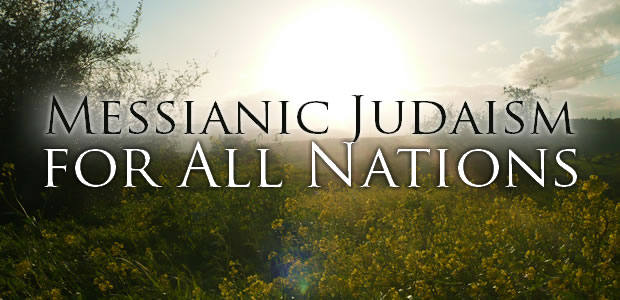
Since this is taken from the Torah Club subdomain of FFOZ, I have to assume it was written (though I could be wrong) by D. Thomas Lancaster, the spiritual leader at Beth Immanuel Sabbath Fellowship which touts itself as “Messianic Judaism for the Nations.” Mr. Lancaster is also the primary contributor to FFOZ’s Torah Club content.
I’ve written a fair amount on Gentiles (and particularly me) and their (our/my) relationship with Shabbat, such as in The Shabbat Project for the Gentiles, Messianic Jewish Shabbat Observance and the Gentile, My Shabbat that Wasn’t, and The Shabbat that Was.
The last three blog posts were not only part of my review of Aaron Eby’s book/siddur First Steps in Messianic Jewish Prayer (also an FFOZ publication) which was written by Eby specifically for a non-Jewish Messianic and Christian audience, but my chronicle outlining my own efforts to truly (or as truly as is possible for me) observe Shabbos using Eby’s book as a guide.
I can’t say I did a very good job of it, but part of that has to do with a lack of practice. One properly observes Shabbat by having many months or years (or a lifetime) of practice observing Shabbat, ideally in the company of people who know what they’re doing.
So we have the Orthodox Jewish perspective that Gentiles are actually forbidden from observing the Shabbat accompanied by astonishment in how we Gentiles manage to survive without it.
Then we have Rabbi Leman’s viewpoint that the Shabbat simply isn’t relevant to non-Jews, even those within the Messianic community, and further, that “Shabbat is about rest and is not a prescribed day of worship.”
We also have FFOZ’s opinion that God is not just a God of the Jews but of the nations as well, and that at least Gentiles are allowed to observe the Moadim, presumably including the Shabbat.
The previously quoted FFOZ blog post ends with:
It is true that the Apostles never commanded the Gentile believers to keep the appointed times, but neither did they tell them not to. They were silent on the matter. In those days, the idea of not keeping the appointed times simply had not occurred to anyone.
 Perhaps if there had been no schism between the Jews and Gentiles nearly twenty centuries ago, the issue would be moot. Halachah would have been developed regarding “Messianic Gentile” observance of Shabbat, the Appointed Festivals, and a great many other things we call “Jewish,” and then the halachah would have been refined over the centuries so that today’s expressions of Messianic Judaism would each have their own traditions and practices defined for Gentile members.
But such is not the case.
However, maybe the issue isn’t all that important, at least on a global scale. The churches have their answer to “The Lord’s Day,” and each Messianic community that includes Gentile members or attendees has their official policies regarding non-Jews and Sabbath.
Ultimately, lacking a clear Biblical directive, each of us has to negotiate his or her relationship with God, and each non-Jew has to decide how he or she (or if he or she) should address the puzzling issue of a Shabbat for the Nations.
I wrote quite recently that if it came down to a choice, it’s more important for Jews to observe Shabbos than for Gentiles. In the microcosm of my family, that’s how it works today (however imperfectly).
Of course there are those who want to have their cake and eat it too, but I’m not convinced you can solve knotty problems such as these by saying “the (Torah) rules are all the same for everyone, end of story,” and this narrative can appear a little unusual from time to time (I like comic books too, but this comparison caught me by surprise).
Even setting aside larger, normative Christianity’s opinion on the matter, authorities within Messianic Judaism let alone the wider realm of Jewish thought differ in how or if Shabbat applies to the Gentile, whether a disciple of the Master or not.
I decided to write this “meditation,” even though it may seem that I’m beating a well and truly dead horse, because of the simple statement I quoted at the top of this blog post:
Who among us has not wondered how the non-Jews can survive without the Sabbath!
So, given all of the benefits of Shabbat observance for the Jewish people, how do the rest of us survive?
Each Sabbath refreshes anew the special bond that Hashem has with His people, and affords every Jew the chance to turn away from the weekday world and bask in the radiance of the Shechinah. Thus, every Sabbath is a festival; but rather than commemorating a single event, it serves to strengthen and nurture the connection between the Jews and their Father in Heaven.
-from “A Mussar Thought for the Day,” p.141
Oh, as far as the Shabbat being primarily about rest rather than worship:
It is all too easy to fall into the trap of regarding the Sabbath simply as a day of rest, and to use it only as a chance to catch one’s breath before heading back into the grind of the following week. The folly of this approach, too, is highlighted by the location of the Sabbath among the festivals. Nobody makes the mistake of looking at Pesach or Succos as times of rest! These festivals are clearly identified as times to celebrate the closeness and special care that Hashem has demonstrated toward His people.
-ibid

So if we accept Derek’s assertion that Shabbat is not specifically a day of worship, we can also say that, at least in Orthodox Judaism, it’s not primarily just a rest day either. Like the Appointed Festivals, it’s a time of celebration, a day to rejoice in drawing nearer to God, at least for the Jewish people.
But among the varying and madding opinions of the relevant pundits, how do we non-Jews survive without a Sabbath or, like our First Century counterparts, the Gentile disciples Paul made in the diaspora, can we too somehow join Jewish community and simply enjoy the blessings of their Shabbat observance even if, as a matter of covenant, it is not also ours?
I know someone is going to bring up Isaiah 56 as “proof” that everyone everywhere is commanded to keep the Shabbat in the current age, but are we to behave like partisans, freedom fighters representing a (sort of) “King in Exile,” obeying the laws he will establish once he returns as if they are already in effect? Remember, in Messianic Days, King Messiah will not only rule over Israel, but the Gentile countries as well, as we will be vassal nations under the authority and protection of Israel’s Monarch. In those days, the will of the Master will be unequivocal.
Today however, Biblical hermeneutics being what it is, there is room for doubt and multiple conflicting learned opinions, and as I said above, that leaves it up to each of us, our conscience, and our relationship with God, to decide how to navigate the rather murky waters of Gentiles and Shabbat. How can we presume to observe it? How can we survive without it?