Tag Archives: Christians

The Pilot Project for the Nations

Warning. This is pretty cynical. It’s been that kind of day.

@James — You wrote: “It does seem like the Bible is biased heavily in defining the roles and responsibilities of the Jewish people and is pretty skimpy with its “advice” to the Gentiles.” I think I mentioned somewhere above, in response to a similar comment from Drake, that this should be obvious because the literature was written by Jews for Jews, and its consideration of gentiles was only to provide a larger framework for the world in which Jews must exist as a part of that larger body of humanity. It was never intended to provide advice or guidelines for non-Jews, though such guidelines may be (and have been) inferred from it. I pointed out to Drake that it is inappropriate to “criticize” this literature for not providing such information, because that was not its purpose. One might as well criticize a cookbook for not including motorcycle-repair instructions, or a self-help book about quitting smoking for not addressing drug addictions in general. Now, it’s not entirely incidental, of course, that the instructions for a pilot program redeeming one of the families of the earth should contain information that can be generalized to other families; but to criticize a lack of generalized information is just not correctly appreciating the nature and purpose of the existing literature.

Comment by ProclaimLiberty (emph. mine)
Submitted 2015/06/30 at 10:53 a.m.
On Why Do Christians Hate Judaism

That explains a lot.

I actually like the references to the non-Jewish disciples of Yeshua (Jesus) in the Apostolic Scriptures (New Testament) being referred to as a “pilot program” (I know PL used “pilot program” as applied to the Jewish people and then generalized to the rest of us, but I think my interpretation fits better). It makes perfect sense. The phrase brings into clarity what I think we’ve been struggling with in the conversation taking place on the aforementioned blog post, as well as the one that started this whole thing out.

I don’t know if the Apostle Paul ever intended to flesh out his “pilot program” and develop a full-fledged halachah for the non-Jewish disciples. Maybe not. I’ve read more than one commentary stating that Paul believed the Messianic return was imminent, so he probably didn’t think he had to do anything but put band-aids on gushing arteries because Yeshua was going to be back so fast, he’d heal all our wounds.

Oops.

divorceThis also explains why, with the passage of time, the Gentiles decided to take matters into their own hands and, in a rather ugly divorce, separate themselves from their Jewish mentors and invent an identity of their own, one that diminished if not deleted the Jewish role in the redemptive plan of God through Moshiach (Christ).

Maybe I’ve been a little hard on the Church Fathers. Maybe they thought that turning against the Messianic Jews, all other Jews, and Israel was an unfortunate but necessary step if Gentile lives and souls were to mean anything at all, at least in a more fully developed form.

No real identity, role, or function for the Gentile disciples in Jewish space? No problem. Leave Jewish community and create an identity, role, and function for non-Jewish believers, excuse me, “Christians” that stands on its own legs, without any sort of need for Judaism. Heck, if they were stinging from being put on long-term hold in a “pilot program,” they’d just take it to the next level and write a theology that made Israel and the Jewish people the “bad guys”.

And it worked, at least, from a Christian perspective, for the past eighteen-hundred years or so.

Then, as Derek Leman recently wrote, Messianic Judaism had a “revival” in the late 19th and early 20th centuries, and then later in the 1960s. From there, after a few missteps, it picked up steam and is now beginning to realize itself as an authentic Judaism again.

And as I’ve said before, with Jewish realization of their identity in Messiah, there also came a Gentile realization that said, “I’m no longer the center of Christ’s attention, anymore” (not that we ever were).

And it’s not too far a walk from that point to, “I’m not only not the center of attention, but I’m pretty much irrelevant.”

Of course that defies certain statements in the Bible such as Galatians 3:28 which seems to establish some common ground between Jews and Gentiles in the Messianic ekklesia, but I think it stands to reason that if you admit the centrality of Israel, Judaism, and the Jewish people in God’s redemptive plan for the world, then the only place for Christians to go once they leave the pitcher’s mound is either the outfield, or more likely, the bleachers (the parking lot? …maybe a few miles away from the ballpark?).

shakespeareI’ve mentioned before that when Israel becomes the head of all the nations and King Messiah reigns from Jerusalem over not only Israel but over the rest of the world, the rest of the world will be composed of vassal nations, subservient to the head nation, the Jewish nation.

For some reason, Shakespeare’s Sonnet 57 comes to mind:

Being your slave, what should I do but tend
Upon the hours and times of your desire?
I have no precious time at all to spend,
Nor services to do, till you require.
Nor dare I chide the world-without-end hour
Whilst I, my sovereign, watch the clock for you.
Nor think the bitterness of absence sour
When you have bid your servant once adieu;
Nor dare I question with my jealous thought
Where you may be, or your affairs suppose,
But like a sad slave, stay and think of nought,
Save, where you are how happy you make those.
So true a fool is love that in your will
Though you do anything, he thinks no ill.

Of course, the accepted commentary on this sonnet states this is the lament of a neglected friend regarding a companion who has abandoned him and gone off adventuring with others, but I think it could be applied to the current discussion.

I know I’m probably exaggerating, but this series of blog posts are an evolutionary exploration into who or what non-Jews in Messiah are if at all in relationship with Jewish community.

In the blog post I mentioned at the top of today’s missive, I commented that the worst case scenario (for Gentiles) in the Messianic Age, given what I’ve just said, is a true “bilateral ecclesiology,” one extending world-wide with the Jewish people in Israel and the rest of us in our own nations, perhaps only visiting Israel on special occasions to pay homage to our Lord, but otherwise, as the defeated nations that had vainly attacked (or from the present’s point of view, will attack) Israel and were conquered and shamed for our efforts, we remain in our place and tend to our own affairs and only come to the King if summoned.

I wonder if the pilot program was ever meant to be developed further, even by Messiah, since the rather dystopian scenario (for Gentiles) I’ve just crafted doesn’t really need a lot more detail than said-pilot program provides.
solomon

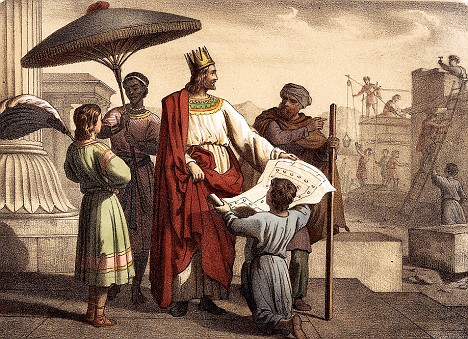
I wonder if there’s a Gentile application to Solomon’s Ecclesiastes? We poor, dumb Christians rule and reign in our churches for eighteen-hundred years thinking we have the proverbial tiger by the tail, only to realize that we are the tail and we’re no tiger, not by a long shot.

Each and every insult, pogrom, persecution, injustice, and inquisition Christianity has ever visited upon the Jewish people in eighteen or so centuries is going to come back and land right on our collective necks with a solid, concrete “thump”.

Maybe the reason Gentiles don’t fit into Messianic Judaism is that we were never meant to. Maybe Mark Kinzer’s vision of separate silos for Jews and Gentiles is intended to be carried over into the Messianic Era. Maybe we had our chance to stay loyal to the Jewish people and Israel during the Age of the Apostles, but once we walked out of the house, so to speak, and slammed the door in Messianic Jewish faces, there was no going back…

…ever.

I see now why the Pastor and just about all of the other people I described Messianic Judaism to at that little Baptist church I used to attend didn’t accept a word of it. I know why “One Law” Hebrew Roots Christians (no, you aren’t “Messianic Judaism”) can’t accept it either. It’s a terribly humbling realization and one accepted only with great difficulty and personal reorganization of who we are. We can never be who we thought we were. Those people never existed, at least not to God.

What was Solomon’s point in writing Ecclesiastes again?

Oh, yeah.

The conclusion, when all has been heard, is: fear God and keep His commandments, because this applies to every person. For God will bring every act to judgment, everything which is hidden, whether it is good or evil.

Ecclesiastes 12:13-14 (NASB)

Yes, God will judge us, may He have mercy on the nations. Except that keeping His commandments, if you mean the Torah mitzvot, only “applies to every person” (assuming Solomon didn’t mean “every Jew” since his primary audience was most certainly exclusively Jewish), in the broadest possible sense.
torahOf course, it’s dangerous to attempt to apply any of the Jewish scriptures (and even the Apostolic texts are Jewish scriptures written by Jews for Jews) to non-Jews in any sense, so I’m skating on proverbial thin ice (a very hazardous thing given that it’s triple digit highs in and around Boise for the foreseeable future).

Yes, I’m being pessimistic. Half the time, I want to take this “religion thing” and say “to heck with it…if I’m not supposed to belong to the club, I’ll leave.”

Maybe Thomas Gray was correct when he penned in his poem “Ode on a Distant Prospect of Eton College:”

“Where ignorance is bliss, ’tis folly to be wise.”

While Christians were ignorant of their/our true place in the ekklesia and their/our station in the future Kingdom of Messiah, we felt like Kings and Queens, reigning and ruling with Jesus, King of the Hill, Top of the Heap, and so on.

Given the “alternate reality” I’ve just constructed, we’d better duck and run when Messiah really does return for treating the Jewish people and Israel so badly, especially if all of the nations we live in (everywhere except Israel) are going to war against God’s precious, splendorous people, and, as the Bible says, we’re going to get our fannies whooped.

So wising up, I look around and find that I’m just part of a pilot project, a starter kit, a house made of cards with cotton candy for a roof and play-doh for a foundation.

No wonder I’ve felt so “unfinished” or maybe just “unmade” in my version of being a “Messianic Gentile.”

But it all fits. It explains everything, particularly why there are so many questions and so few, if any, answers.

We really were never meant to go as far as we tried to go, were never meant to rise as high as we tried to fly.

Like Icarus, now that I’ve flown close enough to the Sun to see the truth, my wax wings have melted and I plummet to earth like a broken angel, though I’m hardly angelic.

“Being your slave, what should I do but tend upon the hours and times of your desire” indeed.
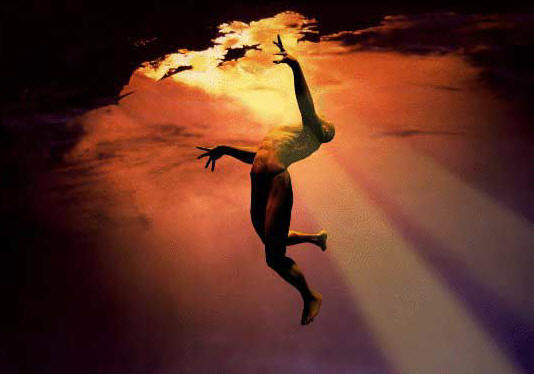
icarusI think I’d better crawl on my knees in abject humility or humiliation for the incredible arrogance I’ve been guilty of in even imagining I could be more or, worse yet, that I was more.

I don’t think I’ve understood being a servant up until now, not really.

A fallen servant is one whose wings have melted, and wallowing in soggy, warm wax, all I can do to serve is to scoop up some of that gooey, messy stuff. Maybe it’ll be good enough to make into a few candles to light the way, should the King decide to return by the road that winds past my small place.

Renewing Her Relationship with Shabbos and Hashem

And the Lord said to Moses: Speak to the Israelite people and say: Nevertheless, you must keep My sabbaths, for this is a sign between Me and you throughout the ages, that you may know that I the Lord have consecrated you.

Exodus 31:12-13 (JPS Tanakh)

The Talmud (Shabbos 10b) describes Shabbos as a special gift the Almighty gave to the Jewish people.

-Rabbi Zelig Pliskin
from “Observing Shabbos is a sign of your relationship with the Almighty,” p.218
Commentary on Torah Portion Ki Tisa
Growth Through Torah

My wife is continuing to renew her relationship with Hashem. Today (Shabbos, as I write this), she went to the Chabad for Shabbat services. I couldn’t be more delighted.

Why? Let me explain.

I’ve mentioned before that I believe the duty of non-Jews in Messiah and particularly those of us who identify as Messianic Gentiles, is to support, and if possible, inspire a return to greater Torah observance for Jewish people, and frankly, whether they’re disciples of Yeshua or not.

But without me doing a thing, something remarkable happened this morning. My wife (who is not Messianic in the slightest) went to Shabbat services. As I said above, I couldn’t be more delighted. She’s been lighting the Shabbos candle in our home somewhat intermittently over the past few months, but this is the first time in a long time when I’ve found her all dressed up and heading out the door to go to the Chabad to worship.

Shabbat candlesI’ve tried my hand at personal Shabbat observance and let’s say the results weren’t spectacular. Shabbat observance for anyone requires a great deal of discipline and preparation and really, I think it can only be done when it is fully integrated into your lifestyle. It would probably be best if you grew up in an observant home, but short of that, practicing and striving to observe Shabbos over the course of months, ideally with a knowledgable Jewish person guiding you, would certainly be effective.

But after my own “experiment,” and especially knowing my wife would not support me observing Shabbat (my “honey do” list has certain duties I must perform on Saturday), I decided that if it’s more important for her to observe Shabbat than it is for me, then my observing Shabbat, in the grand scheme of things, doesn’t really matter all that much. I think Rabbi Pliskin would probably agree:

The Chofetz Chayim gave two parables to illustrate how Shabbos serves as a sign of the relationship between the Jewish people and the Almighty. When two people are engaged to be married they send each other gifts. Even if difficulties arise between them, as long as they keep the gifts that they received from each other we know they still plan to get married. But if we see that they have returned the gifts, then we know that the relationship between them is over. Similarly, as long as a person observes Shabbos we see that he still has a relationship with the Almighty.

-ibid

Granted, she drove to services and it’s possible she will perform other melachah today, but this is still a powerful leap forward.

The effect of observing the Sabbath properly has another dimension. The Midrash (Shemos 25) states: R’ Levi said, “If the Jews will observe Shabbos properly, even one day, the son of David will arrive (i.e. we will return to Eretz Yisrael).” Why? For it is considered the equivalent of all the mitzvos, as the verse states (Tehillim 95:7): “For He is our God and we are the flock He pastures and the sheep in His charge — even today, if we but heed His call!”

from A Mussar Thought for the Day
Sunday’s commentary on Torah Portion Vayakhel
A Daily Dose of Torah

Yes, this is midrash so we might not be able to take it literally, but I believe there is a certain truth involved in Jews performing the mitzvot with Kavanah, the return of Messiah, and the New Covenant promises of God to Israel, the Jewish people, being realized.

Then I will sprinkle pure water upon you, that you may become cleansed; I will cleanse you from all your contamination and from all your idols. I will give you a new heart and put a new spirit within you; I will remove the heart of stone from your flesh and give you a heart of flesh. I will put My spirit within you, and I will make it so that you will follow My decrees and guard My ordinances and fulfill them. You will dwell in the land that I gave to your forefathers; you will be a people to Me, and I will be a God to you.

Ezekiel 36:25-28 (Stone Edition Tanakh)

No, I’m not discounting the Messiah, and I know that no one comes to the Father except through the Son:

I am the bread of life. Anyone who comes to me will not be hungry, and one who believes in me will not thirst again.

John 6:35 (Delitzsch Hebrew Gospels)

MessiahI don’t believe that Yeshua-devotion and the New Covenant promises of God to Israel are mutually exclusive. In fact, they are inexorably tied to one another, since Messiah is the mediator of the New Covenant and he came the first time to lay the foundation and to make the first down payment of the New Covenant.

This may be for some of you as was said in the synagogue in Kefar Nachum (John 6:59-60), “This word is difficult. Who is able to hear it?”

Rabbi Derek Leman has been spending the past several weeks on his blog laying out his theological perspective on a Jewish understanding of the Bible including the Apostolic Scriptures, as it describes Hashem’s relationship with the ancient and modern Jewish people. One of the things he said, and I agree with him, is that God didn’t abandon the Jewish people, and switch to the Christian Church at the end of the Biblical narrative. He can be found just as commonly in the Synagogue as in the Church (and having worshiped in a synagogue setting in years past, I can attest that His Presence was there).

So I don’t believe that God has abandoned my Jewish wife anymore than He has abandoned me for being a Christian (or Messianic Gentile if you prefer). I do believe that God expects my wife, as a Jew, to observe the mitzvot, including the Shabbat, since they were given specifically to the Children of Israel (as opposed to all mankind) at Sinai. The existence of a large number of “grafted in” Gentiles does not take away uniquely Jewish obligations and duties to God, and if my being a disciple of Yeshua means anything at all, then it should mean that I will do everything in my power to support and encourage my wife to observe the mitzvot associated with Shabbos.

The first of the zemiros that many people sing on Friday night begins with the words: “Whoever hallows Shabbos as befits it, whoever safeguards Shabbos according to the law [and refrains] from desecrating it, his reward is exceedingly great, in accordance with his deed.”

from A Closer Look at the Siddur
Sunday’s commentary on Torah Portion Vayakhel
A Daily Dose of Torah

So even if she didn’t light the Shabbos candles last night but she davened at shul (today) on Shabbos, then in accordance with her deeds, may Hashem reward her.

Of course, this should only be the beginning:

Rashi comments on this that rest on Shabbos should be a permanent rest and not merely a temporary rest. I heard from Rabbi Chayim Shmuelevitz the following explanation: A temporary rest means that a person has not really changed his inner traits, but he merely controls them on Shabbos. He still has a bad temper and has a tendency to engage in quarrels, but because of the elevation of Shabbos he has self-discipline and these traits are not manifest. But the ultimate in Shabbos observance is that a person should uproot those negative traits which are contradictory to peace of mind on Shabbos. One needs to uproot such traits as anger and the tendency to quarrel with others. Only then is your rest on Shabbos a complete rest.

-Rabbi Zelig Pliskin
from “To have peace of mind on Shabbos you need to have mastery over your traits,” p.220
Commentary on Torah Portion Ki Tisa
Growth Through Torah

intermarriageI’m choosing to interpret this a bit differently than I think Rashi and Rabbi Pliskin have in mind. I think that when a Jewish person observes some portion of Shabbos but not others, they are achieving a sort of temporary rest. Only when a Jewish person observes all of the aspects of Shabbos do they achieve the permanent rest they find in the complete acceptance of Hashem’s gift to Israel.

I’m keenly aware that my wife very likely sees me as an obstruction to her Shabbos observance since, after all, not only am I not a Jewish husband, I am in fact, a Christian husband, and like most Jews, she sees Christian theology, doctrine, and practice as the antithesis to religious Judaism and Torah observance.

More’s the pity.

I probably embarrassed her this morning, though I didn’t mean to. I spent about an hour and a half at the gym and when I got home covered in sweat, she was just coming out of our bedroom dressed quite nicely. I was startled and although I thought I knew the answer, I asked where she was going.

“Where do you think?” she responded.

I was thrilled she was going to services but she said I was “acting weird about it.” I guess I didn’t get my actual emotions across, but then I know she doesn’t want me to comment too much about her observance or relationship with Jewish community.

In the end, if my staying home and doing chores on Shabbat somehow frees her to go to synagogue, daven with Jewish community, and to observe more of the mitzvot, then I am content to be in that role. This is the role, at least from my tiny viewpoint, that I believe God has assigned me as a Messianic Gentile. The rest is in Hashem’s hands.

Are Christians Idol Worshipers?

More to the point, by Christians worshiping Jesus as divine, does that automatically make Christians idol worshipers according to Judaism?

The Jewish criterion regarding idolatry – as it relates to non-Jews – is also subject to debate. The accepted ruling is that if a non-Jew believes in a single all-powerful God, even if he accepts other forces together with God (such as the Christian belief in the Trinity), it is not idolatry. (Note that this distinction only pertains to non-Jews.) However, any other type of belief in a deity independent of God is idolatry (Code of Jewish Law – Rema O.C. 156:1).

-from “Ask the Rabbi”
Aish.com

Granted, the various branches of Judaism would have other issues with the worship of Jesus as part of the Trinity, but it is only idol worship if we are assigning an inanimate object with directly being God.

I’m not going to address the whole idea of the Trinity or the divine nature of Yeshua, and how all that’s supposed to work and, for once, I’m not going to write a lengthy missive on the topic. I just wanted to clarify for those folks out there who have accused Christians of being idol worshipers, that according to Jewish thought based on the above-quoted passage, we/they certainly aren’t.

As far as “the Father and I are one” (John 10:30) is concerned, there are other ways to understand why no one comes to the Father except through the Son.

But as the Aish Rabbi above explains, this applies only to non-Jews. For Jewish disciples of Yeshua, I can only imagine things may be a little harder to understand.

Notes from the Wrong Side of the Jordan

I shall make a distinction between My people and your people.

Exodus 8:19 Stone Edition Chumash (v23 in Christian Bibles)

R’ Shamshon Raphael Hirsch suggests that the phrase “between My people and your people” is a reference to the differing perspectives possessed by the people of the two nations.

-from “A Mussar Thought for the Day,” p.101
Friday’s commentary on Parashas Va’eira
A Daily Dose of Torah

I’ve definitely experienced some “distinctiveness” in opinion over the past several days in the comments section of my blog posts Saving Israel After the Fullness of the Gentiles Has Come (and Gone) and In the Image of God.

(I suppose I should note that even the title of the first blog post I mentioned, the phrase “Saving Israel” was taken as some sort of insult when I posted it in a private Facebook group on Messianic Judaism, due to a misunderstanding of my intent and my citing Paul’s words in Romans 11:26, and the reaction was so strongly disapproving of me, that I removed my Facebook post entirely.)

It’s true that if you’re going to write a “religious” blog, sooner or later, you’re going to rub someone the wrong way, but there are people out there who just can’t seem to tolerate that we are all going to either misunderstand each other from time to time, or that we will disagree on something, and there’s no way to any sort of peace with them.

OK. I get that. So I try not to enter into those debates so much anymore. They never end well. But sometimes these situations seem unavoidable.

Relative to my recent blog posts, there’s a particular group of Jewish people who are offering a service to larger Jewry by “exposing” the fallacies involved in Christianity as well as Messianic Judaism. I periodically had visits in the comments section of my blog from one such person, the subject of this blog post, until I finally had to ban him. I hate banning people, but sometimes a person is so persistently annoying and counterproductive that they inhibit any good that might come out of a discussion on at least some of the topics I write about.

Hence another couple of gentlemen, and I will continue to believe that they are well-meaning in their efforts, made some comments that were designed to be provocative and could well fall into the category of antimissionaries. But while their efforts may be seen as good for Jewish people, they’re not so good for the disciples of Yeshua, Jewish or Gentile.

I can sort of see why they’d want to “visit” Messianic Jewish blogs in an attempt, however misguided, to convince the Jewish blog writers of the error of their ways, but what did I do? I’m not Jewish and I try as much as I can to do no harm to Jewish people or national Israel in word or deed.

(I should say there was a third individual involved in some of these comments who isn’t Jewish and sadly seemed to be more of a troll than anything else).

For those of us who identify as Messianic Gentiles, these situations present an odd conundrum. On the one hand, I relate to Messianic Judaism, at least in its ideal state, as another branch of Judaism that runs parallel to Orthodox, Conservative, Reform, and the rest of the various streams of Judaism.

On the other hand, antimissionaries relate to Messianic Judaism as a form of Christianity, and a rather deceitful one at that.

This also invokes Rabbi Stuart Dauermann’s essay for issue 114 of Messiah Journal, “The Jewish People are Us – Not Them”. It’s a strange thing to relate positively to Messianic Judaism as a Judaism and at the same time, to find yourself at odds with people operating in other branches of Judaism.

Or maybe not. Let me tell you a joke (and I have to thank reader “ProclaimLiberty” for telling me this one):

There were two Jewish men, David and Joel, who were the only survivors of a shipwreck at sea. The two men were washed up on the shores of a deserted island.

A year later, rescuers found them and discovered that they had built three synagogues on the island. One of the rescuers asked David why the two men built three synagogues. David answered, “That synagogue is the one I go to, the one over there is the one Joel goes to, and the one way over there is the synagogue neither of us would be caught dead in.”

Don't ArgueIf you don’t get the joke, it would be kind of hard to explain it to you. Another way of putting it is by expressing the Jewish adage, “two Jews, three opinions.”

Here’s another example:

At that time Jesus went through the grain fields on the Sabbath, and His disciples became hungry and began to pick the heads of grain and eat. But when the Pharisees saw this, they said to Him, “Look, Your disciples do what is not lawful to do on a Sabbath.” But He said to them, “Have you not read what David did when he became hungry, he and his companions, how he entered the house of God, and they ate the consecrated bread, which was not lawful for him to eat nor for those with him, but for the priests alone? Or have you not read in the Law, that on the Sabbath the priests in the temple break the Sabbath and are innocent? But I say to you that something greater than the temple is here. But if you had known what this means, ‘I desire compassion, and not a sacrifice,’ you would not have condemned the innocent.

Matthew 12:1-7 (NASB)

From a traditionally Christian interpretive dynamic, this looks like Jesus is contradicting or just doing away with “the Law” of Shabbat, but from a Jewish perspective (to the best of my ability to render one), it’s two groups of Jews debating on what is and isn’t permissible on Shabbat, more specifically, the melachot or acts of work that are considered forbidden to perform on Shabbos.

Remember, some of the Pharisees felt so strongly about Shabbat and performance of melachot that they even planned to destroy the Master (see Matthew 12:14). Fortunately, these disagreements don’t get to that point in this day and age, however, that doesn’t mean they can’t be quite passionate.

So where does that leave me in these discussions? I can’t resolve them. There’s little to benefit from entering into another long and useless debate, batting their proof texts and mine back and forth like so many tennis balls.

Of course, from my critics’ point of view, we aren’t discussing a simple disagreement. This is a matter of heresy, apostasy, sacrilege, and even idol worship.

So where am I to turn?

The clear inference of these passages is that the recognition of Hashem’s mastery over all areas of life is a liberating force, rather than a debilitating one. This concept is illustrated in the simple, yet extraordinarily profound saying of Ben Zoma in Pirkei Avos (4:1), which asks, “Who is rich? He who is happy with his lot.” Rashi concludes that even the wealthiest person who is discontented with his lot will be in a constant state of fear and despondency, and is considered a pauper.

-from “A Mussar Thought for the Day, p.102

Oh yeah, God. Remember God? This is supposed to be about God and not winning arguments or rattling “pagan” Christian cages just to get a reaction.

When I get tired of religious people and religious arguments, I take some comfort in the Bible such as this reading from the Psalms for this past Shabbat:

Desist, and know that I am God; I will be exalted among the nations, I will be exalted upon the earth.

Psalm 46:11

Unfortunately, even here with the (apparent) reassurance that it is right and appropriate for the nations to exalt God, Rashi’s commentary on the verse as found at Chabad.org states:

Desist: all nations from further marching upon Jerusalem.

and know that I am God: That I will execute judgment upon you.

I will be exalted among the nations: I will be exalted with My vengeance which I will wreak upon those nations.

leaving churchNot very soothing sentiments for a Gentile who is trying to relate to Yeshua-faith as a form of Jewish worship and study. Well, maybe Rashi wasn’t talking about people like me (although I think he actually was).

So why do I do this to myself? Why do I continually inject my attention, my studies, and my commentary into what is obviously Jewish space? Because traditional Christian study materials, interpretations, and doctrine are somewhat…how should I say it…wanting. I suppose it’s one of the reasons I left church last fall after attending for two years (and those of you who’ve been following my blog for a long time know how agonizing my decision to return to the church was back then).

So once again I’m standing in-between multiple opposing forces within my little corner of the religious blogosphere and in my life as well. But I did mention something earlier:

I wait for the Lord, my soul does wait,
And in His word do I hope.

My soul waits for the Lord
More than the watchmen for the morning;
Indeed, more than the watchmen for the morning.

O Israel, hope in the Lord;
For with the Lord there is lovingkindness,
And with Him is abundant redemption.

And He will redeem Israel
From all his iniquities

Psalm 130:5-8 (NASB)

I have no doubt that God will fulfill His promises to redeem Israel. I just hope that when the dust settles, there will be something left for the rest of us…for me.

Addendum: For more perspective on the debate between Messianic Judaism and other Jewish religious groups and branches (in this case, Yad L’Achim and Chabad) please read Yad L’Achim’s Personal Jesus: the Berditchever Rebbe at the Rosh Pina Project.

The Sukkot Season of Joy

have-sukkah-will-travelSeven days shall you dwell in booths (Leviticus 23:42) … and you shall only be rejoicing (Deuteronomy 16:15).

Succos is the festival designated as the season of our gladness. Yet the commentaries state that one of the symbolisms of the succah, a temporary hut, is that we dwell in it for seven days to symbolize man’s temporary sojourn on earth for his average life span of seven decades (Psalms 90:10).

Human mortality is a rather sobering thought; it is hardly conducive to rejoicing. Most often we do not think about our mortality, and when circumstances force us to face it, we quickly dismiss it from our minds and go on acting as though we will live forever.

How different Torah values are from secular values! The Torah teaches us that there is an eternal life, a wholly spiritual life, whose bliss is far greater than the human mind can imagine. We are placed on this planet for our ephemeral earthly existence only to give us an opportunity to prepare for the eternal life.

The Torah teaches us to enjoy life, and if it restricts some pleasures, it is because we should enjoy life in a manner that befits a human being. Furthermore, our joy of living should not be diminished by the awareness of our mortality, nor need we deny it. The succah – the symbol of our temporary stay on earth – is beautifully decorated, and we enjoy our festive meals therein. Even our temporary existence can be beautiful and happy, and our faith in the eternal life should enhance that happiness.

Today I shall …

… try to enjoy life as befits a spiritual person, knowing that the true life of man is not the fleeting one, but that of eternity.

-Rabbi Abraham J. Twerski
“Growing Each Day, Tishrei 15”
Aish.com

I have to admit that at this time of year, sometimes I envy Jewish people. The traditions surrounding the celebration of Sukkot are so rich and full of life. Sure, I can build a sukkah and I can observe, to some degree, the same traditions, but I wonder what it must be like to have a life-long experience of such celebrations. What memories do Jewish people have of childhood, eating in a sukkah each year, “partying” with relatives and friends, singing, dancing, rejoicing?

I’ve come to the party far too late and worse, I was too late to bring my children. If I had been more timely, perhaps, my son would build a sukkah for his wife and child each year. Face it, in terms of traditions and spiritual depth, Sukkot has got Christmas beat all hollow.

I recently came across a Facebook page called Jewish People Around the World. The stories and photos of Sukkot observance are just fabulous. Certainly if, as Rabbi Twerski says, the Torah teaches us to enjoy life, then Sukkot is one of the crowning jewels of that Torah sentiment.

Rabbi Twerski also said this:

God wants us to enjoy worldly goods, but to do so in a manner that befits a spiritual people, a kingdom of priests and a holy nation.

Sukkot_Priestly_BlessingSukkot, for all its focus on being a “season of joy” does not focus on just the individual seeking his or her own joy as another of Rabbi Twerski’s commentaries notes:

Rabbi Mordechai of Nesh’chiz looked forward all year to the mitzvah of the Four Species on Succos. Since a fine esrog was costly and Rabbi Mordechai was hardly a man of means, he would accumulate small coins all year round, even depriving himself of food, in order to be able to afford an esrog.

A few days before Succos, Rabbi Mordechai joyfully took the money he had saved, and in high spirits, went off to buy the coveted esrog. On the way, he encountered a man sitting at the side of the road, weeping bitterly. He inquired as to the reason for the man’s grief, and the latter told him, “Woe is to me! I earn my living with my horse and wagon, and this morning my nag died. How am I to feed my wife and children?”

“How much do you need to buy another horse?” Rabbi Mordechai asked.

The sum that the man specified was exactly the amount that Rabbi Mordechai had laboriously saved all year long for the esrog. Without giving it another thought, he gave his purse to the man. “Here, my dear man. Go buy yourself a horse’

After the man joyfully left with the money, Rabbi Mordechai said, “Oh well. All of Israel will be fulfilling the mitzvah of the Four Species with an esrog, but I will do so with a horse.”

Rabbi Mordechai’s sacrifice of his personal comfort all year round teaches us how precious is the mitzvah of the Four Species, but his final act teaches us that the mitzvah of tzedakah (charity) is even greater.

Today I shall…

… try to realize the greatness of the commandment of charity, to make certain that another person has the means to survive.

I mentioned Christmas before, which I suppose is the closest thing in Christian tradition to Sukkot (apart from Thanksgiving, which strictly speaking, isn’t a “Christian” holiday). I think for some Christians, teaching charity and giving is the focus of that holiday, but for most people, including most Christians, all attention is drawn on buying and consuming material goods for their own sake and for ours, not for the sake of other people.

Also, as we read in the first quote from Rabbi Twerski, Sukkot teaches us the difference between temporal, material values and those for the sake of Heaven, and yet even eternal values are celebrated with the joys of our material world. Our mortal life is much like living in a sukkah, while what is beyond can be compared to basking in the glory of God on His Throne.

If it comes down to experiencing our own joy and providing joy to others in material ways that summon the eternal, I say, is it too much to ask for both?

Separating Good from God

returning-the-torahThe campaign of the Greeks was aimed to “make them forget Your Torah and violate the decrees of Your will” (Sidur p. 59); as the Midrash (Bereishit Raba 16) puts it, (the Greeks demanded) “Write…that you have no share in the G-d of Israel.” It was a war against G-d. “Let them study Torah,” the Greeks implied. “Let them practice the justice-mitzvot and the ‘testimonial’ observances. But they must not mention that the Torah is G-d’s Torah and the mitzvot are the decrees of His will. Torah and mitzvot must be severed from G-dliness.”

“Today’s Day”
Thursday, Tevet 2, Seventh Day of Chanuka, 5703
Compiled by the Lubavitcher Rebbe
Translated by Yitschak Meir Kagan
Chabad.org

Why should any religion get the credit for people doing good, but not get the credit for people doing bad?

I think it should be consistent either way, don’t you? Either the church gets all the credit or none of it. You can’t just give it the good and ignore the bad.

-comment from NotAScientist
on my blog post
When Christians Do Good

Typically, one of the criticisms non-religious people level against Christians and other people of faith is that we need some sort of excuse to do the right thing. We use our faith and our religion as an external motivator to do good when, as human beings, we should just know how to do good and do the right thing because it’s the right thing.

This gets muddied up further when definitions about what “right” happens to be differ between religious and non-religious populations and certain social priorities and “causes” become involved. Then too, the matter of the “supernatural” vs. the “rational” is also injected into the argument, with rational, scientific atheism and secular humanism weighing in on the side of “thinking” as opposed to “believing”.

In doing a little research into “atheist advertising” for this blog post, I found a number of clever slogans that atheists use to promote their particular viewpoint. One was on the side of a New York City bus and read…

“You don’t have to believe in God to be a moral or ethical person”

The ad then provided the URL to the New York City Atheists website (see the story at The New York Times for details).

But that takes us back to the “Today’s Day” quote at the top of this blog post and interestingly enough, Chanukah.

As you’re reading this, Chanukah has just ended (at sundown Sunday night) but the lessons it teaches us are still fresh in my mind. Why would the Greeks be content to continue to allow the Jews to perform the Torah mitzvot and to do justice, as long as they divorced those moral and ethical deeds and the Torah itself from the God of Israel? If you donate food to your local food bank because you believe that helping others is the right thing to do, and I perform the same act in response to the will of God, what difference does it make? Hungry people are still fed either way, right?

atheist_christmas_adWell yes, hungry people are still fed either way. Someone can enjoy a donated meal without wondering about the motivation of the person who provided it. Their belly will be just as full and they can feel just as grateful to the person who helped them out. I can understand why an atheist would make such a statement, but why would the ancient Greeks, who had no end of gods of their own, want to say something like that about the Jews? Why separate the good deed from the ultimate author of the good deed, God?

Pinchas arose and wrought judgment, and so the plague was checked.

Psalms 106:30

The word tefillah, or “prayer,” has its origin in the word pallel, which means “to seek justice.” Prayer should therefore be an activity whereby one seeks justice. The first recorded prayer in Jewish history is that of the Patriarch Abraham. He sought justice for the people of Sodom and pleaded with God to spare them (Genesis 18:23-33). Thus, when we pray, whether for ourselves or for others, it should be with the understanding that we are seeking justice.

How, then, can we ask of God to grant our various requests? Are we deserving of this? Do we deserve them? Are they within the realm of justice?

Two answers come to mind. If, as part of our prayers, we admit the wrongs we have done, sincerely regret them, and commit ourselves not to repeat them, then we may indeed be deserving. We therefore do not make our requests on the basis of what we are, but on the basis of what we will be. Second, if we extend ourselves by forgiving people who have offended us and acting with kindness toward them, then God’s acting accordingly toward us can in itself be considered justice.

Thus, teshuvah (the process of regret and return) and gemilas chasadim (acts of kindness) are the foundations of prayer.

Today I shall…

try to do teshuvah, and to act toward others in a way that I wish God to act toward me.

-Rabbi Abraham J. Twerski
“Growing Each Day, Tevet 1”
Aish.com

I don’t have some wise commentary or a learned sage to draw from to answer the question I posed above, but there seems to be one difference between the atheist’s motivations and the reason a person of faith does good: the definer and creator of good.

If man is the final arbitrator of what is good and evil, then good and evil changes over time, changes between nations and cultures, and changes from one individual to the next. What I may consider good, another person may see as evil. What I can justify within my own conscience may be considered tremendously heinous within another’s moral structure.

But God is God. He does not change and thus what is good does not change.

And what is good?

And Jesus said to him, “Why do you call me good? No one is good except God alone.”

Mark 10:18 (ESV)

OK, it’s not that simple. I’ve mentioned before that religion and how we understand God evolves over time. Besides that, even just within Christianity, various denominations and even individuals who go to the same church can differ on a number of political and social issues in terms of what is “good” and “evil.” Should you pray for the well-being of President Obama or pray against his health and safety? You may believe the answer to that question is clear, but I promise you that no matter what your answer may be, there is a believer out there who has the opposite answer, and yet both of you believe you are in the right because of God and the Bible.

But even though we have that monkey wrench in the machine, I still believe it is better to seek out God in matters of right and wrong than to universally rely on our own judgment and feelings. I’ve been writing recently about the Sandy Hook school shootings and it is only the most recent of the many debates you will find on how to address violence in our society. What is the right thing to do? What is the ethical and moral thing to do in response to the death of 26 people, including 20 small children?

symmes_chapel_churchI don’t know.

I do know that even those of us who turn to the God of the Bible for our strength and our hope don’t always agree on the answer. How much more must a secular world with only the standard of public opinion dispute each other, disagree, and contend?

I don’t know the answer. But I am thankful that when I have to ask the question, I don’t have to ask another human being who is just as hurt, sorrowful, and angry as I am.

If my sense of right and wrong became detached from God, even if my basic behavior and my concept of what is good did not change, I would be at the mercy of the opinion of whatever group of people I chose to listen to or worse, I would have to depend upon the voice of my own personal thoughts and feelings.

I lift up my eyes to the hills. From where does my help come? My help comes from the Lord, who made heaven and earth.

Psalm 121:1-2 (ESV)

It was God who took a family and made them a people and a nation too numerous to count. If the Greeks had succeeded and caused the Jews to detach the Torah from God, Israel too would become detached and ultimately lost. It is God who redeems the soul of every living person and from whose hand we receive what each of us needs at its proper time. Without God, we too would be lost.